Corner Kitchen Table: A Guide for Upstate NY Homes

In a lot of Upstate New York kitchens, the problem isn’t a lack of square footage alone. It’s the one corner that never seems to work. It collects mail, reusable bags, homework, and whatever else lands there by the end of the day. Meanwhile, the kitchen still feels short on seating.
That’s where a corner kitchen table earns its keep.
I’ve seen this play out in older homes around Albany, Greene County, and the wider Capital Region for years. A standard dining set can crowd the walkway, and an island isn’t always realistic. But a corner setup can turn an awkward spot into the place where breakfast happens, kids do spelling words, and someone sits with coffee while dinner finishes on the stove.
The Smart Solution for Your Cozy Kitchen Corner
One of the most common small-kitchen complaints is simple: “We have space, but we can’t use it well.” A bare corner often looks harmless on paper, but in real life it becomes wasted space or a traffic jam.
A corner kitchen table solves a different problem than a full dining room set. It tucks seating where the room naturally gives it to you. It creates a defined eating area without asking the kitchen to become something bigger than it is.
That matters in homes where one room has to do a lot. Plenty of families still want a place to gather, even if the kitchen is compact and the layout is quirky. A corner nook can make the room feel more intentional, not more crowded.
If you’re also trying to control clutter before adding furniture, this guide on how to organize a small kitchen is worth a look. Good organization and the right table choice usually go hand in hand.
Why this setup works so well
A corner arrangement helps in a few practical ways:
- It uses dead space well instead of forcing furniture into the center of the room.
- It improves flow because benches can stay tucked in tighter than pulled-out chairs.
- It creates a natural gathering spot for quick meals, conversation, and everyday routines.
A good kitchen corner shouldn’t feel like leftover space. It should feel like the most useful part of the room.
For many families, the kitchen table becomes the central hub of the home. That’s part of why certain seats become so meaningful over time. The idea behind having a favorite spot in the house rings especially true in a well-planned breakfast nook.
Rediscovering the Corner Table A Timeless Classic
The corner table isn’t a trend. It’s a practical furniture idea with deep roots.
The corner table concept dates back to the 18th century, when it became an important design solution for households without formal dining rooms, according to Colonial Williamsburg’s corner table history. Families often placed a table in the corner of a multipurpose room to carve out a dining area inside a space that also had to handle sleeping, cooking, entertaining, and daily living.
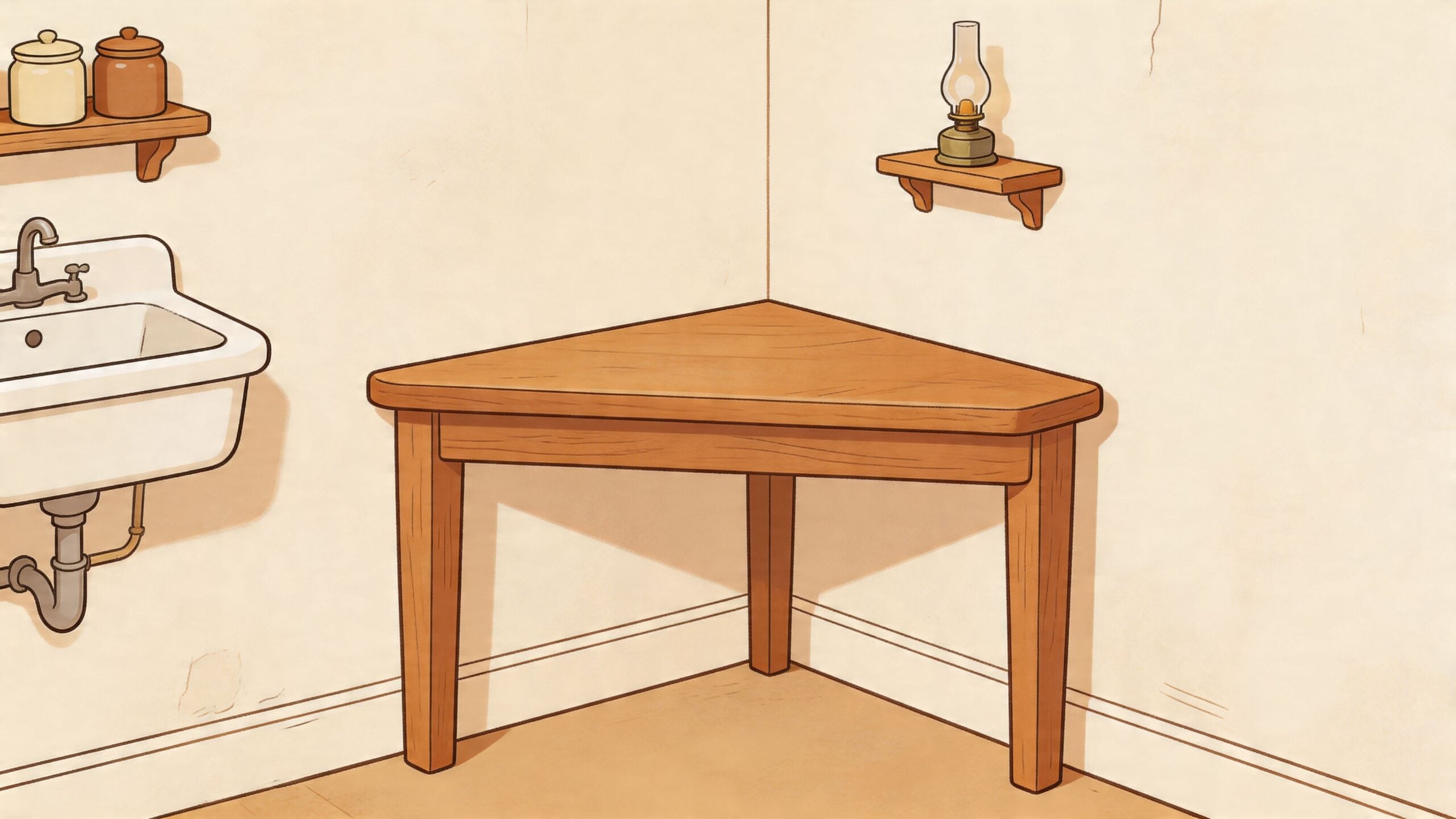
That history matters because the same logic still holds. Many Upstate homes have rooms that need to multitask. Even in a remodeled kitchen, there’s often one corner that works better as a built-in eating area than as open floor space.
What counts as a corner kitchen table today
People use the term loosely, so it helps to separate the main types.
Banquette style
This is the classic breakfast nook look. One or two benches, often fixed against the wall, pair with a table sized to the space. It feels built in, even when it isn’t.
L-shaped bench setup
This is one of the most efficient choices for tighter kitchens. It wraps the corner and makes the most of every inch. Families like it because it can seat more people than a table with four chairs in the same footprint.
Table and chair corner arrangement
This is the simplest version. A smaller rectangular, round, or even triangular table sits in the corner with chairs or a bench. It offers flexibility if you want something easier to move later.
Some of the best furniture ideas survive for centuries because they solve the same human problem in every era. People need a place to sit, eat, and gather without wasting space.
Why the old idea feels current again
Older furniture forms tend to return when homes need them. The corner table is a perfect example. It was useful when households needed one room to serve many purposes, and it’s useful now for almost the same reason.
Today’s version looks cleaner and works harder. You’ll see sleeker lines, better sizing, and more options in wood, finish, and seating style. However, the idea itself remains constant. A corner kitchen table gives a home a dedicated spot for everyday life without demanding a separate dining room.
Planning and Measuring for a Perfect Fit in Your Kitchen
A corner table usually looks fine in the showroom. Problems show up at home, when someone opens the dishwasher, another person pulls out a chair, and the path to the fridge disappears.
That is why I tell Albany-area homeowners to plan the traffic first and the table second. In many Upstate kitchens, especially older homes with tighter layouts, radiators, baseboard heat, deep window trim, and off-square walls change what fits.
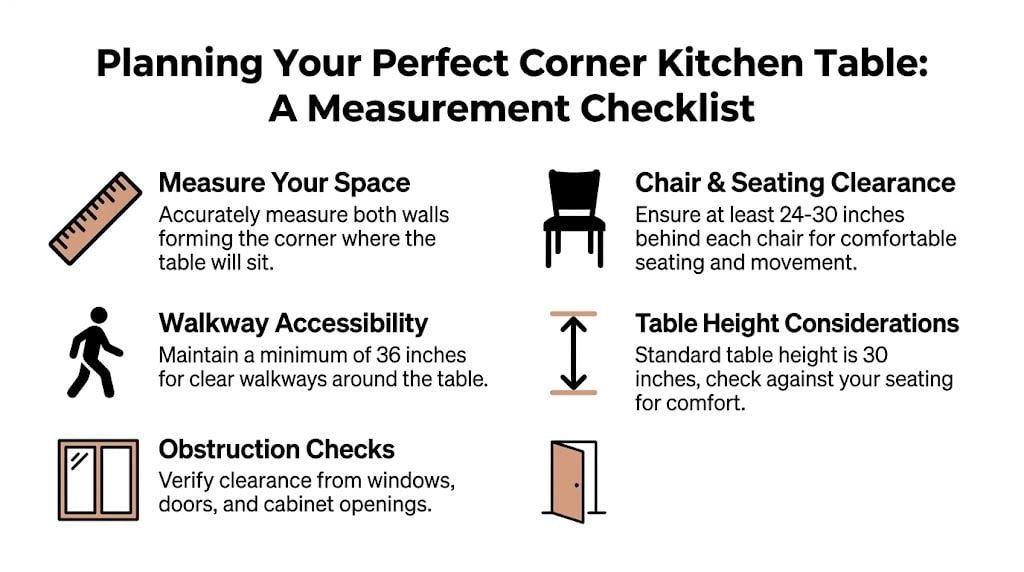
A good first step is this guide on how to measure a room for furniture. For a kitchen nook, use that same process, then add the details that matter in real life: cabinet swing, appliance clearance, outlet placement, trim depth, and the route people use every morning.
Measure the room people actually use
Start with both walls that form the corner, then measure from the wall out into the room. After that, mark anything that steals usable space or interrupts movement.
Pay attention to:
- Door swings that can clip a bench or table edge
- Dishwasher, oven, and pantry clearance when those doors are fully open
- Window trim, radiators, and baseboard heat that reduce bench depth
- Main walking paths between the sink, refrigerator, island, and exit
- Vents and outlets that should stay accessible
One number alone never settles it. Dimensions’ breakfast nook guidance notes circulation zones of 36 to 60 inches overall, with 18 to 36 inches behind seats, 24 to 30 inches between chairs, 16 to 18 inch bench height, and 18 to 20 inches from backrest to table edge. Those numbers are useful because they connect fit and comfort in the same layout. If someone has to turn sideways to pass behind a seated person, the set is too large for that kitchen.
Comfort matters as much as footprint
I have seen plenty of nooks that fit on paper and still feel awkward by the second meal. A bench set too high makes people sit stiffly. A table set too far from the backrest makes kids slump forward and adults reach for everything.
A quick check helps:
- Bench height: Keep it in the 16 to 18 inch range
- Backrest-to-table distance: Stay near 18 to 20 inches
- Table proportion: Match the tabletop size to the wall length and walkway, not just the seat count
- Passing room: Leave enough open floor so the kitchen still works while people are seated
Practical rule: Choose the smaller table if the larger one narrows the walkway.
Mistakes that show up in smaller Upstate kitchens
These are the problems we see most often in homes from Albany to Greene County.
| Problem | What happens |
|---|---|
| Table is too deep | Knees hit the base, and the aisle tightens fast |
| Bench ignores trim or heat | The piece sits proud of the wall or blocks heat flow |
| Door swings were not checked | Daily use becomes annoying within a week |
| Seating count is pushed too far | The nook looks crowded before anyone sits down |
For visual ideas on how a corner can function, Houzz’s ideas for creative kitchen corners can help.
In trickier kitchens, a scaled plan saves money. Tip Top’s local design team can map the room, test different table sizes, and spot issues that are easy to miss in older Upstate homes. If the corner has an odd angle, baseboard heat, or a window that cuts into bench height, our room-planning tools and access to custom Amish craftsmen give you options that a standard big-box set usually cannot.
Choosing Your Style Materials and Finishes
A corner kitchen table earns its keep every day. In a lot of Upstate homes, it becomes the breakfast spot, homework station, bill-paying desk, and extra prep space all in one. That daily wear shows up fast if the material is chosen for looks alone.
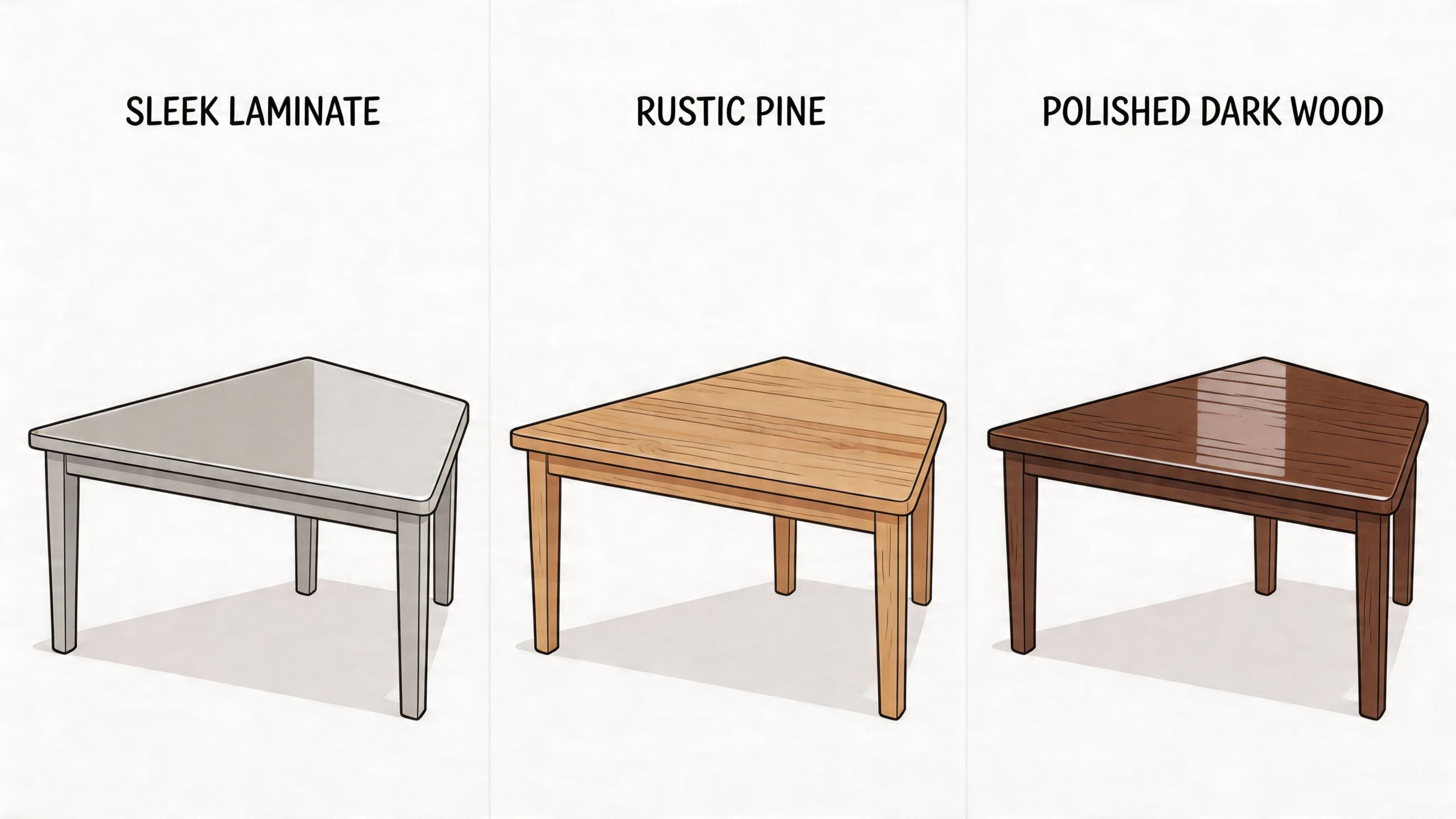
We tell Albany and Greene County shoppers to start with one question. Do you want a lower-cost set that handles a few years of use, or a solid piece you can keep through kids, pets, and daily traffic? That answer usually narrows the field quickly.
For a closer look at species, grain, and wear resistance, our guide to the best wood for tables helps compare appearance with long-term durability.
A practical look at common material choices
Each material has a place. The right one depends on budget, household traffic, and how permanent you want the purchase to be.
| Material | What works | What to watch |
|---|---|---|
| Laminate | Easy cleanup, lower price, simple everyday use | Edges and surfaces can show age sooner, and the feel is less furniture-grade |
| Pine | Warm look, relaxed style, usually easier on the budget | Softer surface dents and scratches more easily |
| Solid oak | Strong, durable, classic grain pattern | Heavier, and usually costs more up front |
| Cherry or other hardwoods | Rich color, better finish depth, custom furniture feel | Higher price, and custom orders can take longer |
Pine versus oak is a real durability decision
This choice matters more than many shoppers expect. A pine nook can look great on day one, especially in a cottage or farmhouse kitchen, but soft wood records family life quickly. You will see chair scuffs, dents from dropped keys, and wear around the edge where people slide in and out.
Oak holds up better under the same use. The benchmark details published in Furniture Dash’s Corona corner dining set listing compare pine at about 380 lbf on the Janka scale with solid oak at 1290 lbf, and also note the value of a high-quality catalyzed lacquer finish for longer service life. In plain terms, oak is the better pick for a busy kitchen, while pine fits a tighter budget if you are comfortable with a lived-in look over time.
Finish matters almost as much as the wood
Finish is where many good purchases go wrong. A beautiful wood species with a weak topcoat can disappoint faster than a simpler hardwood with a durable finish.
In our store, we see this most often with families who want the soft look of a painted or lightly stained nook but also need it to survive constant wipe-downs. The better finish usually wins that argument. It protects edges, seat tops, and table corners where wear builds up first.
Shop by construction and finish quality first. Then choose color.
What usually works best by household
- For young families: Oak or another durable hardwood is usually the safer buy.
- For lighter use or a first home: Pine can make sense if you like character marks and want to control cost.
- For a kitchen that needs specific color matching: Custom hardwood gives you better stain and finish options near cabinets, floors, and existing furniture.
That last point matters in older Upstate homes. A standard big-box finish can look out of place next to original trim, warm maple flooring, or an older hutch that has been in the family for years. Tip Top’s design team can help match tones, compare samples in the room, and work with Amish craftsmen on wood species and finish details that fit the house instead of fighting it.
Amish-crafted solid wood stands apart for practical reasons. The joinery is stronger, the finish options are better, and the piece is usually built for long use rather than short-term convenience. For many homeowners, that is the difference between buying a corner table and buying the table that stays in the kitchen for the next twenty years.
Beyond the Big Box Customizing Your Corner Nook
Standard corner sets work for standard kitchens. A lot of kitchens in Upstate New York aren’t standard.
Older homes may have baseboard heat on one wall, a window stool cutting into the corner, or an odd wall length that leaves a mass-produced set either too short or too bulky. That’s where custom work becomes less of a luxury and more of a practical fix.
If you’re exploring a made-to-fit piece, the right place to begin is getting started with custom order. It helps to come in with measurements, photos, and a rough idea of how many people you want to seat.
Why custom is becoming more relevant
There’s a real gap in the market. Most online content and most ready-made options focus on standard pine or MDF pieces. But the demand for custom sizes is growing. The verified market note tied to this research reference cites a 40% rise in custom dining queries and notes that the median NY kitchen is 110 sq ft. Those two facts fit together. Small kitchens often need furniture sized more carefully than the average catalog offers.
That’s especially true when a homeowner asks a question like this: can a corner kitchen table fit an awkward kitchen corner and still leave proper legroom? A stock answer usually isn’t enough.
What custom ordering actually solves
Custom work helps in several practical ways:
- Wall-to-wall fit: You can size the bench or table to your actual corner, not the manufacturer’s guess.
- Wood choice: Solid oak, cherry, and other hardwoods give you more long-term value than many flat-pack options.
- Finish matching: A custom stain or paint can work with cabinets, flooring, or existing dining pieces.
- Seat layout: You can decide whether the nook should prioritize capacity, comfort, or easier entry and exit.
The trade-offs to think through honestly
Custom isn’t automatically the right answer for everyone.
| If you want | Custom may be best when | Stock may be better when |
|---|---|---|
| Precise sizing | Your kitchen has awkward dimensions | Your corner is simple and standard |
| Long-term durability | You plan to keep the piece for years | You need a quick solution |
| Personal style match | You want specific wood or finish | You’re flexible on look |
| Budget control | You’re treating it as a lasting investment | Lowest upfront cost matters most |
A custom corner nook makes the most sense when the room is hard to fit, not when you’re trying to force a custom order onto a simple problem.
For many homeowners, the biggest advantage is confidence. You stop wondering whether a boxed set will sort of work and start choosing a table that’s built for how the kitchen is used.
Making It Yours Financing Delivery and Care
Buying a corner kitchen table should feel manageable, not complicated. The best choice is one you can live with comfortably in both design and budget.
That matters because the modern kitchen itself is a relatively recent idea. Before the 1920s, kitchens were made up of freestanding furniture, and the shift toward integrated, efficiency-focused layouts came later, as explained in this history of American kitchen design and time-and-motion planning. In other words, kitchens have always evolved around daily work. Furniture choices should do the same.
Make the purchase easier on the budget
A well-made nook can be a real upgrade, especially in a smaller home where every piece has to perform. That’s why flexible payment options matter. If you’re planning a full room update or choosing better materials from the start, furniture financing options can help spread out the cost in a more workable way.
Clearance shopping can also make sense if timing lines up and the dimensions are right. The key is not to buy the wrong size just because the price looks attractive. In a kitchen corner, fit still comes first.
Delivery and setup matter more than people think
A corner kitchen table often has more pieces than buyers expect. Benches, table bases, backrests, and tight entry paths into older homes can complicate the job.
Before purchase, check these basics:
- Entry access: Measure doors, stair turns, and narrow hallways.
- Room readiness: Clear the corner fully so delivery crews can place pieces accurately.
- Floor protection: Use pads or glides where appropriate, especially on wood or laminate flooring.
Keep it looking good with simple care
Maintenance doesn’t need to be complicated.
- For solid wood: Wipe promptly, use placemats, and avoid letting moisture sit on the finish.
- For pine: Expect more visible character over time and be gentle with abrasive cleaners.
- For laminate surfaces: Use a soft cloth and avoid harsh scrubbing that can dull the finish.
The right care routine is the one your household will actually follow. Simple habits beat complicated products every time.
A corner kitchen table works best when it’s chosen with real life in mind. Budget, delivery, and upkeep all shape whether the piece still feels like a smart decision years later.
Create Your Family's New Favorite Spot with Tip Top
A corner kitchen table does more than fill empty space. It gives a compact kitchen a purpose-built place to gather. In many Albany-area and Greene County homes, that’s exactly what’s missing.
The best results come from getting three things right. Measure carefully. Choose materials that match how hard the table will be used. If the room is unusual, don’t settle for a poor fit when a custom solution will serve the space better.
A finished nook also deserves a little personality. Once the furniture is in place, even a small touch of greenery can warm it up. This guide on how to decorate with houseplants has sensible ideas for adding life to a dining corner without overwhelming it.
Good furniture should make daily life easier. In a kitchen, that usually means better flow, comfortable seating, and a spot people naturally return to.
If you’re ready to find a corner kitchen table that fits your home the right way, visit Tip Top Furniture & Mattresses in Freehold, NY. Since 1978, the family-owned showroom has helped homeowners across the Greater Albany Capital Region furnish real homes with practical expertise, custom options, Amish-crafted solid wood furniture, delivery support, financing, and professional design guidance. Bring your measurements, photos, or even a rough sketch, and ask about a complimentary design consultation to create your family’s new favorite spot.