Top Ergonomic Office Chairs for Ultimate Comfort & Support

A lot of people across the Capital Region end up in the same spot. They start working from home at the kitchen table, then move to a spare bedroom, and before long they're spending hours each week in a chair that was never meant for focused desk work. The result usually isn't dramatic at first. It's a nagging low-back ache, tight shoulders by late afternoon, or that stiff-neck feeling that makes even a short email session feel longer than it should.
That's why the search for top ergonomic office chairs has become much more common. The market itself reflects that shift. The global market for ergonomic office chairs was valued at USD 7.5 billion in 2023 and is projected to reach nearly USD 14.8 billion by 2032, according to market coverage summarized here. People aren't just shopping for a nicer chair. They're trying to solve a real day-to-day problem.
For homeowners and professionals driving in from Albany, Schenectady, Troy, and surrounding communities to browse furniture in Freehold, the challenge usually isn't finding a chair labeled ergonomic. The challenge is finding one that fits the body, the desk, and the work routine.
Table of Contents
- Is Your Home Office Chair Hurting Your Productivity
- The Anatomy of a Top Ergonomic Office Chair
- Finding Your Perfect Fit for Any Body Type or Work Style
- Budget vs Long-Term Value in an Ergonomic Chair
- The Tip Top Advantage Why Buying Your Chair Near Albany Matters
- Take the Next Step to a More Comfortable Workday
Is Your Home Office Chair Hurting Your Productivity
A poor office chair rarely causes trouble all at once. More often, it chips away at the workday. Someone starts shifting around after the first hour, leans forward because the backrest doesn't support the lower spine, then props an elbow on the desk because the armrests are too low or missing entirely. By the end of the day, posture has collapsed and concentration usually goes with it.
That pattern shows up often with makeshift home offices. Dining chairs look fine for short tasks, but they usually don't give the body enough adjustability for repeated computer work. Basic office chairs can be just as frustrating if the seat is too deep, the back support lands in the wrong place, or the arms force the shoulders upward.
Small aches usually point to setup problems
Workers often assume they need to “tough it out” or stretch more. Movement does help, and so does a better workstation layout. A strong starting point is desk placement guidance for a healthier home office setup, because chair comfort and desk position always work together.
For people already dealing with hand, wrist, forearm, or shoulder irritation from repetitive computer work, MedAmerica Rehab Center's guide to RSI is a useful resource. It helps explain how repeated strain can build when posture, support, and work habits aren't aligned.
A chair doesn't need to feel fancy to be a problem. It only needs to place the body in a poor position often enough.
A good chair supports work, not just comfort
The right chair is less about luxury and more about consistency. When the body is supported well, it's easier to stay focused, type with less tension, and finish a work session without feeling drained by the furniture itself.
That matters for hybrid workers, home-based professionals, students, and anyone carving out office space in an existing room. Since 1978, local furniture shoppers in Freehold and the greater Albany area have looked for pieces that hold up to real use, not just showroom appearances. Office seating belongs in that same category. It's a working tool.
The Anatomy of a Top Ergonomic Office Chair
A chair earns the ergonomic label only when it helps the body stay supported in a healthy position and allows adjustment as the user moves through the day. That's the part many shoppers miss. Comfort in the first five minutes doesn't always mean support by midafternoon.
What proper support actually means
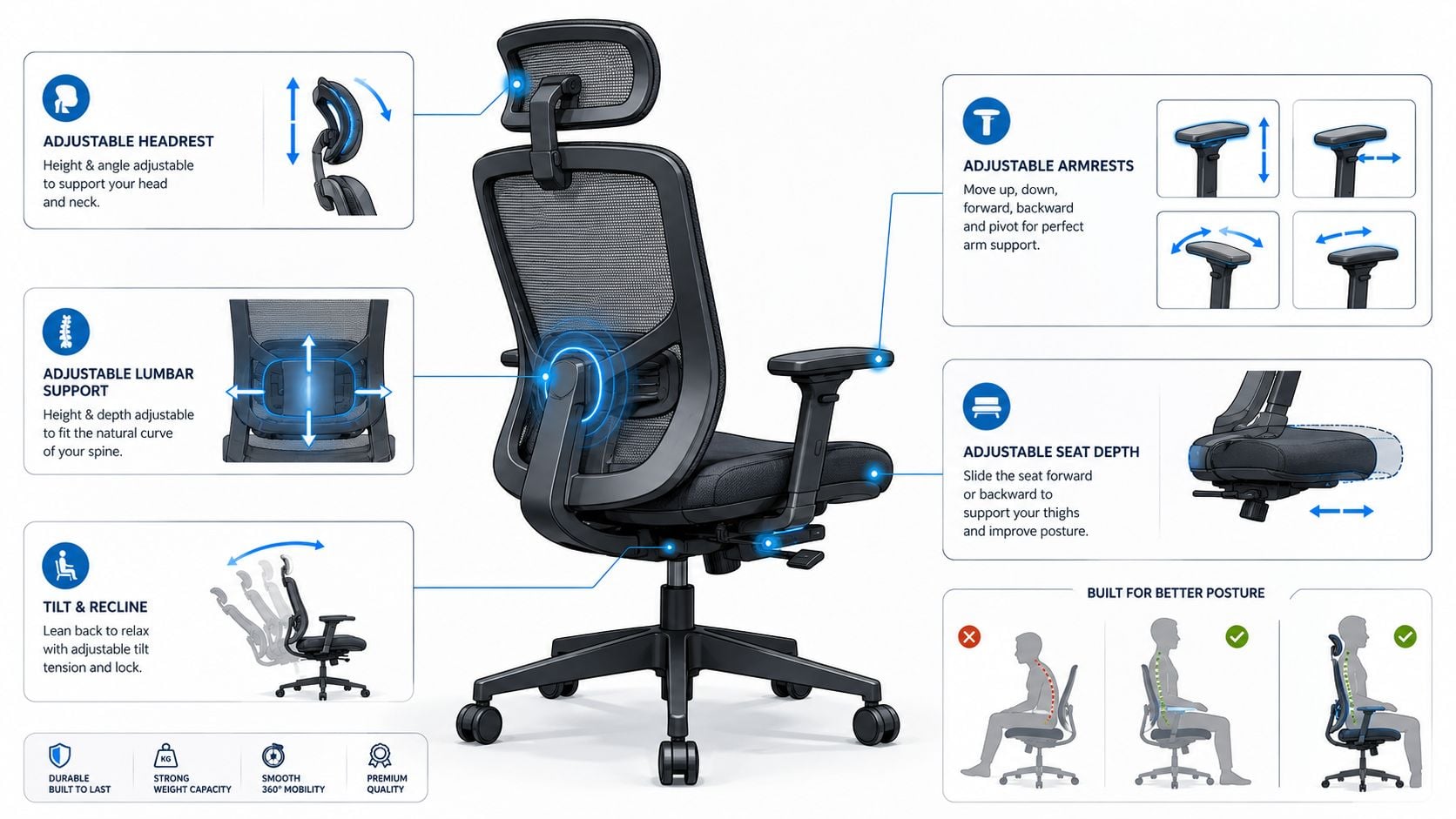
Standards guidance says a high-spec ergonomic office chair should keep the torso-to-thigh angle at no less than 90°, because smaller angles increase loading on the spine, back musculature, and thighs. The same guidance recommends lumbar support positioned about 15–25 cm (5.9–9.8 in) above the compressed seat height so it supports the natural lumbar curve rather than the pelvis or mid-back, as outlined in this chair standards overview.
That sounds technical, but the takeaway is simple. The chair should support the body where support is needed, and it should do that without forcing a rigid posture.
A chair that only looks sleek but can't place the body in that range won't hold up well for desk work. Neither will one that locks the sitter into a single stiff position.
Features worth paying attention to
The strongest ergonomic chairs usually include a group of features that work together, not one standout feature doing all the work.
- Seat height adjustment helps place the feet firmly on the floor and keeps the knees and hips in a healthier working relationship.
- Adjustable lumbar support matters because lower-back shape and torso length vary from person to person.
- Armrest adjustment is important when a user spends long stretches typing or using a mouse. The goal is relaxed shoulders, not shrugging upward.
- Seat depth adjustment helps match the chair to leg length so the user can sit fully back without pressure behind the knees.
- A supportive recline gives the body a way to change posture instead of holding one fixed angle all day.
For shoppers comparing materials, upholstery also affects comfort and long-term wear. This guide to upholstery materials helps explain why mesh, fabric, and cushioned surfaces each feel different in daily use.
Practical rule: If a feature can't be adjusted to match the user, it's not delivering much ergonomic value.
One common mistake is overvaluing extras and undervaluing basics. A headrest, polished frame, or dramatic styling may look impressive, but if the seat depth is wrong or the armrests won't align with the desk, the chair still won't perform well.
Finding Your Perfect Fit for Any Body Type or Work Style
The biggest mistake in ergonomic chair shopping is assuming a highly rated chair will fit everybody. It won't. A chair can be well made, attractive, and comfortable for one person while still being a poor match for another.
That's why top ergonomic office chairs should be judged less like fashion items and more like fitted equipment. Body proportions vary. Work habits vary. Desk heights vary. A universal winner doesn't exist.
Why fit matters more than ratings
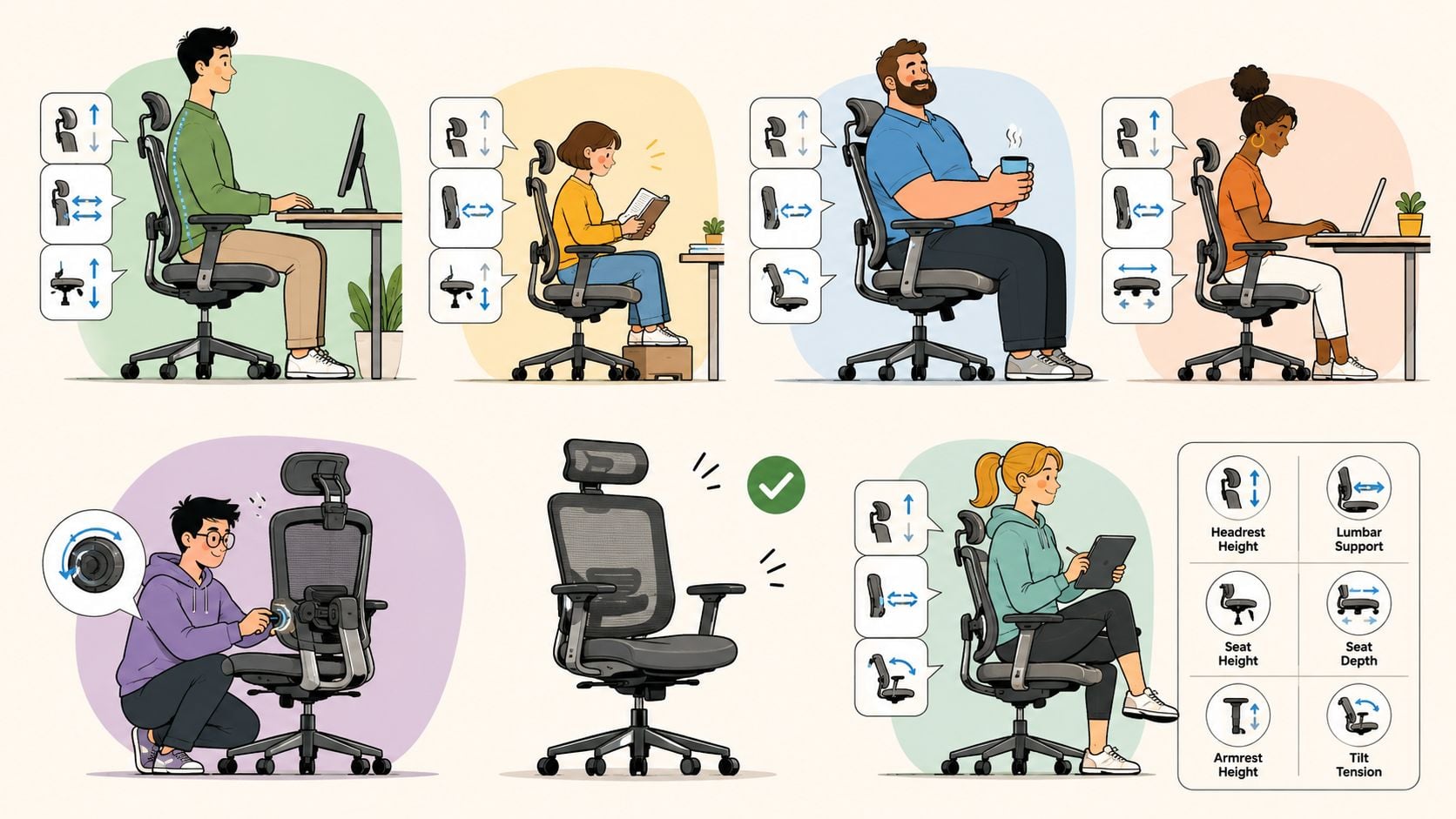
Authoritative guidance stresses that ergonomics is not one-size-fits-all. It recommends leaving about a 0.5-inch to 2-3 finger gap behind the knees and notes that many online roundups don't address whether a chair's adjustment range suits different body sizes, as explained in this ergonomic chair fitting guide.
That missing detail matters more than most ranking lists. A shorter user may need a shallower seat and lower arm range. A taller user may need more back height, more seat depth, or a different lumbar position. Without those adjustments, the body starts compensating.
Three fit problems show up repeatedly:
- Seat too deep. The user can't sit fully back without the front edge pressing into the legs.
- Armrests too high or too wide. The shoulders tense and the elbows drift outward.
- Lumbar support in the wrong spot. Support lands too low or too high and feels intrusive instead of helpful.
A better way to test a chair
A practical in-person fitting is much more revealing than reading feature lists online. Start with the body's contact points and work outward.
- Sit all the way back so the pelvis reaches the backrest.
- Check the gap behind the knees. There should be a small clearance, not a hard edge touching the leg.
- Look at the feet. They should rest comfortably rather than dangle or force a forward slide.
- Set the armrests so the shoulders stay relaxed while the forearms are supported.
- Lean back and return upright to see whether the chair supports movement or fights it.
A chair that feels soft at first but pushes the body forward is usually less useful than a firmer chair that keeps the body aligned.
Work style should influence the decision too. Someone handling long focused sessions at a desk may prioritize a stable backrest, dependable arm support, and easy recline changes. Someone using a sit-stand routine may care more about quick adjustments, easier entry and exit, and a shape that doesn't feel oversized in shorter sessions.
For shoppers who want to compare options in one place, office chairs available through this home office collection can provide a starting point. The important step is still the fitting itself. That's where many buyers from Albany and the surrounding region save themselves from an expensive mismatch.
Budget vs Long-Term Value in an Ergonomic Chair
Price differences in office chairs confuse a lot of people, and fairly so. Two chairs can look similar in a photo while feeling completely different once someone sits in them for a real work session.
The market also spans a broad range. Consumer Reports evaluated 16 office chairs priced from $90 to $2,340, and its guidance emphasizes core fit metrics such as keeping the knees at no less than 90 degrees, maintaining a roughly 2-inch gap behind the knee, and supporting the arms so the shoulders stay relaxed, according to this office chair review guidance.
Why prices vary so much
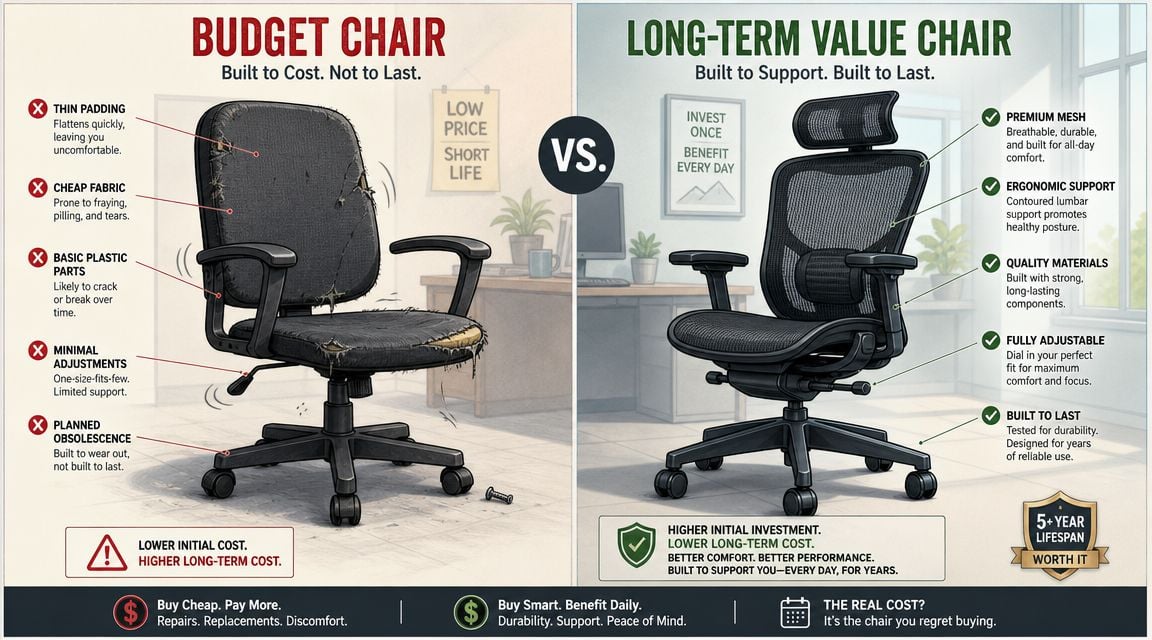
A higher price often reflects things a shopper can feel but can't always spot from a product photo.
| Chair factor | Lower-value version | Higher-value version |
|---|---|---|
| Support feel | Padding flattens quickly or feels vague | Support stays more consistent through the workday |
| Adjustments | Basic height only or limited arm movement | More precise tuning for arms, seat, and back |
| Mechanisms | Recline may feel abrupt or loose | Movement feels smoother and easier to control |
| Build quality | More flex, wobble, or wear over time | Stronger daily-use performance |
That doesn't mean everyone needs the most expensive chair in the room. It means buyers should ask what they're paying for. Some people need long-session performance. Others need solid support for shorter hybrid work blocks and may be better served by a simpler chair that still fits well.
How to judge value instead of sticker shock
A practical buying approach is to judge the chair in three layers:
- First, fit: if the chair doesn't match the body, the rest doesn't matter.
- Second, mechanism quality: moving parts should adjust smoothly and stay where they're set.
- Third, materials: fabric, mesh, foam, and frame quality affect both comfort and lifespan.
For households balancing a larger furnishing project, this article on how long furniture should last is a useful reminder that durability is part of value, not a separate issue.
There's also no reason to think quality must mean paying the highest possible amount upfront. Flexible financing can make a better long-term chair easier to manage within a household budget, and clearance inventory can sometimes open the door to stronger construction at a more approachable price.
The Tip Top Advantage Why Buying Your Chair Near Albany Matters
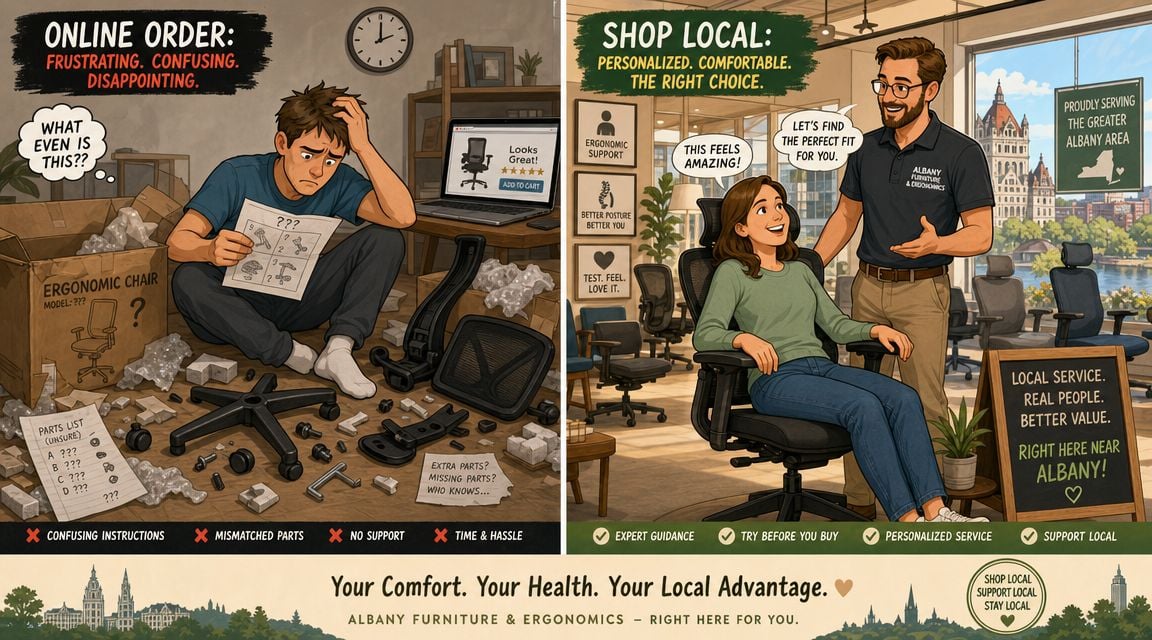
Buying a chair online often turns into guesswork. The seat looks supportive on a screen, the description promises adjustability, and the photos make the scale hard to judge. Then the box arrives, assembly starts, and the buyer finds out the lumbar support hits the wrong place or the seat edge doesn't suit their legs.
That's where a local showroom changes the process. A chair can be tested in real time, adjusted on the spot, and ruled in or out before money gets tied up in shipping, returns, and frustration.
What online shopping can't tell you
No product page can fully answer these questions:
- Does the lumbar support hit the right part of the back
- Do the arms tuck comfortably under the desk
- Does the seat feel supportive after more than a minute or two
- Does the recline encourage movement or feel unstable
Those answers matter more than branding language. They're also easier to discover in person.
The best ergonomic chair for a shopper is usually the one that disappears once the workday starts. It supports the body without demanding constant adjustment or attention.
Why a showroom visit changes the decision
For furniture shoppers in Freehold and the greater Albany Capital Region, an in-person visit gives them a more practical decision process. Since 1978, local customers have relied on showroom guidance because many furniture purchases benefit from touch, scale, and side-by-side comparison. Office seating is one of the clearest examples.
Tip Top Furniture & Mattresses offers home office seating within a broader showroom setting, which helps buyers compare chair comfort while also considering desk placement, room layout, and overall style. That matters for people trying to make a spare bedroom, den, or shared living area function better as a work zone.
The value goes beyond the chair itself:
- Hands-on fitting helps narrow choices quickly.
- Professional design services available since 1984 can help the office area work with the rest of the room.
- Custom ordering can help match a preferred finish, fabric, or style when standard options don't fit the space.
- One-stop shopping makes it easier to coordinate office furniture with flooring, décor, or adjacent-room pieces.
For buyers who don't sit continuously all day, the larger conversation also matters. Ergonomic guidance often emphasizes that chair setup is only part of the solution. Recline, monitor height, arm support, posture, and regular movement breaks all play a role, as discussed in this overview of office chairs and back pain. That kind of practical context is easier to apply when a real person helps match the chair to the way the room is used.
Take the Next Step to a More Comfortable Workday
The right office chair isn't the one with the loudest reputation or the flashiest feature list. It's the one that fits the body, supports the actual work routine, and keeps the user from fighting the chair all day.
That's the main reason local fitting still matters. Ergonomics isn't a trend word. It's a matching process. The seat depth has to suit the legs. The armrests have to work with the desk. The back support has to land where the body needs it. When those details line up, the workday usually feels more natural.
A smarter buying checklist
Before choosing among top ergonomic office chairs, it helps to keep a short decision list in mind:
- Fit the body first and ignore flashy extras until the basics work.
- Test movement because a chair should support posture changes, not just upright sitting.
- Think about use patterns such as focused desk work, hybrid schedules, or shorter task sessions.
- Consider the whole room so the chair, desk, and layout work together.
For anyone planning a more complete workspace refresh, home office furniture ideas for comfortable and functional rooms can help turn a chair purchase into a better overall setup.
Why this decision is worth making carefully
A good chair can support better work habits. A poor one keeps asking the body to compensate. That's why shoppers from Albany, Troy, Schenectady, Greene County, and nearby communities often benefit from slowing the process down and trying seating in person instead of treating it like a quick click-and-buy purchase.
The most useful next step depends on where the buyer is in the process. Some people need layout help first. Others want to explore budget options, financing, or clearance opportunities. Many need to sit in several chairs and find out which one fits.
Tip Top Furniture & Mattresses has helped local families furnish their homes from Freehold, NY since 1978, and that same practical guidance applies to home office seating. Shoppers who want to plan the room first can explore the online room planner through Tip Top Furniture & Mattresses. Those comparing affordability can review financing options, and anyone ready for a hands-on fitting can visit the Freehold showroom to test office chairs in person and narrow the choice based on body fit, workspace needs, and style.