
How Much Does a Retractable Awning Cost

A professionally installed retractable awning usually costs $1,000 to $3,500 for a standard residential setup, and the national average in 2026 is about $2,700. For many Upstate New York homeowners, though, the final price moves up or down based on size, motorization, installation conditions, and whether the home needs electrical updates.
That's the point where many shoppers pause. The deck gets too hot by late afternoon, the patio furniture starts baking in the sun, and a light summer sprinkle sends everyone back inside. A retractable awning sounds simple enough, but the pricing can feel all over the place.
Homeowners around Albany, Schenectady, Troy, Greene County, and nearby towns often face an extra layer of decision-making because older homes, mixed siding types, and seasonal weather put more pressure on getting the right product and the right installation. The question isn't only how much does a retractable awning cost. It's also what kind of awning makes sense for the house, the yard, and the way the space is used.
Your Guide to Retractable Awning Costs in the Capital Region
A familiar local scene goes like this. A family sets up dinner on the back deck, the weather looks perfect, and then the sun starts hitting the seating area so hard that nobody wants to stay at the table. On another evening, the forecast looks clear enough, but a quick sprinkle rolls through and cuts the whole gathering short.
That's why retractable awnings appeal to so many homeowners in the Capital Region. They give shade when it's needed, pull back when the weather is pleasant, and help a deck or patio feel more usable without turning the yard into a permanent covered structure.
For homes in Freehold, Albany, and surrounding communities, the big advantage is flexibility. A fixed cover works one way all the time. A retractable awning works differently at lunch, in the late afternoon, and during shoulder seasons when a little extra sun is welcome.
Practical rule: The best awning choice usually starts with how the outdoor space is used most often, not with the fanciest feature list.
A homeowner who wants simple shade over a smaller seating area may land on a basic manual model. Another homeowner may want a broader patio cover with motorized operation because the awning will be opened and closed often. Both are valid choices, but they sit in different budget ranges.
Many readers also begin this project while planning other outdoor updates. For anyone rethinking the full layout, materials, and comfort of the space, this look at patio design ideas for a more inviting outdoor setup can help connect the awning decision to the bigger picture.
The rest of the pricing story comes down to the details. Size matters. Motorization matters even more. In Upstate New York, installation conditions can matter just as much as the awning itself.
Understanding the Average Cost of Retractable Awnings
The easiest way to make awning pricing feel manageable is to stop looking for one magic number. There isn't one. Most homeowners are really choosing between entry-level, mid-range, and premium versions of the same basic idea.
According to Angi's 2026 retractable awning cost guide, the national average cost for a professionally installed retractable awning is approximately $2,700, with most residential projects falling between $1,000 and $3,500. The same guide notes that motorized systems generally range from $1,000 to $6,000, while premium smart-automated versions can reach $5,000 to over $10,000.
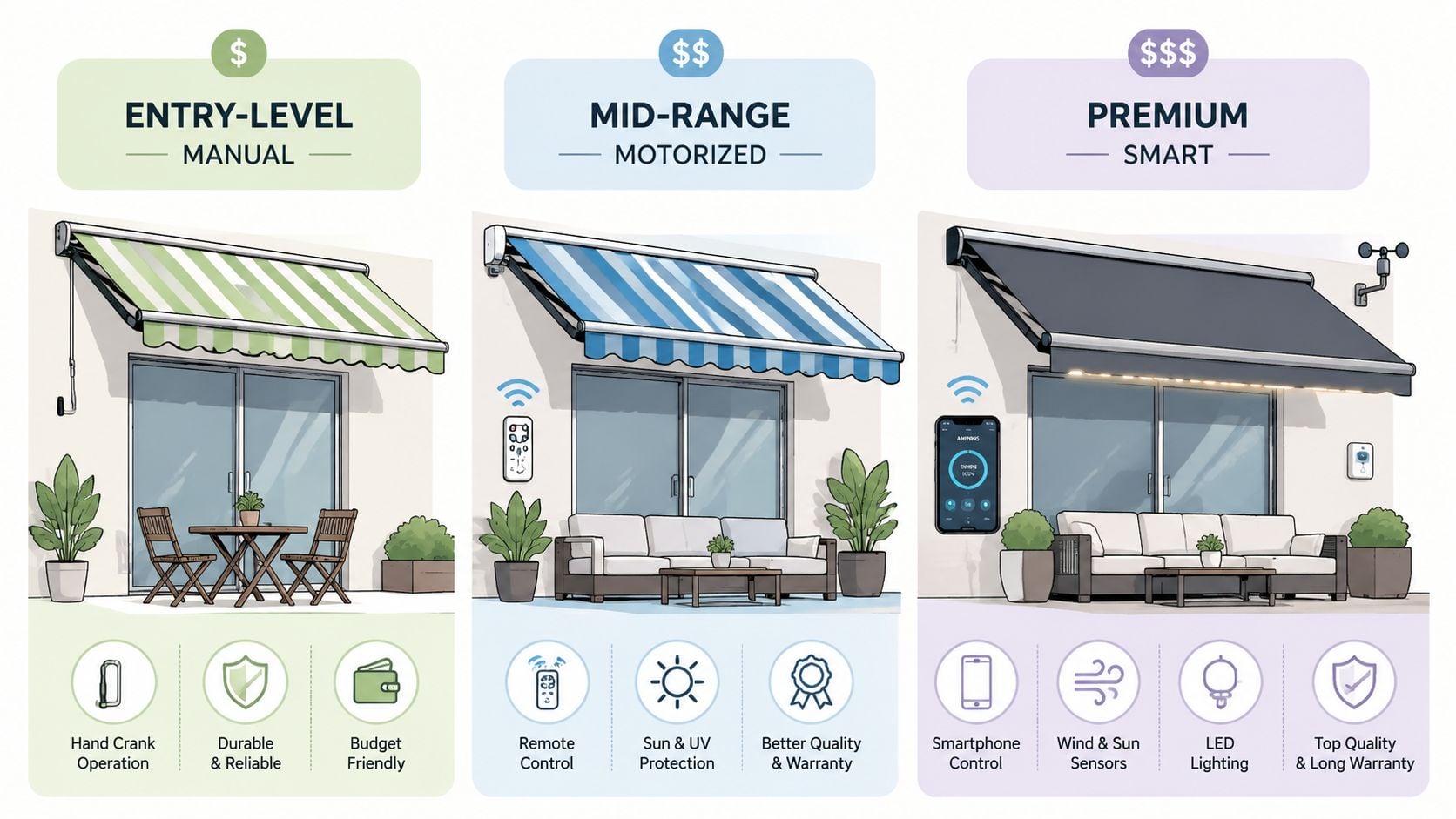
Three budget levels most homeowners compare
| Awning tier | Typical cost range | Best fit |
|---|---|---|
| Entry-level manual | $1,000 to $3,500 | Smaller patios, simpler operation, tighter budgets |
| Mid-range motorized | $1,000 to $6,000 | Frequent use, larger spans, easier daily operation |
| Premium smart-automated | $5,000 to over $10,000 | High-end outdoor spaces, convenience-focused homeowners |
This tiered view clears up a common misunderstanding. A homeowner may see the $2,700 average and assume that covers every motorized option with every feature. It usually doesn't. That average is helpful as a baseline, but it doesn't describe the full spread of choices.
What usually changes from one tier to the next
A few features tend to move an awning from basic to premium:
- Operation style changes from hand crank to powered opening and closing.
- Coverage size often grows as the budget rises.
- Automation features can include weather-related controls and more advanced convenience options.
- Finish and construction details usually become more refined on higher-end models.
A practical way to think about it is this. The lower end buys shade. The middle adds ease. The upper tier adds protection, convenience, and a more refined appearance.
Some homeowners also price the awning alongside the patio itself. When the surface under the awning is still in planning, it helps to estimate your flagstone patio budget so the full outdoor project stays realistic from the start.
A retractable awning often makes the most financial sense when it's planned as part of the whole outdoor living area, not treated as an afterthought.
Key Factors That Determine Your Final Awning Price
Once the baseline pricing is clear, the final bill comes down to a handful of real choices. Some add cost gradually. One changes the budget very quickly, and that's motorization.
According to Rollac's retractable awning cost breakdown, motorized units incur a 200–250% price premium over manual counterparts. The same source says manual retractable awnings average $1,200–$3,000 fully installed, while motorized systems range from $3,000–$7,000.
Retractable Awning Cost Factors at a Glance
| Cost Factor | Low-End Impact | High-End Impact |
|---|---|---|
| Size and projection | Smaller coverage keeps material and installation needs lower | Larger coverage raises both product and installation cost |
| Manual or motorized | Manual stays closer to entry pricing | Motorized moves the project into a much higher bracket |
| Awning style | Standard styles stay more budget-friendly | More protective styles cost more |
| Material and finish choices | Basic selections help contain spending | Upgraded fabrics and details raise the total |
| Installation conditions | Straightforward mounting is simpler | Older homes and more involved setups increase labor |
Size changes everything first
Many homeowners begin by focusing on the motor or fabric color, but size is usually the first cost driver. A broader awning needs more fabric, more frame, and more structural support. It can also require a more careful installation if the mounting area is awkward or if the projection reaches farther over a dining or seating area.
That's why it helps to measure how the space is used. A compact bistro setup near the back door needs very different coverage than a deep deck with dining, lounge seating, and a grill zone.
Manual and motorized are not small price differences
The cost of a motor often leads to sticker shock. People often assume a motor is just a minor add-on. It isn't.
A motorized awning does more than save the effort of turning a crank. It changes the hardware package, the installation process, and in some homes the electrical work required to make the system practical and safe.
Worth remembering: Motorization isn't just a convenience feature. It usually changes the category of the project.
For homeowners who want the easiest path to a larger shade area while keeping spending under control, a manual model can still be a smart choice. For households that expect to open and close the awning regularly, powered operation may be worth the jump.
Style and protection level matter
Not all retractable awnings protect themselves the same way when closed. Some leave more of the fabric and moving parts exposed. Others provide more enclosure and protection from weather.
That style difference can affect both upfront cost and long-term durability, especially in an Upstate New York climate where outdoor products take a beating through changing seasons.
Materials and customization add up gradually
Fabric, frame finish, valance details, and design preferences often raise the total in smaller steps rather than one big leap. Those choices still matter because they shape the awning's appearance against the home's siding, trim, deck, and outdoor furniture.
When a homeowner wants the awning to work visually with the rest of the house, it helps to think about it the same way people think about interior finishing choices. This guide to choosing window treatments that fit the home's style and function offers a useful parallel. Both decisions balance appearance, sunlight control, and everyday practicality.
Some homeowners also compare an awning with other ways to make a deck more comfortable. For broader planning ideas, your guide to usable outdoor spaces is a helpful read because it frames shade as part of overall livability, not just as a product purchase.
The best budget match is usually not the cheapest model
A lower sticker price can make sense for a lightly used side patio or a simple sitting area. It may be the wrong fit for a main backyard gathering space that gets constant use all season. In that case, a homeowner often gets more satisfaction by simplifying one feature, such as staying manual, while buying the right size and sturdier build.
That's a more useful way to budget. Instead of chasing the cheapest awning, match the product to the way the space functions.
Installation Costs and Local Albany Area Considerations
Installation is where national averages stop being enough. Two homes can choose the same awning and still end up with different final totals because the wall surface, mounting conditions, and electrical setup are different.
In the Albany Capital Region, that issue comes up often. One house may have straightforward modern construction. Another may have older siding, older wiring, or an exterior wall that calls for extra care before an installer can safely mount a large retractable system.
Electrical retrofitting is the hidden line item
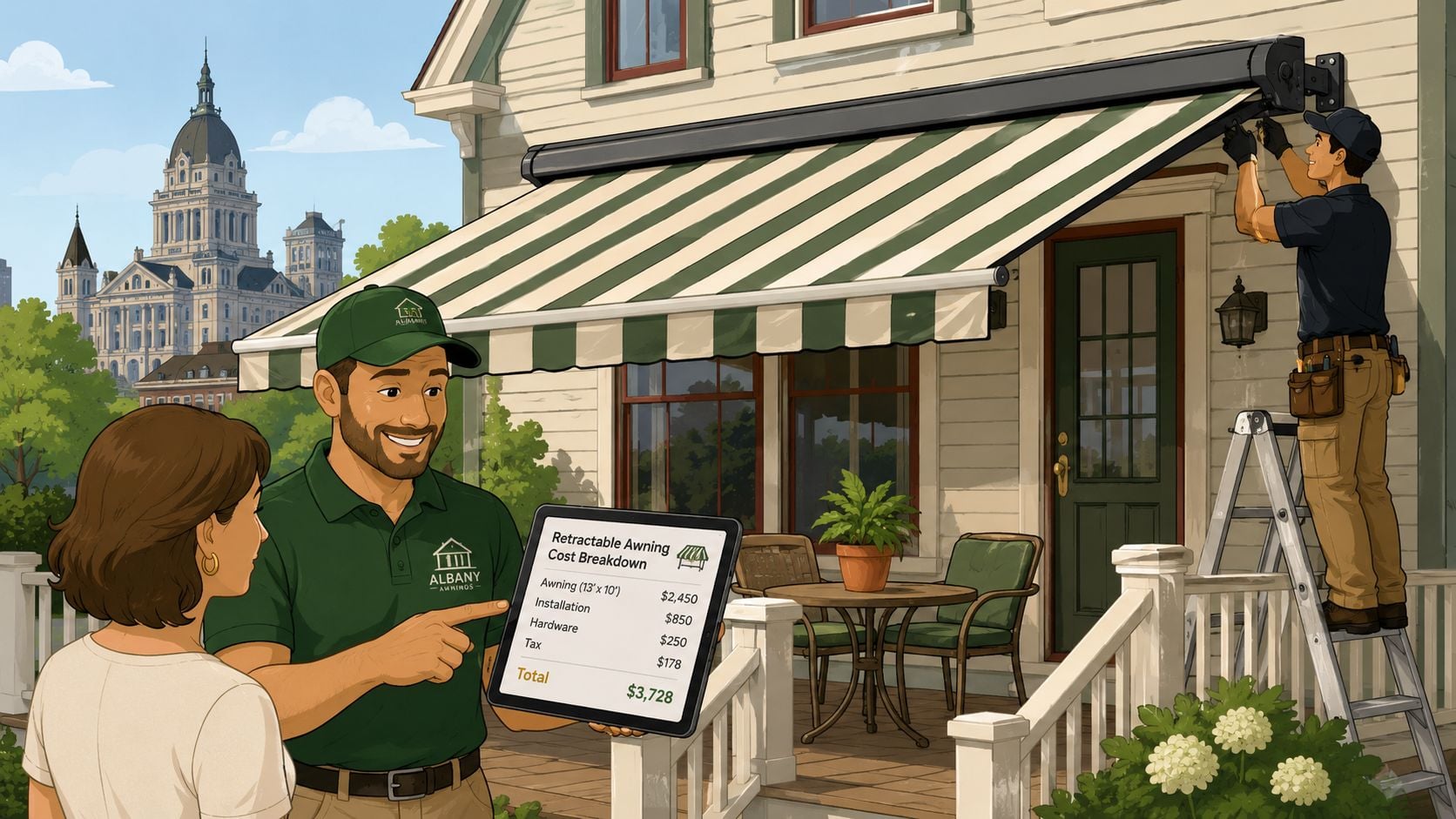
One of the most overlooked costs for Upstate New York homes is the electrical work tied to motorized awnings. According to this analysis of retractable awning expenses in older Upstate New York homes, electrical work can add $500–$1,500 to the final bill when older homes need retrofitting for motorized operation.
That matters because many shoppers assume “motorized” already includes a ready-to-use power source. In reality, an older Albany-area or Greene County home may need new conduit routing or other electrical adjustments before the awning can even be connected properly.
Common installation questions in older homes
Where will the power come from
A motorized unit needs more than a nearby outlet assumption. The installer has to confirm safe, appropriate power access.What is the awning mounting into
Wood framing, masonry, and other exterior surfaces each change the approach.Is the house already wired in a convenient location
Older homes often aren't, which is why the electrical retrofit cost catches people off guard.
Many national pricing guides flatten installation into one number. Older homes in the Capital Region rarely work that neatly.
Wall type and mounting conditions affect labor
A clean, open section of exterior wall is the easiest scenario. A more complicated installation might involve limited access, decorative trim, or construction details that require extra planning before brackets go up.
That's especially important for larger awnings. A broad projection creates more force on the mounting points, so installers need to get the attachment method right. Shortcuts at this stage can create long-term problems.
For homeowners already thinking about delivery, setup, and the value of professional handling, this overview of furniture stores that deliver and assemble reflects a broader point that also applies here. Large home products usually go better when installation is planned around the house itself, not just the item being delivered.
Upstate weather changes the conversation
In this region, an awning has to do more than look good in July. Homeowners also need to think about changing conditions across the year, including wet weather and winter exposure. That doesn't mean every retractable awning is meant to carry seasonal loads when extended. It does mean the homeowner should pay attention to frame quality, mounting quality, and how the product is meant to be used when weather turns rough.
A practical local concern is snow. For a retractable model, homeowners should understand when it should be retracted and protected rather than treated like a permanent roof structure. The farther north and more exposed the property is, the more important that conversation becomes before purchase.
Professional planning usually saves frustration
A good installation conversation should answer four things clearly:
- What is being mounted
- Where it will be mounted
- Whether power access is already adequate
- How local weather affects usage and storage expectations
When those answers are clear, the price starts to make sense. When they're skipped, the “hidden costs” show up late.
Long-Term Value and Maintenance Costs
The cheapest awning on day one isn't always the least expensive awning to own. Long-term value comes from how well the system protects itself, how often it will be used, and how much upkeep the homeowner is likely to stay on top of.
One of the clearest examples is the full cassette style. According to Marygrove's retractable awning cost guide, full cassette retractable awning models cost $5,000 to $8,500. That higher price is tied to the way the cassette protects the fabric and arms when the awning is closed, helping reduce wear compared with more basic models.
Why higher-end protection can make sense
For a home that uses the patio constantly, better protection of the moving parts and fabric may justify a higher initial investment. This is especially true when the awning sits in a spot exposed to weather shifts, tree debris, or long periods without use between seasons.
A more protected design can also appeal to homeowners who care about a tidier look against the house. When closed, the system often presents a cleaner profile.
Better protection usually matters most on the homes that rely on the awning most often.
Habits that help an awning last longer
A few simple maintenance habits make a big difference:
Retract it when conditions turn rough
A retractable awning should be used as intended, not left out unnecessarily.Keep fabric clean and dry when possible
Dirt and trapped moisture make any outdoor fabric harder to maintain over time.Watch the hardware seasonally
Homeowners should look for signs of strain, looseness, or uneven movement.Store with care through colder months
In Upstate New York, off-season attention matters.
For homeowners who already follow careful home care routines, the same mindset used for caring for quality wood furniture applies here too. Good materials reward consistent upkeep. Neglect shortens the useful life of almost anything.
Value isn't only about mechanics
A well-chosen awning can make an outdoor seating area feel finished. It can help a deck or patio become a place the household uses more often, more comfortably, and for a longer part of the season. That kind of daily usefulness often matters more than shaving the project down to the lowest possible upfront number.
Making Your Awning Project Affordable for Your Home
Affordability usually comes from matching the project scope to the space, not from stripping every feature away. A homeowner may decide that a manual awning in the right size serves the family better than a smaller motorized unit. Another may choose to keep the size modest and spend more on convenience.
The numbers on size help illustrate that tradeoff. According to LawnStarter's retractable awning price guide, a 10-foot retractable awning typically costs $500 to $3,500, while a 20-foot model ranges from $1,200 to $9,000. The same source notes that professional installation for a non-motorized awning averages $850, while a motorized version is closer to $2,350.
Practical ways homeowners keep the project manageable
Choose coverage carefully
Shade the area that gets used most, not every inch of the deck by default.Decide if manual operation is acceptable
That single choice can keep a project in a very different price category.Plan the awning with the rest of the outdoor budget
If decking, patio work, or furniture are also in the mix, the full spending picture matters.Use financing when it supports a better long-term choice
Spreading payments can make it easier to buy the awning that fits the space.
For households also comparing broader outdoor spending, this guide to affordable deck materials can help put the awning decision in context with the rest of the project.
A smart budget isn't always the lowest budget
The strongest value often comes from balancing three things:
| Priority | Budget-minded choice |
|---|---|
| Coverage | Buy the right size for the main seating area |
| Operation | Stay manual if daily convenience isn't essential |
| Payment flexibility | Consider furniture financing options for home projects when a better-fit product would otherwise be postponed |
For many Albany and Freehold area homeowners, that's the point where the project starts feeling manageable. The budget becomes less mysterious once the choices are laid out clearly.
A retractable awning can turn a hot, underused patio into one of the most comfortable spaces at home. For homeowners who want help comparing options, planning a coordinated indoor and outdoor look, or making the project easier to budget, Tip Top Furniture & Mattresses offers the kind of local guidance that comes from serving Freehold, NY and the Greater Albany Capital Region since 1978. Their family-owned showroom features one-stop shopping for furniture, décor, flooring, custom orders, and USA-made favorites from more than 50 trusted manufacturers, along with flexible financing, a strong clearance selection, and professional design services available since 1984. A visit to the showroom is a practical next step for anyone ready to explore styles, ask questions, and find a payment approach that fits the home.