
8 Bedroom Furniture Paint Ideas for 2026


The eight bedroom furniture paint ideas to consider are chalk-style matte, two-tone color blocking, distressed milk paint, limewash mineral texture, deep navy or charcoal, greige tonal neutrals, antique glazing, and hand-painted stencil or ombre accents. Solid wood is generally the best starting point for all eight, while veneer, laminate, and particleboard require a more cautious decision.
An inherited oak dresser in an Albany bedroom might have sound drawers and sturdy joints but a finish that clashes with everything around it. Repainting can make sense when the structure is good and the work is manageable. Once repairs, specialty primers, and professional labor enter the picture, replacement deserves a fair comparison.
Identify the material before choosing the color. Thin veneer can be damaged by aggressive sanding, while laminate and melamine need a compatible bonding system. Swollen particleboard isn't a sensible foundation for an elaborate finish, regardless of how attractive the sample looks. Furniture-painting preparation guidance supports matching the coating system to the substrate.
For Capital Region homeowners, the practical choice is between a manageable DIY refresh and furniture built and finished by craftsmen. A complimentary design consultation at the Freehold, NY showroom can compare finish samples against bedding, flooring, and wall colors, then weigh preparation, expense, durability, and style.
1. Chalk-Style Matte Painted Finish
Chalk-style matte suits furniture that should feel quiet rather than polished. Consider a warm-white oak dresser with linen bedding in a Saratoga-area bedroom, or sage nightstands beside a cream upholstered headboard in Albany. These are design scenarios, not promises that a particular paint will transform every existing finish.
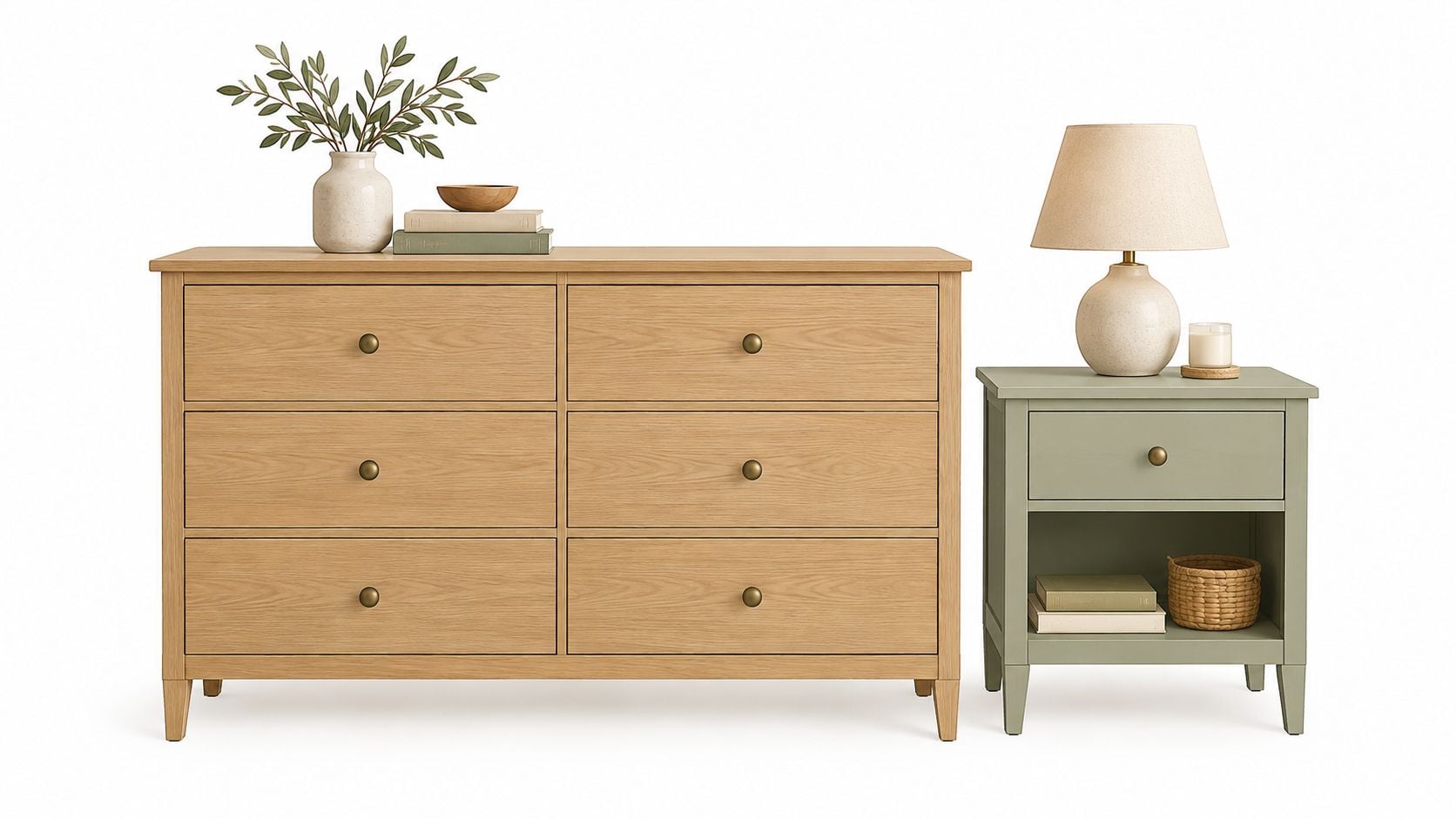
The appeal is the soft appearance. The trade-off is choosing a finish for a surface that receives repeated handling: a decorative headboard panel has different demands from a nightstand supporting drinking glasses.
Keep the Look Soft Without Skipping Preparation
A no-prep promise shouldn't replace inspection. Clean the piece, assess its existing coating, and use the preparation and primer specified for the selected paint. Unknown older coatings need a safety assessment before any sanding.
- For solid wood: Preserve crisp edges and sound detailing rather than sanding aggressively.
- For laminate: Confirm that the primer and decorative coating are compatible.
- For protection: Use wax or a clear coating only when the paint manufacturer approves the combination.
The broader distinction between low-sheen and glossy surfaces matters more than the decorative label. Guidance on the durability of paint finishes is useful background, but the selected product's instructions should govern the actual system.
Budget position: This is a reasonable DIY candidate when the dresser is sound and its coating is known. Extra repairs and protective layers add work. Tip Top's guide to picking a paint color can help narrow the palette before materials are purchased.
2. Two-Tone Color-Blocked Dresser and Nightstands
A Troy condo with plain walls could use an ivory-fronted dresser inside a charcoal frame. In a Schenectady bedroom, navy nightstands with pale tops and brass-colored pulls offer a more restrained version of the same idea.
Color blocking works best when it follows the furniture's construction. Drawer fronts, inset panels, and bases provide natural stopping points. Arbitrary painted stripes can compete with moldings instead of improving them.
Let the Joinery Define the Color Break
Remove hardware and label removable components before starting. Prepare each substrate separately, especially when a piece combines solid-wood drawer fronts with an engineered top. Paint doesn't make those materials behave alike.
- For clean edges: Follow the tape manufacturer's application and removal directions.
- For cohesion: Repeat a color already present in the bedding, rug, or artwork.
- For durability: Specify a furniture-suitable coating for drawer edges and other contact points.
Tip Top's guidance on color-coordinated room settings can help connect the dresser to the surrounding room. A discussion of two-toned paint trends for CT homes offers additional color-pairing inspiration, rather than evidence of local demand.
Practical rule: A contrast should clarify the furniture's shape, not make every component compete for attention.
Budget position: Color blocking adds masking, handling, and paint-selection work. A Clearance Corner dresser may offer a useful starting point, but its condition should justify refinishing. A discounted piece with a suitable factory finish may be the better purchase left untouched.
3. Classic Milk Paint with a Distressed Farmhouse Finish
For a Greene County farmhouse, consider a cream-painted solid-wood dresser with restrained wear at the edges and an exposed wood top. A muted barn-red chest could provide character at the foot of a bed in an Albany-area home without requiring a matching painted suite.
Distressing should be a deliberate design choice, not a way to disguise poor adhesion. The finished surface still needs to perform under ordinary bedroom use.
Resolve Old-Paint Safety First
Inherited, antique, and secondhand furniture deserves special attention. Older coatings can contain lead, and disturbing them can create hazardous contamination. The appropriate approach is to establish the piece's history, avoid dry sanding unknown coatings, and obtain testing or professional advice when lead is suspected, consistent with the EPA's indoor-air health guidance.
Intentional wear belongs in the decorative finish, not in an unassessed layer of old paint.
For a known, suitable surface, follow the milk-paint manufacturer's mixing, bonding, sealing, and storage directions. Product names alone don't establish whether a particular formula will bond to an existing finish or tolerate repeated cleaning.
- Best candidate: Structurally sound solid wood with an understood coating history.
- Less convincing candidate: Damaged laminate made to resemble naturally worn timber.
- Cost consideration: Testing, stripping, repairs, and professional work can outweigh the savings of repainting.
Tip Top's rustic design guidance can help distinguish farmhouse character from an overly distressed result. For a coordinated room, an Amish-made solid-wood piece with an available craftsman-applied finish may be preferable to trying to reproduce the same effect across mismatched furniture.
4. Limewash and Textured Mineral Finish
A cloudy mineral-style finish is an accent treatment, not a universal furniture coating. A Clifton Park bedroom with linen curtains and a plaster-look wall could suit a softly textured dresser. A whitewashed pine headboard offers a less visually dominant alternative.
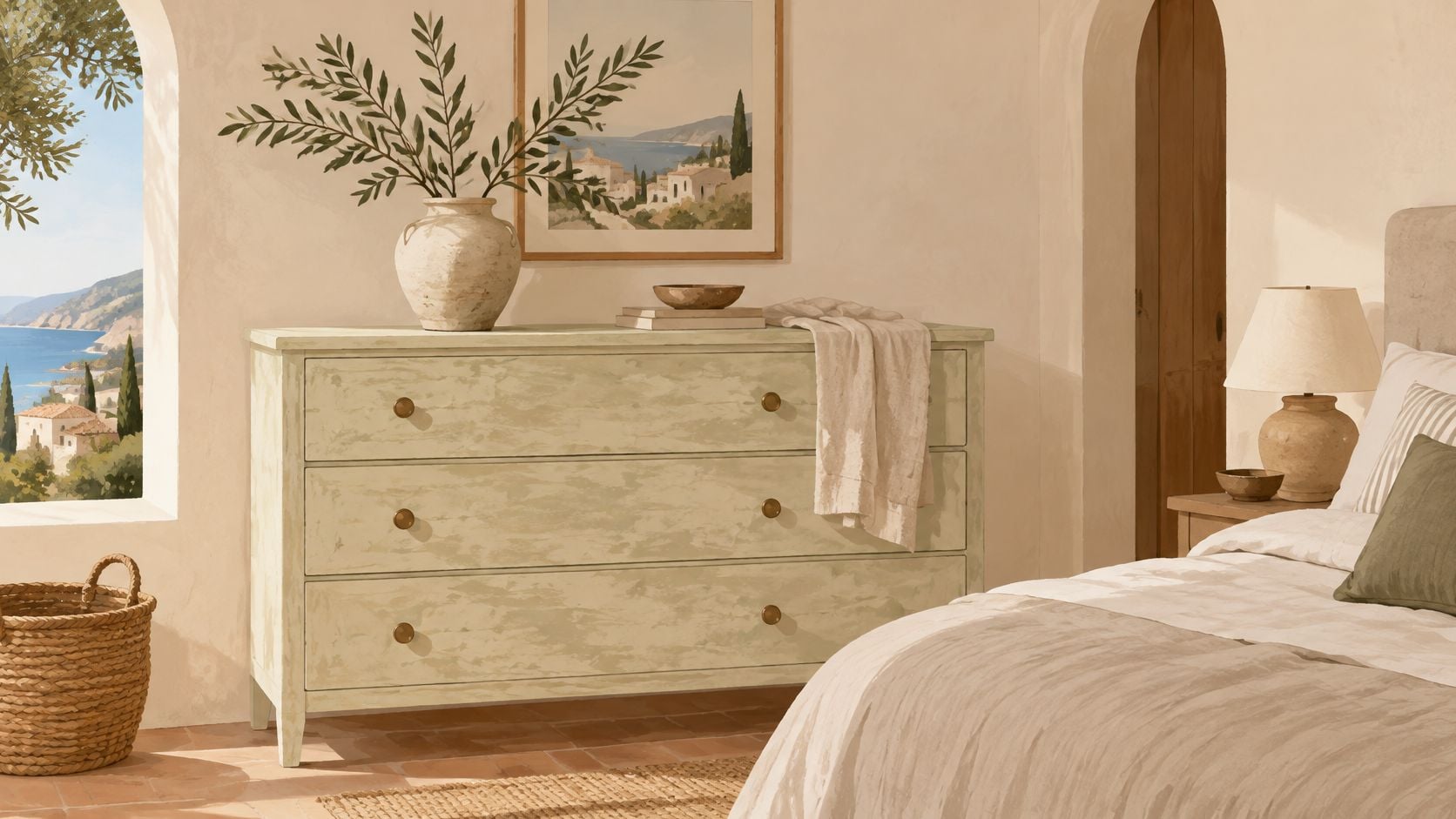
The essential distinction is between the desired appearance and the product used to create it. A coating intended for another type of surface shouldn't be assumed suitable for a factory-finished dresser. Choose a manufacturer-approved furniture system that can produce the mineral effect.
Keep Texture Away from the Hardest-Working Surfaces
A drawer panel or headboard can carry decorative variation while the dresser top receives a smoother, more practical finish. Test the complete system, including any protective layer, because protection may change the appearance.
- Solid wood: Use a sample to judge how the effect interacts with grain and existing details.
- Veneer: Avoid preparation that risks sanding through the face.
- Laminate: Verify adhesion before investing in decorative brushwork.
Budget position: Sample-making and application labor are the main considerations. This isn't the best shortcut for a heavily used nightstand if the chosen system lacks clear furniture-use guidance.
For winter projects around Freehold, an unheated garage may also be unsuitable. USDA wood-painting specifications require clean, dry wood and prohibit application below 45°F or when condensation is forming; the selected product may impose stricter limits. Tip Top's free online Room Planner can help assess the dresser's placement and scale before a decorative finish becomes the focus.
5. Deep Navy or Charcoal Statement Furniture
A navy dresser with brass-colored pulls can anchor a Latham bedroom with pale bedding. A charcoal armoire could serve the same purpose in an Albany room furnished with warm wood and cream textiles.
Dark furniture creates emphasis, but it doesn't automatically improve a dark room. A large armoire may become more visually prominent rather than disappear. The choice should be intentional.
Choose the Sheen for Daily Contact
Nightstand tops, drawer fronts, and bed-frame edges need a coating suited to handling and cleaning. Matte can suit low-contact decorative areas; satin or semigloss is a practical starting point for working surfaces. High gloss makes surface defects more apparent, a trade-off reflected in Behr's paint-sheen comparison.
Don't choose navy on the assumption that it will hide every scratch. A pale substrate exposed by damage can contrast with a dark coating. Good preparation remains more important than the depth of the color.
- For an Albany primary bedroom: Balance charcoal case goods with lighter bedding and warm-toned flooring.
- For a smaller Schenectady room: Start with a dark nightstand rather than an entire matching suite.
- For a factory-finished piece: Confirm primer compatibility before applying a dramatic color change.
Budget position: An already-dark Clearance Corner piece may avoid refinishing labor entirely. For an heirloom-quality Amish armoire, ask which custom finishes are available before commissioning a DIY repaint.
The best result isn't necessarily the darkest sample. It's the color and sheen that work with the room's actual light, the furniture's scale, and the amount of daily use.
6. Soft Greige and Warm Neutral Tonal Palette
Greige works when the room needs coordination rather than a focal point. A greige dresser with a warm oak headboard could suit a Saratoga Springs bedroom. A taupe chest with cream bedding could give a Greene County guest room a similarly restrained appearance.
Warm neutrals aren't a universal prescription, but they have support as bedroom colors. In a survey of 67 home stagers and designers, 76% recommended warm neutrals for a primary bedroom, as reported in Apartment Therapy's coverage of the Fixr color survey. That finding concerns bedroom palettes, not a ranking of furniture paints.
Compare Undertones in the Actual Room
Beige, gray, cream, and oak can look coordinated on separate samples but awkward together. Place the proposed furniture finish beside the floor, bedding, and wall color before committing.
Light-reflectance value provides another useful reference. Sherwin-Williams describes an LRV scale from 0 to 100, with higher values reflecting more available light, in its explanation of light reflectance. A pale finish is therefore a sensible candidate when a bulky dresser should feel less visually heavy.
- For consistency: Compare samples under daylight and the bedroom's lamps.
- For dimension: Retain some natural wood instead of painting every surface alike.
- For planning: Use the Room Planner for layout, then physical samples for color.
Budget position: A simple tonal repaint can remain manageable when repairs are minimal. A full coordinated suite deserves a comparison with custom ordering and flexible financing. Tip Top's guide to a coordinated color palette offers a useful starting point for that consultation.
7. Glazed Antique Finish on Solid Wood
Carved details give an antique-style glaze somewhere meaningful to sit. Consider a cream headboard with subtle shading around its profiles in a traditional Troy bedroom, or a wood-toned Amish dresser with an approved glazed finish in an Albany home.
Restraint separates depth from an artificially dirty appearance. A flat-fronted dresser may gain little from dark material spread across every surface. Furniture with defined profiles gives the treatment a clearer purpose.
Build the Finish as a Compatible System
Practice on a sample that includes the intended base coat, glaze, and protective finish. A sample of glaze alone won't show the final appearance or establish compatibility.
- For existing solid wood: Preserve carving and profiles during preparation.
- For veneer: Keep sanding conservative and assess damaged areas before proceeding.
- For custom ordering: Ask about available wood species, sizes, and finish combinations rather than assuming every effect is offered.
Tip Top's wood-furniture refinishing guide can help homeowners frame the repaint-or-replace decision. A structurally compromised piece doesn't become heirloom quality because its new finish looks antique.
Budget position: Glazing adds sample work and application labor. For a large armoire or coordinated bedroom set, a craftsman-applied custom finish may be the more predictable investment.
Finish-system priority: The base coat, decorative layer, and protective coating must work together. Appearance alone isn't enough.
Curing also needs room in the schedule. Benjamin Moore lists 14 days to full cure for Regal Select Interior in its paint drying and curing FAQ, but that example isn't a furniture-product recommendation or a universal waiting period. The actual coating's technical instructions determine when the finished piece can tolerate normal use.
8. Hand-Painted Stencil and Ombre Accents
A Schenectady guest room could suit drawer fronts that graduate from pale blue to a deeper blue-gray. In a Clifton Park child's bedroom, a restrained geometric stencil could personalize a dresser without turning every piece into a decorative project.
Keep the artistry on the visible panels and the coating system appropriate to the furniture. Solid wood is a forgiving starting point, but sound laminate can still be a candidate when its bonding requirements are met. Decorative paint won't repair lifting edges or a swollen top.
Make a Sample Before Painting the Pattern
A sample board helps establish pattern size, color contrast, and the amount of paint needed on the brush. An ombre sample should show neighboring colors together, not merely isolated paint chips.
- For stencils: Use light applications and avoid overloading the brush.
- For gradients: Test the sequence on removable samples before coating drawer fronts.
- For growing families: Keep the pattern limited enough that bedding and accessories can change later.
A child's bedroom also makes air-quality planning especially important. The EPA's indoor-air care guidance identifies paints, coatings, and furnishings as potential VOC sources. A low-VOC label doesn't remove the need for ventilation, label precautions, and appropriate curing.
Budget position: Small decorative panels can limit material purchases, but detailed stencil work adds time. An elaborate pattern across a full dresser is better treated as a deliberate craft project than a quick refresh.
Tip Top's design consultants can help coordinate a pattern with flooring and décor, or compare suitable youth furniture when the existing piece isn't worth refinishing. The safest, most durable choice may be a simpler finish on better furniture.
8 Bedroom Furniture Paint Ideas Compared
| Finish or Style | Implementation Complexity | Resource Requirements | Expected Outcome | Ideal Use Cases | Key Advantages |
|---|---|---|---|---|---|
| Chalk-Style Matte Painted Finish | Low; light sanding and painting | Water-based paint; optional wax or clear coat | Soft, velvety, low-sheen surface | Cottage or vintage-modern rooms; furniture refreshes | Forgiving for beginners; easy to touch up |
| Two-Tone Color-Blocked Dresser and Nightstands | Moderate; careful taping and multiple coats | Two or more paint colors; quality painter's tape | Crisp contrast between furniture sections | Plain rooms or simple furniture needing visual interest | Custom look; individual sections can be repainted |
| Classic Milk Paint with a Distressed Farmhouse Finish | Moderate to high; mixing, layering, and distressing | Powdered milk paint, water, and protective sealer | Matte, naturally worn, handcrafted appearance | Farmhouse or heirloom-style solid wood furniture | Low-VOC formula; distinctive aged character |
| Limewash and Textured Mineral Finish | Moderate; layered application and sample testing | Mineral finish; optional sealer | Mottled, textured surface with subtle color variation | Modern rustic or Mediterranean-inspired rooms | Distinctive appearance; hides scuffs well on accent pieces |
| Deep Navy or Charcoal Statement Furniture | Moderate; thorough prep and multiple coats | Dark paint; satin or semi-gloss finish recommended | Dramatic focal point with strong contrast | Rooms with light walls or a moody, hotel-inspired look | Bold effect; conceals many everyday marks |
| Soft Greige and Warm Neutral Tonal Palette | Low to moderate; coordinate shades and finishes | Muted paints, fabric samples, and varied textures | Calm, cohesive, low-contrast atmosphere | Serene bedrooms and flexible décor schemes | Easy to coordinate; timeless and adaptable |
| Glazed Antique Finish on Solid Wood | High; careful glaze application and wiping | Base coat, tinted glaze, and protective topcoat | Aged depth that emphasizes carved details | Traditional, Victorian, or transitional rooms | Highlights craftsmanship; adds character without a full color change |
| Hand-Painted Stencil and Ombre Accents | Moderate to high; detailed work or careful blending | Stencils, brushes, paint, and time for layered application | Personalized patterns or gradual color transitions | Eclectic, bohemian, or youth bedrooms | Highly customizable; easy to repaint when tastes change |
Pick Your Finish, Then Make It Last
The decision shortcut is straightforward: matte and greige for calm, navy and glazing for drama, milk paint and stencils for character. Color blocking provides definition, while mineral-style texture suits a carefully chosen accent. None of these finishes compensates for weak construction or the wrong preparation system.
A sound solid-wood piece with a known coating is a stronger repaint candidate than damaged particleboard or peeling laminate. Preparation, compatible layers, and adequate curing determine how the result stands up to bedroom use. Dry-to-touch isn't permission to load drawers, place objects on the top, or push the piece into service.
Plan the Workspace Before the Makeover
Painting outside the sleeping area is the more practical approach. The EPA recommends maximum ventilation during finishing and for at least 72 hours afterward, as explained in its indoor-air-quality remodeling guidance. That ventilation period doesn't replace the product's full-cure requirements.
For homeowners considering spraying, a spray painting kitchen doors tutorial can provide background on the process. Furniture still requires its own substrate assessment, product instructions, and suitable isolated workspace.
- For a repaint consultation: Bring photographs of the dresser, close-ups of damage, and any known finish history.
- For color coordination: Include a bedding swatch, flooring sample, and photographs of the room's lighting.
- For replacement: Compare an available Clearance piece with a custom solid-wood order before purchasing refinishing supplies.
Tip Top Furniture & Mattresses is family-owned and has served Freehold and the Greater Albany Capital Region since 1978, with Professional Design Services available since 1984. Its selection from more than 50 trusted manufacturers supports comparisons between ready-made furniture and custom options.
That local, one-stop approach also covers flooring, décor, and USA-made mattresses, with sleep-matching technology available to help guide comfort and support choices. A full-bedroom project can therefore address more than the dresser's color.
Homeowners from Albany, Schenectady, Troy, and Greene County can bring their materials to the Freehold showroom for a practical recommendation: refinish the existing piece, choose quality Clearance furniture at a deep discount with immediate availability, or order Amish-made solid-wood furniture handcrafted in the USA. Flexible financing and delivery can help organize a larger project without forcing every decision into a DIY weekend.
For coordinated bedroom furniture paint ideas, custom finish options, and complimentary design guidance, homeowners can visit Tip Top Furniture & Mattresses in Freehold, NY. Bringing dresser photographs, a bedding swatch, and a flooring sample gives the team a concrete starting point for comparing a repaint, a Clearance purchase, or a craftsman-finished custom order.