Dining Room Sets Light Wood

A lot of Capital Region homeowners start in the same place. The dining room feels too dark, too heavy, or too formal for the way the home functions today. A table that once looked substantial can begin to make the room feel smaller, especially in older Albany-area homes with tighter footprints or in open-plan spaces where the dining area has to blend with the kitchen and living room.
That's where light wood dining room sets tend to make sense. They brighten a room without feeling stark, they fit comfortably with both traditional and modern interiors, and they can look relaxed enough for everyday family meals while still feeling finished when guests come over. The challenge is that online shopping often stops at style photos and broad finish names. It rarely answers the practical questions people ask before buying.
In Freehold and across the Greater Albany Capital Region, shoppers usually want more than inspiration. They want to know what holds up, what cleans easily, what fits in a smaller room, and what still looks good after years of use. That's an important difference. Furniture isn't just décor in a dining room. It's one of the hardest-working pieces in the house.
Table of Contents
- Brighten Your Home with Light Wood Dining Furniture
- Understanding Light Wood Species and Finishes
- The Pros and Cons of Light Wood Dining Sets
- Finding the Perfect Fit for Your Albany Home
- Styling and Coordinating Your Dining Space
- Protecting Your Investment with Proper Care
- Your Dream Dining Set is in Freehold NY
Brighten Your Home with Light Wood Dining Furniture
A light wood dining set changes more than color. It changes how a room feels when someone walks into it at breakfast, how open it looks in the afternoon, and how comfortable it feels during an ordinary weeknight meal. In homes around Albany, Schenectady, Troy, and Greene County, that matters because dining rooms often serve more than one purpose. They host homework, holidays, laptop time, and quick family dinners all in the same space.
Light wood works well because it softens visual weight. Dark finishes can be beautiful, but they absorb light and make the center of the room feel heavier. A pale oak, maple, birch, or similar finish usually reflects more light back into the room, which helps smaller dining areas feel less crowded.
What shoppers usually want from a light wood set
It's not always about finding a trendy finish. Often, the goal is to solve a real problem:
- A room feels closed in and needs a brighter focal point.
- An older set looks too formal for everyday life.
- The dining area shares space with the kitchen and needs a cleaner, lighter look.
- The household wants durability without the visual heaviness of darker wood.
Practical rule: In a dining room, the right wood tone should support daily living first and style second.
That's why dining room sets light wood remains a practical search, not just a decorative one. A good set should look inviting on day one, but it also needs to make sense after years of wiping spills, moving chairs, and living with changing daylight through every season in Upstate New York.
Why local shoppers tend to think long term
In this region, furniture buying is often deliberate. Many homeowners are furnishing a forever home, updating a family dining room, or replacing a set that has already served for years. They want something that feels fresh without becoming fussy. They also want a clear explanation of trade-offs, because a pretty product photo doesn't show how a finish behaves in a real house.
That's why this category rewards careful shopping. The right light wood dining furniture can feel open, timeless, and easy to live with. The wrong one can look washed out, show every mark, or fit the room poorly.
Understanding Light Wood Species and Finishes
A shopper hears “light wood” and often assumes it describes a single look. It doesn't. It can mean a naturally pale species, a lighter stain, or a finish that keeps more of the original grain visible. That distinction matters because the wood and the finish together determine how the table will wear, how much grain shows, and how easily marks are noticed.
What counts as light wood
Light wood dining room sets are usually built from oak, maple, birch, or brown maple, and those species are valued for durability along with a brighter visual finish. Well-made solid-wood tables are commonly expected to last 10–15 years, and higher-end solid wood pieces can last 20 years or more before needing major refinishing, according to Millwest's guide to the best wood dining room tables.
That kind of lifespan is one reason shoppers in the Capital Region should slow down and look past color names alone. A dining set is often a long-term household piece, not a quick seasonal update.
Common Light Wood Species at a Glance
| Wood Species | Hardness & Durability | Grain Pattern | Best For |
|---|---|---|---|
| Oak | Strong everyday durability with good scratch resistance | Visible, pronounced grain | Busy family dining rooms and classic-to-modern styles |
| Maple | Durable and typically smoother-looking | Finer, more uniform grain | Cleaner, quieter looks and transitional spaces |
| Birch | Practical for lighter finishes | Subtle to moderate grain | Homes that want a softer wood appearance |
| Brown maple | Durable and often chosen for furniture | More subdued than oak | Shoppers who want a custom, understated look |
For buyers comparing options in more detail, this guide to the best wood for tables is useful because it helps connect species choice to real household use rather than appearance alone.
Why finish matters as much as species
Two tables made from similar wood can look very different once finished. A natural clear finish usually keeps the wood brighter and more authentic-looking. A whitewashed finish can feel airier, but it may mute some grain character. A more opaque look can disguise variation, yet it can also reduce the visual warmth people often want from real wood.
That's also why surface protection deserves attention. Homeowners comparing furniture finishes often benefit from reading broader wood-finish guidance, such as Buff & Coat's finish recommendations, because the same practical questions come up with tables. How much sheen is desired, how much texture should remain visible, and how forgiving will the finish be in day-to-day use?
Lighter woods tend to reveal grain, joints, and surface details more clearly, which is part of their appeal but also part of what makes quality easier to spot.
Shoppers should zoom in on edges, corners, and any extension areas. On a light wood table, those transitions are often easier to see than they are on a dark stained piece. That's helpful when the goal is to buy confidently and avoid surprises after delivery.
The Pros and Cons of Light Wood Dining Sets
Light wood dining sets keep showing up for a reason. They're easy to live with visually, they suit many homes, and they rarely feel dated when the rest of the décor changes. But they're not automatically the right answer for every household.
Why homeowners choose them
The biggest advantage is simple. They make a room feel more open. In spaces with limited natural light, or in dining rooms that connect to darker kitchens or hallways, that can make a noticeable difference.
They also work with a wide range of styles:
- Scandinavian-inspired rooms that need warmth without heaviness
- Modern farmhouse interiors that rely on natural materials
- Traditional homes that need a lighter refresh
- Mixed-style spaces where upholstered seating, metal lighting, or painted cabinetry share the room
Furniture materials guidance also highlights acacia and mango for combining visual warmth with durability in dining-table use, and lighter species with clear finishes can help a room stay brighter while still offering adequate wear resistance, as noted in this dining room table materials guide.
Where they can disappoint
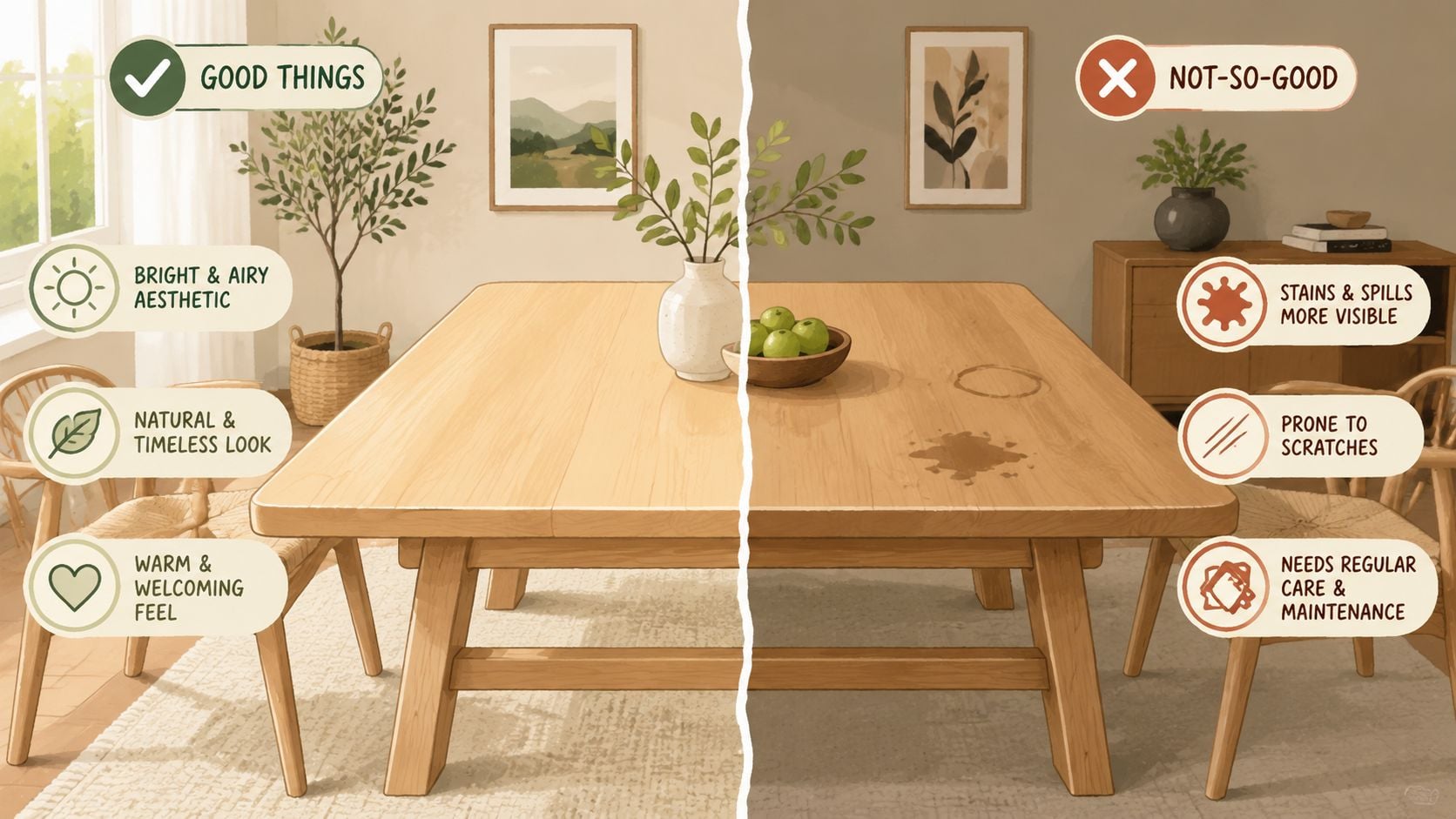
The honest downside is that some light finishes are less forgiving. They can show food stains, pen marks, or surface grime more readily than a medium-tone finish. In households with young kids, heavy entertaining, or a lot of craft and homework use, that's worth thinking through before buying.
Another common issue is expectation mismatch. Some shoppers want the airy look of a pale finish but expect it to hide wear the way a darker or more textured surface might. That usually doesn't happen.
A few trade-offs to keep in mind:
- Stain visibility: Pale finishes can make spills easier to notice if they aren't cleaned quickly.
- Surface character: Strong grain can either add warmth or feel too busy, depending on the room.
- Finish sensitivity: Ultra-matte looks can be beautiful, but they may require more care.
- Tone shift: Daylight changes the appearance of light wood throughout the day.
For homeowners comparing wood materials in other parts of the home, this article on comparing cabinet door materials can be a useful parallel because it highlights the same core idea. Material choice affects both appearance and long-term practicality.
A light wood table usually works best when the buyer likes visible character and accepts that real wood should look lived in, not frozen in showroom condition.
That's the right mindset. Buy for use, not perfection.
Finding the Perfect Fit for Your Albany Home
A family in Albany falls in love with a light wood dining set online, measures the tabletop, and assumes it will work. Then the chairs hit the wall, the walkway tightens up, and the room feels smaller every day after delivery. I see that problem more often than finish regret.
Capital Region homes rarely follow one formula. Center hall colonials, older city homes, condos, and newer open layouts all ask different things from a dining set. A good fit has to work on an ordinary Tuesday, not just in a staged product photo.
Start with the room, not the table
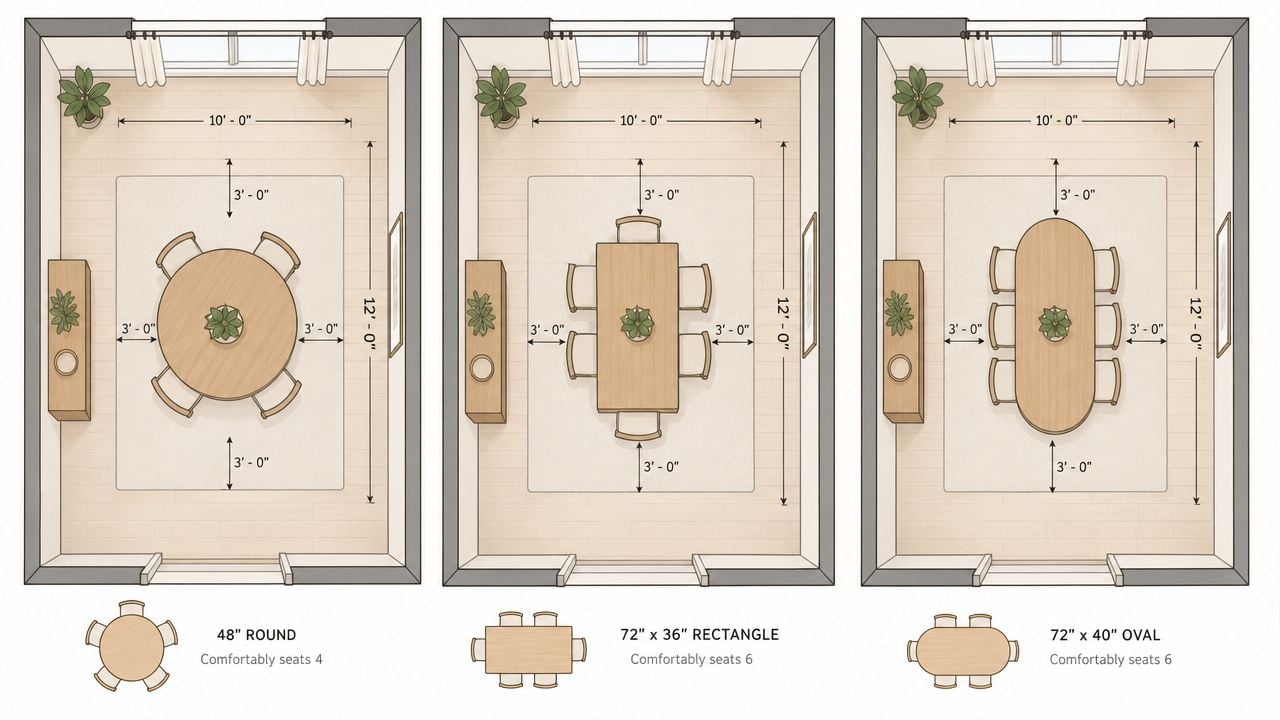
Measure the space you can use. That means subtracting radiator clearance, door swing, heat vents, and any path people use to pass through the room. The goal is a set that feels comfortable with chairs occupied, not one that only fits on paper.
Painter's tape helps. Mark the table footprint on the floor, then pull out a chair and walk around it. That quick test catches a lot of problems before you buy.
A practical process looks like this:
- Measure the usable floor area. Ignore square footage that furniture or traffic patterns already claim.
- Tape out the table shape. Round, oval, and rectangle can feel very different in the same room size.
- Test chair clearance. Leave room for someone to sit down without blocking the whole space.
- Walk the traffic path. People should be able to move from kitchen to living area without squeezing sideways.
If you want a better sense of proportions before shopping, this dining table size guide for room planning gives a solid starting point.
Match the shape to how the room is used
In many Albany-area homes, shape solves more problems than style. Round tables usually work well in tighter rooms because there are no sharp corners to dodge. Oval tables help in narrow spaces where a rectangle feels too rigid. Rectangular tables still make sense in longer rooms or homes that host larger holiday meals, especially if the table includes leaves.
Extension tables earn their keep over time. Day to day, they keep the room open. On holidays, birthdays, or when the kids bring friends home, they give you extra seats without asking you to live with a larger table all year.
That trade-off matters. A slightly smaller table with a leaf often serves a home better than a big fixed table that dominates the room every day.
Plan for ownership, not just move-in day
The right fit also depends on who uses the room and how often. Homes with young children usually need more chair clearance and tougher seating surfaces. Empty nesters often prefer a cleaner footprint with comfortable chairs they can sit in for a full meal. In open-concept homes, the back view of the chairs and table base matters because you see the set from multiple angles every day.
Local shoppers often get the best result by using room-planning help from a nearby showroom or an online layout tool before they commit. That extra step can save a return, a restocking fee, or years of living with a set that always feels just a little too big.
In smaller dining spaces, flexibility usually beats maximum seating. A table that stays comfortable for daily use gets enjoyed more often and lasts longer in the home.
Styling and Coordinating Your Dining Space
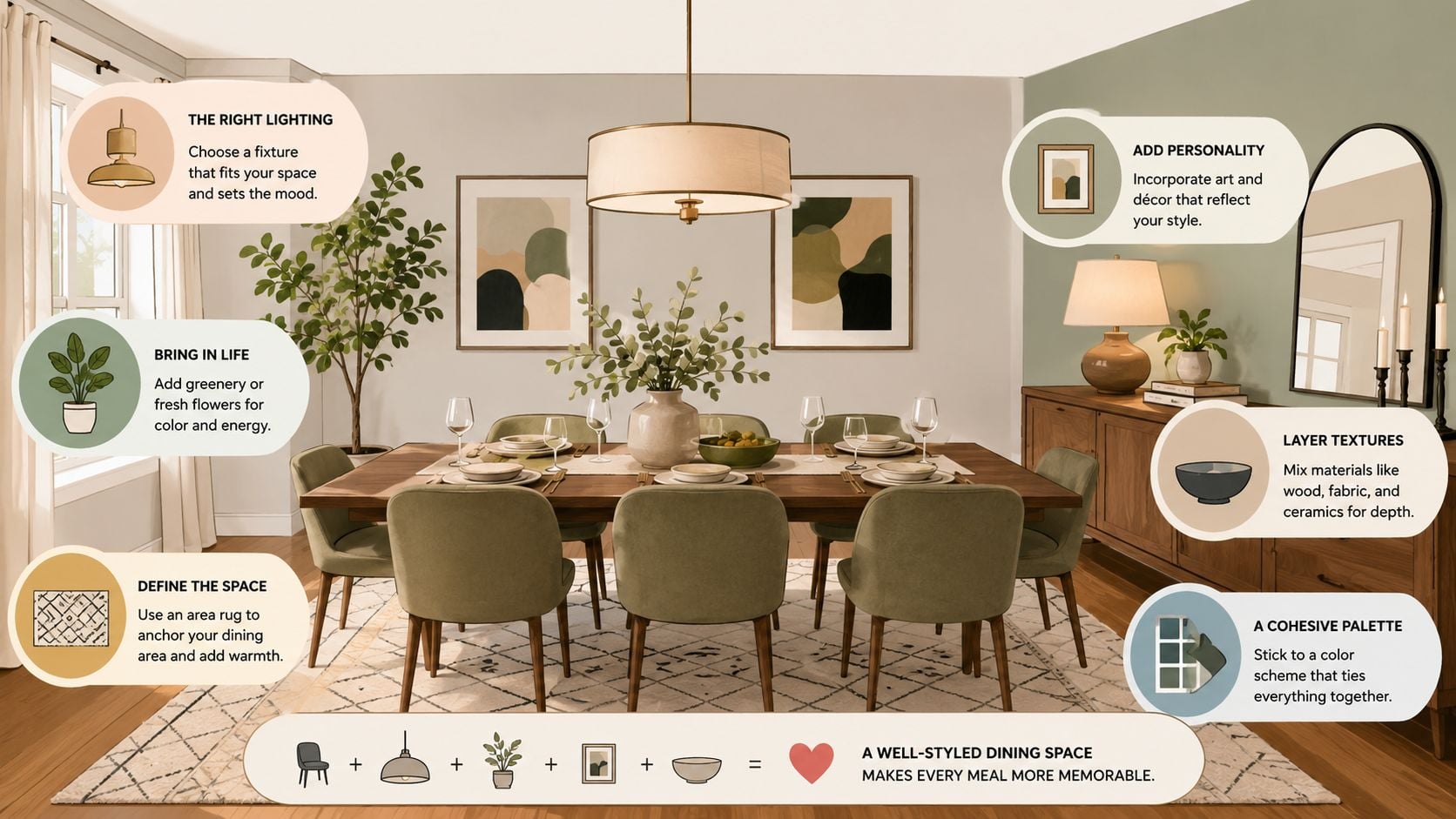
A dining set looks strongest when the room around it supports it. Light wood is especially versatile because it doesn't dominate the space. That gives homeowners room to layer in texture, fabric, color, and lighting without making the room feel crowded.
A room feels finished when materials are balanced
A pale wood table often looks better when it isn't surrounded by too much of the same tone. If the floor, chairs, sideboard, and tabletop all sit in a very similar wood range, the room can flatten out visually.
A more balanced approach often works better:
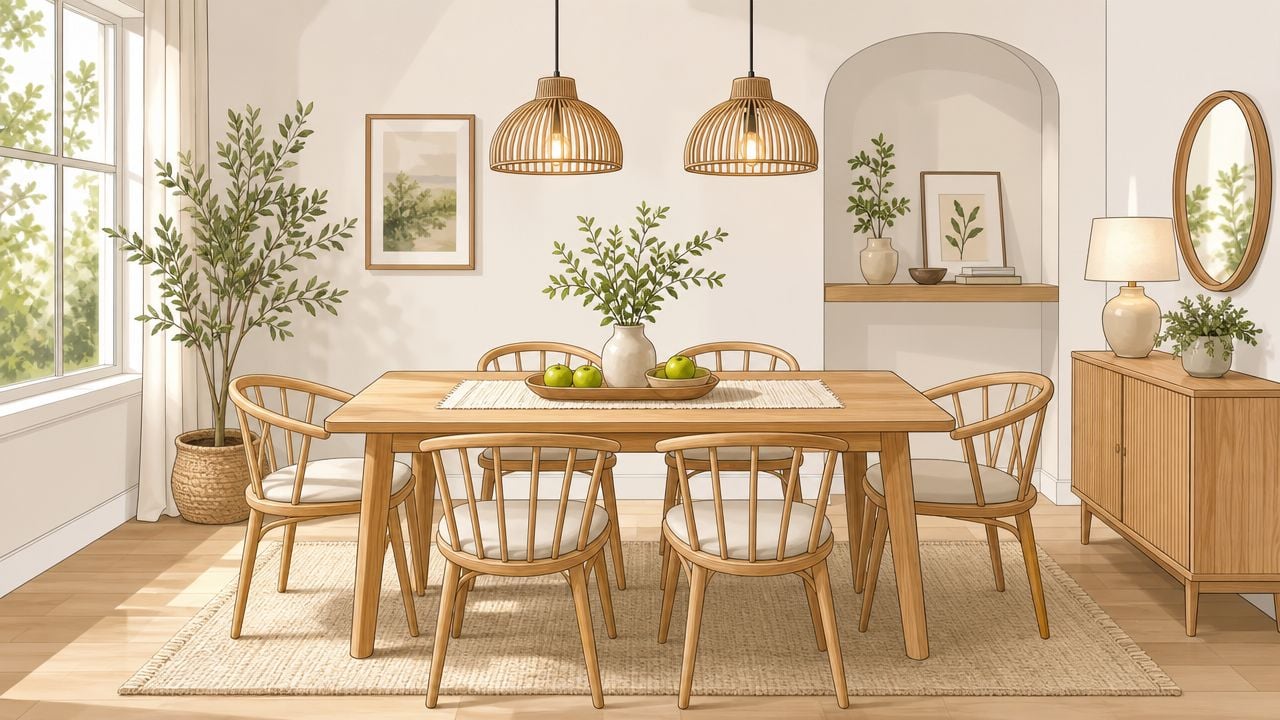
- Upholstered chairs soften the crispness of wood grain.
- A rug with gentle contrast helps define the dining area.
- Metal or glass lighting adds another material so the room doesn't feel one-note.
- Ceramics, linen, and greenery make the wood feel warmer and more lived in.
This is also where one-stop coordination helps. Homeowners who are also updating flooring, window treatments, or accessories usually get a more cohesive result when they think about the room as a whole instead of buying each piece in isolation.
How to avoid the overmatched look
A matching set can be convenient, but a room usually benefits from some variation. That might mean mixing chair styles, adding a bench on one side, or pairing a light wood table with darker upholstered seating.
A simple example works well in many Capital Region homes. A natural oak or maple dining table sits at the center, spindle or upholstered host chairs add shape at the ends, and a rug anchors the area so the furniture feels intentional rather than floating.
For more practical ideas on finishing the room around the table, these dining room accessory suggestions can help tie the space together without overdecorating.
A well-designed dining room doesn't need every piece to match. It needs the pieces to relate.
That's an important difference. Light wood makes that easier because it behaves almost like a neutral. It can support earthy colors, painted finishes, black accents, soft fabrics, or cleaner modern lines without fighting the rest of the room.
Protecting Your Investment with Proper Care
A dining table naturally acquires its wear. Plates slide, chairs bump the apron, sunlight shifts across the top, and somebody eventually leaves a damp glass where a coaster should've been. A light wood set can age beautifully, but it needs realistic care.
Daily habits that help
Most owners don't need a complicated routine. They need a consistent one.
- Wipe spills quickly: Light finishes can make stains easier to notice, so speed matters.
- Use soft cloths: Abrasive scrubbers can dull the surface.
- Set out placemats or trivets: Heat and friction are hard on dining tops.
- Lift, don't drag: Serving pieces, décor, and even laptops can leave marks if pushed across the surface.
For households that want a more detailed care checklist, this guide to protecting wood furniture from scratches and stains covers the fundamentals in a practical way.
What to watch over the years
One of the biggest unanswered questions shoppers have is how light wood dining sets hold up visually over time. Many product pages still don't address yellowing, stain visibility, or how natural light changes the finish, even though those are key ownership concerns, as discussed in this video on long-term light wood furniture concerns.
That means buyers should expect some natural variation and plan for it.
A few long-term habits make a difference:
- Rotate tabletop décor so sunlight doesn't create uneven tone changes.
- Keep the table clean under runners or pads where trapped grit can scratch.
- Avoid harsh cleaners that can strip or cloud the finish.
- Accept patina thoughtfully because real wood often develops character with use.
The goal isn't to keep a dining table looking untouched forever. The goal is to help it age well, stay structurally sound, and remain attractive in everyday family life.
Your Dream Dining Set is in Freehold NY
Shoppers looking for dining room sets light wood usually aren't just choosing a finish. They're balancing room size, household habits, maintenance tolerance, and how long they want the furniture to serve them. That's why an in-person evaluation still matters, especially for a piece that will be used constantly.
What careful shoppers should inspect
Expert buying guides recommend examining close-up photos of grain, joints, and undersides before buying because lighter species and finishes can make those details more visible. That reflects a shift toward performance-based evaluation, where shoppers judge construction quality alongside appearance, as explained in this high-quality dining table buying guide.
In a showroom, that means checking:
- Joinery and edge details
- How extension mechanisms operate
- Whether chair seats feel comfortable for a full meal
- How the finish looks under normal light, not just studio lighting
For buyers who want handcrafted solid wood with customization options, Amish furniture near Albany and the Capital Region is one practical route to explore, especially when wood type, finish, and long-term quality are the priority.
Good options for different priorities
Different households need different solutions.
A growing family may prefer a forgiving wood species and an extension table. A downsizing homeowner may want a round pedestal that keeps the room open. A buyer furnishing a long-term home may lean toward custom ordering, especially when matching existing cabinetry, flooring, or architectural style matters. Others may focus first on immediate availability or financing flexibility.
That's where a local showroom in Freehold can be useful for Albany-area shoppers. It gives people a chance to compare finishes in person, sit in the chairs, assess scale, and ask questions that product pages often skip. It also helps when the project extends beyond a dining set and includes flooring, décor, or adjacent rooms that should work together.
A smart purchase in this category usually comes down to three things. Buy the right size for the room, choose a finish that fits the household's habits, and pay attention to construction details that lighter wood makes easier to see.
For homeowners ready to compare styles, wood tones, Amish-made options, custom ordering possibilities, clearance finds, or financing choices, Tip Top Furniture & Mattresses offers a practical next step from its Freehold, NY showroom for shoppers across Albany, Schenectady, Troy, Greene County, and the wider Capital Region.