Choosing Your Perfect Dining Set With China Cabinet

You're probably here because the dining room is starting to feel real.
Maybe you've hosted enough holidays around a table that's too small. Maybe you've inherited dishes you want to use and display. Or maybe you've looked at an empty wall in your dining room and thought, “A full dining set with china cabinet would make this room feel finished,” then immediately followed it with, “But how do I know if I'm choosing the right one?”
That hesitation is normal. A dining set with china cabinet isn't a throw-in purchase. It affects how the room looks, how people move through it, what you can store, and whether the space feels calm or crowded. For many homeowners around Albany, Schenectady, Troy, and throughout the Capital Region, this decision is less about taste alone and more about layout, daily life, and getting lasting value from a major piece of furniture.
Comfort matters, too. If you're trying to create a room that feels warm and welcoming year-round, small touches help alongside the furniture itself. A practical read like this Jackpot Candles guide to home comfort can spark ideas for how lighting, texture, and atmosphere support the overall feel of your dining space.
Families often start with the furniture before they've worked out the room plan. That's backwards. A better approach is to think about the room as a whole, especially if you're deciding between a cabinet, buffet, or a more flexible storage piece. If you want a helpful first step, this guide on where to start when designing a dining room lays the groundwork well.
Your Guide to Creating the Perfect Dining Room
A couple from the Capital Region came into our showroom idea stage with a familiar challenge. They wanted one room that could do both jobs. It needed to feel polished enough for Thanksgiving, but easy enough for takeout, homework, and Sunday coffee the rest of the year. Their instinct was right. A coordinated dining set gave them the visual anchor they wanted.
Where they got stuck was the cabinet.
They loved the look of a taller piece with glass doors, but they worried it would dominate the room. That's where many shoppers pause. The table seems easy to picture. The cabinet is harder because it changes the wall, the height of the room, and the way your eye reads the whole space.
A good dining room doesn't just hold furniture. It gives each piece enough breathing room to work.
That's why it helps to think in this order:
- First, define the room's job. Is this your formal holiday room, your everyday family dining room, or a mixed-use space?
- Then, identify what needs storing. Dishes, serving pieces, stemware, linens, seasonal décor, and heirlooms all take different kinds of space.
- Last, match the furniture to the room. Not the other way around.
A dining set with china cabinet can be beautiful and practical. It can also be too much for the wrong room. The right fit comes from understanding why these pieces have lasted so long, how they function today, and how to size them for real homes in places like Freehold, Albany, and the wider Capital Region.
The Timeless Appeal of a Coordinated Dining Set
A dining set with china cabinet carries more history than many realize. It didn't start as a trend piece. It grew out of formal dining furniture traditions in Europe, where cabinets were used to store and display prized ceramics and imported porcelain. China cabinets first appeared in the 17th century, became more decorative in the 18th century, and by the 19th century had become a regular feature in many middle-class homes for dinnerware and decorative objects, according to this historical overview of built-in china cabinets.
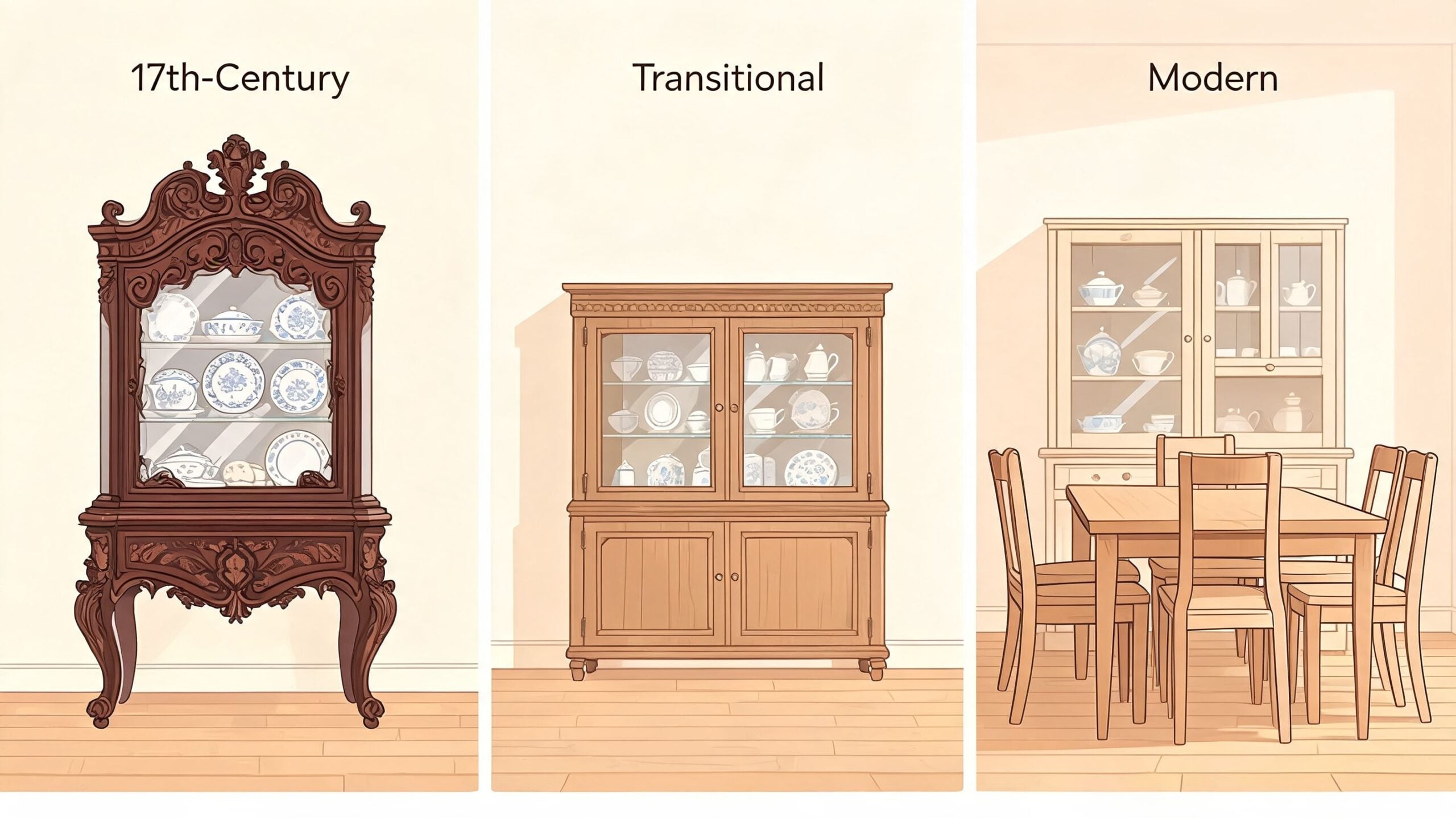
That history explains why these pieces still feel important in a room. They've always done two jobs at once. They store what matters, and they show what a household values.
Why people still love them
A china cabinet gives a dining room a sense of completion that a table alone usually can't. The table handles the activity. The cabinet brings order, height, and display.
Here's what a coordinated set does especially well:
- Creates visual unity. The table, chairs, and cabinet share the same design language, so the room feels intentional.
- Combines display and protection. Glass-front storage keeps pieces visible while reducing dust exposure.
- Supports entertaining. Serving dishes, glasses, linens, and silverware stay close to the table instead of scattered across the house.
Historically, the piece also signaled taste and status. As porcelain became more accessible in the mid-19th century, the dining set with china cabinet became associated with public display of wealth and taste. By the 1920s and 30s, these cabinets took on Art Deco styling, and later versions often added built-in lighting and specialized storage, as noted in this article on the evolution of china cabinets.
Why that history matters in a modern home
Some readers hear “china cabinet” and picture something too formal, too old-fashioned, or too bulky. But the lasting appeal isn't about formality. It's about having one piece that makes the room feel settled.
In many homes around the Capital Region, that can mean a traditional cabinet in a formal dining room. In others, it might mean a simplified hutch in a farmhouse setting or a cleaner-lined piece with less ornament. The idea stays the same. You're choosing a furniture grouping that stores, displays, and anchors the room.
Local perspective: Handcrafted solid wood pieces, including Amish-made options, often work so well in this category because the cabinet feels like part of the home's long-term story, not a temporary stopgap.
Finding the Perfect Size for Your Capital Region Home
A family in Albany falls in love with a dining set on the showroom floor. The table seats everyone for holidays. The china cabinet looks beautiful under the lights. Then the set gets home, the cabinet takes up more wall than expected, chairs bump the walkway to the kitchen, and the room suddenly feels tighter than it did in the store.
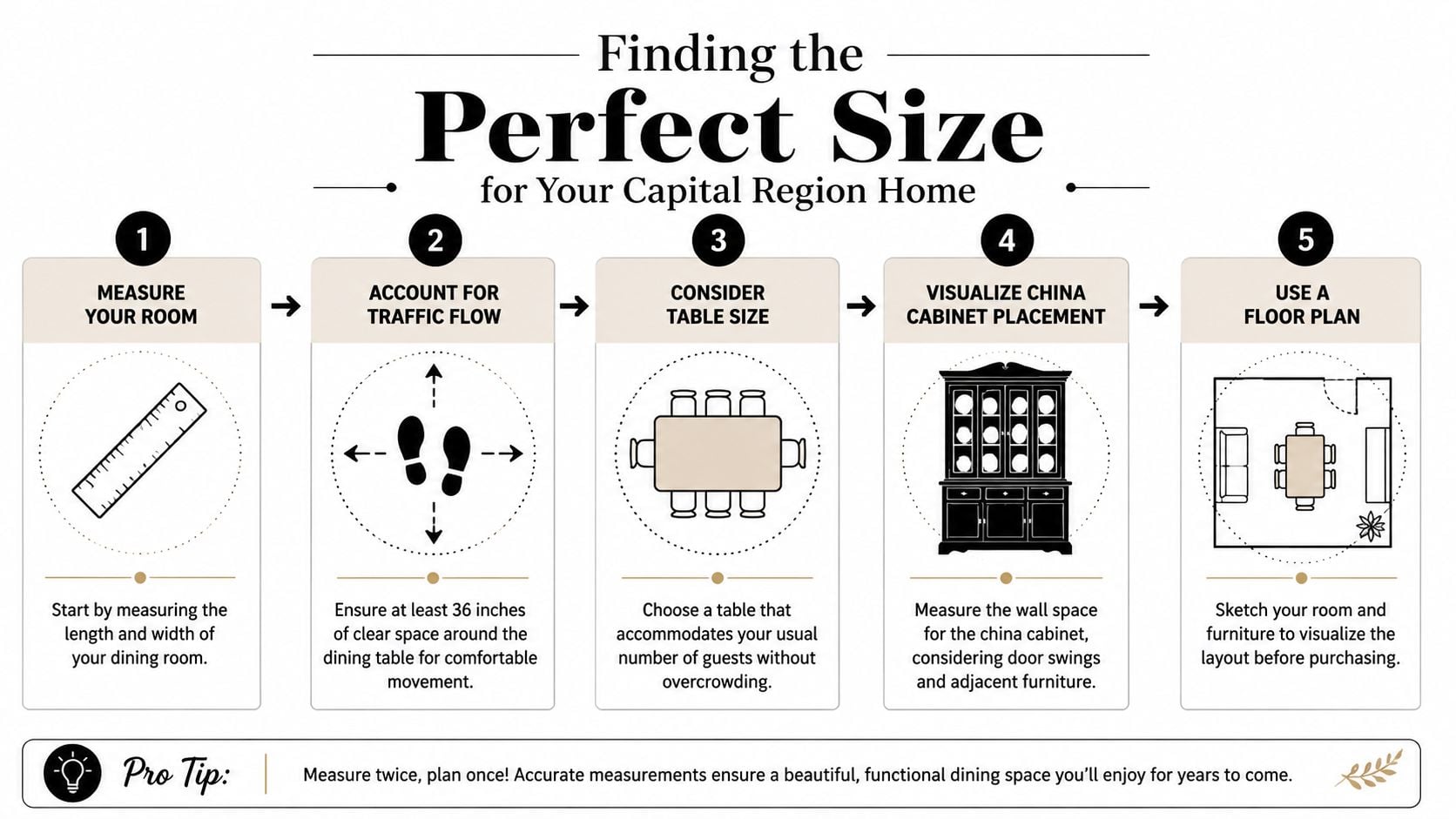
That problem usually starts with planning the pieces separately. A dining set with a china cabinet works more like a room arrangement than a single purchase. The table, chairs, cabinet depth, walking paths, door swings, and ceiling height all have to work together.
That matters in the Capital Region because homes here vary so much. A formal dining room in Niskayuna gives you a different set of limits than a bungalow in Albany, a townhouse in Clifton Park, or an older home near Troy with narrower passages and prominent trim. A set that feels comfortably scaled in one house can feel oversized in another, even if the room dimensions look similar on paper.
One practical source points to the challenge. A buffet-and-hutch can be wide, deep, and tall enough to shape the whole room, as shown in these product sizing details. That is why I usually tell shoppers to place the cabinet first on the plan, then fit the table and chairs around it.
Measure the room in the right order
Start with the room, not the furniture tag.
Use a tape measure, painter's tape, and a quick sketch. You do not need a designer's blueprint. You need a clear picture of the space people use every day.
- Measure the full room length and width. Include any bump-outs, baseboard heaters, floor vents, radiators, and windows that affect placement.
- Measure the cabinet wall carefully. Note trim, outlets, light switches, return-air grilles, and nearby door openings.
- Check the ceiling height. A tall hutch can feel comfortable in a room with height, but heavy in a room with lower ceilings or large crown molding.
- Mark the traffic paths. In many Capital Region homes, the dining room is also a passage to the kitchen, hall, or stairway.
That last step gets missed all the time. A dining room should let people pass through without turning sideways or bumping chair backs.
Test the room with real movement
Furniture plans can look fine on paper and still feel awkward once people start using the space. Chairs slide back. Cabinet doors open out. Someone carries a casserole from the kitchen while another person is getting up from the table.
Painter's tape helps you catch that before delivery day. Tape the table outline on the floor. Add the chair positions in the pulled-out state, not tucked in neatly. Then stand where the cabinet will go and check what happens in the aisle behind the chairs.
If one person has to stop moving so another can pass, the room is telling you the set is too large.
A dining table size guide for room planning and seating clearance can help you compare table shapes and seating needs before you commit to a specific set.
A simple checklist for cabinet placement
The cabinet often creates the tightest point in the room, so give it a close review before you order.
- Wall fit: The cabinet should sit comfortably on the wall instead of looking wedged between trim, windows, or door casings.
- Depth fit: Depth matters more than many shoppers expect. Even a well-proportioned cabinet can crowd a walkway if it projects too far into the room.
- Door and drawer clearance: Make sure glass doors, lower buffet doors, and drawers can open without hitting nearby furniture or interrupting traffic.
- Visual weight: In a smaller room, a dark, tall cabinet can make the space feel shorter and narrower.
- Table relationship: The table and cabinet should feel scaled to each other, like pieces from the same conversation.
When the room is awkward
Some rooms need a little more problem-solving. Open-concept layouts can leave only one realistic cabinet wall. Older homes may have uneven walls, wide window trim, or heat sources that limit placement. Eat-in kitchens sometimes have enough square footage for a set, but not enough breathing room once chairs are in use.
In those homes, a slightly smaller cabinet or a narrower table often gives better daily function than the larger option you first had in mind. That is not settling. It is choosing a set that fits the way your household lives.
Tip Top Furniture & Mattresses also offers an online room planner, which can help shoppers test layouts to scale before buying. If your measurements are close, that extra planning step can save you from picking a set that looks right in a photo but feels crowded at home.
Choosing Materials and Styles for Lasting Quality
Once the size works, the next question is what the set is made of. This matters even more with a china cabinet than with many other dining pieces because the cabinet carries the weight of dishes, glassware, and serving pieces over time.
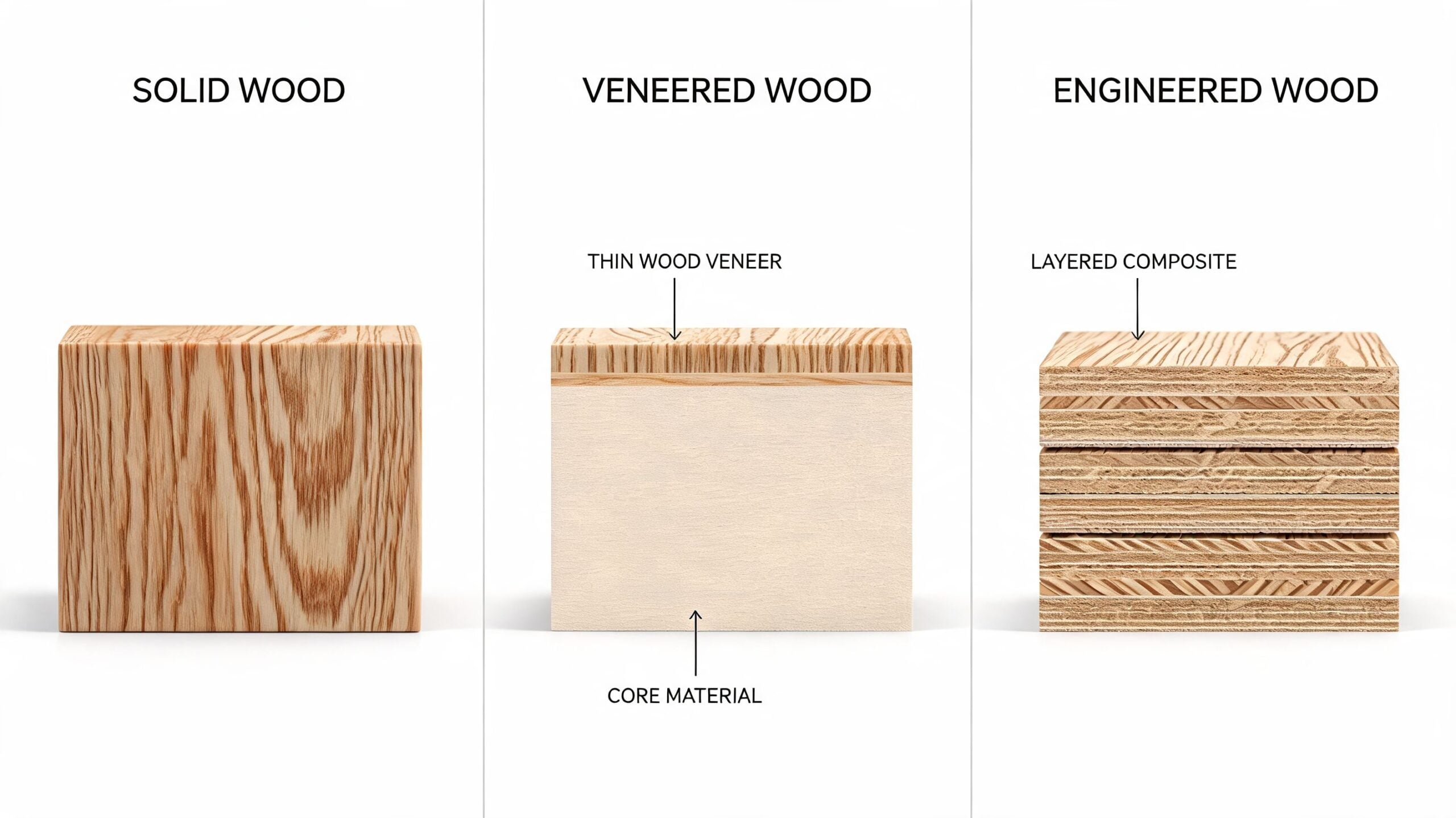
High-end dining sets are often built with solid hardwood and furniture-grade joinery such as English dovetails because the cabinet has to support substantial static loads from dishes and glassware. That construction is stronger for long-term use than basic stapled or nailed assemblies, as described in this product construction example.
What to look for in the cabinet itself
A cabinet can look polished in a showroom and still fall short in daily use. Focus on the parts that affect durability.
- Drawer construction: Dovetail joinery is a strong sign that the maker paid attention to how the piece is built, not just how it looks.
- Shelf strength: Ask whether shelves are designed for heavy dinnerware or mostly for display.
- Door feel: Cabinet doors should open smoothly and align cleanly.
- Back panel stability: A sturdier cabinet body usually feels more solid when you open and close it.
Construction clue: The heavier piece isn't always the better piece, but a cabinet should feel stable and deliberate, not flimsy or hollow.
Solid wood, veneer, and engineered materials
Shoppers often get confused here. “Wood” can mean several different things.
Here's a simple comparison:
| Material | What it means | Best for |
|---|---|---|
| Solid wood | Lumber throughout key structural parts | Long-term use, heirloom feel, refinishing potential |
| Wood veneer | Thin real wood surface over a core | A furniture look with more design flexibility |
| Engineered wood | Manufactured core materials | Budget-conscious spaces, lighter-duty use |
None of these is automatically wrong. The right choice depends on your goals. If you want a cabinet that may stay in the family for years, solid wood and stronger joinery deserve close attention. If you're furnishing a more transitional home or expect your floor plan to change, a well-made mixed-material piece may make more sense.
This guide on choosing the right hardwood for longevity and style can help you understand how wood species, grain, and finish affect both appearance and wear.
Matching style to the room
Style shouldn't be picked in isolation. Look at three things together:
- Your table shape
- Your home's architecture
- How formal the room feels day to day
A heavier cabinet with carved details may suit a traditional dining room. A simpler cabinet with cleaner lines may fit better in a home that mixes dining, work, and gathering in one space. If you love solid American craftsmanship, Amish and USA-made collections are especially worth considering because they often offer finish choices and custom ordering that help the cabinet feel perfectly suited to the room instead of merely placed in it.
Is a Full China Cabinet Right for You
Here's the honest answer. Sometimes yes. Sometimes no.
A traditional china cabinet can be the perfect finishing piece for a dining room. In another home, it can be more storage than you need and more visual weight than the room wants. The right choice depends on your habits, not just your taste.
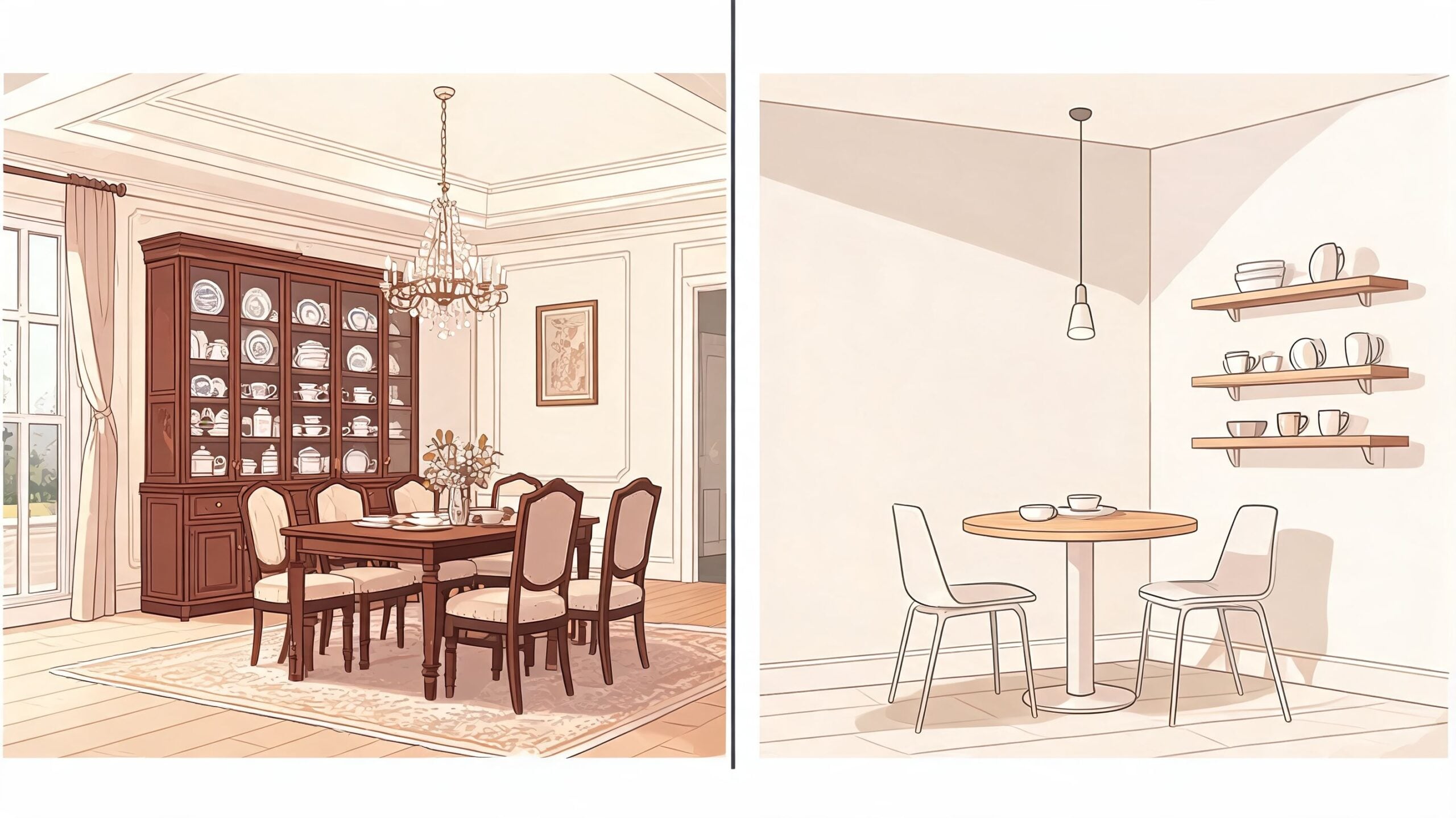
The market has been moving toward more flexible storage pieces, including corner units, wall-mounted storage, and buffet cabinets, which suggests many buyers want lighter, lower-profile options for multi-use rooms, according to recent retail category trends.
A quick comparison of your options
| Option | Works well if you want | May be less ideal if you need |
|---|---|---|
| Full china cabinet | Display plus enclosed storage, a formal focal point, more vertical presence | A lighter look or a flexible layout |
| Buffet or sideboard | Lower storage, serving surface, easier fit in smaller rooms | Tall display space |
| Corner cabinet | Storage in an awkward or underused area | A strong visual anchor on a main wall |
| Built-in or wall-mounted storage | A custom look that integrates with the room | Furniture that can move with you |
Questions to ask yourself
If you're unsure, answer these plainly:
- Do you want to display dishes or collectibles?
- Do you need hidden storage more than glass-front storage?
- Will this room stay a dining room for years, or might it become more flexible?
- Does the room have one clear wall that can support a tall focal piece?
Some homeowners don't need a full cabinet. They need a buffet with better organization.
That's not settling. That's choosing correctly.
For many households in Freehold and the Albany area, a buffet or dining storage piece ends up being the smarter fit because it keeps the room open while still solving the storage problem. This guide on how to select a dining storage piece is useful if you're deciding between a hutch, sideboard, or cabinet and want to match the storage to the way you live.
Caring for Your New Dining Room Investment
A well-made dining set with china cabinet can serve a family for many years, but only if you care for it like a working part of the home, not a museum piece.
The good news is that maintenance doesn't have to be complicated. Consistency matters more than intensity. A few simple habits protect the finish, keep the glass clear, and help the doors and drawers keep working smoothly.
Daily and weekly habits that help
Start with the basics:
- Dust regularly: Use a soft, dry cloth so dust doesn't build up on wood, shelves, and trim.
- Wipe spills quickly: Moisture that sits on wood is harder on finishes than occasional careful cleaning.
- Use barriers: Placemats, trivets, and felt pads reduce wear from heat, moisture, and abrasion.
- Handle glass gently: Clean glass doors with a product appropriate for glass, applied to the cloth rather than sprayed heavily into wood joints.
If the cabinet holds dishes you don't use every day, it's still worth opening it now and then. That gives you a chance to catch smudges, dust, or shelf shifting before they become a bigger nuisance.
A practical care routine
You don't need a long maintenance schedule. This simple rhythm works for most homes:
- Every few days: Clear crumbs, fingerprints, and obvious dust from the table surface.
- Weekly: Dust cabinet frames, chair backs, and exposed shelving.
- Seasonally: Remove items from the cabinet, dust shelves fully, and check felt pads or shelf stability.
- As needed: Tighten loose hardware if a pull or knob starts to feel less secure.
Wood furniture lasts longer when families use it carefully and clean it regularly, not when they're afraid to touch it.
For more detailed finish-safe advice, this wood furniture care guide is a helpful reference, especially if your set includes solid wood pieces or custom finishes.
Budgeting and Bringing Your Vision to Life
A dining set with a china cabinet often looks straightforward on the showroom floor. In a real Capital Region home, the budget usually has to cover more than the furniture itself. You may be working around a radiator in an Albany colonial, a tighter dining area in a townhouse, or an open dining space where the cabinet shares visual space with the kitchen. That is why it helps to price the room as a full plan, not just a table-and-cabinet package.
Start with the pieces that affect daily use most. For some families, that is a sturdy table and comfortable chairs because the room handles homework, holiday meals, and weeknight dinners. For others, the storage piece matters just as much because they need a place for serving dishes, glassware, or seasonal pieces that are currently packed in another room.
A good budget works like a floor plan. It shows where your money needs to go first.
A smart way to set your budget
Set your priorities in order before you compare price tags. That keeps you from spending too much on a cabinet that looks impressive but makes the room feel crowded, or choosing a table size that leaves too little walking space.
Use these questions to guide the budget:
- What has to fit comfortably in the room? In many Capital Region homes, inches matter. Leave enough space to pull chairs out and walk past the cabinet without turning every meal into a shuffle.
- Which piece does the hardest work? If the table will be used every day, put more of the budget into solid construction there.
- Do you need all the storage now? Some households buy the table and chairs first, then add the matching storage piece later after they confirm the room still feels open.
- Are you paying for function or just size? A buffet, server, or smaller cabinet can store what you need without taking over one wall.
- Would a floor sample or clearance piece solve the problem? That can be a smart way to get better materials or a larger table without stretching the budget too far.
Room coordination matters here too. The wood tone of the set, the wall color, the light fixture height, and even the path from the kitchen to the table all affect whether the room feels settled or awkward. A beautiful cabinet that blocks a traffic lane will feel oversized no matter how nice the finish is.
Support options that make the project easier
Large furniture purchases feel simpler when you break them into clear decisions. Size first. Layout second. Style third. Price last, but still with discipline.
For buyers who want to spread out the cost, flexible financing options can make a larger furniture purchase more manageable. If value is your first priority, the Clearance Corner is worth checking for dining furniture and storage pieces that are available now. If your room has an unusual footprint, custom order options can help you match the size, wood, and finish more closely to the space.
The final test is practical. The set should fit the room, leave clear movement around the table and cabinet, and support the way your household eats and gathers. When those pieces line up, you are not guessing anymore. You are choosing with confidence.
If you'd like a second opinion before you buy, Tip Top Furniture & Mattresses offers a practical next step for Capital Region shoppers. Visit the Freehold, NY showroom to compare dining sets and storage pieces in person, book a complimentary design consultation for layout help, or explore financing and clearance options if you're balancing style with budget.