A 2026 Guide to Choosing Curtain Length Sizes

You bring home a new set of curtains, slide them onto the rod, step back, and something feels off. The color works. The fabric is nice. But the hem floats too high, or the panels barely cover the window, and the whole room suddenly looks less finished than it did before.
That's one of the most common decorating frustrations I hear from homeowners around Albany, Troy, Schenectady, and the hill towns farther south. Curtain length sizes sound simple until you're standing in your living room with a tape measure, uneven trim, and an older house that doesn't follow the “standard” rules.
The good news is that this is fixable. Once you understand how curtain lengths are meant to work, the choices become much easier. A few smart measurements can make a room feel taller, calmer, and more polished.
If you're also freshening the rest of the window area, this professional guide to deep cleaning blinds is a useful companion read before you hang new panels. And if you want a broader overview of layering and style, this guide on how to choose window treatments is a helpful starting point.
Your Guide to Flawless Window Treatments
Curtains do more than cover glass. They set the vertical lines in a room, soften hard edges, and help everything from your sofa to your rug feel connected. When the length is wrong, even beautiful fabric can look accidental.
Homeowners often blame the curtain when the problem is placement. The package may say 84 inches, but that doesn't mean 84 inches is right for your wall, your rod height, or your floor. In many Capital Region homes, especially older ones, trim details and ceiling heights change the answer.
Practical rule: The best-looking curtain is rarely the one that simply matches the window height. It's the one that matches the whole wall.
That's why curtain length sizes are worth learning before you buy. You don't need designer jargon. You just need to know what each common length is meant to do, where the rod should sit, and when a standard panel works beautifully.
A well-chosen curtain length can make a modest bedroom feel taller. It can make a family room feel more finished. It can even help a tricky window stop calling attention to itself.
Understanding Standard Curtain Lengths
Most ready-made panels come in a short list of sizes. In the U.S., the standard curtain lengths are 63, 84, 96, 108, and 120 inches, and those sizes grew out of the widespread use of 8-foot ceilings in more than 70% of new single-family homes built after World War II. The 84-inch length became the default for that common wall height and still accounts for roughly 40% of ready-made curtain sales, according to Omni Calculator's curtain size guide.
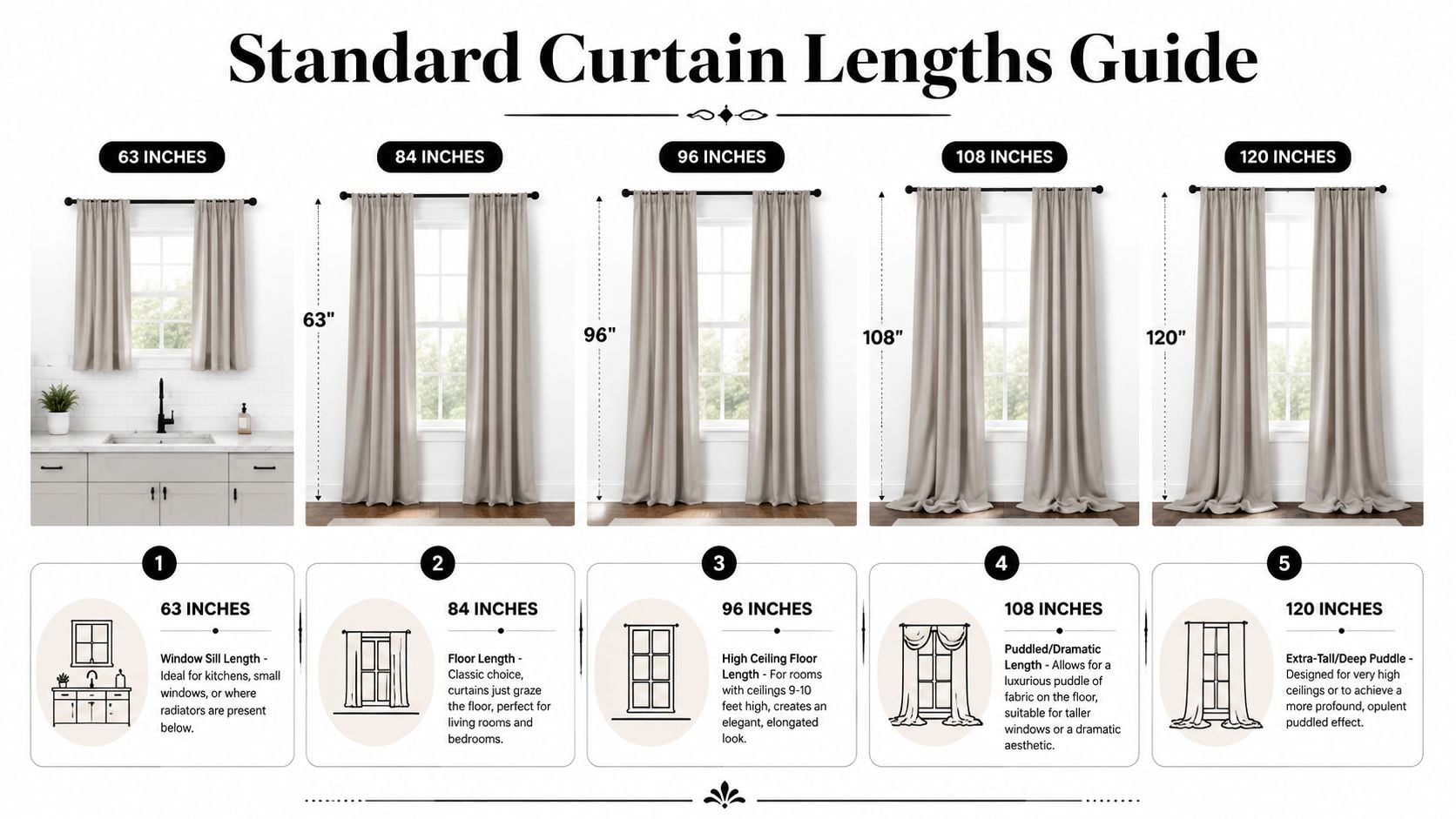
If you want to compare what's available before you shop, a quick look at common curtain panel sizes helps put these numbers into context.
What each standard length usually means
Think of curtain lengths the way you'd think about pant hems. Some are cropped and practical. Others are precisely styled. Some are intentionally long and dramatic.
| Standard length | Common use | How it looks |
|---|---|---|
| 63 inches | Kitchens, baths, small windows | Stops around the sill or below it |
| 84 inches | Classic living rooms and bedrooms | Usually floats just above the floor |
| 96 inches | Rooms where you want more height | Gives a taller, more custom look |
| 108 inches | Tall rooms or dramatic styling | Often reaches the floor with extra fabric |
| 120 inches | Very tall walls or deep puddling | Best for large-scale spaces |
The style words that confuse people
Shoppers often mix up the number on the package with the finished look they want. They're related, but they're not the same thing.
- Sill length works like a cropped pant. It's practical and easy around sinks, radiators, or busy work areas.
- Apron length hangs a bit below the sill. It feels softer than a short café curtain but still casual.
- Floor length is the classic trouser of window treatments. It's the most versatile look for living rooms and bedrooms.
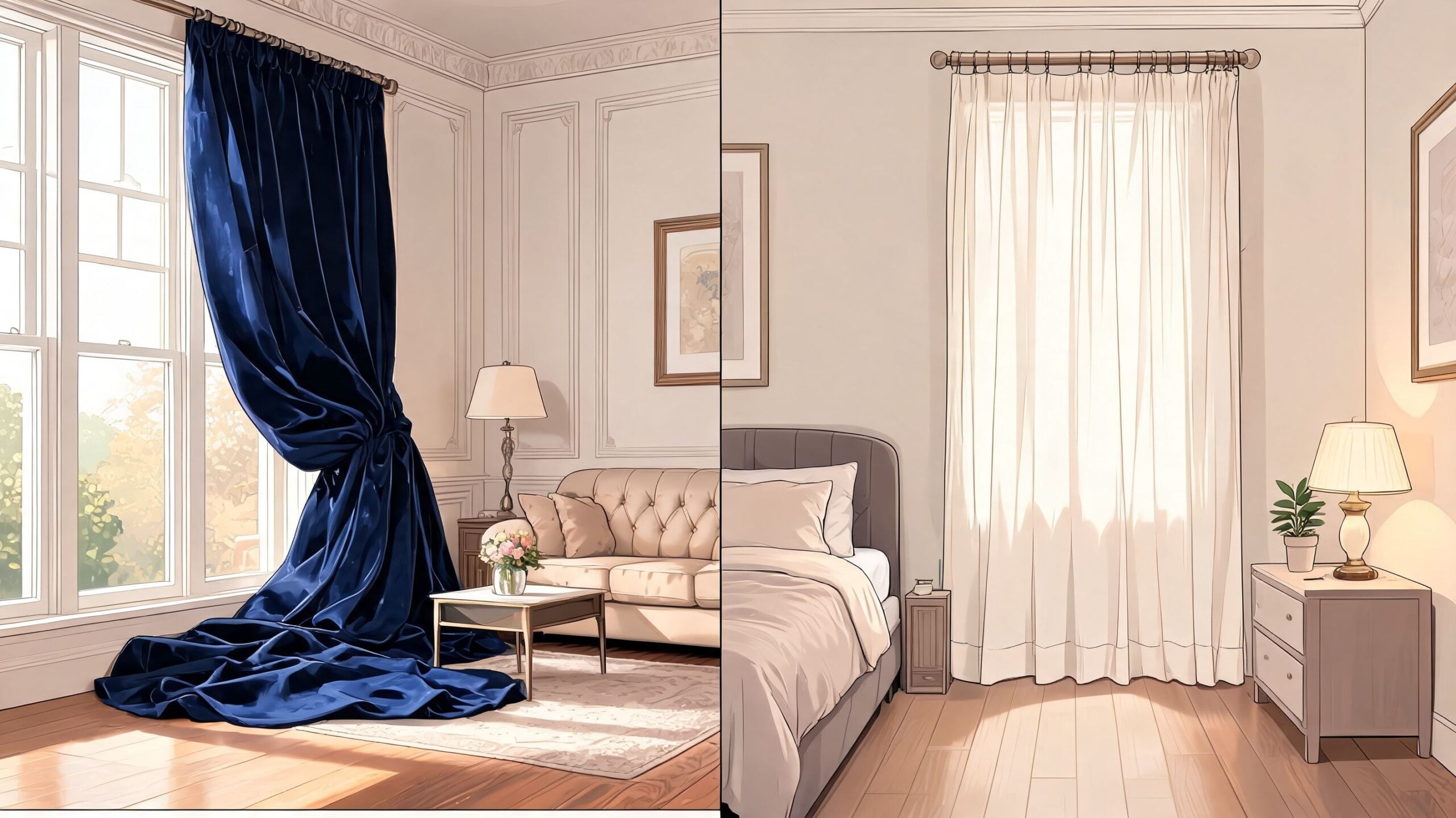
- Puddling means extra fabric rests on the floor. It's decorative, not necessary.
A curtain can be 84 inches long and still look different from one home to another. Rod height changes everything.
A plain-language way to choose
If your room is casual, hard-working, or short on wall space, shorter lengths often make sense. If you want the room to feel calm, finished, and a bit taller, floor-length panels are usually the safer choice.
For most homeowners, the primary decision isn't “Do I want 84 or 96?” It's “Do I want the curtain to float, touch the floor, or puddle?”
Once you answer that, the measuring gets much easier.
How to Measure for Curtains Like a Pro
Good measuring starts with one decision. You're not measuring the glass alone. You're measuring the full installation, including where the rod will sit.
For many standard rooms, hanging the rod 4 to 6 inches above the window frame with 84-inch curtains creates a floating effect. But using 96-inch panels on the same wall and mounting the rod near the ceiling can increase the perceived height by 12% to 18%, and 90% of designers recommend that taller look for standard living rooms, according to this curtain length guide from Joey'z Shopping.
If you're planning the whole room at once, not just the windows, this guide on how to measure a room for furniture helps you avoid crowding the wall with pieces that compete with the drapery.
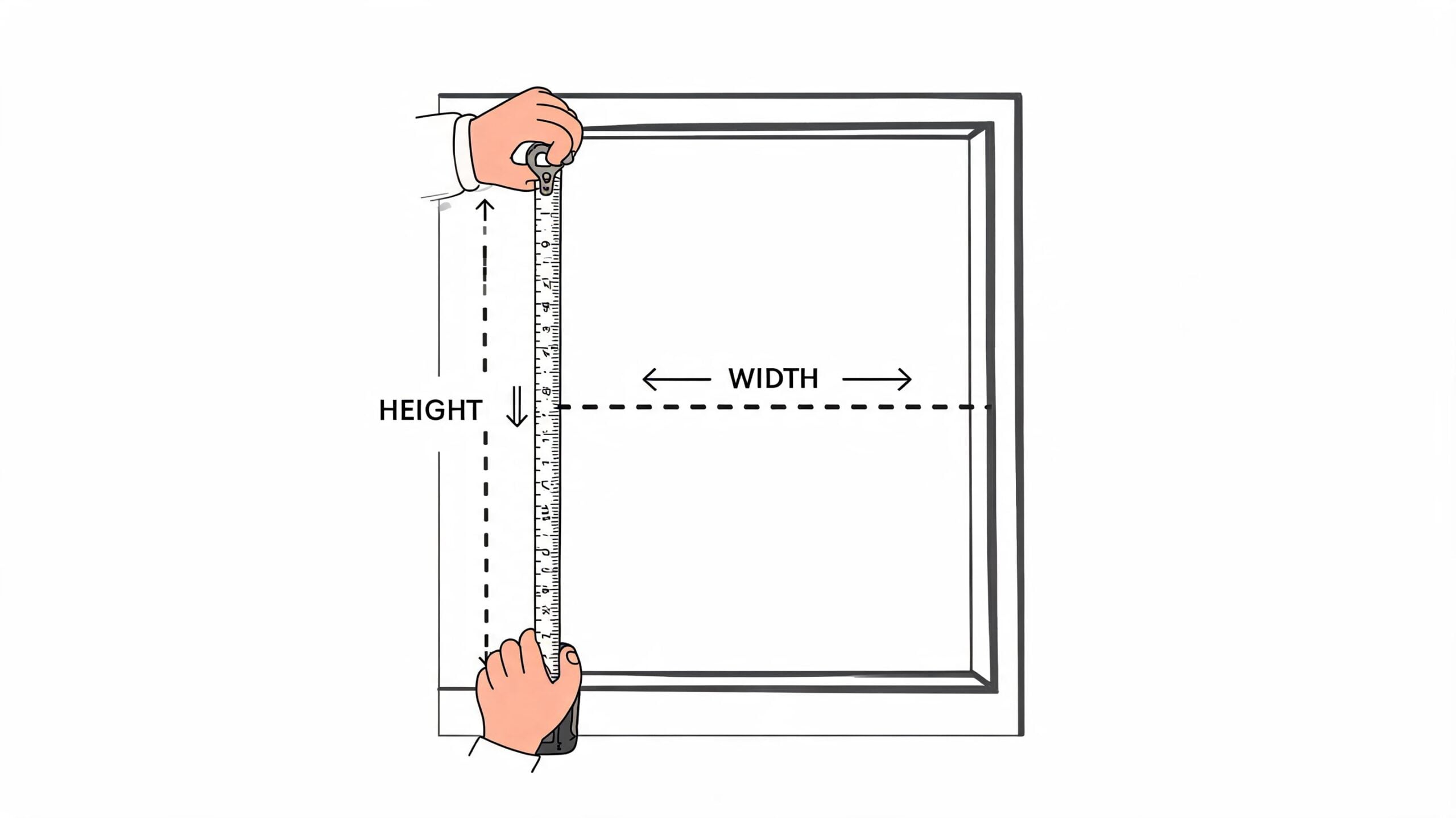
Measure height the right way
Use a steel tape measure if you can. Cloth tapes can sag and throw you off.
Follow this order:
Choose rod placement first
Decide whether the rod will sit just above the frame or closer to the ceiling.Measure from the rod location to the floor
Don't measure from the top of the window trim unless that's exactly where the rod will go.Pick your finish style
- For a float, stop just above the floor
- For a kiss, let the hem lightly touch
- For a puddle, allow extra fabric on purpose
Round to a standard size if needed
If your exact measurement falls between two ready-made lengths, the longer panel usually gives you more flexibility.
Measure twice at the left, center, and right side of the window. Older floors are often less level than they look.
Measure width for function, not just coverage
A curtain that only covers the glass when closed will often look skimpy when open. You want the stack of fabric to sit partly on the wall, not block all your daylight.
A simple approach is to mount the rod high and wide:
- Higher placement makes the room feel taller
- Wider placement lets more glass show when panels are open
- Extra rod width also keeps the treatment from feeling squeezed
If your home has unusual openings, bay angles, or uncommon proportions, comparing notes with references on Australian standard window sizes can be surprisingly useful. Different markets use different conventions, but it helps you see just how much rod placement and opening size can vary from one home to another.
A quick measuring example
Say your rod will sit near the ceiling in a bedroom, and the distance from rod to floor is a bit longer than a standard floor-length panel. That usually points you toward the next standard size up, then hemming if needed.
That's the part many people skip. Buying slightly long is usually easier to fix than buying too short.
Choosing the Right Style and Fullness for Your Space
Length gets most of the attention, but fullness is what makes curtains look rich instead of flat. Fullness means how much fabric width you use compared with the width of the window or rod.
A useful rule is to choose curtains that total 1.5 to 3 times the width of the window. If you want a balanced everyday look, many rooms land comfortably near the middle of that range. And there's a practical payoff too. A 2x fullness multiplier can reduce heat loss by up to 20%, based on ENERGY STAR data summarized in this drapery length article from Simply Windows. In Albany-area winters, that's a design choice that also supports comfort.
For inspiration on how window treatments work with everything else in a room, this article on how to create an eye-catching room is a smart next read.
Which lengths work best in each room
Different rooms ask for different behavior from fabric.
Living room
Floor-length panels usually look the most grounded. They frame seating areas well and add softness around larger furniture.Bedroom
This is a great place for longer panels and fuller fabric. The room usually benefits from a calmer, more wrapped feeling.Dining room
If the room is formal, a slight puddle can look elegant. If chairs move around a lot near the window, keep the hem cleaner.Kitchen and bath
Shorter treatments often make more sense. Steam, splashes, and daily cleanup matter more than drama here.
When drama works and when it doesn't
Puddled curtains can be beautiful, especially in a formal primary bedroom or a dining room that isn't used as a traffic path. But in family rooms, playrooms, or homes with pets, that extra fabric can become a nuisance quickly.
Designer's shortcut: Match the curtain style to the room's pace. The busier the room, the cleaner the hem should be.
That's why “best” curtain length sizes depend on how you live. A floor-kissing linen panel may be perfect beside a reading chair. The same panel with a deep puddle near a back door may feel frustrating within a week.
Fullness mistakes to avoid
The most common fullness problems are easy to spot:
| Problem | What it looks like | Better fix |
|---|---|---|
| Too narrow | Panels look flat and strained | Add more width |
| Too wide for the wall | Fabric crowds furniture and trim | Reduce stack or change rod width |
| Too little fabric in a cold room | Window feels visually bare | Increase fullness for softness and coverage |
If your curtains look thin when closed, the issue usually isn't the length. It's that you don't have enough width.
Custom Solutions for Your Upstate New York Home
Standard curtain size rules were built for standard walls. Many homes in the Capital Region are anything but standard.
A farmhouse outside Albany may have uneven floors. A Victorian in Troy may have tall trim and deep moldings. A cottage in Greene County may have dormers or sloped ceilings. Those details are part of the charm, but they can make off-the-shelf curtain length sizes much harder to get right.

According to this guide on curtain lengths for unusual spaces, up to 35% of homes in the Northeast U.S. have non-standard ceiling heights or architectural features like sloped roofs. That same source notes these conditions contribute to return problems and that 80% of consumer complaints mention the frustration of an awkward cutoff or poor fit.
Where standard panels stop working
You'll usually run into trouble in situations like these:
- Sloped ceilings that make one side of a window feel visually taller
- Arched windows where the rod can't sit in the obvious place
- Old plaster walls with trim that throws off “normal” mounting height
- Half-story rooms where knee walls and dormers change the proportions
In these spaces, the curtain isn't just decorating the window. It's correcting the architecture visually.
What custom work solves
Custom ordering helps in ways shoppers often don't think about at first.
One benefit is exact length, especially when a room lands between standard sizes. Another is width control, which matters just as much in wide openings or paired windows. Fabric choice matters too. A light linen blend hangs differently than a lined panel, and the final hem can rise or settle depending on the material.
Custom work also makes it easier to coordinate window treatments with the rest of the room. If you're furnishing with solid wood pieces, textured upholstery, or handcrafted looks, a generic panel can feel disconnected. Custom drapery tends to pull the space together.
In older homes, the right curtain often solves a wall problem you didn't realize the room had.
For homeowners who want a professional eye, this is also where design help pays off. A second opinion can keep you from chasing the wrong size when the actual issue is hardware placement, lining, or fullness.
And if budget is part of the decision, custom doesn't have to mean all at once. Tools like custom ordering options and flexible financing can make a more exact solution easier to tackle in a phased room update.
Troubleshooting Common Curtain Conundrums
Even carefully chosen curtains sometimes need a small correction. That doesn't mean you bought the wrong style. It usually means one detail needs adjustment.
A 2023 WCMA survey found that 68% of U.S. homeowners now choose floor-kissing lengths in the 96-inch to 108-inch range, and improper sizing still causes up to 25% of window treatment returns, according to Three Girls' curtain sizing guide. That's why these small fixes matter.
What if my curtains are a little too long
That's usually the easiest problem to solve.
- Try hemming first if the panels are only slightly long.
- Use ring clips carefully if you need a small lift and the style suits them.
- Recheck rod height before altering fabric. Sometimes the hardware is the issue, not the curtain.
Why do my curtains look skimpy
You probably need more width, not more length.
If the panels look stretched when closed or disappear into narrow vertical strips when open, they don't have enough fullness. Add another panel or move to a wider pair. If you're dressing a glass door or similar opening, this guide to curtains over French doors shows how proportion changes the look.
Should curtains touch the floor
In many living rooms and bedrooms, yes. That's why floor-kissing styles are so popular. But “touch” can mean a light kiss, not a heap of fabric.
If the room sees a lot of traffic, a slight float is often easier to live with. If the room is formal, a little more drama can work.
My window is strange. What should I do first
Start with photos, then measurements.
Take one straight-on photo and one wider room view. Measure width, rod height, and floor distance. Include trim, radiator, or furniture details that affect the installation. Those three pieces of information answer most fit questions quickly.
Bring your measurements, photos, and room questions to Tip Top Furniture & Mattresses in Freehold, NY. Since 1978, our family-owned team has helped homeowners across Albany, Schenectady, Troy, Greene County, and the wider Capital Region choose window treatments that suit their homes and their lives. If you want hands-on help, ask about our design services, custom ordering, and flexible financing. If you're shopping with a budget in mind, browse the Clearance Corner for high-value finds. We're here to help you get the polished look without the guesswork.