Butcher Block Bathroom Vanity: Expert Guide 2026

You've probably seen this happen in bathroom remodels across Albany, Troy, and Schenectady. The tile is fresh, the paint is right, the lighting is upgraded, but the vanity still feels flat. Stone can look polished, but it can also feel cold. Laminate can be practical, but it rarely feels personal.
A butcher block bathroom vanity changes that mood fast. Wood brings in warmth, grain, and a furniture-like look that helps a bathroom feel finished instead of purely functional. For many Upstate New York homeowners, that's the difference between a room that looks renovated and one that feels lived in.
At a family-owned store in Freehold, NY that has helped local families since 1978, we've seen the same pattern for decades. People want a bathroom that works hard, but they also want character. If you're sorting through vanity ideas and trying to balance style, moisture concerns, and budget, this guide will help you make a smart choice. If you're still gathering inspiration, these brown bathroom decorating ideas are a strong place to start because they show how warm finishes can shape the whole room.
Your Guide to Butcher Block Bathroom Vanities
A wood vanity top often appeals to homeowners who are tired of seeing the same bathroom repeated over and over. White counters, gray tile, chrome fixtures. It works, but it can also feel generic. A butcher block top brings in a softer, more natural surface that looks more like furniture than a built-in slab.
That matters in bathrooms where you want comfort, not just durability. In a hall bath, guest bath, or primary bathroom with good ventilation, butcher block can give the room a collected look that stone and laminate don't always deliver.
Why homeowners keep coming back to this look
The appeal usually comes down to a few practical and visual benefits:
- Warmer appearance. Wood adds grain, tone, and variation that break up hard bathroom surfaces.
- Flexible style. It can lean farmhouse, modern, rustic, Scandinavian, or classic depending on the wood, sink, and hardware.
- Furniture feel. Many homeowners want the vanity to look like a crafted piece, not a builder-grade box.
- Custom potential. Wood is easier to personalize for width, edge detail, and finish than many manufactured tops.
A bathroom vanity is one of the first things you see when you walk in. If it looks flat, the whole room can feel flat.
Where buyers sometimes get nervous
The biggest hesitation is almost always moisture. That's fair. A bathroom is not a dry room, and wood needs the right finish and the right installation details. Homeowners also worry about upkeep and whether the look is worth the extra attention.
Those are real concerns, not deal-breakers. The key is understanding where butcher block works best, how to choose the right species, and what details you can't skip.
The Unique Appeal of a Wood Vanity
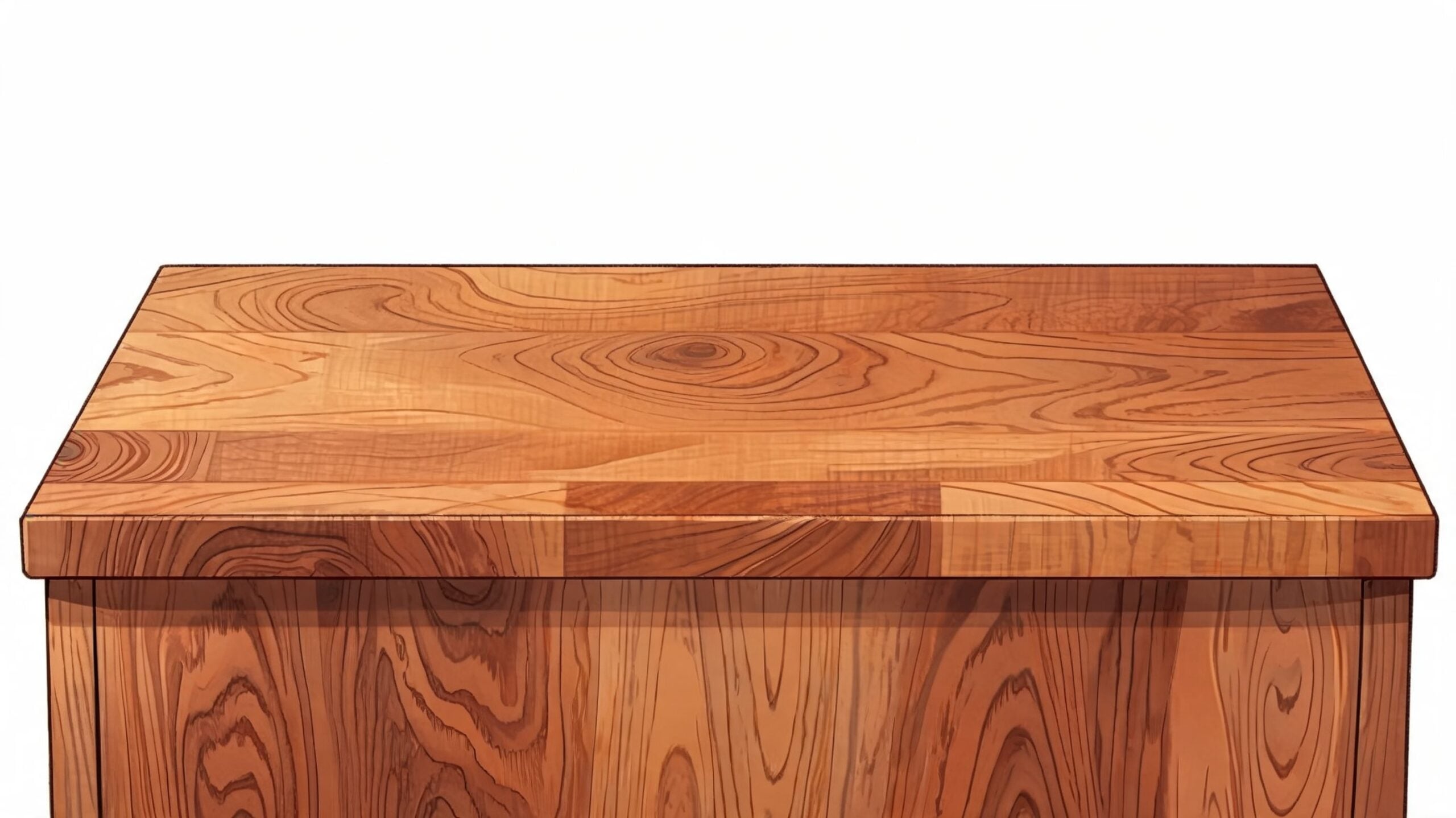
You walk into the bathroom on a cold Albany morning, flip on the light, and the vanity does more than hold the sink. It sets the tone for the whole room. A butcher block top brings in the kind of warmth people usually associate with a well-made dining table or an old family sideboard. That is the appeal. It makes a bathroom feel furnished, not just fitted out.
Wood also has a way of calming down a room full of hard surfaces. Tile, mirrors, chrome, porcelain, and stone can all look sharp and clean, but they can also feel a little chilly together. A wood vanity works like the wool rug in a room with hardwood floors. It softens the edges and makes the space feel lived in.
That flexibility is a big reason homeowners keep asking about it in our store. Maple with a simple sink can feel bright and current. Oak with darker hardware feels rooted and familiar. Walnut can add depth without making the room feel heavy. For homeowners who want that welcoming, collected look, our guide to rustic design style shows why natural texture makes such a difference.
Why wood stands out
A butcher block vanity earns its place in ways that go beyond appearance.
- It feels more personal. Grain variation, color shifts, and small natural marks keep the vanity from looking mass-produced.
- It can age gracefully. Light wear often blends into the character of the wood instead of standing out the way chips or laminate edge damage can.
- It gives you repair options. Many tops can be sanded and refinished, which is part of why families who plan to stay in their home often like them.
- It fits custom work well. If your bathroom has an odd width, an offset sink, or an older home layout, wood is often easier to adapt than many factory-made tops.
That last point matters in older Upstate New York homes. We see plenty of bathrooms around Albany with walls that are not perfectly square, narrow alcoves, and radiator placements that force you to size a vanity carefully. In those spaces, butcher block often makes more sense than people expect.
The part homeowners should be honest about
Wood asks for a little respect.
A butcher block vanity can perform well, but it is not the best choice for every bathroom or every household routine. If water sits around the faucet base, kids leave puddles all over the top, or the bath has poor ventilation, wood will show the effects faster than quartz or porcelain. In a well-planned bathroom, though, that risk can be managed, and managed well.
As noted in this discussion of designer tips for butcher block bathroom vanities, homeowners often worry about long-term durability and upkeep. That concern is reasonable, especially here in Upstate New York where winter condensation, steamy showers, and seasonal humidity swings can all put extra stress on natural materials.
Homeowners comparing custom and stock vanities often run into the same tradeoff discussed in these Adelaide bathroom renovation vanity options. You get more personality and flexibility with wood, but the material rewards careful planning and regular care.
Practical rule: If you want a vanity top that feels like furniture, treat it with the same care you would give a good piece of furniture near water.
Done right, a wood vanity brings warmth that many other tops never quite match. Done carelessly, it can become a maintenance headache. The difference usually comes down to wood choice, sizing, sealing, and installation details.
Choosing Your Perfect Wood and Construction
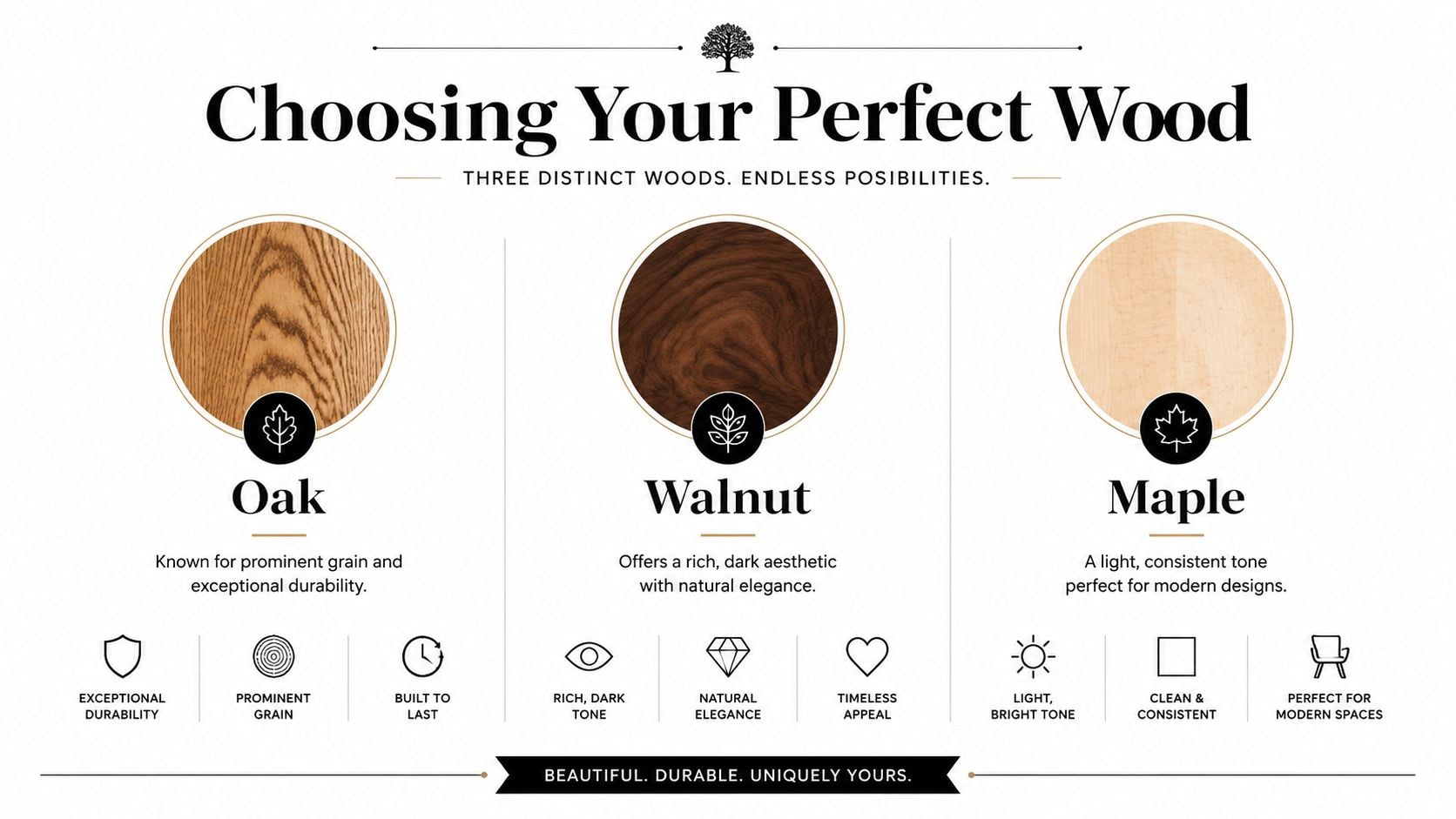
A family in Albany will often walk into our store with two samples in hand and the same question: which wood will still look good after years of wet hands, toothpaste splashes, and winter humidity swings? That is the right question to ask.
Wood choice shapes more than color. It affects how busy the grain looks, how the vanity fits the style of your home, and how forgiving the surface feels in everyday use. The species matters, but so does the way the top is built.
A helpful starting point is simple. Teak has natural oils that help it handle moisture, walnut gives you rich dark color, oak brings warmth and visible grain, and maple keeps the room lighter and cleaner-looking. Every one of them still needs a proper finish in a bathroom according to this guide on bathroom sink styles for butcher block countertops.
How the common wood choices compare
| Wood | Best for | Visual effect | Practical note |
|---|---|---|---|
| Maple | Clean, bright bathrooms | Light and consistent | Good for a quieter look that does not compete with tile or bold mirrors |
| Oak | Traditional and rustic spaces | Warm golden tone with visible grain | Shows character quickly and hides small signs of use better than very smooth woods |
| Walnut | Richer, moodier designs | Deep brown color | Beautiful with black or brass hardware, but it creates a stronger visual statement |
| Teak | Moisture-conscious projects | Warm, refined look | Naturally oily wood, often chosen by homeowners who want extra peace of mind |
| Bamboo | Contemporary and eco-minded looks | Linear grain | Works well visually, but still depends on careful finishing and construction quality |
If you want a broader explanation of how species affect durability, grain pattern, and long-term appearance, our guide to choosing the right hardwood for longevity and style gives useful background.
Construction matters as much as species
Homeowners often focus on the face of the wood and miss what is happening underneath. Butcher block is usually made by laminating strips of wood together, and that construction changes both the appearance and the feel of the vanity top.
For bathroom vanities, edge-grain construction is usually the safer visual choice. The lines run in a steady direction, so the top reads more like a well-built piece of furniture and less like a chopping surface. In smaller Upstate New York bathrooms, that calmer pattern can keep the room from feeling busy.
End-grain has its place, but it tends to look more dramatic and more rustic. For many bathroom remodels, especially ones trying to balance warmth with a clean look, that can be too much pattern in a tight space.
A practical way to choose
If you are torn between two options, narrow it down in this order.
- Start with the room's tone. Maple and lighter oak feel airy. Walnut and teak feel deeper and more refined.
- Check your hardware finish. Brass warms up walnut and oak. Chrome and nickel often sit comfortably with maple.
- Decide how much grain you want to see. Oak announces itself. Maple stays quieter.
- Match the vanity to the house, not just the photo that inspired you. A downtown condo bath and a farmhouse outside Albany usually want different wood personalities.
Custom sizing also changes the equation. A species you love in a small stock vanity may look very different across a longer custom top with one or two sinks. That is one reason homeowners comparing stock and made-to-order pieces often end up weighing the same tradeoffs covered in these Adelaide bathroom renovation vanity options.
After helping local families for more than 45 years, we have found that the best butcher block vanity is rarely the trendiest wood. It is the one that fits your bathroom's light, your household's habits, and the level of upkeep you will consistently stick with.
Mastering Moisture Protection for Your Vanity

A family picks a beautiful butcher block top, gets it installed, and loves it for the first few weeks. Then the first trouble spots show up around the faucet, the sink rim, or the front edge where wet hands drip every morning. In our part of New York, with long heating seasons, humid summer stretches, and bathrooms that are not always well ventilated, moisture protection decides how that vanity will look a year from now.
Wood can do very well in a bathroom. Sealed wood behaves a lot like a good pair of leather boots in a wet Albany winter. The material itself is not the problem. Trouble starts when water keeps finding unprotected areas and getting time to sit there.
The success or failure of a butcher block bathroom vanity depends on this step. Every exposed surface needs attention before installation, not just the part you see from above. That includes side edges, sink cutouts, faucet holes, backsplashes, and the underside, which is easy to ignore because it stays out of sight.
Seal first, install second.
That order matters because once the sink and plumbing are in place, the hardest-to-reach areas are often the ones that need protection most.
Finishes that make sense in a bathroom
Homeowners usually compare three finish directions, and each has tradeoffs.
- Tung oil based systems, including products such as Waterlox, are popular when people want a warm, hand-finished look with solid moisture resistance. The official finishing resources from Waterlox explain how these systems build protection over multiple coats.
- Polyurethane creates a more noticeable film on the surface and is often chosen for stronger day-to-day spill resistance.
- Marine-grade finishes appeal to households that expect frequent splashing and want a finish built for harsher wet conditions.
A simple way to sort them out is to ask one practical question. Do you want the wood to feel more natural, or do you want the strongest barrier you can reasonably maintain? Those goals can overlap, but not perfectly.
Where moisture usually gets in
Bathrooms rarely damage a wood vanity all at once. The problem usually starts in a few predictable spots.
- Sink cutouts, where water pools around the rim
- Behind and under the faucet base, where small drips happen daily
- Back edges and backsplash seams, where splashes sit unnoticed
- Front corners and edges, where wet hands and washcloths make repeated contact
- The underside near plumbing, where humid air lingers and condensation can form
That pattern matters. A butcher block top is more like a house roof than a decorative shelf. One weak area can let moisture into the whole system.
What we tell Albany-area homeowners
If you want butcher block in an Upstate New York bathroom, go in with a clear plan. Use a finish meant for wet rooms, seal every exposed area before install, wipe standing water instead of letting it sit, and keep the room ventilated. A vanity near a busy family sink needs more protection than a powder room that only sees light use.
Good habits also help the finish last longer. Our guide to protecting wood furniture from scratches and stains covers simple care practices that work well for vanity tops too.
If your remodel also includes tile work, shower areas, or broader bathroom waterproofing, it helps to see how seriously professionals treat moisture control in every part of the room. This Waterproofing compliance certificate Victoria 2026 guide is not a New York code reference, but it is a useful example of the level of care proper bathroom waterproofing deserves.
After decades of helping local families choose wood furniture that lasts, our advice stays pretty steady. Butcher block works in a bathroom when you respect the water. Ignore the hidden edges, and the room will eventually remind you.
Designing Your Layout with Custom Sizing
You measure one wall in an older Albany bathroom and get one number. You measure again near the floor or by the baseboard heater and get another. That is usually the moment a stock vanity starts to look less convenient.
Custom sizing helps because the vanity has to fit the room you have, not the room a box store assumes you have. In many Upstate New York homes, that means working around narrow layouts, older trim, out-of-square walls, radiators, and door swings that leave very little room for error. A butcher block top can be cut and shaped to suit those conditions, which is one reason local families often choose it for renovation projects that need a more precise fit.
Start with how the room will be used
A good layout begins with daily habits. A hall bath used by two kids before school needs different spacing than a quiet powder room off the dining room.
We usually ask homeowners three simple questions first:
- What sink style are you using
- How much clear space do you want beside the sink for soap, toothbrushes, and daily items
- How much room do you need for drawers, doors, and people to move comfortably
Those answers shape almost everything else. Vessel sinks usually leave more of the wood visible, so they make sense if you want the butcher block grain to be part of the look. Undermount sinks create a cleaner furniture-style profile, which many homeowners prefer in a traditional vanity, but they also ask for careful planning around the sink opening and edge detail.
Proportion matters more than homeowners expect
A vanity can be the right width and still feel wrong in the room. If the mirror is too narrow, the whole wall looks top-heavy. If the sink is pushed too close to one side, the counter can feel awkward every morning even if it looked fine on paper.
That is why we tell people to treat the vanity wall like a composition, not just a cabinet opening. The top, sink, mirror, sconces, and faucet all need to share the space comfortably. If you are still working through fixture placement, this article on solving common bathroom lighting issues is a useful outside reference.
Wall-mounted faucets can help free up usable surface area on a smaller top. Deck-mounted faucets are often simpler to coordinate, but they take up room on the wood surface and affect where the sink can sit. In a compact bath, those inches matter.
Where custom sizing pays off
Custom work makes the most sense when the room has quirks that standard sizes do not handle well.
- Older homes with uneven or out-of-square walls
- Tight bathrooms where every inch of walkway matters
- Furniture-style vanities that need a specific overhang or leg placement
- Remodels built around a favorite sink, mirror, or vintage piece
- Homes where you want the vanity to match other USA-made wood furniture
This is especially true in the Capital Region, where plenty of homes were built long before current vanity sizing became common. A custom butcher block top can be trimmed for an alcove, shaped around a wall detail, or sized to give you better balance from one side of the room to the other.
If you want to see how dimensions, wood species, and finish choices come together, our guide to getting started with custom order furniture walks through the process in plain language.
Installation and Long-Term Care Tips
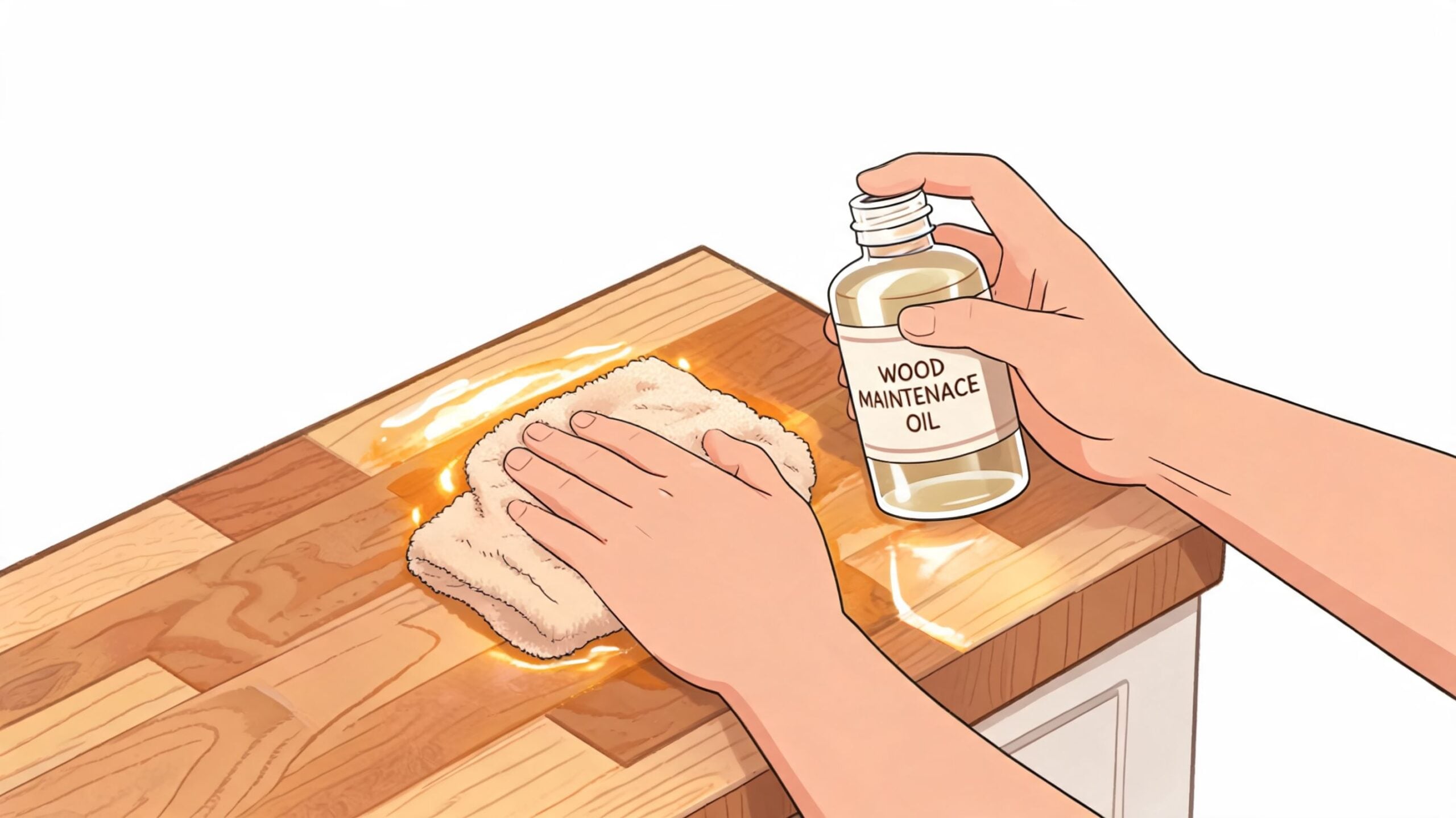
A week after installation is when many bathroom tops reveal whether the job was done well. In an Upstate New York home, steam from a hot shower, wet hands at the sink, and winter-dry air can all work on the wood at once. A butcher block vanity holds up well under those conditions if it is installed like a piece of furniture and protected like a wood window sill near a sink.
That starts with the installer.
Smart installation habits
A good installer plans for weight, water, and wood movement before the top ever reaches the vanity base. Butcher block is heavier than many stock tops, so the cabinet or wall support has to be solid and level. On a floating vanity, secure fastening into studs matters because the top, sink, plumbing, and daily use all add stress over time.
A few habits make a big difference:
- Pre-drill for fasteners, especially near edges and corners, to lower the chance of splitting.
- Seal every side of the top, including the underside and cutouts, so bathroom moisture cannot creep in from below or around the sink opening.
- Sand and finish carefully before installation so the surface starts out smooth and evenly protected.
- Caulk where the wood meets the sink or backsplash, using a neat, flexible bead that keeps splash water from settling into joints.
- Check for level across the full cabinet, because a slight twist can create stress points and leave water pooling instead of draining toward the sink.
That last point confuses some homeowners. If a vanity top is even a little out of level, water behaves like it does on a driveway with a low spot. It sits where you do not want it.
Easy care that keeps the top looking good
Long-term care is simple, but it needs consistency. Wipe up standing water around the faucet, sink rim, and soap dispenser area. Use a mild cleaner and a soft cloth. Skip abrasive pads and harsh chemical sprays, since they can wear down the finish long before the wood itself has a problem.
Keep an eye on the areas that see the most daily contact. Around the faucet base, at the front edge near the sink, and anywhere caulk meets wood, the finish usually shows wear first. If those spots start to look dry, dull, or slightly rough, it is time for a maintenance coat before moisture gets a foothold.
That is the true rhythm of butcher block ownership. Small touch-ups now prevent bigger repairs later.
For Albany-area families, season changes matter too. Wood naturally responds to shifts in indoor humidity, and older homes across the Capital Region can be especially noticeable for that. A properly finished top should handle normal seasonal change, but good bathroom ventilation helps a lot. Run the bath fan during showers, and leave enough airflow in the room so damp air does not linger on the surface.
A good fit for the right household
Butcher block suits homeowners who like materials with character and are comfortable with light upkeep. It gives a bathroom a warmer, furniture-like feel that stone and synthetic tops usually do not match.
It is not the best match for every home.
If a busy household leaves puddles on the counter, ignores ventilation, or wants a surface that can be forgotten for years, another material may be easier to live with. If you want natural wood, appreciate how it ages, and are willing to maintain the finish once in a while, butcher block can be a very satisfying long-term choice. In our experience helping local families choose wood furniture for decades, the people happiest with butcher block are the ones who go in with clear expectations and a good plan from day one.
Find Your Vanity at Tip Top Furniture
A lot of bathroom projects stall at the same point. You find a vanity style you like online, then realize the size is off by two inches, the wood tone fights the floor, or the finish details are vague enough to make you uneasy in a humid Upstate New York bathroom.
That is where an experienced local showroom helps.
For Albany-area homeowners, a butcher block vanity usually works best when it is chosen in person, with real guidance on sizing, wood tone, sink placement, and finish options. Older homes in the Capital Region often have tight layouts, uneven walls, and dimensions that punish guesswork. A vanity that looks perfect on a screen can feel clumsy in the room once the door swing, mirror height, and traffic path are taken into account.
Tip Top Furniture & Mattresses has served Greene County and the Greater Albany area from Freehold, NY since 1978, with professional design services available since 1984. That kind of history matters. A family-owned store that has helped local households for decades has seen the difference between a vanity that looks good on delivery day and one that still feels right years later.
The practical advantage is simple. You can compare wood species, construction quality, hardware, and finish choices in person, then match them with flooring, mirrors, and other furnishings under one roof. For a material like butcher block, that hands-on process can save expensive second guesses.
Options worth asking about
If you are shopping for a butcher block bathroom vanity, these are the services that often make the project easier:
- Custom ordering so the vanity fits your room, not the other way around
- Amish-crafted furniture for shoppers who want USA-made quality with lasting construction
- Design help to coordinate the vanity with flooring, mirrors, and the rest of the space
- Clearance opportunities for budget-conscious remodels
- Flexible financing if you are updating more than one part of the room at once
Custom work is especially useful in Upstate New York homes, where bathrooms are often more quirky than standard. A narrow alcove, an off-center plumbing line, or a need for extra storage can turn a basic purchase into a custom project very quickly.
If you want a butcher block vanity done right, seeing the wood in person and talking through the moisture plan with someone who knows local homes is a smart step. Visit Tip Top Furniture & Mattresses in Freehold, NY to explore custom-order options, heirloom-quality Amish craftsmanship, design guidance, clearance values, and flexible financing for a butcher block bathroom vanity that fits your home the right way.