7 Big Wall Art Ideas for Capital Region Homes


You finish the room, sit down on the sofa, and your eye goes straight to the wall that still feels unresolved. The rug fits. The furniture is in place. The room still looks incomplete because one large surface has no weight, no texture, and no connection to what sits below it.
We see this often in homes across Freehold, Albany, Schenectady, Troy, and the wider Capital Region. At Tip Top Furniture & Mattresses, our family has helped local homeowners furnish and coordinate their spaces since 1978, and our design services have been available since 1984. The pattern is consistent. Large walls create problems with scale, proportion, placement, and follow-through. A piece can look great in a photo and still feel too small, too busy, or disconnected once it is in your room.
Good results usually come from planning the whole wall with the room, not shopping for art in isolation.
At our Freehold showroom, we help customers sort through the practical decisions before anything goes up. That can mean using our Room Planner to test size and placement, comparing finishes against your dining set or entertainment unit, or custom ordering Amish-made furniture that supports the art instead of competing with it. If you already have a favorite piece, we can build the room around it. If you are starting with a blank wall, we can help narrow the options before you spend money in the wrong direction.
Execution matters just as much as the idea. Hanging height, width relative to the furniture, frame finish, wall material, and lighting all change the final result. If placement is part of your project, our guide to hanging your picture with precision covers the measurements that keep large art from feeling awkward or undersized.
Temporary options can make sense too. In apartments, guest rooms, or short-term setups, even renter-friendly vinyl wall art may be worth considering. The trade-off is durability and visual depth. Peel-and-stick pieces solve one problem, but they rarely create the same presence as framed art, textured panels, shelving, mirrors, or a custom wall treatment.
The ideas below are not just style inspiration. They are practical ways to handle a large wall, with clear trade-offs and local help available if you want to plan, order, and install with more confidence.
1. Make a Statement with Oversized Paintings & Gallery Walls
If you want the safest place to start, start here. A single oversized piece or a well-built gallery wall solves more large-wall problems than almost anything else.
One large canvas over a sectional gives the room a center of gravity. A gallery wall does something different. It adds rhythm and personality, and it works especially well in stairways, long hallways, and spaces where one giant piece would feel too formal.
Choose one mood, not five
An oversized abstract above a sofa in an Albany living room can soften a busy space fast. A calm scene over a bed often works better than anything high-contrast or overly detailed. Above a dining room sideboard, a gallery wall of family photos, prints, and a few textured pieces can feel collected without looking random.
The mistake people make is mixing too many visual directions. If your furniture is strong, keep the art quieter. If the upholstery is simple and the case pieces are clean-lined, that’s when a bolder painting can carry the room.
Practical rule: A large piece should look connected to the furniture beneath it, not like it floated onto the wall as an afterthought.
The hanging details matter more than people think
For a single piece, the classic eye-level rule still works. Hang it so the center sits around 57 inches from the floor. For gallery walls, keep the spacing consistent. That’s what separates a polished arrangement from a wall that feels improvised.
A few details make this easier:
- Mock it up first: Lay every frame on the floor before you touch the wall.
- Keep spacing consistent: A regular gap between frames reads cleaner than “close enough.”
- Light it intentionally: A picture light or track lighting helps big art hold its own at night.
- Tie it to the room: Pull one or two colors from your rug, sofa, drapery, or wood finish.
If you’re unsure about placement, our team often points customers to this guide on hanging your picture with precision, because scale problems usually start with height and spacing, not the art itself.
In practice, this idea works best when you already like the room and just need the wall to finish it. It works less well when the room itself still lacks structure. In that case, the wall may need more than art.
2. Add Depth with Architectural & Textured Walls
Some walls shouldn’t just hold art. They should be the art.
That’s what shiplap, wainscoting, slat walls, panel molding, and modern 3D treatments do well. They give the room texture, shadow, and permanence. This approach is especially useful in bedrooms, dining rooms, and living rooms where a plain drywall surface feels flat next to solid wood furniture.
When texture beats framed art
A tall headboard wall behind an Amish bed is often a good candidate for planking or panel detail. In a dining room, wainscoting can visually ground the table and chairs so the room feels finished even before decorative art goes up. In a contemporary media area, geometric wall panels can give the room enough interest that you don’t need much else.
This route makes sense when the room already has substantial furniture. It also helps in open-concept homes where one wall needs to carry more visual weight without becoming cluttered.
What works and what doesn’t
Textured walls work best when the finish choices relate to the rest of the room. If the floor has a warm wood tone and your furniture leans traditional or transitional, a cold gray feature wall usually feels disconnected. The same goes for overly busy 3D panels in a room that already has patterned upholstery and strong grain variation in the furniture.
A better approach is to keep one element as the lead and let the others support it.
- Use texture for structure: It’s strong behind beds, buffets, fireplaces, and media centers.
- Match undertones carefully: Paint, stain, flooring, and wood furniture need to agree.
- Plan before delivery day: It’s easier to finish this work before large furniture arrives.
- Use lighting to reveal texture: Wall washing and angled lighting make these surfaces come alive.
Good texture adds depth without shouting. Bad texture turns into visual noise.
This is also where one-stop planning helps. Tip Top’s design team can coordinate wall ideas with furniture and flooring selections, which holds more importance than might be assumed. Flooring is part of the visual field in every room, and when the wall treatment fights the floor, the room never settles. If you want inspiration beyond flat framed pieces, this look sits closer to unique textured art for walls.
This idea isn’t the fastest. It usually takes more commitment, more prep, and more finish decisions. But it often gives the most custom result.
3. Go Bold with Oversized Sculptural & Metal Art
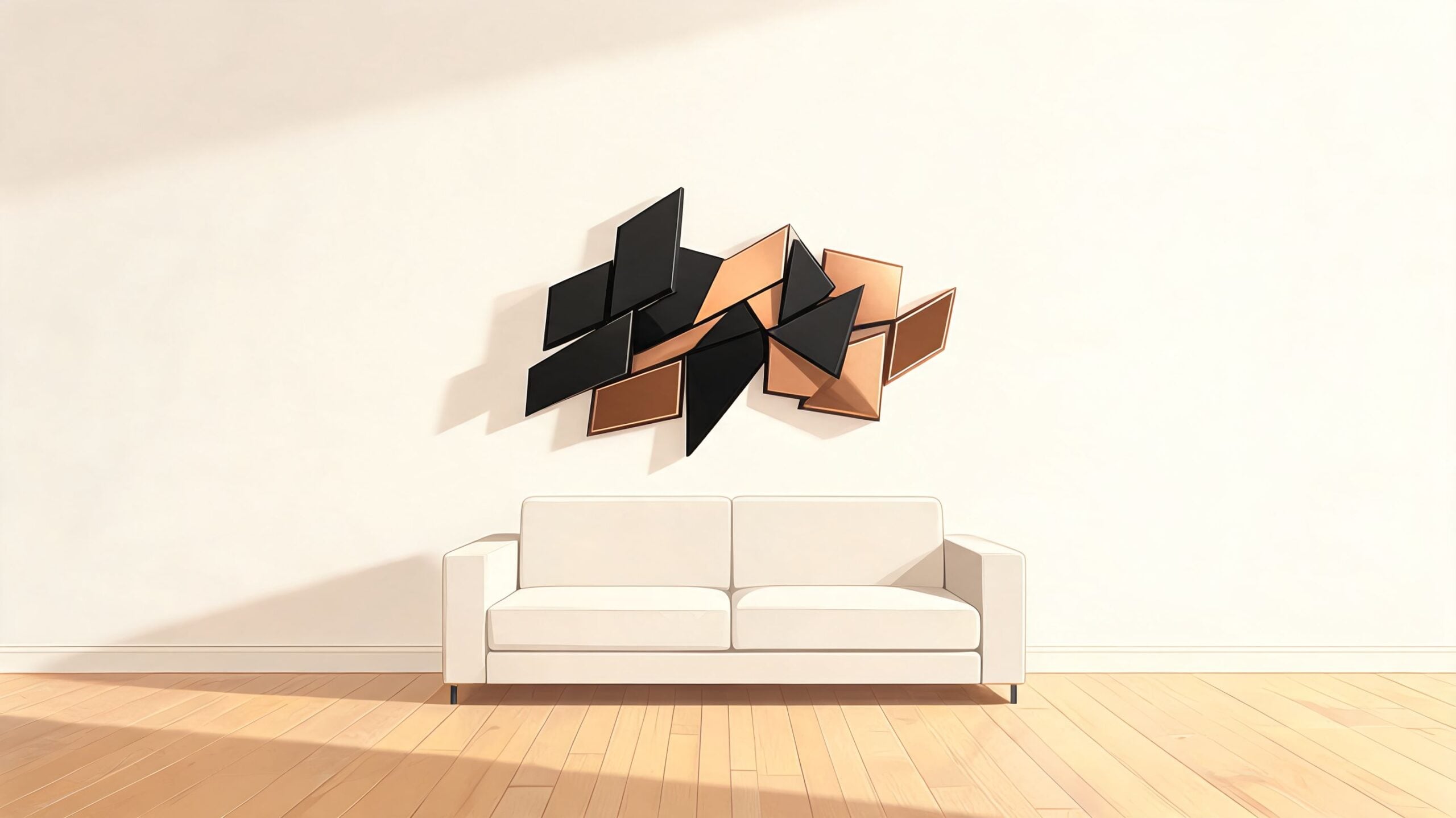
A large blank wall over the sofa or fireplace often needs more than a framed print. Sculptural and metal wall art solves a different problem. It gives the room shape, shadow, and a focal point that still reads clearly from across the space.
I recommend this category for entryways, long hallways, stair walls, and living rooms that already have strong furniture but still feel flat. Open geometric metalwork, carved wood panels, and layered mixed-media pieces can carry a wall without asking you to build a full gallery arrangement.
Use dimension with restraint
These pieces succeed because they change through the day. Morning light catches edges differently than evening lamplight. That gives the wall movement, which is something canvas art cannot do in the same way.
Scale is the first decision. A sculptural piece should usually span enough width to relate to the furniture below it. Too small, and it looks like an afterthought. Too large, and it starts crowding lamps, mantels, or ceiling lines.
Material matters too. Black metal gives a room definition. Brass or warm bronze can soften a space with a lot of wood. Carved wood wall art works especially well when you want texture and craftsmanship without adding another framed object.
What to check before you buy
This is one of the easiest categories to get wrong if you skip planning. Weight, projection from the wall, finish, and sight lines all matter.
- Measure the full composition area: Include nearby sconces, mantels, and tall case goods.
- Confirm the hanging method: Heavy pieces need proper anchors and enough wall structure to support them.
- Repeat the finish on purpose: If the art is matte black, tie that into lighting, hardware, or table legs so it feels intentional.
- Give it visual space: One strong piece usually works better than a large piece surrounded by too many accessories.
- Check depth in walkways: On narrow walls or hall paths, pieces that project too far can become a nuisance.
A good rule from the showroom floor is simple. If the wall art has strong shape, keep the styling below it quieter.
Tip Top also has a useful guide on what you should know about metal accents. The same finish logic applies here, especially if you are pairing wall art with cocktail tables, lighting, or Amish-made case pieces in the same room.
Pair the art with the right furniture
Execution matters more than the idea itself. A dramatic metal piece over a mass-produced console can feel disconnected. The same piece over a well-scaled solid wood buffet or media cabinet usually feels settled and complete.
At the Freehold showroom, we often help clients build the whole wall composition instead of choosing art in isolation. Start with the Room Planner to test width, height, and furniture spacing before you hang anything. If the room needs a stronger foundation, custom Amish-made consoles, buffets, and bookcases can be built to support the scale and finish of the art instead of competing with it.
Greenery also helps balance harder materials. If you like that mix of metal and organic form, you can browse large cacti from The Cactus Outlet for the kind of tall plant shapes that work well near statement walls.
Choose oversized sculptural or metal art when the room needs structure, shadow, and a single clear focal point. Pass on it if the space already has a lot of reflective surfaces, busy patterns, or tight circulation.
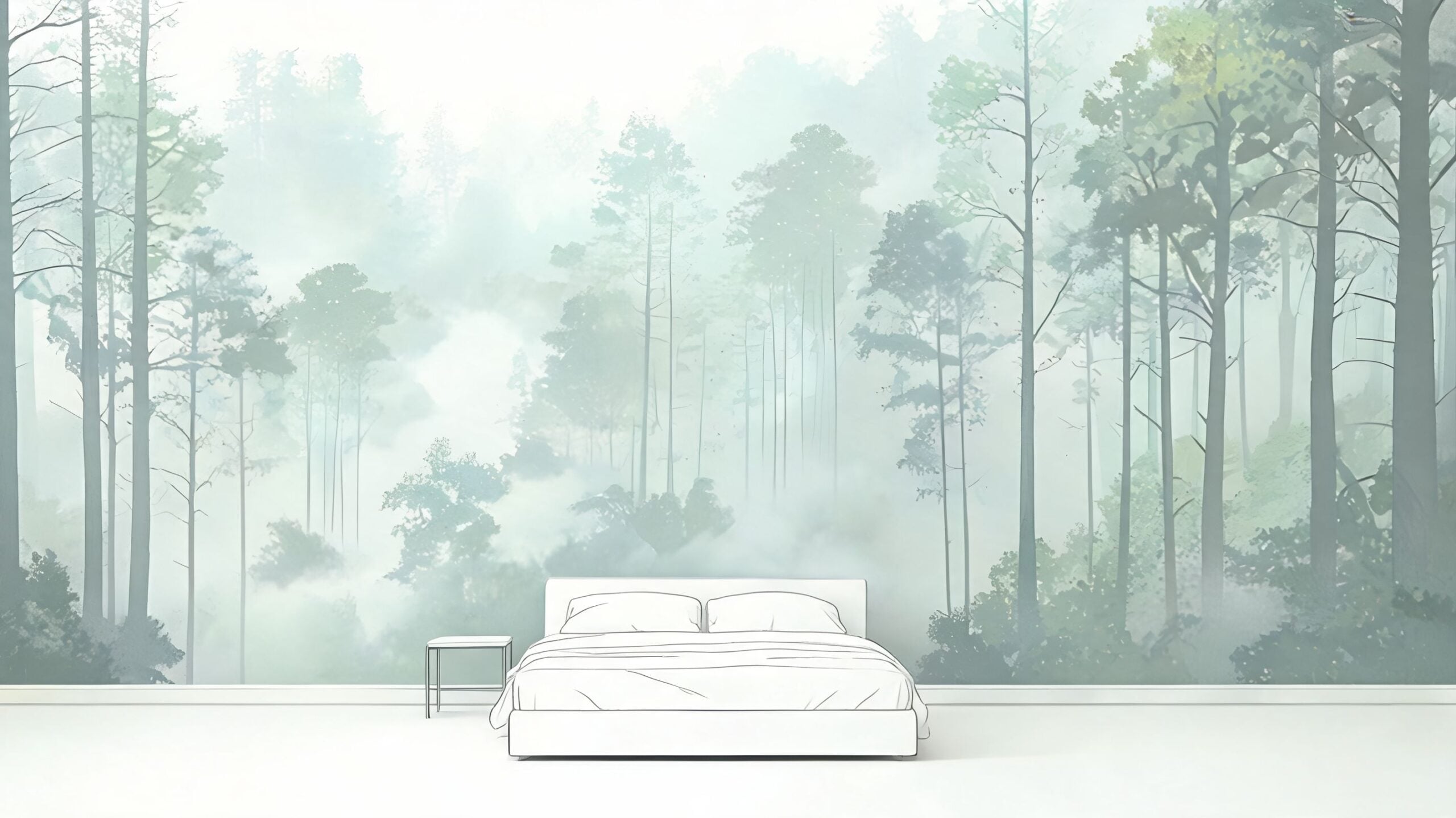
4. Embrace Drama with Wall Coverings, Murals, and Wallpaper
Wallpaper has changed. A lot of people still picture dated patterns and difficult removal, but current wall coverings can be one of the smartest big wall art ideas if you want impact without hanging a single oversized object.
A mural or bold wallpaper turns the entire wall into the statement. That works especially well in bedrooms, home offices, dining nooks, and powder rooms where one feature wall can carry the room.
Use pattern with intention
A botanical wallpaper behind a bed can make the whole bedroom feel layered, even if the furniture is simple. A black-and-white cityscape mural in a home office can define the workspace without adding shelves or more décor. In a dining nook, a geometric paper can visually separate the eating area from the rest of an open room.
Peel-and-stick products have also made this category easier to try. They’re not perfect for every wall surface, but they’ve opened the door for more flexible decorating choices, especially if you don’t want a fully permanent look.
Samples save mistakes
Wallpaper almost always looks different in your own lighting than it does online. Scale also fools people. A pattern that feels subtle on a sample image may feel huge once it covers a wall.
That’s why I always recommend slowing down at this stage.
Order the sample first, tape it up, and look at it in morning light and evening lamplight before you commit.
A few smart rules:
- Start with one wall: Especially if the room is open to other spaces.
- Prep the surface well: Wall condition matters with murals and peel-and-stick papers.
- Pull one color into the room: Accent chairs, pillows, or drapery should connect back to the wall.
- Keep nearby furniture honest: If the wallpaper is active, the furniture should usually be calmer.
If you’re dealing with an older space and unsure about wall prep, Tip Top has a useful article on whether you can put wallpaper over wallpaper. It’s one of those questions people often ask after they’ve already fallen in love with a pattern.
This is also where custom ordering helps. If you choose a wallpaper with a deep green, rust, slate blue, or warm neutral that you can’t quite match from in-stock décor, custom upholstery can pull the whole plan together. That’s a real advantage in a showroom environment where furniture and wall choices can be considered at the same time.
Wallpaper is a strong move when the room needs energy. It’s the wrong move when the room already has too many competing patterns, busy rugs, or highly figured wood in large amounts.
5. Combine Form and Function with Floating Shelves
Some large walls need storage and personality at the same time. Floating shelves solve both problems.
This approach works well above sofas, around desks, in family rooms, kitchens, and smaller walls that need flexibility more than a single permanent statement. It’s also one of the best big wall art ideas for people who like to rearrange, collect, and layer over time.
Shelves work when the styling stays disciplined
A long set of oak shelves above a sofa can hold framed prints, pottery, small plants, and books without feeling as formal as a giant painting. In a home office, custom shelves can create a library effect that fills a wall while staying useful. Around a fireplace or in a recessed niche, staggered shelves can make awkward architecture look intentional.
Where people go wrong is treating shelves like storage first and wall art second. If every inch is packed, they look heavy. If everything is the same height, they look flat.
Build rhythm with objects, not clutter
Good shelf styling depends on variation. You want taller and shorter forms, a mix of matte and reflective surfaces, and enough empty space that each object can breathe.
Here’s what tends to work well:
- Use odd-number groupings: Groups of three often read more naturally than pairs.
- Mix vertical and horizontal shapes: Stack books, then lean art, then add a sculptural object.
- Repeat materials: If the room has oak furniture, oak shelves usually look more intentional than a random painted board.
- Anchor with a few larger items: Tiny objects alone get lost on a big wall.
For many Tip Top customers, the best version of this idea is a custom shelf finish that relates directly to existing furniture. If you’ve just ordered an Amish dining set, entertainment center, or office piece, shelves in a compatible wood and stain can make the room look planned instead of pieced together.
Tip Top’s article on how to decorate shelves in any room is worth a look if you tend to overfill or second-guess display pieces. And before installation, it helps to test placement in the free room planning tool, especially when shelves need to clear lamps, TVs, or tall case goods.
This option also fits budget-conscious projects well. You can start simple, style the shelves with pieces you already own, and add better accessories over time. In a showroom setting like Freehold, where shoppers often coordinate furniture, décor, and flooring in one visit, shelves can become the bridge element that ties everything together.
6. Expand Your Space with an Oversized Mirror
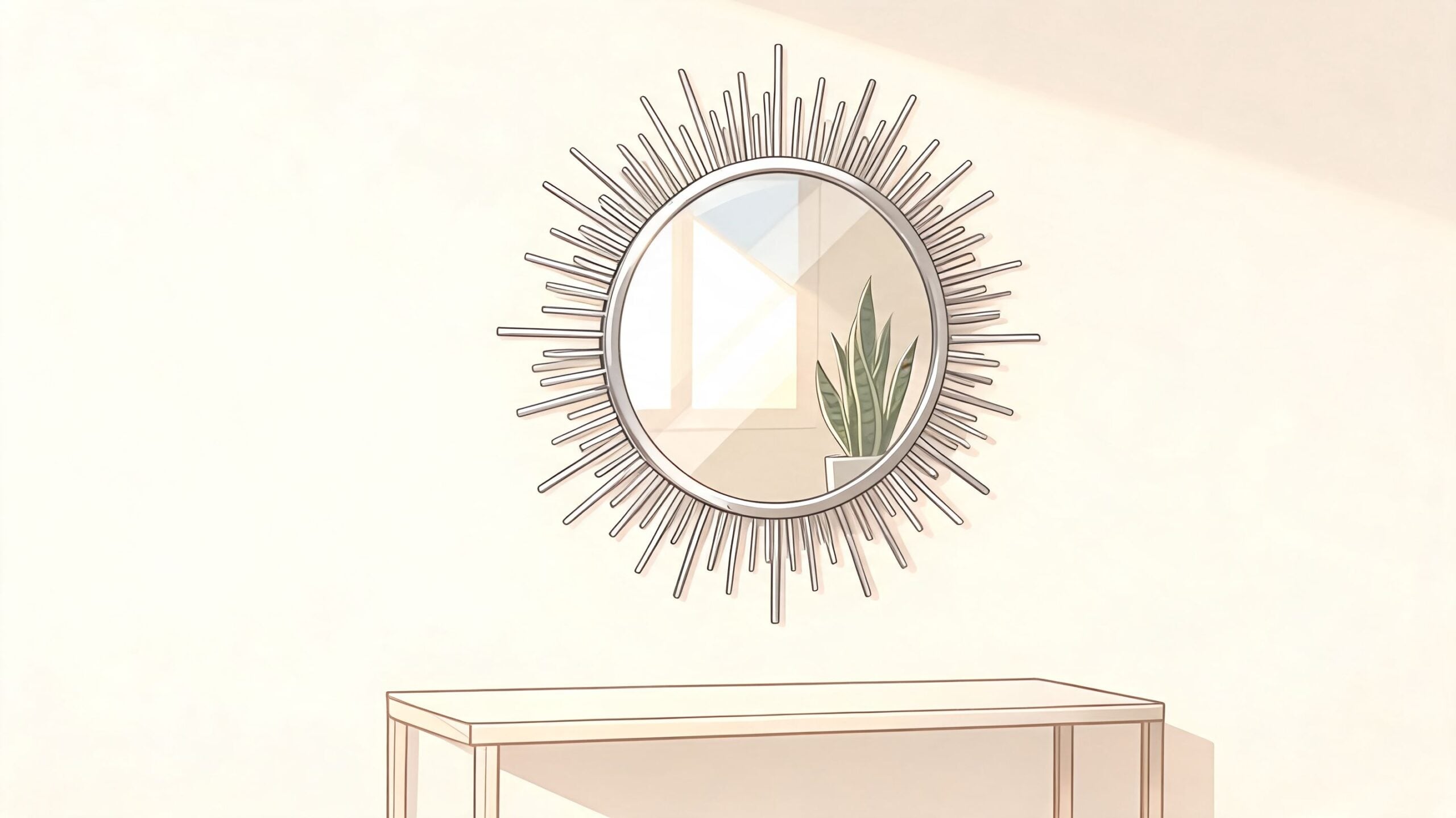
A blank wall can make a room feel unfinished, but the wrong art can add weight where the space already feels tight. An oversized mirror solves a different problem. It decorates the wall and changes how the room reads the moment you walk in.
That is why mirrors earn their place in entryways, dining rooms, bedrooms, and narrower living areas. They bounce light, break up heavy stretches of drywall, and give you scale without introducing another pattern or color story.
Why an oversized mirror works
A wide mirror above a buffet can pick up chandelier light and make the dining room feel brighter at night. A tall mirror at the end of a hallway can reduce that boxed-in feeling. In a bedroom with substantial wood furniture, a mirror often balances the room better than another framed print because it adds openness instead of more visual mass.
This choice works especially well when the furniture already does a lot of the visual work. A solid wood bed, dresser, console, or dining set has presence. The mirror complements it instead of competing with it.
Get the size and placement right first
The mistake I see most often is going too small. On a large wall, a small mirror looks accidental. The frame should have enough size to relate to the furniture below it, and the reflection should show something worth looking at.
Use these checks before you buy or hang one:
- Face it toward something attractive: A window, chandelier, textured wall, or a well-styled seating area.
- Match the frame to the room’s materials: Wood frames sit naturally with Amish-made case goods and dining pieces. Metal frames usually fit cleaner, more contemporary rooms.
- Test glare at different times of day: Sunlight and TV reflections can get irritating fast.
- Watch the hanging height: Over a console or buffet, keep the mirror visually connected to the piece below it instead of floating too high.
- Use floor mirrors carefully: Leaned mirrors can look relaxed and upscale, but they need enough clearance to feel intentional and safe.
A mirror should reflect light, a view, or a part of the room you want to repeat. If it reflects clutter, it will multiply the problem.
If you are trying to make a tighter room feel more open, Tip Top’s guide on how to make a small room feel big gives useful placement ideas that pair well with this approach.
At the Freehold showroom, this is usually where planning matters most. Bring wall measurements, a photo of the room, and the dimensions of the furniture that will sit below the mirror. We can use the Room Planner to test proportions before you commit, then help you choose a frame finish that works with your existing pieces or a new custom Amish-made console, buffet, or bedroom set. That is how a mirror stops looking like a last-minute fix and starts looking built into the room.
7. Get Personal with a Hand-Painted Mural
You walk into a room with one long blank wall, the furniture is in place, and framed art still feels like an afterthought. A hand-painted mural can solve that problem in a way ready-made pieces usually cannot. It gives the room a point of view that is built for the house, not borrowed from a catalog.
This approach works best when the wall needs to tell a specific story or set a clear mood. I usually recommend murals for nurseries, bedrooms, home offices, stair halls, and dining rooms where the scale of the wall would make standard art feel undersized or disconnected.
Custom matters here, but so does restraint. A soft tonal mural behind a bed or sofa can add depth without dominating the room. A map, outdoor scene, or botanical scene can bring in personality, but it needs to fit the architecture and the furniture plan. The best murals feel tied to the room, not pasted onto it.
The trade-off is commitment. Unlike framed art, a mural is part of the room’s finish package, so the concept has to hold up for years.
A few decisions make or break the result:
- Start with the room function: A child’s bedroom can support more whimsy than a primary bedroom or formal dining space.
- Choose the artist for their existing style: If their portfolio shows clean botanicals and soft washes, that is what they should paint for you.
- Finalize the major furnishings first: Upholstery, rug colors, wood tones, and window treatments should already be pointing in the same direction.
- Prepare the wall properly: Surface repairs, sanding, and primer matter. Paint will highlight flaws, not hide them.
- Keep the scale calm: Large forms and controlled color usually age better than busy detail or novelty themes.
Execution is where local planning helps. At the Freehold showroom, homeowners often bring photos, measurements, fabric swatches, and finish samples before they hire an artist. We can use the Room Planner to test how the mural will sit behind a bed, sofa, buffet, or desk, then help you pair it with custom Amish-made furniture that supports the artwork instead of competing with it.
That step saves expensive mistakes. A mural can be beautiful on its own and still feel wrong once the case goods, dining table, or bedroom pieces go in. Sorting out proportions, wood finishes, and sightlines first gives the artist a clearer target and gives you a room that feels intentional from wall to floor.
If you want a wall treatment no one else will have, this is one of the strongest options in the article. It just works best with a plan.
7-Point Comparison of Big Wall Art Ideas
| Item | 🔄 Implementation Complexity | ⚡ Resource Requirements (cost & time) | 📊 Expected Outcomes | 💡 Ideal Use Cases | ⭐ Key Advantages |
|---|---|---|---|---|---|
| 1. Oversized Paintings & Gallery Walls | Moderate, measurement, secure hanging, layout planning | Moderate cost/time (canvas, framing; quick if ready-made) | Dramatic focal point; cohesive room mood | Living room above sectional; staircases; tying rooms together | High visual impact; customizable; evolves over time |
| 2. Architectural & Textured Walls | High, precise installation, often professional | Higher upfront cost and time (materials + labor) | Added depth, shadow, and perceived home value | Feature wall in living/bedroom; pairs with solid wood furniture | Timeless architectural character; hides imperfections |
| 3. Oversized Sculptural & Metal Art | Moderate–High, heavy mounting, stud anchoring | Higher cost for materials/art + secure installation | Strong 3D statement; gallery-like sophistication | Entryways, above fireplaces, modern or industrial rooms | Durable, dramatic, low maintenance once installed |
| 4. Murals & Wallpaper | Moderate, surface prep and pattern alignment; peel-and-stick easier | Variable cost (removable options cheaper; custom murals costly) | Instant room transformation; scale and pattern introduction | Accent walls, dining nooks, offices; renters (removable types) | Dramatic change; vast design variety; removable choices |
| 5. Floating Shelves | Low–Moderate, stud mounting and styling attention | Low–moderate cost; quick install for pre-made/custom options | Functional display plus vertical emphasis | Home office, above sofas, nooks, library walls | Blends storage and display; customizable to match furniture |
| 6. Oversized Mirror | Moderate, heavy handling and precise placement | Moderate cost; fast visual impact once installed | Brighter rooms and illusion of larger space | Small rooms, dining areas, entryways, narrow halls | Timeless, dual-purpose (decorative + practical) |
| 7. Hand-Painted Mural | High, artist coordination, surface prep, lengthy process | High cost and time; bespoke commissioning | Unique, highly personalized focal wall; strong emotional impact | Homeowners seeking bespoke design; feature walls, kid’s rooms | One-of-a-kind artwork; perfect furniture harmony |
Your Vision, Our Expertise Bringing Your Walls to Life
You stand in the middle of the room, look at one big empty wall, and know the space still is not finished. The trouble is not finding ideas. It is choosing one that fits the room’s scale, the furniture you already own, and the way you use the space.
A large wall rarely works as an isolated project. Oversized art, shelving, wallpaper, mirrors, and panel details all need to relate to the sofa below them, the wood tone across the room, the light they catch during the day, and the traffic flow around them. Online inspiration can show a beautiful wall. It usually does not show what happens when that wall sits above your sectional, next to your flooring, or across from a heavy dining set.
As noted earlier, interest in wall art and large-scale decorative pieces keeps growing. More options can help. They also make bad decisions easier. Scale problems, weak placement, and mixed finishes are the mistakes I see first when homeowners try to solve a blank wall without a full-room plan.
At Tip Top Furniture & Mattresses, shoppers from Freehold, Albany, Troy, Schenectady, Greene County, and nearby communities often come in asking for one piece, then realize the wall issue starts somewhere else. Sometimes the art is too small for the furniture. Sometimes the room needs a mirror because the light is poor. Sometimes a custom shelf or cabinet works better than art because the wall also needs function. Good wall design starts with that kind of honest diagnosis.
The Freehold showroom gives you a practical way to make those calls. You can bring measurements, room photos, and finish samples. You can use the free Online Room Planner to test scale before you buy. You can compare wood tones in person, check how a framed piece will sit above a bed or sofa, and decide whether the wall needs contrast, storage, softness, or more light.
That same planning matters if you want a coordinated result instead of a one-off fix. Tip Top offers custom ordering, design help, flooring coordination, delivery, clearance options, and flexible financing. For a homeowner finishing a living room or tying together several rooms at once, those services make the process easier to manage and less expensive to redo later.
The custom side is especially useful for big wall projects. Amish-made and American-made pieces can be built to suit the wall rather than forcing the wall to accept a standard size. That matters when you need floating shelves that match a dining table, a console that works under oversized art, or a built piece based on a sketch, reference photo, or exact measurement.
If you are unsure where to start, ask one question first. What does the wall need to do?
A wall can brighten a dark room, anchor a seating group, add storage, soften hard surfaces, or bring in color that connects the furniture. Once that function is clear, the right solution gets much easier to choose, and much easier to execute well.
Bring the measurements. Bring the photos. Bring the swatch you are not sure about. Visit Tip Top Furniture & Mattresses to try the free Online Room Planner, explore custom order options, review flexible financing, or plan a trip to the Freehold, NY showroom. If you want help choosing big wall art ideas that work with your furniture, flooring, and layout, their design team can help turn one blank wall into a room that feels resolved.