Bar Cart Essentials for Your Albany NY Home


You’ve probably had this moment. Friends are coming over in Albany, the appetizers are handled, the living room looks good, and then you realize the drinks are still scattered across the kitchen counter. One bottle is by the sink, glasses are in two different cabinets, and the ice scoop has disappeared again.
That’s usually when a bar cart starts to make sense.
A good bar cart isn’t just a spot to park a few bottles. It gives your room a focal point, keeps entertaining simple, and makes even a small gathering feel more considered. For first-time hosts, that matters. You don’t need a dedicated bar room or a formal dining setup. You just need one hardworking piece that keeps the basics together and looks right at home in your space.
Around the Capital Region, I see this come up often with new homeowners, downsizers, and anyone trying to make a living room or dining nook work a little harder. The best setups aren’t overdone. They’re thoughtful, easy to maintain, and suited to the home they’re in.
Elevate Your Home Entertaining with the Perfect Bar Cart
A bar cart solves a very common hosting problem. You want guests to feel welcome, but you don’t want to disappear into the kitchen every time someone asks for a drink. When everything is organized in one place, the evening feels easier for you and more relaxed for everyone else.
That’s true whether you live in a downtown Albany apartment, a Schenectady colonial, or a larger home out toward Greene County. The size of the gathering can change. The value of a well-set-up cart doesn’t.
What I like most about a bar cart is that it works on two levels at once. It’s practical storage, yes, but it also acts like furniture with personality. It can soften an empty corner, add shine to a wood-heavy room, or bring a little formality to a casual family space without making it feel stiff.
A well-done bar cart tells guests, “You’re welcome here. Stay awhile.”
If you’re not sure what kind of drinks to build around, start with familiar recipes instead of trying to stock for everything. A roundup of classic drink inspirations can help you choose bottles and tools that match the way you entertain.
There’s also a decorating side to this that people often overlook. The cart should support the room, not interrupt it. If you want your entertaining area to feel polished without getting fussy, these design tips for effortless entertaining are a smart companion to your setup.
What makes a first bar cart work
For most homes, success comes down to three things:
- The right scale so the cart fits the room and traffic flow
- The right essentials so you can make a few drinks well
- The right styling so it looks intentional even when no one’s using it
Get those three right, and your bar cart becomes one of the most useful pieces in the room.
Choosing the Right Bar Cart for Your Capital Region Home
Before you buy glassware or think about cocktail napkins, choose the cart itself carefully. The best one for your home isn’t always the flashiest. It’s the one that fits your space, your style, and the way you host.
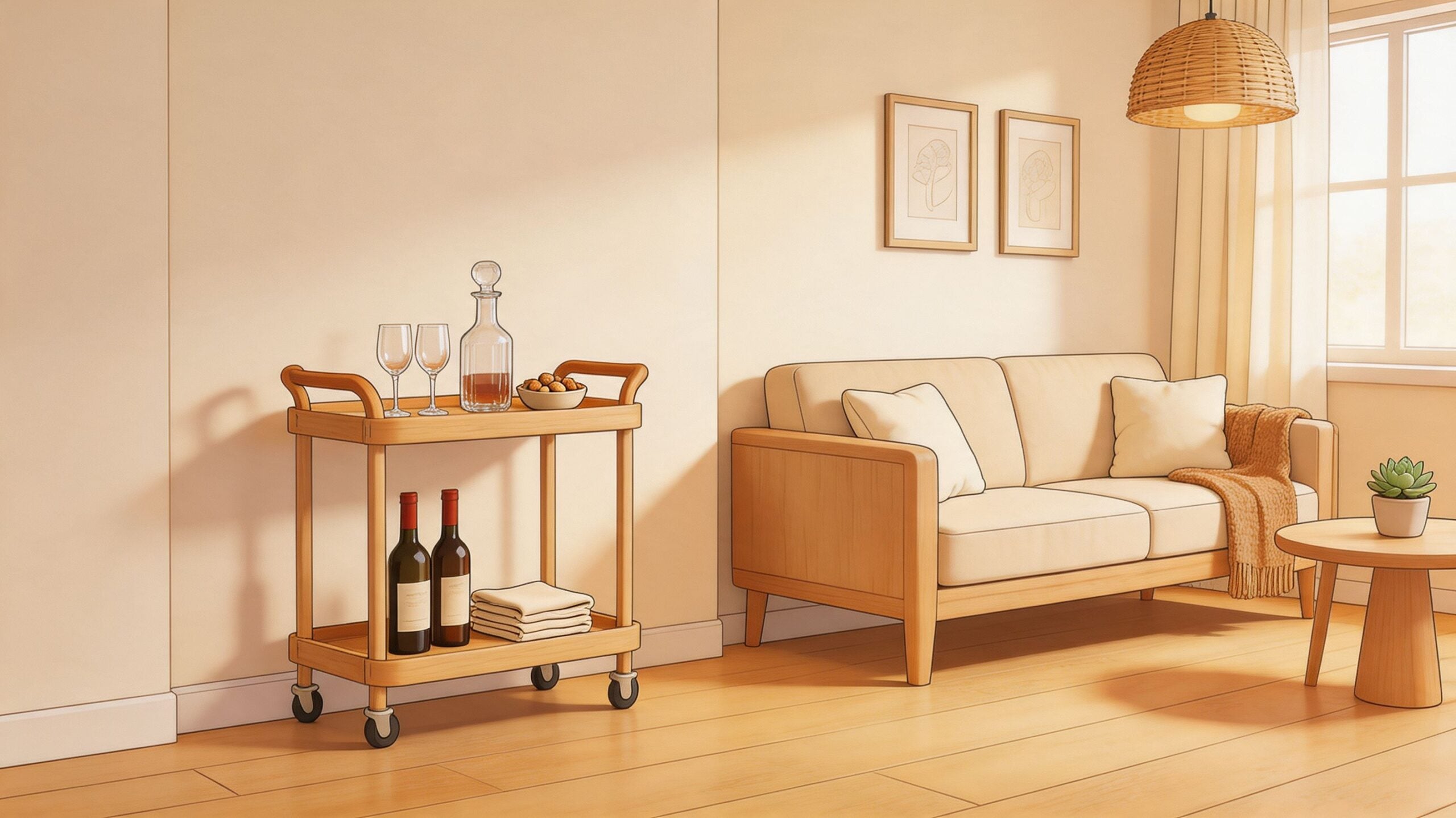
The bar cart has a long design history, which is part of why it works in so many interiors. It originated as a tea trolley in England around 1807, was repurposed during Prohibition from 1920 to 1933, and later became a staple of Mid-Century interiors, giving it a more than 200-year timeline of adaptation and style, as noted in this history of the bar cart. That history explains why a cart can look natural in everything from a traditional living room to a cleaner modern space.
Start with size and placement
Most mistakes happen here. People pick a cart they like online, then discover it blocks a walkway or looks undersized beside the sofa.
Think about these questions first:
- Will it live in the living room or dining room? A dining area can usually handle a slightly larger piece.
- Do you need it to move? If you host in different rooms, wheels matter.
- What’s nearby? Lamps, side chairs, and door swings all affect how much room you really have.
Before choosing a piece, measure the area carefully. If you need help getting the dimensions right, this guide on how to measure a room for furniture perfectly will save you a lot of second-guessing.
Practical rule: Leave enough space around the cart that someone can pour a drink without feeling like they’re standing in a hallway.
Match the material to your home
A bar cart should connect to the furniture you already own.
Here’s a simple comparison:
| Style direction | What works well | Best fit for |
|---|---|---|
| Mid-Century inspired | Walnut, teak tones, simple lines | Ranch homes, updated split-levels, minimalist interiors |
| Glam or formal | Metal frames, glass shelves, mirrored accents | Dining rooms, entertaining spaces, dressier living rooms |
| Rustic or grounded | Solid wood, darker finishes, sturdier silhouettes | Farmhouse homes, traditional interiors, cozy family spaces |
| Industrial | Mixed metal and wood, open shelves | Lofts, casual open-plan rooms, urban spaces |
Think beyond “off the shelf”
Sometimes the right cart isn’t a standard cart at all. A compact console, a small server, or a custom-scale accent piece may fit better, especially in older Capital Region homes where walls, radiators, and traffic patterns are less predictable.
That’s where custom order furniture options become useful. If you need a specific finish, shelf spacing, wood tone, or footprint, a custom approach can make the piece feel like it belongs in the room instead of being squeezed into it.
Stocking the Shelves Part 1 The Essential Spirits and Mixers
Once you have the cart, the next question is usually the one that makes beginners freeze. What do I put on it?
The answer is less than many assume.
A first bar cart should not look like a restaurant back bar. It should support a handful of drinks you enjoy making and serving. If you try to buy everything at once, you’ll spend too much, crowd the shelves, and still feel unprepared because nothing is organized around real use.
Start with a versatile core
For most homes, a beginner-friendly cart includes a few broad categories:
- A clear spirit for crisp mixed drinks
- A darker spirit for sipping or spirit-forward cocktails
- One bottle with citrus or herbal character for variety
- A favorite liqueur that helps tie classic recipes together
- Bitters for depth
That may sound abstract, but it keeps you flexible. You’re not stocking for every possible request. You’re building a collection that can handle a casual weeknight drink, a small dinner party, or a holiday visit.
If your household already leans toward one style, let that guide you. A whiskey household doesn’t need to pretend it’s a gin household. A cart should reflect the people who live there.
Keep mixers simple and useful
Clutter can quickly accumulate. Tiny specialty syrups and novelty mixers take over fast.
Instead, focus on a few staples that work across multiple drinks:
- Club soda or sparkling water for lengthening drinks without making them heavy
- Tonic water if you like crisp, bitter cocktails
- Ginger beer for a little spice
- Simple syrup for balance
- Fresh citrus such as lemons and limes
- A juice or two that your household will finish
A bowl of citrus can do double duty. It’s useful, and it adds color to the cart. That’s a small designer trick, but it works.
Buy for the next few gatherings, not for the next five years.
What to skip at the beginning
New hosts often waste money in three places:
Too many duplicate spirits
One good bottle in a category is more useful than three that all do almost the same job.Mixers nobody remembers to replace
If you won’t keep it fresh, don’t build around it.Large bottles with no purpose
If you can’t name at least a couple drinks you’ll make with it, leave it on the shelf for now.
A balanced first shelf
A good beginner shelf usually feels edited. You should be able to glance at it and know what you have. Bottles should fit comfortably, labels should be visible, and there should still be breathing room for a tray, an ice bucket, or a small bowl of garnishes.
That restraint is part of good styling, but it’s also practical. When guests can see what’s available, serving gets easier. And when restocking day comes around, you won’t be digging through a crowded cart wondering what’s still usable.
Stocking the Shelves Part 2 Glassware and Tools of the Trade
This is the part that separates a decorative cart from a functional one. Good tools remove guesswork, and that matters more than people expect. You can buy decent spirits and still end up with a disappointing drink if you’re measuring poorly, straining badly, or using the wrong glass.
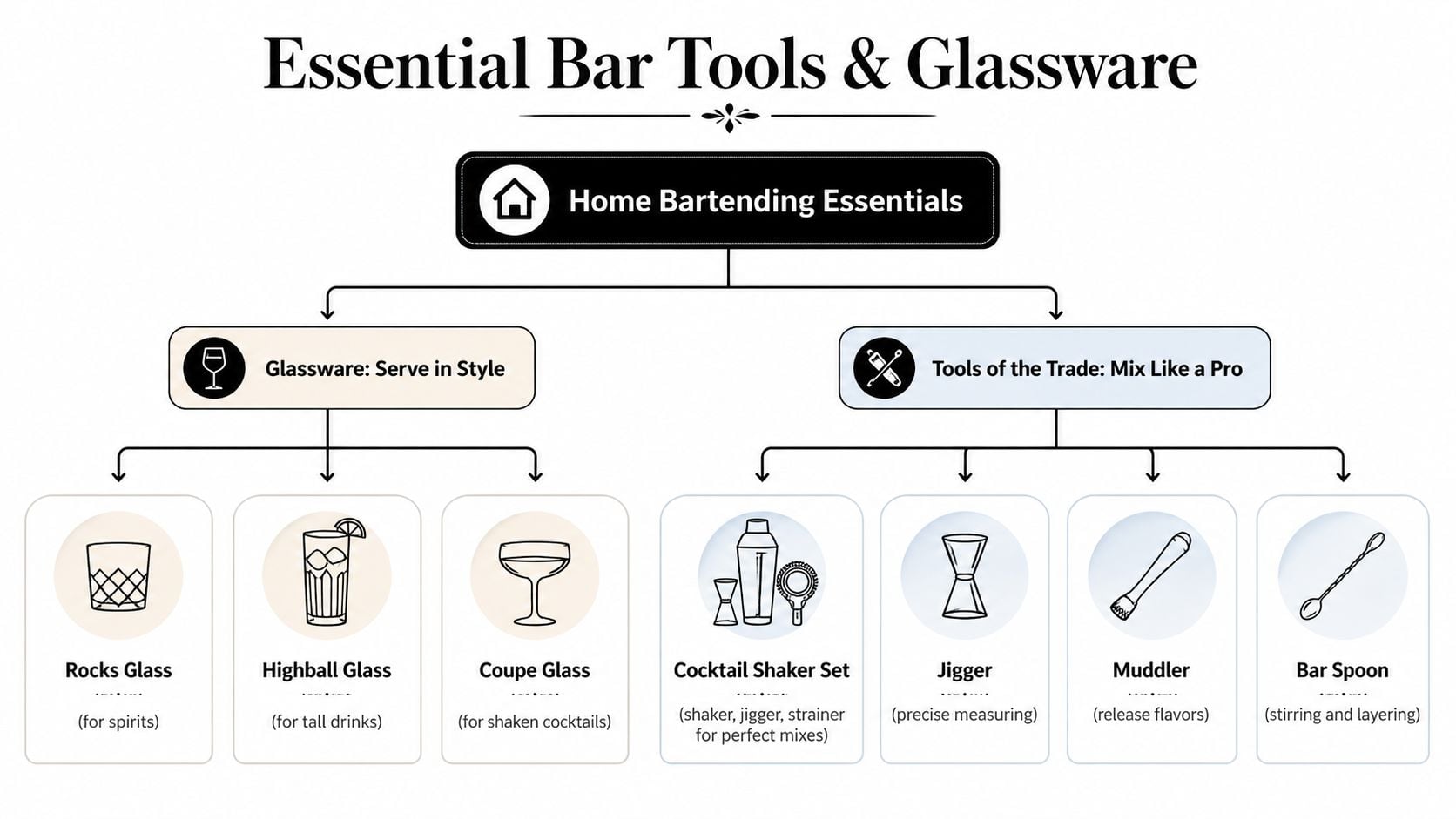
A properly equipped cocktail shaker set is the one tool group I’d call indispensable. According to this guide to essential bar cart tools, a proper set can support a 90% success rate in recreating professional-quality cocktails at home, and a double-sided jigger helps prevent overpouring that can waste 20% to 50% of a premium spirit. That same source notes that a Hawthorne strainer is important for filtering solids and preventing dilution.
The three tools to buy first
If you only buy a few things, buy these:
Cocktail shaker set
This is your foundation for shaken drinks. A proper set usually includes the shaker itself plus the pieces that help you measure and strain accurately.Double-sided jigger
This is what keeps your drinks consistent. Beginners often think free-pouring looks easier, but measured pours give better balance and make it easier to repeat a drink that turned out well.Hawthorne strainer
This tool sits over the shaker and catches ice shards, pulp, and herbs before they reach the glass.
If you enjoy whiskey and want to go a little deeper into serving pieces and finishing touches, this article on discover essential bourbon accessories offers useful ideas without making the setup feel overcomplicated.
The right bar tools don’t make your cart look more serious. They make your drinks taste more intentional.
The glassware most homes actually need
You don’t need a separate glass for every cocktail family. For a first bar cart, keep it tight.
Here’s the easiest working set:
| Glass type | Best use | Why it earns a spot |
|---|---|---|
| Rocks glass | Spirits, short cocktails, drinks over ice | Compact, versatile, easy to stack |
| Highball glass | Tall mixed drinks | Handles soda, tonic, and longer pours well |
| Coupe glass | Shaken cocktails served without ice | Adds a dressier feel without needing a full stemware collection |
That trio covers most entertaining situations while keeping shelf space under control.
Small additions that help
After the basics, a few supporting items make life easier:
- Muddler for citrus, herbs, or sugar
- Bar spoon for stirred drinks
- Bottle opener or corkscrew for wine and beer guests
- Napkins and coasters to protect surfaces
- A small tray to corral tools and stop the cart from looking scattered
If you’re trying to make the cart look organized as well as stocked, the principles in this guide on how to decorate shelves in any room apply surprisingly well. A bar cart is still shelf styling, just with bottles and barware instead of books and vases.
Styling Your Bar Cart Like a Professional Designer
A bar cart can be fully stocked and still look unfinished. That’s usually because everything on it is functional and nothing has been arranged with the room in mind. Styling matters because the cart lives out in the open. It’s part storage, part display.
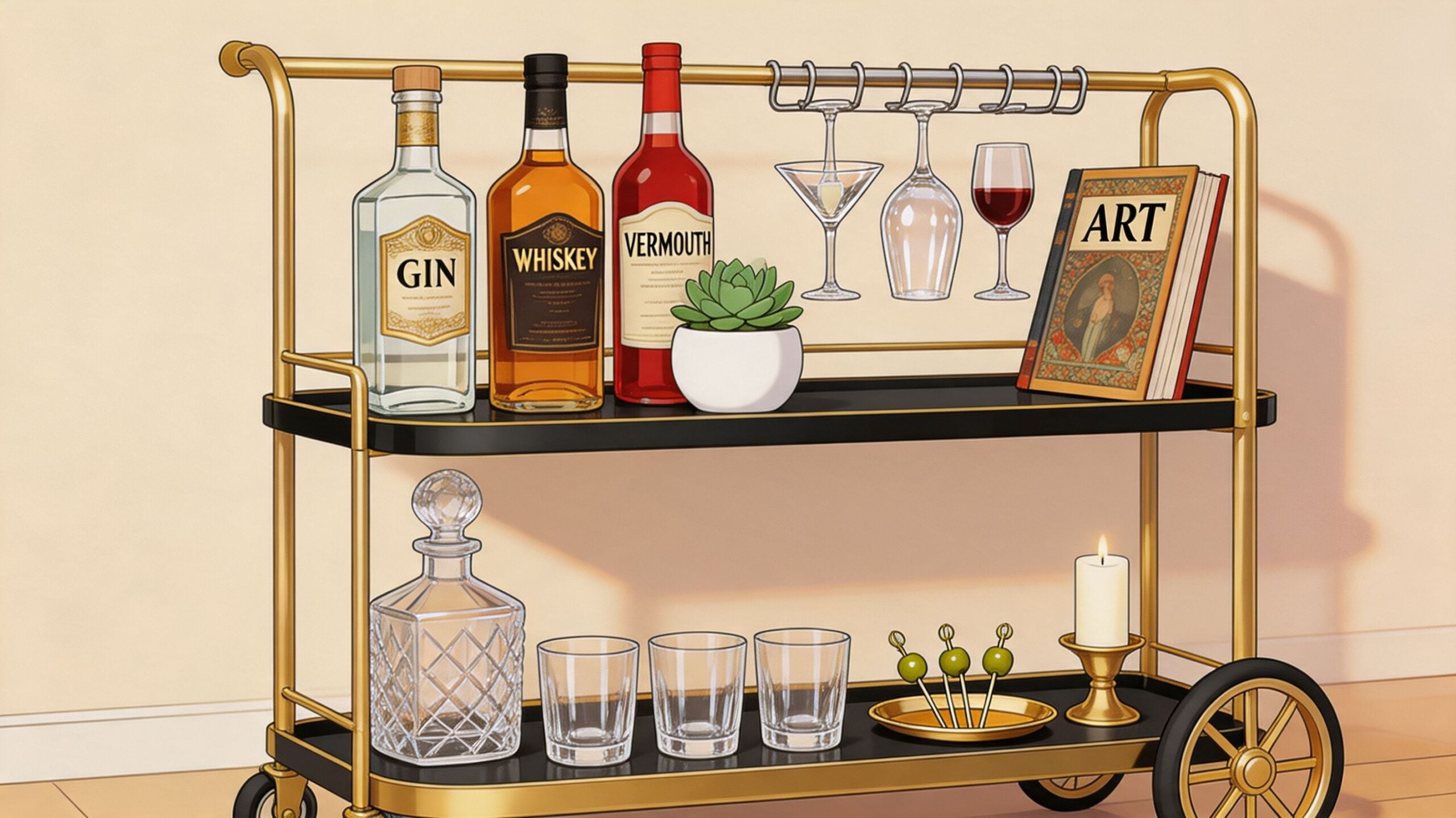
The strongest bar carts usually mix three elements: what you need, what looks beautiful, and what helps the piece connect to the rest of the room. If you overfocus on only one of those, the setup falls flat. It either looks cluttered, too sparse, or overly staged.
Build in layers
Think vertically. A cart looks better when the eye moves up and down instead of reading one flat row of objects.
A simple arrangement often includes:
- Tall items at the back such as bottles or a vase
- Medium-height pieces in the middle like a shaker or ice bucket
- Lower items in front such as glasses, a bowl of citrus, or coasters
You can also use a small stack of books to lift one object and add height variation. That’s an old stylist’s trick because it works in nearly every room.
A bar cart should look collected, not crowded.
Add one softening element
Bar carts naturally include hard surfaces. Glass, metal, labels, and shiny tools can start to feel cold if everything has the same finish.
That’s why I like to add one softer piece, such as:
- a small plant
- linen cocktail napkins
- a woven coaster stack
- a ceramic bowl
- a framed piece of small art nearby
For more visual ideas, this article on how to elevate your home bar setup is a helpful reference for arrangement and balance.
Use nearby decor to support the cart
A cart doesn’t have to carry the whole styling burden by itself. The wall behind it and the furniture around it matter too.
Try one of these combinations:
| Nearby feature | What it adds |
|---|---|
| Lamp beside the cart | Warmth and evening atmosphere |
| Small artwork above it | A finished, anchored look |
| Accent chair nearby | Creates a conversational zone |
| Mirror behind it | Light reflection and a little formality |
If you’re comfortable styling a coffee table, you can style a bar cart. The same principles of balance, negative space, and mixing practical with decorative items apply. This guide to the perfectly styled coffee table translates nicely to bar cart decorating too.
For broader visual inspiration, I also like the way Architectural Digest home entertaining ideas show rooms as complete environments rather than isolated furniture pieces. That’s the right mindset here. The cart should feel like part of the room’s story.
Sourcing and Budgeting Your Bar Cart in the Albany Area
Most people don’t struggle with the idea of a bar cart. They struggle with execution. Where do you find one that fits your room? How much should you spend? What should you buy now, and what can wait?
Those are good questions, especially in the Albany area where homes vary so much. A compact apartment near downtown Troy has different needs than a farmhouse in Greene County or a suburban family room outside Colonie.
Decide what matters most to you
Before shopping, pick your priority. Most buyers lean toward one of these three paths:
Budget first
You want a good-looking cart at a comfortable price, and you’re willing to build the accessories over time.Style first
You have a clear design direction and want the cart to match existing furniture, finishes, or architectural details.Longevity first
You’d rather buy one well-made piece that lasts and grows with the room.
None of those is wrong. Problems start when people try to do all three at once without ranking them.
Where to save and where not to
Save on things that are easy to upgrade later. Decorative accessories, specialty glassware, and novelty tools can all come later.
Spend more carefully on:
- The cart itself, because size, finish, and construction affect the whole room
- Core tools, because poor tools create daily frustration
- Everyday glassware, because it gets used often and handled by guests
If you’re furnishing the room more broadly, convenience matters too. Coordinating nearby seating, lighting, storage, and even flooring often creates a better final result than buying one piece at a time from unrelated places.
Local shopping makes the process easier
This is one area where local sourcing helps. You can compare finishes in person, see whether the scale feels right, and ask real questions about delivery, assembly, and custom possibilities.
That’s especially valuable for heavier carts, solid wood pieces, or anything that needs to work in an older home with tighter turns and narrower entries. A service that handles furniture delivery and assembly takes a lot of stress out of the process.
If a bar cart has to be “made to work,” it usually won’t work for long.
Budget for the full setup, not just the cart
A common mistake is spending the whole budget on the furniture piece and forgetting the rest. Your total setup may also include glassware, tools, coasters, mixers, and a few styling items that keep the cart from looking bare.
A better approach is to think in layers:
- Layer one is the cart
- Layer two is the working equipment
- Layer three is the visual finish
That gives you a more realistic shopping plan and helps you avoid buying the wrong things in a rush.
Maintaining Your Bar Cart for Lasting Enjoyment
A bar cart works best when it’s ready without needing a full reset every time guests come over. That doesn’t take much. A few regular habits keep it looking sharp and make entertaining easier.
Care for the cart based on its material
Wood carts need a gentler touch than metal or glass. Use a soft cloth, wipe spills promptly, and don’t let citrus, syrup, or condensation sit on the surface. If your cart has a natural wood finish, coasters and trays do a lot of protective work.
Metal frames and glass shelves are simpler to clean, but fingerprints show quickly. Keep a soft polishing cloth nearby and give the shelves a quick wipe before guests arrive.
Clean tools right after use
This one saves the most aggravation. Wash the shaker, jigger, strainer, and spoon after each use instead of leaving sticky residue overnight. Citrus pulp and syrup dry fast, and once they harden into seams and strainers, cleanup gets annoying.
A small routine helps:
- Empty melted ice before it drips under bottles
- Rinse tools promptly so sugar and juice don’t cling
- Check glassware for water spots before putting it back
- Replace tired garnishes instead of pretending they still look fresh
Edit the cart every so often
Bar carts collect clutter just like bookshelves do. An empty bottle, mismatched napkins, or a random unopened mixer can make the whole setup feel neglected.
Take a few minutes now and then to remove what you’re not using. Straighten labels, refill what matters, and put seasonal extras elsewhere.
A tidy bar cart feels welcoming even when no one’s drinking from it.
Start Your Home Bar Journey in Freehold Today
A well-planned bar cart brings together function, style, and hospitality in a way few small furniture pieces can. It helps you host more easily, keeps your space organized, and adds personality to the room even on ordinary days.
If you’re in Albany, Schenectady, Troy, Greene County, or anywhere in the Capital Region, it’s worth taking the time to choose a cart that fits your home instead of settling for one that almost works. The right size, the right materials, and a few smart essentials make all the difference.
And if you’re near Freehold, seeing pieces in person can make the decision much easier.
Ready to create a bar cart that fits your room and your budget? Visit Tip Top Furniture & Mattresses in Freehold, NY to explore quality furniture for Capital Region homes, including custom-order options, Amish-crafted pieces, clearance finds, and coordinated design help. If you’d like guidance, ask about a complimentary design consultation or financing options to make your project easier from the start.