Coverlet vs Quilt: A Buyer’s Guide for Albany Homes


You’re standing at the foot of the bed, looking at the last layer that will finish the room, and the question sounds simple until you have to answer it. Coverlet or quilt? One feels lighter and cleaner. The other looks cozier and more substantial. In Albany-area homes, that choice matters because your bedding has to work through muggy summer stretches, damp shoulder seasons, and cold winter nights.
A lot of shoppers use the terms interchangeably, but they’re not the same thing. A quilt has three layers stitched together: the top fabric, an inner batting layer, and the backing. A coverlet is a single decorative layer, usually lighter in feel and easier to use as either a top layer or a layering piece.
That difference isn’t just modern retail language. Historically, coverlets held a major place in American homes. Before quilts became commonplace in American households, coverlets were one of the most widely used bedding items, arriving with European weavers in the 18th century. The craft remained popular until after the Civil War, when railroad expansion made mass-produced goods readily available, diminishing the demand for hand-woven textiles (The Farmers' Museum and Fenimore Art Museum).
For anyone who wants a broader look at materials and insulation while choosing the perfect quilt, it helps to start there first, then compare it against how a coverlet behaves on your own bed.

Your Guide to Choosing the Perfect Bedding
The easiest way to think about coverlet vs quilt is to ask one practical question first. Do you want your top layer to add warmth, or mostly add finish and flexibility?
A quilt usually does both. It brings visual interest to the bed, but it also contributes real insulation because of the batting inside. A coverlet leans more toward finish, texture, and lighter comfort.
Start with the basic job of each piece
Here’s the clean distinction:
| Bedding type | Construction | Best use | Overall feel |
|---|---|---|---|
| Coverlet | Single-layer woven fabric | Warm-weather use, layering, cleaner tailored look | Light, smooth, breathable |
| Quilt | Top, batting, and backing stitched together | Cooler nights, cozy styling, extra warmth | Heavier, textured, cushioned |
That table sounds simple, but it solves most confusion right away. If you sleep hot, wash bedding often, or prefer a bed with a clean, simple look, a coverlet usually makes more sense. If you want more warmth and more traditional texture, a quilt often wins.
Why people get stuck between the two
In the showroom, the hesitation usually comes from wanting one product to do everything. Most bedding doesn’t. The top layer that looks crisp in July may not be the one you want in January. The one that feels snug on a cold night may feel like too much in a humid bedroom.
Practical rule: Choose your bedding by how you sleep first, then by how you want the bed to look.
That order matters. People often shop the appearance first and then live with the wrong feel for months.
History still shapes the way these pieces work today
Coverlets and quilts both carry tradition, but they developed around different needs. Early American coverlets were woven textiles, often practical and decorative at once. Quilts evolved into a bedding form people valued for warmth, stitching, and handmade character.
That’s why even now, a coverlet often reads as woven and precisely finished, while a quilt reads as stitched and cozy. You can see that difference from across the room, and you can definitely feel it once you’re under it.
A Detailed Comparison of Core Differences
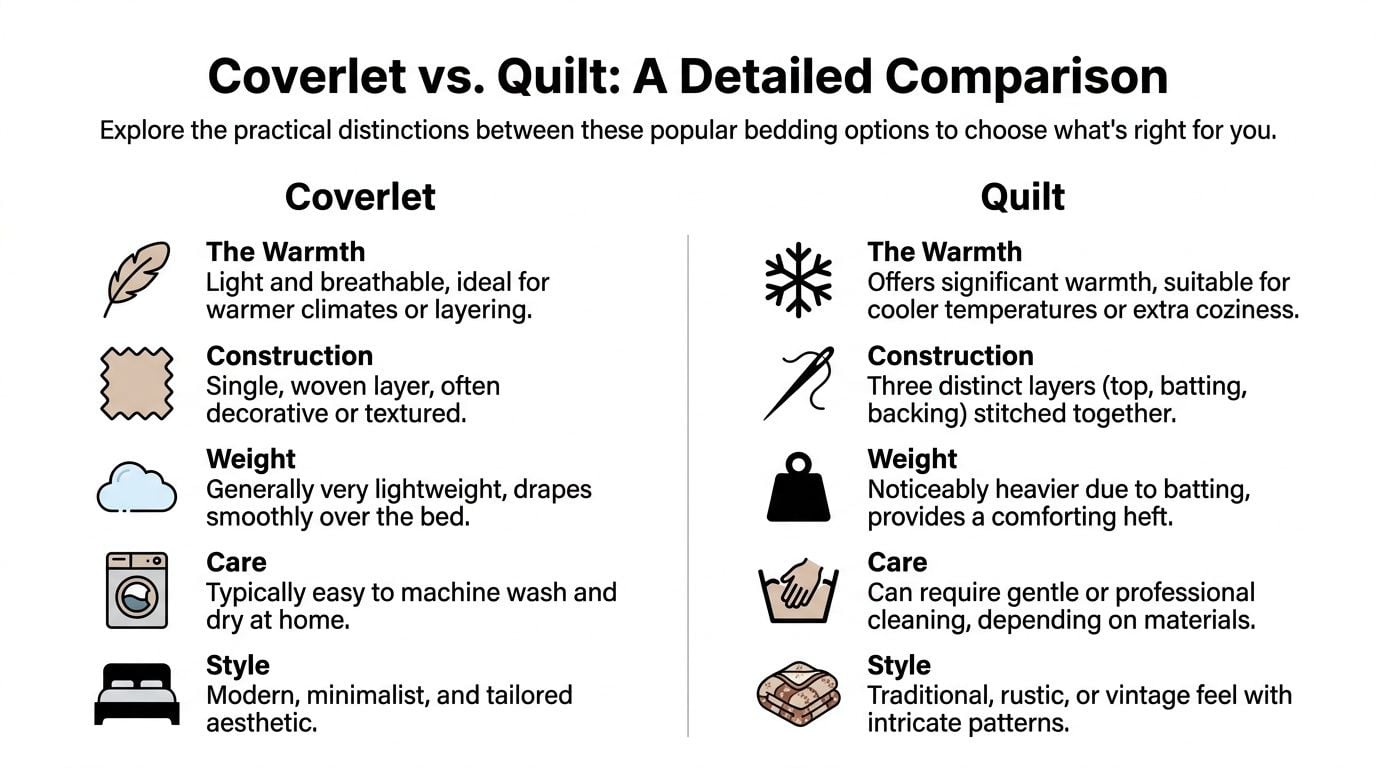
The best bedding choice usually comes down to four things. Warmth, construction, drape, and day-to-day use. If you compare those side by side, the decision gets much easier.
Warmth and weight
This is the biggest dividing line. Quilts have a three-layer structure with batting that provides an R-value of around 1.0 to 2.0, while single-layer coverlets have an R-value under 0.5 according to Peacock Alley’s quilt vs coverlet guide. In plain language, quilts hold warmth. Coverlets release heat more easily.
That means a quilt is usually the stronger choice for colder bedrooms and winter use. A coverlet is usually better when the room already runs warm, or when you want a top layer that won’t feel heavy.
If you’ve ever kicked bedding off halfway through the night and then pulled it back on before morning, you already know this trade-off. A quilt can feel secure and substantial. A coverlet feels lighter and less trapping.
Construction and feel
A quilt has stitched layers, so it tends to feel loftier and softer in a padded way. You notice both the stitching pattern and the fill beneath it. Some people love that lightly weighty, cocooning feel.
A coverlet feels flatter and more compact. The texture comes from the weave or surface finish rather than from internal fill. It sits closer to the bed and usually gives the whole setup a neater silhouette.
If you want to understand the middle layer that changes a quilt’s feel so much, this explanation of What Is Batting: A Guide to the Heart of Your Quilt is useful background.
A quilt changes the sleep experience more. A coverlet changes the look of the bed more.
That’s a simplification, but it’s a helpful one.
Size and drape
Many coverlets are chosen for their neat, precise drop. They don’t always flood the sides of the bed with volume. Instead, they tend to skim the mattress and create a tidy profile.
Quilts often look more generous on the bed, especially when paired with thicker mattresses or layered shams. Because they carry more body, they can create a fuller, softer appearance.
This becomes important in two situations:
- Platform beds and modern rooms often benefit from the cleaner line of a coverlet.
- Traditional bedrooms and farmhouse looks often feel more complete with the fuller presence of a quilt.
Everyday practicality
A coverlet is often easier to flip, fold, and restyle during the week. It doesn’t fight you much. If you like pulling back the bed in the morning and resetting it quickly, that matters.
A quilt asks for a little more handling because it has more bulk. The upside is that it can sometimes replace the need for additional layers during cooler stretches.
Here’s a direct comparison:
| Decision point | Coverlet | Quilt |
|---|---|---|
| Heat retention | Lower | Higher |
| Visual bulk | Slimmer | Fuller |
| Bed-making ease | Easier to shake out and fold | More substantial to handle |
| Best role | Main layer in warm weather or style layer year-round | Main layer in cool weather or cozy layered bed |
What works and what doesn’t
Some combinations work beautifully. Some don’t.
What works
- A coverlet over sheets for warm months
- A quilt as the main top layer in colder rooms
- A coverlet with a folded quilt at the foot for flexible layering
- A quilt in a guest room where visitors may want more warmth available
What doesn’t
- Using a heavy quilt as your only top layer in a room that already sleeps hot
- Expecting a coverlet alone to provide the same warmth as a quilt in winter
- Choosing by pattern alone without thinking about your mattress height and preferred drape
A note on craftsmanship
If you’re drawn to hand-finished bedding, quilts often showcase craftsmanship more visibly. Stitching, pattern placement, and batting all affect the final result. That’s one reason heirloom-minded shoppers are often pulled toward Amish-made quilt styles and other traditionally constructed pieces.
But that doesn’t make a coverlet the lesser choice. It’s a different tool. In many bedrooms, especially cleaner-lined spaces, the coverlet is the smarter and better-looking answer.
Styling Your Bedroom With Coverlets and Quilts
The bed usually decides the room’s mood before anything else does. You can have a beautiful dresser, solid nightstands, and the right lamps, but if the bedding feels off, the whole room feels unfinished.
The tailored look
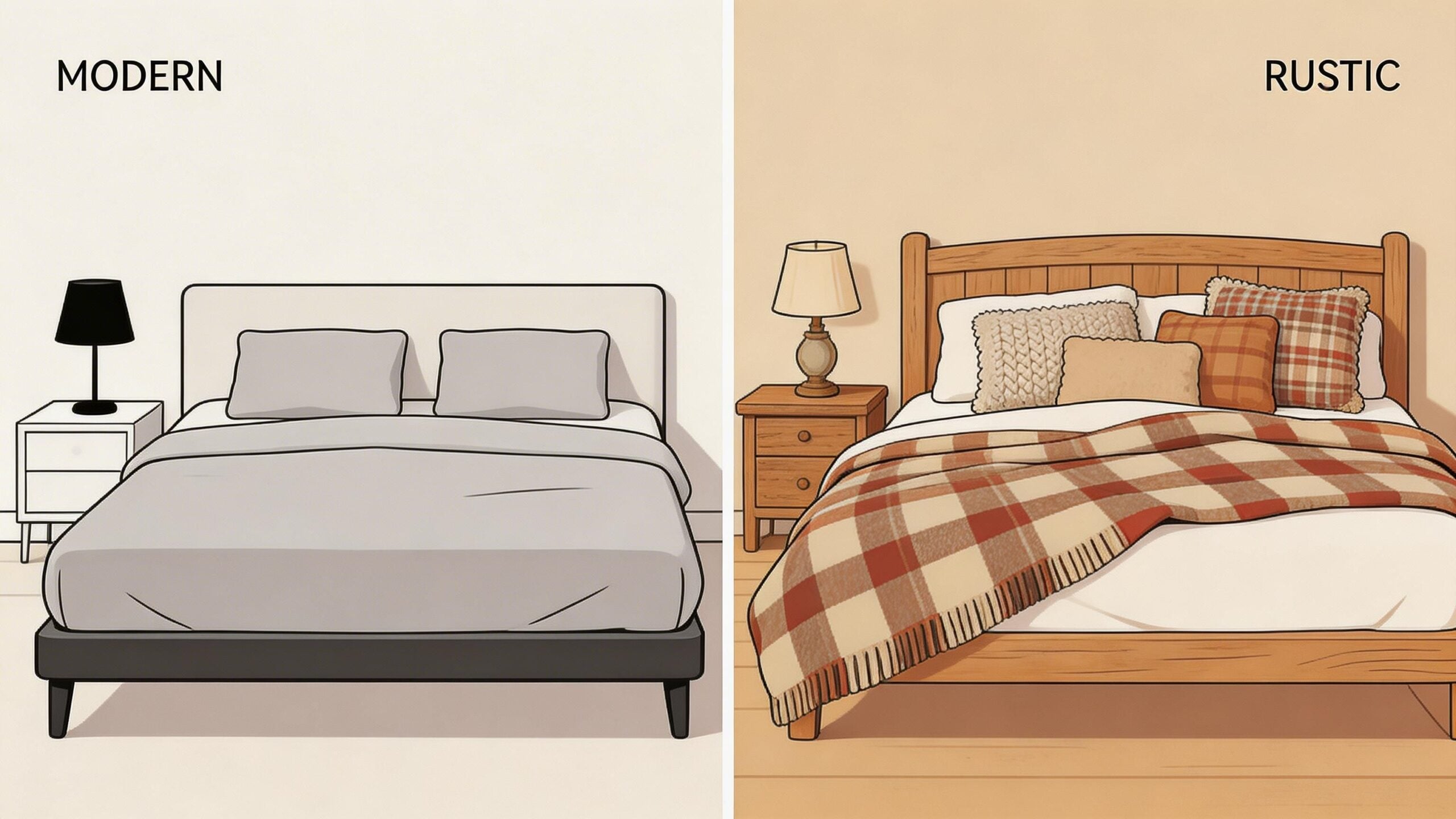
A coverlet is often the right answer when you want the room to feel orderly, light, and current. Think painted furniture, simple window treatments, and a bed that looks crisp instead of overfilled.
In that kind of room, a coverlet accomplishes a lot. It smooths out the bed, adds texture without visual weight, and keeps the furniture lines visible.
This is especially effective when:
- Your bed frame has a strong silhouette and you don’t want bulky bedding hiding it
- You like a hotel-inspired setup with tucked sheets and minimal excess fabric
- Your room already has pattern elsewhere, such as rugs or drapery
The cozy and collected look
A quilt changes the atmosphere immediately. It adds comfort before anyone even sits down. That’s why quilts fit so naturally in traditional bedrooms, farmhouse rooms, and spaces with warm wood tones.
If the room has an Amish-made bed, paneled furniture, or a more classic setting, a quilt often feels like it belongs there. The stitching and loft create depth that flatter solid wood furniture especially well.
Bedding should match the room’s character, not compete with it.
Layering both together
Many bedrooms look their best with this layered approach. You don’t always have to choose one and exclude the other. In many Albany-area homes, the strongest setup is a coverlet as the everyday base with a quilt folded at the foot of the bed.
That combination does three things well:
- It keeps the bed from looking flat.
- It gives you a quick extra layer when the night turns cooler.
- It lets you shift the room seasonally without redoing the whole bed.
A folded quilt at the foot also adds color and pattern in a controlled way. You get the charm of the quilt without making the entire bed feel visually heavy.
Match the bedding to the furniture
This is the step people skip. Bedding doesn’t live alone. It sits against the headboard, beside the case goods, and under the room’s lighting.
If you’re refreshing the whole bedroom, it helps to look at how bedding, pillows, wood tones, and scale work together. The ideas in Bedroom 101 accessorizing the bed of your dreams are useful for seeing how those pieces come together in a finished room.
A coverlet tends to support cleaner, more architectural rooms. A quilt tends to support softer, more layered ones. Neither is automatically better. The better choice is the one that makes the entire bedroom feel intentional.
Choosing Bedding for Upstate New York Seasons
Upstate New York doesn’t ask one thing from bedding. It asks several. A bed that feels comfortable in a warm Albany summer bedroom may feel completely wrong once winter settles in, especially in homes that run cooler at night.
Summer and shoulder season use
In many local homes, a coverlet earns its keep from late spring through early fall. It feels lighter, looks neat, and doesn’t overdo warmth when the room already has humidity in it.
That matters more than many people realize. With Upstate New York’s average annual humidity between 70 to 80 percent, multi-layered quilts can take over 12 hours to air dry, while single-layer cotton coverlets dry in under 4 hours, according to Casper’s coverlet vs quilt guide. In practical terms, that makes coverlets easier to live with in damp conditions.
If you’ve ever washed bedding on a sticky day and found it still feeling a little heavy hours later, you’ve seen this firsthand.
Winter comfort and real-world use
A quilt usually comes into its own when the bedroom cools down and the house feels drier and colder. It’s not just about appearance. It’s about sleeping without constantly adjusting layers through the night.
In Greene County and across the Capital Region, winter bedding needs are often different room by room. A sunny upstairs bedroom may need less. A cooler guest room may need more. That’s why many households end up keeping both a coverlet and a quilt in rotation rather than trying to make one piece handle every season.
The local mildew issue people overlook
This is the part national bedding advice often misses. In a humid region, drying time is part of product performance.
A quilt that stays damp too long after washing can become a hassle fast. That doesn’t mean quilts are a bad choice. It means you need to be honest about your laundry setup, your storage space, and how often you want to wash top bedding.
Coverlets are often easier for:
- Homes without a lot of indoor drying space
- Busy families who need bedding back on the bed quickly
- Bedrooms that stay a little damp in summer
For a broader look at seasonal sleep changes, sleep better as seasons change by adjusting bedding and mattress setup is worth reading.
In this region, the best bedding choice isn’t just about warmth. It’s also about how easily the piece recovers after washing in humid conditions.
That’s why many practical households use a coverlet most of the time and bring in a quilt when the temperature drops.
Care and Longevity for Your Bedding Investment
Good bedding lasts longer when you care for it according to how it’s built. That sounds obvious, but it’s where many people shorten the life of a piece without realizing it.
Caring for a coverlet
A coverlet is usually the easier piece to own. Because it’s a single layer, it tends to be simpler to wash, simpler to dry, and simpler to store.
For most coverlets, the routine is straightforward:
- Wash gently according to the fabric label
- Dry thoroughly before putting it back on the bed or into storage
- Fold loosely rather than packing it tightly into a crowded closet
- Rotate use if you keep more than one top layer for the season
The main risk with a coverlet is less about damage and more about appearance. If you overcrowd the washer or leave it crumpled after drying, it won’t sit on the bed as cleanly.
Caring for a quilt
A quilt asks for more patience because the batting and stitched construction need protection. You don’t want the fill shifting, bunching, or staying damp longer than it should.
A safer approach is:
- Check the care instructions first, especially for hand-finished or heirloom-style pieces.
- Use gentle washing methods when appropriate for the fabric and stitching.
- Let the quilt dry fully and evenly before folding or returning it to the bed.
- Store it in a breathable space rather than sealing it away while any moisture remains.
That last point matters in this region. Even a well-made quilt can suffer if it’s put away before it’s fully dry.
Storage habits that help both
The best storage is boring storage. Clean, dry, and breathable. Avoid stuffing either piece into plastic while it’s fresh from laundering. Give it time to release moisture fully.
If you switch bedding seasonally, keep the off-season piece somewhere with air movement and away from obvious dampness. A bedroom closet often works better than a basement area that feels cool but holds moisture.
For shoppers building out a fuller bedding setup, this complete guide to bedding mattress protectors comforters helps connect the top layer with the rest of the bed.
Which one lasts longer
Longevity depends less on category and more on construction, fabric quality, and care habits. A well-made coverlet can look excellent for years if it’s washed properly and not overworked. A well-made quilt can become a genuine heirloom if it’s treated with patience.
If you know you want low maintenance, a coverlet is usually the easier answer. If you value craftsmanship and don’t mind more careful handling, a quilt often rewards that effort.
A Buyer's Guide for Your Household
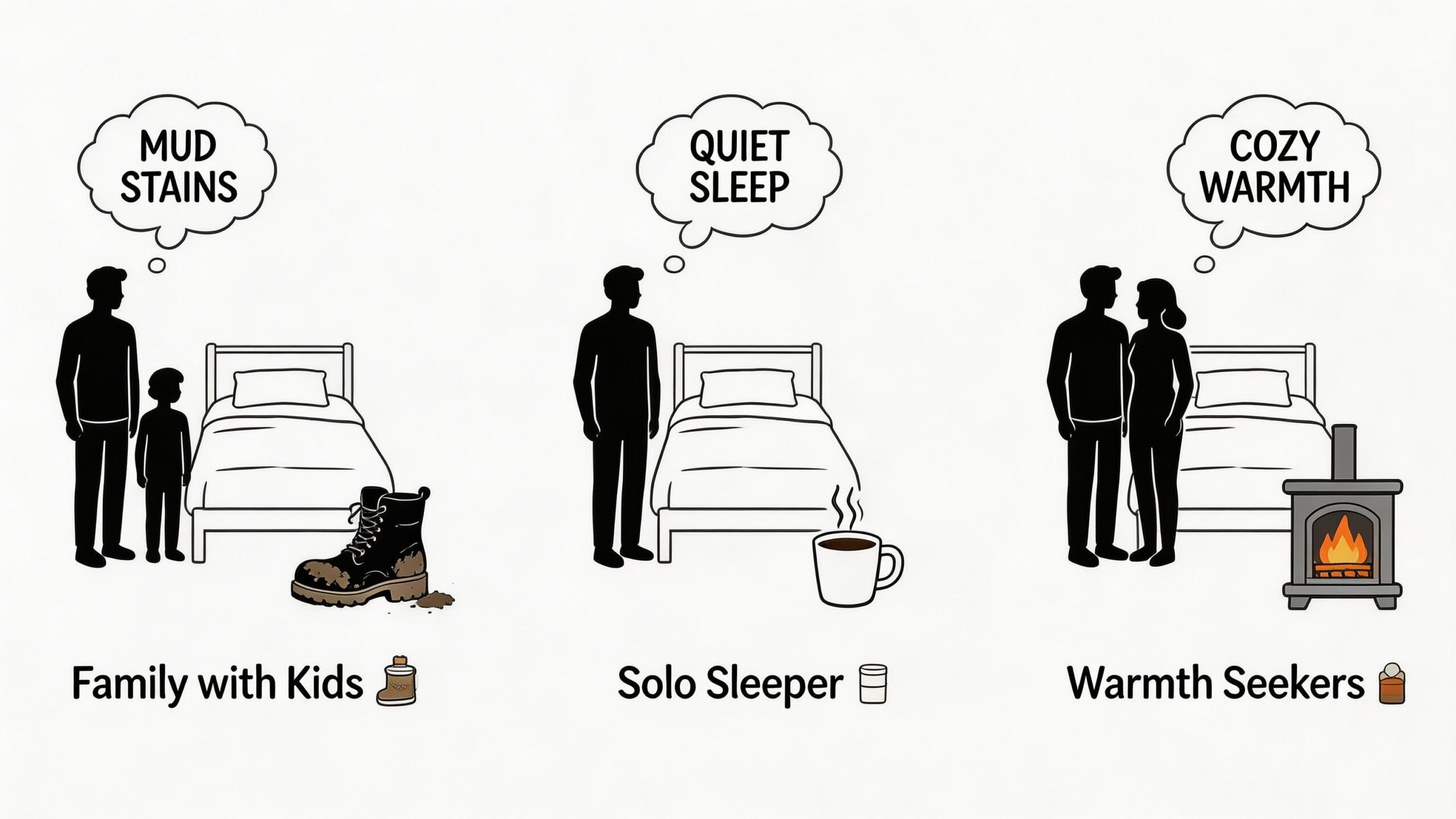
Shoppers don't typically choose bedding based on abstract categories. They shop from real-life needs. Kids, pets, hot sleep, budget, guest rooms, laundry habits, and personal taste all shape the right answer.
For families with kids
A coverlet often makes more sense in a household where the bed gets used hard. It’s easier to pull straight, easier to wash regularly, and less fussy when someone climbs on it with socks, snacks, or a coloring book.
That doesn’t mean quilts are off the table. It just means the everyday practicality of a coverlet usually wins when you know spills and frequent laundering are part of the picture.
Best fit:
- Primary bedrooms that need quick upkeep
- Kids’ rooms and teen rooms
- Guest rooms that need to look neat fast
For the heirloom seeker
If you care about craftsmanship and want bedding with more soul, quilts deserve serious attention. This is especially true if you’re drawn to Amish-made pieces, hand-finished work, or bedrooms with solid wood furniture that call for texture and warmth.
A quilt often feels less like a simple accessory and more like part of the room’s identity. It has presence. It also asks for more care, which many heirloom-minded buyers are happy to give.
If a custom look matters, explore options through custom orders. That route is often the best fit when you want the bedroom furniture and bedding style to feel aligned rather than pieced together.
For the budget-conscious shopper
Being flexible pays off in this situation. You don’t always need to chase one specific look at full price. Sometimes the smartest buy is the high-quality piece that’s available now and fits the room well.
A coverlet can be a strong budget pick because it handles multiple roles. It can be the top layer in warm weather, a decorative layer in cooler months, and an easy style refresh without reworking the whole room.
A quilt can also be an excellent value if you want one substantial layer instead of buying several lighter pieces. The better choice depends on how you sleep and how often you want to wash it.
If value is leading the decision, browse the clearance section. It’s often the easiest way to stretch your budget without settling for a look you don’t want.
For the hot sleeper
Hot sleepers usually do better with less bulk over the body. That makes a coverlet the more natural choice in many cases. The lighter feel is often more comfortable, especially if the mattress already sleeps warm or the room doesn’t cool off quickly at night.
A quilt isn’t automatically wrong here, but it usually works better as an occasional layer than an everyday one. If you know you run warm, don’t talk yourself into a thick top layer just because you like the pattern.
For the person furnishing the whole bedroom
If you’re starting from scratch, don’t choose bedding in isolation. Bedding should support the bed, mattress, scale of the room, and how you use it.
Start with mattress size and drop, then work upward. This bed sheet measurements guide is a practical starting point because sizing mistakes create half the frustration people blame on the bedding itself.
The right bedding choice for your household is the one that matches your routine, not the one that looks best in a staged photo.
Experience the Difference at Our Freehold Showroom
Reading about coverlet vs quilt helps. Touching both in person helps more.
At our Freehold showroom, homeowners from Albany, Schenectady, Troy, Greene County, and across the Capital Region can compare bedding the way it should be compared. By feel, weight, texture, and how each piece looks on an actual bed. A coverlet that sounds perfect online may feel too spare in person. A quilt that looks bulky in a photo may feel just right once you handle it.
That in-person comparison matters most when you’re making a full bedroom decision, not just buying one top layer. Bedding has to work with your bed frame, your mattress height, your sleep habits, and the look you want in the room.
If you want more guidance, our team can help you connect the bedding choice to the whole space through interior design consultation services. That’s useful when you’re coordinating bedding with Amish furniture, matching finishes, or planning a complete room update.
You can also explore:
- Custom order options if you want a more personal look or specific furniture pairing
- USA-made mattresses if your comfort issue starts with sleep temperature or support, not just the top layer
- Flexible financing if you’re doing more than one room or tackling a larger bedroom refresh
- Clearance opportunities if you want quality and value at the same time
The biggest advantage of shopping locally is simple. You don’t have to guess. You can compare, ask questions, and leave with a bedding choice that fits your home and your season, not just a trend.
Frequently Asked Questions About Bedding
A few questions come up again and again when shoppers are deciding between a coverlet and a quilt.
FAQ Quick Answers
| Question | Answer |
|---|---|
| Can I use a coverlet and quilt together? | Yes. A common setup is a coverlet as the main layer with a quilt folded at the foot for added texture and optional warmth. |
| Which one usually looks more modern? | A coverlet often creates the cleaner, more tailored look. Quilts usually feel more traditional or layered. |
| Which is easier to care for? | In most homes, a coverlet is easier because it has less bulk and simpler construction. |
| Is a quilt always warmer? | In general, yes. The batting layer gives it more insulating ability than a single-layer coverlet. |
| How do I choose the right size? | Start with your mattress size and depth, then decide how much drape you want at the sides and foot of the bed. |
How should I layer them for a finished look
Use the coverlet as the main visual base if you want a smoother bed. Fold the quilt across the foot or drape it casually over the lower third of the mattress if you want extra texture.
That approach works especially well when you want flexibility. The bed still looks complete, and the extra warmth is within reach.
How do I avoid sizing mistakes
Look at mattress height, not just mattress width and length. A thicker mattress changes how both a coverlet and a quilt hang. If you like a more generous drop, don’t guess from the package name alone.
Can I get help matching bedding to a mattress and bed frame
Yes, and it’s worth doing. Bedding can feel wrong when the underlying issue is mattress profile, sleep temperature, or bed height. Pairing those correctly makes the top layer perform better.
Are custom-made options worth considering
They can be, especially if you have a distinctive bedroom style, an Amish bed, or a room where standard choices never seem quite right. Custom options make the most sense when you want the final room to feel intentional rather than close enough.
If you’d like help comparing bedding in person, Tip Top Furniture & Mattresses welcomes shoppers from Freehold, Albany, Troy, Schenectady, and the wider Capital Region. Visit the showroom to feel the difference between a coverlet and a quilt, explore Amish-crafted bedroom furniture, ask about custom order options, or speak with the team about mattresses, financing, and a complete bedroom plan that fits your home.