Discover The Best Window Treatments For Living Room


Late afternoon sun hits the living room first. It bounces off the TV, warms the sofa more than anyone wants, and makes a beautiful window feel harder to live with than it should. In a lot of Upstate New York homes, especially older houses around Albany, Greene County, Schenectady, and Troy, that problem gets more complicated because the same window that overheats the room in August can feel drafty in January.
That's why the best window treatments for living room spaces are rarely chosen on looks alone. The right treatment has to handle light, privacy, comfort, durability, and how your family uses the room. In a house with original trim, uneven frames, or a big picture window facing west, the smart answer often looks different than what a quick online search suggests.
Families have been shopping our region since 1978 for home furnishings that have to work in real homes, not showroom-perfect ones. Over the years, one thing becomes obvious fast. A living room window treatment succeeds when it solves a daily problem and still fits the room.
Finding the Perfect Frame for Your Living Room View
A living room usually asks more from its windows than any other space in the house. It's where people watch TV, host holidays, read in the morning light, and try to make one room feel both open and comfortable. In the Capital Region, that often means dealing with broad front windows, older woodwork, and sightlines you don't want to lose.

The first mistake people make is shopping by style name alone. “I want curtains” or “I want blinds” sounds clear, but it skips the fundamental question. What is the window doing to the room right now that you want to change?
What the room needs comes first
The National Association of Realtors says homeowners should choose window treatments based on the window's location, durability, privacy, light control, safety, and style. It also notes that many modern shades, blinds, and shutters can filter at least 75% of the sun's harmful UV rays when installed over double-glazed glass, which helps protect furniture and flooring, as explained in this window treatment guide from the National Association of Realtors.
That matters in living rooms because people tend to place their largest rug, their best upholstery, and often a wood cocktail table or accent pieces they don't want fading over time in these spaces.
Practical rule: If your living room gets strong daylight for several hours a day, the treatment should be chosen for comfort and protection first, then finished for style.
Why living rooms are trickier than bedrooms
A bedroom can get away with one simple goal. Darken the room. A living room can't. Most homeowners still want daylight, a sense of openness, and a finished look from the street.
That's why layered solutions show up so often in well-designed spaces. A shade manages the sun. Drapery softens the room and adds flexibility. If you're trying to create that balance, this look at putting your living room in the best light is a useful place to gather ideas.
In practical terms, the “best” choice is usually the one that lets the room do more than one job without fighting the window all day.
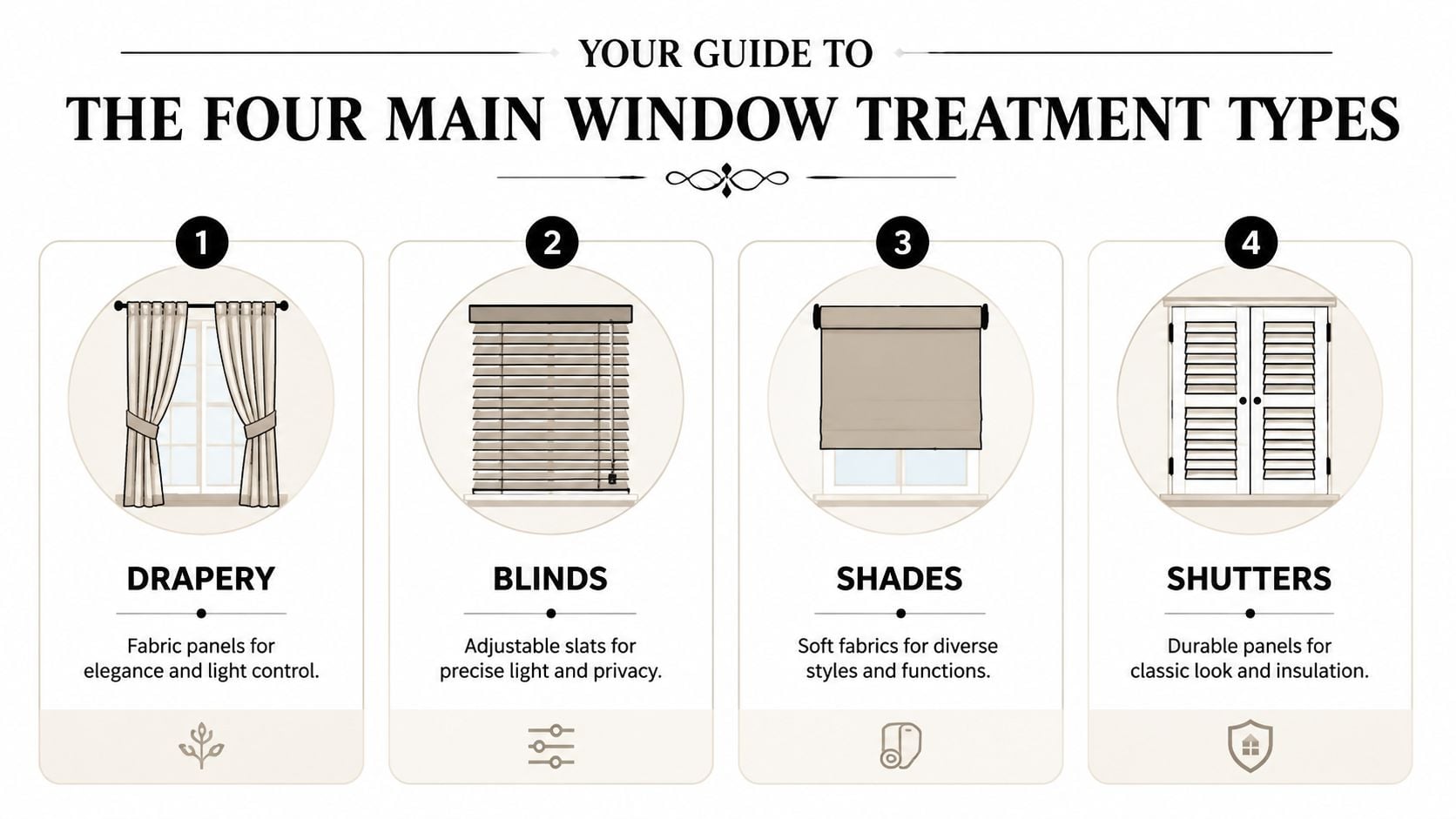
Your Guide to the Four Main Window Treatment Types
Most living room projects start going more smoothly once you narrow the field. Nearly every option falls into four main categories: drapery, blinds, shades, and shutters. Each one solves a different problem well, and each comes with trade-offs.
Window Treatment Comparison Guide
| Treatment Type | Light Control | Privacy | Insulation | Best For |
|---|---|---|---|---|
| Drapery | Good to excellent, depends on fabric and lining | Good to excellent | Good when lined and layered | Large windows, softening a room, adding height |
| Blinds | Precise slat adjustment | Good when closed | Moderate | Homeowners who want adjustable control and a crisp look |
| Shades | Light filtering to room darkening, depending on style | Good to excellent | Moderate to strong, depending on construction | Most living rooms, especially where a clean profile matters |
| Shutters | Strong control with solid structure | Good | Good | Classic interiors, durable long-term installations |
Drapery
Drapery is still the fastest way to make a living room feel finished. Fabric adds softness, color, scale, and a sense of architecture that a hard treatment alone often can't deliver. Drapery works especially well on large front windows and tall openings where the room needs warmth.
The downside is practical. In tighter rooms, long panels can interfere with furniture placement, floor registers, radiators, or pet traffic.
Blinds
Blinds offer adjustable slat control, which is useful when the goal is to redirect daylight instead of fully blocking it. They suit casual living rooms, transitional spaces, and windows where homeowners want a straightforward, easy-to-use option.
They're less forgiving visually. In a formal room or one with a lot of upholstered furniture, blinds can feel a little spare unless they're paired with panels.
Shades
Shades are often the most flexible category. They sit close to the glass, suit many architectural styles, and come in versions built for insulation, glare control, or a softer decorative look.
For bay windows and grouped windows, shades often solve fit and function more neatly than drapery alone. If you're working through that kind of layout, these ideas for bay window curtains for living room help clarify where shades, panels, or a combination makes the most sense.
Shutters
Shutters bring structure. They look substantial because they are substantial, and they tend to work best in rooms where the trim and architecture can carry that visual weight. They're also a strong choice when durability is high on the list.
Shutters can look timeless in the right room, but they aren't always the easiest answer for older homes with out-of-square openings or for homeowners who want a softer, more layered feel.
If you're unsure where to start, pick the category that matches the room's main problem first. Then refine the style.
A Deeper Look at Today's Most Popular Window Shades
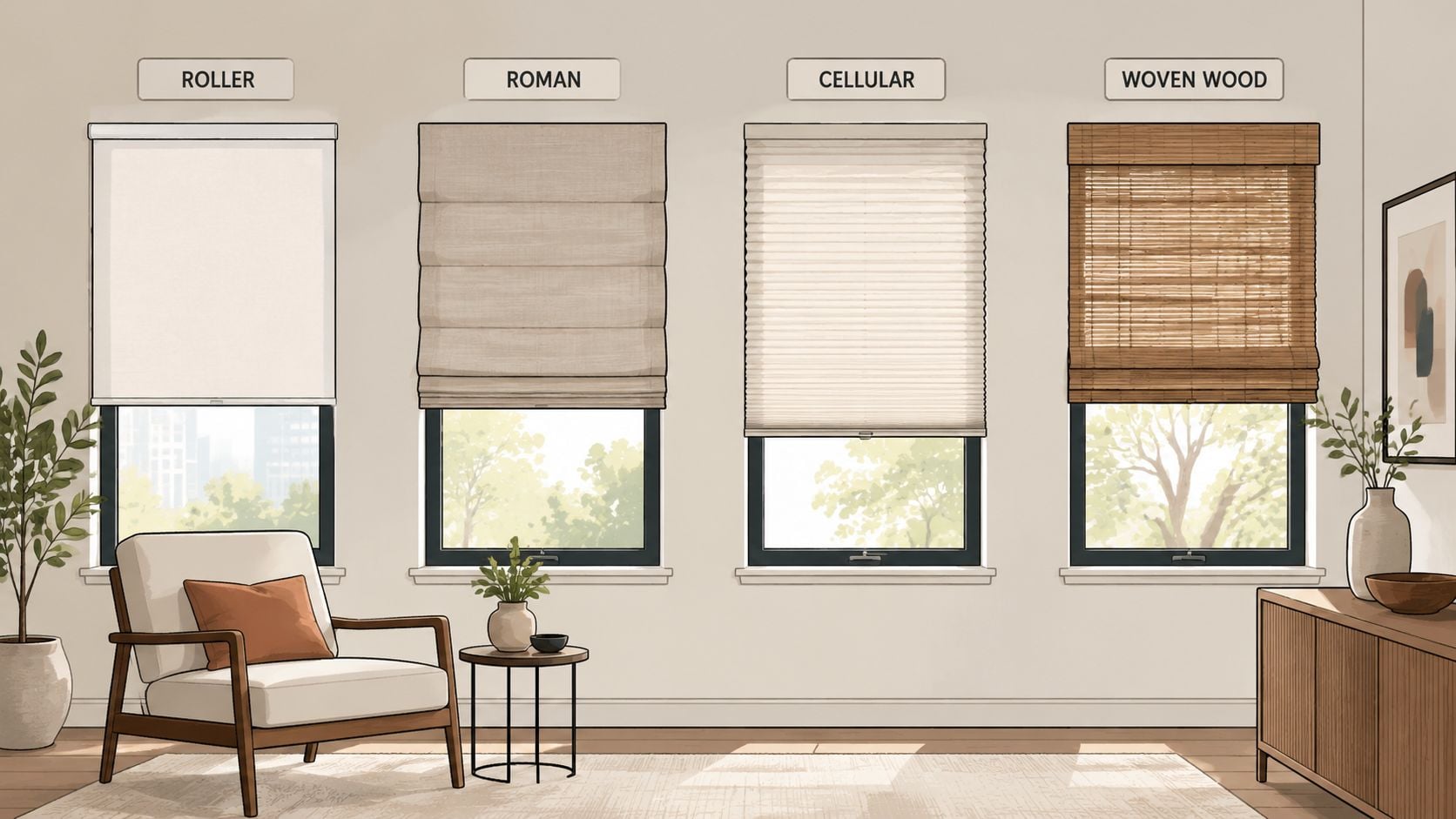
Among all the options, shades usually give homeowners the most control without making the room look busy. They fit modern living rooms, traditional spaces, and awkward older windows more easily than many people expect. They're also where engineering makes the biggest difference.
Cellular shades for insulation
If heat loss is the issue, cellular shades deserve serious attention. Their honeycomb construction traps air and creates an insulating barrier that can reach up to R-4, and double-cell versions are a practical choice in colder Northeast climates, according to this living room window shade guide from Blindsgalore.
That construction matters in Upstate homes with wide front windows or older glazing. When the glass is the weak point, adding an insulating layer inside the room can improve comfort without replacing the window.
A few practical notes matter here:
- Double-cell designs generally make more sense for colder homes than single-cell versions.
- Fit matters more than people think. Gaps at the edge reduce performance.
- Best use case is a living room that feels chilly near the window in winter.
Solar shades for glare and view
Solar shades solve a different problem. They're designed to reduce intense bright light while preserving the view, which is why they work so well in living rooms with TVs, laptops, or open sightlines.
That makes them especially useful in homes with mountain, yard, or street views you don't want to bury behind heavy fabric. If you want a broader practical read on reducing home heat with solar screens, that piece adds helpful context around sun control strategies.
In rooms where people watch a screen during the day, solar shades usually outperform decorative-only treatments.
Roman shades for softness
Roman shades are often chosen for appearance first, and that's fine. They bring fabric, shape, and a more polished look than a flat roller shade. In living rooms with traditional furniture, patterned upholstery, or classic wood trim, they can bridge utility and design very well.
Their trade-off is bulk. On a very large window, they need enough stack space when raised, and some fabrics feel heavier than homeowners expect.
Layered shades for flexible light
Layered shades, often called zebra shades, use alternating translucent and opaque bands. You shift the bands to change how much light comes through. That makes them a smart middle ground for families who don't want the room either fully open or fully closed.
They look especially clean in contemporary spaces. They also work well when one person wants daylight and another wants less glare.
For any shade style, sizing changes the result more than people realize. Before ordering, it helps to understand how fabric height and stacking affect the final look. This quick guide to curtain length sizes is worth reviewing because the same visual principles carry over when shades are paired with side panels.
Choosing Window Treatments for the Upstate NY Climate
Upstate New York asks a lot from a living room window. Winter cold pushes against the glass for months. Summer sun can be surprisingly strong, especially on west-facing rooms. Spring and fall shift quickly enough that homeowners often need one treatment to do opposite jobs in the same year.
That's where the best window treatments for living room spaces stop being decorative accessories and start acting like part of the room's comfort plan.
What works in summer
The U.S. Department of Energy reports that medium-colored draperies with white-plastic backings can reduce heat gains by 33% in the summer when used properly, and it notes that cellular shades are effective insulators in colder months in its guidance on energy-efficient window coverings.
For homes around Albany and the surrounding Capital Region, that matters most in rooms with large front exposures or broad picture windows. If a living room gets hammered by afternoon sun, lined drapery can do more than soften the look. It can help tame heat and glare at the same time.
What works in winter
Winter comfort in older homes is often about reducing the cold feeling near the window, not just adjusting the thermostat. Treatments that sit close to the glass usually help most with that. Cellular shades are strong performers here, especially when the fit is tight and the window itself isn't perfectly efficient.
For homeowners sorting through style, privacy, and seasonal performance together, this guide on how to choose window treatments is a practical next step.
The local trade-offs that matter
Not every treatment suits every Upstate house. Here's where local experience usually changes the recommendation:
- Older trim and uneven openings can make inside-mount products harder to fit cleanly.
- Large picture windows often need layered solutions because one product rarely handles glare, warmth, and privacy equally well.
- Historic or traditional interiors usually benefit from treatments that respect the architecture instead of fighting it.
- Open-plan rooms need treatments that look good from multiple angles, not just straight on.
A big-box shelf option can work on a standard secondary window. It often falls short on the main living room window, where proportion, fit, and daily use matter more.
Matching Window Treatments to Your Living Room's Function
The biggest shift in living room design is simple. Many living rooms no longer do one thing. They're conversation rooms, TV rooms, reading rooms, and work-from-home overflow spaces all at once. If you ignore that, you usually end up with a treatment that looks right for a week and feels wrong after that.
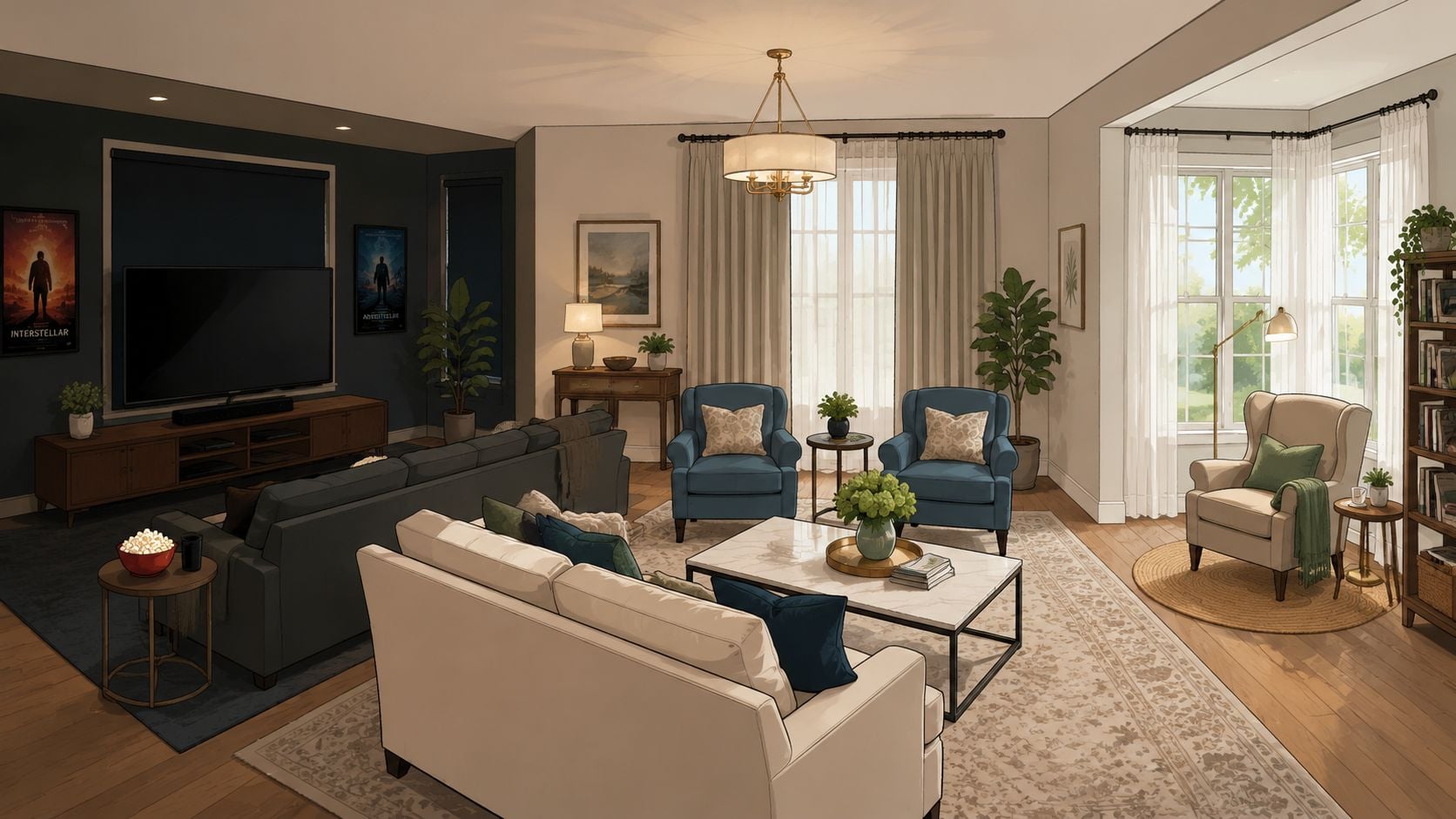
BlindsToGo notes that a common oversight is choosing treatments for style alone and overlooking the room's use as a media space. It points out that solar roller shades are designed to reduce glare and UV rays while preserving the outside view, and that layering decorative drapery over those shades adds a blackout option for movie nights, as described in its living room blinds and drapes guide.
If the room has a TV
It is common for homeowners to make suboptimal selections. Sheer drapery looks pretty, but it won't solve screen glare. Wood blinds can help, but they don't always preserve the view well when adjusted for comfort.
For TV rooms, the strongest practical choices are usually:
- Solar roller shades when daytime viewing matters and you still want the view
- Layered shades when you want adjustable filtering without a heavy look
- Solar shades plus drapery when the room also needs evening darkening
If you're comparing shading options with film and privacy solutions, even a region-specific article like this one on Georgia car tint legal limits can help frame how visible light, privacy, and window film choices affect day-to-day comfort.
If the room is mostly for entertaining
A formal or guest-facing living room usually needs softer visual lines. Roman shades, drapery panels, or refined layered treatments tend to win here because they contribute to the room even when the sun isn't a problem.
This is also where material coordination matters. In homes where furniture, rugs, flooring, and trim all sit in one sightline, selecting fabric in isolation is a mistake. Tip Top Furniture & Mattresses coordinates window treatments alongside furnishings, decor, and flooring selections, which is useful when homeowners want the room to read as one finished space rather than a collection of separate purchases.
A living room treatment should match the room's job first. Style comes after that, not before it.
If children or pets use the room daily
Safety and convenience start to matter more than decorative detail. Cordless and motorized options usually make more sense in active family spaces because they reduce clutter around the window and are easier to use consistently.
That consistency matters. A treatment only helps with privacy, glare, or comfort if people lower and raise it.
Budgeting Measuring and Installing Your New Treatments
A window treatment budget moves up or down based on size, fabric, operating style, and whether the treatment is standard or custom. Motorization, specialty fabrics, and difficult windows all affect the final number, so a sensible way to budget is by priority, not by guessing from a single online price.
Start with three decisions
Before you shop seriously, decide these first:
Which windows matter most
The front living room window usually deserves the budget before smaller secondary windows.What problem you're paying to solve
Glare control, privacy, insulation, and style don't all cost the same.Whether custom fit is necessary
In older Upstate homes, it often is.
Measure carefully before you order
Initial measurements are useful for planning, but final ordering measurements need precision. Width, height, depth, trim projection, and whether the window is square all matter. If you want a general primer before an in-home appointment, this replacement window measurement guide gives a solid overview of what to look for.
For fabric panels, proportion matters just as much as raw size. This reference on curtain panel sizes helps homeowners understand fullness and scale before they commit.
Why installation is worth it
Professional measuring and installation prevent the most common failures:
- Too-narrow panels that look skimpy
- Inside mounts that reveal uneven frames
- Shades hung at the wrong height that make windows look shorter
- Hardware placement errors that are hard to undo cleanly
In-house measuring and coordinated installation are especially valuable when the living room is the focal point of the home. A good fit looks quiet. A bad fit is all anyone sees.
Start Your Project with Tip Top's Local Experts
Living room windows affect more than one decision. They influence furniture placement, TV location, rug fading, wall color, and even whether the room feels comfortable in the late afternoon or on a cold January morning. That's why the best results usually come from looking at the whole room instead of treating the window as a stand-alone purchase.
For homeowners in Freehold, Albany, Troy, Schenectady, and across the Capital Region, local context matters. Older homes, four-season weather, and non-standard windows change what works. So does the way your family uses the space.
A complete plan often includes several moving parts:
- Design guidance so the treatment fits the room and not just the glass
- Custom ordering when standard sizes won't deliver a clean result
- Coordination with furniture and flooring so finishes, fabrics, and scale make sense together
- Flexible financing when the project includes more than one room or several home upgrades at once
That one-stop approach is what many homeowners miss when they shop window treatments in isolation. A strong result usually comes from combining function, fit, and room design in one process.
If you're comparing options for your living room, start with a space that lets you see materials in person and talk through real fit and function issues. Tip Top Furniture & Mattresses serves homeowners from Freehold to the Greater Albany Capital Region with window treatments, furnishings, design help, custom order options, delivery coordination, and flexible financing, so you can plan the whole room with local guidance instead of guessing online.