Laminate Flooring vs Hardwood Cost: 2026 Price Guide

If you're standing in your living room with a tape measure, a sample board, and a budget that already feels stretched, you're asking the same question a lot of Capital Region homeowners ask: should I spend more on hardwood, or save money with laminate?
It's a fair question, and the wrong answer usually comes from looking at only one number. A floor has an installation price, but it also has a lifespan, a maintenance pattern, and a different effect on how your home feels when you live in it every day. In older Albany-area homes, those trade-offs matter even more because subfloors, room transitions, and moisture conditions can change the job fast.
After decades of helping families around Freehold, Albany, Schenectady, Troy, and the surrounding area sort through flooring choices, one thing stays true. Laminate usually wins the first bill. Hardwood often wins the long game. The better buy depends on how long you plan to stay, where the floor is going, and how much wear that room takes.
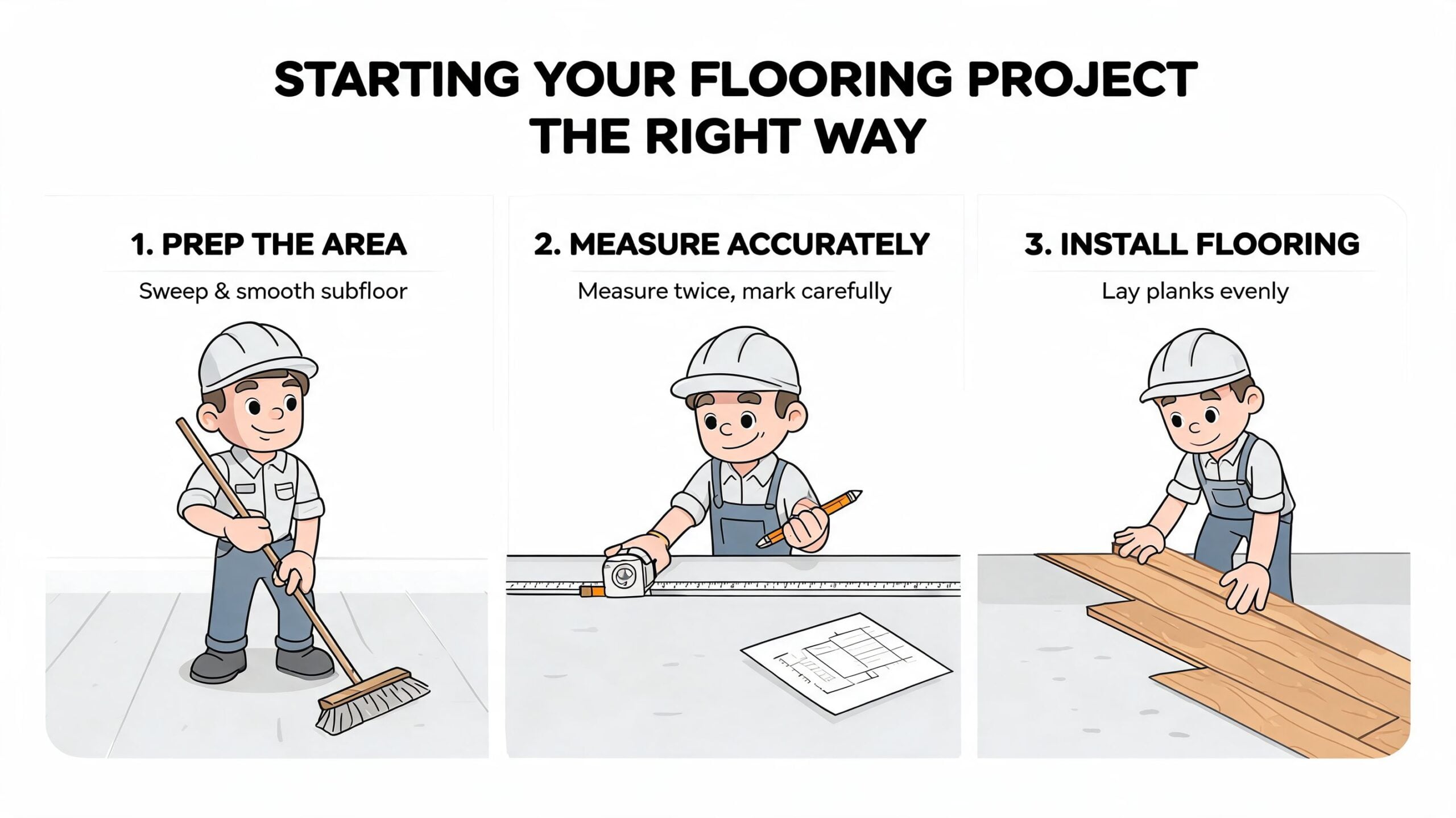
Starting Your Flooring Project The Right Way
A flooring project usually starts with a simple plan and then gets complicated fast. You price the material, then you realize installation method matters. Then you start thinking about pets, kids, muddy boots, resale, and whether the new floor will work with the rest of the house.
That's why it helps to start with a basic filter. Before you compare colors or plank widths, decide what matters most in your home:
- Budget first: You need the most floor for the least upfront money.
- Longevity first: You want something that can hold value over decades.
- Lifestyle first: You need durability for traffic, spills, and daily wear.
- Appearance first: You care most about the warmth and authenticity of real wood.
Start with the room, not the product
A bedroom and a front entry don't ask the same things from a floor. In a quiet second-floor bedroom, hardwood can make a lot of sense if you want character and long-term value. In a busy family room, basement-level space, or a house with dogs racing through every day, laminate may solve more problems for less money up front.
If you're also planning room additions or home updates, flooring should be part of that bigger conversation early. Door heights, trim work, transitions into adjacent rooms, and subfloor condition can all affect what makes sense.
Measure honestly and budget for the whole job
Homeowners often price only the planks. Installers price the whole project. That difference is where surprises happen.
A realistic flooring budget should account for:
Material choice
Laminate and hardwood can look closer than ever, but they install differently and age differently.Labor complexity
Stairs, room cuts, old floor removal, and uneven subfloors can push a project higher.How the room is used
A formal dining room gets treated differently than a mudroom or den.
Practical rule: If you're torn between laminate and hardwood, decide first whether you're solving a short-term budget issue or making a long-term ownership decision.
For many homeowners, it also helps to look at room-specific guidance before narrowing the product list. A good starting point is this guide to the best flooring for living room spaces, especially if your project centers on the main area buyers and guests notice first.
The Upfront Cost Laminate vs Hardwood
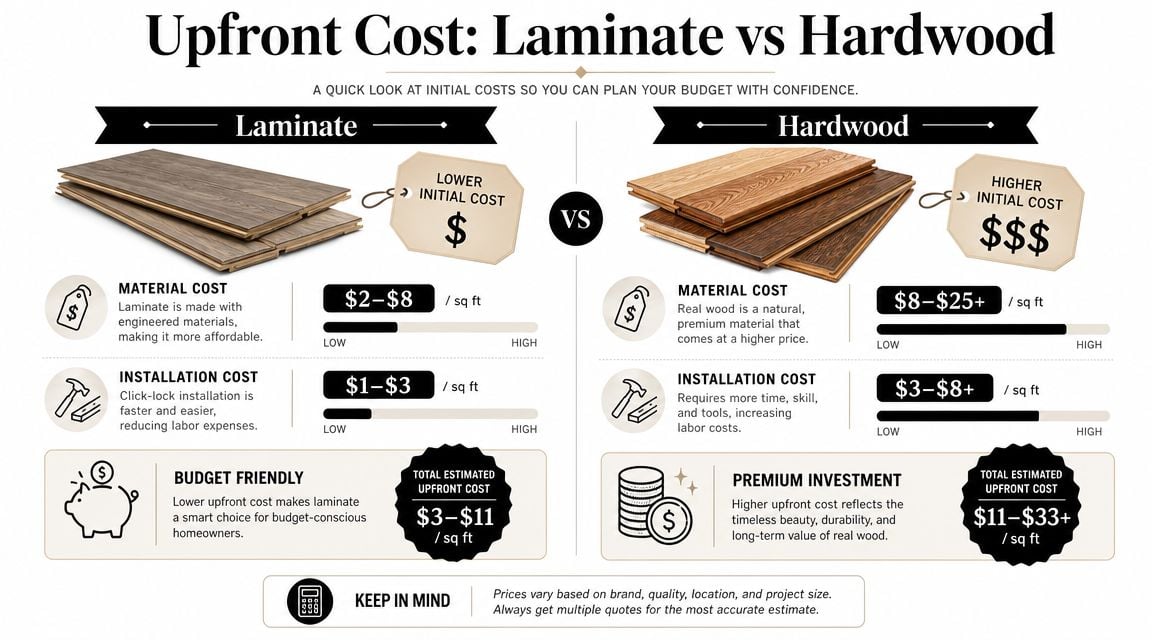
On initial price, laminate flooring vs hardwood cost is not a close contest. Hardwood usually requires a much larger check for both material and installation.
For Albany-area homeowners, that gap shows up fast once estimates start coming in. A floating laminate floor can often be installed with less labor, while hardwood usually involves more skill, more time, and more site conditions that affect the bid.
| Flooring type | Material cost | Installation cost | Typical installed range |
|---|---|---|---|
| Laminate | $1 to $4.50 per square foot | $2 to $8 per square foot | $3 to $12.50 per square foot |
| Hardwood | $3 to $12.50 per square foot | $6 to $12 per square foot | $9 to $24.50 per square foot |
The ranges above reflect major U.S. retail benchmarks commonly cited across the flooring industry.
A separate 2025 comparison also notes that hardwood can cost 2 to 5 times more installed than laminate, with hardwood installed at about $8 to $18 per square foot in one guide and high-end or custom work exceeding $20 per square foot, while laminate's average installed cost remains much lower in the comparison data from this flooring cost guide.
Why laminate comes in lower
Laminate is usually cheaper for two reasons. The product costs less, and the installation is often simpler.
Many laminate floors use a click-lock floating system. That can reduce labor hours compared with nail-down or glue-assisted hardwood work, especially in straightforward rooms. In real homes, though, "simple" only applies if the subfloor is flat and the prep work is light. If an older Albany home has dips, squeaks, or layers of old flooring to remove, laminate estimates can climb too.
If you're sorting through wear layers, core types, and price tiers, this guide on how to choose laminate flooring for your home can help you narrow options before you ask for bids.
What makes hardwood cost more
Hardwood costs more because both the floor and the install are in a different class.
- The material is a premium product
- Installation usually takes more time and skill
- Site prep and finishing details can add labor
- Transitions, vents, stairs, and trim work are often less forgiving
Solid and engineered wood both carry higher material costs than laminate. Buyers also recognize real wood right away, which is part of why hardwood keeps its appeal despite the bigger upfront spend.
Hardwood costs more at the register because it delivers a different kind of value, not just a different look.
A whole-home example
For a 2,000-square-foot home, the installed cost gap can be significant. Based on the ranges cited above, laminate may land around $6,000 to $25,000, while hardwood can run about $18,000 to $49,000 installed.
That spread matters for homeowners trying to balance project scope with cash flow. In my experience, laminate often makes sense for large ranch homes, finished lower levels, and houses where the budget has to cover paint, trim, lighting, and other updates at the same time.
Hardwood usually fits a different buyer. It tends to make more sense for homeowners who plan to stay put, care about resale presentation in the Albany market, and can afford the higher entry cost without squeezing the rest of the project.
Beyond the Sticker Price Lifecycle Costs and Longevity
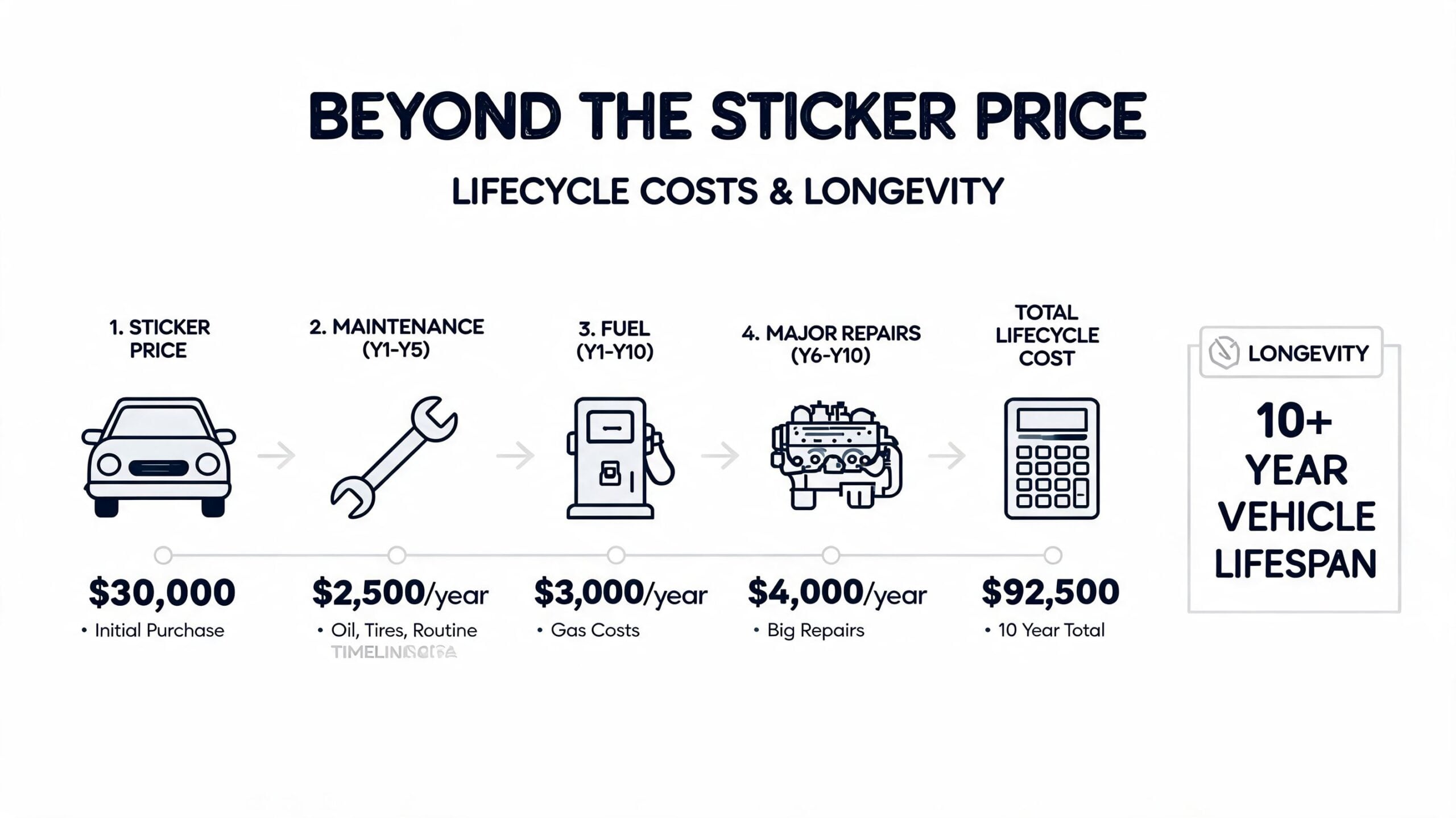
The cheapest floor on installation day isn't always the cheaper floor over the years. Many laminate flooring vs hardwood cost comparisons stop too early by neglecting this long-term reality.
A floor has a life after the invoice. It gets scratched, cleaned, dragged across, exposed to sunlight, and tested by everyday living. Over time, the question shifts from “What did it cost?” to “What will I have to do next?”
Hardwood can be renewed
The biggest long-term advantage of hardwood is simple. It can be refinished repeatedly and may last for generations, while laminate generally cannot be refinished and must be replaced when worn, as noted in this discussion of lifetime cost and flooring durability.
That one difference changes the ownership math.
If a hardwood floor starts showing wear, a homeowner may be able to restore the surface rather than tear out the whole floor. With laminate, once the wear layer is spent or the top surface is badly damaged, replacement is usually the path forward.
Laminate can still be the right value
That doesn't mean laminate is a bad investment. It means it's a different kind of investment.
Laminate often makes very good sense when:
- You need lower upfront cost now
- You expect heavy daily traffic and want a practical surface
- You may redesign the room before a hardwood floor's long lifespan matters
- You're updating a space where premium resale impact isn't the main goal
A lot of homeowners in the Albany area don't stay in one house for generations. For them, controlling the initial spend and getting a clean, attractive floor can be the smarter call.
Think in ownership horizons
A useful way to decide is to ask how long you expect to own the home.
| Ownership horizon | Laminate usually fits when | Hardwood usually fits when |
|---|---|---|
| Shorter stay | keeping upfront costs down matters most | you still want a premium finish despite the higher initial cost |
| Medium stay | you want practical performance without a large initial investment | you want a floor that may age better and support long-term appeal |
| Long stay | replacement later may be acceptable if today's budget is tight | refinishing potential and long service life become more valuable |
If you want a straight look at where laminate performs well and where it falls short, this breakdown of laminate flooring pros and cons helps put the day-to-day ownership picture into plain language.
A floor should match your timeline. If you're staying long enough to benefit from refinishing, hardwood starts to look very different on paper.
How Local Factors in the Albany Area Affect Your Cost
A floor that looks affordable on a sample board can turn into a very different job once the installer starts working through an older Albany home.
That is common across the Capital Region. Housing stock here ranges from newer colonials in the suburbs to century-old homes in Albany, Troy, and the surrounding towns. The material matters, but the house often drives the quote. As noted earlier, laminate usually starts lower than hardwood on installed price. Around here, the spread between the two can widen or narrow based on prep work, layout, and how much finish detail the job needs.
Labor and layout shape the final number
Older homes often need more subfloor correction, more cutting, and more transition work from room to room. Hardwood also asks for a different level of labor than laminate in many cases, especially if the project includes site finishing, stain matching, or tying new boards into existing wood.
These are the local cost drivers we see most often:
- Subfloor repairs and leveling: Common in older homes where floors have settled over time.
- Room shape and cut-up layouts: Small rooms, narrow halls, alcoves, and closets add labor.
- Stairs and height transitions: These details raise labor faster than many homeowners expect.
- Seasonal humidity: Albany winters and muggy summers make acclimation and moisture control more important, especially for wood.
- Matching existing finishes: In homes with partial hardwood, blending old and new can take extra sanding, stain work, or custom trim solutions.
A simple open room installs very differently than a first floor with three transitions, a powder room, and an uneven subfloor.
Different homes call for different answers
Historic homes near Albany and Troy often look and feel more natural with hardwood, especially when original trim, stair parts, and older millwork are still in place. The upfront bill is higher, but the result usually fits the house better.
In busy family homes in the suburbs, laminate often makes sense when the goal is solid looks, easier budgeting, and broad coverage across several rooms. For finished lower levels, home offices, or flexible-use spaces, many homeowners decide not to put premium wood in an area that may take more wear or moisture swings.
In the Albany area, the product cost is only part of the job. The condition of the home and the amount of finish carpentry often decide where the estimate lands.
If you want to price the wood side of the project more closely before choosing species or plank width, this guide to hardwood flooring installation cost is a practical next step.
One other point matters for total cost of ownership. A cheaper floor that needs replacement sooner, or a premium floor installed in a space that does not support the investment, can both be expensive mistakes. The right choice depends on how your house is built, how long you plan to stay, and how hard the floor will have to work day to day.
Resale Value The Long Term Return on Your Flooring Investment
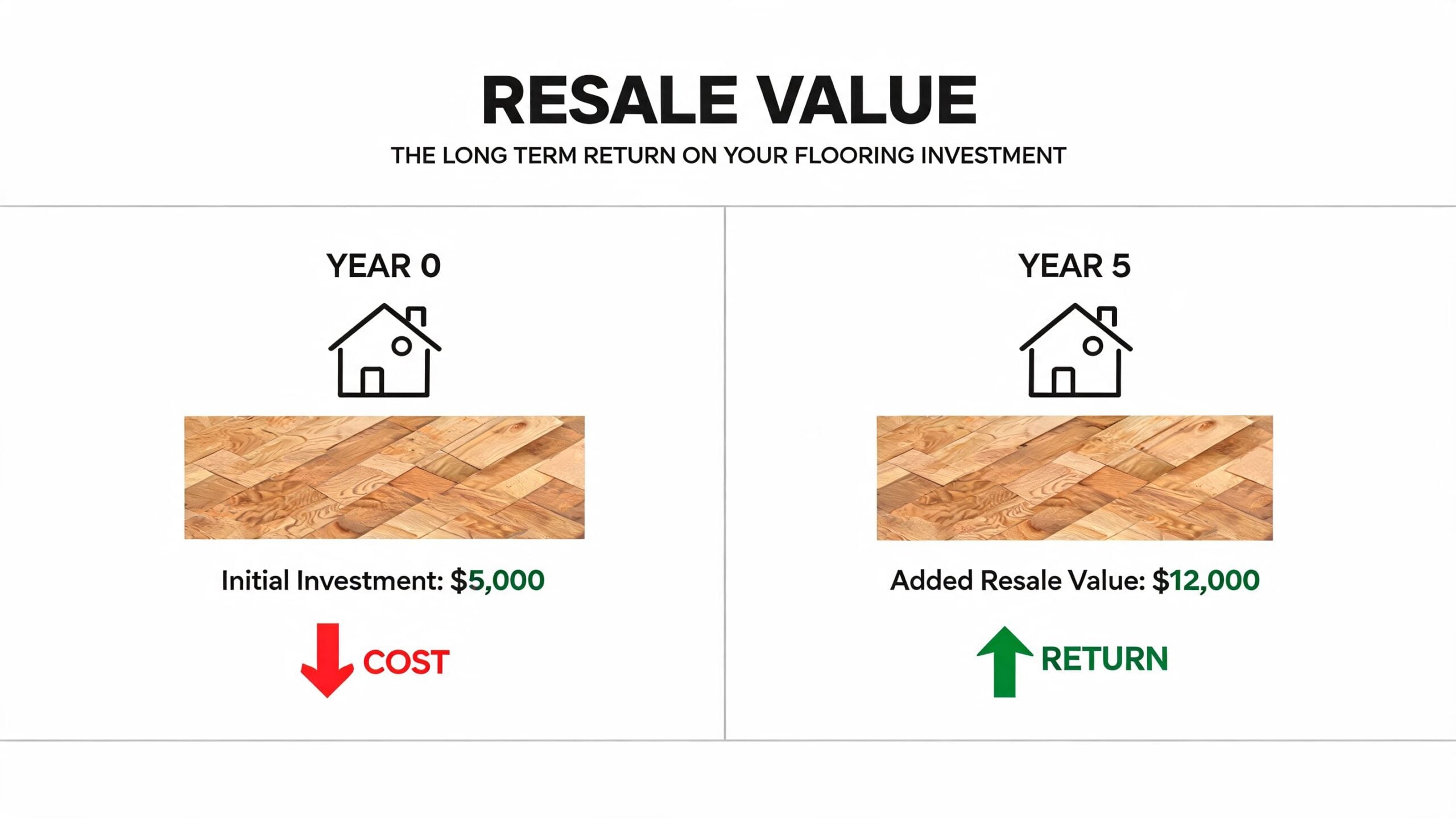
Not every home project pays you back the same way. Flooring is one of the upgrades buyers notice quickly, especially during showings when they're taking in the overall condition of the home in just a few minutes.
In that setting, hardwood usually carries stronger resale appeal than laminate. Buyers and agents tend to read real wood as a premium finish. Laminate may look attractive and perfectly serviceable, but it usually lands in a more budget-oriented category.
Why hardwood is perceived differently
Industry data helps explain that perception. The U.S. wood-and-laminate flooring market is projected to total $8.1 billion in 2025 and grow to about $11.8 billion by 2035, while one industry summary reports hardwood flooring including engineered wood rose 2.0% and laminate fell 8.4% in recent years, according to Fact.MR's U.S. wood and laminate flooring industry analysis. That same summary supports what many homeowners already sense in the market: hardwood tends to hold stronger premium positioning.
In plain terms, buyers usually give real wood more credit.
That doesn't guarantee a specific sale price bump in every Albany-area neighborhood, and I won't pretend every buyer thinks the same way. But in competitive resale situations, hardwood often helps a home feel more established and more finished.
When laminate still makes sense for resale
Laminate can still be a sensible move if the alternative is leaving behind worn, dated, or damaged flooring. Clean, cohesive floors help a home show better than patchwork surfaces, stained carpet, or multiple clashing materials.
Laminate is often the practical answer when:
- You need a visible update without a large cash outlay
- You're improving a secondary space
- The rest of the house is not positioned as a premium finish property
If you're weighing wood against other broad resale-friendly surfaces, this comparison of carpet vs hardwood flooring gives useful context for where hardwood tends to stand in the bigger picture.
Buyers may appreciate a nice laminate floor, but they usually recognize hardwood as a stronger finish category the moment they step into the room.
Making the Right Choice for Your Home and Budget
A lot of Albany-area homeowners reach this point with the same question. Do you spend less now and keep the project moving, or spend more on the front end for a floor that may serve you longer and carry more weight at resale?
The best answer usually comes from total cost of ownership, not sticker price alone. A floor has to fit your budget today, hold up to your household, and make sense for how long you expect to stay in the home.
Choose laminate when the project needs cost control
Laminate is often the right call when the job needs to stay on budget without looking like a compromise. Installation is usually faster and less labor-intensive than hardwood, which matters in the Capital Region where labor costs can shift the final bill more than many homeowners expect.
Laminate is a practical fit if you need:
- A lower upfront investment
- Quicker installation with less disruption
- Good coverage for larger areas
- A floor that makes sense in busy, everyday spaces
I usually point homeowners toward laminate for family rooms, kids' rooms, some finished basement areas, and houses where the flooring budget has to share space with paint, furniture, lighting, or other updates.
That choice can be smart, not short-sighted.
Choose hardwood when long-term value matters more
Hardwood tends to earn its keep over time. The upfront cost is higher, and installation is usually more involved, but the equation changes if you plan to stay put for years or want a stronger finish for resale in the Albany market.
Hardwood often makes the most sense in:
- Living rooms and main gathering spaces
- Dining rooms
- Primary bedrooms
- Homes where owners want a floor they can refinish instead of replace
That last point matters. If the floor gets scratched, dulled, or dated, hardwood may give you another life cycle through refinishing. Laminate usually does not. For a long-term owner, that can change the true cost picture quite a bit.
A simple way to sort it out
| Your priority | Better fit |
|---|---|
| Keep upfront costs down | Laminate |
| Limit installation time and labor | Laminate |
| Get a floor with renewal potential | Hardwood |
| Support a more traditional premium feel | Hardwood |
| Stay in the home for many years | Hardwood |
One practical option for local homeowners is Tip Top Furniture & Mattresses, which offers flooring along with design coordination, furniture, and financing support from its Freehold showroom. For some families in the Albany area, that kind of one-stop planning is useful when flooring is only one part of a broader room update.
Don't choose from a sample alone
Before you make the call, check the floor against real life in your house.
- Take the sample into natural light so you can see color changes through the day.
- Look at the surrounding rooms so the new floor works with the rest of the home.
- Be realistic about wear from pets, kids, guests, and everyday traffic.
A floor can look great on a display board and still be the wrong fit once muddy boots, dog nails, winter salt, and heavy daily use enter the picture. Around Albany, that matters. Our seasons bring in moisture, grit, and temperature swings, and those conditions have a way of exposing a poor flooring choice faster than a showroom ever will.
If budget is the main obstacle, financing can help spread out the investment and make a better long-term choice more manageable.
If you're comparing laminate flooring vs hardwood cost for your Albany-area home, a hands-on visit usually clears things up faster than online guessing. At Tip Top Furniture & Mattresses, you can see flooring samples in person at the Freehold, NY showroom, compare finishes with furniture and décor, ask real project questions, and explore flexible financing options if you want to spread out the investment. If your project includes more than flooring, you can also browse living room furniture, review custom order options, or check the clearance section for budget-friendly finds.