Engineered Wood Furniture: A Buyer’s Guide for 2026

If you're furnishing a home in the Albany area right now, you're probably balancing three things at once. You want furniture that looks good, holds up to real life, and doesn't blow the budget for the whole room. Add in muddy boots, dry winter heat, humid summer days, kids, pets, and the usual wear of daily living, and the material under that finish matters more than is often realized.
That’s where engineered wood furniture deserves a fair look. A lot of shoppers still hear the word “engineered” and assume it means cheap or temporary. In practice, that’s too simple. Some engineered wood pieces are built for price alone. Others are well-made, stable, attractive, and exactly the right fit for a busy Upstate New York home.
Is Engineered Wood Furniture Right for Your Albany Home
A common situation around the Capital Region goes like this. A family moves, renovates, or finally decides the hand-me-down mix isn’t working anymore. They need a bedroom set, a desk for the home office, maybe a media console or a dining storage piece. They want something that feels finished and pulled together, but they also need it to survive daily use.

That’s often where engineered wood makes sense. It can give you a clean style, useful storage, and good surface consistency without forcing every purchase into heirloom territory. For a painted bedroom, a bookcase wall, a youth room, or a work-from-home setup, that’s not settling. It’s choosing the right tool for the job.
Why the old myth misses the point
The old line is that solid wood is always better. Sometimes it is. If you're buying a dining table you hope to hand down, or you love the idea of refinishing a piece years from now, solid wood has clear strengths. That’s one reason so many shoppers still gravitate toward American-made Amish furniture for dining rooms and bedroom investments.
But modern homes need a mix of materials. A family might choose a solid wood table and then pair it with an engineered wood sideboard, desk, or entertainment center because those categories benefit from flat panels, stable surfaces, and a more budget-friendly price point. That’s smart buying.
Practical rule: Don’t ask whether engineered wood is “as good as” solid wood in every case. Ask whether it’s the best material for the piece you’re buying, the room it’s going in, and the way your household actually lives.
Where engineered wood tends to work best
In homes from Greene County to Troy, engineered wood furniture is often a strong choice for:
- Painted case goods that need a smooth, even surface
- Home office furniture where flatness matters for drawers, shelves, and desktops
- Kids’ and teens’ rooms where budget and practicality matter
- Media units and storage pieces with wide panels that benefit from stability
- Secondary spaces like guest rooms, finished basements, and craft rooms
The broader market reflects that demand. The global engineered wood market was valued at USD 254.2 billion in 2023 and is projected to reach USD 427.3 billion by 2033, with the furniture segment showing the fastest growth, according to Woodworking Network’s coverage of the engineered wood market. That doesn’t mean every piece is equal. It does mean a lot of buyers are recognizing the same thing local furniture shoppers have learned for years. Good engineered wood furniture can be practical, attractive, and worth owning.
The Building Blocks of Engineered Wood Furniture
Most shoppers see one label and assume all engineered wood is the same. It isn’t. The easiest way to think about it is like baking. Bread, pie crust, and pizza dough all use similar ingredients, but they perform differently because they’re made differently. Engineered wood furniture works the same way.
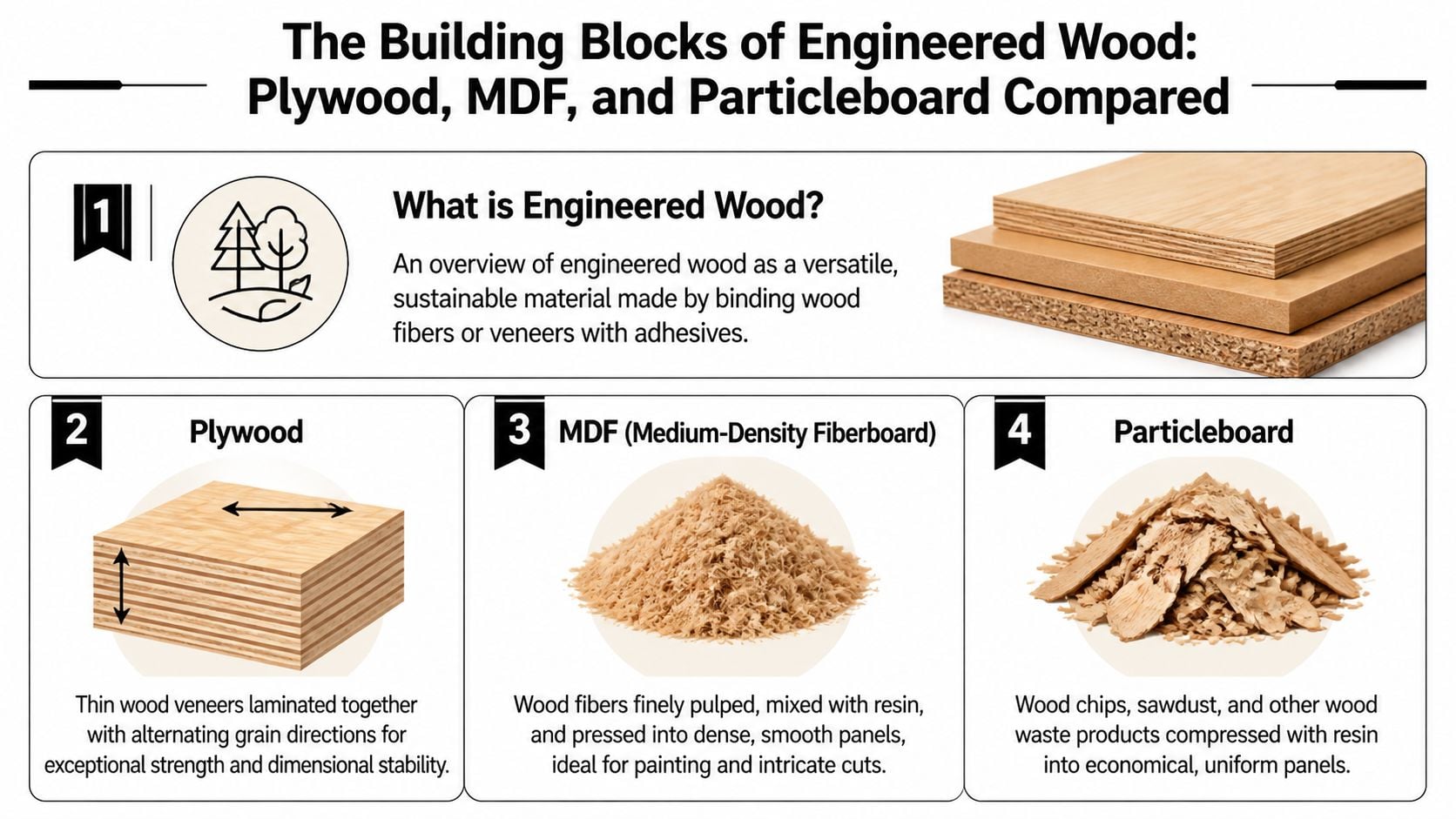
Plywood, MDF, and particleboard are not interchangeable
Plywood is made from thin layers of wood veneer bonded together. It’s often used when a manufacturer wants strength and better resistance to movement across a panel. In furniture, plywood commonly shows up in cabinet boxes, bed platforms, drawer parts, and structural panels.
MDF, or medium-density fiberboard, is made from very fine wood fibers compressed into a dense, smooth panel. It machines cleanly and paints beautifully, which is why it’s so common in painted furniture, routed details, and modern case goods.
Particleboard is made from wood chips and particles bonded into a panel. It can be useful in lower-cost furniture, especially when paired with laminate or melamine surfaces, but it’s usually not the first choice for demanding applications or repeated moves.
Here’s the practical version:
| Material | Best use in furniture | What shoppers usually notice |
|---|---|---|
| Plywood | Structural panels, cabinet bodies, shelves | Feels sturdy, often used where strength matters |
| MDF | Painted furniture, shaped fronts, smooth panels | Very smooth finish, crisp paint, consistent surface |
| Particleboard | Budget-friendly storage and occasional-use pieces | Lower cost, uniform look, often covered with laminate |
Why MDF earns more respect than it gets
MDF is one of the most misunderstood materials on a showroom floor. In a well-made piece, it can be a very sensible choice. According to this explanation of engineered wood types from Tribesigns, MDF has a screw-holding strength of 800-1200 N, compared with 500-900 N for particleboard, and its fiber structure reduces splitting risk by 60-80% during drilling.
That matters in real furniture. Drawers, cam-lock assemblies, dowel joints, and hardware all depend on the panel holding together cleanly. MDF also gives manufacturers a smoother substrate for painted finishes and decorative wraps, which is why many attractive bedroom and office pieces use it.
A painted dresser with a quality MDF panel can outperform a poorly chosen solid wood panel if your priority is a smooth, stable finish and clean detailing.
Veneers and laminates change the surface, not the whole story
A lot of engineered wood furniture uses either veneer or laminate on top of the core.
- Wood veneer is a thin slice of real wood over a core such as plywood or MDF.
- Laminate or melamine is a durable manufactured surface designed for wear resistance and easy cleaning.
The best choice depends on the piece. Veneers can deliver a warmer, more natural wood look. Laminates can be excellent for desks, kids’ furniture, and utility pieces that see heavy everyday use.
If you're also comparing surface materials for floors, this engineered timber flooring guide gives a helpful overview of how layered wood products are built for stability. The category is different from furniture, but the basic logic carries over. Construction method affects performance.
Engineered Wood vs Solid Wood A Practical Comparison
This comparison only helps if it stays honest. Solid wood has strengths. Engineered wood has strengths. The smart decision comes from matching the material to the piece, not from repeating a slogan.
Cost and value
If you're furnishing a whole room, engineered wood often stretches the budget further. That can let you buy a better mattress, add an accent chair, or finish the room now instead of waiting another year. In many households, that matters more than having every piece made from thick solid hardwood.
Solid wood usually asks for a larger upfront investment. In return, you often get greater repairability, refinishing potential, and a stronger long-term ownership story. If that’s your priority, this guide to solid and engineered hardwood differences for Parker homeowners does a good job explaining the broader stability-versus-refinishing trade-off in wood products.
Stability in Upstate New York homes
Engineered wood furniture can be the better answer for certain categories. Seasonal humidity swings in the Albany region can be hard on wide panels. Heat kicks on in winter, windows open in summer, and some rooms stay drier or damper than others.
According to IntechOpen’s chapter on engineered wood performance, cross-laminated construction can reduce moisture-induced expansion or contraction by up to 50-70% compared to solid wood. That’s a meaningful advantage for panel-heavy furniture.
So if you're shopping for a large wall unit, desk, entertainment center, or painted storage piece, engineered wood often brings peace of mind. It’s less about prestige and more about staying flat and functional.
Appearance and style
This category is closer than many shoppers expect.
A good veneer over a quality core can look excellent. Painted engineered wood pieces can also deliver a crisp, precise look that’s hard to match with some solid wood designs. Modern, transitional, and casual styles often use engineered materials because they help achieve cleaner lines and more uniform finishes.
Solid wood still wins if you want visible grain variation, natural character, and the option to age and refinish the piece over time. That’s especially true in dining, primary bedroom furniture, and statement pieces from well-regarded solid wood furniture brands.
Solid wood is often the better lifetime purchase. Engineered wood is often the better everyday purchase for the right category.
Lifespan and repairability
Here the trade-off is straightforward.
Solid wood usually offers more repair options. Surface wear, dents, and finish issues can often be addressed. Engineered wood furniture can last well when it's properly built and properly used, but many pieces don't give you the same refinishing path if the surface is severely damaged.
That doesn’t make engineered wood a poor choice. It means you should be selective. Buy better construction when you need longevity, and be realistic about where lower-cost pieces belong.
How to Spot Quality Engineered Wood Furniture
Most disappointment with engineered wood furniture comes from shoppers buying blind. The label isn’t the problem. The build quality is.

Start with what you can feel and see
Pick up a drawer if the floor model allows it. Open doors. Slide shelves. Touch the edges.
A quality piece usually gives itself away fast.
- Check the weight. Heavier often signals a denser core and better hardware.
- Inspect the edges. Clean, well-applied edge banding matters. Loose or thin edges are an early warning sign.
- Look at the back panel. A flimsy back can weaken the whole case.
- Open and close drawers. If they rack, bind, or wobble on the floor, they won't improve at home.
- Study the finish. Veneer seams, bubbling, or rough transitions tell you a lot.
Ask what the core material is
This is one of the best questions in the showroom, and it’s surprising how many people never ask it.
A desk top made with plywood and veneer is a different animal from one made with low-density particleboard and a thin printed surface. A painted chest built from MDF can be a smart, stable choice. A damp-prone basement cabinet made from low-grade board with weak edge protection is a gamble.
For shoppers comparing storage furniture, this article on what to look for when buying chests, dressers, and cabinets is worth reading before you buy.
Know the limitations before they become your problem
The honest downside is repairability. According to FurnitureRoots’ comparison of solid wood and engineered wood furniture, most engineered pieces can't be repeatedly sanded and refinished like solid wood, and reports noted there also show higher failure rates in humid regions, which makes sealing and build quality especially important.
That doesn’t mean you should avoid the category. It means you should avoid weak versions of the category.
Buyer check: If the piece will live near a heating vent, in a finished basement, or in a room with big humidity swings, pay close attention to edge sealing, surface finish, and the reputation of the maker.
Better matches for different rooms
Different rooms call for different priorities.
- Kids’ bedroom. Painted MDF can make sense because it offers a smooth, durable-looking finish and often keeps the budget manageable.
- Home office. Laminate or melamine over a quality core is often the practical winner for scratch resistance and easy cleanup.
- Living room storage. Veneered plywood or better-grade engineered panels usually offer a nicer mix of appearance and structure.
- Primary bedroom investment pieces. If refinishing and long service life matter most, solid wood may still be the better fit.
Custom ordering helps when you want that balance dialed in. Choosing core material, finish, and style intentionally is very different from grabbing the first similar-looking piece online.
Caring for Your Furniture to Ensure Longevity
Engineered wood furniture lasts longer when owners treat the surface and the environment with a little respect. Most care mistakes are simple ones. Too much water, too much heat, rough cleaning pads, and unchecked humidity.
Daily habits that make a real difference
Use a soft cloth, not a soaking wet rag. Wipe spills promptly, especially around seams, edges, and corners. Coasters, placemats, and desk pads aren’t overkill. They’re cheap insurance.
Keep furniture out of direct contact with radiators, heating vents, and strong sun when you can. If a piece sits in a room that tends to feel damp, improve airflow and keep an eye on the edges first. That’s where trouble often starts.
- For veneers use a lightly damp cloth, then dry the surface.
- For laminates and melamine stick with non-abrasive cleaners.
- For chips or edge nicks address them early before moisture gets in.
- For heavy items don’t overload shelves beyond what the unit was built to handle.
Why newer engineered wood is better than many people think
The category has improved. According to Market.us reporting on the engineered wood market, global wood-based panel production recently reached 393 million cubic meters, and modern adhesive innovations have reduced formaldehyde emissions by up to 50% in newer formulations. That’s part of why today’s better-engineered products can be more family-friendly and more pleasant to live with than older shoppers may remember.
Keep indoor humidity steady, protect the edges, and clean gently. Those three habits do more for furniture life than most specialty products.
If you're storing furniture for a while
Moves, renovations, and downsizing happen. If you need to put furniture away for a season, proper storage matters just as much as everyday care. This guide to long-term furniture storage solutions by Posch & Silva offers practical tips on wrapping, climate, and placement that help prevent avoidable damage.
For day-to-day protection at home, a focused guide on protecting wood furniture from scratches and stains is useful to keep bookmarked.
Find Your Perfect Piece at Our Freehold Showroom
Saturday afternoon, the kids are in and out of the living room, the dog is circling the coffee table, and you are trying to choose furniture that looks good now and still makes sense three winters from now. That is the kind of decision families from Albany, Schenectady, Troy, and across the Capital Region bring into our showroom every week.
Reading product descriptions helps. Putting your hands on the piece helps more.
A lot of shoppers arrive with strong opinions about engineered wood. Some have only seen the cheaply made versions sold in flat boxes, so they assume the whole category is disposable. Others expect every wood piece to perform about the same. After years of helping local families furnish first homes, camp houses, apartments, and long-term family homes, I can say the truth usually shows up once people open the drawers, check the finish, and feel the weight for themselves.
Why seeing it in person still matters
Photos rarely show the difference between a well-built engineered wood piece and one that was made to hit a price point and little else. In the showroom, you can test the things that affect daily use:
- How drawers open and close
- Whether doors stay aligned
- How the finish handles light
- Whether the hardware feels sturdy
- How the scale fits a real room
- Which pieces feel stable and which ones feel hollow
That side-by-side comparison matters in Upstate New York homes. Engineered wood can be a smart choice for wide surfaces, painted finishes, and family spaces where stability and budget both matter. Solid wood still earns its place in many rooms too. The right answer depends on how the piece will be used, what the room goes through, and what you want from it five or ten years from now.
Delivery also plays a bigger role than many shoppers expect. A well-made piece can still have a short life if it gets stressed during transport or assembled poorly at home. That is why many customers ask about assembled furniture delivery when they want the piece to arrive properly set up and ready to use.
The best outcome is usually a smart mix
The homes that come together best usually mix materials with a purpose. A bedroom set might use engineered wood where a clean painted look and steady panels make sense, while a dining table or heirloom chest may be better in solid wood if repairability and natural grain matter more to you.
That approach gives families more control over budget without settling for furniture that feels temporary. It also reflects how people live in practice. Busy households often need durable, attractive pieces in several rooms at once, and high-quality engineered wood can meet that need very well.
The goal is simple. Buy furniture that fits your home, your budget, and the way your family actually lives.
For homeowners weighing those choices, the Freehold showroom gives you a chance to compare finishes, construction, comfort, and scale in person, then ask direct questions and get advice that fits your house instead of a generic sales script.
If you're ready to compare engineered wood furniture, solid wood options, and custom-order possibilities in one place, visit Tip Top Furniture & Mattresses. Homeowners from Freehold, Albany, Schenectady, Troy, and across the Capital Region can explore room settings in person, use the online room planner, ask about design help, and find flexible financing for projects big or small.