Choose Your Perfect Corner Sofa Chair

You know the room. One wall has a window you don’t want to block. Another has a radiator, a floor lamp, or a doorway that swings wider than expected. The old sofa-and-loveseat setup looked fine in the store, but at home it leaves a dead corner, chops up the traffic path, and somehow still doesn’t seat everyone comfortably.
That’s a common story in Upstate New York homes. In the Albany and Capital Region, people are often working with older layouts, narrower entries, odd angles, and multipurpose family rooms that need to handle movie night, company, and everyday living all at once. A corner sofa chair often solves those problems better than separate pieces because it uses space that usually goes wasted.
After more than 45 years helping local families furnish their homes, one thing stays true. The best sofa isn’t just the one that looks good online. It’s the one that fits your room, your routine, and the way your household lives.
If you’re still sorting out the basics, a broader living room sofa buying guide can help you compare styles before narrowing in on a corner design. Here, the focus is practical. What a corner sofa chair really is, how to choose the right configuration, how to measure for Albany-area homes, and what details matter if you want comfort that lasts.
Your Guide to the Perfect Corner Sofa Chair
A lot of people use corner sofa chair to mean different things.
Sometimes they mean a true sectional that wraps neatly into a room corner. Sometimes they mean a compact L-shaped sofa. Sometimes they mean a sofa with a chaise that gives the same visual effect. That’s where confusion starts, and it’s also why shoppers can feel overwhelmed before they’ve even picked a fabric.
The good news is that the category makes more sense once you strip away the jargon. A corner sofa chair is usually a seating piece designed to use corner space efficiently while offering more seating or lounging room than a straight sofa of similar visual footprint.
Practical rule: If your room feels too tight, too open, or too awkward, a corner layout often works better because it gives the room a clear seating zone.
In real homes around Albany, Schenectady, Troy, and Greene County, that can mean different things:
- In a smaller room, it can replace a sofa and chair pair that crowd the walkway.
- In an open-plan room, it can define the living area without needing extra furniture.
- In an older home, it can help work around alcoves, uneven walls, or tricky window placement.
Some families need maximum seating. Others just want one spot that feels comfortable enough for reading, napping, and relaxing after work. A well-chosen corner sofa chair can do both, but only if you match the shape to the room instead of forcing the room to adapt to the furniture.
Decoding the Corner Sofa What It Really Means
A customer in Albany might walk into our showroom asking for a corner sofa chair and point to three completely different pieces in ten minutes. One means a sectional. Another means a sofa with a chaise. A third means any seat that helps a room use a corner better.
That confusion is normal.
After more than 45 years helping Capital Region families furnish colonials, ranches, apartments, and older city homes, we’ve found that the term matters less than the job the furniture needs to do. In plain English, a corner sofa chair is usually a seating piece designed to turn an awkward corner into usable, comfortable living space.
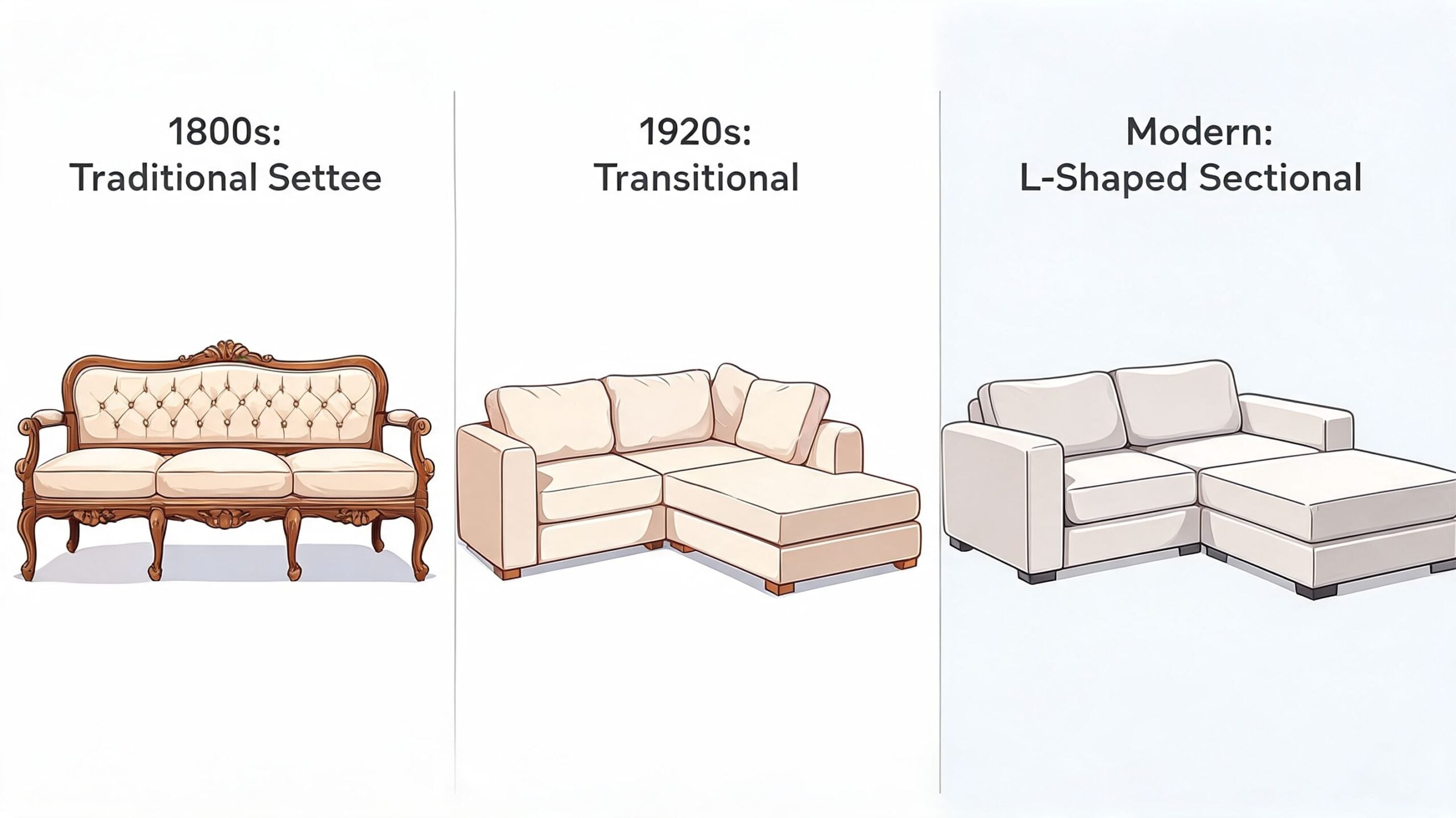
From corner seating to modern sectionals
The idea itself is older than many shoppers expect. Furniture makers have been creating corner-friendly seating for generations because corners often go underused. Earlier corner chairs were built to sit neatly where two walls meet. Modern sectionals apply the same logic on a larger scale.
The shape changed. The purpose stayed familiar. Use the room better, seat more people comfortably, and avoid wasting floor space.
That long history helps explain why corner sofas keep showing up in real homes across Upstate New York. They are not a passing style. They are a practical answer to a common room problem, especially in homes with tight walkways, fireplaces, radiators, or open living areas that need more definition.
Terms shoppers mix up all the time
Store tags and online listings often blur together, so it helps to sort the vocabulary before you compare sizes, fabrics, or prices.
| Term | What it usually means | What to watch for |
|---|---|---|
| Sectional sofa | A sofa made in multiple joined pieces | Can be L-shaped, U-shaped, chaise-based, or modular |
| L-shaped sofa | A sofa with one long side and one shorter side | May be fixed or modular |
| Chaise sectional | A sofa with one extended lounging section | Great for stretching out, but not always equal seating on both sides |
| Modular corner sofa chair | A sectional built from movable units | Useful if you want to rework the layout later |
One term trips people up all the time: left-hand or right-hand facing. That refers to which side the longer section sits on when you stand facing the sofa. It sounds technical at first, but it is really just a direction check.
If you also find yourself comparing product names, our guide on the difference between a couch and a sofa clears up another bit of furniture language that often confuses shoppers.
A corner sofa chair is best understood as a category, not a single furniture style.
Why the name can be misleading
The word chair in this phrase throws people off. In many cases, the piece is not a chair in the traditional sense at all. It may be a compact sectional, a one-armed chaise-ended sofa, or a modular setup with a defined corner seat.
That matters for Albany-area buyers because local homes rarely follow a perfect showroom layout. A brownstone living room in Troy, a split-level in Clifton Park, and a farmhouse outside Greenville can all need corner seating, but each room asks for a different shape. The label on the tag will not tell you that by itself. The room will.
A good rule from our showroom floor is simple. Focus first on how the piece uses the corner, how many people it seats well, and how much walking space it leaves open. The product name comes second.
Why this style keeps earning its place
Families use living rooms differently than they did years ago. One person may be reading, another watching a game, and a third stretching out with the dog all in the same space. Corner seating supports that kind of everyday use without scattering furniture across the room.
In Upstate homes, that practical side matters. Winters are long, evenings are spent indoors, and the living room often works hard. A well-chosen corner sofa helps the room feel settled, comfortable, and ready for real life.
Finding Your Configuration L-Shape Chaise or Modular
A family in Colonie may want a corner sofa for movie nights. A homeowner in a Troy brownstone may need that same category of furniture to solve a narrow room with one workable wall. The right configuration changes everything, because the shape that looks good online may feel awkward in a real Upstate living room by the first snowstorm.
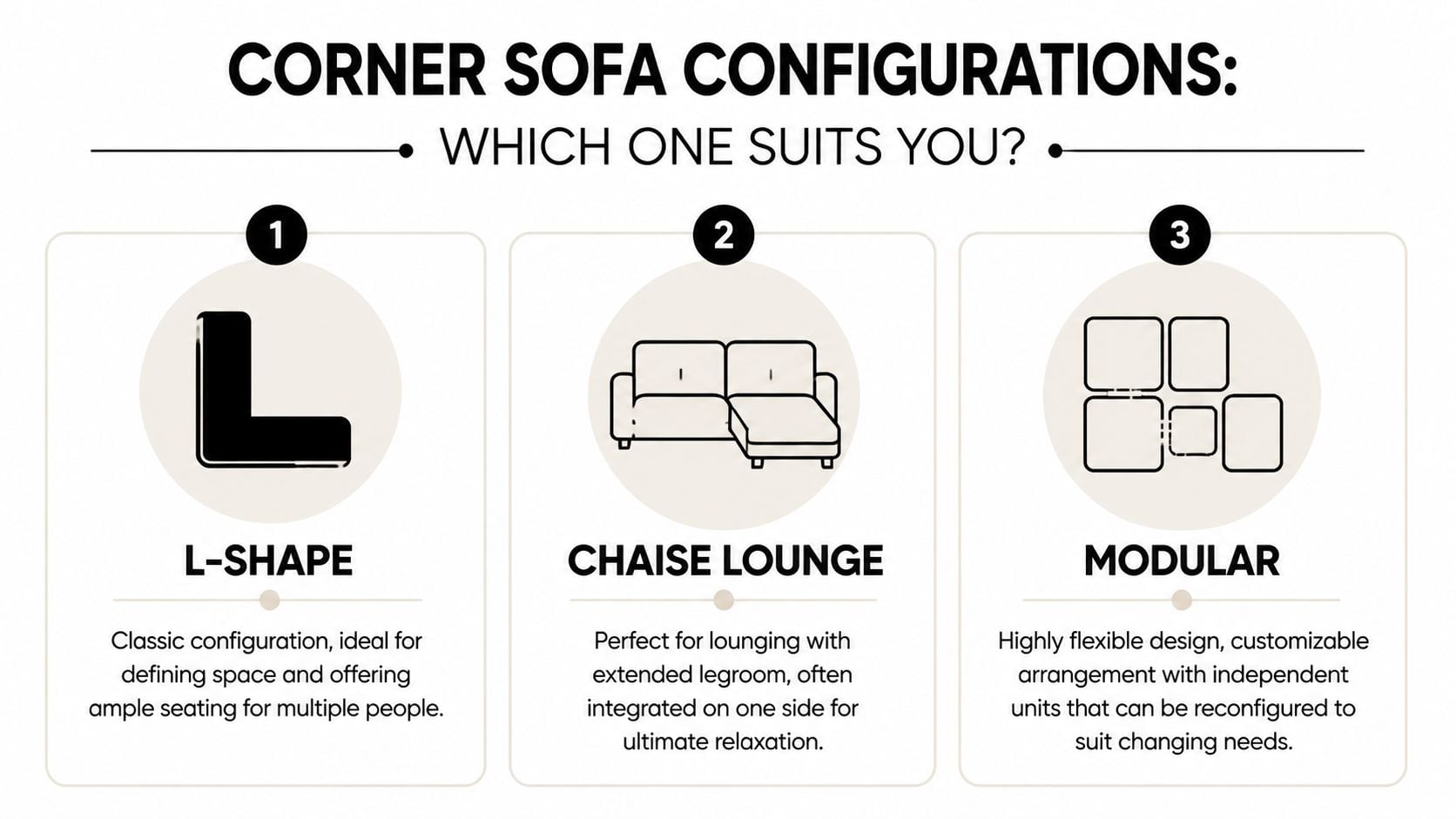
After 45 years helping Capital Region families furnish homes, we have seen one pattern again and again. Shoppers often focus on the outline of the sofa, but daily use defines its importance. Who stretches out. Who sits upright. Who hosts neighbors. Who needs a piece that can adapt after a move from Saratoga to Albany, or from an apartment to a first house.
The classic L-shape
An L-shape gives you two defined seating runs that meet cleanly at the corner. It works like a natural frame for the room, which is why it often feels settled and finished the moment it is in place.
This configuration usually suits households that want several true seats instead of one main lounging spot. In a larger family room, it can gather everyone around the television or fireplace. In an open-concept space, it can help mark off the living area without adding extra furniture.
Good fit:
- Families who use the room together most evenings
- Rooms with a clear corner and few obstacles
- Shoppers who prefer a balanced look
Potential drawback:
- It asks for a more exact fit, especially in older Upstate homes with radiators, uneven walls, baseboard heat, or windows that sit closer to the corner than expected
The chaise version
A chaise corner sofa chair has one side built for stretching out. Many shoppers in medium-size homes like it because it gives you that relaxed sectional feel without the visual weight of a full L-shape.
The tradeoff is simple. One end becomes the prime lounging seat, and the other seats need to do the rest of the work. That can be perfect for a couple, a small household, or anyone who wants a reading-and-reclining spot every day.
Best for:
- Couples or smaller households
- Rooms that need an open, lighter look
- Buyers who care more about lounging comfort than maximum guest seating
One quick showroom lesson from our team. A chaise often looks generous in a photo, but in person it serves one person differently than a standard seat serves a guest. That distinction matters if you host often.
The modular option
A modular corner sofa chair uses separate pieces that connect together, so the layout can change with your room or your routine. That flexibility can be a real advantage in the Capital Region, where people often work with mixed-use spaces, finished basements, bonus rooms, and older homes with layouts that are not perfectly straightforward.
Many modular designs are built to be rearranged into different layouts, including corner setups and larger sectional shapes, as shown by Flexsteel's modular sectional options.
If your household changes furniture around for holidays, guests, or a future move, modular seating gives you more ways to keep the piece useful over time.
Corner Sofa Configuration Comparison
| Configuration Type | Best For | Pros | Cons |
|---|---|---|---|
| L-Shape | Families, open rooms, TV areas | Defines the room well, offers multiple everyday seats, has a classic sectional feel | Needs a cleaner corner and a more predictable layout |
| Chaise | Couples, smaller households, casual lounging | Comfortable for stretching out, lighter visual footprint, often easier in medium rooms | One side favors lounging more than guest seating |
| Modular | Changing homes, awkward rooms, flexible use | Can be reworked, adapts well, useful in multipurpose spaces | Takes more planning so the final setup feels cohesive |
A simple way to decide
Use your daily routine as the test.
- If several people sit in the room at once, an L-shape usually gives the most balanced seating.
- If one spot is used for reading, napping, or watching TV every night, a chaise may fit your life better.
- If the room needs to change with guests, holidays, or future moves, modular is often the safer long-term choice.
If you want a broader look at how these layouts behave in real homes, our guide on what to know before buying a sectional adds helpful context before you choose.
How to Measure for a Corner Sofa in Your Albany Home
A family in Albany finds a corner sofa chair they love, checks one wall, places the order, and feels done. Delivery day arrives, and the piece fits the room on paper but crowds the walkway, misses the radiator by an inch, or gets stuck at the stair turn.
We have helped Capital Region families avoid that scene for more than 45 years. In Upstate New York homes, especially older ones, measuring is less about one number and more about the whole path the furniture has to live in.
Start with the room, not the product tag
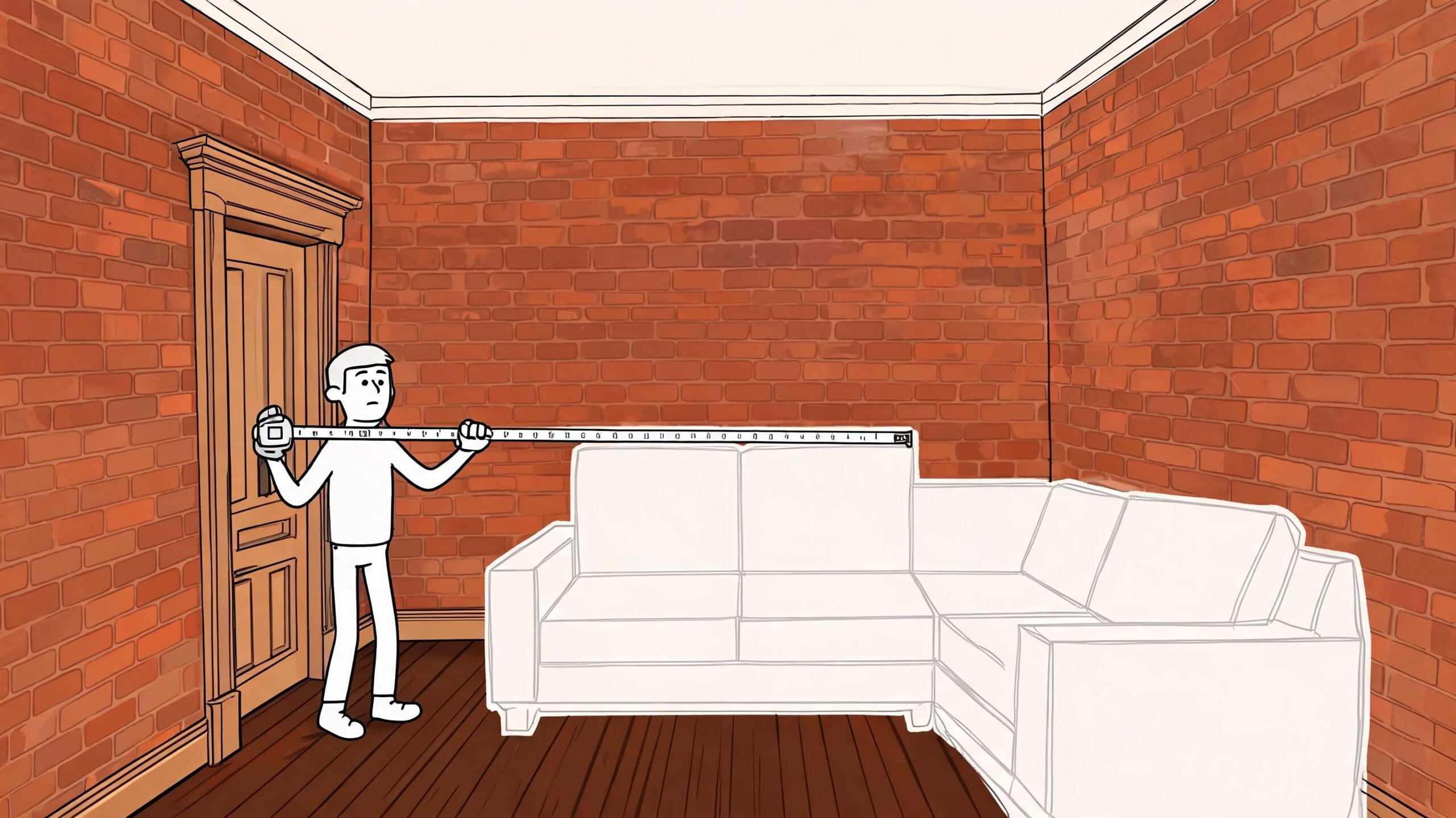
Begin where the sofa will sit. Measure both walls of the corner, then measure how far the sofa can come into the room without pinching daily traffic.
That second number trips people up.
A corner sofa can technically fit and still feel wrong every day. The real test is whether someone can pass by with a laundry basket, whether the dog can circle around it, and whether guests can move through the room without turning sideways. In many Albany homes, that matters as much as the wall length itself.
A practical measuring routine
Use a tape measure, painter’s tape, and a notepad.
Measure each wall separately
Older homes are not always perfectly square, and one side of the corner may give you less usable space than the other.Measure outward from the wall
This tells you how deep the sofa can be before it starts to crowd the room.Mark obstacles right away
Include radiators, baseboard heat, vents, window trim, outlets, doors, and any built-ins.Tape the footprint on the floor
Painter’s tape works like a dress rehearsal. You can see the size instead of guessing at it.Walk the room normally
Follow the path you use every day, from the hallway to the chair, from the sofa to the TV, from the entry to the next room.Measure the delivery route
Check the front door, storm door, interior doors, hallways, stairwells, ceiling height, and any tight turns.
That last step saves a lot of frustration.
Measure the spot where the sofa will sit. Then measure every opening and turn it has to pass through before it gets there.
Why awkward Albany rooms need extra care
Many homes around Albany, Troy, and the wider Capital Region have quirks you will not find in a builder-grade floor plan. You may have a deep window casing, a narrow staircase, a fireplace offset from center, or a radiator right where the arm of the sofa wants to go.
Those details change the best choice.
A fixed corner sectional asks the room to cooperate. A modular design gives you more freedom to work around a bump-out or a heater. An armless end can also help in a tighter space because it trims bulk where a full arm would eat up room. If your home was built decades ago, flexibility often matters more than a picture-perfect showroom layout.
Signs you should measure for flexibility, not just size
- One wall includes a radiator, vent, or deep trim
- The corner is not square
- The room serves as a pass-through to another space
- A window, doorway, or ceiling slope limits one side
- You may move the layout for holidays or guests
If two or more of those sound familiar, bring measurements for both your ideal sofa and a slightly more flexible alternative.
Delivery dimensions count as much as room dimensions
We have seen shoppers measure the living room carefully and forget the front steps, the entry hall, or the upstairs turn. That is often the difference between a smooth delivery and a very long afternoon.
Sectionals usually come in separate pieces, which helps, but each piece still needs enough clearance to come through the house safely. Measure the narrowest doorway, any sharp hallway turns, and the stairwell width if the room is upstairs. If you want a simple checklist to follow while you measure, keep this guide on how to measure furniture for delivery and room fit open as you go.
A simple way to double-check yourself
Use painter’s tape on the floor, then live with it for a day.
That little outline works like a test parking space. You will notice quickly whether the chaise blocks the vent, whether the corner crowds the coffee table, or whether the layout leaves enough breathing room for the way your family lives. On a showroom floor, a corner sofa chair can feel balanced and inviting. In an Upstate New York living room with real walls, real winter gear, and real traffic patterns, the right fit comes from accurately measuring the room.
Choosing Quality Fabrics and Construction That Last
A corner sofa chair earns its keep in an Upstate New York home.
It handles movie nights in January, muddy paws in March, extra relatives at the holidays, and the everyday habit of everyone choosing the same favorite seat. After 45 plus years helping Albany and Capital Region families furnish real homes, we can tell you this with confidence. A sofa that looks good on day one and a sofa that still feels solid years later are often two very different things.
Start by judging the piece in two layers. The fabric is the coat. The frame is the skeleton. You need both.
Start with fabric that matches how your room is actually used
Shoppers often reach for color first, then texture, then price. Daily wear should be much closer to the top of the list.
If you have kids, pets, or one main living room that gets used every night, ask about abrasion ratings such as Martindale or Wyzenbeek. Those tests give you a practical way to compare fabrics that may look almost identical in the showroom. One fabric may suit a formal room that sees light use. Another may hold up better in the family room where people stretch out, snack, and slide in and out of the same corner seat every day.
A few common upholstery choices each solve a different problem:
- Performance fabrics are a strong fit for busy households because they are made for easier cleanup and repeated use.
- Microfiber feels soft, cozy, and forgiving, which is one reason many families choose it for TV rooms.
- Leather wears differently, develops character over time, and can be a smart long-term choice if you like its feel and care routine.
- Textured woven fabrics add warmth and visual depth, but they still need to be judged for durability, not just appearance.
If you want a clear primer before you start comparing swatches, this guide to upholstery materials and how they perform in real homes is a helpful place to start.
Then look under the cushions
A beautiful fabric cannot rescue a weak frame.
The strongest corner pieces usually have hardwood or engineered hardwood frames, reinforced corners, and joinery that stays tight under daily use. Mortise-and-tenon joinery is one of the construction details worth asking about because it helps keep the frame steady over time. That matters even more in sectionals and corner seating, where pressure tends to build at the inside corner, the arm, and the spot where people drop into the seat after a long day.
Seat support matters too. Ask whether the sofa uses sinuous springs, webbing, or another support system, and ask how the cushions are built. A corner sofa chair can feel wonderful for ten minutes in a showroom and still lose its shape too quickly at home if the support underneath is not up to the job.
Practical advice: For the seat your household will use every day, treat frame construction with the same care you give the fabric choice.
The details that separate a quick purchase from a good long-term fit
This is the part shoppers sometimes rush, especially after finding a fabric they love.
Check these details before you decide:
- Seat depth. A deep lounge seat feels great for curling up, but it may not suit everyone in the house for upright sitting.
- Back height. A lower profile can look clean and current, but taller backs often feel better for longer sitting sessions.
- Cushion style. Loose cushions can be rotated. Attached cushions usually look tidier with less fuss.
- Seam quality. Well-finished seams in high-contact areas help the upholstery hold up better over time.
- Fabric hand and texture. Some fabrics look rich but catch lint, pet hair, or winter dryness more easily than others.
That last point matters in our area. Upstate homes often deal with dry indoor heat for months at a time, then open windows and extra humidity in warmer weather. Fabrics and cushions that handle daily swings in use and comfort tend to age more gracefully.
Why custom choices often pay off
Corner seating takes up a lot of visual and physical space, so small material decisions become big everyday decisions.
A sunny room may call for a fabric choice that handles light better. A household with a large dog may want a tighter weave that does not invite snagging. A smaller bungalow in Albany or a compact townhome in the Capital Region may benefit from a cleaner, less bulky upholstery choice, especially if you are also focused on designing inviting small spaces.
Global sofa trends come and go, but long-lasting comfort usually comes back to the same local question. How will this piece live in your house, through your winters, with your family? Answer that realistically, and you will make a much better choice.
Styling and Placement Tips for Your Living Room
Once the sofa is in the room, placement does most of the heavy lifting.
A corner sofa chair can make a room feel calm and intentional, or it can make the room feel bulky. The difference usually comes down to orientation, scale, and what you place around it.
Use the sofa to define the room
In open living areas, the back of the sectional can act like a soft divider. It tells the eye, “this is the seating zone,” without closing the room off.
That works especially well in larger Capital Region homes where the living room connects to a dining area or kitchen. Instead of adding extra pieces just to create structure, the sofa does that job on its own.
Match the table to the shape
A common mistake is choosing a coffee table that’s too small and looks lost in front of the sectional. The opposite problem happens too. An oversized table makes it hard to move around comfortably.
Try these pairings:
- Round coffee tables soften the lines of a boxier sectional.
- Ottomans work well if you want flexibility and a softer family-room feel.
- Nesting tables help in tighter layouts where full-size side tables feel crowded.
Leave the room enough breathing space that the sofa looks like it belongs there, not like it was pushed in as an afterthought.
Add softness without clutter
Corner seating already has visual weight, so styling works best when it feels layered but not fussy.
A simple combination often works better than a pile of accessories:
- A few pillows in varied texture
- One throw placed on the chaise or corner
- A rug sized to anchor the seating area
- One floor lamp or side lamp for warmth
If you’re working with a smaller room, some of the ideas in this piece on designing inviting small spaces are useful because they focus on warmth and balance instead of overcrowding.
Work with the room’s best feature
Some homes in the Hudson Valley and Catskills have a natural focal point. A window view, a fireplace, or even a beautiful built-in can guide the sofa placement.
In other homes, especially larger great rooms, the challenge is creating enough coziness. That’s where the sectional earns its keep. It brings people inward and makes a bigger room feel more connected.
Design services can be especially helpful here because placement isn’t only about fit. It’s also about what the room feels like when everything is in place.
Your Project Made Easy with the Tip Top Advantage
Choosing a corner sofa chair gets easier when you don’t have to figure everything out alone. A good furniture project usually comes down to four things. Fit, comfort, quality, and confidence in the final choice.
That’s where local service makes a real difference for homeowners in Freehold, Albany, Schenectady, Troy, and throughout the Capital Region.

Custom ordering helps you get the fit right
Not every room wants a standard answer. Some need a specific arm style, a certain fabric, or a layout that works around a window, stair opening, or older trim detail.
Custom ordering helps when you like the comfort of one model but need a different look or configuration. That’s especially useful in homes where off-the-floor inventory feels close, but not quite right.
Room planning cuts down on guesswork
A room planner is one of the most useful tools in the shopping process because it moves the decision from “I think this will work” to “I can see how this fits.”
That’s a big help with a corner sofa chair because these pieces affect:
- Walkways
- Sight lines
- Table placement
- Delivery access
- How open or crowded the room feels
Seeing everything to scale before buying can prevent a lot of avoidable frustration.
Design help brings the whole room together
Since 1984, professional design services have helped homeowners coordinate furniture, décor, and other room elements into one cohesive plan. That matters when the sofa is only part of a bigger update.
A sectional may fit the room physically but still feel off if the rug is undersized, the tables are too small, or the flooring and upholstery compete instead of working together. Design guidance helps connect those pieces.
Financing can make a better long-term choice possible
Sometimes the right sofa is the one you’ll keep for years, not just the cheapest one available this weekend. Flexible payment options can make that decision easier to manage.
If financing would help you choose the better fit or better construction now, you can review available financing options while planning your project.
Clearance can be a smart shortcut
Not every good furniture purchase has to be custom. Some shoppers want quality and immediate availability.
That’s where a strong clearance furniture selection can be especially valuable. You may find a corner sofa chair or related living room piece that solves the problem quickly, with less waiting.
Create Your Perfect Living Space Today
A corner sofa chair can solve problems that separate seating often can’t. It can use a dead corner, create a more natural conversation area, make a large room feel grounded, or give a smaller room better function.
The key is getting three things right. Choose the right configuration, measure carefully, and pay attention to construction and fabric, not just the photo or color.
For Upstate New York homes, that careful approach matters even more. Older layouts, tight entries, and multipurpose rooms reward thoughtful choices. When the sofa fits the room and the way you live, everything feels easier.
After more than 45 years serving families across Freehold, Albany, and the wider Capital Region, one lesson keeps proving itself. Furniture shopping goes better when you can ask questions, compare real options, and get guidance that’s grounded in local experience.
If you’re ready to find the right corner sofa chair for your home, visit Tip Top Furniture & Mattresses online or stop by the Freehold, NY showroom. You can explore living room options, try the free room planner, ask about custom ordering, review financing, or see what’s available in clearance. It’s a practical way to move from “maybe this will fit” to a living room that feels right.