Your Big Comfy Chair Buying Guide for Albany Homes


Some evenings in the Albany area all feel the same. You finish dinner, the house finally gets quiet, and you look for one place to land with a book, a ballgame, or a cup of tea. The sofa is already claimed, the old accent chair looks nice but never feels right, and suddenly the idea of a big comfy chair starts sounding less like a luxury and more like a missing piece of the room.
That’s usually where questions begin. How big is too big for your space? Will a deep chair feel relaxing or leave your back angry after an hour? Can you find something cozy without turning the whole room into an obstacle course?
Families around Freehold, Albany, Schenectady, Troy, and the wider Capital Region ask those questions every day. A chair has to do more than fill a corner. It has to work with your room, your habits, your body, and the way Upstate New York homes are used through long winters, busy weekends, and everyday living.
Welcome Home to Your Personal Retreat
A big comfy chair often starts with a simple need. You want one spot in the house that feels like yours. Maybe it’s for reading near a window, watching the snow fall in Greene County, or stretching out after working from home all day.
That’s why this category has grown far beyond the old idea of a bulky living room extra. The demand for comfortable, ergonomic home seating is growing significantly. The global ergonomic chair market was valued at USD 9.80 billion in 2022 and is projected to reach USD 16.88 billion by 2030, with North America leading that trend, according to Grand View Research’s ergonomic chair market report.
Why the chair matters so much
A good chair creates a personal zone inside a shared room. In many Capital Region homes, that matters more than people expect. Open living rooms, family rooms that double as TV spaces, and older homes with tighter layouts all benefit from one seat that invites you in without overpowering everything else.
A well-chosen big comfy chair can become:
- Your reading seat by the lamp
- Your conversation seat angled toward the sofa
- Your winter retreat near the fireplace or picture window
- Your flexible extra seating when family visits
The right chair doesn’t just look inviting. It changes how often you use the room.
What local shoppers usually discover
The search for a comfy chair often begins with softness. Sitting in a few models, however, quickly reveals that comfort is more specific than that. One chair feels roomy but awkward. Another looks compact but supports the back better. A third seems perfect until you picture it beside your coffee table and realize it will crowd the walkway.
That’s normal. A big comfy chair is part comfort purchase, part space-planning decision, and part long-term investment. After decades of helping families furnish homes across the Albany area, I can tell you this. The happiest buyers are the ones who slow down and match the chair to real life, not just to a showroom moment.
What Truly Makes a Chair Both Big and Comfy
“Big” and “comfy” sound obvious until you start shopping. Then you realize one chair is wide but unsupportive, another is plush but hard to get out of, and a third feels terrific for ten minutes but not much longer.
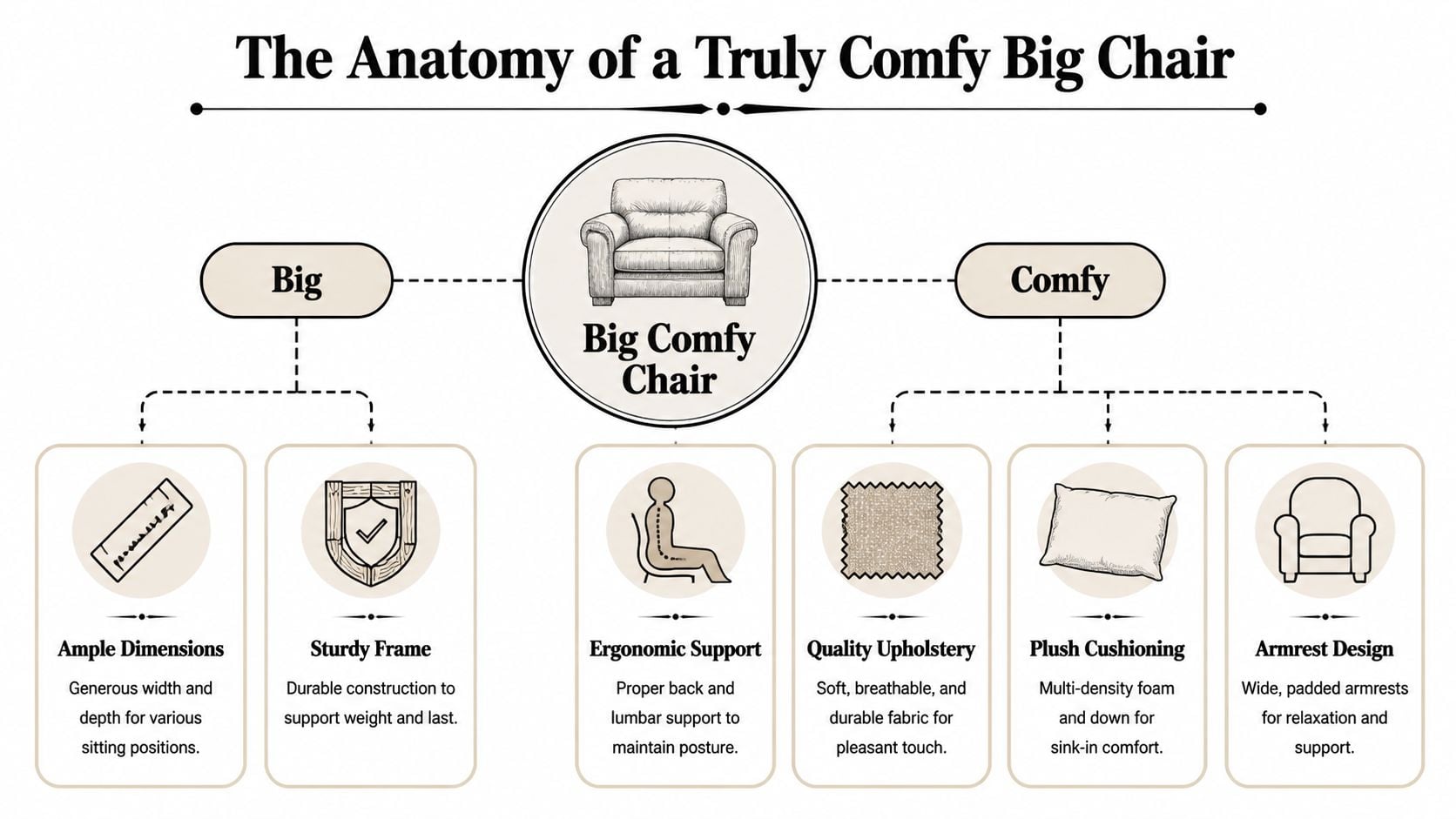
Big doesn’t just mean oversized
A chair earns the “big” label when it gives you room to change positions comfortably. That may mean a wider seat, broader arms, a higher back, or a deeper seat pan. But if those dimensions ignore the way people sit, the chair can feel clumsy instead of restful.
Anthropometric research gives us a better way to judge comfort. According to this lounge-chair ergonomics research review, optimal backrest height for a lounge chair should be around 75% of a person’s shoulder-to-floor measurement, and a seat height between 16 and 19 inches allows most adults to rest their feet flat on the floor, helping posture and reducing strain.
That’s why experienced salespeople don’t just ask, “Do you like it?” We ask how it feels behind your knees, whether your feet touch the floor naturally, and where your shoulders land on the back cushion.
Comfy means supportive, not just soft
People often confuse softness with comfort. Softness matters, but support matters longer.
Here’s what to look for in plain language:
- Seat height keeps your knees in a comfortable position and helps you get in and out easily.
- Seat depth should let you lean back without the front edge pressing awkwardly into your legs.
- Back support should meet your body where you need it, especially through the lower back and shoulder area.
- Arm design affects how relaxed your neck and shoulders feel during longer sitting sessions.
Practical rule: If a chair only feels good when you slump, it probably isn’t the right chair for everyday use.
Terms that sound technical but are simple
A few furniture terms can make shopping feel more confusing than it needs to be.
Seat pitch is the angle of the seat. A slight backward tilt can feel relaxing. Too much tilt can make it hard to sit upright for reading or conversation.
Cushion density describes how the filling resists compression. You don’t need to memorize construction details. You just need to know the difference between a cushion that welcomes you and one that swallows you.
Lumbar support is support for the lower back. In a comfortable chair, that support is built into the shape, not left entirely to a throw pillow.
If pets are part of your household routine too, comfort planning can extend beyond your own seat. Some readers also enjoy this ultimate guide for happy pups when they’re trying to create a cozy shared living room.
For a closer look at construction details worth checking in person, this article on what to look for in your new sofa or chair is a useful next step.
Choosing Your Perfect Style and Material
A big comfy chair should suit the way your household lives. In many Albany area homes, that means more than picking a shape you like in the showroom. The right style has to work with movie nights, snowy weekends, afternoon reading, and the kind of room your home gives you, whether that is a formal front parlor or a family room that opens right into the kitchen.
Which chair style fits your routine
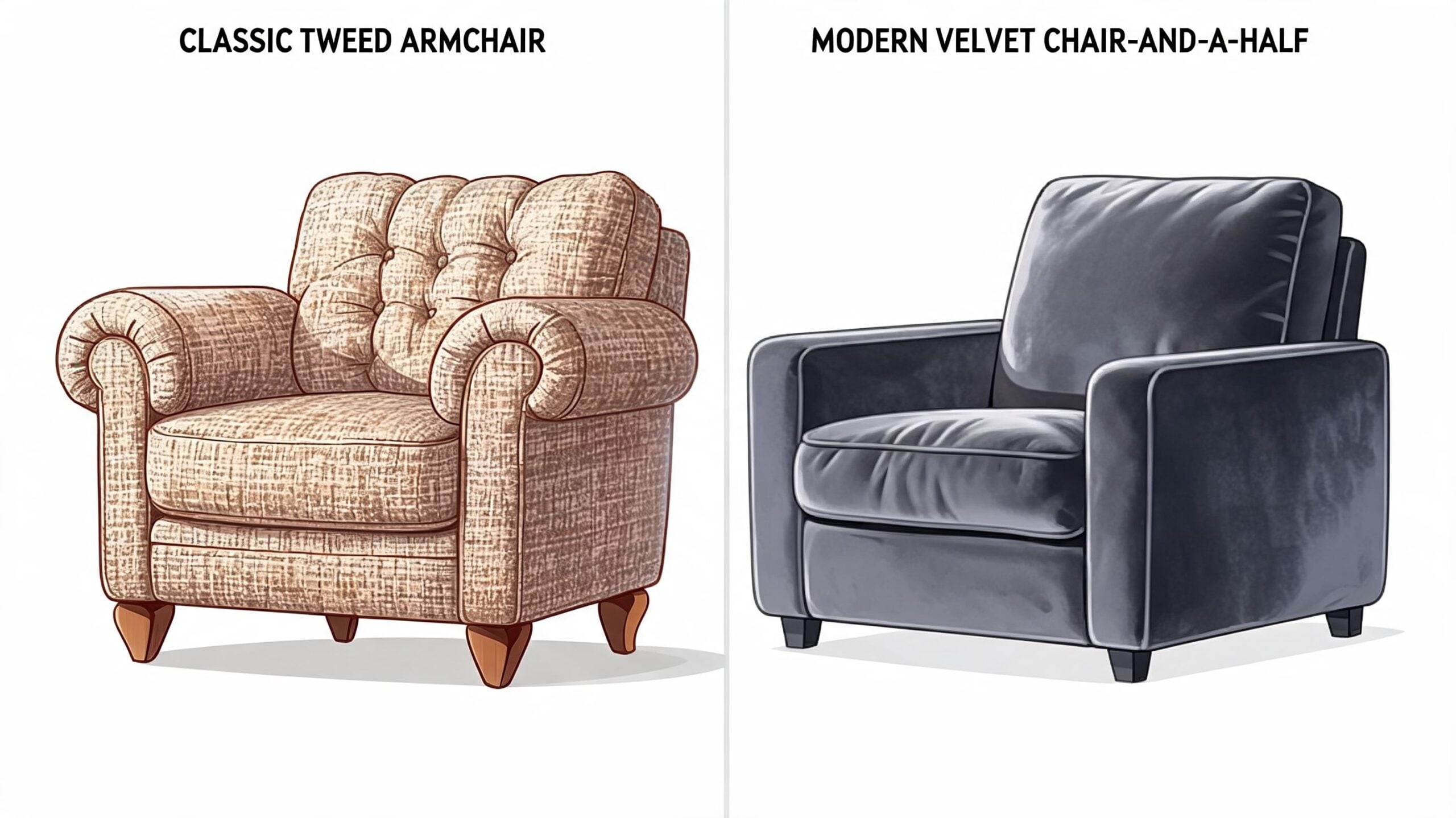
A classic upholstered armchair brings order to a room. It sits neatly, reads well in traditional and transitional spaces, and usually makes sense for reading, visiting, or a quieter corner where you want the chair to hold its shape.
A chair-and-a-half gives you room to curl up without asking the room to handle a loveseat. For many families, this is the most practical version of "big." You get extra width for a book, a child beside you, or a dog at your feet, while keeping the chair flexible enough for bedrooms, dens, and smaller living rooms.
A swivel chair earns its keep in rooms with more than one focal point. If your seating needs to face the TV at night, the fireplace on winter weekends, and guests during holidays, a swivel base can make the room feel easier to use. In older Capital Region homes, that kind of flexibility often matters more than a dramatic silhouette.
A recliner or motion chair is built for full-body ease, but the style range is wider than many shoppers expect. Some have clean lines and smaller arms that fit a structured space. Others are deep and plush for basement family rooms or bonus spaces where comfort comes first. If you are considering motion, test the chair in the position you will use most often, not just fully closed.
Material changes how the chair lives in your home
Style catches your eye first. Material decides how the chair feels in February, how it wears after years of use, and how much upkeep it asks from you.
| Chair Material Comparison | Best For | Maintenance Level | Feel |
|---|---|---|---|
| Fabric upholstery | Family rooms, reading corners, everyday use | Moderate | Soft and inviting |
| Leather | Easy wipe-down care, classic living rooms, long-term use | Moderate | Smooth and supportive |
| Performance fabric | Homes with kids, pets, frequent entertaining | Lower | Durable with a cozy hand |
| Velvet | Accent seating, formal spaces, rich color | Moderate | Plush and warm |
| Tweed or textured weave | Traditional rooms, casual layered spaces | Moderate | Structured and tactile |
A simple way to sort materials is to start with daily habits. Households with children, pets, or heavy evening use often do well with performance fabrics because they are easier to live with over time. Leather suits buyers who want a cleaner look and a surface that wipes down quickly. Textured weaves tend to feel especially at home in Upstate New York interiors, where wood floors, painted trim, brick, and stone can benefit from a softer, warmer counterpoint.
Texture matters more than many shoppers expect.
A chair can look handsome under showroom lights and still feel too slick, too stiff, or too warm once you spend two hours in it. That is why we often tell customers to picture the chair in real use. Are you sitting upright with coffee in the morning? Stretching out under a lamp at night? Using it every day in blue jeans, sweaters, and socks through a long heating season? Those details usually point you toward the right fabric faster than color alone.
For households that like to layer in seasonal softness, this article on the differences between blankets and throws can help you choose accessories that add comfort without overwhelming the seat.
If your room has unusual dimensions, fabric and style choices can also help control visual weight. A skirted chair may feel too formal in a compact ranch living room. A chair with exposed legs can look lighter in a tighter space. A taller back can anchor a room with high ceilings, while a lower profile often works better under windows or in rooms where you want sightlines to stay open. At Tip Top, custom ordering makes those decisions easier because you are not limited to one floor sample or one standard cover.
Fabric choice has a long memory. If you want practical guidance on wear, cleanup, texture, and which options hold up best in everyday family spaces, read this guide on how to choose upholstery fabric before you order.
Sizing Your Chair for an Albany Capital Region Home
Good intentions often go awry. A chair can feel perfect in the store and completely overwhelm a room once it’s home.
The local reality of room size
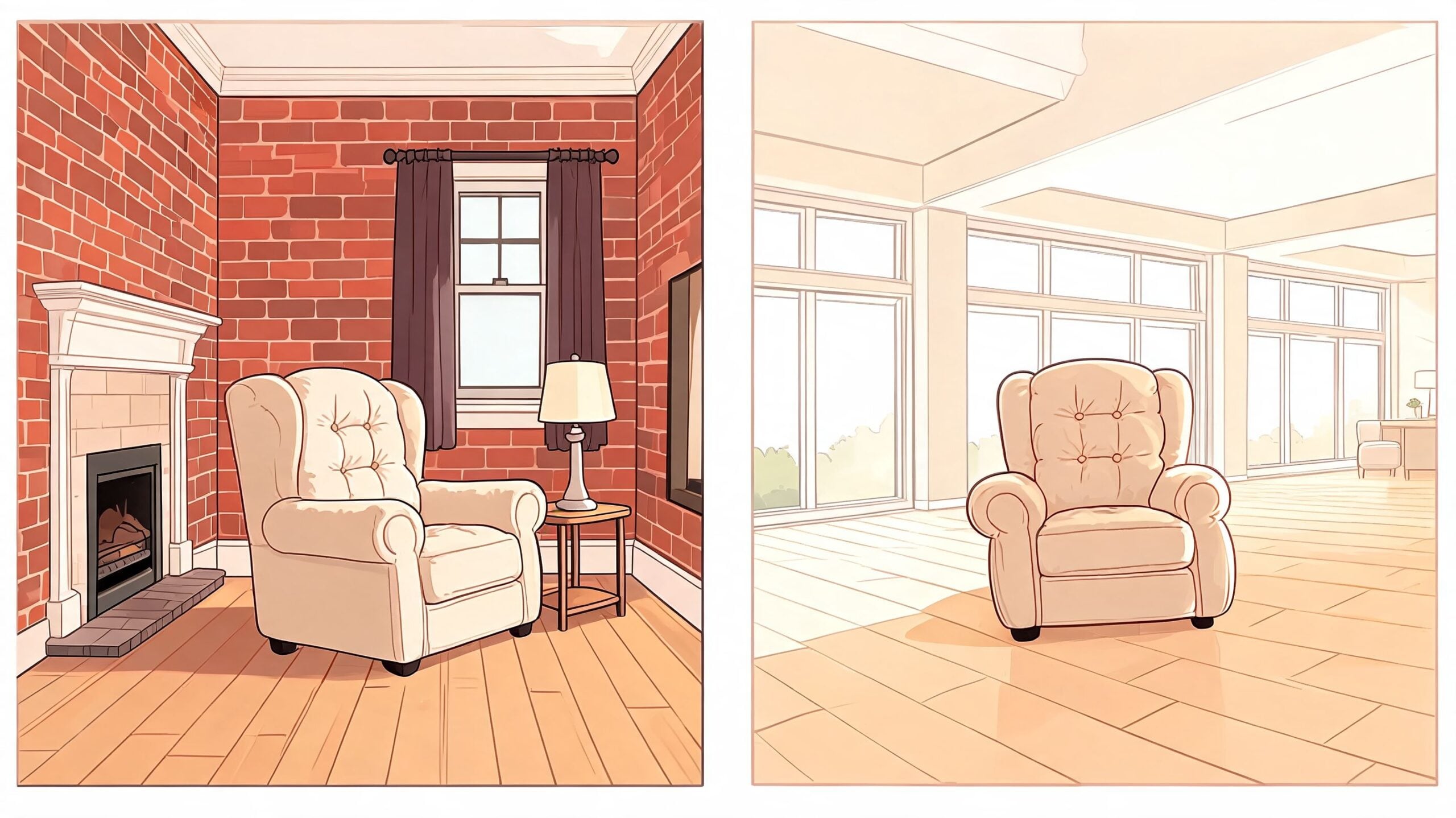
Homes around Albany and the Capital Region vary widely. You might be working with a farmhouse living room, a compact ranch family room, a townhouse den, or a formal front room in an older home with tight doorways and strong architectural lines.
A common issue for homeowners in Upstate New York is misjudging scale. Standard living rooms often struggle to accommodate chairs wider than 55 inches without disrupting flow, as noted on Living Spaces’ oversized chair category page. That’s why “big” has to be balanced against how people move through the room.
Measure in this order
Measuring the wall is often the initial step. I’d start with movement.
Walk the traffic path
Notice where people enter, turn, and pass through. A chair that blocks the natural route from hallway to sofa will feel oversized fast.Mark the chair footprint on the floor
Painter’s tape works well. Include the arms, not just the seat.Check nearby furniture relationships
Look at distance to the sofa, coffee table, side table, and lamp. Your chair needs breathing room.Measure access points
Doorways, stair turns, entry halls, and railings matter just as much as the room itself.
A big comfy chair should anchor the room, not interrupt it.
Common fit mistakes
The most frequent mistake is choosing a chair for the wall instead of the whole room. Another is ignoring visual weight. A low, broad chair can look larger than its measurements suggest, especially next to slim-legged tables or a smaller sofa.
Watch for these trouble spots:
- A chair pushed too close to a coffee table so legs feel trapped
- Arms that crowd a side table and make drinks or reading lamps awkward
- Backs that sit too high under windows and cut across trim or views
- Depth that forces the chair into the main walkway
If you want to avoid those surprises, use a measuring guide before you shop. This article on how to measure furniture helps you map dimensions clearly and catch problems early.
Key Questions to Ask Before You Buy
The biggest myth in this category is simple. If a chair feels extra deep and extra plush, people assume it must be more comfortable.
Sometimes it is. Sometimes it isn’t.
Ergonomic studies show that deep-seated chairs without adequate lumbar support can increase lower back strain by up to 30% during extended use, according to 2Modern’s oversized lounge chair resource. That matters most when the chair will be used for reading, remote work, or evening TV every single day.
Ask these in the store
Don’t stop at color and price. Ask practical questions that reveal how the chair will live over time.
What supports the back?
If the answer is basically “the loose pillow,” sit carefully. You may need more built-in structure.How does the seat cushion hold its shape?
Some cushions bounce back well. Others relax quickly and change the feel of the chair.What is the frame made from?
Construction affects durability, stability, and how the chair ages.Can I change the fabric or firmness?
Customization can solve problems before they start.Will this still feel good after an hour?
Stay seated long enough to notice what your lower back, shoulders, and knees are telling you.
Pay attention to how you sit naturally
If you always tuck your feet under you, a super-firm structured chair may frustrate you. If you sit upright to read, a deep sink-in lounge chair may leave you stacking pillows behind your back by week two.
Ask yourself: “Am I relaxing into this chair, or am I already trying to fix it with my posture?”
For households planning around mobility needs, seat height, arm firmness, and ease of getting up matter even more. This guide to lift chair features offers helpful context on supportive seating details that many shoppers overlook.
If you want a broader checklist before walking into a showroom, this guide on how to shop for furniture smartly gives you a strong framework for comparing options with confidence.
Caring for Your Chair to Ensure Lasting Comfort
A quality chair should age well, but it still needs regular care. Most wear happens gradually. Sunlight fades fabric, body oils darken arm areas, and cushions compress when they’re always used the same way.
Simple habits that make a difference
Rotate loose cushions if the design allows it. Fluff back pillows often so filling stays distributed. Vacuum fabric upholstery gently, especially in seams and under the arms where dust and grit collect.
For spills, blot first. Don’t scrub. Scrubbing can push moisture deeper into the fabric and rough up the surface.
Material-specific care
Fabric chairs benefit from prompt cleanup and occasional professional attention, especially in high-use family rooms. If your room gets strong afternoon sun, use window treatments to reduce fading.
Leather chairs should be wiped with a soft dry or slightly damp cloth and kept away from intense heat sources. Dry winter air can be hard on leather, so climate balance matters.
A chair keeps its comfort longer when the filling, cover, and frame all get basic routine care instead of emergency treatment after a problem appears.
For additional upholstery and leather maintenance guidance, the furniture care advice from Good Housekeeping is a helpful general resource.
The Tip Top Advantage for Your Perfect Chair
A big comfy chair can feel perfect in the showroom and still be wrong for your home if it blocks a walkway, overpowers a smaller room, or will not make the turn at the staircase. Around the Albany Capital Region, that happens more often than shoppers expect. Older homes, split levels, narrow entries, and multipurpose family rooms all change what “big” should mean.
A good furniture store helps you sort that out before you buy. In a showroom, you can sit in different seat depths, test arm height with your own posture, compare cushion support, and see how a chair’s scale relates to end tables, lamps, and sofas nearby. That gives you a clearer read than a product photo and a measurement box on a screen.
Why customization matters in real homes
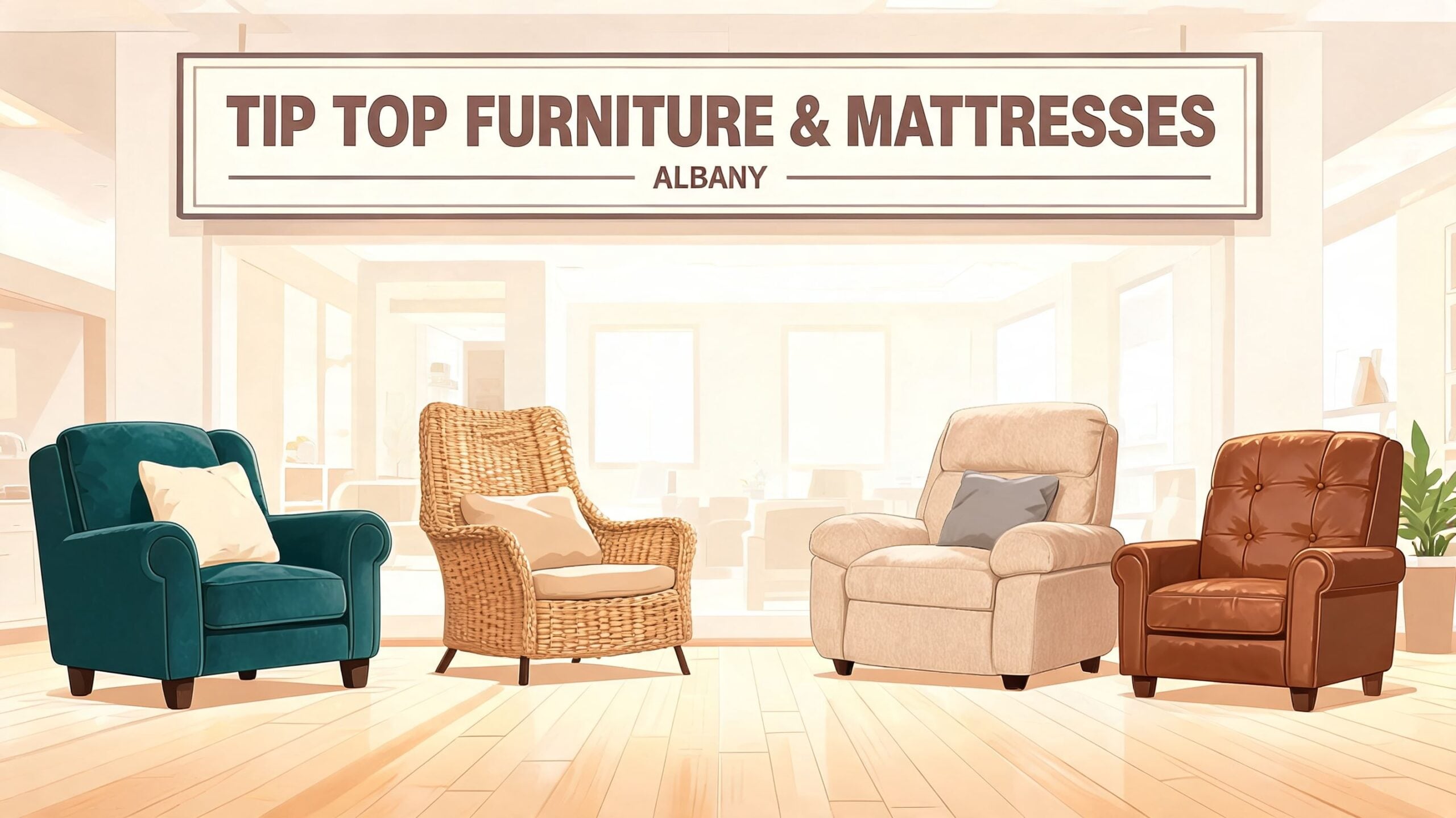
Tip Top Furniture & Mattresses in Freehold works with shoppers who need more than a standard floor sample. Sometimes the fix is simple. A narrower arm can save a few inches in a tighter room. A firmer cushion can make standing up easier. A different fabric can hold up better in a home with pets, grandkids, or heavy daily use through long Upstate winters.
Room planning matters just as much as the chair itself. If your living room has an off-center fireplace, a radiator under the window, or a traffic path from the kitchen to the stairs, the right chair has to fit the room you live in, not an ideal rectangle on paper. Custom ordering and in-store planning tools help solve those common local problems with more precision.
Delivery is part of that planning too. A chair may fit your room and still fail at the front door, hallway corner, or second-floor landing. Tip Top’s assembled furniture delivery service helps buyers account for access before moving day becomes a headache.
What long-term value looks like
A well-chosen chair should serve your household for years, so value includes the decisions around it, not just the sale price. Helpful guidance often includes:
- Design coordination so the chair works with the pieces you already own
- Custom ordering when the closest option on the floor is still not quite the right size, fabric, or comfort level
- Clearance choices for shoppers who want stronger quality at a friendlier budget
- Financing options for families furnishing a full room instead of buying one piece at a time
There is real comfort in working with a family-owned store that has served local households since 1978 and offered professional design services since 1984. Experience shows up in practical ways. Someone asks about your doorway width. Someone notices that a tall back may crowd a low window. Someone helps you choose a chair you will still enjoy after the novelty wears off and daily use begins.
That kind of guidance makes a big chair feel like it belongs in your home from day one.