Discover Your Perfect Queen Oak Headboard


You’ve painted the walls, chosen the bedding, maybe even replaced the flooring. But the room still feels unfinished. In most bedrooms, that missing piece is the headboard.
A queen oak headboard does more than fill empty wall space. It gives the bed presence, adds warmth, and helps the whole room feel settled. In many Albany-area homes, especially where older wood floors, traditional trim, or inherited furniture already set the tone, oak often feels like the natural choice.
I’ve spent decades helping families sort through furniture decisions, and this is one of the most common ones. People want something that looks right today, still looks right years from now, and doesn’t feel flimsy after one move or one season of humidity. Oak tends to answer all three concerns.
Your Bedroom's Centerpiece Starts with the Right Choice
The process doesn't usually begin with the headboard. It starts with a problem.
The bed feels plain. The bedroom looks scattered. The comforter is nice enough, but the room still doesn’t have a clear focal point. That’s usually when a homeowner in Albany, Troy, Schenectady, or Greene County starts thinking about what belongs behind the bed.
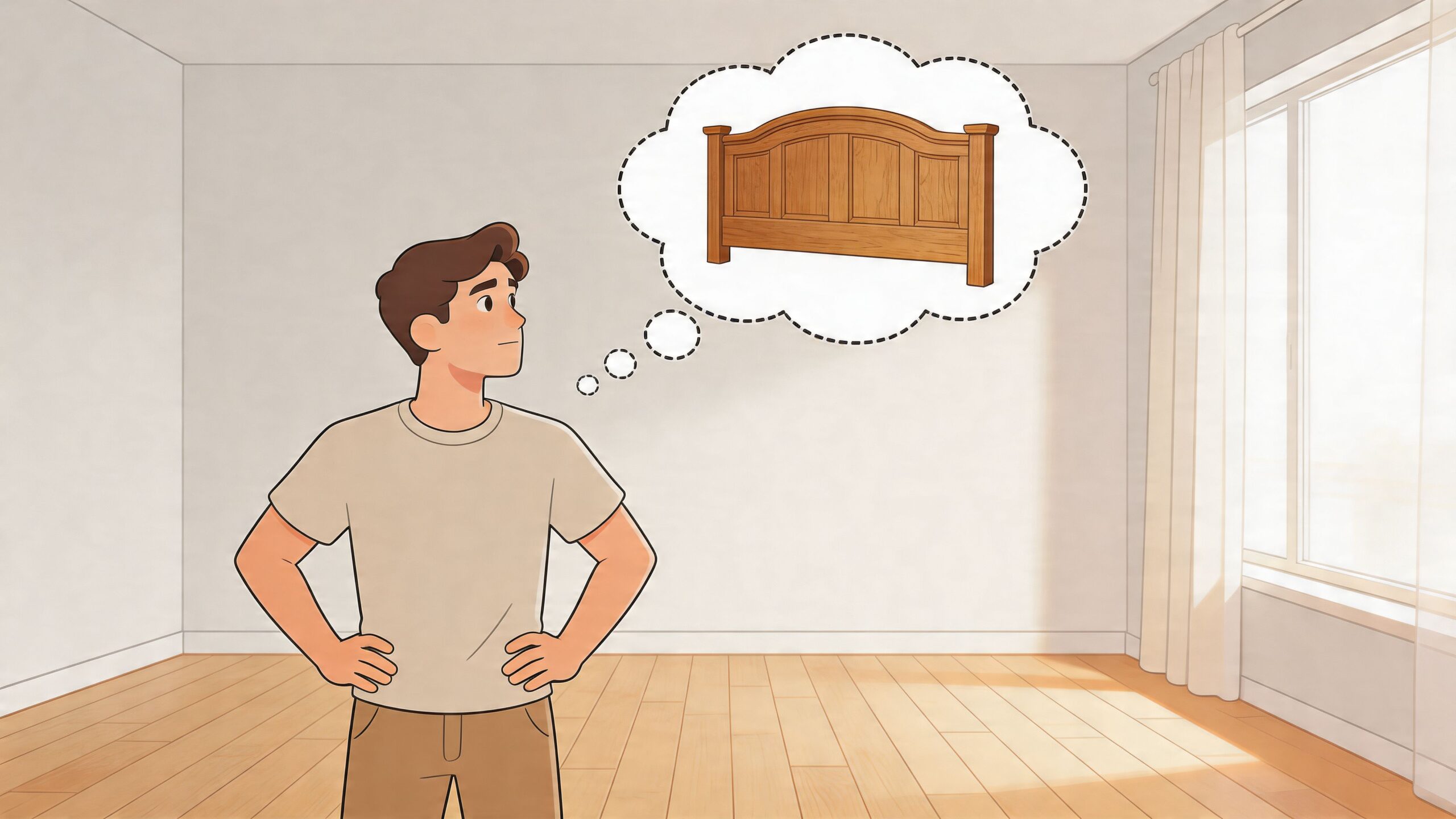
A headboard changes the room fast. It anchors the bed, gives your eye somewhere to land, and makes bedding look more intentional. Even a simple oak panel can make a bedroom feel designed instead of merely furnished.
Why this piece matters so much
The bed is usually the largest object in the room. If the bed has no visual weight at the top, everything can feel a little low, flat, or unfinished.
That’s why a queen oak headboard often becomes the piece that ties everything together:
- It frames the bed so the mattress doesn’t look like it’s floating in the room.
- It adds material warmth that painted walls and fabric alone can’t provide.
- It helps define style whether your room leans farmhouse, classic, transitional, or clean-lined modern.
- It creates balance with dressers, nightstands, and flooring.
Some homeowners want a dramatic statement. Others want quiet structure. Oak can do both.
A bedroom doesn’t need more stuff. It needs one strong piece that makes the rest of the room make sense.
A familiar Albany area situation
A lot of local homeowners already have something they’re trying to work with. Maybe it’s older oak flooring. Maybe it’s a family dresser. Maybe it’s a colonial home that looks odd with furniture that feels too trendy.
That’s where the headboard becomes more than decoration. It becomes a bridge between what’s already in the home and what you’re adding next. If you’re still shaping the overall room, these master bedroom decorating ideas can help you think through proportion, color, and layout before you settle on the final piece.
Why an Oak Headboard is a Timeless Investment
Fast furniture often looks good in a photo and disappointing in a home. Oak tends to do the opposite. It has a quiet honesty to it. You see the grain, you feel the weight, and you know right away it was made to stay around a while.
That matters in a bedroom. A headboard gets used every day. You lean on it, bump into it, move the bed, and live with it through seasonal changes. A material with real staying power makes that daily use much less of a worry.
Oak carries a long furniture tradition
Headboards didn’t begin as mere decoration. Their role changed over time as homes and furniture styles evolved. In ancient Egypt, headboards signaled status through precious materials. In ancient Greece, makers turned them into practical barriers that helped shield sleepers from cold drafts, using wood because it insulated better than stone or brick, according to this history of headboards.
Later, design became more expressive. The Renaissance and Victorian eras pushed headboards into a more decorative and comfort-focused role. The 17th century saw upholstered headboards become popular for comfort, and the 19th century featured hand-poured iron bed frames before mass production changed furniture making after World War I, as noted in this headboard history overview.
Why oak still earns its place
Oak works because it doesn’t belong to one passing trend. It can look traditional, refined, rustic, or modern depending on the cut, finish, and shape.
A few reasons buyers keep coming back to it:
- Natural character. Oak grain gives a headboard depth that flat painted surfaces can’t match.
- Visual flexibility. It works with white bedding, iron lamps, antique quilts, sleek nightstands, and just about everything in between.
- Long-term appeal. Oak rarely looks dated in the way heavily trend-driven finishes can.
If you’re comparing wood types more broadly, this guide on choosing the right hardwood for longevity and style gives useful background.
Investment means more than price
People sometimes hear “investment” and think only about upfront cost. In furniture, I think about how often a piece needs to be replaced, how well it fits future homes, and whether you’ll still like it after styles shift.
A good queen oak headboard usually answers those questions well. It has enough presence to enhance the room now, but enough restraint to adapt when rugs, lamps, wall colors, or bedding change later.
Practical rule: If a piece has to survive daily use and still look appropriate ten years from now, simple oak is one of the safest choices you can make.
Understanding Queen Headboard Sizes and Specifications
Many shoppers get tripped up. They assume “queen” means every queen headboard is exactly the same width as the mattress. It usually isn’t.
A standard queen mattress measures 60 inches by 80 inches, and a queen headboard is typically 62 inches wide so it extends slightly past the mattress on both sides for better balance and bedding coverage, according to Gothic Cabinet Craft’s sizing details.
That extra width is not a mistake. It’s part of good design.
Why the headboard is wider than the mattress
When a headboard matches the mattress exactly, the bed can look cramped. A bit of overhang frames the mattress and gives the whole setup a cleaner outline.
It also helps in everyday use:
- Pillows sit better against a slightly wider backdrop.
- Bedding looks neater when sheets and comforters don’t crowd the edges.
- The bed feels centered instead of squeezed into the frame visually.
A few real examples
Not every queen-compatible oak headboard has the same exact dimensions.
The same Gothic Cabinet Craft listing notes one oak plywood panel headboard at 2.5"D x 61.5"W x 46"H, while another traditional oak panel version is 66.5"W x 2.75"D x 54"H with 60.5-inch leg spacing designed for queen frames. Those differences are why measuring matters.
Some headboards are also designed to work across more than one mattress size, especially full/queen combinations. That’s convenient, but it means you need to look at the leg spacing and attachment points, not just the label on the product page.
The three measurements that matter most
Here’s the simple version to focus on before you buy.
| Measurement | Why it matters | What to check |
|---|---|---|
| Width | Affects how the bed looks from the front | Make sure it suits a queen mattress and gives the look you want |
| Height | Changes the visual impact and reading comfort | Consider pillows, wall art, and whether you like a low or tall profile |
| Depth and mounting area | Determines frame compatibility | Check bolt locations, bracket style, and room behind the bed |
If you’re unsure how to measure around baseboards, windows, or nightstands, this guide on how to measure furniture is worth keeping open while you plan.
Why oak performs well structurally
The same source notes that oak plywood offers a compressive strength of about 10,000 psi parallel to grain, and that cross-grain lamination in veneers helps resist splitting when bed frame bolts are tightened. That’s one reason quality oak headboards tend to feel more stable over time.
For Upstate New York homes, material stability matters. Bedrooms see seasonal swings, and furniture that’s poorly made can loosen, shift, or show stress at the connection points. Oak generally gives you a better starting point.
If you’re between two sizes or styles, trust the tape measure over the product photo. Photos can flatter almost anything. Measurements tell the truth.
Exploring Oak Styles and Finishes
Once size is settled, the next question is usually style. This is the fun part, but it’s also where people get overwhelmed. “Oak” sounds simple until you start comparing panel beds, curved tops, storage designs, stained finishes, wire-brushed textures, and the solid wood versus veneer question.
The first thing to know is this. Oak is one of the most adaptable looks in the bedroom.
Common queen oak headboard styles
Some styles feel familiar the moment you see them. Others depend more on the room around them.
Here are the ones shoppers ask about most often:
Panel headboards
These are the steady classics. They look grounded, work well in traditional and transitional spaces, and don’t fight with patterned bedding.Mission and Shaker-inspired designs
Clean lines, visible craftsmanship, and less ornament. These are popular in Capital Region homes where buyers want warmth without fuss.Bookcase headboards
A practical choice for readers or smaller bedrooms. They add storage, but they also create a busier look, so they work best when the rest of the room is fairly simple.Modern oak headboards
These tend to have sleeker profiles, rounded edges, or mixed materials. In some cases, they may pair wood with upholstery for a softer effect.
If you’re still deciding which overall room style fits your home, this guide to different types of interior design can help put names to looks you may already like.
Finish changes the mood more than most people expect
The same oak headboard can feel completely different depending on its finish.
A few broad directions:
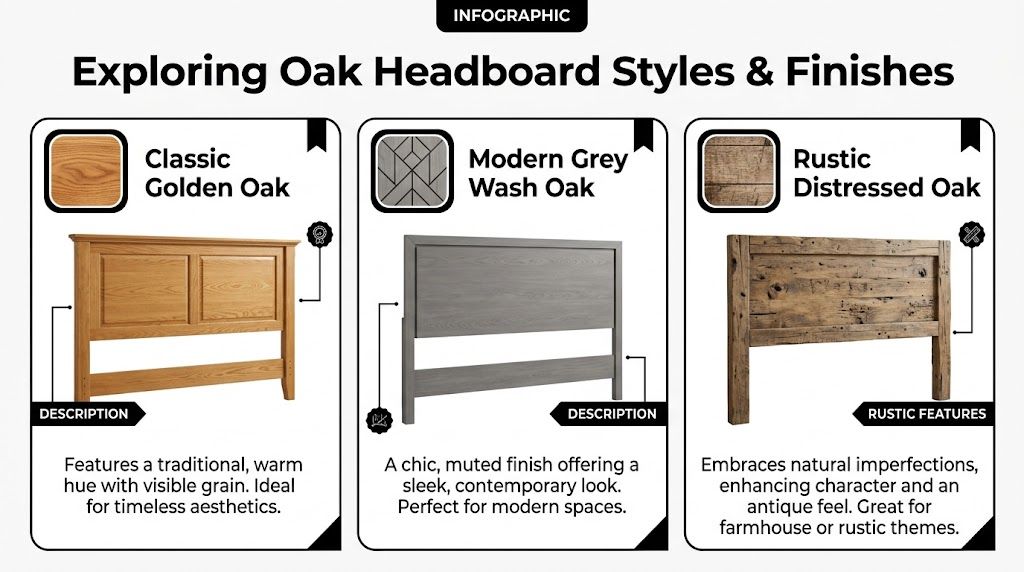
- Golden or medium oak feels familiar and warm.
- Grey-wash or cooler tones lean more current and understated.
- Distressed finishes bring out character and work well in farmhouse or casual settings.
- Dark stains make a stronger statement and often pair nicely with lighter walls.
If you already own wood furniture, the finish matters just as much as the species. Matching “oak to oak” doesn’t automatically guarantee a match in undertone or sheen.
Solid oak versus oak veneer
Online shopping often gets muddy. Listings can be vague, and buyers end up comparing products that are not equal.
Here’s the plain-language breakdown:
| Option | What it is | Best for | Limits |
|---|---|---|---|
| Solid oak | Made from solid wood parts | Long-term ownership, refinishing, heirloom use | Usually heavier and often costs more upfront |
| Oak veneer | Real oak surface over another core material | Stable construction and lower weight | Can’t usually be refinished the same way as solid oak |
There’s a real information gap here. As noted in this oak headboard market comparison discussion, many budget oak-finish headboards may chip within 1 to 2 years, while heirloom-quality solid oak from Amish craftsmen can last 50+ years with proper care.
That’s a major difference in long-term value.
When veneer makes sense and when it doesn’t
A good veneer product isn’t automatically poor quality. In fact, some well-made veneer construction can be stable and attractive.
But buyers should be honest about what they want:
- If you want a piece you may refinish later, choose solid oak.
- If you want maximum longevity, solid oak is usually the stronger choice.
- If you need a lighter piece or a certain price point, veneer may be a practical compromise.
For anyone considering a wood headboard as a long-term piece, learning basic upkeep matters too. This article on how to refinish wood furniture helps explain why solid wood gives you more future options.
The Enduring Quality of Amish and USA-Made Furniture
When people ask what makes Amish or USA-made furniture different, I usually tell them to start with what you can feel. Open a drawer. Touch the edge. Look underneath. Better furniture usually doesn’t just look nicer. It feels more settled, more deliberate, more complete.
That’s especially true with a queen oak headboard.

What buyers usually notice first
With handcrafted furniture, the details tend to be quieter but better. The wood selection looks intentional. The finish feels less plastic. The design often relies on proportion and joinery instead of flashy shortcuts.
That matters because a headboard sits at eye level. You see it every night and every morning. If the craftsmanship is weak, that’s where it shows.
Why heirloom quality means something
“Heirloom quality” gets tossed around a lot. In my book, it should mean a piece is built to stay useful and attractive through real life, not just display well in a showroom.
That often comes down to a few basics:
- Solid hardwood construction instead of flimsy substitutes
- Careful finishing that highlights the wood rather than hiding it
- Stronger joinery methods that help furniture stay tight and steady
- Repairability and longevity so the piece can be kept, not discarded
USA-made furniture often appeals to buyers for the same reason. They want better accountability, better craftsmanship standards, and materials that don’t feel anonymous.
This overview of made in USA furniture manufacturers is useful if you’re comparing where furniture is built and why that can matter.
Better furniture usually asks for more patience up front and gives back more years in return.
Why this matters in Upstate New York homes
A lot of homes around Albany and the surrounding communities aren’t blank-box interiors. They have character. Wide trim, older floors, antique pieces, family furniture, and room layouts that reward substance over trend.
That’s where Amish and USA-made oak furniture often feels right at home. It doesn’t look disposable. It doesn’t feel out of place next to older craftsmanship. And because many of these pieces are made with customization in mind, buyers can often get a better fit for their rooms and style than they would from a generic catalog item.
For families furnishing a primary bedroom with long-term use in mind, that difference is worth serious attention.
Customizing Your Headboard for Your Upstate NY Home
One of the hardest parts of buying bedroom furniture isn’t choosing what you like. It’s choosing what will look right in your home.
That’s a different problem.
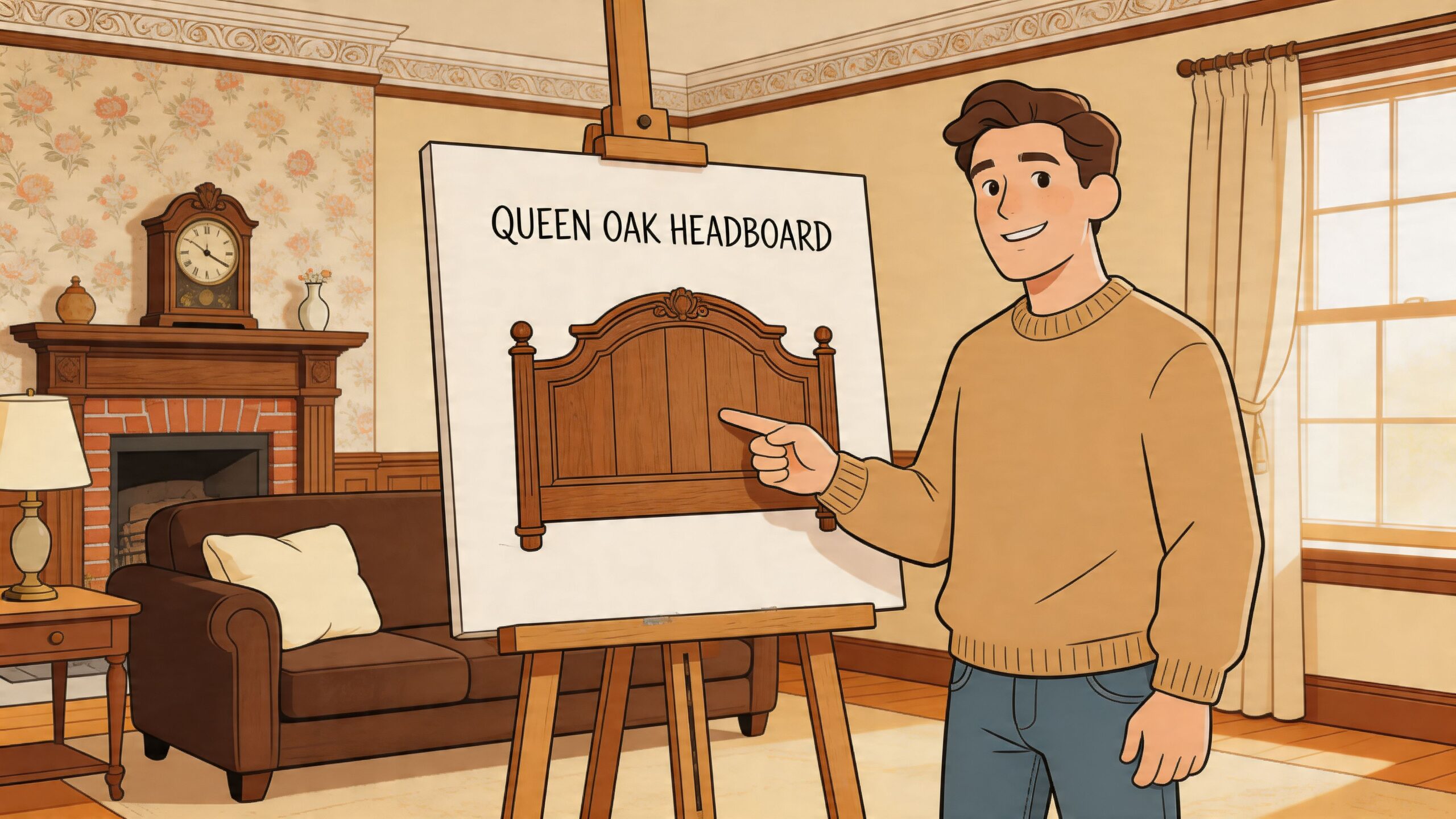
A queen oak headboard might look beautiful online and still miss the mark once it’s sitting in a Troy Victorian, an Albany colonial, or a Greene County farmhouse with older oak floors and inherited case pieces.
Where custom ordering helps most
Custom work isn’t only for people building luxury homes. Often it helps ordinary homeowners solve very ordinary problems.
For example:
- The stain is close, but not close enough
- The height feels wrong under the window
- The room needs white oak, not red oak
- A standard style looks too plain next to antique furniture
- You want a cleaner version of a traditional design
According to this discussion of matching headboards to existing oak interiors, one common unaddressed question is how to match new queen oak headboards to existing oak flooring or antiques in Upstate New York homes. That same source notes 28% growth in custom wood furniture searches for “custom oak headboard,” showing how many buyers want something more specific than a standard catalog choice.
A simple way to think through a custom piece
When buyers feel stuck, I tell them to decide in this order:
Start with the room
Look at flooring, trim, wall color, and nearby furniture first.Choose the wood look
Decide whether you want the grain and tone to blend in or stand out.Set the silhouette
A straight panel, arched top, slatted design, or storage style each changes the room’s personality.Refine the finish
A lot of “almost right” choices become right during this refinement.Confirm the practical details
Height, mounting method, and bed frame compatibility should be settled before anything is built.
Good design work removes guesswork
If you’re building or renovating, it can help to look at how professionals coordinate wood tones and architectural details across a whole project. Resources on custom home building services can give useful context for thinking about furniture as part of a bigger room plan rather than a standalone purchase.
The big advantage of custom ordering is confidence. You stop hoping a product page is accurate and start choosing something with your actual room in mind.
Installation, Care, and Making Your Project Affordable
Once you’ve chosen the right queen oak headboard, most of the remaining questions are practical. How hard is it to install? How do you care for it? Can you make a quality purchase fit your budget? Those are fair questions.
The good news is that oak headboards are usually straightforward to live with.
Installation is often simpler than buyers expect
Many modern wood headboards are designed for manageable setup. According to IconByDesign’s product details, cam-lock joinery can achieve 95% rigidity in a 30-minute, two-person setup.
That doesn’t mean every headboard installs exactly the same way, but it does tell you that current designs can be both sturdy and user-friendly.
A few practical checks before installation:
- Confirm the frame connection points so the bolt pattern lines up.
- Protect the finish during setup with a blanket or soft pad on the floor.
- Tighten hardware evenly rather than forcing one side first.
- Ask about adjustable base hardware if your bed moves.
That same source notes that modification plates can adapt some headboards to adjustable bases without binding, which is helpful for buyers who want both style and motion-bed compatibility.
Care is mostly common sense
Solid oak doesn’t ask for fussy maintenance.
A few habits go a long way:
- Dust with a soft cloth to keep grit from dulling the finish.
- Use a mild wood-safe cleaner only when needed.
- Skip harsh chemicals that can damage topcoats.
- Watch sunlight exposure if one side of the bed gets strong direct light.
The payoff for routine care is simple. Oak tends to age with dignity.
Comfort and budget both matter
Headboards aren’t only visual. The same IconByDesign source notes that oak headboards can offer ergonomic support for reading postures when their height supports the upper back and neck well.
And if the budget is the sticking point, there are practical ways to move forward without settling for poor quality. Flexible payment plans can make a larger purchase easier to manage over time. For shoppers who want immediate value, in-stock clearance pieces can also be a smart option, especially if the right size and finish happen to be available.
Frequently Asked Questions About Queen Oak Headboards
Can I use a queen oak headboard with an adjustable bed frame
Often, yes. The key issue is compatibility.
Some headboards can connect to adjustable bases using modification plates or brackets. As noted earlier in the article, certain systems are designed to adapt to electric actuators without binding. Before buying, check the mounting style on both the base and the headboard.
What’s the difference between red oak and white oak
They’re both durable hardwood choices, but they look different.
In plain terms, red oak often reads warmer and more open-grained. White oak usually appears a bit calmer and more contemporary. Buyers in older Albany-area homes often care less about which is “better” and more about which one matches existing floors or furniture more naturally.
Is a wall-mounted headboard better than a frame-mounted one
Not better. Just different.
Frame-mounted headboards are the standard choice for many bedrooms because they attach directly to the bed frame and are simpler to install. Wall-mounted headboards can create a custom, built-in look, but they require more planning and secure wall installation.
Is solid oak always the right choice
Not always, but it’s often the strongest long-term choice for buyers who care about durability, repairability, and heirloom potential.
If weight, budget, or a specific construction style matters more, a well-made veneer option may still be worth considering. The important thing is knowing which one you’re buying.
If you’d like help comparing styles, wood types, finishes, or custom options for your bedroom, Tip Top Furniture & Mattresses is a trusted family-owned resource serving the Greater Albany Capital Region from Freehold, NY since 1978. You can explore bedroom furniture, ask about custom ordering, use the room planner, or look into flexible financing and clearance options to make your project easier.