Curtains Over French Doors: A NY Homeowner’s Guide

French doors are easy to love until you live with them through a bright summer afternoon or a cold January morning in the Capital Region. They bring in light, make a room feel open, and connect indoor and outdoor spaces beautifully. They also put privacy, glare, and temperature control right in front of you every day.
That’s why curtains over french doors remain one of the most practical finishing touches in a home. Done well, they soften the glass, help the room feel complete, and make the doors more comfortable to use. Done poorly, they sag, drag, catch on handles, and look like an afterthought.
Homeowners around Albany, Schenectady, Troy, Greene County, and the surrounding area run into the same questions. Should you mount one rod across both doors, or treat each door separately? Which fabrics help with winter comfort? How full should the panels be so they don’t look skimpy? And what do you do when the doors swing in a tight space or divide two rooms?
The Beauty and Challenge of French Doors in Your Home
At 6 p.m. in January, French doors can change character fast. What felt bright and open at noon starts to feel chilly after sunset, especially in older Albany homes where the glass sits a few feet from the family seating area. That is usually the moment homeowners stop seeing the doors as a design feature and start asking more practical questions about comfort, privacy, and heat loss.
French doors earn their place. They bring in daylight, frame a backyard nicely, and make a room feel larger. They also create one of the trickiest spots in the house to dress well because the treatment has to clear handles, work with the swing of the door, and help with temperature control without looking bulky.
I see this often in Capital Region homes. A pair of doors between a kitchen and deck may need everyday privacy without blocking morning light. A set between a living room and sunroom may need more insulation than the homeowner expected. In cold climates, that trade-off matters. Bare glass can create a noticeably cooler zone near the door, and lightweight decorative panels often do very little to soften that effect.
That is why I treat French door curtains as both a design decision and a thermal one. Fabric weight, lining, rod projection, and how close the panel sits to the glass all affect the result. Homeowners who want a softer look sometimes choose sheers first, then realize in February that they solved glare but not comfort. A lined drapery panel or a door-mounted treatment that sits closer to the glass usually performs better when winter drafts are part of the problem.
French doors ask more from a curtain than a standard window does. The treatment has to look good, move well, and respect the way the door actually opens.
If you’re comparing styles before choosing hardware or fabric, a practical overview of window treatments for door windows can help you see how curtains fit alongside other options.
The best results come from being honest about how the doors are used. Sheers keep the room brighter but offer limited privacy after dark. Heavier panels insulate better, though they need enough stack-back space and the right hardware to avoid crowding the doorway. Door-mounted panels stay neat and close to the glass. Wall-mounted drapery usually gives the room a fuller furniture-grade finish. If you want the proportions to feel right with the rest of the room, the same measuring discipline used for large pieces applies here too, and our guide on how to measure furniture for your space is a helpful starting point for thinking through scale.
Getting the Foundation Right with Measuring and Hardware
A French door curtain job usually goes wrong before the rod ever goes up. The trouble starts with width, clearance, and hardware that looked fine online but does not suit a real doorway in a working home.
In Albany-area houses, that matters even more because French doors often sit on an exterior wall. If the treatment cannot close properly, stack back cleanly, and stay close enough to the opening, you lose some of the draft control you were trying to gain in the first place.
Measure for how the doors actually function
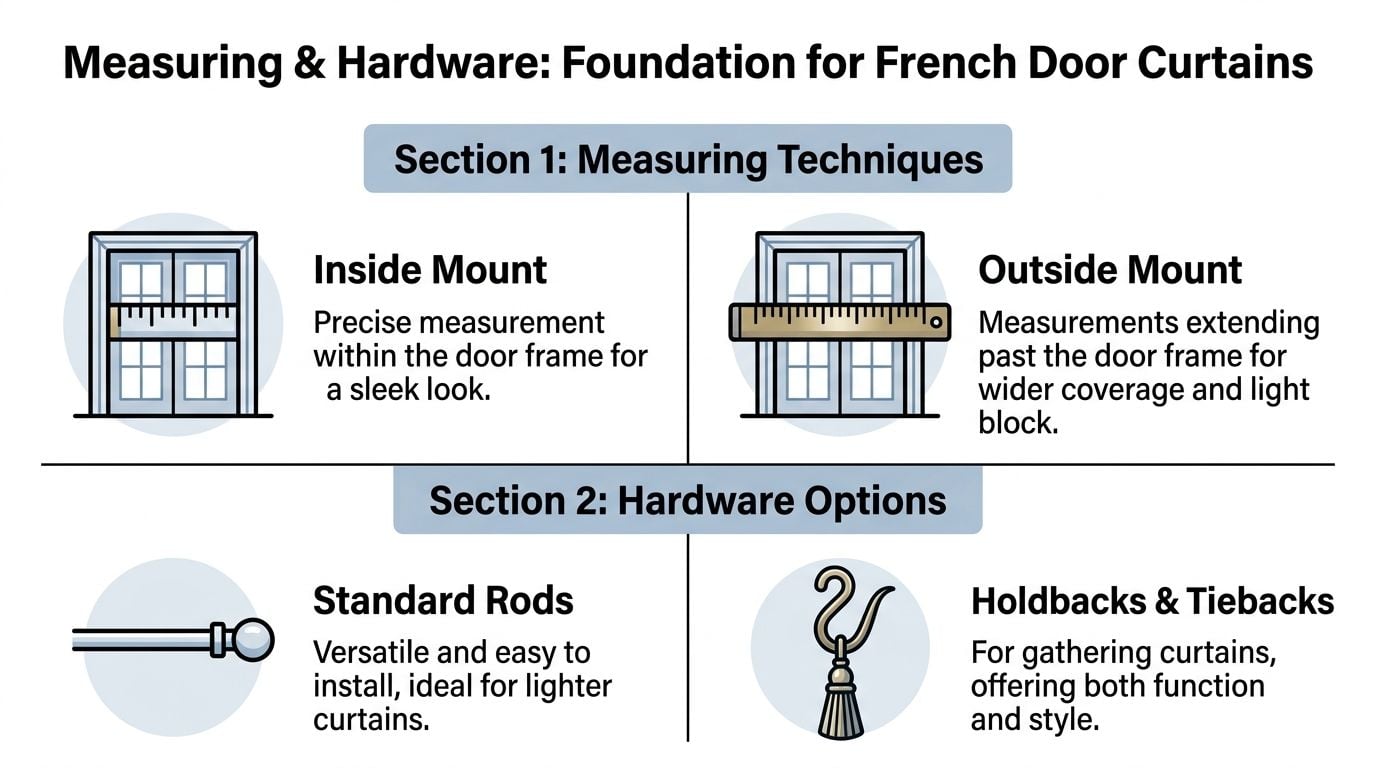
Start with the full area the curtains need to cover, not just the glass. On double French doors, one continuous rod across both doors often gives the cleanest look and the best chance of covering the opening well on cold nights. It also lets the panels stack to the sides instead of crowding the glass.
Leave enough room at the sides for the panels to sit back when open. The exact amount depends on trim width, nearby walls, and how much panel bulk your fabric creates. A slim cotton panel stacks differently than a lined drape with thermal backing, which is one reason material and measuring should be considered together. If you are still comparing materials, this guide to buying cotton fabric by the yard is a useful starting point for understanding how fabric choice affects bulk, fold, and finished width.
Curtains also need enough width to form proper folds when closed. Panels sized too tightly across the opening tend to look flat, and they often leave small gaps along the edges that are especially noticeable in winter.
Match the mounting style to the room
The right hardware choice depends on traffic, trim, and how much insulation help you want from the treatment.
Wall-mounted rod across both doors works best when you want a fuller, furniture-grade look and enough stack-back space to pull fabric off the glass. In many homes, this is the better choice for appearance and coverage.
Door-mounted panels make sense when the doors are used constantly or the surrounding wall space is tight. Because the panel stays with the door, the treatment sits closer to the glass, which can help with draft control. The trade-off is a more fitted, less dramatic look.
Low-profile specialty hardware earns its keep when lever handles project, casing is narrow, or another door or piece of furniture sits nearby. In those cases, clearance comes first. Decorative scale comes second.
Build in support from the start
Long rods need support. If you skip that step, the rod can sag, brackets can loosen, and the panels stop moving cleanly.
I tell homeowners to decide on support before they order the rod, not after installation day. Center brackets, stronger rod diameters, and better anchors are small choices that save a lot of frustration later, especially with heavier lined drapery that is better suited to Upstate winters.
Choose hardware that holds up and helps performance
Finish and projection matter more than many shoppers expect. Near exterior doors, I prefer durable finishes that hold up to seasonal humidity and frequent handling. I also pay close attention to how far the rod projects from the wall. Too much projection leaves a larger air gap between fabric and door. Too little can interfere with handles or trim.
For colder climates, the goal is simple. Get the curtain close enough to the opening to help with heat loss, but not so close that the fabric catches every time the door moves.
A few habits keep the project on track:
- Measure the full span you want to cover, including both doors if you want one treatment.
- Check stack-back space on each side before ordering panels.
- Confirm where handles, locks, and trim will sit once the rod and brackets are installed.
- Measure length with door use in mind so panels clear the floor and do not drag at the threshold.
- Test wall quality before buying heavy hardware, especially in older homes with plaster.
If you want to sanity-check proportions before you order, our guide on how to measure furniture for your space helps you think through scale, clearance, and fit the same way we do in the showroom.
Selecting Your Perfect Fabric and Styling Options
A French door can look beautiful all year and still be the coldest spot in the room by January. In Albany homes, that usually comes down to fabric choice more than color or pattern. The panel has to look right, move cleanly, and do some real work against glass and winter drafts.
I usually start with the problem the curtain needs to solve. Glare calls for a different fabric than nighttime privacy. A chilly seating area near the doors calls for something else again. For cold climates, the best results usually come from pairing the right face fabric with a lining that adds body and helps slow heat loss.
What different fabrics do well
Sheers soften daylight and take the hard edge off a glass-heavy wall. They suit rooms that already stay comfortable, but they do very little for insulation or privacy after dark.
Linen and linen-look fabrics give French doors an easy, well-fitted look. They work well in living rooms and dining spaces, especially in homes that want warmth without a formal feel. On their own, though, they are rarely my first pick for a drafty door in an Upstate winter. They perform much better with a privacy or thermal lining.
Cotton panels are a practical middle ground. They drape well, come in a wide range of weights, and can feel more substantial than many shoppers expect once lined. For homeowners comparing natural fibers, this guide to buying cotton fabric by the yard is a helpful resource.
Velvet and other heavier decorative fabrics add weight where French doors can otherwise feel visually thin. They also help the treatment hang closer to the opening, which can improve comfort in colder months when paired with the right lining.
Thermal and blackout-lined curtains do the most for privacy, light control, and winter comfort. In older homes with a bit of air movement around the doors, this is often the fabric choice that makes the room feel noticeably more settled.
Good fabric should solve a room problem, not just match the paint.
Fullness and lining shape the result
Fabric type matters, but so does how much of it you use. Panels that are too narrow look flat and leave the doors feeling unfinished. Panels with generous fullness hang better, insulate better, and look more intentional when closed on a cold night.
For French doors, I usually advise homeowners to avoid skimpy panels. A little extra width gives the pleats or folds enough body to cover the glass properly and helps the treatment feel custom instead of temporary. If energy efficiency is a priority, that added fullness also reduces open gaps along the span.
Lining deserves just as much attention. Unlined drapery can be perfectly fine in a bright breakfast nook that stays warm. In a north-facing room or any space where you feel cold radiating off the glass, lined panels earn their keep. Interlined or thermal-lined curtains cost more and weigh more, but they often justify that trade-off in comfort and appearance.
French Door Curtain Fabric Comparison
| Fabric Type | Privacy Level | Light Control | Insulation Value | Best For |
|---|---|---|---|---|
| Sheer voile | Low | Soft filtering | Low | Bright rooms that need softness without heaviness |
| Linen or linen blend | Medium | Gentle filtering | Moderate | Casual living spaces, dining rooms, transitional interiors |
| Cotton panels | Medium to high depending on lining | Flexible depending on weave and lining | Moderate | Everyday family spaces needing balance |
| Velvet or heavy decorative fabric | High | Strong light blocking when lined | High | Formal rooms, drafty doors, statement treatments |
| Thermal or blackout-lined fabric | High | Strong control | High | Upstate New York homes focused on privacy and comfort |
Styling should support the door, not fight it.
- Tiebacks: Helpful when the doors are used often and you want the panels pulled clear during the day.
- Holdbacks: Better for a more structured, symmetrical shape at each side.
- Valances or cornices: Useful if you want to cover the rod and create a more traditional finish, though they can add visual weight in smaller rooms.
- Simple headers: Often the cleanest choice on French doors because they keep the top of the treatment tidy and easy to operate.
Color also changes how warm the doors feel visually. If you want a richer accent that still feels grounded, these burnt orange curtains for warming up a room show how drapery can add depth without taking over the space.
A Step-By-Step Guide to Mounting Curtains
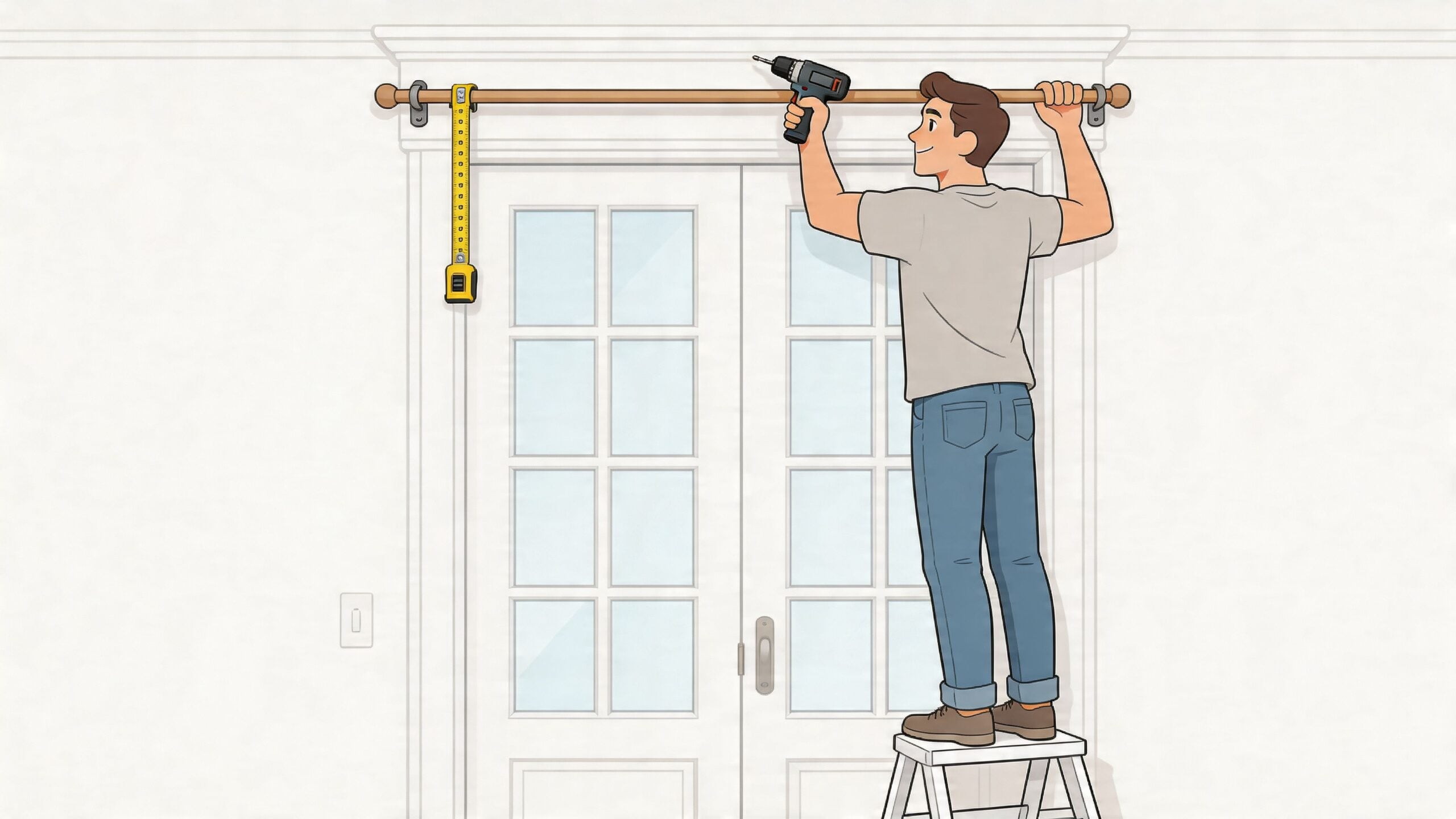
Installation gets easier when you decide early whether the treatment belongs on the wall or on the door itself. That one choice affects clearance, operation, and the overall look.
For a more architectural, room-finished result, I usually prefer mounting above and beyond the frame. For heavily used patio doors or delicate trim, no-drill or door-mounted methods often make more sense.
Standard wall-mounted installation
Use this route when you want a fuller drapery look.
Mark the rod width
Start with your measured span, including the extra stacking space at both sides.Set the bracket height
Mounting a bit higher can make the doors feel taller. Mounting closer to the frame gives a more contained, practical look.Install brackets securely
If the rod is long, include the center support from the start.Hang and test the panels
Open and close the curtains fully. Then open both doors and make sure handles, locks, and traffic flow still work.
No-drill and door-mounted options
These methods are useful for renters, painted steel doors, and situations where you don’t want to disturb original trim.
Adhesive-mounted systems can work very well if installed correctly. Adhesive-based methods can achieve a 98% success rate on clean glass or metal surfaces, hold 5-10 lbs, and should be applied only after cleaning with isopropyl alcohol and pressing firmly for at least 30 seconds according to this installation demonstration.
That detail about surface prep matters. Clean glass or metal gives the adhesive a fair chance. Dust, oil, or a rushed install usually causes the failure people blame on the product.
A simple adhesive method that works
- Clean first: Use isopropyl alcohol and let the area dry.
- Center carefully: Place the top support where the curtain will sit square on the glass.
- Press long enough: Hold pressure for the full recommended time.
- Secure the bottom: Light bottom tabs help keep the panel from swinging when the door moves.
If you want a no-drill setup to last, patience during prep matters more than speed during installation.
For homeowners who like to tackle projects themselves, this step-by-step guide to hanging your picture with precision is also a good reference for layout habits, level checking, and clean placement.
One final note on safety. Use stable ladders, avoid overreaching, and keep the work area clear when drilling or mounting overhead hardware. General household tool safety principles apply here just as much as they do in any wall-hanging project.
Solving for Upstate NY Winters and Unique Door Layouts
A French door can look beautiful in October and feel drafty by January. Around Albany, I see that happen all the time. Homeowners add a pretty panel for privacy, then wonder why the room still feels cold near the glass.
French doors need more than decoration in our climate. They need a treatment that helps hold heat in the room and cuts that chilly downflow you feel when outdoor temperatures drop.
Why thermal curtains matter here
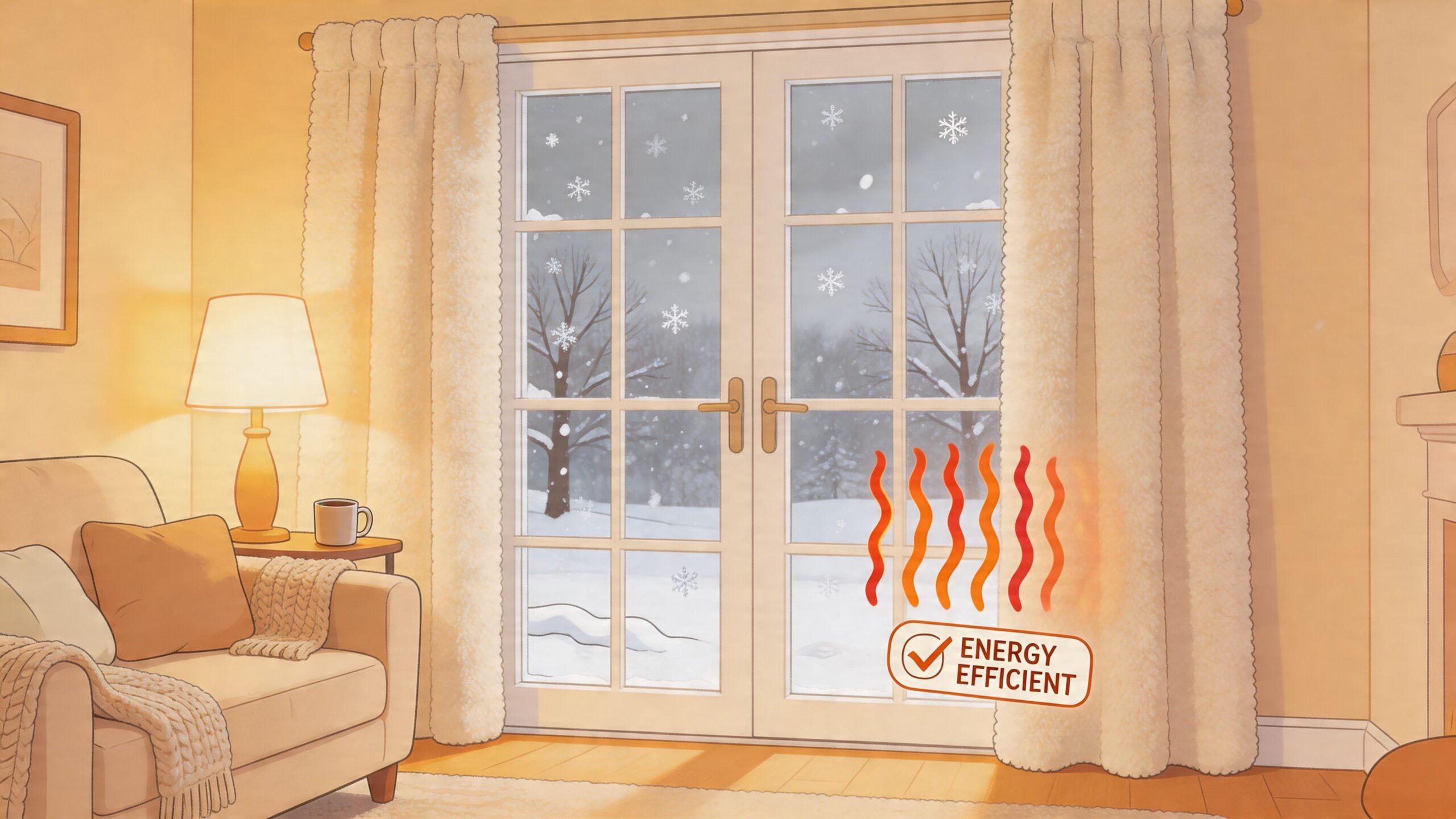
According to West Shore Home’s article on French door curtains, the large glazed area of French doors can be a significant source of heat loss, and high-quality thermal curtains can improve a window’s energy efficiency by creating an insulating air pocket.
The air pocket is the part many online guides skip. In practice, thermal performance depends less on whether a panel looks heavy and more on whether it is built and mounted to trap still air. A lined drape with some structure usually does more than an unlined decorative panel, even if both are the same color and length.
Three choices make the biggest difference in cold-weather homes:
- Fabric with weight and body: Velvet, lined cotton blends, and tightly woven fabrics tend to hang closer and resist flutter from drafts.
- A proper lining: Thermal or blackout linings often perform better than face fabric alone.
- Coverage beyond the glass: Panels that extend past the door glass or frame usually block more edge draft than narrow panels fitted only to the lite area.
Fullness matters too. Flat panels leave less trapped air between the fabric and glass. A little extra width creates folds, and those folds help the curtain do actual insulating work.
Practical choices for colder rooms
For homes in Albany, Greene County, and the surrounding area, I usually steer people toward wall-mounted panels when the room allows it. Mounting wider and a bit higher can improve coverage and reduce the cold strip you feel along the edges of the doors.
There is a trade-off. More coverage helps with comfort, but bulky panels can crowd a tight breakfast nook or interfere with furniture near the swing path. In those rooms, a slimmer lined panel often works better than the heaviest option in the showroom.
Operation matters in winter too. If the curtain is awkward to open, it stays bunched, half-closed, or ignored. A treatment only helps when people will use it morning and night.
Challenging layouts need custom planning
French doors are not always centered on a clean open wall. Some sit close to a radiator, a built-in bench, or a dining chair that already steals clearance. Others divide two rooms, which means the treatment has to look finished from both sides and still let the doors move freely.
Standard rod-and-panel advice often misses those details. In my experience, the trouble spots are predictable:
- Tight handle clearance
- Limited stack-back space beside the doors
- In-swing or out-swing doors that conflict with fabric
- Furniture placed too close to the opening
- A need for the doors to look presentable from both rooms
That is why I recommend sketching the door swing, handle location, and panel stack before ordering anything. A curtain can be technically beautiful and still be wrong for the room if it catches the lever handle or blocks the traffic path.
If you’re comparing solutions for other large glass openings, these best curtains for sliding glass doors offer a useful point of comparison, especially for coverage, insulation, and day-to-day operation.
Your Local Partner for a Perfect Finish
On a January morning in the Albany area, French doors can be the coldest spot in the room. If the curtain treatment is wrong, you feel it every time you walk past. The fabric gaps at the glass, the rod leaves too much space at the top, and the room never feels quite comfortable.
A good finished plan solves more than appearance. It has to clear the handles, stack back without blocking traffic, and help limit heat loss around a large glass opening. That last part gets missed in many online guides, but in older Upstate homes, it matters. A lined drapery panel mounted high and wide, with enough return to sit closer to the wall, often performs better in winter than a decorative panel chosen only for color.
I have seen the same problems come up again and again. Panels are ordered too skimpy to close properly. Hardware is selected for looks but not for daily use. A beautiful fabric ends up too stiff for a door that opens several times a day. In homes with room-dividing French doors or unusual swing patterns, small planning mistakes turn into constant irritation.
The best result respects the architecture, the traffic path, and the season.
For homeowners across the Greater Albany Capital Region, experience helps at the finish stage because the curtain is only one part of the decision. Rod projection affects handle clearance. Lining choice affects draft control. Fabric weight affects how easily the panels open and how neatly they hang back. The finish on the hardware still matters, but so does whether the treatment will make the room feel warmer in February and lighter in July.
If you want help sorting through those trade-offs, our interior design consultation services give you practical guidance before you order.
If you’re ready to finish your French doors with confidence, Tip Top Furniture & Mattresses can help. Visit the Freehold, NY showroom to explore window treatments, custom order options, Amish-crafted furnishings, flooring coordination, and whole-room design ideas for homes across Albany, Troy, Schenectady, and the surrounding Capital Region. If your project needs a custom fit or a cold-weather solution that works beautifully, book a complimentary design consultation and get practical guidance from a family-owned business that’s been serving local homeowners since 1978.