Best Mattress for Combination Sleepers: A 2026 Guide

A restless sleeper often knows the feeling by morning. The sheet is twisted, the pillow has migrated, and the body wakes up tired even after spending plenty of hours in bed. That pattern usually points to one thing. The sleeper doesn't stay in a single position for long.
That's what makes the search for the best mattress for combination sleepers so tricky. Many guides stop at a simple answer and say “buy a medium-firm hybrid.” That advice isn't wrong, but it's incomplete. A person who spends most of the night on one side and occasionally rolls onto the back needs something different from a sleeper who rotates equally between back and stomach.
Families across Albany, Schenectady, Troy, and the wider Capital Region often run into this exact problem when shopping in Freehold. After 45+ years of helping local households compare comfort, support, and durability, one lesson keeps showing up. The right mattress usually comes from understanding how a person sleeps, not from chasing a generic “top pick.”
Table of Contents
- Are You Tossing and Turning All Night
- What Being a Combination Sleeper Really Means
- The Four Keys to a Great Combination Sleeper Mattress
- Best Mattress Types for Albany Combination Sleepers
- Choosing Your Ideal Firmness Beyond the Label
- Try Your Perfect Mattress in Our Freehold Showroom
Are You Tossing and Turning All Night
A combination sleeper is someone who changes positions during the night. That might mean falling asleep on the side, waking up on the back, and spending part of the night on the stomach without even noticing. The movement itself isn't always the problem. The issue is sleeping on a mattress that doesn't adapt well as the body shifts.
Many people describe this as “tossing and turning,” but that phrase can be misleading. Sometimes the body is turning because the mattress is too soft in one position and too firm in another. Sometimes the sleeper feels stuck when trying to roll over. Sometimes the hips drop too low while the shoulders feel jammed.
A helpful place to start is with basic sleep habits, room setup, and bedtime routines. For broader sleep wellness guidance, the ultimate guide to restorative sleep offers practical ideas that pair well with better mattress shopping.
A mattress can't fix every sleep problem, but the wrong mattress can make every sleep problem feel worse.
The goal isn't to find the trendiest bed. The goal is to find a surface that supports movement without forcing the body to fight the mattress all night. That's why broad online lists often miss the mark. They give one answer to a group of sleepers who have different needs.
For readers trying to improve sleep right away, Tip Top also shares 3 things you can do to start sleeping better today. It's a useful companion to mattress shopping because comfort begins with habits as well as support.
What Being a Combination Sleeper Really Means
Some shoppers treat “combination sleeper” like a single category. It isn't. It's a range.

The label is broader than it sounds
One person may spend most of the night on the side and only occasionally roll onto the back. Another may switch constantly between back and stomach. Both are combination sleepers, but they shouldn't automatically buy the same feel.
That's where shoppers often get confused. The label describes movement, but it doesn't describe which position dominates, how much cushioning the body needs, or how much support is required to keep the spine in line.
A better approach is to ask three plain questions:
- Which position gets the most time: Side, back, or stomach usually tells the bigger story.
- Where does pressure show up: Shoulders, hips, or lower back discomfort can reveal whether the surface is too firm or too soft.
- Does movement feel easy or resisted: If turning feels like work, the mattress may lack responsiveness.
Why dominant position matters more than most shoppers think
Guidance from Sleep Foundation says side sleepers often do best in the medium-soft to medium-firm range, while sleepers over 230 lbs often prefer medium-firm, around 6.5 to 7 out of 10, to help maintain alignment, as explained in its side sleeper mattress guidance. That's a strong reminder that the “combination sleeper” label needs a more personal diagnosis.
A simple example helps. A shopper who mostly sleeps on the side but sometimes rolls to the back usually needs enough cushioning for the shoulder and hip first. A shopper who spends more time on the stomach and back usually needs stronger pushback first so the midsection doesn't sink too far.
Practical rule: Shop for the position the body uses most, then make sure the mattress can still handle the occasional switch.
This is why many Albany-area shoppers benefit from reviewing sleep style before testing beds on a showroom floor. The article on how to choose the right mattress for your sleeping style helps break that decision down in everyday language.
The Four Keys to a Great Combination Sleeper Mattress
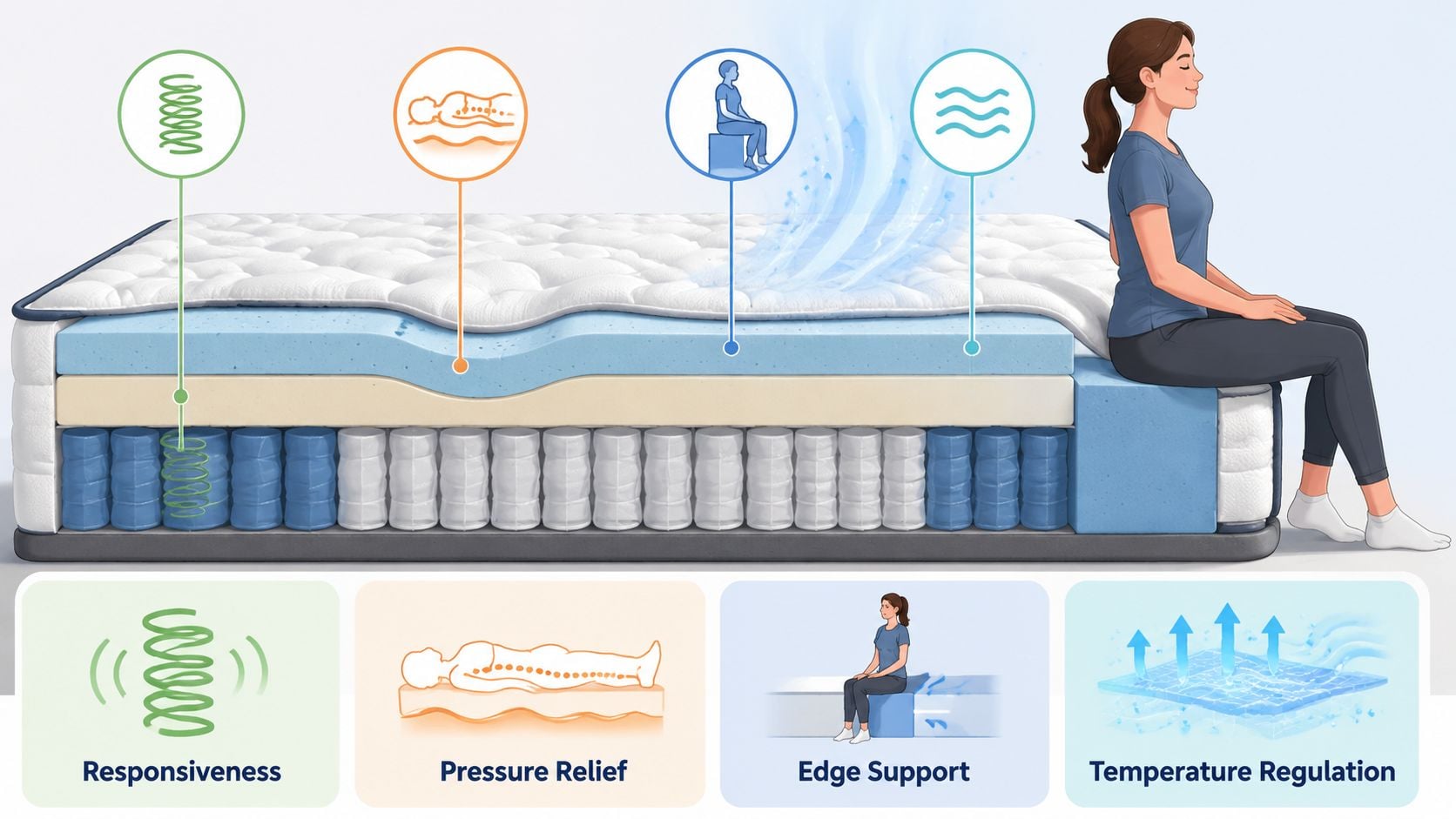
A combination sleeper doesn't just need comfort. The mattress also needs to keep up with movement.
Responsiveness helps the body move without effort
Responsiveness is the mattress's ability to adjust quickly when the sleeper changes position. In plain language, it means the bed doesn't hold the body in one spot.
A slow-moving surface can feel like wet sand. The sleeper turns, but the mattress lags behind. That can interrupt sleep even when the person never fully wakes up.
Recent expert coverage notes that hybrids still lead in this area, and one summary references over 370 tested mattresses while emphasizing that the final choice depends on whether the sleeper values bounce, motion isolation, or cooling most, as discussed in this combination sleeper mattress overview.
Pressure relief protects the shoulders and hips
Pressure relief is the cushioning that reduces sharp contact at heavier joints. Side sleepers notice this quickly because the shoulder and hip press deeper into the mattress than the waist.
A good combination sleeper mattress needs enough give to cushion those areas without letting the whole body sag. That balance is what shoppers are really trying to feel when they lie down and say, “This one feels supportive, but not hard.”
Edge support and temperature control matter more than shoppers expect
Edge support is often overlooked until the sleeper gets near the side of the bed. Weak edges can create a rolling-off sensation, especially for people who move around at night or sit on the side to get dressed.
Temperature control matters because restless sleepers often wake up more easily if heat builds around the body. A cooler-feeling mattress doesn't just feel pleasant. It can reduce one more reason the sleeper shifts around.
A strong checklist looks like this:
- Responsive surface: The sleeper can roll from side to back without feeling trapped.
- Balanced cushioning: Hips and shoulders get relief without deep sink.
- Stable perimeter: The edges feel secure, not collapsible.
- Breathable design: The bed avoids a stuffy, heat-holding feel.
For anyone comparing constructions and materials, mattress types explained is a useful next step because these four traits show up differently in foam, latex, innerspring, and hybrid models.
Best Mattress Types for Albany Combination Sleepers
Not every mattress construction handles movement the same way. That's why the answer to the best mattress for combination sleepers often depends on how each material manages pushback, contouring, and airflow.
Mattress Type Comparison for Combination Sleepers
| Mattress Type | Responsiveness | Pressure Relief | Edge Support | Best For… |
|---|---|---|---|---|
| Memory Foam | Moderate to low, depending on design | Strong | Varies by build | Sleepers who want contouring and motion control more than bounce |
| Innerspring | High | Light to moderate | Often strong | Sleepers who prefer a more traditional, lifted feel |
| Latex | High | Moderate to strong | Generally supportive | Sleepers who want easier movement with a buoyant surface |
| Hybrid | High | Strong | Often strong | Shoppers who need both movement and cushioning in one bed |
How each mattress type behaves in real life
Memory foam can work for some combination sleepers, especially when it's designed for easier repositioning rather than a slow, deep hug. Its strength is pressure relief and reduced motion transfer. Its weak point can be movement if the foam feels too slow or too enveloping.
Innerspring mattresses usually make movement easy because the surface feels lifted and springy. The tradeoff is that some models don't cushion shoulders and hips as well, which can be a problem for anyone who spends meaningful time on the side.
Latex often appeals to shoppers who dislike the “stuck” feeling. It tends to feel buoyant rather than sinky. For some combination sleepers, that makes transitions easier while still offering a gentler surface than a basic innerspring.
Hybrid mattresses are recommended so often for a reason. Expert reviews consistently favor medium-firm hybrid mattresses for combination sleepers because the coil layer adds pushback for easier position changes while foam comfort layers offer contouring for pressure relief, creating a balance that all-foam or all-innerspring beds often miss, according to this hybrid mattress guidance for combination sleepers.
The most common mistake is choosing a mattress that feels great in one position during the first minute, but feels awkward once the body turns.
For pet owners, this same comfort-versus-support balance often comes up when choosing beds for older dogs with sore joints. The Nandog guide for dog joint pain beds is a helpful reminder that pressure relief and stable support matter across the whole household.
Shoppers who want a broader overview of materials, comfort levels, and buying considerations can use this mattress shopping guide before heading into a store. It helps narrow the field so the showroom visit feels less overwhelming.
Choosing Your Ideal Firmness Beyond the Label
“Medium-firm” is useful advice, but it's only the starting point.
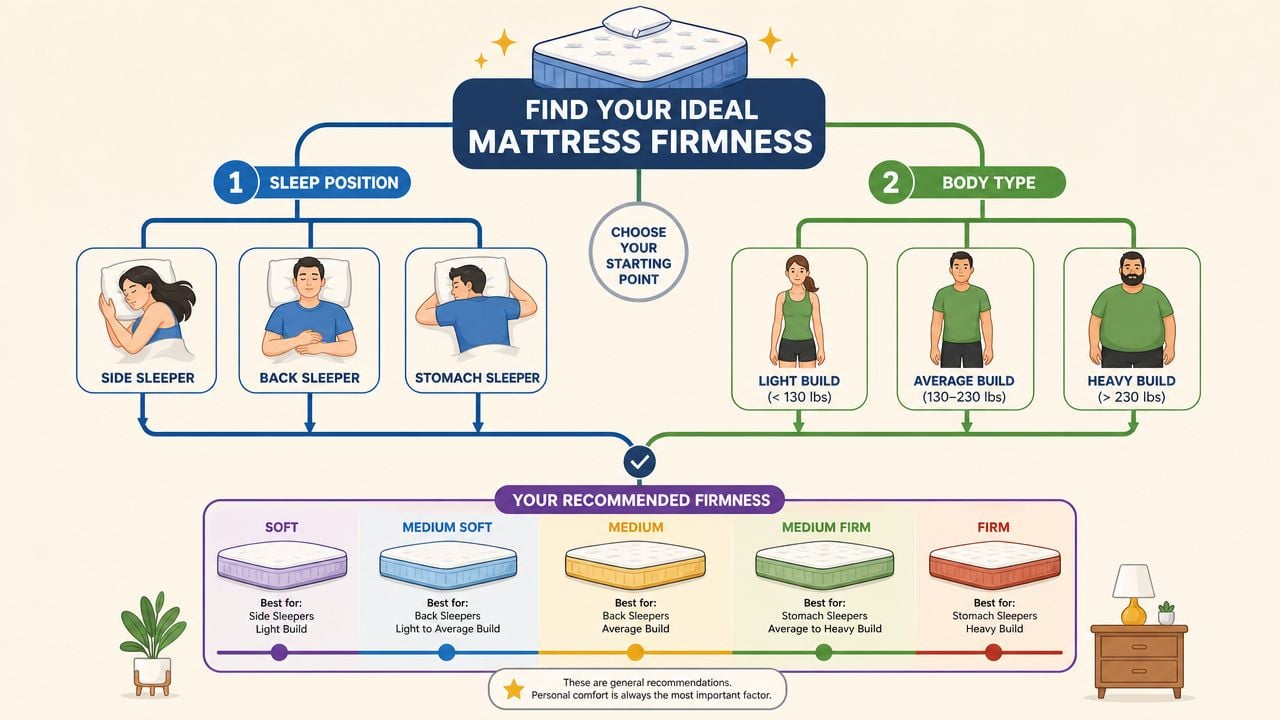
Major mattress guidance for 2026 consistently steers combination sleepers toward a medium-firm feel because it balances support for back and stomach sleeping with enough cushioning for side sleeping while helping preserve neutral spinal alignment, as described in this 2026 combination sleeper mattress guide. That's the general rule. The better answer comes from adjusting that starting point to the sleeper.
Start with your dominant position
If the sleeper is mostly on the side, the mattress usually needs to lean a little gentler so the shoulder and hip don't take too much pressure. The bed still needs support, but pressure relief takes the lead.
If the sleeper is mostly on the back, a true medium to medium-firm feel often makes sense. The body usually needs a flatter, more even support pattern here.
If the sleeper is frequently on the stomach, firmer support often matters more because the midsection needs to stay from dipping too far downward.
A practical way to consider:
- Mostly side sleeper: Lean toward the softer end of the medium range.
- Side and back mix: Stay close to the middle.
- Back and stomach mix: Lean toward medium-firm.
Then factor in body weight and pressure sensitivity
Body weight changes how firm a mattress feels. A surface that feels supportive to one sleeper may feel too soft to another. Pressure-point sensitivity matters too. A sleeper with tender shoulders may need more cushioning than someone with the same sleep pattern but fewer pressure complaints.
That's where careful testing matters more than labels on a tag. A shopper may assume “firmer is better for support,” then discover that a slightly gentler surface keeps the spine straighter because the shoulder can settle without forcing the torso upward.
Some sleepers don't need a different mattress type. They need a small adjustment in firmness within the same type.
For shoppers comparing feel options, this mattress firmness guide helps translate showroom terms into real-world comfort. It's especially useful for families looking at USA-made mattresses or exploring custom comfort preferences that may call for a more specific order.
Try Your Perfect Mattress in Our Freehold Showroom
A combination sleeper usually learns more in ten careful minutes on the right mattress than in an hour of reading roundup articles. The actual test is simple. Notice what happens when your body settles, turns, and changes position the way it does at home.

Why in-person testing still matters
For a combination sleeper, a mattress is not just a surface to lie on. It is a surface that has to respond each time you roll from your side to your back, or from your back to your stomach. That is why a quick 30-second “showroom flop” can be misleading.
A better approach is to start in the position you use most, stay there long enough for your muscles to relax, then move into your second most common position. Pay attention to the spots that usually complain first. Shoulders, hips, and lower back tend to tell the story quickly.
Responsive support is easier to feel than to describe. Some mattresses let you turn without effort, like changing lanes on a road with clear pavement. Others feel slow or sticky, and you notice your body working harder just to reposition. That difference matters for sleepers who move often.
Tip Top Furniture & Mattresses uses a bed-matching system that helps identify pressure patterns and likely comfort needs based on the individual sleeper. That gives shoppers a more personal starting point than broad online advice like “just buy medium-firm.” For many families, the better question is narrower: medium-firm for whom, in which sleep position, and at what body weight?
What shoppers from the Albany area should test before buying
Shoppers coming from Albany, Troy, Schenectady, or Greene County usually get the best results when they test with a plan instead of hopping from bed to bed.
- Begin with your dominant sleep position: Give your body a minute or two to settle naturally.
- Change positions the way you do at night: Roll normally instead of carefully staging the movement.
- Notice how much effort turning takes: A good fit should feel easy to move on, not sticky or sluggish.
- Test the edge: Sit and lie near the side to see whether the mattress stays steady.
- Ask practical questions: Foundation support, rotation needs, delivery setup, and comfort policies all affect long-term satisfaction.
This kind of testing helps separate “feels nice for a minute” from “supports me through the whole night.” It also helps couples. One person may be mostly a side sleeper with pressure at the shoulder, while the other spends more time on the back and wants steadier lumbar support. Those differences are easier to sort out in person.
For households balancing comfort with budget, it's smart to review flexible financing options before making a final choice. Shoppers looking for immediate value can also browse the Clearance Corner for available mattress and bedroom finds.
A good mattress match for a combination sleeper should let movement feel natural, keep support consistent, and cushion pressure without trapping the body in one spot. In a showroom, that becomes much easier to judge because you can match the mattress to your real sleep habits instead of a generic label.
For readers ready to narrow down the best mattress for combination sleepers, a visit to the Freehold showroom can turn general advice into a real match. Tip Top Furniture & Mattresses serves the Greater Albany Capital Region with personalized guidance, USA-made mattress options, delivery support, and financing choices that make the process simpler. Explore Tip Top Furniture & Mattresses to plan a showroom visit and compare comfort in person.