Magazine Rack Wicker: Your 2026 Buying Guide


A lot of homes have the same small problem. The coffee table starts with one magazine, the kitchen counter catches the mail, and before long there's a loose stack of catalogs, newsletters, and reading material drifting from room to room.
That's where a Magazine Rack Wicker piece earns its keep. It doesn't solve clutter with a big storage system or a complicated organizer. It solves it with one simple object that looks warm, works hard, and fits naturally into a lived-in room. In homes across the Capital Region, that kind of piece matters because it helps a space feel finished instead of overmanaged.
Woven storage has stayed relevant for a reason. It feels lighter than a solid cabinet, softer than metal, and more decorative than a plain office file bin. For anyone sorting papers, styling a reading corner, or trying to keep the end of a sofa from becoming a paper pile, a wicker rack is often the neatest answer. Readers looking for more whole-home organization ideas can also find practical storage guidance in this article on solving clutter issues once and for all.
Table of Contents
- An Elegant Solution to Everyday Clutter
- Demystifying Wicker Natural vs Synthetic Materials
- Choosing the Right Wicker Magazine Rack Size and Shape
- How to Style a Wicker Rack in Your Capital Region Home
- Simple Care to Keep Your Wicker Looking Great
- Your Local Source for Furniture and Design Help in Freehold NY
An Elegant Solution to Everyday Clutter
Clutter often builds in the same places. A chair arm becomes temporary storage. The table beside the sofa collects magazines that someone still plans to read. A hallway console starts holding mail because there isn't a better place for it.
A wicker magazine rack works because it handles that kind of overflow without making a room feel stiff. It's open enough to keep papers visible, compact enough to tuck beside seating, and decorative enough that it doesn't look like office equipment dropped into the middle of a living room.
In practice, wicker proves more effective than bulkier storage. A closed cabinet hides everything, but it also adds visual weight. An open shelf helps, but loose papers can still spread. A woven rack creates a boundary. It assigns a home for reading material, and that simple limit usually makes a room easier to maintain.
A good small storage piece should reduce visual noise without asking the room to rearrange itself around it.
That matters in older homes, apartments, and family rooms throughout Albany, Schenectady, Troy, and the surrounding area, where people often need flexible pieces more than oversized systems. A magazine rack wicker design can live beside an accent chair, near a fireplace, or at the end of a sofa and still feel intentional.
Its appeal isn't only decorative. It's the mix of order and texture. Wicker softens corners, introduces a handcrafted look, and helps paper clutter look contained instead of abandoned. For a simple household object, that's a strong return.
Demystifying Wicker Natural vs Synthetic Materials
Why wicker still works
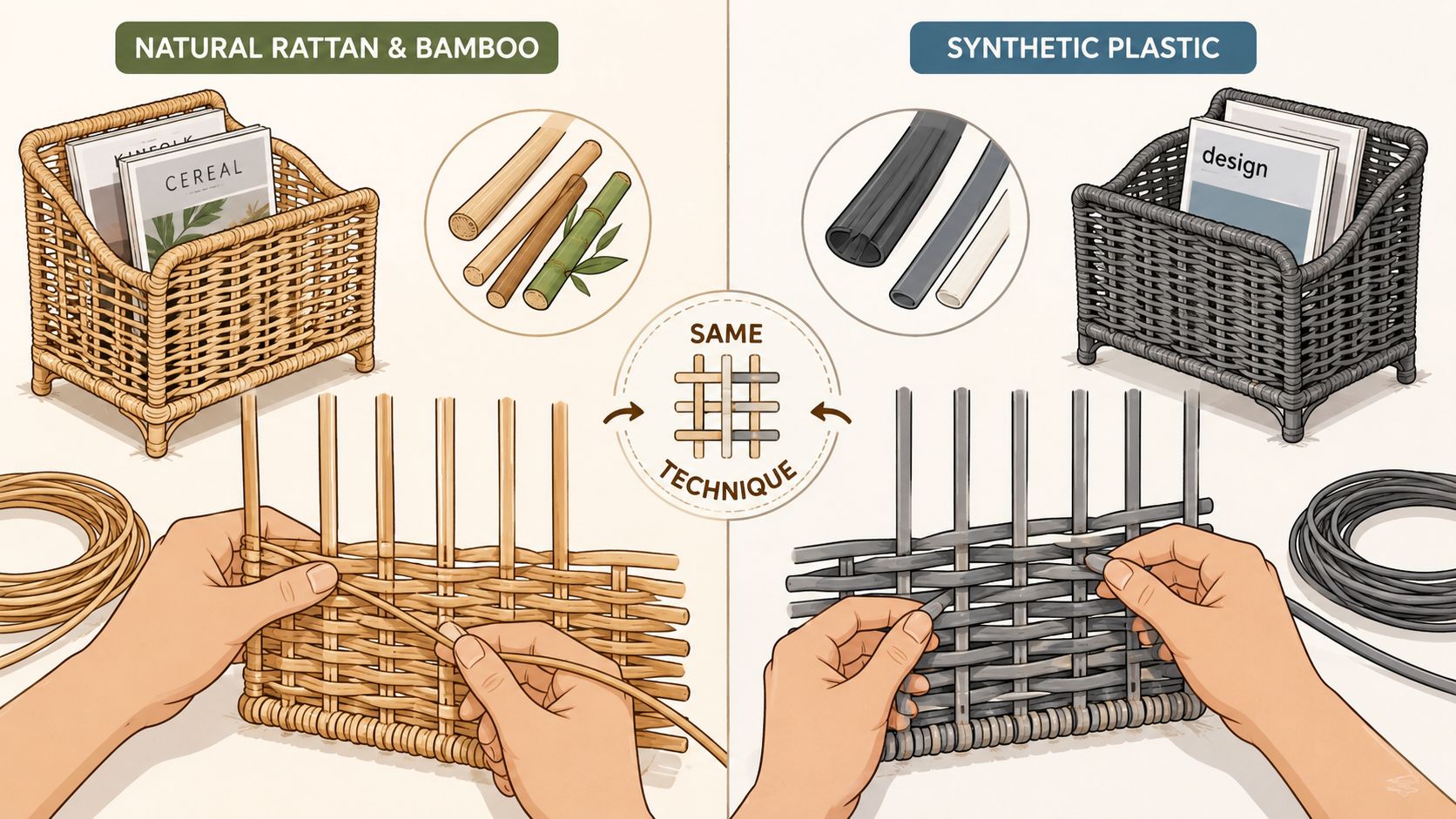
Many shoppers treat wicker like a material category, but wicker is a weaving method, not one single raw material. That distinction matters because two magazine racks can look similar at first glance and perform very differently once they're in the home.
Wicker is also far older than commonly understood. It's documented in ancient Egypt around 3000 BC, giving it roughly 5,000 years of recorded history as a furniture-making technique, with early use later adopted and refined by Greeks and Romans by about 300 BC according to this history of wicker craftsmanship. That long lifespan explains why woven storage still feels natural in modern interiors. The method has always been useful for lightweight, strong, ventilated storage.
For homeowners comparing finishes and textures elsewhere in the home, this guide to upholstery materials is also helpful because surface feel and maintenance often matter just as much as appearance.
How natural and synthetic wicker differ
The decision typically comes down to natural wicker versus synthetic wicker. Neither is automatically better. The best choice depends on where the rack will live and what it needs to hold.
Natural wicker suits dry, comfortable interiors: It has warmth, visible texture, and the handmade irregularity many people want in living rooms, bedrooms, and reading corners. It tends to look more at home next to wood furniture, soft textiles, and traditional or cottage-inspired decor.
Synthetic wicker handles moisture better: In spaces where damp air, splashes, or easier wipe-down cleaning matter, synthetic options are often the safer choice. Bathrooms, covered porches, and busy family zones are common examples.
Natural wicker asks for gentler care: It doesn't like repeated exposure to moisture or rough treatment. That doesn't make it fragile, but it does mean placement matters.
Synthetic wicker is often the practical pick for mixed-use spaces: If the rack may hold mail one month, towels the next, and end up near a humid room later, synthetic construction usually offers more flexibility.
Practical rule: Choose natural wicker for character. Choose synthetic wicker for tolerance.
There's also a style difference. Natural wicker usually reads as softer and more traditional. Synthetic wicker can be cleaner and more uniform. In a room with hand-finished wood pieces, natural wicker often blends better. In a sharper, more utility-driven space, synthetic can feel neater.
The mistake is choosing by color alone. Material affects upkeep, room placement, and how the piece ages. Those trade-offs are what make the right pick feel smart six months later, not just attractive on the day it arrives.
Choosing the Right Wicker Magazine Rack Size and Shape
Start with placement, not style
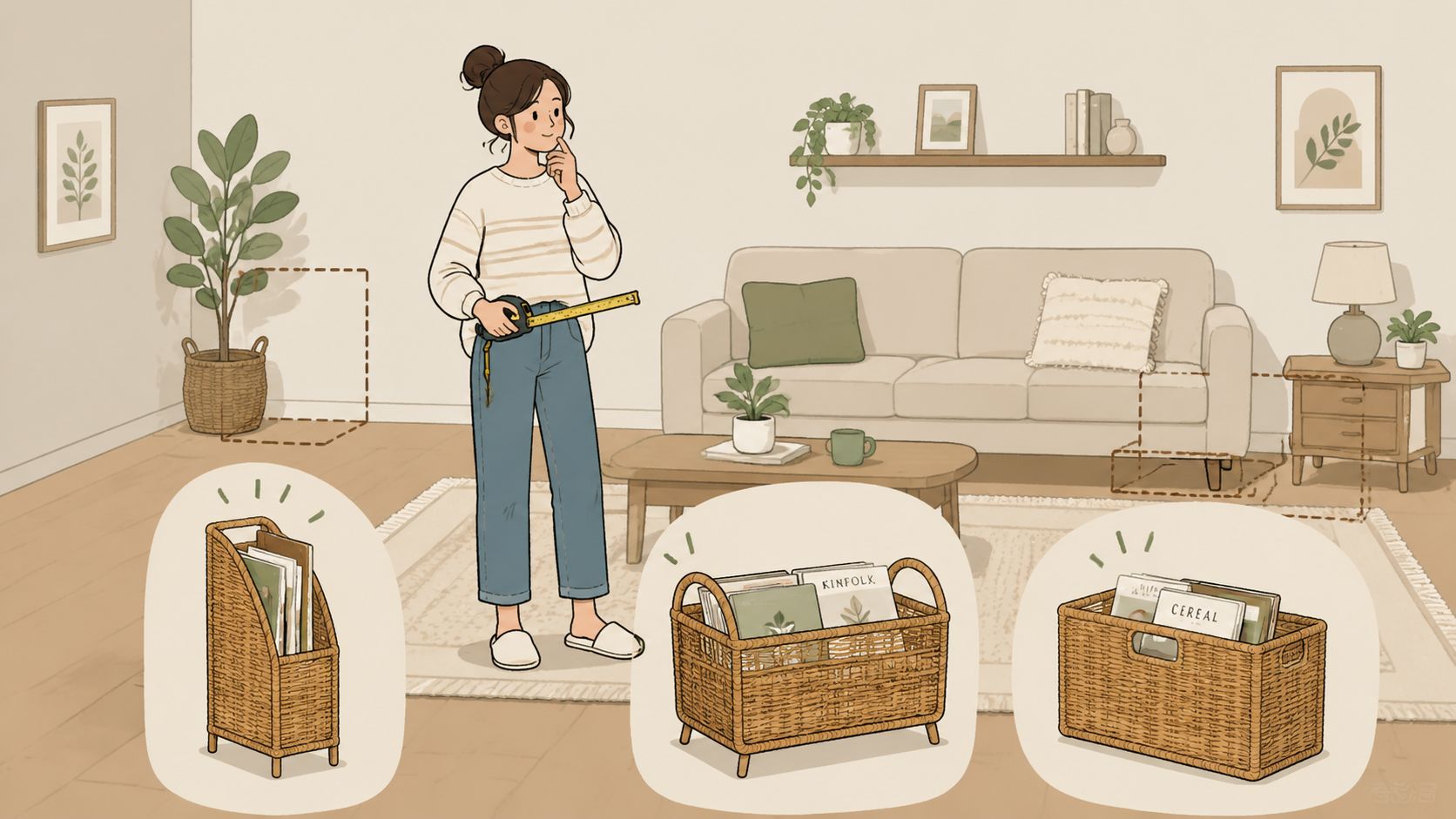
Most sizing mistakes happen because people shop by silhouette first. The better approach is to start with the spot where the rack will sit, then match the shape to the traffic path and the type of reading material it needs to hold.
A representative vintage wicker rack measures about 17-18 inches wide by 13 inches deep, a compact footprint that fits neatly beside seating while still supporting upright magazines, as shown in this vintage wicker rack example. That size tells an important story. A typical floor rack isn't a deep archive bin. It's an accent-scale storage piece built for easy reach.
Before buying, measure three things:
- Width beside the furniture: Leave enough room so the rack doesn't crowd an armchair or block the side table.
- Depth into the walkway: A rack can look small in a photo and still stick out too far in a narrow lane between seating.
- Height against nearby surfaces: If it sits beside a sofa arm or under a window, the proportions should look deliberate.
Homeowners who want to mock up fit before shopping can use the same planning mindset described in this article on how to measure furniture.
Match the shape to the job
Not every wicker magazine rack is the classic open V-shape. That familiar form works well when the goal is upright magazine storage with easy grab-and-go access. It's less useful when the household also needs sorting.
A small compartment organizer changes the function entirely. One example of a wicker-style organizer uses 4 compartments and measures 12.4 inches long by 6.5 inches deep by 6.3 inches high, which makes it more practical for mail, papers, and desktop use than for oversized periodicals, as shown in this compartment wicker organizer example.
That leads to a simple buying framework:
| Shape | Best use | What it doesn't do well |
|---|---|---|
| Open floor rack | Magazines beside a sofa or chair | Small paper sorting |
| Narrow vertical rack | Tight corners and light reading stacks | Large-format catalogs |
| Multi-compartment basket | Mail, files, mixed paper clutter | Deep back-issue storage |
A household that still subscribes to print magazines will usually prefer a single open rack. A busy entry or home office often benefits more from divided storage. The wrong shape creates frustration even when the finish is perfect.
If the rack will hold more mail than magazines, it should behave like an organizer, not a display piece.
How to Style a Wicker Rack in Your Capital Region Home
Living room and bedroom ideas
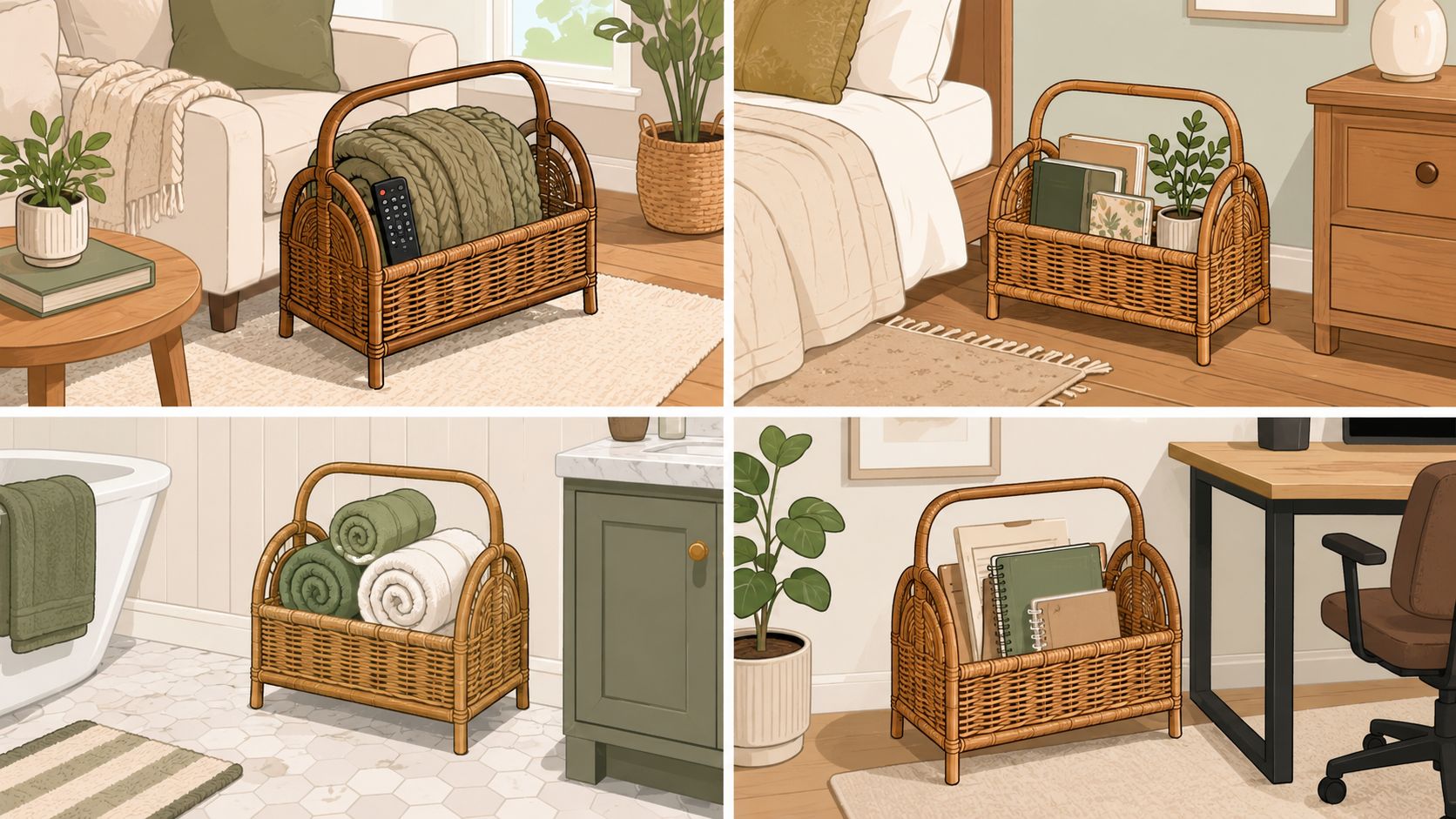
In the living room, a wicker rack works best when it supports an existing zone instead of floating by itself. The most convincing placement is usually beside a reading chair, near the sofa arm, or tucked by the hearth with a few current magazines and one or two hardcover books. It should look used, not staged to the point of stiffness.
This is especially effective in rooms that already have wood tones, woven textiles, or handcrafted furniture. A wicker rack beside an Amish-made chair, a lamp table, or a softly patterned area rug gives the room texture without piling on visual weight. For readers reworking a seating area, this guide on how to style a living room pairs well with the same approach.
Bedrooms benefit from a different strategy. Instead of treating the rack as paper storage only, use it as a bedside catchall for current reading, a journal, and a throw blanket folded loosely over the edge. In a guest room, it can hold local guides, a devotional, or a few welcome reads without requiring another nightstand drawer.
The best-styled wicker pieces don't try too hard. They carry a small edited group of items and leave some breathing room.
For homes leaning more retro, clean-lined, or warm minimalist, woven accents still fit. This roundup of mid century modern home decor ideas is a useful reference because it shows how natural texture can soften more structured furniture shapes.
Bathroom and home office uses
Bathrooms reveal whether a wicker rack is decorative only or useful. In a dry bathroom, it can hold rolled towels, spare washcloths, or reading material near a soaking tub. In a humid room, material choice becomes more important than styling. That's where synthetic construction usually makes more sense.
The home office is where a magazine rack wicker design often proves its range. A divided basket can sort incoming mail, school forms, and folders far better than an open decorative rack. On a shelf or console, it keeps paper upright and visible. That means less rummaging and fewer mixed stacks.
A few styling approaches work especially well in Capital Region homes:
- Near an armchair: Hold current issues, a puzzle book, and reading glasses.
- At the entry: Use a compartment design for mail, envelopes, and small papers.
- In a bedroom corner: Store books and a folded knit throw.
- Beside a desk: Separate household paperwork from magazines and catalogs.
The common mistake is overfilling it. Once papers start mushrooming out of the top, the piece stops reading as furniture and starts reading as backlog. A wicker rack looks best and works best when it stays edited.
Simple Care to Keep Your Wicker Looking Great
Care habits for natural wicker
A wicker rack lasts longer when the cleaning method matches the material. That's one of the most overlooked parts of the buying decision. The difference in maintenance between natural and synthetic wicker is especially important when choosing for a humid bathroom or a dry living room, as noted in this discussion of natural and faux wicker magazine rack options.
Natural wicker needs a lighter hand. Too much moisture can work against it, and aggressive scrubbing can rough up the woven surface.
For natural wicker, these habits usually work best:
- Dust gently: Use a soft brush or cloth to remove dust from the weave instead of grinding it deeper into the crevices.
- Keep moisture limited: A barely damp cloth is safer than soaking the surface.
- Watch room placement: Dry living rooms, bedrooms, and reading corners are usually easier on natural fibers than damp utility areas.
- Empty before cleaning: Moving the contents out first prevents strain on the weave while the piece is handled.
Anyone who already follows careful maintenance routines for case goods will recognize the same principle in this guide on how to care for wood furniture. Good furniture usually rewards steady, simple care more than occasional heavy treatment.
Care habits for synthetic wicker
Synthetic wicker is generally more forgiving. That doesn't mean it should be neglected, but it often handles everyday cleanup more easily.
A practical routine looks like this:
- Wipe with a damp cloth: This is often enough for routine surface grime.
- Clean spills quickly: Prompt cleanup keeps buildup from settling into the weave pattern.
- Use it where cleanup matters: Covered porch use, bathrooms, and family areas are often better candidates for synthetic options.
- Check the weave occasionally: Loose ends or stretched sections are easier to address early than after they snag repeatedly.
A wicker rack stays attractive when owners clean the weave before dust becomes grime.
The goal isn't perfection. It's consistency. A piece that gets light upkeep and sensible placement will usually stay presentable and useful far longer than one that's forced into the wrong room and cleaned only after it already looks tired.
Your Local Source for Furniture and Design Help in Freehold NY

Why local guidance still matters
A magazine rack seems like a small decision. In real homes, small decisions often reveal the bigger pattern. A homeowner starts by trying to solve the magazine pile, then notices the side chair no longer fits the room, the lamp is undersized, or the flooring and accent pieces aren't pulling together.
That's where local furniture guidance helps more than isolated shopping. A family-owned showroom in Freehold, NY serving the Greater Albany Capital Region can look at the whole room, not just the one accessory. That matters when people want the woven rack to connect with a reading chair, bedroom furniture, home office storage, or a broader update that includes flooring and decor.
There's also the practical side. Some shoppers want an in-stock piece and quick placement. Others need custom ordering, a specific finish, or a handcrafted look that coordinates with Amish furniture and other long-term pieces. Some are furnishing one room. Others are trying to stretch a larger plan with financing or by checking clearance options first.
When one small purchase leads to a bigger room plan
Professional design help often saves more frustration than people expect. A room can be close to working and still feel unsettled because the scale, texture mix, or storage balance is off. That's why consultation matters, especially for households in Albany, Schenectady, Troy, and Greene County trying to make older spaces, new homes, or mixed-style rooms feel cohesive.
Support is especially useful when the purchase list grows from one accent piece into a larger refresh involving seating, bedroom furniture, mattresses, window treatments, or flooring. Coordinated decisions tend to feel calmer, more finished, and easier to live with over time. Homeowners considering that kind of broader planning can explore interior design consultation services for room-by-room guidance.
A good wicker rack solves a visible problem. A good local furniture partner helps solve the room around it.
For homeowners looking beyond a single accent piece, Tip Top Furniture & Mattresses offers the kind of local help that makes decorating easier. From the Freehold, NY showroom, the team has served the Greater Albany Capital Region since 1978 with furniture, mattresses, home decor, flooring, custom ordering, design support, clearance finds, delivery options, and flexible financing. Whether the goal is a simple Magazine Rack Wicker piece, a handcrafted Amish furniture order, or a full-room plan, a showroom visit can turn a scattered wish list into a home that feels pulled together.