What Is a Credenza Used for: A Practical Home Guide

A homeowner in Freehold, NY, may find a credenza after rearranging a dining room, clearing a hallway, or setting up a hybrid-work corner. It looks simple, a long, low cabinet with a useful top, but the question quickly becomes practical: should it hold serving dishes, support a television, organize office equipment, or catch the everyday clutter that gathers near the door?
The answer depends on how the room is used, how people move through it, and whether the household needs storage, display space, or a secondary work surface. For homeowners across the Greater Albany Capital Region, including Albany, Schenectady, Troy, and Greene County, a credenza can be a flexible piece rather than a dining-room leftover.
Where a Credenza Fits in Your Home
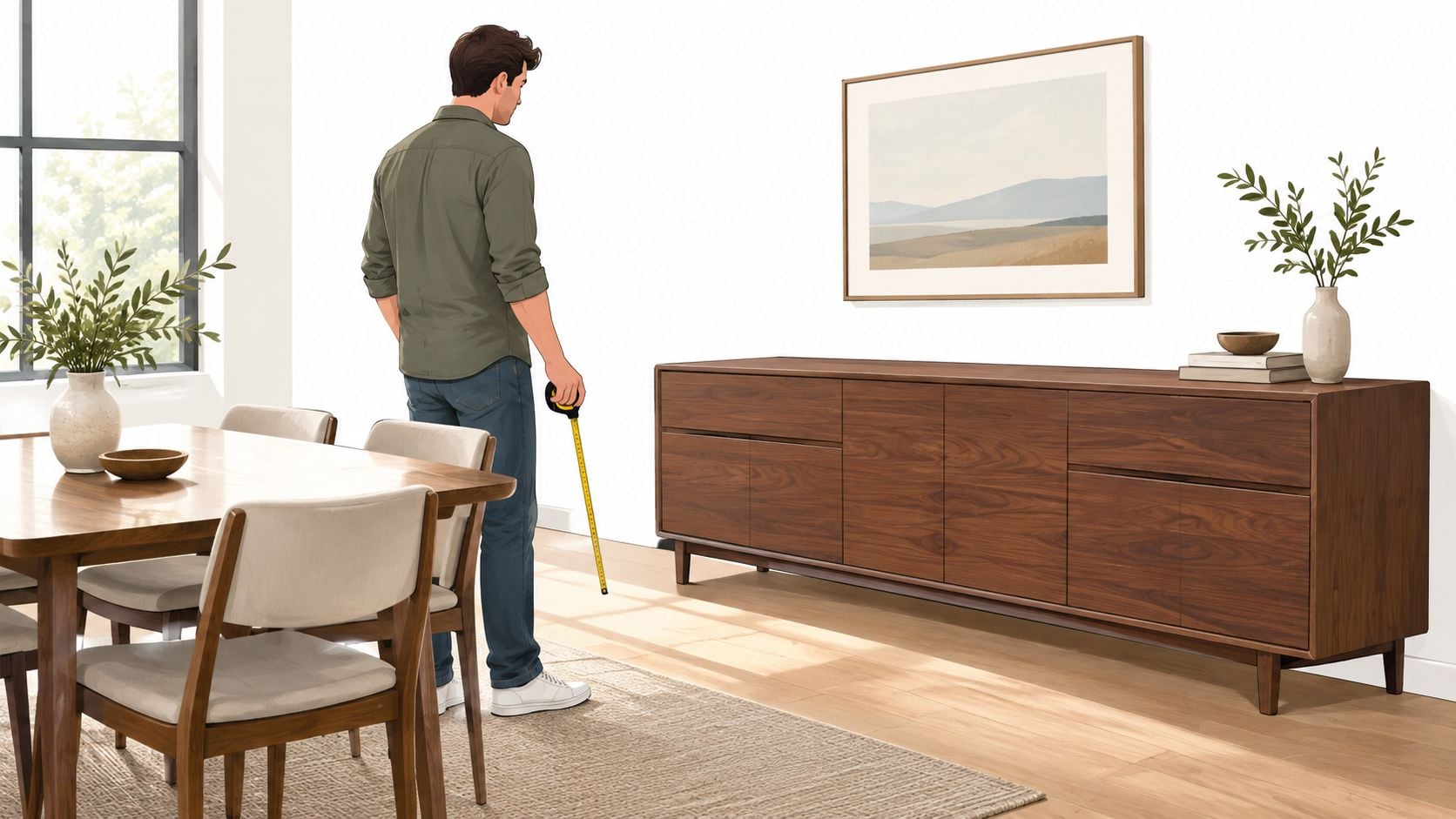
A homeowner standing in a dining room with a tape measure may wonder why the wide, low cabinet bought on a whim feels useful in every room but doesn't quite belong anywhere yet. The piece might hold table linens near the dining table, support a television in the living room, extend a desk in a home office, or collect keys and mail in an entryway.
The room determines the job
A dining room credenza should leave a clear path between the table, chairs, and nearby doors. In a living room, the same form may need to align with the television and stay shallow enough to preserve circulation. In an office, its value comes from keeping printers, files, chargers, and reference materials close without taking over the main desk.
An entryway presents a different challenge. A low cabinet can become a landing place for keys, mail, shoes, gloves, and pet supplies, but doors and drawers need enough room to open without interfering with the front door or a busy hallway.
Practical rule: A credenza works best when its storage solves a daily problem without creating a new traffic problem.
Many Upstate New York homes now ask one room to do more than one job. A dining area may double as a homework station, a living room may include a small office, and a hallway may need to organize a growing household. Thoughtful placement also benefits from broader feng shui home styling advice, particularly guidance about flow, balance, and keeping entrances welcoming.
The clearest definition starts with the furniture's shape and history. Once those basics are understood, the right room becomes easier to identify.
What a Credenza Actually Is
A credenza is a long, low cabinet with a broad top and enclosed or partly open storage. Traditionally associated with dining rooms, it holds linens, china, glassware, serving pieces, and other household items while offering a surface for arranging food or displaying objects. In an Upstate New York home, the same shape can support more than dining. It may store office supplies near a shared workspace, hold a printer behind a sofa, or organize everyday items in a room that serves several purposes.
The name has a practical history. It traces to Renaissance Italy and a service ritual involving food tasting before meals were presented to nobles or high-ranking clergy. Historical references place that use between the medieval period and the 16th century. The English furniture term is dated to about 1875–80. Earlier English uses included a side-table meaning in the mid-15th century and a cabinet for displaying plate in the 1560s. The history and definition of credenza reflects that shift from service furniture to household storage.
The physical form matters
Modern credenzas are usually:
- Long and horizontal, giving a wall a grounded, organized appearance.
- Lower than many dining buffets, so the top remains useful for display or equipment.
- Deeper than a narrow console, leaving room for practical storage.
- Built with doors, drawers, shelves, or a combination of these features.
Showroom examples commonly measure about 60 to 84 inches wide, 18 to 22 inches deep, and 30 to 36 inches tall. These figures vary by design, so use them as a starting point when measuring your room. Office configurations may range from 1088 mm to 2116 mm wide, with depths near 515 mm, and may use two-, three-, or four-door layouts. Review this hardwood selection guidance when comparing materials for long-term use.
At the Freehold showroom, test the scale from several angles. Check whether the doors open comfortably, whether drawers clear nearby furniture, and whether the top sits at a useful height. A credenza can fit behind a desk, beneath artwork, along a dining wall, or under a wall-mounted television. Its top may hold a lamp, printer, books, or a serving tray, while the cabinet conceals chargers, files, dishes, or other necessities.
It describes a function, not one look
A credenza may be traditional, modern, rustic, transitional, or mid-century in style. The name does not specify a wood species, finish, leg design, or door pattern. It identifies a low, broad storage form that can serve as a dining cabinet, media base, or hybrid storage-plus-workstation piece.
Common Uses in Living, Dining, and Entryways
The easiest way to understand what a credenza is used for is to assign it a specific household job. The same cabinet can look decorative in a showroom, but its usefulness becomes clear when the stored items and daily routine are defined.
Dining room serving and storage
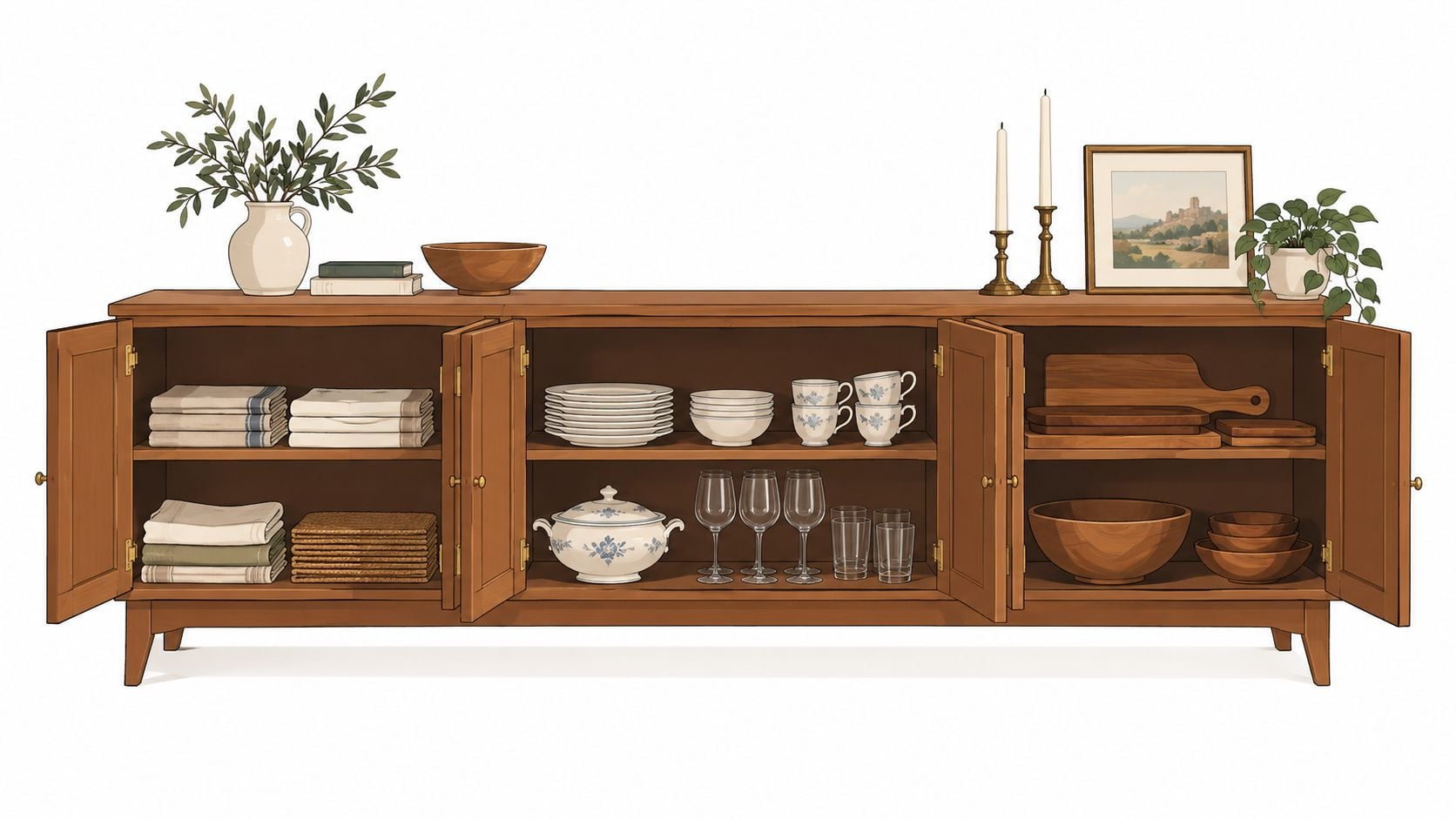
In a dining room, a credenza acts as a compact serving station. The top can hold a family-style meal, a drink setup, desserts, or a row of serving dishes while the dining table remains available for plates and conversation.
Inside, the cabinet can organize:
- Table linens, such as runners, napkins, and placemats.
- Serving boards and trays, kept close to the table but off the kitchen counter.
- Extra dishware, including seasonal plates and bowls.
- Glassware and serving utensils, arranged in drawers or on shelves.
For example, a household that hosts holiday meals might keep a large serving platter, cloth napkins, and extra water glasses in the same cabinet. That arrangement shortens the trip between the kitchen and dining table without turning the table into permanent storage. More dining-specific planning is available in this guide to choosing a dining storage piece.
Living room media and display
A living-room credenza can replace a conventional media console when its structure supports the equipment. Its broad top may hold a television, while the cabinet hides game controllers, remotes, routers, books, and extra cables.
Ventilation and access matter here. Electronics need room for heat to escape, and cable openings should allow cords to reach outlets without pinching behind the cabinet. A piece without suitable openings may work better as a display cabinet than as a full media unit.
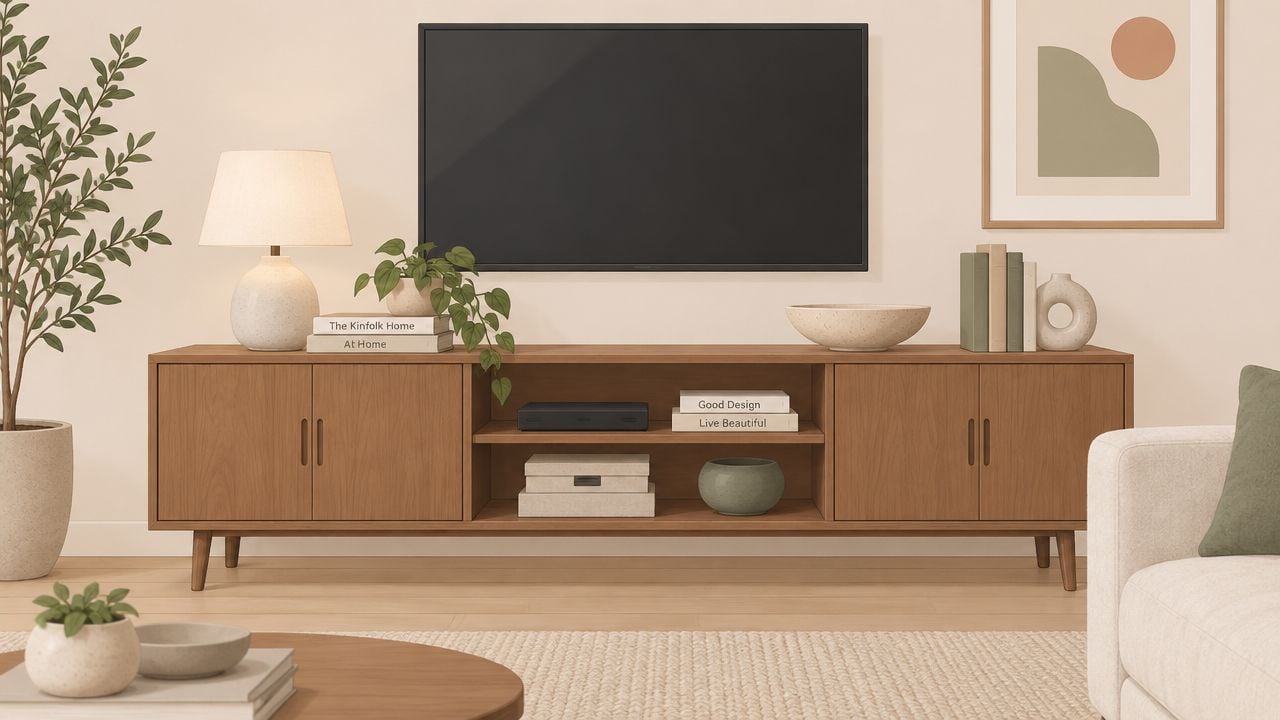
The top also provides a controlled display area for books, lamps, plants, artwork, or family photographs. Closed doors are particularly useful in open-plan homes where the living room is visible from the kitchen or dining area.
Entryway organization
Near an entrance, a credenza becomes a drop zone. A tray on top can collect keys and mail, while the interior stores shoes, bags, scarves, dog leashes, or seasonal accessories.
A shallow drawer might hold gloves and sunglasses. Baskets inside a larger cabinet can separate footwear from pet supplies, so a household doesn't have to search through one deep compartment each morning. The piece should sit far enough from the door that drawers can open without interrupting arrivals and departures.
The deciding question isn't whether a credenza looks attractive in a room. It's whether the interior storage matches the objects that need a home there.
Using a Credenza in a Home Office
A credenza can help a hybrid worker whose desk is already full. It functions as a secondary workstation and storage anchor, placed behind or beside the main desk so the primary typing area stays clear.
Give each section a job
A practical office arrangement might place the printer and scanner at one end, files in lower cabinets or drawers, and daily supplies in a smaller drawer. If the unit includes a pull-out shelf, that surface can support a printer during use without permanently occupying the top.
The interior can hold:
- Printer paper and replacement supplies in a cabinet.
- Active paperwork and binders in file-ready compartments.
- Chargers, notepads, and a laptop behind closed doors at the end of the workday.
- Shared equipment in a central bay if more than one person uses the office.
Office credenzas commonly provide broad storage and a low profile, which helps them fit in executive offices, boardrooms, reception areas, and home offices without blocking sightlines. The same principle works in a spare bedroom that serves as both office and guest space.
Plan the cables before choosing the finish
Cable management often determines whether the setup feels calm or improvised. Back cutouts, grommets, or a simple route behind the cabinet can connect printers, monitors, chargers, and outlets while keeping the front of the piece orderly.
A credenza usually sits a few inches lower than a typical desk. That makes it useful as a monitor stand or secondary surface, but it may not be comfortable as the primary typing surface. An existing desk should remain the main work zone unless the chosen configuration has the appropriate height and legroom.
A shopper comparing layouts can review this guide to multifunctional home-office furniture before deciding whether the credenza needs to support equipment, paperwork, or both.
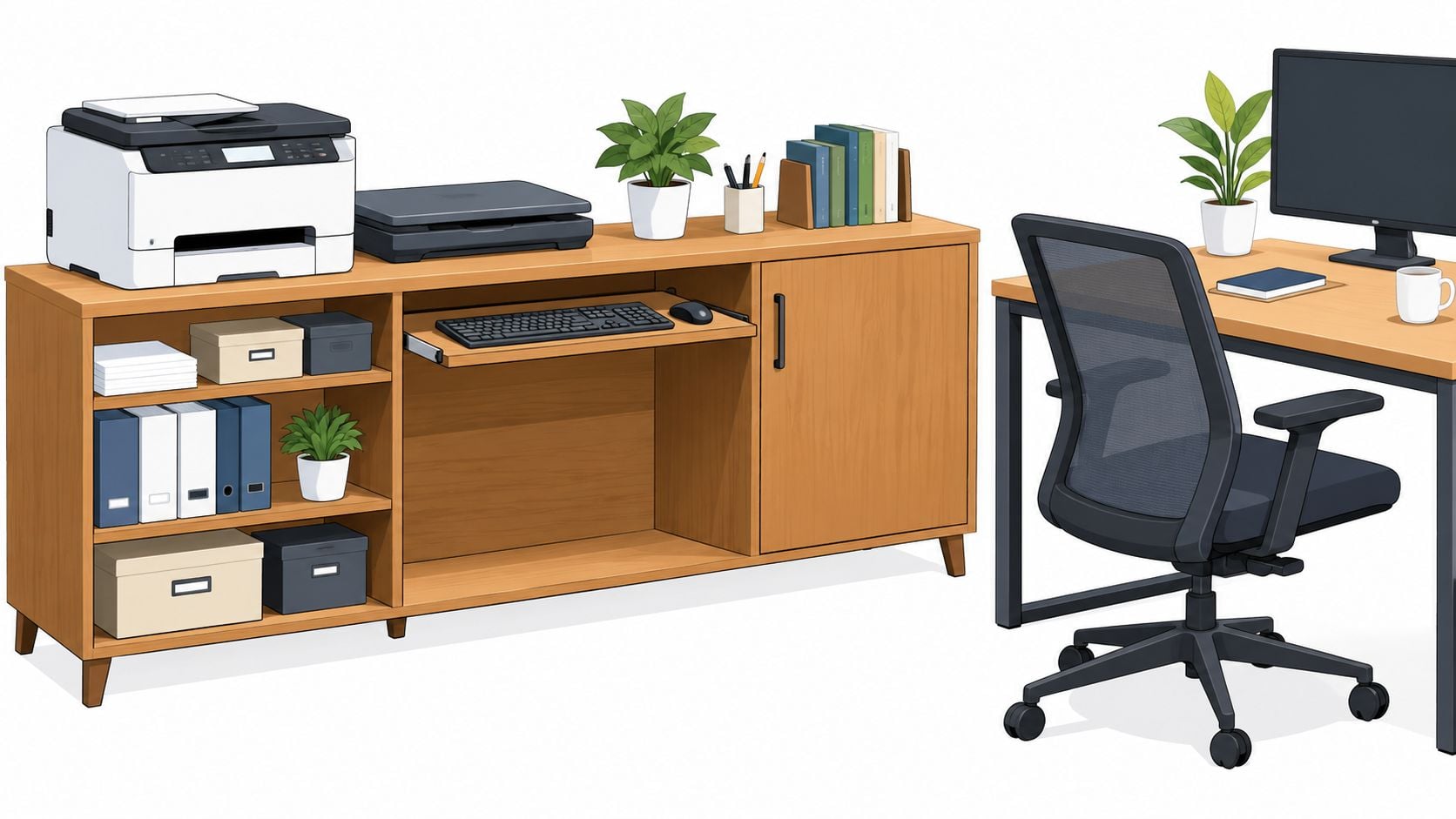
Custom ordering can make the office version more precise. Tip Top Furniture & Mattresses can help shoppers configure drawer layouts, keyboard trays, finishes, and storage around existing office furniture. At the Freehold showroom, buyers can test drawer slides, soft-close hinges, and cable cutouts before committing to a configuration.
Credenza vs Sideboard vs Buffet vs Media Console
Furniture names overlap in everyday conversation, but the differences still matter when a piece must fit a wall, support equipment, or store serving ware. A sideboard and buffet are often used to describe nearly the same dining-oriented form. A credenza tends to be lower and shallower, while a media console is designed around electronics.
| Piece | Typical Height | Best Use |
|---|---|---|
| Credenza | About 30 inches | Low storage, display, office support, or a piece behind a sofa |
| Sideboard | Around 36 inches | Dining-room storage and serving |
| Buffet | Around 36 inches | Serving food, dishes, linens, and glassware |
| Media console | Varies by design | Television, electronics, ventilation, and cable access |
A buffet or sideboard generally offers more serving-oriented height and depth. That can be helpful when guests need to reach dishes comfortably, but it may feel too bulky behind a sofa or in a narrow passage.
A credenza is a better fit when the cabinet needs to sit along a dining-room side wall, behind a desk, or beneath artwork without dominating the room. A media console earns its name when the interior includes ventilation, cable cutouts, open shelving, or glass-front compartments for receivers and other devices. More guidance on matching a television to its support piece appears in this guide to shopping for TV stands.
The labels aren't perfectly fixed across furniture collections. Before ordering, shoppers should confirm actual height, depth, door clearance, shelf adjustability, and cable access rather than relying on the product name alone.
Styling Tips and Smart Buying Choices
A credenza should look intentional, but it also needs to survive daily use. In a Freehold, Albany, or wider Upstate New York home, the right choice depends on wall length, nearby furniture, door swings, and the amount of traffic around the piece.
Measure the complete footprint
Leave 6 inches of breathing room on either side so doors and drawers can open fully. Measure the depth behind a sofa, check the height beneath a wall-mounted television, and confirm that the top won't interfere with windows, trim, or outlets.
Common mistakes include:
- Choosing a piece that's too short for a long wall, which can make the arrangement feel unbalanced.
- Ignoring depth limits behind a sofa or in a hallway.
- Selecting a delicate top that won't withstand serving dishes, office equipment, or everyday décor.
- Skipping wall safety, particularly when children or pets are in the household.
Anti-tip hardware should be used when appropriate. A solid hardwood credenza, including an Amish-made piece handcrafted in the USA, can provide a durable foundation, while a custom order can accommodate sizing in 6-inch increments and match an existing dining set or office suite.
Finish coordination doesn't require an exact match. Echoing a nearby wood tone can create continuity, while a considered contrast can separate the credenza from the rest of the room. Tip Top's professional design services, available since 1984, can help coordinate furniture, décor, window treatments, and flooring as part of a broader room plan.
Choosing the Right Credenza for Your Space
The best next step depends on the job the cabinet must perform.
- Dining serving: Explore buffets and sideboards with a depth under 36 inches, then test how comfortably serving pieces fit.
- Hybrid work: Ask about custom layouts for printers, dual monitors, files, and concealed cable channels.
- Entryway storage: Measure the wall length and ceiling height first, then test drawer depth and door clearance in person.
- Living-room media: Confirm ventilation, cord access, equipment width, and the relationship between the cabinet and television.
A room planner can validate the layout before purchase, while a design consultation can help pair wood, finish, hardware, fabric, and flooring choices. A visit to the Freehold showroom gives homeowners from Albany, Schenectady, Troy, Greene County, and nearby communities a chance to see built samples, test drawer action, collect swatches, and leave with a clear order plan.
Tip Top Furniture & Mattresses is a family-owned Freehold showroom serving the Greater Albany Capital Region since 1978, with credenzas, Amish furniture, custom ordering, home-office storage, flooring, USA-made mattresses, flexible financing, and clearance options. Visit Tip Top Furniture & Mattresses to explore room solutions, use the room planner, or arrange a showroom visit for measurements and design guidance.