Blue Console Cabinet Guide: Shades, Sizing, and Styling


The front door opens into a narrow entryway, and there's nowhere to put the mail without covering the keys. A lamp would make the space more welcoming, but the current table is already crowded. A blue console cabinet could solve both problems, provided its depth, storage layout, and finish suit the room rather than just the photograph.
Why a Blue Console Cabinet Belongs in Your Home
A console cabinet earns its place by giving everyday clutter a home without making the room harder to use. Closed doors can conceal bags, serving pieces, or household paperwork. A drawer keeps keys apart from the items that tend to collect beside them.
An open console table offers a landing surface and a lighter look. A cabinet adds enclosed storage, though its doors and solid front carry more visual weight. Choose based on what needs storing and how much presence the room can handle.
A Familiar Furniture Form With Deep Roots
Console furniture has a long European history, with examples from the 1600s onward that moved from the wall into formal rooms. Early consoles could serve as architectural focal points in elaborate interiors. A modern cabinet is a much smaller piece than a palace console, but the same logic applies: furniture beside a wall can give an overlooked area a clear job.
Blue offers a choice beyond wood stain, black, or white. It can bring contrast without requiring colorful furniture throughout the room. The finish matters: a soft, muted blue reads differently from a glossy or very dark one, and nearby wood tones can change how each appears. Consider those relationships alongside the cabinet's build, not as a substitute for checking it.
Start With the Job, Not the Accessories
Before choosing a piece, check these practical details:
- Shade: Should the cabinet recede into the room or feel like a strong focal point?
- Construction: Is the frame stable, and are the doors and drawers well fitted?
- Fit: Can people pass while the doors and drawers are open?
- Surroundings: Does the finish suit the flooring and nearby furniture?
- Care: Can the coating handle the cabinet's location and everyday use?
- Buying path: Will a ready-made piece fit, or does the room call for customization?
In homes in Freehold, Albany, Schenectady, Troy, and Greene County, start with household routines. Measure the items that need storage and check how the cabinet will stand against the wall. A handsome piece still needs to hold what the household uses.
Choosing the Right Shade of Blue for Your Room
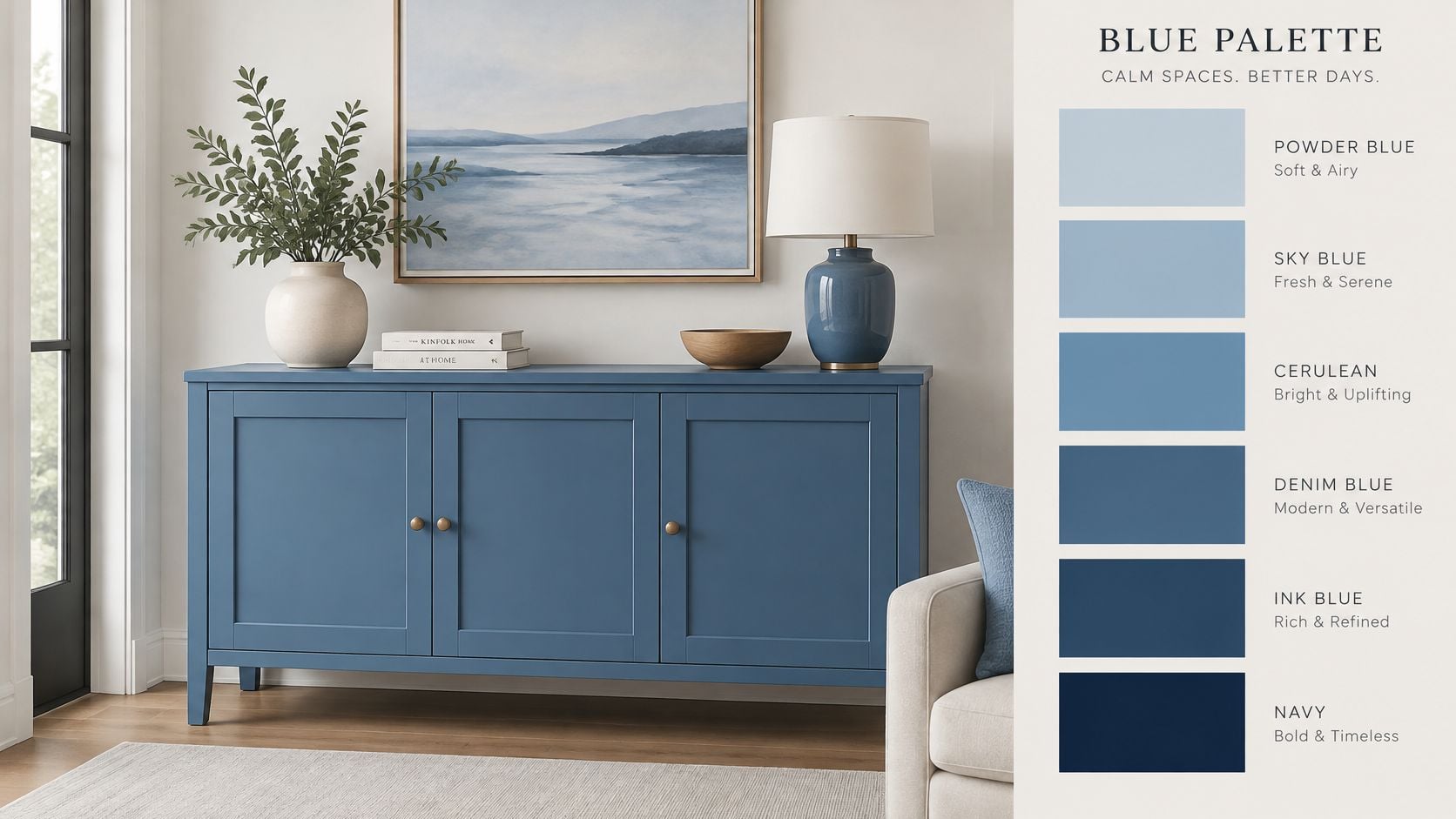
Blue covers several distinct finishes, and each one reads differently in a room. In a bright space, pale blue can feel open and light. In a dim entry, the same color may look cool or washed out. Undertone, sheen, and room light all affect how the cabinet will appear.
Compare the Blue Families
Finish names vary, so use these descriptions to narrow your choices, then judge a real sample. Pay attention to the blue's undertone and how much visual weight it adds.
| Blue family | Undertone to examine | Perceived visual weight | What to watch in north-facing light | Flooring pairing to test |
|---|---|---|---|---|
| Pale blue | Gray, green, or violet | Airy | May appear cooler or washed out | Light oak or neutral carpet |
| Dusty blue | Muted gray | Soft and restrained | Can read more gray than blue | Warm oak or medium brown wood |
| Teal | Green | Noticeable and colorful | May look deeper and greener | Warm wood or restrained neutral flooring |
| Slate | Blue-gray | Grounded | Can appear charcoal-like | Natural oak or pale flooring |
| Navy | Green or violet beneath a dark blue | Substantial | May lose visible blue detail | Light flooring or warm wood |
A narrow, dim entry usually suits a lighter or muted finish that leaves the wall feeling open. Dusty blue is a practical place to start. Navy brings more visual weight, so check that the floor or nearby wood provides enough contrast. A dark blue can feel lasting, but the room's light and surrounding finishes matter more than the shade's name.
Color preferences change over time. Treat a muted blue as a flexible choice if rugs and accessories may change, and sample saturated blues carefully before committing.
Test the Finish in Its Actual Position
Hold samples vertically beside the intended wall. A sample laid flat on a counter catches light differently from a cabinet front, and that difference can change how the blue reads.
- Compare daylight: Check the sample on bright and overcast days.
- Check evening lamps: Use the lighting that normally illuminates the room.
- Include the wall color: Hold the sample against the paint, not by itself.
- Narrow the choices: Keep finishes that still work in the room's least flattering light.
For navy, test nearby colors against the actual floor and wall. This guide to colors that go with navy offers useful pairing ideas. Keep the sample beside the wood tones in the room, too. A warm floor can soften a cool blue, while pale flooring can make a dark cabinet stand out more.
Materials and Construction to Check Before You Buy
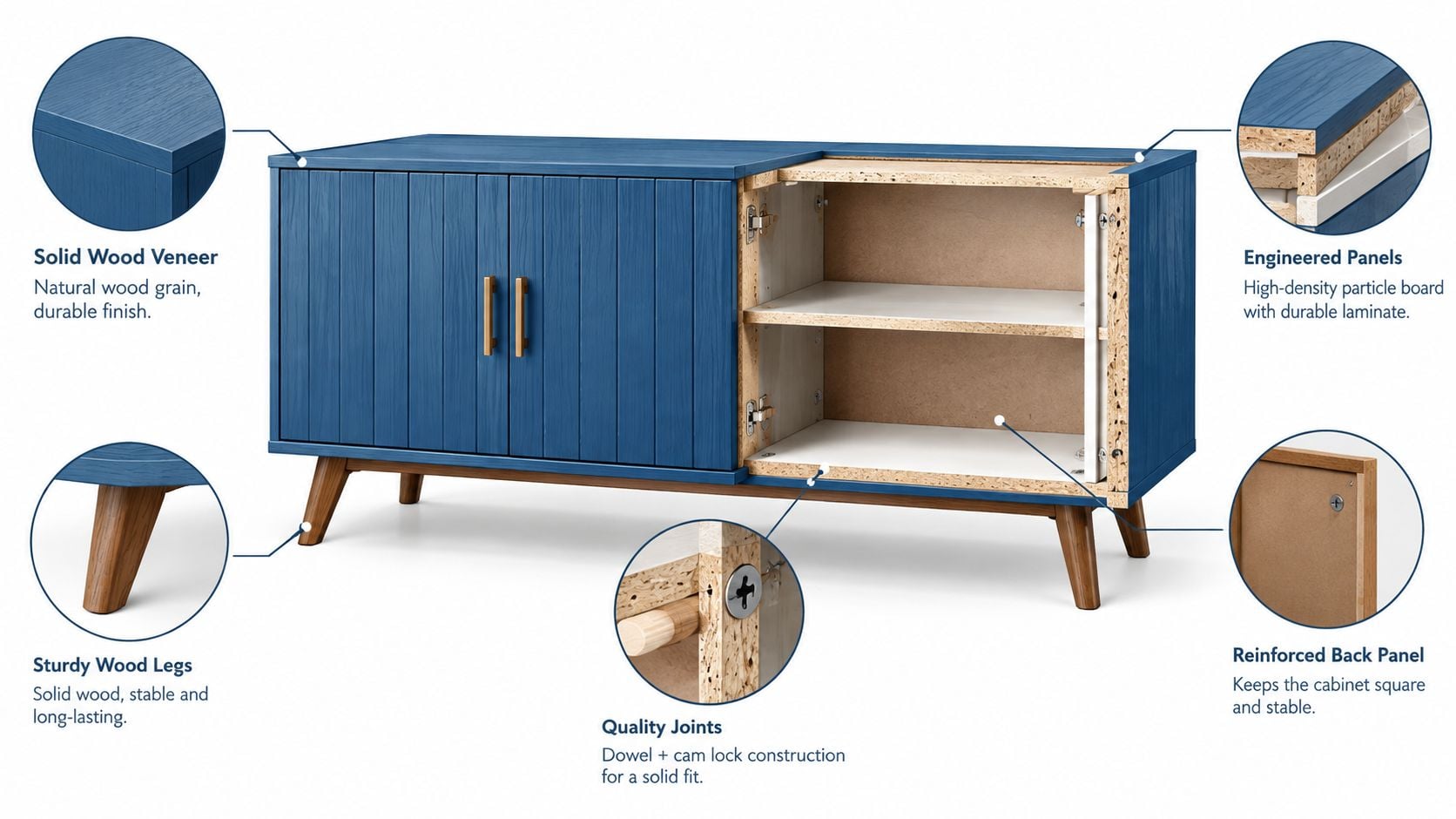
A smooth blue surface can hide very different construction underneath. The useful question isn't whether a cabinet is described as wood furniture. It's which materials appear in the top, sides, doors, shelves, back, and drawer boxes.
Identify the Materials Behind the Finish
Solid wood, plywood, MDF, and particleboard shouldn't be treated as interchangeable descriptions. A veneer is a surface layer, not proof that the entire cabinet is solid wood. A cabinet can also combine materials in sensible ways, so the specification should identify each major component.
Painted furniture deserves particular scrutiny because grain isn't available as a visual clue. Ask for written construction information rather than relying on the appearance of a showroom sample.
Engineered panels also raise an indoor-air-quality question. Some composite products can emit formaldehyde and other compounds, so shoppers should request product-specific emissions documentation, including the certification name and the components it covers. Neither a blue finish nor a solid-wood label alone answers every materials question.
Buying rule: A clear materials description is more useful than an impressive-sounding quality label.
For a household seeking handcrafted, USA-made, heirloom-oriented furniture, Amish solid-wood options deserve consideration. Custom ordering can also provide a clearer discussion about wood species and visible grain, provided the order identifies the actual construction.
Inspect the Parts That Get Used
Open every door and drawer on the display piece. Watch for rubbing, uneven gaps, loose pulls, and shelves that shift under ordinary handling.
A practical showroom checklist includes:
- Edges and interiors: Look beneath the top, behind the doors, and around openings for exposed or poorly finished surfaces.
- Drawer operation: Check whether drawers move smoothly and remain properly supported when extended.
- Door hardware: Ask whether hinges can be adjusted and whether replacement hardware is available.
- Shelf support: Confirm the intended load and inspect how shelves attach.
- Media provisions: Check cable openings and ventilation against the equipment's requirements.
The broader cabinet construction buying checklist can help organize that inspection.
Separate Coating Choice From Construction Quality
A refinishing project introduces another set of questions. The I PAINT STUFF resource on acrylic enamel for kitchen cabinets offers related reading for shoppers considering a cabinet repaint.
That's a starting point, not permission to coat an unknown finish. Compatibility, surface preparation, and the coating manufacturer's directions still need confirmation. New paint won't correct loose joinery or a poorly supported shelf.
Sizing and Placing a Blue Console in Hallways and Entryways
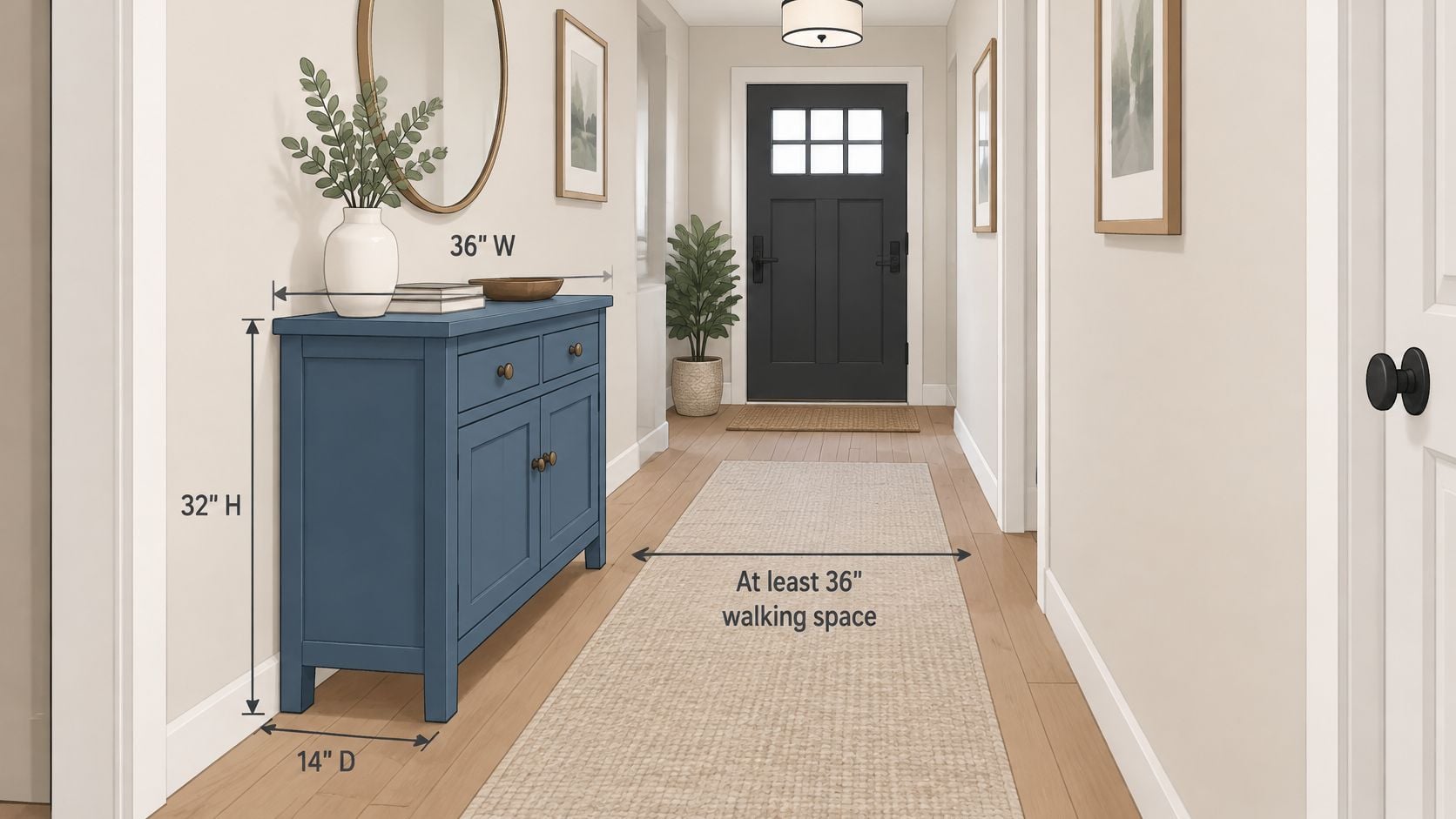
In a narrow entry, a cabinet that looks slim online can still crowd the path. Check its depth against the route people use from the door, then confirm that drawers, doors, and nearby fixtures have room to work.
Measure the Space Where People Walk and Reach
Measure the wall between permanent obstructions. Baseboards, door casing, radiators, outlets, and floor vents can change where the cabinet fits. Use a furniture measuring guide to record the space and compare it with the cabinet's full dimensions.
Mark the proposed footprint with removable tape suited to the floor. Include handles and other parts that project. Open nearby doors, pull out drawers, and walk the usual route while carrying a bulky bag or laundry basket.
- Check the arrival routine: Leave space to hang coats, set down shopping bags, and remove boots.
- Test cabinet access: Allow room to open doors and drawers without blocking the walking route.
- Inspect the delivery route: Measure turns, stairs, and the doorway leading into the room.
- Confirm usable storage: Interior dimensions determine whether a basket or device will fit.
A Broad Footprint Helps, but It Isn't a Safety Guarantee
A long, low console in one example measures 72 inches wide, 20 inches deep, and 30 inches high, a proportion that may be too deep for a narrow entry. A cabinet's low, broad shape can help it sit steadily, but it cannot prevent climbing or a loaded drawer from shifting its balance.
A cabinet that feels heavy when pushed can still tip when weight shifts beyond its base.
Secure the cabinet to a wall stud or structural anchor with the hardware the manufacturer supplies. For plaster or hollow walls, have a qualified installer confirm the attachment point. Anchor the hardware into studs or a structural member so the cabinet stays put under load.
Store heavier items low and toward the rear. If the cabinet will support a television, confirm its top-load rating, secure the television appropriately, and route cables out of children's reach. Keep remotes and tempting objects away from places that invite climbing.
Coordinate Overhead Lighting Before Final Placement
A new pendant can change both the project budget and the visual balance above the cabinet. The guide to pendant lighting costs for hallways offers planning context. Its regional pricing may not apply locally, so homeowners in the Capital Region should request estimates from local professionals.
Plan electrical work and fixture placement before the cabinet arrives. That leaves room to adjust the furniture position without working around an occupied wall.
Matching Décor, Lighting, and Wood Tones Around Blue
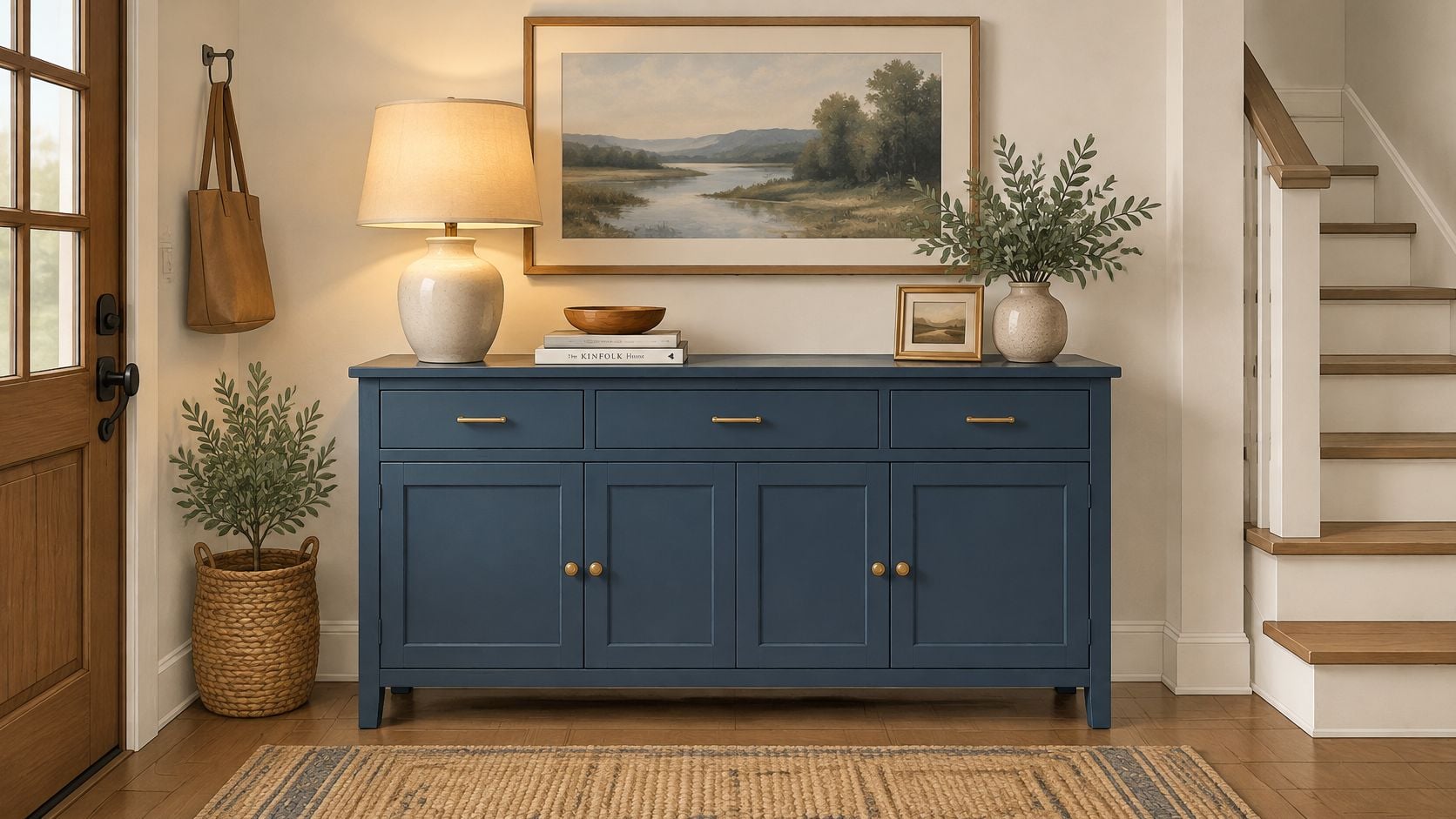
Match the cabinet to what the room already has: flooring, trim, adjacent wood furniture, and the wall behind it. A blue finish can read differently beside golden oak than beside pale flooring, so judge it in the room rather than as an isolated color.
Work With Warm Wood Rather Than Hiding It
Warm oak and cherry can sit comfortably beside blue. Judge the contrast by asking whether it looks planned or cluttered in the room.
With golden oak, test a quieter blue before choosing one with strong green or violet undertones. Beside reddish cherry, compare muted blue-gray with deeper blue in person. A photograph can shift both wood and paint tones, so rely on finish samples for the final call.
A crisp white wall gives blue a clean outline. Warm neutral paint softens that edge, especially alongside cream upholstery or beige flooring. The right choice depends on whether you want the cabinet to stand out or settle into the room.
| Existing room feature | Styling approach to test | Common mistake |
|---|---|---|
| Strong wood grain | Simple cabinet fronts and restrained accessories | Adding several competing textures |
| Pale neutral flooring | A deeper cabinet finish for contrast | Choosing every surrounding item in the same dark tone |
| Patterned runner | Accessories that repeat a quiet background color | Matching every accent in the pattern |
| Warm wall paint | A blue sample checked beside the actual paint | Assuming all blue-gray finishes are neutral |
Build a Useful Surface, Not a Display Shelf
A framed mirror, ceramic lamp, and small catchall can organize an entry without crowding the cabinet. The mirror gives the wall a focal point, the lamp provides evening light, and the catchall keeps everyday items in reach.
A woven basket can add texture nearby if it leaves the cabinet and walkway accessible. Keep a clear landing spot on top for keys, bags, or mail.
- Choose a focal piece: Use artwork or a securely mounted mirror rather than several competing wall decorations.
- Add a working light: Select a lamp that suits both the cabinet's scale and the room's lighting needs.
- Reserve landing space: Keep part of the surface clear.
- Repeat selectively: Carry a material, shape, or accent color into nearby décor without matching everything.
Evaluate the Whole Evening Scene
A lamp's color temperature can shift how blue looks. Check the cabinet, wall, flooring, and the actual lamp together after dark. A finish that feels calm in daylight may appear sharper or grayer under evening light. When flooring is changing, compare the blue against the new floor before the cabinet arrives, because the finish will sit against it every day.
Caring for a Blue Finish Over the Years
A blue console by a sunny entry or a spot where wet umbrellas land needs a finish suited to that daily exposure. Treat durability as a specification you check on the spec sheet, separate from the color. A deep blue and a pale blue can use different finishes, so ask about the coating rather than judging protection by shade.
Ask What Protects the Surface
A sound wood coating should adhere well and resist cracking, flaking, and peeling. It should limit liquid-water entry while allowing some moisture vapor to move through. Urethane coatings are tough and resist marring and water spots, but humidity can affect how they cure. Ask the seller which topcoat was used.
For an indoor cabinet, check the coating type, the room's exposure, and how the finish was applied. Before purchase, request the care sheet for the specific finish. Ask whether the color comes from a pigmented coating or stain, what lightfastness information is available, and whether a protective topcoat is included.
Care priority: Follow the finish manufacturer's directions before trying a general furniture-cleaning remedy.
Keep Water and Strong Sun Under Control
An entry cabinet may collect wet gloves, dripping umbrellas, or damp bags. Put a tray or a separate drop zone nearby instead of letting moisture sit on the cabinet.
- Dust gently: Use a clean, soft cloth suited to the finish.
- Handle spills promptly: Blot moisture instead of spreading it into seams.
- Avoid saturation: Don't soak joints, edges, or hardware openings while cleaning.
- Protect the top: Set coasters and protective pads beneath objects.
- Limit strong sunlight: Place the cabinet away from persistent direct exposure.
- Skip unapproved products: Oils, waxes, disinfectants, and abrasive cleaners may not suit the coating.
Treat Touch-Ups as Finish-Specific Work
A paint sample can look close in daylight yet leave a noticeable patch if its sheen differs. Match touch-up materials to the original coating system whenever possible. If the surface has faded or worn, check the care sheet before applying anything.
In Upstate New York homes, seasonal conditions can change over the year. Inspect the finish routinely for moisture marks, lifting edges, and worn areas before attempting repairs. For everyday maintenance, follow this wood furniture care guide.
Custom Ordering and Design Help in Freehold and Albany
A blue console cabinet can look right in a showroom and still miss the mark at home if the depth, storage, or finish does not suit the room. Custom ordering is worth considering when standard options leave a specific problem unresolved. A narrow entry may need less depth, while a dining area may need space for serving pieces instead of electronics.
Available Furniture or a Custom Piece
A ready-made cabinet has an established design you can often inspect before buying. Confirm the exact item, finish, condition, and delivery timing, since availability and options can vary.
Custom work lets the specification address a particular need. The trade-off is more decisions before production and less immediate availability. A clearance piece may cost less when its condition and dimensions work as they are, but check the sale terms before committing.
| Buying path | Best reason to consider it | What needs confirmation |
|---|---|---|
| Available cabinet | The existing design fits the room and purpose | Exact item, condition, dimensions, and delivery |
| Custom order | Standard options leave a meaningful compromise | Approved drawing, materials, finish, price, and timing |
| Clearance piece | A suitable cabinet offers value without unnecessary changes | Item condition, availability, and sale terms |
Start custom work with written requirements. Confirm the dimensions, wood type, blue finish, hardware, and interior layout before production begins. A sketch can show the general idea, but a dimensioned drawing makes the intended size clear. The custom furniture design service can help households consider those options.
Bring a Room Record to the Consultation
Bring photographs that show both the cabinet wall and nearby spaces, especially in an open layout. Include the delivery route, since a cabinet that fits its final spot may still be difficult to move through a doorway or stairwell.
- Bring measurements: Record the placement area and delivery route.
- List the contents: Note what the cabinet must hold.
- Identify priorities: Separate required features from preferences.
- Set the project scope: Clarify whether the work includes décor, flooring, or lighting.
A free online room planner can help compare layouts to scale. Enter doors, windows, and other fixed features so the plan reflects the actual room, not an empty rectangle.
For a wider view of coordinated planning, Task Masters Inc.’s resource on personalized interior design for your home discusses furnishings as part of a complete room.
Plan the Purchase as a Complete Project
Households in Albany, Schenectady, Troy, and Greene County should confirm delivery arrangements before placing an order. Financing may help organize a purchase, but review the payment terms, eligibility, and total obligation first.
A clearance cabinet can be a practical choice when its size and finish already work. Custom ordering offers more control over fit and details, with added planning and wait time. Before booking a custom order, write down the depth limit, the items the cabinet must hold, and the approval date you need, then bring those numbers to the consultation.
Tip Top Furniture & Mattresses is a family-owned Freehold, NY showroom serving the Greater Albany Capital Region since 1978, with professional design services available since 1984. Its selection from over 50 trusted manufacturers includes Amish furniture handcrafted in the USA, custom options, coordinated décor and flooring, and USA-made mattresses, with financing and delivery available. Visit Tip Top Furniture & Mattresses with room measurements and photographs to compare blue console cabinet finishes, try the free online room planner, or book a complimentary design consultation.