Desk Ideas for Small Spaces: Smart Picks

Living in the Capital Region often means making a workspace fit into a room that already has a real job to do. A Troy apartment might need to stay airy for guests, a Freehold bedroom might need to handle both sleep and paperwork, and a family home near Albany may need one desk that doesn't take over the whole room. The smartest desk ideas for small spaces solve that problem with better planning, not bigger furniture, and that's exactly where Tip Top Furniture & Mattresses has long helped local families since 1978 with one-stop shopping, design support, and custom options from its Freehold showroom.
The best compact desk starts with a simple truth, size matters, but usability matters more. A practical small-space benchmark is a desk around 36 to 48 inches wide and 20 to 24 inches deep, with about 30 inches of clear space behind it for chair movement, and one guide notes that a desk as small as 36 inches by 20 inches can still handle a laptop or single monitor for regular work small-space desk sizing guidance. Another design source points to 300 to 500 lux at the work surface and a desk height around 28 to 30 inches, which shows why a good setup is about light, posture, and footprint together Architectural Digest's small-space desk ideas. Tip Top's Freehold team sees that same pattern every day, people want a desk that disappears visually when possible, works hard when needed, and still leaves the room feeling like home.
1. Wall-Mounted Fold-Down Desk
A wall-mounted fold-down desk fits a room that needs to switch roles fast. Open it for work, close it when the laptop is away, and the wall goes back to feeling open.
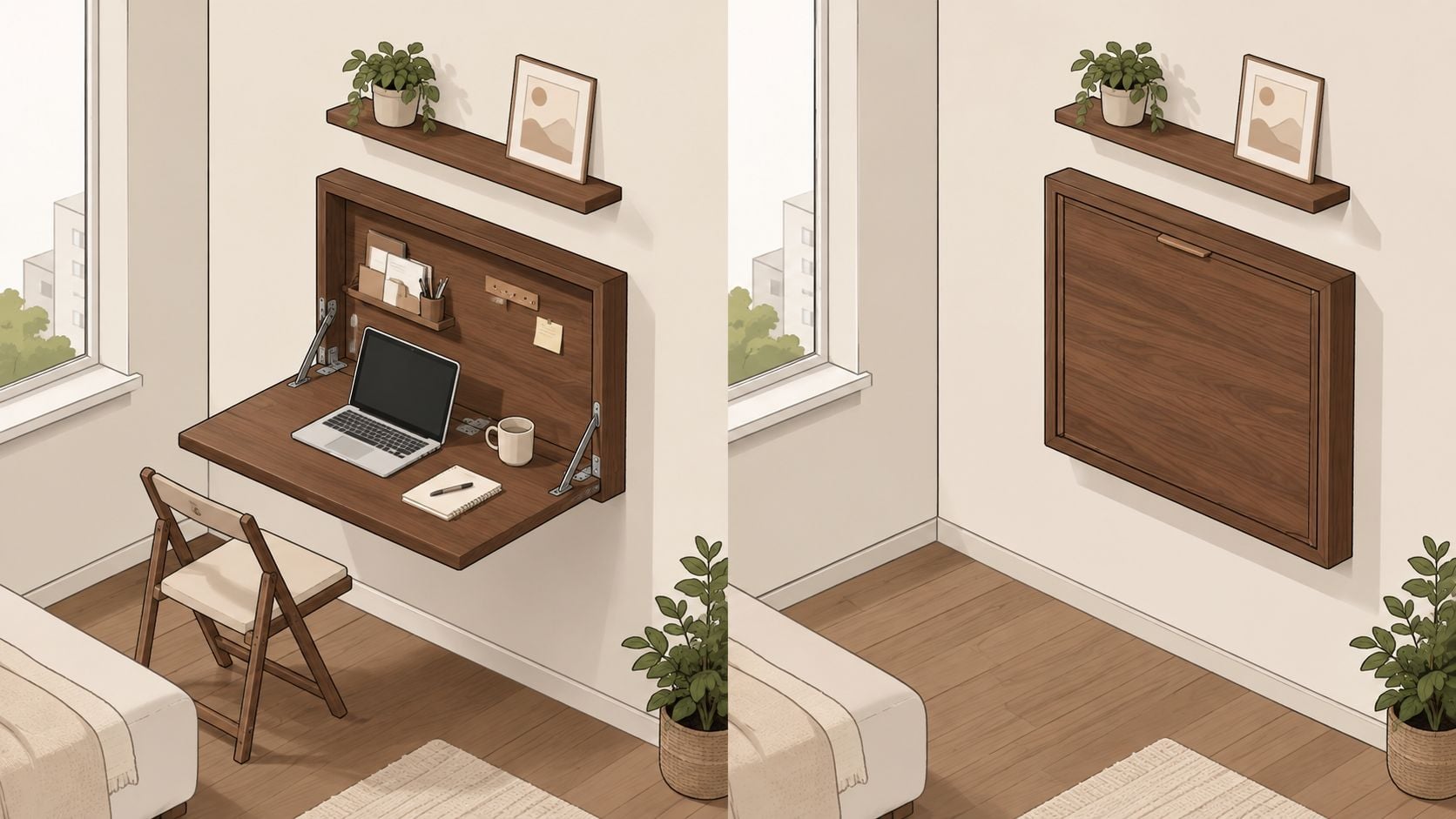
That setup works especially well in a Freehold bedroom that has to serve as both guest space and office, or in a compact Albany apartment where floor space is already spoken for. The clean profile keeps the room from feeling crowded, and that matters in homes where the desk has to disappear between work sessions. Tip Top's office furniture for small spaces page matches this need because compact furniture has to do real work, not just look tidy.
What works best here
Solid construction matters more here than on a decorative piece. A fold-down desk gets opened and closed often, and weak hardware shows up quickly once it starts carrying a laptop, papers, or leaning weight, so an Amish-crafted or otherwise well-built option is the safer long-term choice. The height also needs to pair well with the chair, and a desk around 28 to 30 inches high gives a useful starting point for selection or custom work.
A good wall-mounted desk also needs to fit the room's routine. If the door swing, chair pullout, or walkway feels cramped when the desk is open, the piece will create frustration instead of solving the space problem.
Practical rule: if the desk can't open without blocking movement, it is not really solving a small-space problem, it is just using the wall as storage.
Small details matter in actual homes. Magnetic hooks under the folded surface can hold cords or a headset, and the finished front should blend with the room rather than reading like office equipment. That matters in shared bedrooms, family rooms, and homes where the work area has to be out of sight quickly.
2. L-Shaped Corner Desk with Vertical Storage
Corners get wasted all the time, which is why an L-shaped desk can feel like a room gained an extra corner of usefulness overnight. The shape gives a larger usable surface without forcing the rest of the room to shrink around it.
An L-configuration works especially well in Greene County homes and Albany bedrooms where schoolwork, paperwork, and computer time all happen in the same place. Two walls carry the load, the center of the room stays open, and the vertical storage keeps the desktop from turning into a catch-all. The result is a setup that feels bigger than it is, which is the whole point of good desk ideas for small spaces.
How to keep it from looking bulky
L-shaped desks can overwhelm a room if they're dark, boxy, or over-accessorized. A lighter finish, open shelving, and a clean chair profile help the desk blend into the rest of the room instead of taking over. Tip Top's custom ordering can be useful here, especially for families who want a finish that coordinates with nearby bedroom furniture or a home office hutch.
A corner desk works best when the wall behind it stays visually quiet. Too many framed pieces, cords, and stacked supplies erase the advantage of the shape.
A practical setup is to use the longer arm as the main computer zone and the shorter arm for paper work, a printer, or school supplies. If the room gets natural light from one side, placing the longer arm perpendicular to the window helps avoid screen glare while still keeping the area bright. That simple layout decision often matters more than adding more accessories.
For households with mixed needs, an Amish-crafted L-shaped desk in a custom finish can make a corner office feel intentional rather than improvised. It's also one of the clearest examples of how Tip Top's design services and custom work can turn a tight room into something that functions like a full office.
3. Floating Desk with Under-Desk Storage
A floating desk works well when a room has to stay open, but still needs a real place to work. With no visible legs, the setup feels lighter on the wall, which helps in small bedrooms, studios, and newer homes across the Capital Region.
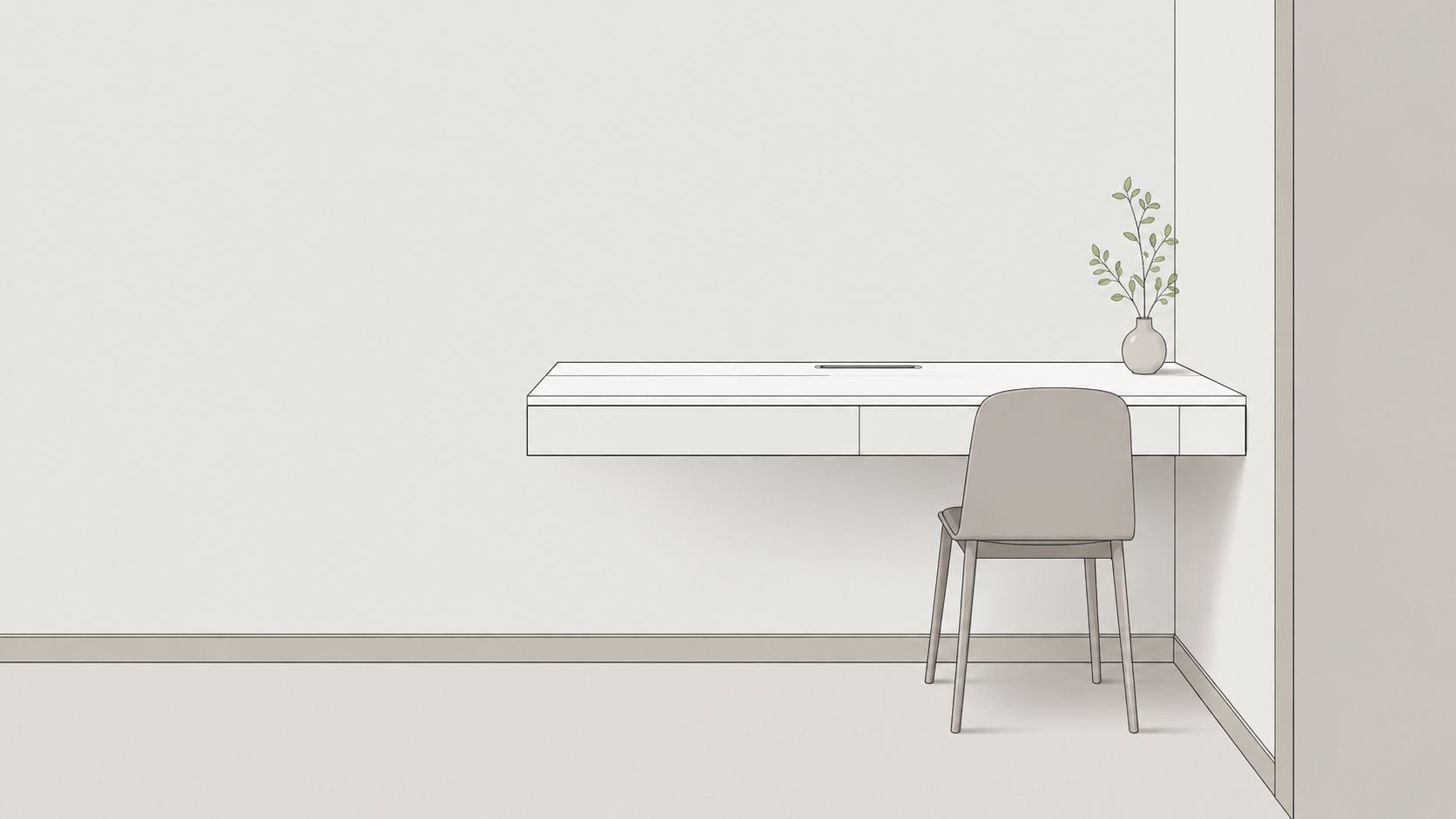
In compact Freehold apartments, the space under the desktop can hold low storage without adding a full-sized cabinet. In Albany studios, the wall-mounted look often reads more like built-in furniture than office gear. That matters when the desk has to share a room with a bed, a sofa, or a walkway. Tip Top's home office storage ideas show the same basic principle, the desk stays neat only when storage stays controlled.
The details that keep it practical
Wall-stud mounting is required. The desk needs solid anchoring, and the storage below it has to leave enough room for a chair so knees and feet do not feel boxed in. The layout also needs enough depth for the work you do. A laptop setup can stay compact, while a larger monitor or extra accessories may call for more planning than a shallow floating shelf can handle.
A few choices keep the look light:
- Neutral wood tones: White, natural, or soft walnut finishes help the desk blend into the room.
- Hidden storage: Cabinets or drawers beneath the desktop reduce clutter on the surface.
- Wall lighting: Task lighting mounted above the desk keeps floor space open.
- Simple containers: Dividers and labeled bins keep the storage from turning into a jumble.
For homeowners who want a cleaner plan before they buy, Tip Top's home office storage ideas can help narrow down what belongs under the desk and what should live elsewhere in the room. The floating style works best where visual space matters as much as actual square footage. It is not the right fit for heavy equipment or a large file load, but for light daily computer use it gives a small room a calm, finished look.
4. Desk with Integrated Shelving and Hutch
A desk with a hutch solves a common problem in small homes, where the desk surface is only half the battle. The other half is where to put the files, chargers, books, and supplies without adding another piece of furniture.
This style makes sense in Freehold apartments, guest rooms, and family bedrooms where one corner has to do everything. It also fits well in the Greater Albany Capital Region because the vertical storage keeps the footprint compact while giving the room a more finished look. For shoppers who want a coordinated system, Tip Top's white bookcase with desk shows how a single unit can carry both work and storage duties.
Why the hutch matters more than people think
The hutch should help the room feel organized, not crowded. Open and closed storage need to be balanced, because filling every shelf makes the desk look heavier than it is. Lighter wood finishes, especially natural oak or soft stains, help keep the upper section from feeling top-heavy in a small room.
Keep the most-used items at eye level and the messiest items behind doors. That one rule makes a hutch feel calm instead of busy.
This style works especially well in homes where the desk doubles as a school station or small-business center. Documents can live in lower cabinets, attractive books or decor can sit on open shelves, and task lighting inside the hutch can make the whole setup feel purposeful. The return on vertical storage is simple, it frees the desktop for the work that needs room.
For shoppers considering a custom build, Amish-crafted desk hutch combinations can be matched to other wood pieces in the house. That creates continuity in a small room, which matters because visual clutter and physical clutter usually travel together.
5. Expandable or Height-Adjustable Desk
A room that has to switch jobs during the week needs a desk that can shift with it. An expandable desk or height-adjustable desk handles that better than a fixed piece, because it can serve as a compact laptop station one day and a larger work surface or standing desk the next.
That flexibility fits real households in Freehold and Albany, where adults, teens, and older family members often use the same room in different ways. The desk can stay small when the room needs open floor space, then open up when paperwork, crafts, or a longer work session takes over. Good construction matters here, because the desk has to feel steady whether it is folded down, extended, raised, or locked into place.
Getting the fit right
The starting point is the person who will use it. Seat height, chair height, and elbow position all need to work together, and a standing setup needs enough range to stay comfortable without forcing the shoulders up or the wrists down. Before buying, check how much room the desk uses in its largest position, since a piece that looks modest in the showroom can crowd a small room once it expands. Tip Top's Room Planner for small office layouts helps catch those spacing problems before delivery, which matters when every inch has a job.
A few buying cues help with this style:
- Stable frame: Any wobble becomes more noticeable once the desk expands or changes height.
- Smooth adjustment: The mechanism should move without strain and lock firmly in place.
- Matching finish: The desk should feel like part of the room, not a temporary add-on.
- Good chair pairing: The chair has to work with the desk height, not fight it.
This style suits people who move between computer work, projects, and family tasks during the same week. It is less useful for someone who wants a fixed, formal setup that never changes. For changing routines, though, it gives a small room more usable options without forcing the whole space to stay dedicated to one purpose.
6. Nested or Stackable Desk Tables
A small room can do more than one job if the desk pieces can change with it. Nested desk tables let one surface handle daily computer work, then open up into a larger spread for sorting mail, laying out projects, or helping a child with homework. When the task is done, the smaller tables tuck back together and give the room its floor space again.
That flexibility matters in studio apartments, college-style setups, and family rooms that have to shift between work and living space. It also helps when a single oversized desk would feel heavy every day. The trade-off is straightforward, you gain range and save space, but the room stays tidier only if the tables are easy to move and put away.
A modular setup fits the way many small homes work. One table can handle a laptop, another can slide out for wrapping paper or craft supplies, and a third can stay nested until it is needed. Tip Top's modular furniture for small spaces follows that same idea, since the furniture can shift with the household instead of forcing the room to stay fixed.
The details matter more here than they first seem. Felt pads help protect floors when tables are moved. Matching finishes keep the set from looking pieced together. A clear storage spot, such as a closet or under-bed area, makes the nesting habit much easier to maintain. Cable management matters too, because a spread-out setup can look cluttered fast if cords are left loose.
A small set like this works best when the pieces are light enough to move without effort, but still steady enough to use together. If stacking them becomes annoying, they will end up sitting out all the time, which defeats the point.
For households that switch between homework, paperwork, and weekend projects, nested tables give real flexibility without locking the room into one layout. That is often the smarter choice in a smaller home, especially when the rest of the furniture also has to earn its place.
7. Over-the-Bed Desk or Lap Desk with Storage
A bedroom can end up doing double duty, and this setup gives the room a work surface without taking over the floor. An over-the-bed desk or a lap desk with storage fits well in children's rooms, guest rooms, and small apartments where every inch has to serve a purpose.
For families in Freehold and nearby communities, the appeal is practical. A lap desk with storage can travel from bed to sofa to kitchen table, while a fixed over-the-bed desk gives a child a steady place for homework without adding another full-size piece of furniture. Light finishes keep the setup from feeling heavy beside the bed, especially in rooms that already carry a lot of visual weight.
What to check before buying
Bed height and frame shape set the limits here. The desk has to clear the bed safely, sit at a workable height, and leave enough open space above so the room does not feel cramped. Storage built into the base should be easy to reach, since this style works best when pencils, chargers, and notebooks stay close by instead of spread across the room.
A few practical details are worth checking before you bring one home. The fit needs to stay steady over the bed or on the lap, because wobble turns a simple task into a frustrating one. The materials should stay light, with whitewashed or natural finishes helping the room feel calmer. Built-in compartments are useful because they keep supplies together without adding extra bins. If the desk will move from room to room, make sure the storage does not make it awkward to carry.
This is also one of the few desk ideas that can disappear quickly. In a guest room, that matters, since the room still needs to feel like a place for sleeping first. At Tip Top Furniture, that same practical mindset shows up in custom Amish builds, in-store pieces, and Room Planner mockups, which help families judge whether a compact workspace will fit the room without crowding it.
8. Sliding or Pocket Door Desk Cabinet
A sliding or pocket door desk cabinet is the best choice for people who want the workday to disappear completely. Close the doors, and the room looks like a cabinet, a closet, or a built-in storage piece instead of an office.
That makes this design especially useful in living rooms, bedrooms, and shared spaces where work needs boundaries. It's a strong fit for Albany-area homeowners who care about maintaining a room's main purpose, and it's also a good match for Freehold households that want the office hidden. Tip Top's barn door room divider is a useful complementary idea when a room needs both separation and flexibility.
Hidden workspaces need discipline
A desk cabinet works only if the interior stays organized. Pull-out surfaces, labeled storage, and smooth tracks all matter, because a hidden workspace can turn into a jammed cabinet fast if it isn't maintained. The cabinet should also sit where room flow won't be interrupted, usually against a less prominent wall or tucked into a corner.
If a desk cabinet takes over the room when opened, it fails the whole point of the design. The best versions let the work vanish at day's end.
This is a particularly good option for households that need work-life separation. Closing the doors creates a visual boundary, which helps the room go back to being a bedroom or living area. It's also one of the strongest examples of how custom work can solve a small-space problem, because exact dimensions and finish matching make the cabinet feel built for the house instead of dropped into it.
8 Small-Space Desk Ideas Compared
| Item | Implementation complexity | Resource requirements | Expected outcomes | Ideal use cases | Key advantages |
|---|---|---|---|---|---|
| Wall-Mounted Fold-Down Desk | Medium, stud anchoring and hinge installation | Solid wood or laminate, hydraulic/magnetic hinges, professional install recommended | Reclaims floor space; decorative when closed; full surface when open | Small apartments, guest rooms, multi-purpose rooms | Space-saving; elegant closed appearance; quick setup |
| L-Shaped Corner Desk with Vertical Storage | High, custom fit, multi-component assembly | More materials/cabinetry, cable management, higher cost and lead time | Expansive workspace with integrated vertical storage | Dedicated home offices, dual-monitor or multi-zone setups | Large surface area; abundant storage; efficient workflow |
| Floating Desk with Under-Desk Storage | Medium–High, secure wall mounting and concealed supports | Mounting hardware, under-desk drawers/cabinets, professional install | Visual openness; hidden storage; limited depth workspace | Contemporary studios, small bedrooms, minimalists | Keeps floor clear; modern look; accessible concealed storage |
| Desk with Integrated Shelving and Hutch | High, large, heavy system; permanent or semi-permanent install | Significant cabinetry, custom finishes, higher cost and delivery time | All-in-one office system with extensive vertical storage | Small home offices needing organized storage and multitasking | Consolidated storage; dual work surfaces; durable craftsmanship |
| Expandable or Height-Adjustable Desk | Medium, mechanical/electrical components; occasional wiring | Motors/cranks, sturdy base, possible power outlet; moderate–high cost | Adaptable sit/stand and variable footprint | Users alternating sitting/standing; variable task needs | Ergonomic flexibility; expandable workspace; customizable heights |
| Nested or Stackable Desk Tables | Low, simple, no fixed installation | Multiple lightweight tables, low to moderate cost | Scalable workspace that stores compactly when not in use | Studios, temporary setups, students, multi-use rooms | Highly flexible; portable; low cost; easy reconfiguration |
| Over-the-Bed Desk or Lap Desk with Storage | Low–Medium, lap desk minimal; over-bed needs frame compatibility | Lightweight materials or bed-mount hardware; low cost | Workspace that uses bed area; minimal floor impact; limited capacity | Bedrooms, guest rooms, children's rooms, micro-apartments | Maximizes bedroom space; portable (lap desk); easy removal |
| Sliding or Pocket Door Desk Cabinet | Very high, full cabinetry, sliding hardware, possible electrical work | Extensive custom cabinetry, tracks, interior lighting, professional install | Completely concealed workspace; strong work/life separation | Living rooms, multipurpose spaces where concealment is desired | Hides clutter; seamless aesthetic; integrated storage and lighting |
Ready to Plan Your Perfect Small Office?
The best desk ideas for small spaces don't just shrink the furniture, they make the whole room work better. A fold-down desk can keep a guest room flexible, a corner desk can turn a wasted wall into a full workstation, and a hidden cabinet desk can protect the look of a living room after hours. The right choice depends on how the room is used, how often the desk will be seen, and how much storage has to stay out of sight.
That's where a local showroom can help in a way an online picture can't. Tip Top Furniture & Mattresses has been serving the Freehold area and the Greater Albany Capital Region since 1978, with professional design services available since 1984, plus custom ordering, flexible financing, delivery, and access to more than 50 trusted manufacturers. For homeowners comparing compact desks, Amish furniture, USA-made mattresses, flooring, and storage-friendly pieces all in one stop, that combination saves time and makes the whole project easier to plan.
The smartest next step is to map the room before buying. Tip Top's free Online Room Planner can help visualize how a compact workstation, storage, and chair clearance fit together, and a visit to the Freehold showroom can turn that rough idea into a real setup with the right finish, dimensions, and function. For families in Albany, Troy, Schenectady, Greene County, and nearby areas, that kind of local guidance is often what keeps a small room from feeling cramped.
If the goal is a desk that works hard without taking over the room, visit the Freehold showroom, explore custom options, and let the design team help match the desk to the way the home lives. A small space can still hold a comfortable, attractive office, and it's much easier to get there with local help, flexible financing, and furniture that's built to last.
Tip Top Furniture & Mattresses can help match a compact desk to your room, your storage needs, and your style, whether you want a custom Amish build, a hidden workstation, or a simple piece that fits a Freehold or Capital Region home. Visit Tip Top Furniture & Mattresses to explore small-space office options, plan your layout, and connect with a local team that knows how to make tight rooms work better.