Mudroom Organization for Your Albany, NY Home

A mudroom doesn't usually fail all at once. It fails on a Tuesday morning when boots are wet, backpacks are on the floor, and someone's coat ends up on a chair because the hook wall is full again. In an Upstate New York home, that kind of spillover happens fast, especially when snow, salt, mud, and commuting gear all come through the same door.
Good mudroom organization starts with a space that matches real family routines, not a showroom fantasy. Tip Top Furniture & Flooring is family owned and operated and has been in business since 1978, and that kind of long local history matters when the goal is a practical entry zone that works through every season. A well-planned mudroom can be compact, durable, and calm, even in a busy Freehold or Capital Region home.
First Step Assess Your Family's Entryway Needs
The first mistake is buying storage before the problem is clear. A family with hockey bags, school folders, dog leashes, and winter boots needs a very different setup than a couple who mostly wants a clean place for coats and keys. The right starting point is a simple audit of what comes in the door, where it lands, and what keeps getting left out.
Track the traffic before you buy furniture
Start by watching the entry for a few normal days. Notice who uses the door most often, what each person carries, and which items return every day versus only in certain seasons. That quick observation shows whether the room needs more shoe storage, more hanging space, a drop surface, or a better place for smaller items.
A practical checklist helps narrow the need without guesswork:
- Outerwear: count the coats, rain jackets, snow gear, and work layers that need a spot.
- Footwear: separate everyday shoes from muddy boots and seasonal pairs.
- Carry items: note backpacks, lunch bags, purses, pet gear, and sports equipment.
- Small essentials: keys, gloves, hats, sunglasses, chargers, and mail all need a landing zone.
- Cleanup items: boot trays, a wipeable surface, and a nearby bin make the room easier to reset.
Practical rule: if an item is handled daily and has no assigned home, it will end up on the floor, a chair, or the nearest countertop.
A family-owned showroom with long roots can help translate that list into real furniture choices. Tip Top Furniture & Mattresses has served the region since 1978, and its new homeowner organization checklist is useful for anyone trying to set up a home before clutter hardens into habit.
Turn the mess into categories
The best audit doesn't just count objects. It groups them by how they behave. Wet items need drying space, heavy items need lower storage, and frequently grabbed items need the easiest reach. That separation keeps the room from becoming one big pile with a prettier finish.
Think in terms of three buckets. First, what gets dropped the moment someone walks in. Second, what needs cleanup or drying before it can be stored. Third, what stays put until the next outing. Once those categories are clear, the rest of the design gets much easier.
Map Your Mudroom Layout and Functional Zones
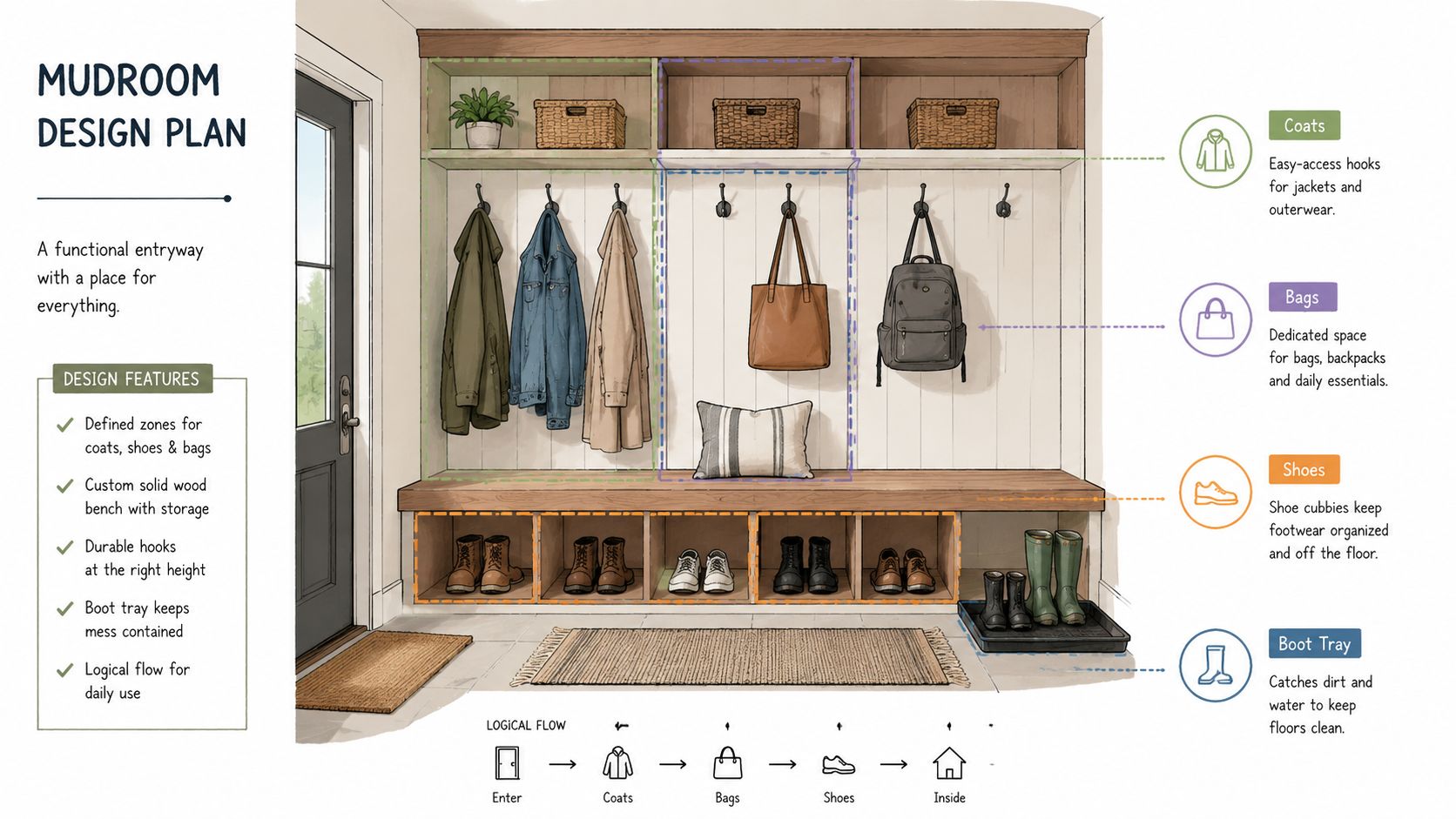
A mudroom works best when it behaves like a sequence, not a storage closet. The most functional layouts move from a drop area to a clean area to a store area, so the room helps people transition instead of trapping them at the door. That logic matters in busy homes because every extra step has to feel obvious or the system falls apart.
Build the room around movement
A clear path is more important than cramming in one more cabinet. A functional mudroom should follow a drop-clean-store sequence with a minimum circulation path of 36 inches. Benches should be 17–19 inches high and 15–18 inches deep for comfort and ease of use, according to the cited design guidance on mudroom ergonomics, Homestyler's mud room guide.
That matters because a bench that's too deep or an aisle that's too narrow turns the room into a bottleneck. A door swing, a backpack, and one person trying to sit down can quickly consume the space. When that happens, even good storage stops working because the room no longer stages people efficiently.
Use these zone questions to shape the plan:
- Where does the drop happen first? Keys, mail, and daily bags need a consistent landing spot.
- Where does cleanup happen? Wet boots and damp coats need a surface or tray that contains the mess.
- Where does storage happen? Seasonal items and spare gear belong in the least crowded zone.
A mudroom that forces people to cross paths at the doorway is usually too tight, even if it looks organized on paper.
Size the furniture to the room, not the wish list
The layout has to fit the actual footprint. In many homes, a one-wall solution can work if it stays disciplined. In larger entry areas, separate zones can be assigned to seating, hanging, and storage without crowding the passage.
The Free Online Room Planner is useful here because it helps visualize the room at scale before anything gets ordered. That's especially helpful in a Freehold or Albany-area home where the entry may have to share space with a hallway, a side door, or a laundry transition area.
A good rule is simple. If the bench blocks the door, the zone is wrong. If the storage makes the room feel like a hallway, the flow needs to change. If the space works only when no one is using it, it isn't functioning as a mudroom.
Choose the Right Mudroom Storage Solutions
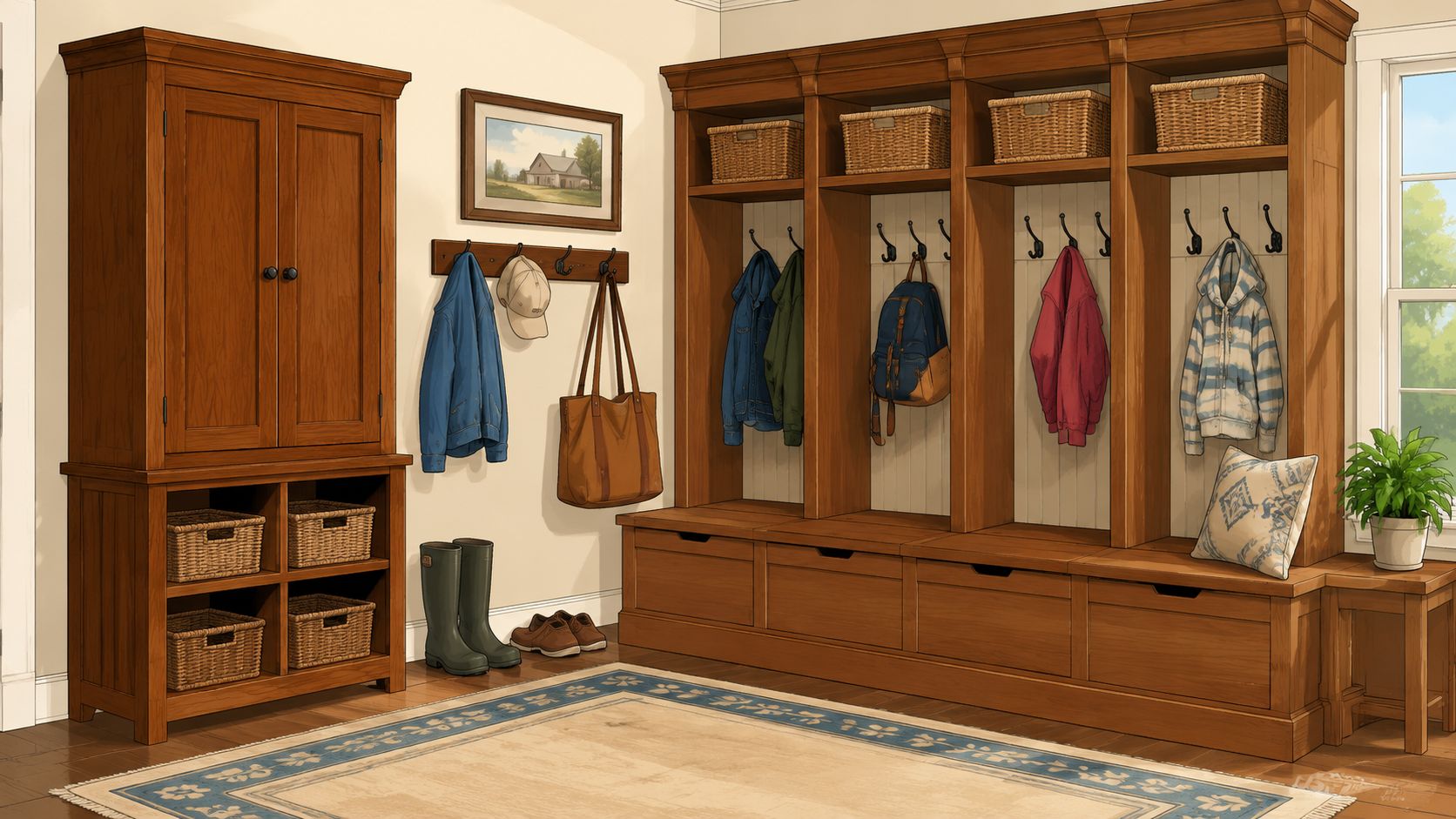
Storage decides whether a mudroom stays orderly or turns into the place where everything gets dropped. Open shelves, cubbies, lockers, benches, and hooks each solve a different problem, and the strongest layouts usually combine several of them. The point is to give every item a home that fits its size, weight, and how often it gets used.
Match the storage type to the family pattern
Open cubbies work well when everyone needs fast access and the household is steady about putting things back where they belong. Lockers create more privacy and clearer separation, which helps families who want coats, bags, and school gear grouped by person. Benches help with shoes and boots, but they only pull their weight if the seat height and depth feel right and the space under the bench is used well.
A zoned approach usually works better than generic open storage. For practical placement, hooks at 60–66 inches for adults and 48 inches for children, with overhead storage at 72–84 inches keeps the room useful for different ages instead of forcing every family member into the same reach zone.
Use a simple compare-and-decide lens:
- Cubbies: good for backpacks, hats, and daily grab-and-go items.
- Lockers: helpful when each person needs a dedicated section.
- Benches: useful for sitting while removing shoes, especially in winter.
- Hooks and shelves: flexible, space-saving, and easiest to adjust as needs change.
The strongest mudrooms usually give each family member a section, then keep one neutral zone open for guests or overflow. That cuts down on confusion and makes cleanup more predictable. It also keeps seasonal rotation from turning into a full-room shuffle every few months.
Build with materials and repairability in mind
Durability matters because mudroom storage gets handled every day. Solid wood and Amish-made storage built for heavy use can offer more weight support, repairability, and long-term value than lighter materials, especially in a wet climate with regular traffic. Tip Top Furniture & Mattresses can custom order pieces to fit unusual dimensions, which helps when the entry has a narrow wall, a low ceiling, or a door swing that limits standard furniture. Their storage hall trees are a practical option when you need one piece to handle hanging, shelving, and seating without crowding the room.
For households that plan to maintain the furniture themselves, simple repair knowledge helps too. A practical guide like Neasden Hardware's DIY repair guide can be useful when a door, hinge, or finish needs attention, especially on storage that gets heavy daily use.
The most common design mistake is too much open space and not enough assigned space. Without labels, family-specific zones, and a place for the small stuff, the room can look organized while still failing in real life.
Select Materials Built for Upstate New York Weather
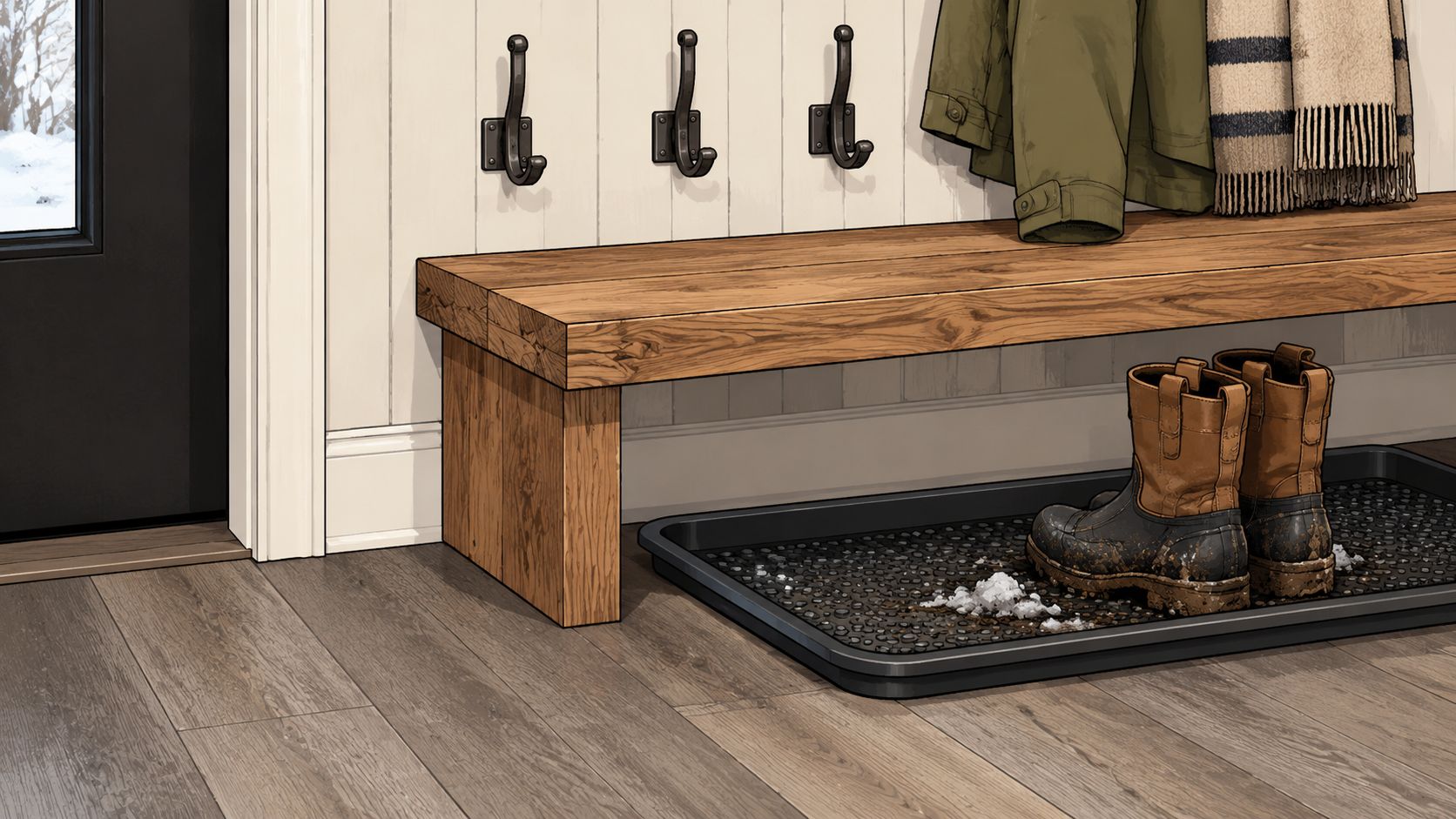
Upstate New York mudrooms take a beating. Snowmelt, salt, slush, wet gloves, and muddy boots don't care how nice the furniture looked on delivery day. Materials have to be chosen for cleanup, not just appearance.
Choose surfaces that can handle moisture
For heavy moisture conditions, resilient flooring like laminate or tile is a smart baseline, and durable, washable rugs help contain the mess, according to the cited home organization guidance from Extra Space Storage. Sealed hardwood can also work when it's properly protected, but the finish has to be maintained with weather and traffic in mind. The point is to reduce water damage, not just hide it after the fact.
Boot trays are not an accessory, they're a control tool. The same guidance recommends properly sized trays, including 15×30 inches, plus a weekly 10-minute wipe-down routine to keep dampness from spreading. That kind of small maintenance habit matters more in winter, when wet footwear brings in more mess than a decorative rug can handle.
If pet gear shares the entry, material choice matters even more. A useful reference point for durable flexible material is Nandog Pet Gear's neoprene guide, since wipeable, moisture-friendly surfaces are often easier to live with around leashes, collars, and mats.
Favor finishes that forgive real use
A mudroom isn't a display room. It needs finishes that can tolerate scratches, repeated contact, and the occasional wet umbrella. Solid wood furniture does better here than particleboard because it's stronger, more stable, and more likely to hold up to repeated use over time.
Odor control also matters. Closed cabinets can help contain smell, while open shelving helps airflow. That trade-off is worth thinking through before the layout is finalized, because the best material choice in a snowy climate is the one that simplifies cleanup and doesn't trap moisture where it can linger.
One-stop shopping helps when the entry has to coordinate with the rest of the house. Tip Top's flooring department makes it possible to match a mudroom's surface with the furniture and the rest of the home, which is especially helpful when the goal is a coordinated finish rather than a pieced-together look. The store's high-traffic flooring guide fits naturally with that planning mindset.
Budgeting and Designing Your Perfect Mudroom
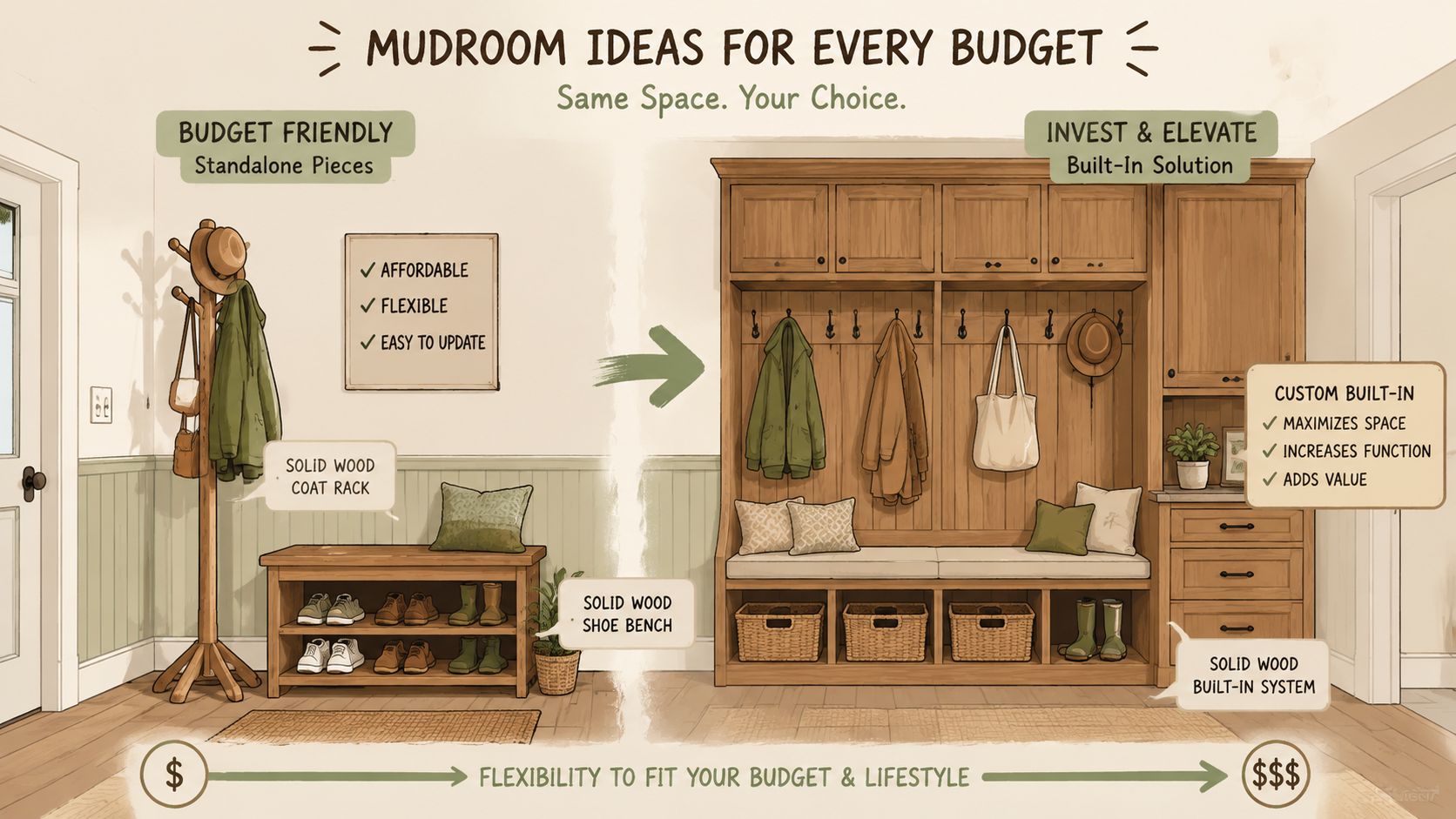
A well-planned mudroom can be practical without turning into a full built-in project, but the budget still needs to match how the space will be used. Some homes only need a bench, hooks, and a few storage pieces. Others need a custom layout that handles odd dimensions, tight corners, or several people coming and going at the same time. In an Upstate NY home, that decision also has to account for snow, salt, and wet gear that can wear down cheaper pieces fast.
Spend where the room gets used hardest
Put the money where the wear will show first. Seating, storage fronts, flooring transitions, and the spots that catch wet boots deserve the most attention because those are the parts that take daily abuse. Decorative extras matter less than a setup that keeps working through winter and still cleans up without a struggle.
Tip Top's professional design consultant services have been available since 1984, bringing decades of expertise to coordinated interior design for local homeowners. That matters when a mudroom has to fit with a nearby hallway, living room, or kitchen instead of standing alone. The custom design and room planning approach can help turn a rough idea into a space that fits the house.
A custom order usually makes sense when:
- The wall is an unusual size and standard furniture leaves dead space.
- The family needs exact compartment sizing for shoes, bags, or coats.
- The finish needs to match existing woodwork or another room in the home.
For homeowners comparing a full built-in with standalone furniture, flexibility matters as much as appearance. Freestanding pieces can be moved or replaced later, while custom pieces can give the room a cleaner fit from the start. The right choice depends on how permanent the homeowner wants the solution to feel, and how much the entry has to do in a snowy season.
Use services and value options to keep the project realistic
A project budget stretches further when the plan includes design help, custom ordering, and value-focused shopping. Tip Top's financing options can make a larger project easier to manage, while the Clearance section is worth checking when the room only needs one or two quality pieces. Those are practical tools, not shortcuts, because a mudroom still has to fit the home and the family.
The Cabinet painting estimation page is a useful reminder to separate cosmetic refreshes from structural storage needs. A mudroom often looks like a simple decor project until actual storage, cleanup, and durability requirements show up. In a climate like ours, that difference can decide whether the room stays useful or becomes a catchall that fills up too fast.
Maintaining an Organized Mudroom Year-Round
A mudroom stays organized only when the routine stays simple. If the system requires a full Saturday reset every month, it is too complicated for a family entry. The best maintenance plan is short, repeatable, and matched to the way the house changes across seasons.
Keep the reset short and specific
A weekly reset works because it catches clutter before it spreads. Boots go back to trays, coats return to assigned hooks, and the floor gets cleared before the next round of wet shoes comes through. That rhythm matters more than a perfect setup because mudrooms are high-turnover spaces.
A practical reset list is easy to follow:
- Return seasonal gear to its designated zone.
- Wipe boot trays and bench surfaces so dampness does not linger.
- Clear bags, papers, and chargers from the drop area.
- Check hooks and cubbies for overflow before it becomes a pile.
A mudroom only stays calm when every item has a place that is easier to use than the floor.
Seasonal rotation matters too. Winter gear can move out of the prime zone when the weather changes, and lighter items can take over the easiest reach spots. That keeps the room from feeling stuffed and prevents off-season clutter from stealing useful storage. In an Upstate NY home, that rotation also helps the room handle snow, salt, and mud without turning into a catchall.
Protect the room from seasonal creep
The goal is not to reorganize the whole room every season. Rotate what is visible and what is reachable. Snow gear, heavy boots, and extra gloves should not occupy the same prime spots in July that they do in January.
Material choice makes the routine easier. Durable finishes, easy-clean surfaces, and storage that can handle damp footwear hold up better through the long winter stretch, and they save time once the mess comes inside. Families in the Albany Capital Region often find that custom furniture gives them better control over those details, especially when the entry has to work hard all year. A local showroom can help homeowners compare storage options in person, weigh built-in fit against freestanding flexibility, and choose a layout that matches the home as it really functions.