When Should You Replace Your Mattress: A Freehold Guide


A mattress can look perfectly presentable while slowly undermining sleep. A homeowner may wake with a stiff neck, a dull lower-back ache, or the peculiar feeling that a full night in bed provided very little recovery. The right answer to when should you replace your mattress isn't found on the calendar alone. It comes from listening to the sleeper, examining the bed, and matching both to the construction and age of the mattress.
For households in Freehold, Albany, Schenectady, Troy, and the wider Capital Region, that diagnosis can lead to a more confident showroom visit. The aim isn't to chase a sale. It's to restore support, comfort, and genuinely restorative sleep.
Waking Up Tired When You Shouldn't
The alarm rings, and the first movement is a negotiation. A hand reaches toward the lower back, the neck turns cautiously, and the sleeper rolls out of bed already tired. During the night, the body may have shifted repeatedly to escape a dip or find a position that feels supported. By morning, the mattress still looks neat, but the sleeper feels as though the bed has worked against recovery.
That pattern deserves attention. A mattress can lose resilience inside its support structure before the surface shows dramatic damage. Coils may no longer respond evenly, foam may compress where the body rests, and comfort layers may stop cushioning the shoulders and hips. The result can be restless sleep, morning stiffness, and grogginess that seems unrelated to the bedroom.

Separate the mattress from other sleep problems
A bed isn't responsible for every poor night. Breathing issues, stress, temperature, pain, and an inconsistent schedule can also interrupt sleep. Someone who snores heavily, wakes gasping, or remains exhausted despite a reasonable sleep opportunity should seek medical guidance, including information about non-invasive sleep disorder treatments.
The mattress becomes a stronger suspect when discomfort appears mainly after sleeping in that bed, improves on a different bed, or follows a visible change in its surface. A useful morning record can include:
- Body response: Note neck, shoulder, hip, or lower-back discomfort immediately after rising.
- Night movement: Record whether the sleeper remembers turning frequently or searching for a comfortable position.
- Daytime effect: Track whether the morning begins refreshed or already depleted.
- Bed comparison: Notice whether sleep feels better in a guest bed, hotel bed, or another bedroom.
A practical guide to waking up refreshed in the morning can help separate bedroom habits from mattress-related clues. The key question is whether the bed still supports the body consistently, not whether it still looks acceptable from across the room.
The 6 to 8 Year Rule and Why It's a Window
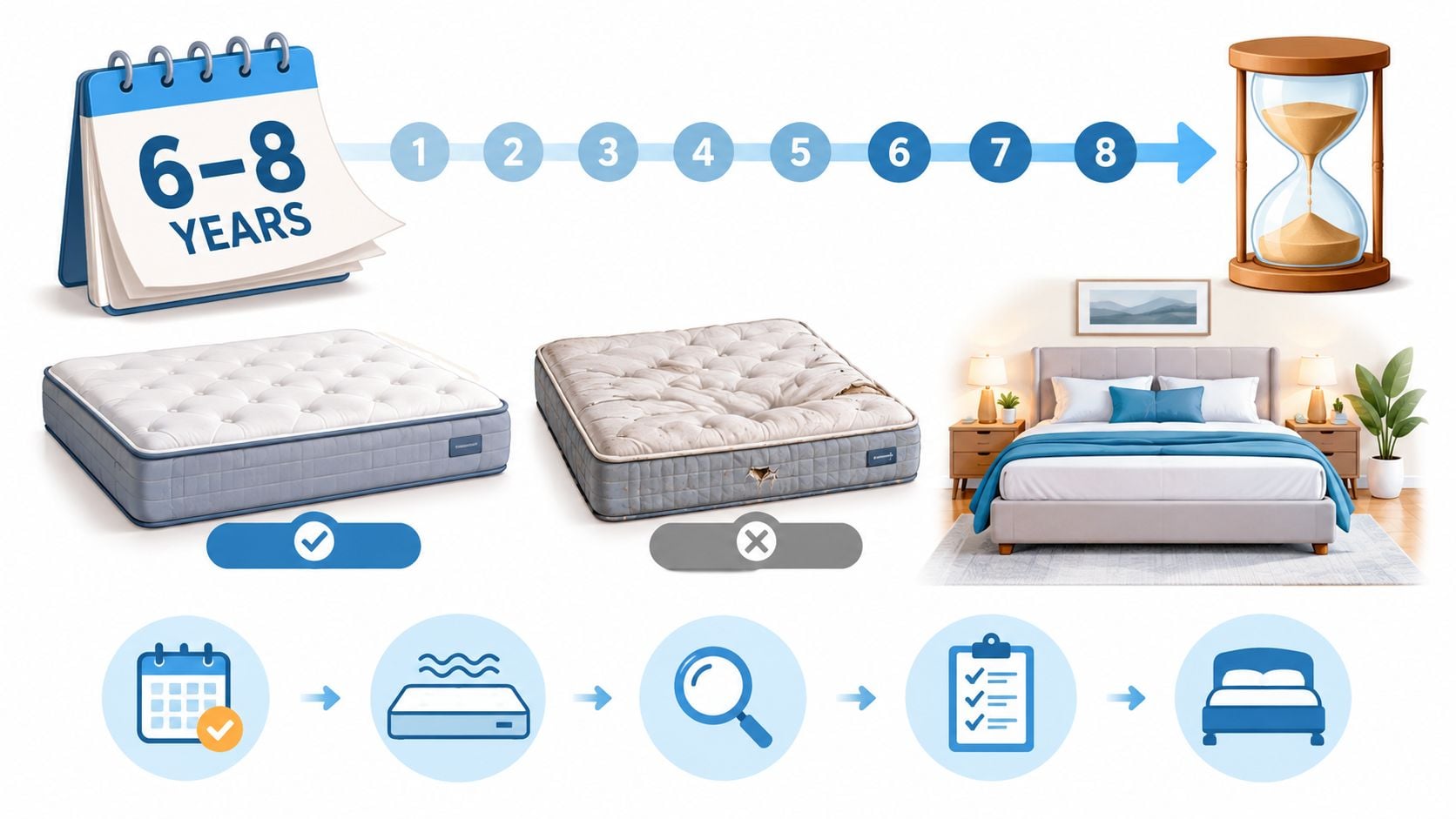
A mattress does not reach an automatic expiration date on its eighth birthday. The six to eight year replacement window is a checkpoint for a closer conversation with your body and your bed. Sleep Foundation recommends replacing mattresses under normal conditions every 6 to 8 years, while its durability guidance places the average lifespan between 7 and 10 years. (Sleep Foundation's mattress replacement guidance)
Two beds purchased together can age differently. Construction, material quality, nightly use, and the sleeper's body weight all shape wear. A lightly used bed may remain comfortable beyond the general window, while a heavily used bed can lose support earlier. The calendar starts the inspection. It does not make the decision.
Use seven years as a checkpoint
Use this simple process:
- Find the purchase date, receipt, warranty document, or delivery record.
- Mark the six-year and eight-year points.
- Use seven years as a midpoint for a more careful inspection.
- Compare the age with the bed's condition and your sleep experience.
If you are unsure how old your bed is, our guide to checking your mattress age shows where to find the purchase record.
Survey reporting from the Better Sleep Council provides useful context. Consumers generally expect a mattress to last 8 to 10 years, yet nearly half reported replacing theirs within seven years. That gap supports a diagnostic approach: the expected lifespan offers a planning range, while the bed's condition shows whether your own replacement window has arrived. (Better Sleep Council research reported by BedTimes)
Practical rule: Age tells a homeowner when to investigate. Support, surface condition, and sleep quality determine what happens next.
A mattress that reaches seven years without sagging, discomfort, or disrupted sleep may not need immediate replacement. A newer mattress with clear loss of support deserves attention sooner. At a local showroom, a high-tech bed matching system can compare your comfort and support needs with available options, helping turn those clues into a more confident choice instead of a guess.
How Long Different Mattress Types Really Last
Construction affects both how long a mattress lasts and the way it begins to fail. Before judging an older bed, identify its basic type. A mattress can be outside the usual range because of its materials, even when its age seems ordinary.
| Mattress Type | Average Lifespan | Common Wear Signs |
|---|---|---|
| Innerspring | About 5.5 to 6.5 years (typical range) | Coil fatigue, uneven support, edge weakness, noise |
| Foam | About 6 to 7 years (typical range) | Softening, body impressions, reduced pressure relief |
| Latex | About 7.5 to 8.5 years (typical range) | Gradual loss of resilience, surface wear |
| Hybrid | About 6.5 to 7.5 years (typical range) | Comfort-layer softening, impressions, weaker support |
These figures come from Sleep Foundation's durability guide. They describe common lifespans, not guarantees. Care, materials, body weight, sleep position, and how often the bed is used can all affect its working life.
Innerspring and foam beds
Traditional innerspring mattresses often show age through coil fatigue. You may feel yourself rolling toward the center, notice more movement from a partner, or hear noise as you change position. The edge can also become less stable, much like a chair that has gradually lost firmness around its frame.
Foam usually changes more subtly. Its surface may still look smooth, while your body settles into an impression that does not fully recover. As compression increases, the mattress may provide less even alignment and pressure distribution. The mattress types explained guide can help you compare construction before visiting a local showroom.
Latex and hybrid designs
Latex commonly keeps its resilience longer in Sleep Foundation's published durability figures. Its decline may feel gradual rather than sudden. The surface loses some lift and responsiveness, so the bed feels less supportive without necessarily showing a dramatic collapse.
Hybrids combine coils with foam comfort layers. The upper layers may soften before the support core weakens, creating a bed that feels different even when its coil system remains functional. Sleep Foundation notes that lower-quality hybrids may begin losing structural support in 5 to 6 years, while better-built hybrids may last 8 to 10 years. (Sleep Foundation's guidance on mattresses that resist sagging)
Use these ranges as a starting point, not a deadline. A well-preserved mattress at the longer end may still feel comfortable when your alignment remains sound. A newer bed with persistent impressions or changed comfort may already have reached the end of its useful sleep life. A local showroom's high-tech bed matching system can connect your body and comfort needs with different constructions, reducing guesswork before you replace it.
Reading the Signs Your Bed Is Telling You
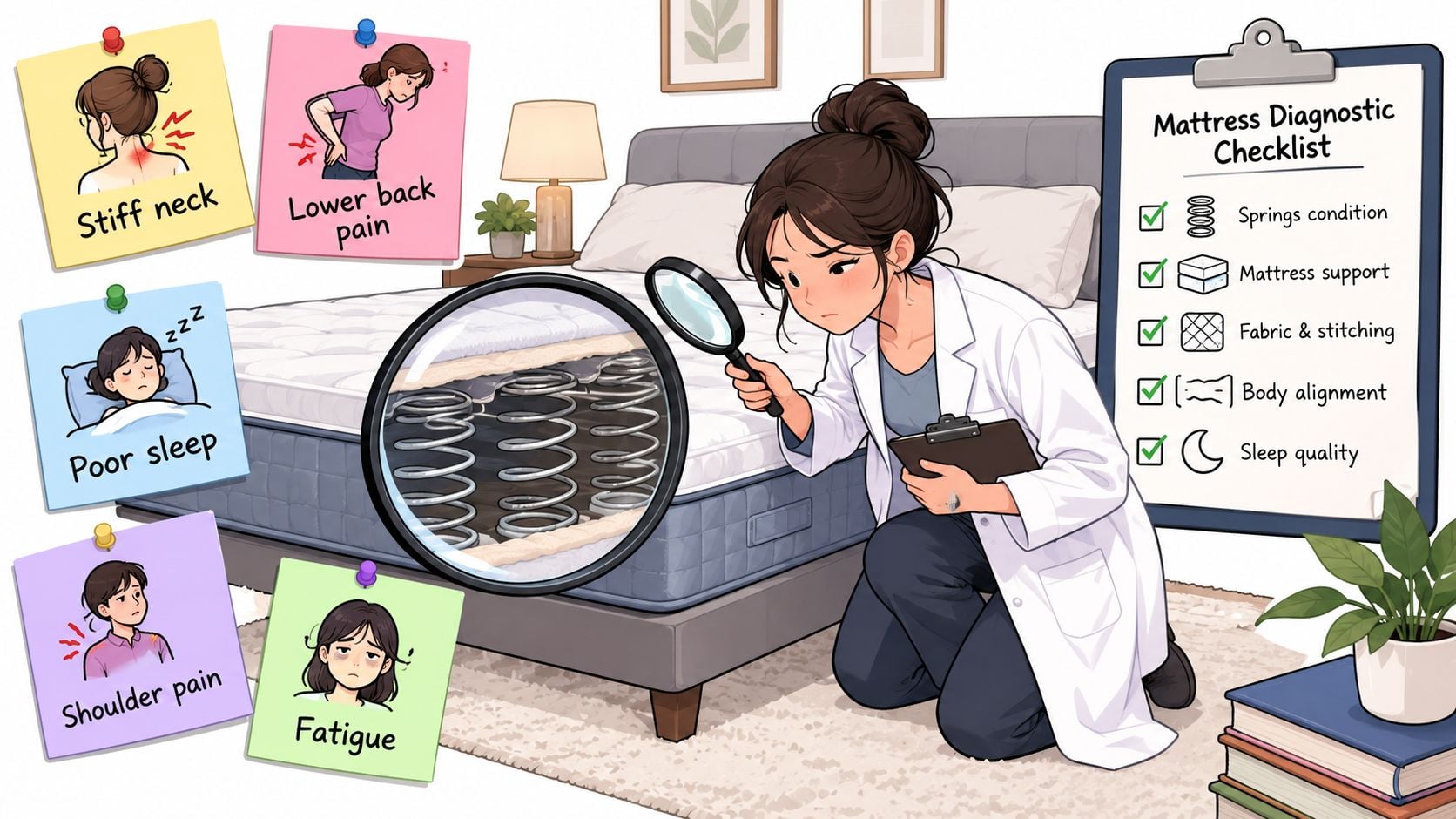
A difficult morning is useful information, but it is not a diagnosis by itself. Look for a pattern: how your body feels, what the mattress surface shows, and whether the bed behaves differently from when it was new. Several clues pointing in the same direction deserve closer attention.
Begin with the sleeper, then inspect the mattress without sheets or blankets. Deep impressions beneath the shoulders, hips, or torso can show that the comfort layers are no longer recovering fully. Edge sinking matters too, especially if the perimeter feels unstable when you sit down or stand up. Sleep Foundation's guidance on mattress buying and wear identifies deep body impressions and edge breakdown as signs that a mattress may need replacement or warranty review.
Match the clue to the likely failure
- Morning stiffness: A comfort layer or support core may no longer hold your spine in a neutral position.
- Lower-back discomfort: A sagging center can let the pelvis sink, while excessive firmness may leave the hips without enough cushioning.
- Shoulder or hip pressure: Compressed cushioning may no longer spread weight evenly.
- Restless tossing: You may be shifting repeatedly to escape uneven support or pressure.
- Visible body impressions: Foam compression or weakened support underneath may have formed a lasting dip.
- Edge sinking: The perimeter may have lost the stability needed for sitting, rising, or sleeping near the edge.
- New noise: Coils, joints, or other internal components may be wearing out.
- Worsening allergy or asthma symptoms: The mattress may have accumulated irritants. Cleaning, bedding, and medical factors should be considered alongside its condition.
The older the bed, the less benefit of the doubt a single symptom deserves, because wear patterns compound rather than appear in isolation. A dip paired with morning stiffness, for example, gives stronger evidence of lost support than either clue alone.
Use a short symptom log
For one week, record each morning:
- Your sleep position at bedtime and upon waking.
- Areas of soreness, stiffness, or pressure.
- Remembered awakenings or major position changes.
- Whether a partner's movement disturbed your sleep.
- Any visible dip, edge collapse, or new sound.
A single clue may point to rotation, a foundation inspection, a pillow adjustment, or a cleaning routine. Several independent clues that indicate lost support make replacement more reasonable. The seven signs it's time to replace a mattress provide a practical checklist, while your own log connects those signs to the actual bed and your body.
Trying Before You Buy at a Local Showroom
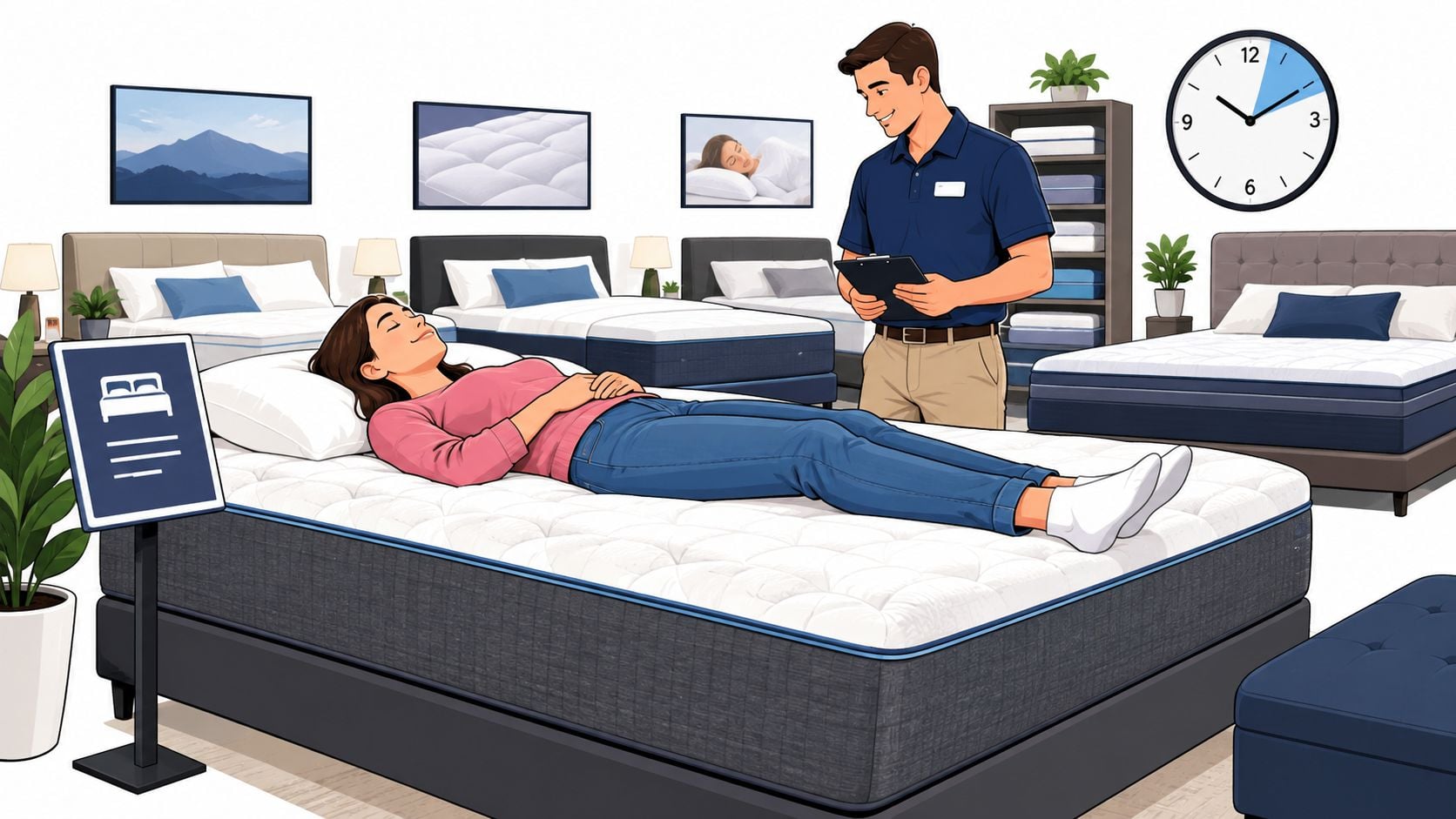
Online descriptions can narrow choices, but a mattress still has to support a real body in real positions. A focused showroom visit gives the sleeper a chance to compare pressure, alignment, movement, and ease of turning instead of relying on specifications alone.
At the Freehold showroom, Tip Top Furniture & Mattresses uses a high-tech bed matching system to support personalized mattress recommendations. A system of this kind can assess pressure distribution or body measurements and help a consultant examine how the shoulders, hips, and spine interact with a surface. The result isn't a magic answer. It's a structured way to reduce guesswork.
Test the positions used at home
A mattress can feel pleasant for a few moments and still fail during a full night. The sleeper should spend enough time in familiar positions to notice pressure and alignment.
- Side sleeping: Check whether the shoulder and hip settle comfortably without forcing the spine to bend.
- Back sleeping: Notice whether the lower back feels supported rather than suspended or pushed upward.
- Stomach sleeping: Look for excessive sinking through the midsection.
- Curled-up sleeping: Recreate the position used during actual rest, not just the position that seems easiest in a showroom.
Bring the pillow used at home, wear comfortable clothing, and ask a partner to lie down at the same time when motion transfer matters. The consultant should explain what the pressure map indicates, adjust firmness or model selection, and distinguish cushioning from structural support.
Ask the questions that prevent surprises
Before committing, the homeowner should ask about:
- Home trial terms: Clarify the length, conditions, and process for an exchange.
- Exchange rules: Confirm whether comfort exchanges carry fees or require specific steps.
- Foundation requirements: Check whether the existing frame provides appropriate support.
- Delivery: Ask how delivery is scheduled and what removal options are available.
- Warranty coverage: Understand which defects qualify and how impressions are measured.
The purpose of a guided visit isn't to hurry a purchase. It's to create a clear match between sleep position, body shape, preferred feel, and support needs.
Planning a Replacement You Can Actually Afford
A mattress replacement feels less disruptive when treated as a planned household purchase rather than an emergency. The first step is to set a target date based on the symptom log, construction, and condition of the current bed. That date gives the household time to compare options instead of choosing under pressure after a particularly painful night.
Several payment paths can make the decision more manageable:
- Paying in full: A household with available funds can keep the purchase separate from future monthly obligations.
- Flexible financing: Store financing can spread the project across scheduled payments. Review the terms, eligibility requirements, and promotional conditions before signing.
- Planned card use: A buyer may coordinate the purchase with an existing rewards or billing cycle, provided the balance can be handled responsibly.
- Clearance timing: Clearance inventory can offer immediate availability and lower pricing when models or displays change, while selection and sizes may vary.
Tip Top's easy financing options are one local route for discussing payment choices. Financing doesn't make an unsuitable mattress suitable, so comfort testing and support assessment should come first.
Think beyond the sticker price
A durable, well-matched mattress can reduce the risk of an early exchange or another premature purchase. It can also prevent a homeowner from spending on temporary fixes that don't correct a sagging support core. A topper may soften a surface, but it can't restore a collapsed structure.
Budgeting should include the complete project:
- Mattress and any required foundation.
- Delivery and possible removal.
- Protective bedding.
- Financing costs or promotional conditions.
- Room updates that affect the bedroom setup.
Tip Top's broader one-stop offering includes bedroom furniture, flooring, décor, and design services, which can help homeowners coordinate a larger bedroom project in Freehold or elsewhere in the Capital Region. The store has offered professional design services since 1984 and has served local households since 1978, according to its publisher information.
Your Next Step Toward Better Sleep
A clear decision can begin this week without a rushed purchase. The homeowner needs only a notebook, a look under the bedding, and a focused showroom appointment.
- Record the evidence: Note morning soreness, restless movement, partner disturbance, and visible impressions for several mornings.
- Identify the construction: Determine whether the mattress is innerspring, foam, latex, or hybrid, then compare its age with the applicable durability window.
- Inspect the support: Check the center, edges, seams, frame, and foundation for changes that could affect performance.
- Set a budget range: Include delivery, foundation needs, protection, and the payment method.
- Book a matching visit: Bring the regular pillow, include a partner when relevant, and ask the consultant to use the bed matching system.
- Compare comfort with evidence: Choose the surface that supports the sleeper's positions and pressure needs, not just the one that feels softest for a moment.
The goal is restorative sleep, not a countdown or a bargain pursued without diagnosis. A mattress under seven years old may still need replacement if it has lost support and repeatedly disrupts sleep. An older mattress may remain serviceable if it continues to hold alignment and provide comfortable, consistent rest.
For homeowners in Freehold, Greene County, Albany, Schenectady, Troy, and the surrounding Capital Region, the next step is a guided visit with the symptoms and measurements already in hand. That turns a vague question into a personalized recommendation.
Visit Tip Top Furniture & Mattresses in Freehold to test USA-made mattresses, use the high-tech bed matching system, and discuss delivery and flexible financing with a local team. The showroom also offers bedroom furniture, Amish furniture, custom ordering, flooring, décor, and clearance options, making it possible to plan a comfortable bedroom with local expertise.