9 Window Treatments Ideas for Capital Region Homes


A bright Saturday afternoon can turn frustrating fast. Sunlight glares across the sofa, the television screen washes out, and the room feels warmer than the thermostat suggests. The fabric swatch that looked perfect under showroom light does nothing for that problem.
Good window treatments ideas start with the job, not the color. A bedroom may need darkness, a west-facing living room needs glare control, and a drafty farmhouse window in Greene County needs insulation first. Matching the treatment to light control, privacy, insulation, and material prevents the common mistake of ordering the same shade for every window.
That approach has measurable value. The U.S. Department of Energy cellular shades fact sheet reports that cellular shades can reduce heating energy use by up to 20% and total heating-and-cooling energy use by up to 15% compared with homes without shades. Clean glass also changes how a treatment performs, so seasonal upkeep matters alongside fabric choice, much like the year-round window cleaning challenges homeowners face in shifting climates.
The nine options below move quickly from problem to fit, with Capital Region rooms, cold winters, and strong summer sun in mind.
1. Roman Shades
A Greene County farmhouse dining room shows why Roman shades endure. Warm neutral linen folds into neat horizontal pleats when raised, lies flat when lowered, and softens the window without pooling fabric near chair legs or baseboard heat. The look reads polished like a blind, but warmer, closer to drapery.
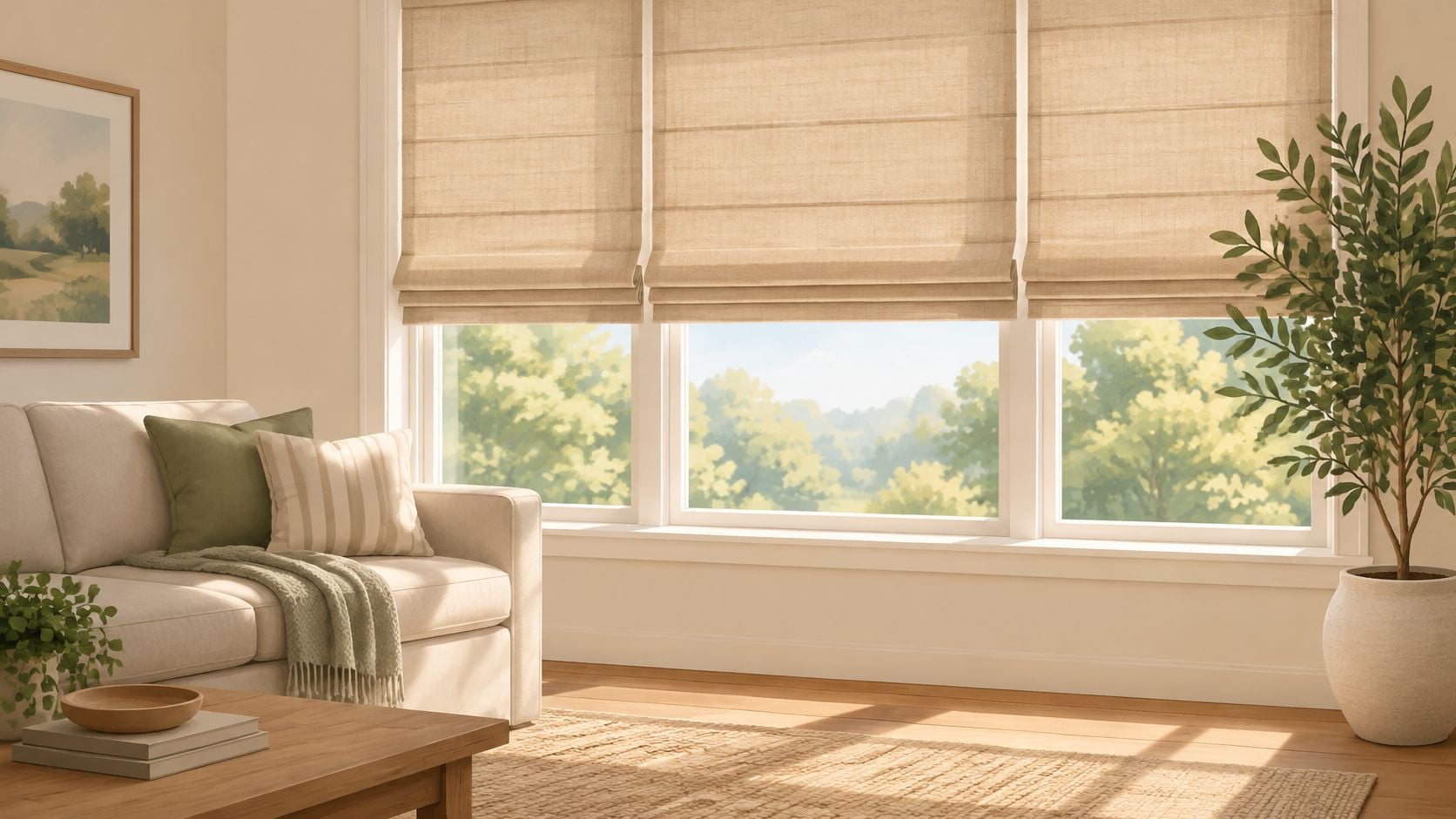
That compact stack suits Albany area living rooms, dining rooms, and bedrooms where wall space beside the frame is tight. A blackout-lined version in a bedroom blocks early morning light for better sleep, while an unlined linen keeps a dining room bright at midday.
Getting the Fit Right
- Measure inside mount depth first: Confirm the frame can hold the headrail before ordering, especially in older trim.
- Add the right liner: Choose thermal or blackout lining for bedrooms and west-facing rooms.
- Tie fabric to the room: Match the shade to a cushion, rug, or upholstery tone rather than introducing a new color alone.
Careful measuring matters more than the fold style. Homeowners weighing flat, relaxed, or hobbled folds can review the steps for Roman shade installation and mount depth before committing. Custom ordering then locks in the exact fabric, lining, and finish, which ready-made sizes rarely match on nonstandard farmhouse windows.
2. Roller Shades
When afternoon glare washes out a home-office screen, a light-filtering roller shade cuts the brightness while keeping the room usable. Its fabric or vinyl rolls onto a tube and drops in a straight plane, with no folds or slats to collect dust. The clean profile suits kitchens and other busy rooms, too. White vinyl wipes clean after cooking splatter, while linen can stain.
Rollers keep the window treatment simple and usually cost less than many fabric options. That minimal look can feel unfinished in a formal living room, where drapery panels can frame the shade. The trade-off is straightforward: choose a roller for easy operation and a spare appearance, or add panels for a softer finish.
For a bedroom, mount the shade slightly wider than the glass on an outside mount. The overlap helps block light at the sides, where gaps can undermine blackout coverage. Blackout fabric also suits media rooms; light-filtering fabric keeps living areas brighter.
Cordless or motorized lifts avoid loose cords that can pose a hazard or become tangled around children and pets. Choose the operating style based on the room and how often the shade needs adjusting.
If slats seem better suited to a particular window, compare window blinds versus shades for light control. For nonstandard frames or a coordinated finish, Tip Top Furniture's window treatment department offers estimates and in-house measuring, and works with local sewing shops to customize treatments to room fabrics.
3. Cellular (Honeycomb) Shades
Cold air pooling at the sill is the problem cellular shades were built for. Pleated fabric forms honeycomb cells that trap air within the shade and between the shade and glass, slowing heat movement in both directions. In Upstate New York, that insulation matters more than a decorative fold.
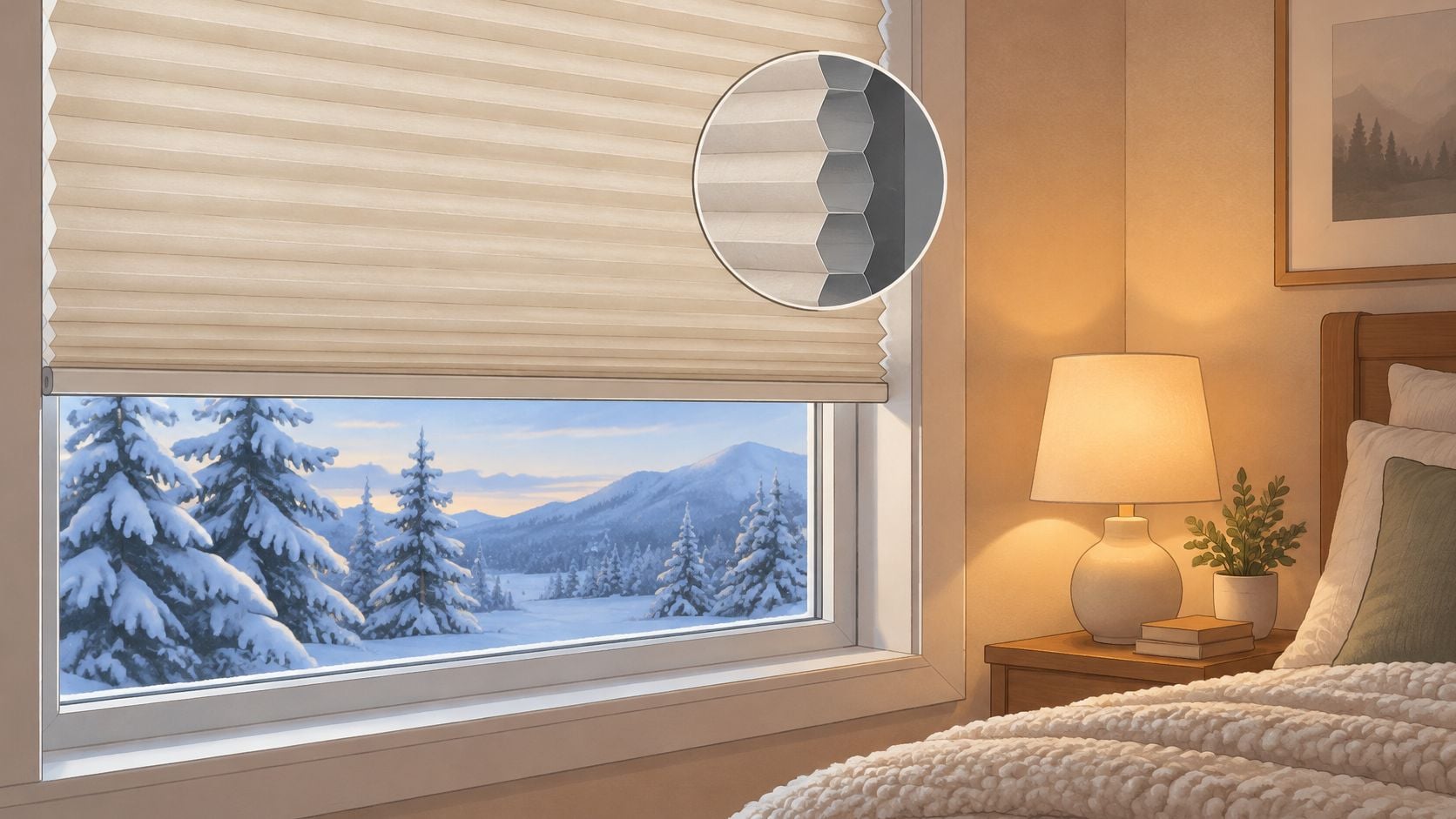
Performance depends on fit and cell count. The Lawrence Berkeley National Laboratory residential window attachments research cites a DOE and PNNL comparison where triple-cell cellular shades on double-pane clear glass produced about 10.5% heating-season savings and 16.6% cooling-season savings relative to vinyl blinds under the same operating schedule.
Where Cellular Shades Earn Their Cost
An Albany bedroom with double-cell blackout shades loses less heat on winter nights and stays dark past sunrise. A family room does better with top-down, bottom-up operation, which covers the lower glass for privacy while daylight enters above.
- Choose double or triple cells: Extra layers add insulation in heating-dominated climates.
- Close gaps at the edges: A close fit limits air washing around the shade.
- Vacuum gently: A brush attachment clears dust from cells without crushing pleats.
Multi-room projects add up quickly, so financing and phased ordering by coldest rooms first keeps the plan realistic.
4. Plantation Shutters
Solid or louvered panels mount inside the window frame, where adjustable louvers give precise control over light and privacy. Shutters cost more upfront and require accurate measurements, but their fixed, architectural look suits rooms where a lasting finish matters more than a soft fabric layer.
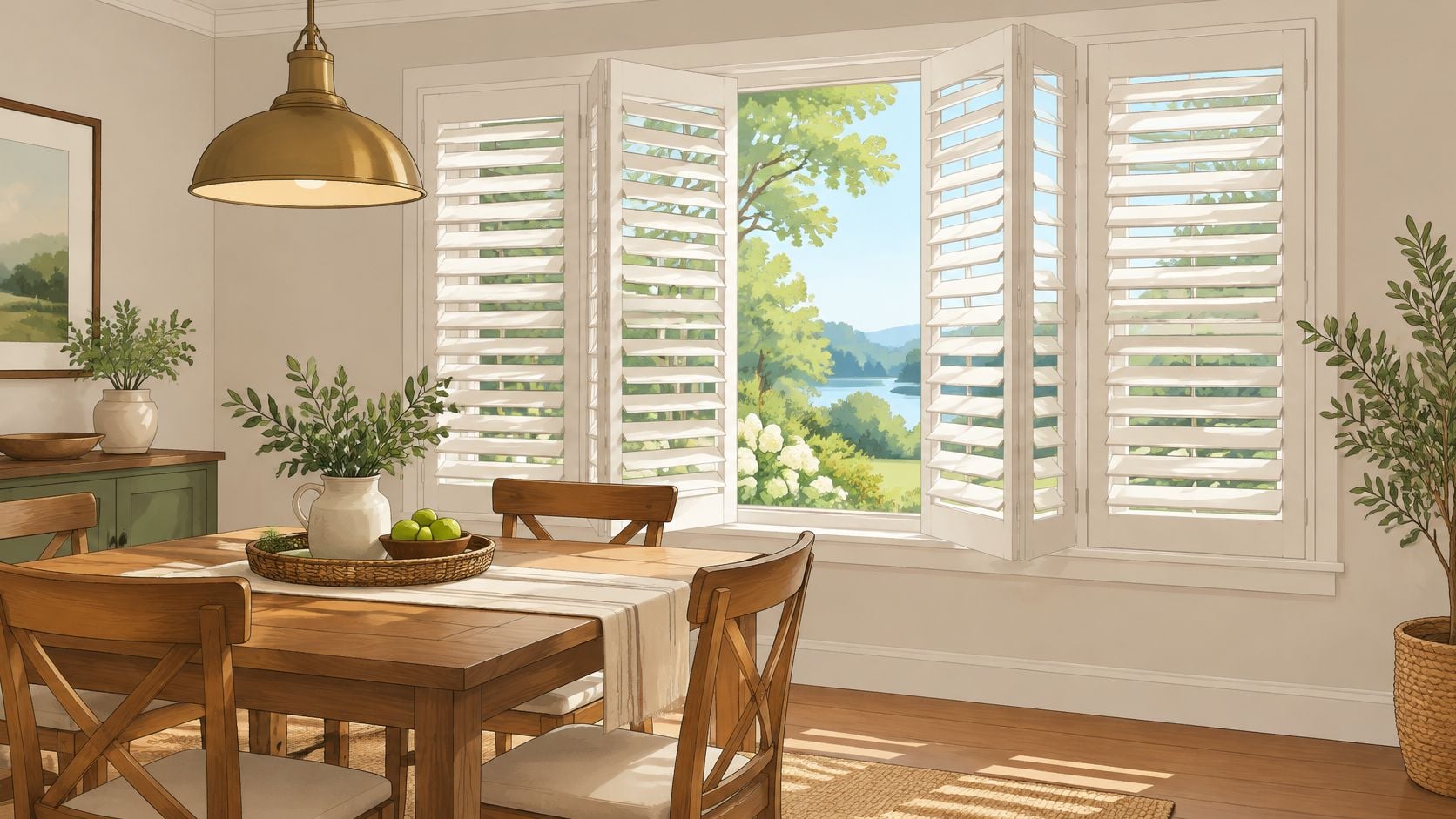
White shutters work well with a wood dining table, keeping the room's finishes simple and balanced. Café-style shutters cover only the lower half of the window, providing sidewalk privacy while leaving the upper glass open for daylight. That makes them a practical choice for a street-facing living room.
Check window cranks, locks, and uneven trim before choosing an inside mount. Any obstruction can limit how the panels swing, so accurate measuring matters. Coordinate shutter color with trim, flooring, and furniture to avoid a bright white panel clashing with warm wood tones.
Before requesting measurements, review plantation shutter cost factors by material and size. Custom shutters make sense when the window shape, obstructions, or finish needs call for a precise fit. Ready-made options may suit standard openings when a close match is available. Tip Top Furniture's Floor Covering and Window Treatment department offers estimates and in-house measuring, helping homeowners decide which route suits the project.
5. Drapery Panels
Nothing changes a room's proportions like full-length drapery. Panels hung high and wide make ceilings look taller, soften hard trim lines, and add the color or texture a neutral sofa needs. The downside is equally clear. Fabric collects dust, puddles catch pet hair, and panels shouldn't hang against baseboard heaters.
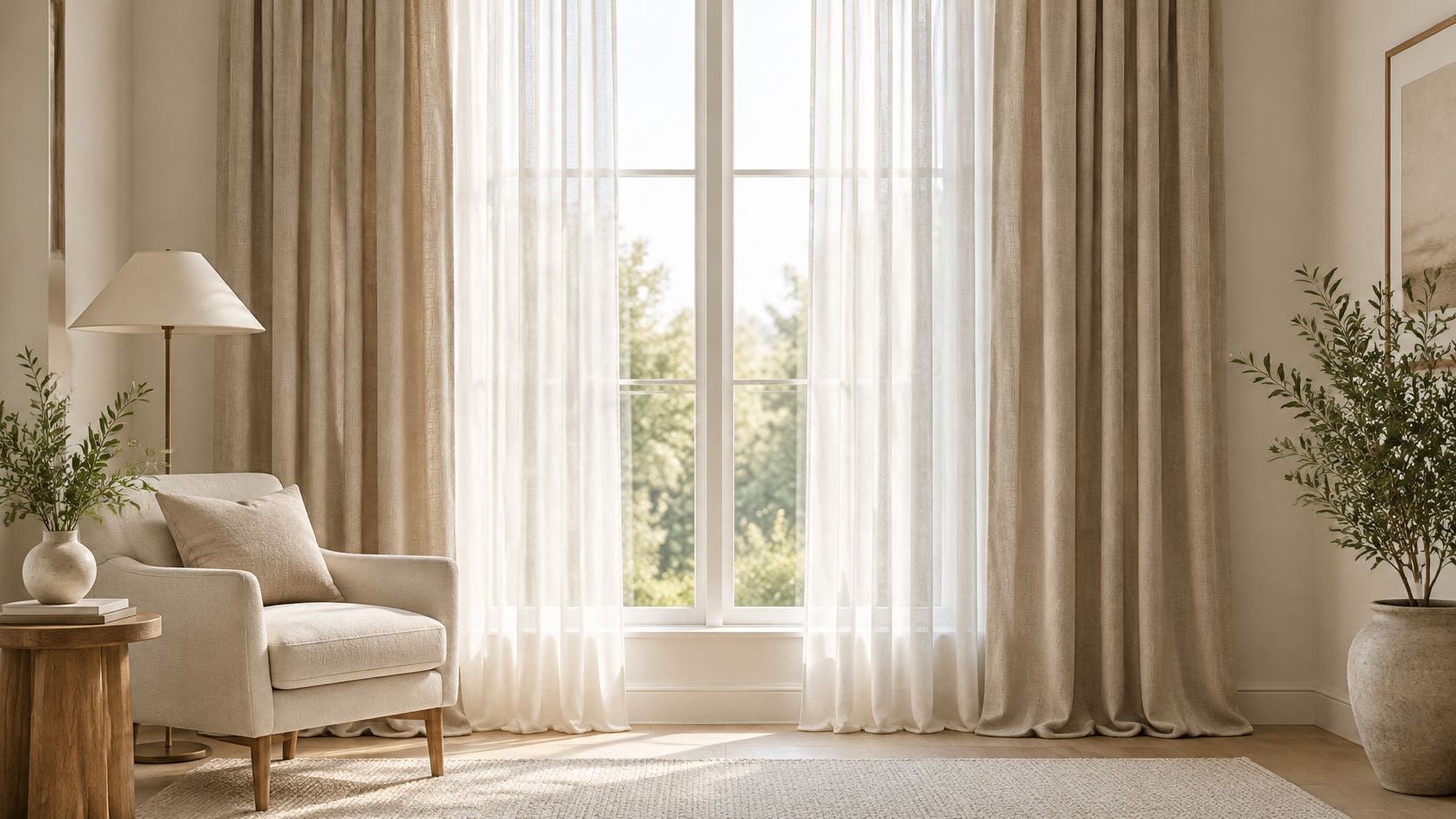
Layering solves the privacy gap. Floor-length linen over sheer voile gives a living room an airy daytime filter and a finished evening look. In a bedroom, blackout-lined panels over a shade seal the side gaps a shade alone leaves open, creating a quieter, darker sleep space.
Hanging Panels That Look Intentional
- Go high and wide: Place the rod 4 to 6 inches above the frame and extend it past each side so open panels clear the glass.
- End at the floor: Panels that just touch the floor, or puddle slightly, look polished. High-water hems look accidental.
- Repeat a fabric note: Coordinate with throw pillows, upholstery, or an area rug.
Correct sizing prevents most mistakes, and a guide to curtain panel sizes and fullness helps before ordering yardage. Tall glass also needs professional cleaning access in some homes, similar to how building owners find Phoenix high-rise window cleaners for hard-to-reach panes.
6. Woven Wood Shades
Bamboo, reed, jute, grasses, and thin wood slats turn hard daylight into a warm, dappled glow. Flat fabric cannot copy that broken light. Rooms already leaning rustic, casual, or coastal pick up depth from the weave itself, so you do not need a second pattern fighting the furniture.
Set the shade over a dining window beside a rustic wood table and the two surfaces share grain and color shifts. In a Capital Region sunroom, reed shades take the edge off bright afternoon glare and still leave enough of the yard in view to sit there comfortably.
Unlined woven shades give daytime privacy and fail after dark. Interior lights throw silhouettes on the glass, so bedrooms need a privacy liner. I would not hang natural fiber in a steamy bathroom. Humidity warps the material, and mold follows.
Practical rule: Hold a woven sample against the window at the brightest hour before ordering. Backlighting changes the color and openness more than showroom light reveals.
A soft brush or vacuum brush attachment clears grit before it packs into the weave. Bamboo often leans yellow, and some reeds lean gray. Bring finish samples from the furniture to a design consultation and compare undertones in the light the shade will get.
7. Solar Shades
Solar shades answer a specific complaint. The view is worth keeping, but glare and heat make the room unusable by mid-afternoon. A tightly woven roller fabric cuts both while preserving a view outside, rated by openness percentage. Lower openness blocks more glare and heat, higher openness keeps the view clearer.
Orientation drives the payoff. The U.S. Department of Energy Better Buildings Residential Network guidance reports that exterior shades on south- and west-facing windows can produce approximately 10% to 20% cooling-HVAC savings, depending on the comparison baseline. Interior solar shades address the same exposures from inside when exterior mounting isn't practical.
A south-facing living room gains protection for hardwood floors and upholstery that fade under direct sun. A home office with light-colored solar fabric reduces monitor glare while keeping sightlines to the yard, which blackout fabric would erase.
- Pick openness by exposure: West glass usually needs the lowest openness in the house.
- Layer for night privacy: Solar fabric turns see-through after dark, so drapery or a second shade covers evenings.
- Think about screens too: Clean mesh improves airflow and view clarity, as the coastal homeowners' guide to cleaner screens explains for salt-air homes.
Sun-exposed rooms also reward fade-resistant flooring choices, coordinated at the same time as the shades.
8. Café Curtains
Café curtains cover the lower half of a window, leaving the upper glass open for daylight. The split suits kitchens, breakfast nooks, and bathrooms where privacy matters at eye level but a full-height treatment would make the room feel dim. In Capital Region homes, they pair naturally with farmhouse and traditional interiors.
In a farmhouse kitchen, white linen café curtains beneath a wood valance screen the sink from the driveway while keeping the work surface bright. In a bathroom, sheer fabric softens daylight and limits views inside. Choose a lined fabric when a neighbor's window is close, accepting less light for added privacy.
Small Curtains, Specific Decisions
A rod near the midpoint of the frame gives typical coverage. Set it slightly lower on a tall kitchen window for a fuller look and more coverage, though that reduces the open glass above. Coordinate the rod finish with cabinet hardware or furniture finishes so it belongs in the room.
A valance or swag gives the top edge a finished look, but kitchen grease can build up on the fabric. Use washable material near the stove. Tension rods suit renters and make seasonal changes easy.
French doors have a similar coverage trade-off. For placement ideas, see this guide to curtains over French doors. Café curtains use less fabric than full-length panels, so custom choices can be practical when the window needs a specific width or fabric. Ready-made options suit standard windows when the fit works; for unusual dimensions or coordinated fabrics, Tip Top Furniture works with local sewing shops to customize window treatments.
9. Motorized and Smart Window Shades
A shade saves energy only when it's down. Motorization removes the daily friction by raising and lowering shades through a remote, wall switch, or smartphone app, on a schedule or in response to sunlight. Battery, plug-in, and hardwired motors cover everything from a single nursery window to a two-story great room.
Operation drives results. The U.S. Department of Energy residential window attachment analysis found cellular shades kept down reduced heating energy by about 9.3% and cooling energy by about 13.3% in one comparison. Scheduled closing at sunset in winter and before afternoon sun in summer captures that benefit without anyone walking room to room.
Tall living room windows that need a ladder to reach are the clearest case for a motor. Cordless motorized shades in a nursery or playroom also remove dangling cords entirely, which matters for child safety.
- Choose battery power for retrofits: Existing homes avoid new wiring, though batteries need periodic charging.
- Confirm smart home compatibility first: Hubs and voice platforms don't all speak the same protocol.
- Group by orientation: West shades on one schedule, south shades on another, keeps automation simple.
Outfitting several windows at once costs more upfront, so phased installation by exposure keeps the project moving.
How the Nine Window Treatments Compare on Light, Insulation, and Best Use
| Item | Light Control | Insulation | Best For |
|---|---|---|---|
| Roman Shades | Lining options provide adjustable light control | Good, especially with thermal or blackout lining | Tailored style, warmth, and bedrooms |
| Roller Shades | Sheer, light-filtering, or blackout options | Limited without a specialty liner | Budget-friendly, minimal rooms and easy cleaning |
| Cellular (Honeycomb) Shades | Light-filtering and blackout options | Excellent; honeycomb cells trap air | Energy efficiency and cold climates |
| Plantation Shutters | Precise control with adjustable louvers | Moderate | Durable style, privacy, and architectural character |
| Drapery Panels | Flexible; lining and layering adjust light control | Varies by fabric and lining | Softness, versatile style, and layered window treatments |
| Woven Wood Shades | Softly filters light; liner improves privacy and control | Limited | Natural texture in casual living and dining spaces |
| Solar Shades | Reduces glare while preserving the daytime view | Helps reduce heat from sunlight | Sunny rooms and home offices |
| Cafe Curtains | Privacy below while letting light in above | Limited | Kitchens, breakfast nooks, and bathrooms |
| Motorized and Smart Window Shades | Depends on shade style; convenient automated control | Depends on shade style | Hard-to-reach windows, convenience, and cord-free safety |
Choose Custom or Ready-Made With Confidence
Window size, exposure, and how long you plan to stay all affect the choice. Ready-made shades and blinds suit standard window sizes and tight budgets, and can be installed quickly. Custom treatments are a better fit for unusual widths, arched or oversized glass, or fabrics that need to coordinate with upholstery, rugs, and flooring.
Measure carefully before ordering. Check each window's width at the top, middle, and bottom, since older frames may not be square. A small measuring error may be hidden by a drapery panel, but it can leave a cellular shade with gaps that let in light and cold air.
For window performance, compare U-factor and solar heat gain coefficient. The U.S. Department of Energy guidance on energy-efficient windows, doors, and skylights explains how these measures describe heat transfer and solar heat entering through a window assembly.
A Simple Rule for the Whole House
- Go ready-made for standard sizes, secondary rooms, and quick updates before guests arrive or you move.
- Go custom for nonstandard windows, blackout bedrooms, insulating shades on cold exposures, and fabrics that need to match a room's palette.
- Mix both across the house. A guest-room roller shade and a primary-bedroom blackout treatment solve different problems.
Tip Top Furniture & Mattresses' Floor Covering and Window Treatment department offers estimates and in-house measuring services. The business also works with local sewing shops to customize window treatments that coordinate with fabrics in your space. Its showroom in Freehold offers furniture, mattresses, window treatments, and floor coverings, so you can plan these choices together. Tip Top is family-owned and has served the Greater Albany Capital Region, including Greene County, since 1978.
Operating shades at the right time can make a difference after installation. The Pacific Northwest National Laboratory window attachments resource guide summarizes DOE field results of approximately 12% to 14% winter heating savings and 15% to 25% summertime cooling savings when high-efficiency shades were operated optimally. In winter, close insulating shades after sunset and open them during sunny hours. In summer, lower west-facing shades before peak afternoon sun.
Bring room photos, rough measurements, and a fabric sample to a conversation with Tip Top's staff. Its design services can help coordinate window treatments with furniture and flooring, and flexible financing is available for larger projects. The showroom serves homeowners across the Greater Albany Capital Region, including Albany and Greene County.