A Parent’s Guide to Youth Bedroom Furniture

A child's room can change almost overnight. One week it holds a small bed, stuffed animals, and a toy bin. The next, it needs to handle schoolwork, sports gear, sleepovers, and a growing opinion about what “their room” should look like.
That's why buying youth bedroom furniture can feel harder than buying for any other room in the house. Parents around Freehold, Albany, Schenectady, Troy, and the wider Capital Region often aren't just choosing furniture. They're trying to solve for safety, storage, style, room size, and the fact that children keep growing.
Older Upstate New York homes add another layer. Bedrooms can be compact, closets can be shallow, and layouts don't always cooperate. A good plan helps families avoid buying pieces that look fine in the store but don't work once they're home.
From Toddler Beds to Teen Retreats
Many families reach the same moment. A toddler starts climbing out of the crib. An elementary-age child suddenly needs more storage than the room can hold. A middle schooler asks for a desk, better lighting, and furniture that doesn't feel “little kid” anymore.
That shift is one reason thoughtful planning matters more now. The global kids furniture market is projected to grow from USD 38.82 billion in 2021 to USD 184.52 billion by 2030, driven by demand for compact, multifunctional furniture. In plain terms, more families are looking for furniture that works harder in smaller spaces.
A room for a young child usually starts with basics. Safe sleep, easy-to-reach storage, and open floor space matter most. Later, those priorities expand to include homework, hobbies, privacy, and personal style.
Practical rule: The best youth bedroom furniture doesn't just fit a child's age. It fits the child's daily routine.
Some parents start with a convertible piece so they don't have to replace everything at once. A crib that converts to a twin bed can make that early transition easier because it stretches the value of one purchase over more than one stage.
What changes as children grow
The furniture needs usually shift in a predictable order:
- Sleep comes first when children are young, so the bed choice leads the room plan.
- Storage becomes urgent once toys, books, clothing, and activity supplies start multiplying.
- Work space matters more later when schoolwork moves into the bedroom and children want a spot of their own.
- Style takes on more importance as kids get older and want the room to reflect who they are.
A well-planned room doesn't have to be redone from scratch every few years. It just needs a strong foundation, smart dimensions, and enough flexibility to keep up with change.
Choosing the Right Beds Storage and Desks
The easiest way to shop for youth bedroom furniture is to break the room into three core functions. Sleep, storage, and work. When those three pieces work together, the room feels calmer and more usable.
Beds that match the room and the age
A bed should fit both the child and the floor plan.
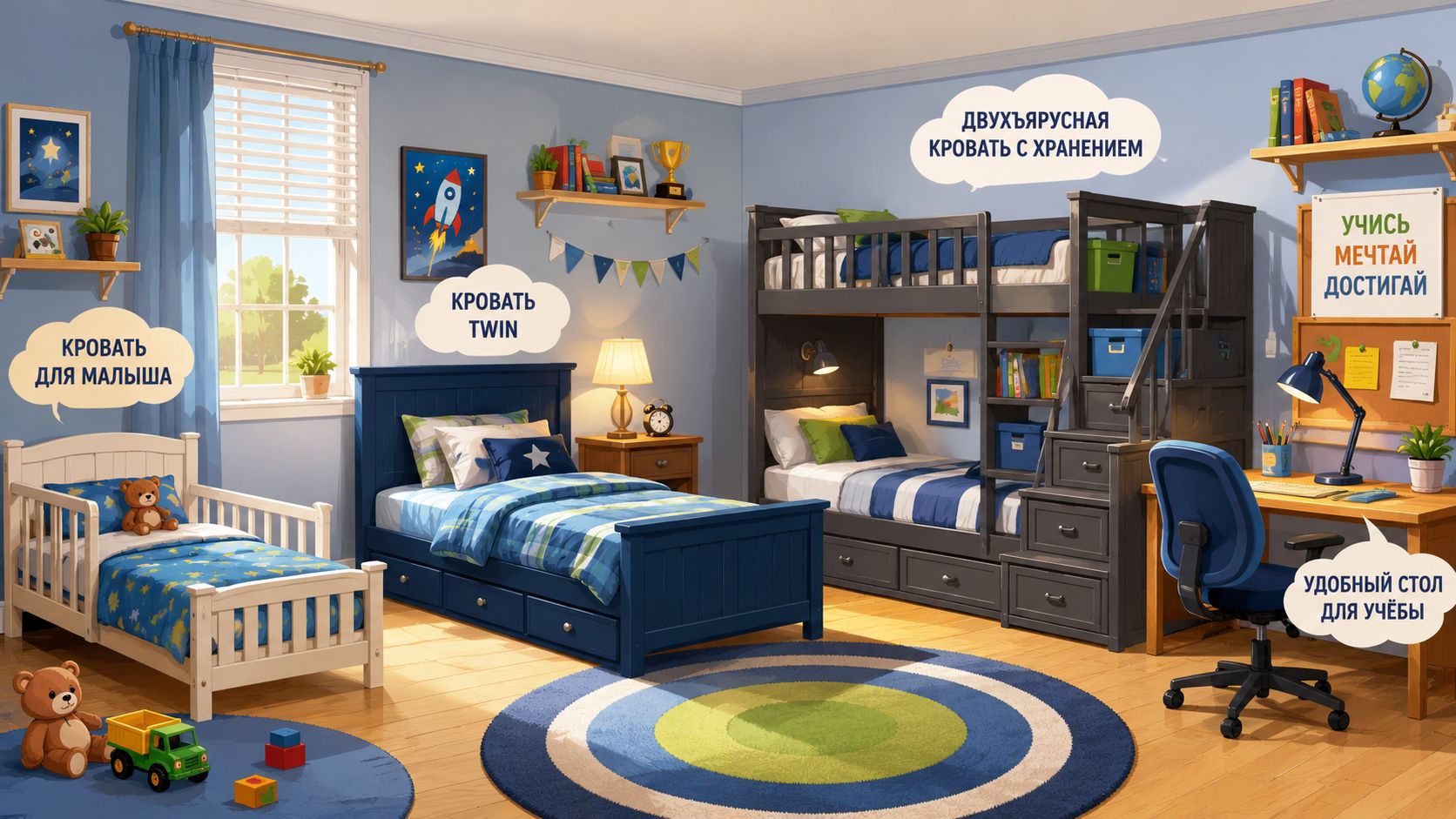
- Toddler bed or low twin: A good choice for younger children moving out of a crib.
- Twin bed: Often the most practical option for school-age children because it leaves more open floor space.
- Full bed: Helpful for older kids who want more sleeping room, but it can dominate a smaller bedroom.
- Bunk bed: Useful for shared rooms or frequent sleepovers.
- Loft bed: Best when the room needs to do more than one job, especially if space below can hold a desk or storage.
Parents comparing styles often do well with a simple measuring exercise. Measure the wall, then mark out the bed footprint on the floor with painter's tape. That makes it easier to see whether drawers can open and whether there's enough walkway space.
Storage that controls clutter instead of hiding it
Storage works best when it matches what the child uses every day.
A dresser helps with clothing. A chest uses vertical space well. Bookcases, cubbies, and under-bed drawers help manage toys, books, and hobby supplies. Families dealing with younger children may also like this practical guide to taming toy chaos, especially for sorting toys into zones instead of one overflowing bin.
A room feels larger when the storage plan is specific. Clothes need one home, books need another, and school supplies need a third.
Desks that support real use
A child who only colors and reads may need a small writing surface. A teen who studies, charges devices, and stores papers needs more structure.
Look for:
- Open knee space so the desk feels comfortable, not cramped
- A drawer or nearby shelf for school supplies
- Enough surface area for a lamp, laptop, or notebook work
- Placement away from the bed when possible, so work and rest don't blur together
Families who want a broader overview of layout and sizing can use this helpful resource on how to choose bedroom furniture.
Youth Furniture Guide by Age
| Age Group | Bed Type | Storage Focus | Desk/Workstation |
|---|---|---|---|
| Toddler to early childhood | Toddler bed or low twin | Toy bins, low shelves, small dresser | Small table for crafts and coloring |
| Elementary years | Twin bed or bunk bed | Dresser, bookcase, under-bed storage | Compact desk for reading and homework |
| Tween years | Twin, full, or loft bed | Clothing storage, book storage, hobby organization | Larger desk with room for school supplies |
| Teen years | Full bed, loft bed, or streamlined twin | Dresser, vertical storage, closed storage for a cleaner look | Dedicated study station with space for devices and focused work |
Prioritizing Safety and Long-Lasting Quality
Style matters, but safety comes first. Parents shopping for youth bedroom furniture should treat safety standards as basic requirements, not optional extras.
Children's furniture sold in the United States has to meet rules that are stricter than general furniture in some key areas. The Consumer Product Safety Commission summary for furniture sold in the US explains that children's products must meet a lead content limit of 100 ppm in accessible component materials and a 90 ppm limit for lead in paint and surface coatings.
Tip-over protection and bunk bed basics
Storage furniture deserves close attention. Dressers and chests can become dangerous if they aren't stable or properly anchored.
According to this guide to interpreting kids furniture safety standards, ASTM F2057 requires storage units to not tip over when a 60-pound weight is applied to an open drawer. That rule helps prevent thousands of child injuries annually.
The same safety overview notes that bunk beds need guardrails on both sides of the upper bunk, positioned at least 5 inches above the mattress surface, with entry openings no wider than 15 inches.
Parents who want a broader overview of material concerns can also review Ocodile's guide to safe kids' pieces as a general reading companion while shopping.
Secure every dresser and tall chest to the wall, even if the piece feels heavy. Weight alone isn't a safety plan.
What quality looks like in person
Long-lasting furniture usually gives itself away in small details:
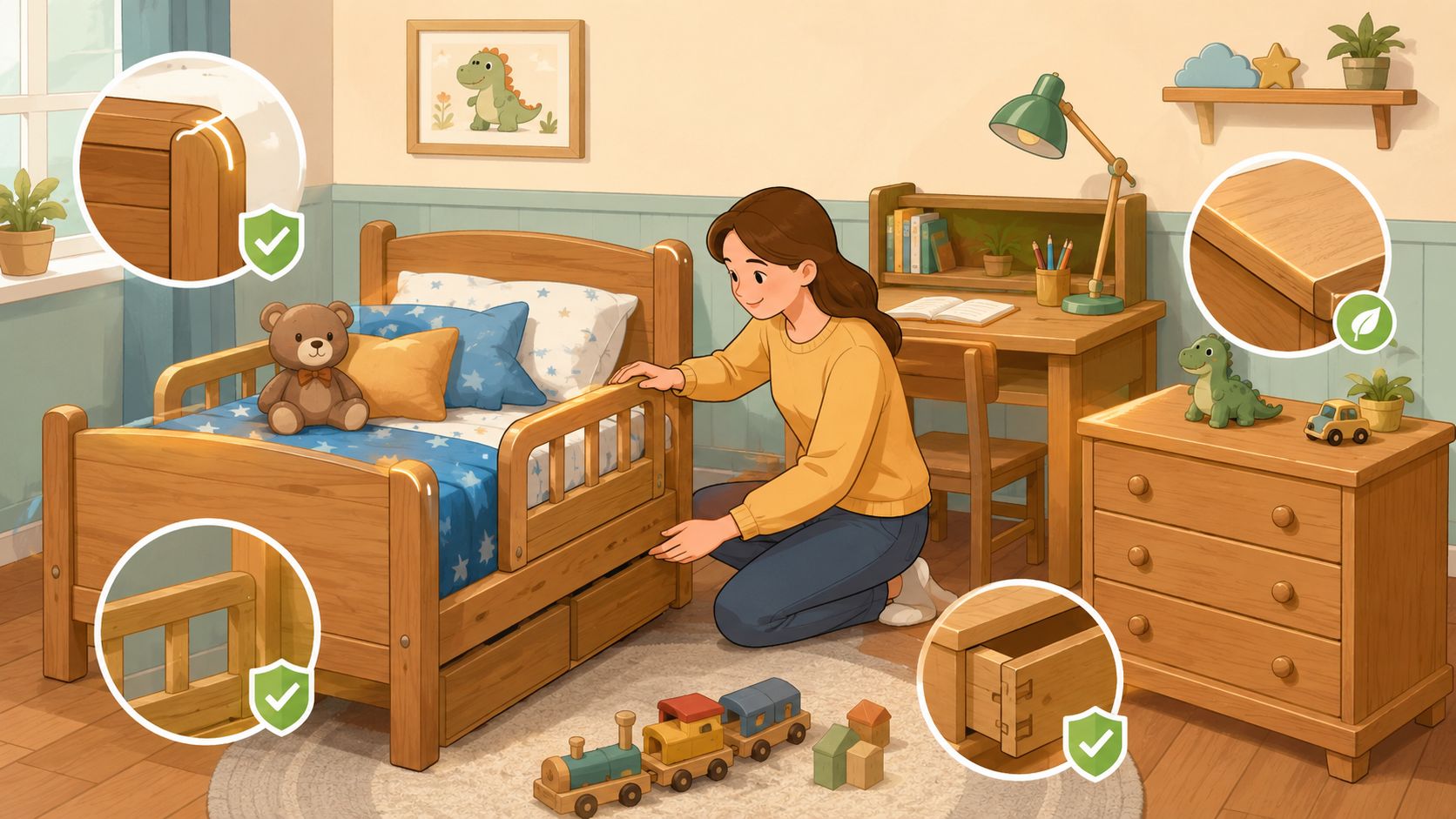
- Solid construction: Drawers should glide smoothly and close evenly.
- Strong joinery: Wobble is a warning sign, especially on beds and desks.
- Durable finishes: Surfaces should handle everyday use without feeling flimsy.
- Useful scale: Deep drawers, realistic shelf heights, and sturdy hardware matter more than decorative extras.
Solid wood remains a strong choice for families who want furniture that can last through multiple stages. Parents interested in heirloom-level craftsmanship often look at what defines Amish furniture quality because it highlights the value of durable materials, careful construction, and pieces that don't need to be replaced quickly.
Where parents often get confused
A common mistake is assuming that “kids' furniture” automatically means safer furniture. It doesn't. Safety comes from compliance, stable design, and proper setup in the home.
Another mistake is buying for the shortest timeline. If a bed, dresser, or desk feels undersized or weak on day one, it probably won't age well.
Designing a Room That Grows With Your Child
For years, many parents heard the same advice. Keep everything neutral, avoid bold choices, and make the room as timeless as possible. That still has some value, but it doesn't tell the whole story anymore.
The better approach is balance. The Hom Furniture youth bedroom buying guide notes that teens increasingly want identity-driven rooms with bold colors and hobby-integrated furniture, and that the answer is balancing durable core pieces with adaptable personal touches.
Start with stable core pieces
The smartest long-term choices are usually the least flashy ones:
- A well-built bed frame in wood or another durable finish
- A dresser with flexible storage that still works years later
- A desk with simple lines that won't feel childish too quickly
These pieces create the backbone of the room. They don't need to be boring. They just need enough staying power to handle changing tastes.
Let personality live in the layers
Children's preferences can shift fast. A room that once needed dinosaurs may later need music, sports, art, or a cleaner teen look.
That's why it helps to make the most changeable parts easy to update:
- Bedding can shift color and mood quickly
- Wall art can reflect current interests
- Rugs and lighting can soften or sharpen the room's style
- Shelving and display space can highlight hobbies without replacing major furniture
A practical family might keep the bed and dresser classic, then update paint, textiles, and accessories over time. Parents exploring this balance often find ideas in planning resources about multi-functional furniture for modern homes, especially when one piece needs to support both style and everyday use.
The room doesn't have to stay the same for ten years. The large pieces should simply be versatile enough to survive several style changes.
A simple age-by-age style mindset
For younger children, gentle color and reachable storage usually matter more than themed furniture. For grade-school kids, the room often benefits from display areas for books, trophies, or favorite collections. For teens, the room starts to feel more personal and private, so stronger color choices and hobby-centered details make sense.
That's often where parents get stuck. They think their only options are “plain forever” or “replace everything later.” In reality, the best youth bedroom furniture gives the room structure, while the decor gives it personality.
Maximizing Space in Greene County Homes
Many Greene County and Capital Region homes have bedrooms that ask a lot from a small footprint. A child may need a place to sleep, study, store clothes, and keep personal items organized, all within one modest room.
That challenge has become more noticeable as schoolwork has moved further into the bedroom. The Dwellify teen bedroom furniture article notes that 68% of teens now study in their bedrooms, making a focus zone separate from sleep space especially important, and that multifunctional furniture like loft beds with desks can help.
Create zones without building walls
In a smaller room, “zones” don't need to be separate rooms. They just need to feel different.
A family can create better separation by using:
- A loft bed with open space below for a desk or reading chair
- A tall chest instead of a wide dresser to free up floor area
- Beds with built-in drawers to reduce the need for extra case goods
- A bookcase or shelving unit to visually divide sleep space from study space
Even in a 10×10 room, those choices can make daily routines smoother. The goal isn't to make the room do everything at once. The goal is to help the child switch modes more easily.
Use vertical space first
Older homes often have awkward layouts, but many still offer usable wall height. That makes vertical planning especially valuable.
A short list of strong space-saving moves includes:
- Lift the bed when appropriate with a loft design that opens floor space below.
- Choose storage that rises up, not out so pathways stay open.
- Keep the desk compact but defined so school materials don't spread onto the bed.
- Limit oversized furniture that blocks windows or crowds door swings.
Families trying to solve these layout puzzles can gather more ideas from this collection of bedroom storage ideas for small spaces.
In a compact bedroom, every piece should earn its footprint. If an item stores little, blocks movement, and serves one purpose, it may not belong there.
A common mistake in small rooms
Parents often focus only on whether furniture fits. The better question is whether the room still works after the furniture is in place.
A bed can technically fit and still make the room harder to live in. A slightly narrower dresser, a lofted sleep surface, or a better-placed desk often creates a much better result than choosing the biggest piece the wall can hold.
Smart Budgeting and Investing in Quality Furniture
Budget matters in every household. The key is to think beyond the price tag on one shopping day and look at how long the furniture is likely to serve the family well.
Cheap furniture can seem practical at first, especially for a fast-growing child. But if drawers loosen, finishes wear quickly, or the bed feels too small within a short time, the family may end up buying twice.
Think in stages, not just totals
A better budgeting approach usually starts with priorities.
- Spend more on the hardest-working items. Beds, dressers, and desks take daily use.
- Save on easy-to-change accents. Bedding, lamps, wall decor, and accessories are easier to update later.
- Choose flexibility where possible. Storage beds, simple desks, and durable case pieces often hold value longer than highly themed furniture.
This way of thinking helps parents avoid overinvesting in short-lived trends while still making room for personality.
Where value usually shows up
Higher-quality youth bedroom furniture often gives families better value in several ways:
- Durability: Better materials and construction hold up to years of use.
- Adaptability: Simpler, sturdier pieces can move from one age stage to another.
- Appearance: Well-made furniture tends to keep a cleaner look over time.
- Resale or hand-me-down potential: Stronger pieces are easier to reuse within the family.
For some households, the best path is mixing investment pieces with budget-friendly additions. A strong bed and dresser can anchor the room, while smaller items handle the current phase.
Making quality more manageable
Timing and flexibility are helpful. Some families prefer to spread out purchases over time. Others look for immediate savings on better-made furniture rather than buying the least expensive option available.
Helpful shopping tools can include:
- Flexible financing options for larger room updates
- Clearance shopping for quality pieces at reduced prices
- Custom ordering when standard sizes or finishes don't solve the room's problems
A smart budget doesn't mean choosing the cheapest room. It means choosing the room that won't need to be redone sooner than expected.
Plan Your Perfect Youth Bedroom with Local Experts
It is Saturday morning in an older Upstate New York home. One wall has a sloped ceiling, the closet is smaller than expected, and the room that looked roomy on paper suddenly has to fit sleep, homework, storage, and a little breathing room too. That is the moment many parents realize youth bedroom furniture is not just about picking a style they like. It is about making the room work well every day.
The strongest youth bedrooms usually start with a practical plan. Parents in Freehold, Greene County, Albany, Schenectady, Troy, and across the Capital Region often get the best results by focusing on a few basics first:
- Keep safety at the front of every decision
- Match each piece to the room's real measurements and traffic flow
- Start with dependable furniture your child will use every day
- Refresh the look with bedding, rugs, art, and lighting as tastes change
- Help one room do more than one job, especially in smaller or older homes
A child's bedroom works like a small house inside the house. It needs a place to sleep, a place to put things away, and a place to focus. In many Greene County homes, especially older ones, those zones do not appear on their own. They have to be planned with care.
That is why expert guidance can be so helpful. A room planner helps parents see scale before delivery day, which can prevent the common mistake of choosing furniture that fits the wall but blocks a doorway or crowds the desk area. Design help also makes the room feel calmer and more useful, because each piece has a job and enough space around it to function properly.
Many parents worry about getting every choice right the first time. A better approach is simpler. Measure carefully, choose the key pieces first, and leave space for the room to change as your child gets older.
Families shopping for youth bedroom furniture can turn to Tip Top Furniture & Mattresses for help that goes beyond the sales floor. Since 1978, this family-owned Freehold, NY showroom has served the Greater Albany Capital Region with personal guidance, flexible financing, delivery options, custom ordering, and access to more than 50 trusted manufacturers. Parents can shop bedroom furniture, heirloom-quality Amish pieces handcrafted in the USA, USA-made mattresses, decor, and flooring for a true one-stop project. They can also explore financing options or use the free online room planning tools and design services that have been available since 1984.