Amish Furniture Quality: Heirloom Craftsmanship

A lot of homeowners in the Albany Capital Region arrive at the same point the hard way. A dining chair starts to wobble after a few holiday dinners. A dresser corner chips. A drawer glides badly by the second move. What looked good on a showroom floor turns into a repair problem, then a replacement problem.
That cycle is what sends many families looking for something better. They don't just want furniture that fits the room. They want furniture that keeps working, still looks right years later, and can handle real life in homes around Albany, Schenectady, Troy, Greene County, and the surrounding area.
That's where Amish furniture enters the conversation differently. It's not just a style choice. It's a quality standard rooted in solid hardwood, traditional joinery, and workmanship that's meant to hold up over time. For shoppers comparing pieces in a Freehold, NY showroom or trying to sort through “Amish-style” claims online, the main question isn't whether Amish furniture can be excellent. It can. The main question is how to tell authentic pieces from lower-tier imitations.
Table of Contents
- Why Your Next Furniture Purchase Should Last a Lifetime
- The Unseen Foundation of Amish Furniture Quality Solid Hardwood
- More Than Material The Art of Amish Construction Techniques
- Amish Quality vs Mass Market Furniture A Clear Comparison
- A Buyer's Checklist How to Spot True Amish Quality in a Showroom
- Making It Yours Custom Amish Furniture and Long-Term Care
- Is Amish Furniture Worth It A Local Value Analysis for Albany Homeowners
Why Your Next Furniture Purchase Should Last a Lifetime
A lot of furniture replacement starts the same way. Someone buys a set that looks good on the showroom floor, gets it home, and for a while it seems fine. Then the finish starts showing wear, a drawer begins to drag, or the frame develops a little movement every time the piece is used.
That is usually the point when shoppers realize they did not buy a long-term piece. They bought a temporary one.
For Albany-area homeowners, that distinction shows up fast. Many local homes mix older character with everyday family use. A dining table may sit under original trim in a colonial. A bedroom set may share space with hardwood floors that have already lasted decades. Furniture that feels lightly built can look out of place in those rooms, and it rarely gets more satisfying with age.
This is also where shoppers need a clear head about Amish furniture. The label alone is not enough. Some pieces are built for decades of use. Others borrow the look, the wording, or the sales pitch without matching the standard. Real value comes from furniture that is made to be lived with, maintained, and handed down, not replaced when the weak points show up.
Practical rule: If a piece is not built to age well, it usually stops feeling like a bargain pretty quickly.
At Tip Top Furniture & Mattresses, we hear the same concern again and again from families across the Capital Region. They want fewer replacement cycles, better materials, and honest guidance on what will withstand use. That is why so many start with a basic question about how long furniture should last in a real home. It gets to the heart of the purchase. Price matters, but useful life matters more.
The Unseen Foundation of Amish Furniture Quality Solid Hardwood
The fastest way to judge furniture quality is to look past the stain color and style details and ask what the piece is made of.
What solid hardwood actually means
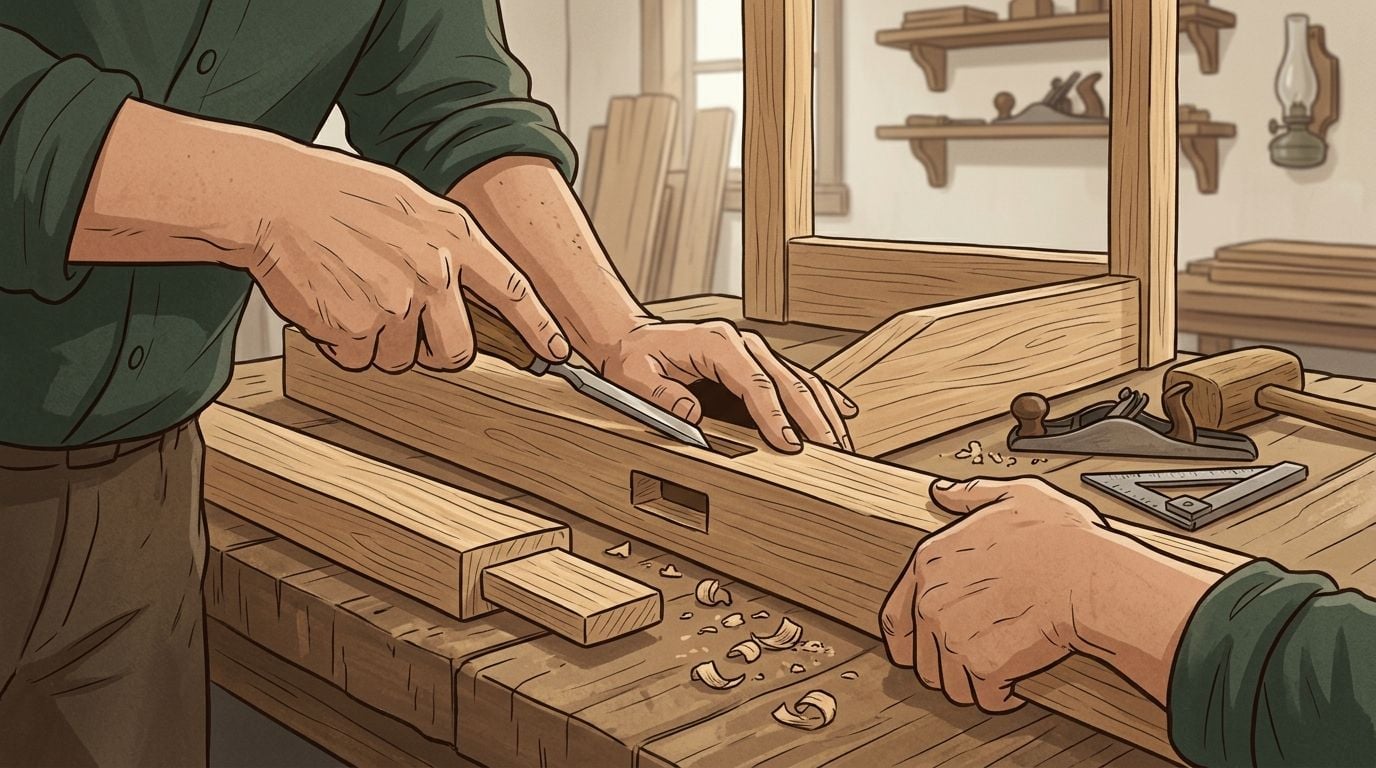
In authentic Amish construction, the quality is anchored in the exclusive use of 100% solid North American hardwoods like oak and cherry. That composition makes the furniture substantially heavier and more resistant to structural deformation, unlike engineered woods with synthetic adhesives that can fail due to humidity changes common in the Albany Capital Region, as described in this explanation of solid hardwood Amish construction.
For a homeowner, that distinction is practical, not technical. Solid hardwood means the visible wood surface isn't just a thin skin over a weaker core. It means the structure itself is wood, not a layer cake of composite material and adhesive.
That changes what the piece can tolerate over time:
- Daily pressure: Chairs, bed rails, and table bases take stress better when the core material is solid hardwood.
- Surface renewal: Scratches and wear can often be addressed because the material isn't a thin veneer over engineered board.
- Long-term stability: Dense hardwood responds differently than lower-grade composite panels when a room gets dry in winter or humid in summer.
For shoppers comparing species, this guide to choosing the right hardwood for longevity and style is a useful place to sort out how oak, cherry, maple, and other woods behave in real rooms.
Why that matters in Upstate New York homes
Furniture in Upstate New York doesn't live in a perfectly controlled environment. Heating season dries indoor air. Summer humidity returns. Entryways, dining spaces, and family rooms see regular shifts in temperature and moisture.
Composite-heavy furniture often hides its weak points until those seasonal changes arrive. Edges start to lift. Fasteners loosen. Thin surfaces chip in a way that can't be repaired cleanly.
Solid hardwood gives a piece a better foundation because the material itself is worth maintaining. Owners aren't trying to preserve a decorative shell. They're living with a substance that was selected for density, grain stability, and useful life.
Furniture either gives you maintenance options later or it doesn't. Material choice decides that before the piece ever reaches your home.
More Than Material The Art of Amish Construction Techniques
A dining chair can feel sturdy on the showroom floor and still start loosening after a year of real use. The difference usually shows up at the joints.
Joinery that locks the piece together
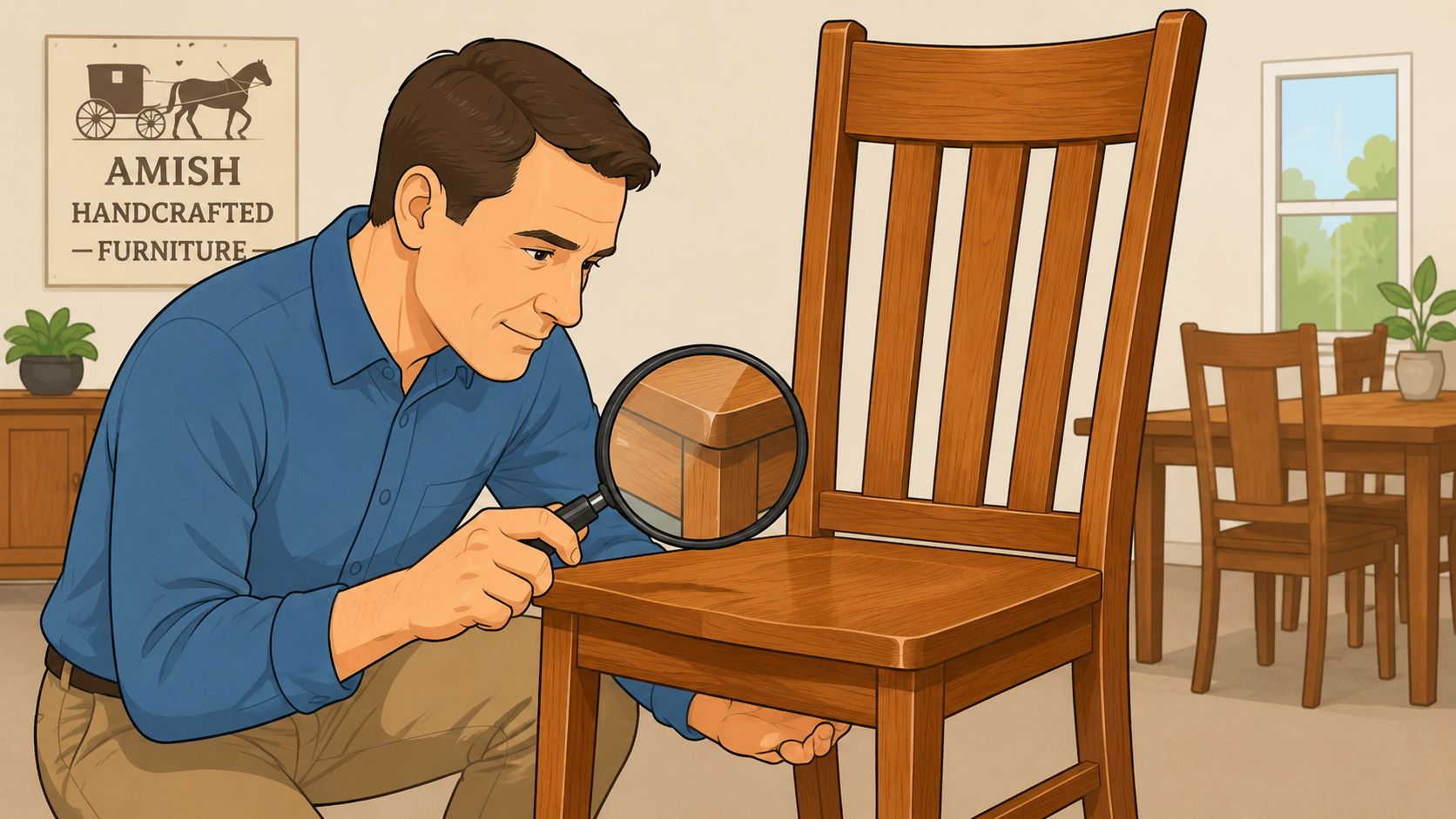
In well-made Amish furniture, strength comes from how the parts are fitted, not just from the wood itself. Dovetail drawers and mortise-and-tenon frames create mechanical hold. They resist racking, pulling, and loosening in ways that stapled panels and light-duty corner blocks usually cannot.
That matters most in the places families use hard every day. Drawer fronts get pulled. Chair joints absorb shifting weight. Table bases handle side pressure every time someone slides in for dinner. If those connection points are weak, the whole piece starts aging early even if the finish still looks fine.
A drawer built with dovetail joinery tends to stay square through years of opening and closing. A chair or table frame built with mortise-and-tenon construction has better support at the stress points that carry weight and movement. For shoppers who want a clearer look at that joint, this guide explains how mortise-and-tenon joinery works in furniture construction.
Why construction methods separate true heirloom pieces from lower-tier Amish furniture
Shoppers in the Albany area need a practical filter. "Amish furniture" is not a quality grade by itself. Some pieces are built with careful joinery, thick stock, and well-fitted parts. Others use the Amish label loosely while cutting corners in drawer construction, frame fit, or support systems you only notice after a few seasons in the home.
At Tip Top Furniture, that difference shows up quickly in person. Open the drawers. Check whether the case feels square. Look underneath the table. Sit in the chair and shift your weight. Better construction has a different feel because the piece was built as a structure, rather than an assembly created to look good under showroom lighting.
Handcrafted work also tends to show more consistency in the small details. Drawer bottoms are better supported. Door alignment is cleaner. Table bases feel planted instead of top-heavy. Those details are easy to overlook, but they are often what separate furniture you keep for decades from furniture that needs repair long before it should.
A well-built handcrafted piece usually shows its quality in plain, practical ways:
- Drawers open with less twist because the box stays square.
- Chairs stay tighter longer because the joints are fitted to carry use, not just pass inspection.
- Tables feel steadier in daily use because the base and top connection was built to handle movement over time.
The strongest furniture usually reveals itself at the joints, not in the finish color.
Amish Quality vs Mass Market Furniture A Clear Comparison
Shoppers often know one piece feels better than another, but they want a cleaner way to compare. A side-by-side view makes the difference easier to judge.
Amish vs Mass-Market Furniture At a Glance
Amish furniture's 100% solid hardwood composition gives it a 40 to 50% longer lifespan than mass-produced furniture, where 60 to 70% typically includes particle board. Amish pieces often last 50 to 100 years, while standard furniture may last 10 to 20 years, based on this discussion of Amish furniture lifespan and materials.
| Feature | Authentic Amish Furniture | Typical Mass-Market Furniture |
|---|---|---|
| Materials | 100% solid hardwood | Often includes particle board, laminate, or other composites |
| Construction | Traditional joinery such as dovetail and mortise-and-tenon | Commonly assembled with staples, screws, glue, or brackets |
| Lifespan | Often 50 to 100 years | Often 10 to 20 years |
| Repairability | Can often be refinished and maintained over time | Surface and core limits often reduce repair options |
| Aging | Natural wood develops character | Composite finishes often show wear without improving |
| Ownership pattern | Long-term purchase | More likely to be replaced sooner |
What the comparison means for real households
For a busy household, the gap shows up in use, not theory. The dining set that handles daily meals, homework, birthdays, and holiday gatherings gets tested quickly. So does a bed frame that's moved, tightened, and used year after year.
That's also why many quality-focused shoppers look beyond furniture alone and think in terms of durable home purchases across categories. The same long-view mindset often applies to sleep products, which is why many families also prioritize USA-made mattresses built for value and dependable support rather than short-term convenience.
The practical lesson is simple. If the goal is to furnish a home once and furnish it well, the construction method matters just as much as the appearance on day one.
A Buyer's Checklist How to Spot True Amish Quality in a Showroom
The Amish label gets used loosely. That's a problem for shoppers because style can be copied more easily than craftsmanship.
Five things to inspect before you buy
A key indicator of authentic Amish quality is a “silky-smooth” surface from hand-sanding, fully finished undersides, and the use of solid, heavy hardware like brass or steel. Mass-produced pieces often show rough undersides and lightweight hardware, which can lead to premature failure, as outlined in this guide on how to tell if furniture is Amish.
That gives shoppers a practical inspection checklist.
- Run a hand across the finish: A hand-sanded piece should feel smooth and intentional, not plasticky or uneven in a cheap way.
- Check the back and underside: Quality doesn't stop where the eye usually stops. Finished hidden surfaces suggest care throughout the build.
- Open and close every drawer: Look for smooth travel, consistent fit, and corners that feel solid.
- Lift or touch the hardware: Heavy brass, bronze, or high-grade steel feels different from lightweight decorative hardware.
- Look at the joints and grain: The construction should make sense. The wood pattern should look like real wood, not a repeated printed effect.
For shoppers who want a broader process before visiting a floor, this article on how to shop for furniture smartly offers a useful framework.
If a seller discourages close inspection, that's already useful information.
Why workshop vetting matters
This is the part many articles skip. Not every piece sold as “Amish” reflects the same standard.
A recent analysis found that 35% of “Amish-style” pieces sold in major Upstate NY retailers contained engineered wood cores, which undercuts the common assumption that everything marketed that way is solid wood. That figure appears in the verified market analysis provided for this topic.
That variance is why curation matters. Some workshops hold to old-school hardwood and joinery standards. Others produce furniture that copies the look while cutting corners where shoppers won't notice immediately.
A careful showroom visit helps. So does buying from a store that knows how to evaluate workshop quality before the customer ever sees the tag.
Making It Yours Custom Amish Furniture and Long-Term Care
One of the strongest reasons people choose Amish furniture isn't only durability. It's fit.
Customization is part of the value
A well-made piece should belong to the room, not merely occupy it. That's why custom ordering matters. With authentic Amish furniture, buyers can often choose wood species, stain tone, finish, hardware, and sometimes dimensions to better match the home itself.
That flexibility is especially useful in the Albany area, where rooms can be narrow, older homes may have unusual layouts, and homeowners often want one piece to bridge traditional architecture with current living needs. A custom dining table, bed, or storage piece solves problems that stock dimensions often don't.
Tip Top Furniture & Mattresses offers custom furniture ordering options along with design guidance for shoppers who want to tailor a piece to their space rather than settle for the closest available version.
Care habits that protect solid wood
Owning solid wood furniture also means treating it like a long-term material, not a disposable one. Good care is usually simple.
- Dust with a soft cloth: Grit is what scratches finishes over time.
- Protect from standing moisture: Use coasters, pads, and prompt wipe-ups.
- Avoid harsh cleaners: Finishes last better when the cleaning routine is gentle.
- Keep placement in mind: Direct heat sources and harsh sunlight can create avoidable stress.
This guide on how to care for wood furniture covers the basics clearly.
For households storing valuable wood pieces, framed artwork, or other sensitive home items during a move or renovation, this reference on professional fine art storage is also helpful because it explains why humidity control matters when preserving materials over time.
Is Amish Furniture Worth It A Local Value Analysis for Albany Homeowners
A family in Albany buys a dining set twice in ten years. The first one looks good on the sales floor, but the finish wears, the chairs loosen, and the table never quite feels solid after a few moves. The second purchase costs more, but it stays steady, can be repaired, and still looks right in the room years later. That is the value question.
Amish furniture usually does cost more upfront. The better question is what that higher price is buying.
In our store, the difference is rarely about style alone. It usually comes down to wood quality, construction, repairability, and how long the piece is expected to serve the household without turning into another replacement project. For Albany area homeowners furnishing a primary home, that matters. Older homes in the Capital Region often deserve furniture with enough substance to age well with the house.
Value also depends on timing and how the piece will be used. A homeowner setting up a long-term dining room has different needs than someone furnishing a short-term space, a rental, or a guest room that gets light use. Good advice starts there, not with a blanket claim that every Amish piece is automatically worth the premium.
That last point matters because not all furniture sold as "Amish" meets the same standard. Some pieces are built to true heirloom quality. Others borrow the look, the language, or the marketing while cutting corners in places buyers do not see right away.
That is where local guidance changes the purchase.
Shoppers in Albany, Troy, Schenectady, and Greene County do not just need more selection. They need someone to sort through what is solid, well-built, and worth bringing home for the long haul. A vetted hardwood piece can be a strong investment. A lower-tier imitation at a premium price is just an expensive mistake.
The practical answer is simple. Amish furniture is worth it when the piece comes from a trusted workshop, fits the way the household lives, and is built well enough to justify the price over many years of use. It is not worth it on label alone.
Some buyers will be better served by a custom hardwood piece. Others need immediate availability, a lower starting price, or financing that keeps the purchase realistic. Clearance inventory can also make better construction more attainable without forcing a rushed decision.
A smart furniture purchase is the one that matches budget, timeline, room demands, and expected years of use. That is the standard we use at Tip Top Furniture & Mattresses when helping Capital Region homeowners compare true long-term value against a lower sticker price that may not hold up.