Biophilic Bedroom Design: Expert Tips 2026


A lot of bedrooms in the Albany Capital Region look finished but don't feel restful. They hold the bed, the dresser, the laundry chair, the chargers, and whatever else landed there at the end of a long day. The room works for storage, but it doesn't help the body settle down.
That's where biophilic bedroom design earns its place. It isn't about scattering a few plants around and calling it done. It's about shaping the room so light, materials, texture, and layout support the natural way people rest. For homeowners in Albany, Schenectady, Troy, Freehold, and the surrounding area, that often means softening hard finishes, bringing in better daylight, choosing authentic materials, and making the space feel more grounded in the natural world.
A well-designed bedroom should feel like a retreat at the end of a Northeast winter day and still feel fresh during a humid summer week. That balance matters. So does practicality. A biophilic room has to live well, clean easily, and hold up for years.
Table of Contents
- Why Your Bedroom Should Feel More Like a Forest Retreat
- The Core Principles of Natural Design
- Building Your Natural Palette with Materials and Colors
- Choosing Furniture and Mattresses for Health and Comfort
- Working with Light and Living Elements
- Bringing It All Together Your Next Steps
Why Your Bedroom Should Feel More Like a Forest Retreat
Many homeowners know the feeling. The day runs long, the phone stays in hand too late, and the bedroom becomes one more place filled with visual noise. Lamps are too bright, finishes are too slick, and there's nothing in the room that signals the body to slow down.
That's why this design direction has moved well beyond a niche idea. According to the National Association of Realtors report on biophilic design, search interest for “biophilic design bedroom” has surged by 100%, showing that homeowners are actively looking for indoor-outdoor connection and authentic materials that support wellness.
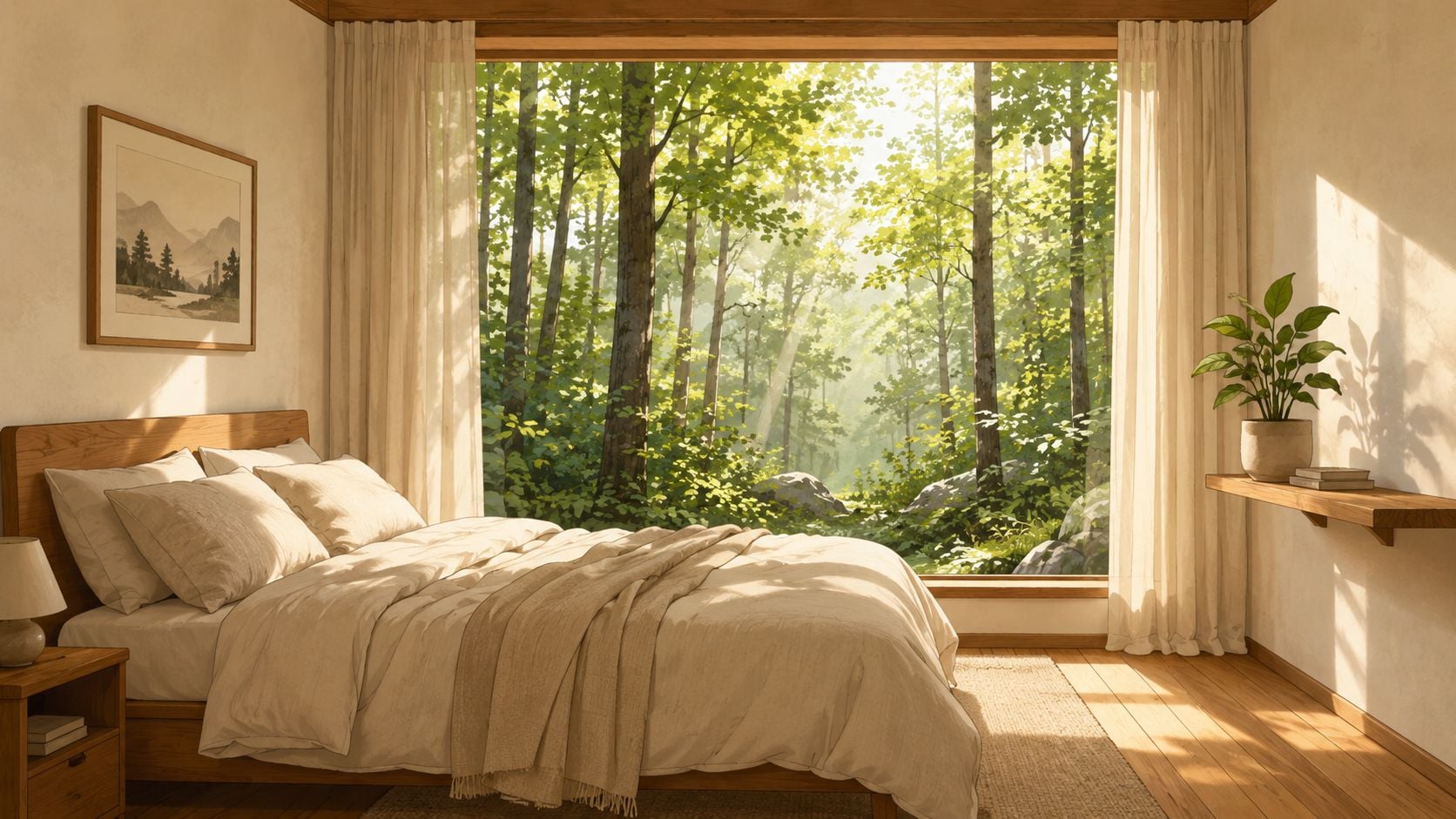
In practical terms, a forest-retreat bedroom doesn't need to look rustic or themed. It needs to feel calm, breathable, and rooted. Natural wood grain, filtered daylight, soft textiles, and a clear view toward a window do more for a room than decorative branches and artificial greenery ever will.
Practical rule: If a bedroom feels busy at night, the fix usually isn't more decor. It's fewer synthetic surfaces, better lighting, and one or two materials that feel honest and substantial.
In homes throughout Greene County and the Greater Albany area, this shift often starts with one decision. Replace the glossy, disposable piece with something tactile and lasting. Open the window treatment so the room gets daylight. Remove clutter around the bed so the eye can rest. The effect is noticeable because the room begins to work with the body instead of against it.
For readers thinking about a more restorative sleep space, this kind of room shares a lot with the ideas in this guide to designing a relaxing bedroom. The difference is that biophilic design pushes further. It treats nature as part of the room's function, not just its look.
The Core Principles of Natural Design
Biophilic bedroom design sounds technical when it's reduced to frameworks and pattern lists. In a real home, it comes down to three things. Bring in real contact with nature, use materials and forms that echo nature, and shape the room so it feels both sheltered and open.
Direct connections that the body notices right away
Natural light comes first. A bedroom with daylight and a visible connection to the outdoors feels different before a single accessory is added. If there's a tree line, a backyard garden, or even a quieter patch of sky outside the window, that view matters.
The room also benefits from a few living elements, but not a jungle. One or two plants, fresh flowers, or a small natural arrangement usually read better than too many scattered pots. The goal is presence, not crowding.
A useful way to judge the room is this. Does it feel stale, sealed, and artificially lit all day, or does it change with morning, afternoon, and evening?
Natural analogues that add warmth without clutter
Not every biophilic choice has to be alive. Some of the strongest ones are built into the room through wood grain, stone-like texture, woven fibers, and curved forms. A solid wood nightstand, a softly rounded headboard, a wool area rug, or linen drapery can carry the natural message without making the bedroom feel decorated for a trend.
That's one reason authentic furniture matters so much here. Pieces with visible grain and honest texture create the effect naturally. Rooms built around imitation finishes often look flat, even when the color palette is right.
For homeowners exploring authentic materials, solid wood furniture choices give a much stronger foundation than laminated look-alikes.
Bedrooms don't calm people down because they contain “nature-inspired items.” They calm people down when the room's main surfaces and shapes stop feeling artificial.
Quality of space that feels open and protected
This is the part people often miss. A restorative bedroom needs a sense of refuge around the bed and prospect outward. In plain language, the sleeper should feel tucked in, but not boxed in.
That balance usually comes from layout choices:
- Bed placement near a stable wall helps the room feel grounded.
- A visible path to the window keeps the room open.
- Clear sightlines reduce visual tension.
- Lower, softer elements around the bed often feel better than tall, bulky pieces crowding the sleep zone.
A room can have beautiful furniture and still feel wrong if every corner is packed. Space is part of the design. In biophilic bedroom design, empty space isn't unfinished. It's what lets the natural elements breathe.
Building Your Natural Palette with Materials and Colors
The most successful natural bedrooms don't begin with accessories. They begin with the envelope of the room. Flooring, wall color, and fabric choices establish whether the space feels grounded and restorative, or staged and short-lived.
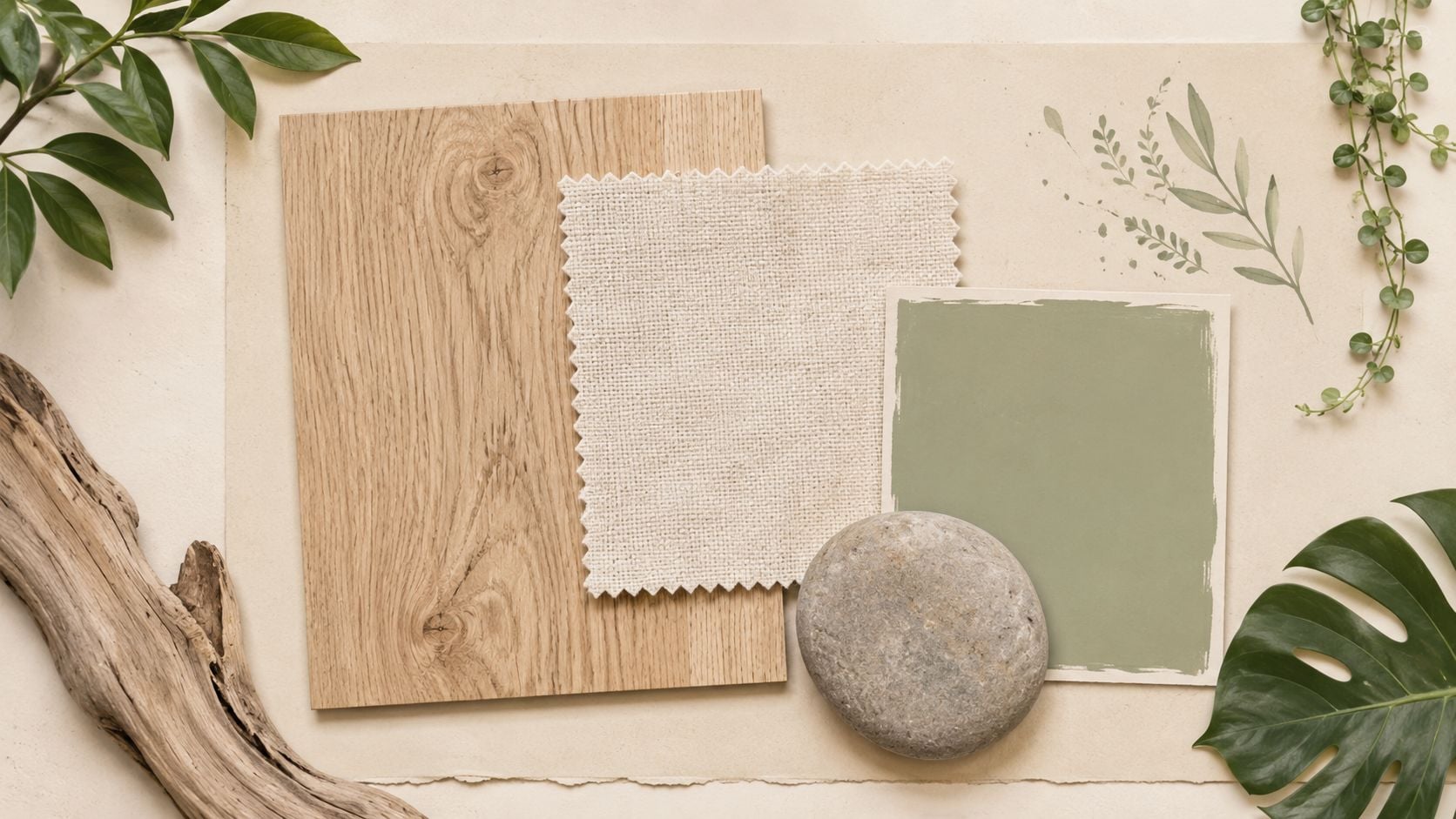
Research supports that layered approach. A therapeutic interior study on bedroom well-being confirms that a synergistic combination of natural woods, indoor plants, biomorphic shapes, and fresh flowers, supported by natural light, is a key mechanism for improving well-being and reducing stress in bedroom spaces.
Start with flooring underfoot
Flooring sets the emotional tone before the eye even reaches the bed. In a biophilic room, that usually means surfaces that feel warm, matte, and believable. Wood is the clearest example. It gives the room visual grain and a natural rhythm that painted or highly processed surfaces can't imitate.
If hardwood isn't the right fit for every household, a softer natural-feeling textile underfoot can still anchor the room. The important thing is to avoid flooring that feels cold, shiny, or overly synthetic, especially in a bedroom meant to encourage rest.
A simple comparison helps:
| Flooring direction | What it adds to the room |
|---|---|
| Wood with visible grain | Warmth, texture, and an organic base |
| Soft neutral carpet or rug | Quiet, comfort, and less visual hardness |
| High-gloss or artificial-looking surfaces | Reflection and visual tension |
Use wall color to quiet the room
Wall color does its best work when it settles into the background. In Upstate New York homes, some of the most effective palettes come straight from the natural surroundings. Mossy greens, weathered stone grays, bark browns, muted clay, and soft sky tones all work because they feel familiar without demanding attention.
The finish matters too. Flat or low-sheen surfaces usually support the mood better than reflective ones. They absorb light more gently, which helps the room feel softer as daylight changes.
Readers choosing a palette often find it easier to work from materials first and paint second. This approach keeps the walls connected to the wood, flooring, and fabric choices already in the room. A helpful starting point is this expert guide to the perfect color palette.
Designer's shortcut: Pick the largest natural material first, then let the wall color support it instead of compete with it.
Layer textiles that breathe and soften
Textiles are where the room stops feeling designed and starts feeling livable. Bedding, curtains, rugs, and upholstered touches should add softness without piling on visual weight. Natural fibers usually do that best because they carry subtle texture and tend to age more gracefully.
A balanced textile mix often includes:
- Linen or cotton bedding that looks relaxed rather than overly slick
- A wool or textured rug to soften the floor and reduce echo
- Curtains with movement instead of stiff, shiny panels
- A throw or accent pillow in one deeper earth tone for contrast
The common mistake is trying to make the room feel natural by adding too many “natural” things at once. Better results come from restraint. One good wood tone, one soft wall color, and a small range of tactile fabrics create a bedroom that feels coherent instead of crowded.
Choosing Furniture and Mattresses for Health and Comfort
Furniture carries more visual and physical weight than any other part of the bedroom. It determines how the room feels, how well it functions, and whether the design still makes sense five or ten years from now. In biophilic bedroom design, the strongest investment is almost always in the core pieces rather than the decorative extras.
Why solid wood matters more than themed decor
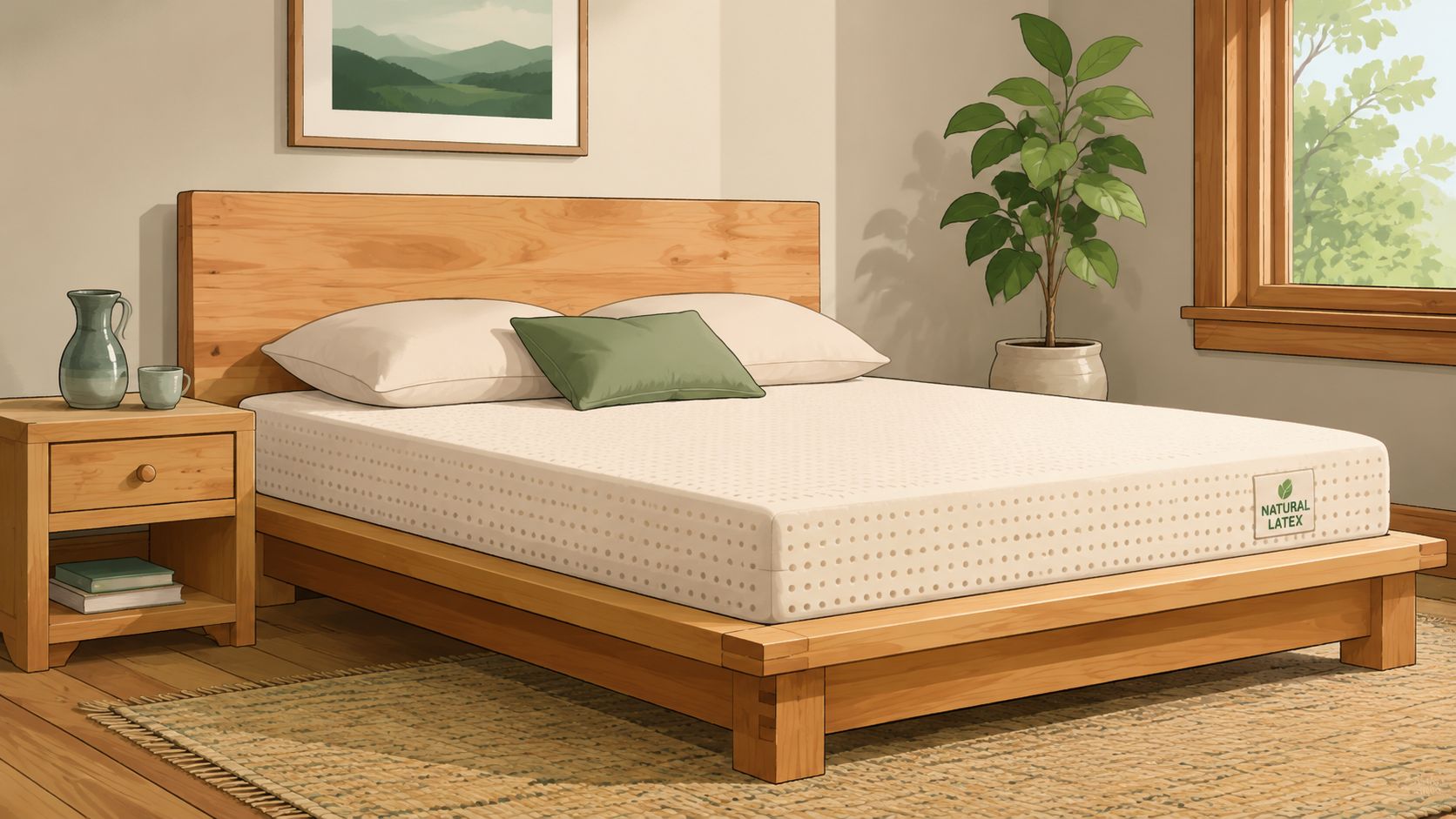
A room doesn't become biophilic because it has leaf prints or botanical art. It gets there when the main furniture pieces carry the warmth and honesty of natural material. Solid wood does that in a way printed decor can't.
That's why Amish-made bedroom furniture fits this style so well. The grain is real. The joinery has substance. The piece ages with character instead of peeling, bubbling, or looking tired after a short run. For homeowners in the Albany Capital Region, that value matters more than many realize.
Data shows that 74% of homeowners in budget-conscious markets like the Albany Capital Region mistakenly believe biophilic design requires expensive imports, when high-quality, USA-made Amish wood furniture offers superior durability, lower lifecycle costs, and up to a 35% higher resale value.
That changes the buying conversation. The comparison isn't “custom wood bed versus a few inexpensive accessories.” It's “lasting anchor piece versus repeating the same replacement cycle.”
- Choose visible grain over heavy surface treatments. Natural variation gives the room depth.
- Prefer simple silhouettes. Curves, softened corners, and balanced proportions support a more organic feel.
- Build around one statement piece. A bed, dresser, or chest can establish the whole room.
What to look for in a healthier mattress setup
The mattress is where the design becomes personal. If the room looks calm but the bed sleeps hot, traps odors, or feels chemically harsh, the bedroom still won't function as a retreat.
That's why material quality matters here as much as comfort level. Low-VOC components, breathable construction, and supportive layering all contribute to a sleep environment that feels cleaner and easier to live with. Homeowners who want a clearer overview can understand low VOC benefits and why they matter in enclosed spaces like bedrooms.
In Upstate New York, the mattress also has to work across changing seasons. A setup that feels fine in January can feel stuffy in July. Breathable materials, washable bedding layers, and a foundation that allows airflow tend to perform better year-round than sealed, heat-holding alternatives.
For anyone comparing comfort, support, and material quality side by side, this mattress buying guide is a solid place to sort through the practical differences.
The mattress shouldn't fight the room. In a natural bedroom, it should feel breathable, quiet, and supportive enough that nothing pulls attention back to the bed itself.
Where custom pieces make the room work better
Biophilic bedrooms often improve when furniture is sized properly for the architecture. Many rooms in older Albany-area homes have awkward wall lengths, tighter corners, or window placement that makes standard sets feel forced. That's where custom ordering becomes more than a luxury.
A custom-height dresser, a bed in the right wood tone, or a nightstand scaled for a narrow wall can preserve openness around the bed. That matters because crowding is one of the fastest ways to ruin the calm this design style depends on.
The best rooms don't just contain natural materials. They leave enough breathing room around those materials so the eye can appreciate them.
Working with Light and Living Elements
Light changes the room by the hour. Plants and other living elements change it by season. Together, they bring movement and softness that static furniture alone can't provide. They also create the strongest day-to-night shift in biophilic bedroom design.
Make the most of daylight and the view you have
The first job is to let natural light into the room without stripping away privacy. Sheer panels, adjustable shades, and layered window treatments usually work better than heavy blackout solutions left closed all day. The room should feel awake in the morning and protected at night.
A direct connection to nature matters too. Guidance on biophilic bedroom layouts emphasizes natural light and focus on natural surroundings, including views through windows toward outdoor scenery and direct sunlight in the room for stress reduction and improved cognitive function, as noted in this biophilic bedroom layout article.
If the view isn't spectacular, there are still ways to strengthen it:
- Trim back what blocks the best slice of sky or trees
- Place the bed or chair to face the window
- Use mirrors carefully to borrow light, not create glare
- Keep the sill and nearby furniture uncluttered
Use artificial light that supports evening rest
Biophilic design doesn't stop when the sun goes down. It asks artificial light to behave more like a natural cycle. That means brighter, clearer light earlier in the day and warmer, gentler light later on.
The technical benchmark is clear. The 14 Patterns of Biophilic Design states that true biophilic design requires circadian color reference lighting, using white light during the day and minimizing blue light at night to align with human biological rhythms.
That principle works best when the room uses layers:
| Lighting layer | Best role in the bedroom |
|---|---|
| Ambient light | General evening illumination kept soft and warm |
| Bedside lighting | Reading and winding down without flooding the whole room |
| Accent lighting | Gentle highlighting of art, texture, or architectural features |
Avoid the common mistake of relying on one bright overhead fixture for everything. It flattens the room and keeps it feeling active long after it should start winding down.
Choose plants that add life without creating work
Plants finish the room, but they shouldn't become a maintenance burden. The best bedroom plants are the ones that match the available light and the household's habits. A healthy single plant by the window does more for the room than several struggling ones tucked into dark corners.
For many homes in the Northeast, dependable beginner-friendly choices include snake plants, ZZ plants, and other low-fuss varieties that tolerate ordinary indoor conditions. Homeowners who want a practical primer can use these essential tips for new plant owners to avoid the usual first-round mistakes.
A few placement guidelines keep the look clean:
- Use one floor plant as a vertical accent
- Place one smaller plant on a dresser or nightstand with breathing room
- Skip crowding the windowsill with too many pots
- Treat fresh flowers as a rotating accent, not permanent clutter
Living elements work best when they feel intentional. In that sense, houseplants that complement furniture should be chosen the same way any other bedroom element is chosen. By scale, placement, and the role they play in the room.
Bringing It All Together Your Next Steps
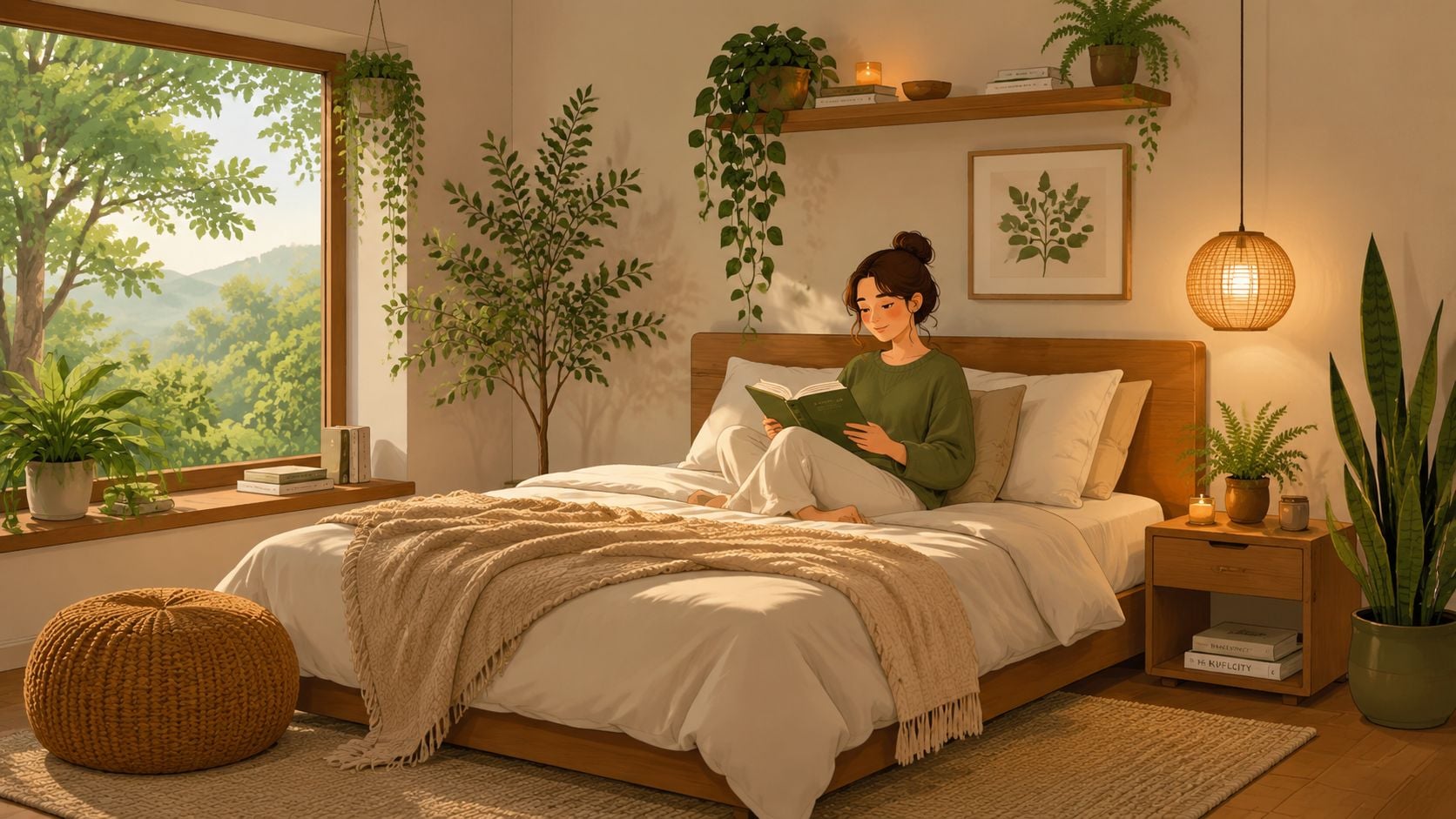
A successful biophilic bedroom doesn't depend on one dramatic gesture. It comes together through a set of steady, practical choices. Better light. Fewer synthetic surfaces. A bed that anchors the room. Flooring and textiles that soften it. A small amount of living greenery. Enough open space to keep the room from feeling crowded.
Finish the room without overfilling it
The last layer should be selective. Nature-based artwork, a textured throw, a ceramic lamp, or a well-placed accent rug can finish the room without tipping it into excess. Clearance pieces can also be useful here because they let homeowners add character without overcommitting to a full matching suite.
A good final edit usually includes removing something, not adding something. If the room feels tight, one extra bench, basket, or decorative stand is often the problem.
A biophilic bedroom should feel edited. Calm comes from balance, not abundance.
Take the practical next step
For homeowners in Albany, Troy, Schenectady, Freehold, and throughout Greene County, the easiest way to start is to make decisions in order. Begin with the bed area, then flooring or rugs, then lighting, then the smaller organic accents. That sequence prevents expensive missteps and keeps the room cohesive.
A practical checklist helps:
- Assess the light. Open the window treatments and study the room morning and evening.
- Choose the anchor material. Usually that's the bed or bedroom storage piece.
- Set the palette. Pull color from wood, stone, field, or sky tones.
- Improve the sleep layer. Mattress, bedding, and lighting need to support the room's purpose.
- Add living detail last. Plants and flowers should finish the space, not lead it.
The best version of this room feels effortless, but it's built through careful choices. When each element supports the next, the bedroom stops acting like a storage zone and starts doing its real job.
Tip Top Furniture & Mattresses has helped families across Freehold, Albany, Schenectady, Troy, and the greater Capital Region create comfortable, lasting homes since 1978. For anyone ready to turn biophilic bedroom design into a real project, the next step can be simple. Explore Tip Top Furniture & Mattresses to plan the room with a free online room planner, book a complimentary design consultation, browse quality bedroom furniture and USA-made mattresses, explore custom ordering options, or ask about flexible financing and in-stock clearance finds at the Freehold, NY showroom.