Sustainable Wood Furniture: Choose Lasting Quality

A lot of homeowners around Albany, Troy, Schenectady, and the smaller towns between are in the same spot right now. They're tired of replacing furniture that looked good online, arrived flat, and started showing wear far too soon. They want something better for their home, their family, and their money.
That's where sustainable wood furniture starts to matter. It isn't just about a label or a trend. It's about choosing pieces that are responsibly sourced, healthier to live with, and built well enough to stay useful for years instead of becoming the next thing hauled to the curb. For households furnishing a first home, updating a family room, or investing in a dining set they hope to keep for decades, that difference is practical.
Interest in this category is also much bigger than many people assume. The global eco-friendly furniture market was valued at about $53.8 billion in 2025 and is projected to grow at roughly 10.0% CAGR from 2026 to 2033, while North America held about 42.6% of that market in 2025, according to Grand View Research's eco-friendly furniture market analysis. That tells a simple story. Buyers in this region aren't on the fringe. They're part of a major shift toward better-made furniture.
Families shopping in Upstate New York also want guidance that feels local, grounded, and honest. A family-owned store with roots in Freehold since 1978 and design services dating back to 1984 has seen the difference between furniture that only photographs well and furniture that holds up through real life. That kind of experience matters when the goal is to choose lasting quality.
Table of Contents
- Your Guide to Choosing Furniture That Lasts a Lifetime
- What Sustainable Wood Furniture Really Means
- The Enduring Benefits of Investing in Sustainable Pieces
- Decoding Labels A Buyer's Guide to Certifications
- How to Choose Quality Sustainable Furniture in the Capital Region
- Making It Your Own With Custom Orders and Long-Term Care
- Build a Home You Feel Good About With Tip Top Furniture
Your Guide to Choosing Furniture That Lasts a Lifetime
For many households, the real question isn't whether wood furniture looks good. It's whether the piece will still feel solid after years of dinners, guests, kids, pets, moving rooms around, and ordinary daily use. That's why sustainable wood furniture deserves a closer look.
The strongest sustainable pieces usually solve several problems at once. They use renewable materials from managed sources, avoid some of the shortcuts that weaken lower-grade furniture, and offer the kind of repairability that keeps a piece in service instead of in the landfill. That combination matters more than any marketing phrase on a tag.
A practical buyer in the Capital Region usually wants answers to straightforward questions:
- Is it built to last? Solid construction, good joinery, and a finish that can age gracefully matter more than trendy styling alone.
- Is the wood responsibly sourced? Buyers should know whether the maker can explain where the material came from and how it was handled.
- Will it work for real family life? Dining tables, bedroom sets, and living room pieces need to hold up under routine wear.
- Can it be maintained later? Furniture that can be cleaned properly, touched up, refinished, or repaired usually gives better long-term value.
Sustainable furniture works best when it stops being abstract and starts answering everyday household needs.
That's also why local expertise matters. A showroom serving Albany-area homeowners for more than four decades has watched styles change, materials change, and quality standards change. One lesson stays the same. People rarely regret buying better furniture when that purchase fits their space, their budget, and their lifestyle.
The rest of the decision comes down to knowing what the terms mean, what labels tell a shopper, and what physical signs separate a lasting piece from a disposable one.
What Sustainable Wood Furniture Really Means
The basic idea behind the term
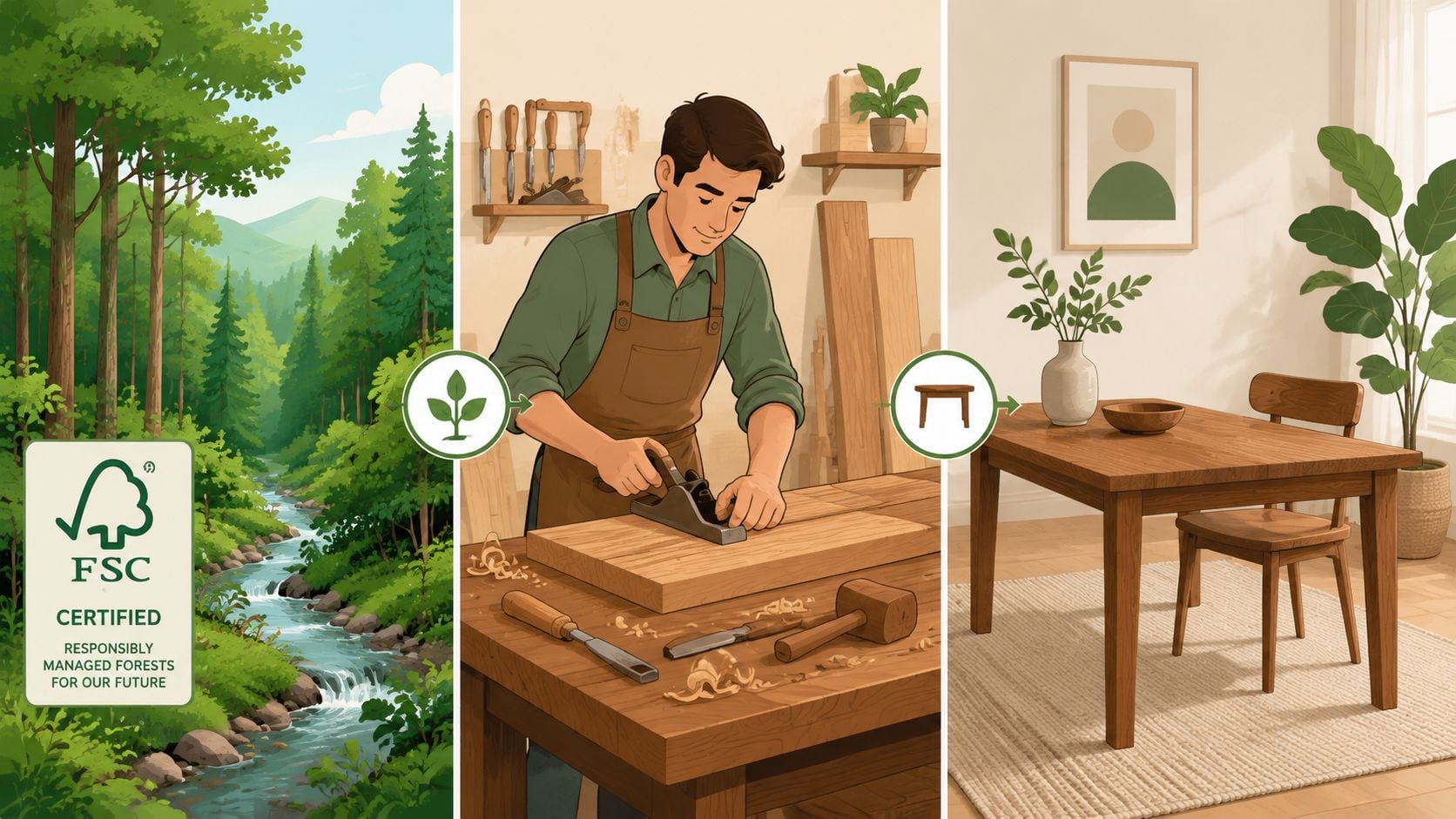
Sustainable wood furniture means more than “made from wood.” In practice, it usually refers to furniture made with responsibly sourced wood, durable construction, and finishes or materials chosen to reduce unnecessary environmental and indoor health burdens over the life of the piece.
That matters because wood remains the dominant raw material in furniture making. According to this furniture sustainability synthesis from BioResources, wood is the most widely used primary material in the furniture industry, and choosing wood-based materials from managed sources helps reduce depletion of finite resources and the buildup of non-biodegradable waste because wood is renewable and biodegradable.
For shoppers, that broad definition becomes useful only when it's broken into plain language. A few terms show up again and again.
Four terms worth knowing before you shop
Sustainably harvested wood means the wood comes from forests managed with long-term health in mind, not from careless cutting that strips future growth. A simple way to think about it is managed farming versus taking everything at once and leaving the land depleted.
FSC-certified wood refers to wood certified through the Forest Stewardship Council. For many shoppers, FSC is the clearest shorthand for responsible forestry. It's similar to how food buyers use trusted certifications to cut through vague packaging claims.
Reclaimed wood means wood recovered from older structures or past uses and given a second life in new furniture. It can add character, but reclaimed doesn't automatically mean better made. Construction quality still matters.
Low-VOC finishes refer to stains, sealers, paints, or topcoats formulated to reduce volatile organic compound emissions. That becomes important indoors, where off-gassing can affect comfort and air quality.
A fifth term also helps in the showroom: solid wood. Solid wood doesn't make every piece superior by itself, but it often gives a buyer a better starting point for longevity, repairability, and refinishing.
Practical rule: If a product description talks a lot about style but says very little about wood species, finish, joinery, or sourcing, it usually isn't giving enough information.
One more detail often gets overlooked. Moisture control matters. Properly dried wood is more stable, which helps reduce problems like warping, splitting, or poorly performing joints over time. Buyers who want a quick primer on that can review how kiln-dried wood affects furniture stability and performance.
A useful working definition is simple. Sustainable wood furniture is furniture that respects the source material, holds up in a real home, and can keep serving a household instead of being replaced after a short run.
The Enduring Benefits of Investing in Sustainable Pieces
Why longevity changes the value equation
The biggest benefit of sustainable wood furniture usually isn't abstract. It's durability.
According to this sustainable furniture guide for designers, FSC-certified solid wood sequesters carbon throughout its service life, and because it can be repaired and refinished, its life can extend for decades. That lowers per-year embodied carbon compared with composite boards that often fail in 5 to 10 years and end up in landfills.
That durability changes the buying equation in a very practical way. A piece that can survive everyday wear, then be tightened, refinished, or restored, behaves differently from one that starts loosening at the joints and can't be meaningfully repaired. The first becomes part of the home. The second becomes a recurring expense.
Shoppers who want a reality check on expected lifespan can compare different construction standards in this guide on how long furniture should last.
A healthier home matters too
Durability is only one side of the story. Materials matter inside the home as much as they matter at the forest level.
Lower-grade furniture often relies heavily on engineered substrates, thin veneers, and finishes that raise more questions than they answer. Better-made solid wood pieces with cleaner finishing systems tend to be a stronger fit for bedrooms, dining rooms, and family living spaces, especially where children or sensitive occupants spend a lot of time.
That same principle shows up in other categories of home products. Parents often appreciate Grow With Me's wooden toy insights because they connect natural materials, durability, and simpler construction in a way that feels relevant to daily family life. Furniture buyers often make a similar calculation. They want fewer synthetic shortcuts and more confidence in what comes into the home.
A sustainable piece also tends to age better visually. Scratches on solid wood can often be blended, touched up, or accepted as character. Damage on low-grade laminated furniture often looks final.
Consider the practical advantages together:
- Longer useful life means less frequent replacement and less disruption.
- Repair potential gives an owner options when wear shows up.
- Better aging helps the furniture remain attractive instead of looking worn out all at once.
- Stronger long-term value comes from keeping a piece in service rather than paying repeatedly for short-lived furniture.
Well-built wood furniture earns its keep slowly. That's why it often looks more expensive on day one and more reasonable a few years later.
Buyers often separate style from substance. Sustainable furniture isn't about giving something up. At its best, it delivers better materials, more dependable performance, and a home that feels calmer, sturdier, and less disposable.
Decoding Labels A Buyer's Guide to Certifications
What the strongest labels help confirm
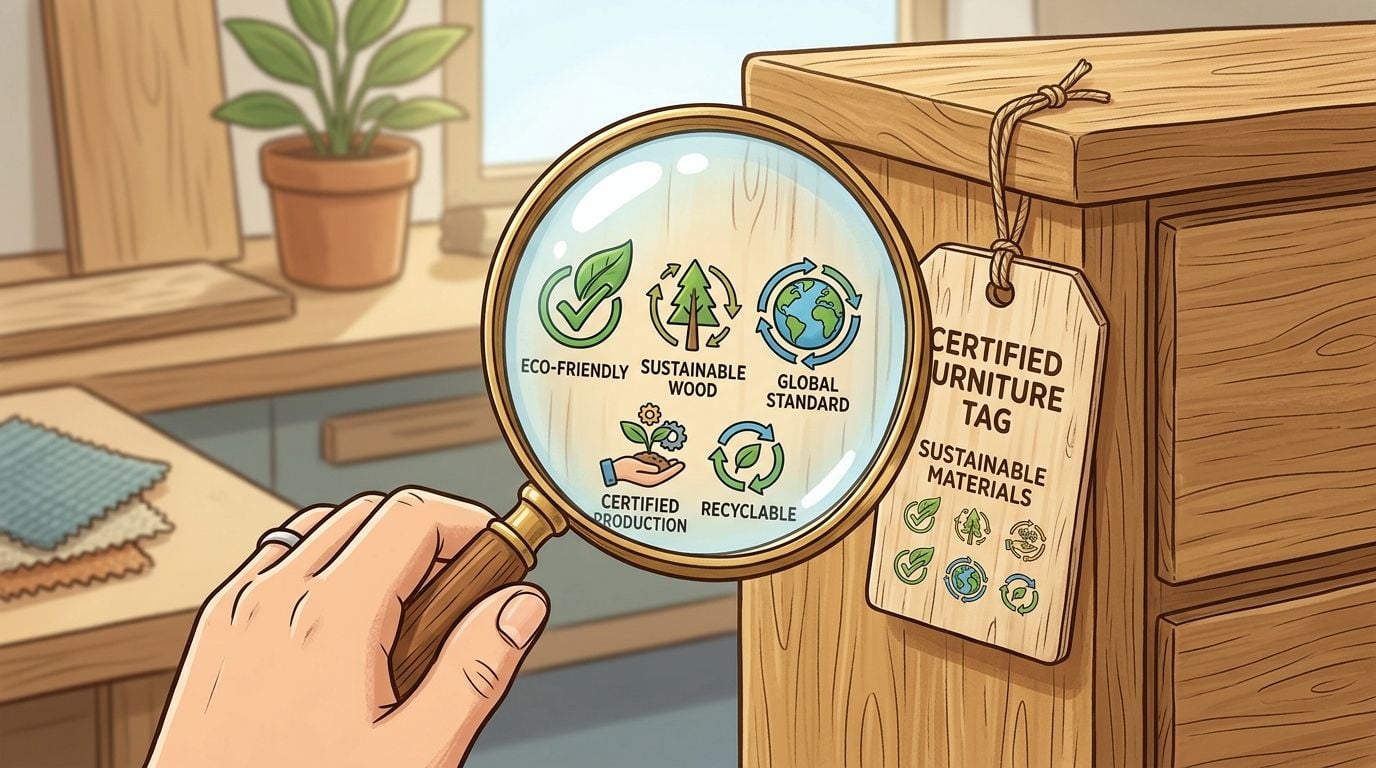
Labels matter because most buyers can't inspect a supply chain from the showroom floor. A useful certification gives third-party support for claims that would otherwise be hard to verify.
One of the clearest examples is FSC. According to Century Furniture's sustainability information, sustainably sourced wood from organizations such as the Forest Stewardship Council must meet strict criteria that include maintaining forest health and ensuring that tree growth exceeds removal rates. The same source notes that best-practice furniture companies now report 80% or more of their wood from certified or documented low-risk origins.
That doesn't mean every good piece must carry every label. It does mean a serious manufacturer should be able to answer basic sourcing questions clearly.
Shoppers looking specifically for domestic craftsmanship can also narrow the field by exploring American-made furniture manufacturers carried by local experts, where sourcing transparency and build quality are often easier to track.
What to ask when a tag sounds vague
A label is helpful, but the wording around it matters just as much. “Eco,” “natural,” and “green” can mean almost anything if they aren't tied to a recognized standard or a specific material claim.
A simple checklist works well in the showroom:
| What to check | Why it matters |
|---|---|
| FSC or equivalent responsible sourcing detail | Helps confirm the wood came from managed sources |
| Low-VOC or indoor air quality certification | Supports a healthier interior environment |
| Solid wood disclosure | Gives a clearer picture of durability and repairability |
| Finish details | Reveals whether the topcoat and stain system are explained or hidden behind vague language |
Ask the seller to explain what part of the piece is solid wood, what part is engineered, and what finish was used. Clear answers usually signal a better product.
Buyers should also listen for evasive language. If a product tag sounds impressive but the sales information never identifies the wood species, finish type, or certification basis, caution is warranted. Genuine quality rarely needs foggy wording.
The goal isn't to memorize every logo. It's to know which claims deserve follow-up questions and which ones already come with meaningful verification.
How to Choose Quality Sustainable Furniture in the Capital Region

What hands and eyes can tell quickly
The fastest way to judge furniture quality is still physical inspection. Buyers in the Albany area don't need a technical background to spot the difference between a serious piece and a short-term one.
Start with the structure. Open drawers. Lift chairs slightly. Press gently on case pieces from the side. Look underneath tables and inside cabinets. Sustainable wood furniture should feel steady, not hollow, wobbly, or overly dependent on thin panels and hidden fast fixes.
A few signs usually point in the right direction:
- Joinery over shortcuts. Look for dovetails, dowels, mortise-and-tenon construction, or other visible signs of real assembly work instead of heavy reliance on staples and flimsy brackets.
- Weight with purpose. A piece shouldn't be heavy just for the sake of being heavy, but solid wood usually carries itself differently than low-density substitutes.
- Finish consistency. Good finishes look even, feel smooth, and don't leave sharp transitions on edges and corners.
- Accessible surfaces for future care. Furniture that can be cleaned, polished, and maintained without delaminating gives an owner more control over its lifespan.
One technical point deserves extra attention inside the home. According to Buildings' sustainable furniture specification guidance, solid-wood furniture with low-VOC finishes can achieve GREENGUARD Gold certification, which sets strict limits on formaldehyde and other volatile organic compounds. That matters especially for children and sensitive individuals.
Why Amish and American-made pieces often stand out
In practical terms, Amish-crafted and other American-made collections often align well with sustainable buying goals. They commonly emphasize solid wood, traditional joinery, repairable construction, and finish choices that support a longer life.
That doesn't mean every domestic piece is automatically superior. It does mean this category often gives shoppers a better shot at finding furniture built with heirloom logic instead of quick-turn logic.
For buyers in Albany, Schenectady, Troy, and Greene County, it helps to see examples in person. A curated selection of Amish furniture available near the Capital Region makes it easier to compare wood species, construction details, and finishing quality side by side.
A strong in-store test is simple. Ask three questions:
- What kind of wood is this made from?
- How is it joined?
- What can be repaired or refinished later?
If those answers come quickly and clearly, the piece is usually worth a closer look. If the information is vague, the product probably is too.
The best sustainable furniture doesn't ask a homeowner to be an expert. It shows its quality in the way it's built, finished, and explained.
This is especially useful for dining, bedroom, and occasional pieces, where wear is predictable and long-term ownership is realistic. A table that can be refinished, a dresser that can be handed down, or a bed that remains structurally solid after years of use is where sustainability becomes visible.
Making It Your Own With Custom Orders and Long-Term Care

Customization can be the more sustainable choice
A common mistake is assuming sustainability limits personal taste. In many homes, the opposite is true. A custom or semi-custom piece often becomes the better long-term choice because it's selected to fit the room, the household, and the owner's actual style from the start.
That reduces the odds of buying something that feels close enough for now but gets replaced once the room evolves. Choosing the right wood species, finish depth, dimensions, and hardware can keep a piece relevant much longer.
This matters in the Capital Region, where homes range from older farmhouses and village properties to newer suburban layouts. Standard sizing doesn't always solve those rooms gracefully. Better fit often means longer use.
Care habits that help solid wood last
Long-term value also depends on maintenance. Solid wood is forgiving, but it still responds to neglect, direct sun, standing moisture, and rough seasonal conditions.
A few habits do more good than complicated routines:
- Keep the surface clean with a soft cloth and avoid harsh cleaners that leave buildup or strip finishes.
- Control placement by keeping furniture away from direct heat sources, damp problem areas, and prolonged intense sunlight.
- Use basic protection such as pads, coasters, and felt under objects that sit in one place.
- Address small issues early. A loose chair rung, dry-looking top, or minor finish wear is easier to correct than long-ignored damage.
For a room-by-room primer, this guide on how to care for wood furniture gives practical upkeep advice that supports a buy-it-for-life mindset.
Some households also need storage guidance during moves, renovations, or downsizing. In that case, a well-organized outside resource like this guide to Australian furniture storage is useful because the principles travel well. Clean the piece first, protect breathable surfaces properly, and avoid storage conditions that trap moisture or expose wood to extreme swings.
Furniture lasts longer when owners treat maintenance as normal stewardship, not a rescue job after the damage is already done.
Customization and care work together. When a piece fits the room well and receives ordinary upkeep, sustainability stops being a slogan. It becomes a durable relationship between the home and the furniture in it.
Build a Home You Feel Good About With Tip Top Furniture
Sustainable wood furniture gives homeowners a better way to buy. It supports responsible sourcing, healthier indoor living, and the kind of construction that can stay useful for years. For many households across the Greater Albany Capital Region, it also means less frustration and fewer replacement cycles.
That's why so many buyers still prefer to shop where they can see, touch, open drawers, inspect construction, and talk through options with someone who understands the difference between quick furniture and lasting furniture. Since 1978, Tip Top Furniture & Mattresses has served Freehold, Albany, Greene County, and the surrounding region with that kind of practical guidance. With over 50 trusted manufacturers, Amish furniture handcrafted in the USA, custom ordering, professional design help since 1984, flooring coordination, USA-made mattresses, and flexible options for different budgets, it offers the kind of one-stop shopping that makes a whole-home project easier to manage.
Buyers who want heirloom quality can explore custom pieces. Buyers furnishing on a tighter timeline can look at in-stock options and clearance. Buyers balancing a larger project can use financing to keep the process manageable. Good furniture should feel responsible, comfortable, and attainable.
For homeowners ready to take the next step, Tip Top Furniture & Mattresses offers a practical place to start. Visit the Freehold, NY showroom to compare Amish and American-made wood furniture in person, explore custom-order options for the right size and finish, browse room collections for bedroom and living spaces, or ask about professional design guidance for a coordinated home update. Shoppers can also review flexible financing options, explore personalized custom order solutions, browse quality pieces for the bedroom, and check the Clearance Corner for immediate-value finds.