Miller Rustic Furniture: Your 2026 Buyer’s Guide

A lot of homeowners around Albany, Schenectady, Troy, and the wider Capital Region start in the same place. They want furniture with character, but they also need it to survive real life. Kids lean back in dining chairs. Winter air dries the house out. Summer humidity returns. A pretty rustic piece can feel like the perfect answer until the questions about upkeep, fit, and long-term value show up.
That's why Miller Rustic Furniture gets so much attention from shoppers who want a cabin-inspired look without giving up practicality. The appeal isn't hard to understand. Rustic furniture feels grounded, familiar, and personal in a way that many mass-market styles don't. But the better buying decision usually comes down to something less glamorous than style. It comes down to wood choice, construction, finish, and whether the piece is built for daily use in an Upstate New York home.
This guide takes a practical view. It looks at what defines the Miller rustic furniture look, what separates durable craftsmanship from surface-level styling, and how to choose pieces that will still feel right years from now in a Freehold or Capital Region home.
Table of Contents
- Your Guide to Miller Rustic Furniture in the Albany Area
- What Defines the Miller Rustic Furniture Style
- A Buyer's Guide to Lasting Rustic Quality
- How to Choose the Right Rustic Pieces for Your Home
- The Advantage of Custom Amish Made Furniture
- Find Your Perfect Rustic Furniture Near Albany
Your Guide to Miller Rustic Furniture in the Albany Area
In the Albany area, rustic furniture usually attracts people who are trying to solve two problems at once. They want a home to feel warmer and more personal, and they don't want to replace major pieces every few years. That combination is what keeps interest high in Miller Rustic Furniture and similar handcrafted styles.
The strongest rustic rooms rarely come from chasing a theme. They come from choosing a few solid pieces that carry visual weight and daily use at the same time. A dining table becomes the center of family meals, holiday gatherings, school projects, and late-night conversations. A bed should feel sturdy and settled, not decorative and temporary.
Rustic furniture works best when it earns its keep. The style should add character, but the construction still has to handle ordinary living.
For homeowners in Freehold and across the Greater Albany Capital Region, that matters more than it might in a milder climate. Seasonal changes can expose weak construction quickly. Gaps, wobble, finish wear, and awkward sizing become much harder to ignore once a piece is part of everyday life.
That's also why shoppers searching for a specific rustic maker often need broader guidance than a product page gives them. The key questions aren't only about appearance.
- Will the wood and finish suit the room?
- Can the piece handle frequent use?
- Does the scale fit the house, not just the showroom?
- Will the style still work if other furnishings change later?
Those are the practical questions worth asking before buying any rustic piece. A good answer usually points toward craftsmanship, proportions, and flexibility rather than pure visual drama.
What Defines the Miller Rustic Furniture Style
Rustic furniture has a long American lineage. The National Park Service notes that rustic styling in the United States developed deep roots in the late 19th and early 20th centuries, especially through Adirondack and lodge-cabin traditions, which established it as a recognized American style in its own right (National Park Service history of rustic furniture).
Where the look comes from
That history still shows up in the Miller rustic furniture look today. The style tends to borrow from lodge, cabin, and early American workshop traditions rather than sleek urban furniture design. It feels substantial. Surfaces often celebrate grain, knots, texture, and visible variation instead of hiding them.
Miller's own brand presentation leans into an older handcrafted model. The business says each piece of rustic log furniture is created from hand-picked native wood, and its published showroom information reflects a stable, place-based operation in Millersburg, Ohio, with listed hours six days a week and a published address and phone record.
For homeowners trying to create achieving warm, unpretentious home styles, that background helps explain why the style feels so approachable. It isn't polished to the point of feeling formal. It's meant to look lived with.
What to look for in the details
A shopper can usually spot the style by checking a few visual and material cues:
- Natural wood character: Grain variation, texture, and occasional irregularity are part of the appeal.
- Heavier visual proportions: Rustic tables, beds, and storage pieces often look anchored rather than airy.
- Handcrafted signals: Joinery, edge shaping, and finish work tend to feel more artisanal than factory-uniform.
- Useful simplicity: The design usually favors strong silhouettes over decorative fussiness.
There's also an important difference between rustic and rough. Good rustic furniture should feel intentional. Edges can be softened, surfaces can show character, and proportions can remain bold without looking careless.
A lot of shoppers find it helpful to compare rustic pieces with other country, farmhouse, and lodge-inspired looks before deciding how far to go. A broader overview of that design direction appears in this guide to rustic design style ideas for solid wood interiors.
A Buyer's Guide to Lasting Rustic Quality
A family can fall in love with a thick plank table on Saturday, then call me six months later because the drawers stick, the top moved, or the chairs feel loose. Rustic furniture gets judged by its surface first. Long-term value shows up in the parts doing the hard work every day.
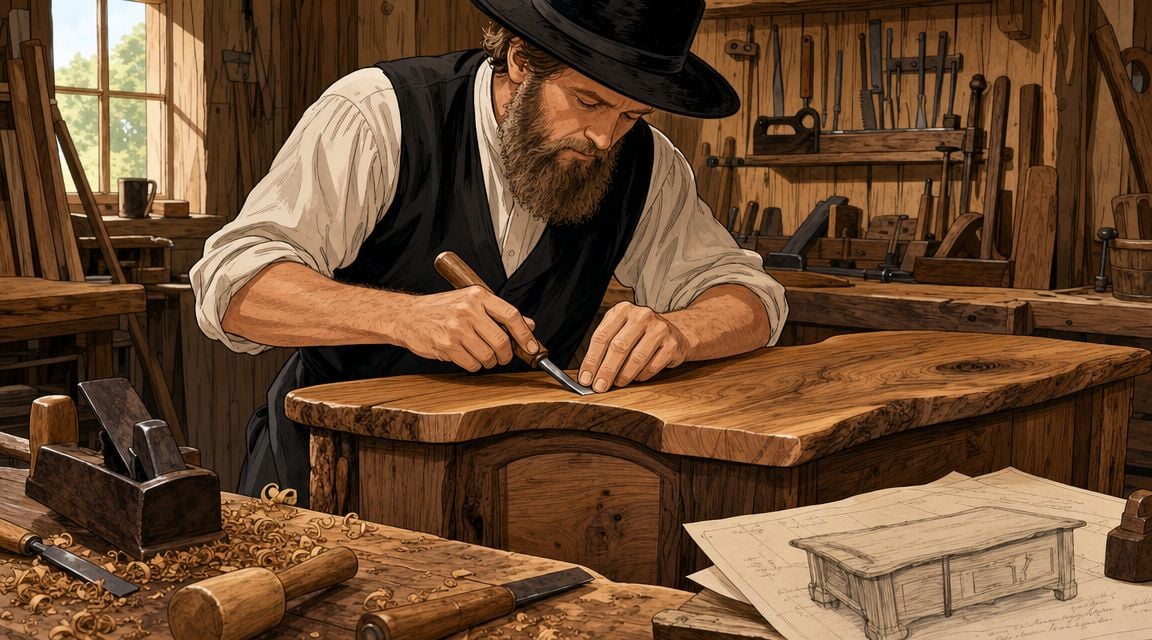
Rustic appearance versus structural quality
The practical question is simple. Will the piece still perform well after years of meals, kids, guests, winter heat, and summer humidity in the Capital Region?
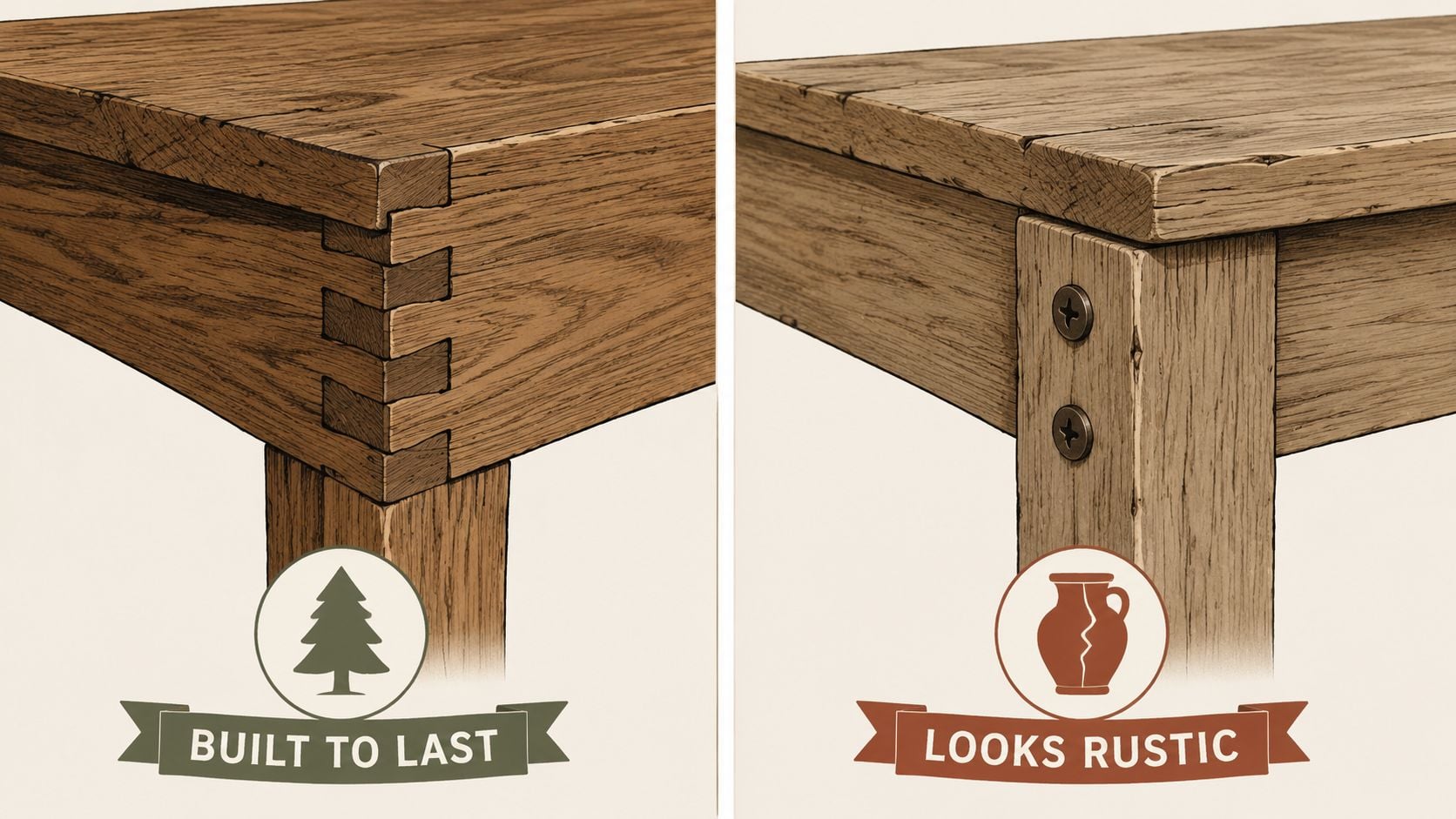
Solid wood always responds to seasonal moisture changes. Good builders plan for that. They allow wood to move where it should, keep the frame stable where it must, and avoid shortcuts that only look convincing on a showroom floor. A distressed finish, saw marks, and hand-worked texture can add character, but they do not tell you whether the joinery is sound or the top will stay true.
I tell shoppers to inspect the working parts before they admire the styling too long.
- Base stability: A table or case piece should feel planted when you press from the side.
- Joinery and understructure: Aprons, corner blocks, and supports should look purposeful, not thin or stapled together.
- Drawer fit: Drawers should open with steady resistance and close square, even on heavier rustic case goods.
- Board alignment: Wide tops should sit flat, with transitions that feel intentional rather than uneven.
- Finish choice: The best finish is the one that matches real use in the room, whether that means easier touch-up, better spill resistance, or lower sheen that hides wear.
That last point matters more than many homeowners expect.
A dining table in an active household needs a different finish strategy than an accent chest in a guest room. Rustic furniture should age with some grace, but it should not ask you to accept avoidable problems as "part of the look."
What an extendable table reveals about craftsmanship
Extendable tables are one of the clearest ways to judge build quality because they have to work hard in more than one position. A published Miller dining table specification lists an 84 in. W × 42 in. D × 30 in. H table with two 18-in. leaves that extends to 120 in..
That sounds straightforward until you think about what has to happen underneath. The slides need to move smoothly. The center line needs to meet cleanly. The leaves need support. The top needs to stay level whether you use it closed for everyday meals or open it for a holiday crowd.
Heirloom-quality Amish-made furniture usually separates itself from rustic pieces built mainly for appearance. The visible style may be similar. The difference is in how the table handles weight, movement, and repeated setup over the years.
Wood species also affects that long-term performance. Hardness, grain pattern, and movement vary from one hardwood to another, so it helps to review how to choose the right hardwood for longevity and style before ordering a dining table, bed, or storage piece.
How to Choose the Right Rustic Pieces for Your Home
Some rustic furniture looks wonderful in a showroom and feels oversized the moment it reaches a real home. The most successful rooms are planned from the floor plan outward, not from a single dramatic piece inward.
Room by room decisions that age well
In a living room, rustic furniture tends to work best when one piece carries the visual weight. That might be a substantial cocktail table, a media console, or an exposed-wood accent chair. If every item is thick, dark, and heavily textured, the room can start to feel crowded even when the square footage is decent.
Bedrooms need a different approach. A rustic bed should feel grounded, but it shouldn't swallow the room or make side access awkward. In smaller homes around Albany and Greene County, scale matters just as much as style. The same goes for dressers and chests. Deep case pieces can interrupt traffic flow faster than many shoppers expect.
Dining rooms reward the most planning because rustic tables often run larger and look heavier than their dimensions suggest. A family that entertains occasionally might do better with an extendable table and simpler side chairs than with a massive fixed setup that dominates the room year-round.
A balanced room often comes from mixing influences rather than matching every item. This guide on how to mix furniture styles without losing cohesion can help homeowners combine rustic wood pieces with upholstered seating, lighter accents, or cleaner silhouettes.
A rustic piece should look like it belongs in the room on an ordinary Tuesday, not just during holiday decorating season.
Measurement and planning checklist
Before ordering, it helps to slow down and check the practical side.
- Measure the room itself: Record width, depth, and the location of windows, radiators, floor vents, and trim.
- Check the approach path: Doorways, hallways, stair turns, and ceiling clearance can stop a delivery before it starts.
- Plan open space: Dining chairs need pull-back room, and bed frames need walking clearance on the sides.
- Think about visual weight: Thick tops, broad legs, and tall headboards read larger than a tape measure suggests.
- Account for expansion: If a table has leaves, measure it both closed and fully open.
- Look at nearby finishes: Rustic wood changes character next to painted trim, stone, metal, and flooring.
- Map traffic flow: People should be able to move naturally around the furniture without squeezing past corners.
For homeowners who want to test layouts before buying, an online room-planning tool is one of the smartest steps. It helps answer the question many shoppers only discover too late: whether a beautiful piece leaves enough breathing room around it.
The Advantage of Custom Amish Made Furniture
Custom work solves a common problem with rustic furniture. A piece can look right in the showroom and still feel too heavy, too dark, or too large once it lands in a Capital Region home. That gap between appearance and daily use is where custom Amish made furniture earns its keep.
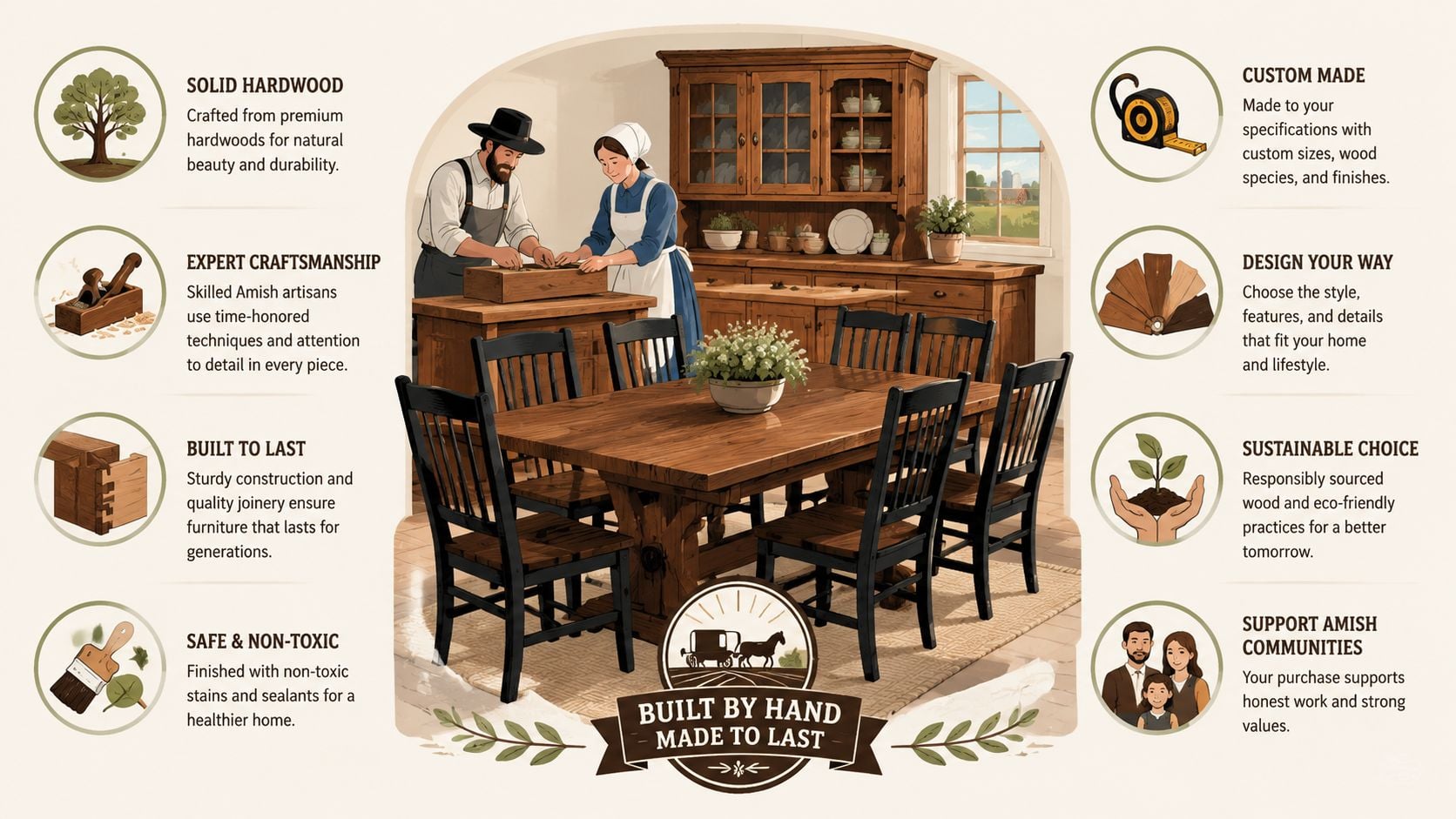
Why customization matters in rustic furniture
Rustic style gets a lot of attention for its look. The better question is how the piece will live in the home for the next ten or twenty years. Wood choice affects dent resistance and grain pattern. Finish affects how easily the surface shows wear, fingerprints, and scratches. Size affects whether the room feels comfortable or crowded.
That matters even more in older homes around Albany, Troy, and Schenectady, where room sizes, heating patterns, and natural light can vary quite a bit from one house to the next. A handcrafted piece built to the right dimensions and finished for the way the room is used usually holds up better than a close-enough option pulled from stock.
What shoppers should customize first
Some custom choices are cosmetic. Others change how well the furniture performs every day. Start with the decisions that affect use, upkeep, and fit:
- Wood species: Harder woods generally stand up better to family wear, while grain character changes the overall rustic feel.
- Finish selection: Lower-sheen finishes often hide everyday marks better than glossy ones.
- Dimensions: A few inches in width, depth, or height can improve traffic flow and make a piece easier to live with.
- Edge and base details: These shape the style, but they also affect comfort, cleaning, and visual weight.
- Hardware: Pull size, shape, and finish influence both function and how formal or casual the piece feels.
I have seen this play out for years. A family may love a thick, heavily distressed table on the floor, then realize a slightly narrower top with a smoother finish makes more sense for homework, weekday dinners, and easy cleanup. A tall bed with a dramatic headboard may suit a large room, but in a modest primary bedroom, a lower profile often feels better and leaves the space calmer.
Custom furniture also gives homeowners better control over long-term value. Instead of paying for a piece that is almost right, they can order one that matches the room, the household, and the level of maintenance they are willing to take on.
For shoppers who want help turning rough ideas into practical specifications, getting started with a custom furniture order is a smart first step.
Find Your Perfect Rustic Furniture Near Albany
Rustic furniture isn't typically an impulse purchase. It's a touch-and-feel category. Grain, texture, finish, edge shape, and scale are easier to judge in person than on a screen. That's especially true for homeowners near Albany, Schenectady, Troy, and throughout the Capital Region who want a piece that feels substantial without overpowering the room.
A smart shopping trip usually focuses on three things. First, test stability and comfort. Second, compare wood tones under normal lighting rather than showroom excitement. Third, ask how the piece will function in everyday use, not just how it looks in a staged setting.
There's also value in looking beyond special-order pieces alone. Some shoppers need immediate availability. Others are furnishing on a stricter budget and want strong value without giving up quality. In those cases, in-stock opportunities and clearance can be just as useful as custom work, especially if the construction is sound and the size is right.
A local showroom visit tends to answer questions faster than endless scrolling. It helps shoppers compare rustic looks with other solid-wood styles, judge comfort accurately, and decide whether a handcrafted piece fits the home they have, not the fantasy room in their head. For those beginning the search, this page for Amish furniture near the Albany area is a solid place to start.
For homeowners who want durable, heirloom-quality rustic furniture with local guidance, Tip Top Furniture & Mattresses is well worth a visit. The family-owned Freehold, NY showroom has served the region since 1978 and helps shoppers across the Greater Albany Capital Region compare solid wood options, explore custom Amish-made furniture, browse the Clearance Corner for immediate-value finds, and review flexible financing for larger projects.