Full Size Bed vs Queen Size Bed: An Albany Buyer’s Guide

A lot of Albany-area shoppers reach the same point. The room is almost ready, the paint is done, maybe the dresser is picked out, and then the bed question stops the whole project. A full seems easier to fit. A queen sounds more comfortable. The difference looks small on paper, but it changes how the room works every day.
That choice shows up in all kinds of homes across the Capital Region. A couple in Albany might be upgrading a primary bedroom. A family in Troy might be setting up a guest room that still needs space for a nightstand and dresser. Someone in an older Schenectady home might be trying to make a smaller bedroom feel usable instead of crowded.
Since 1978, local furniture professionals at a family-owned showroom in Freehold have helped homeowners work through exactly this kind of decision. The right answer usually isn't about picking the bigger bed. It's about matching the bed to the room, the sleeper, and the way the space needs to function long after move-in day. Shoppers who want a broader foundation before deciding can start with this guide on how to choose bedroom furniture.
Table of Contents
- Choosing Your Perfect Bed A Local Guide for Albany Homeowners
- Full vs Queen At a Glance
- A Deeper Dive into Dimensions and Personal Space
- Matching Your Bed to Your Lifestyle and Sleep Habits
- Planning Your Bedroom Layout for the Perfect Fit
- Considering Frames Bedding and Overall Costs
- Your Bed-Buying Checklist and Next Steps at Tip Top
Choosing Your Perfect Bed A Local Guide for Albany Homeowners
The full size bed vs queen size bed decision sounds simple until the room has to work in real life. A bed isn't just a mattress. It's walking space, storage access, sheet sizing, frame style, and whether the room still feels calm when everything is in place.
For many homeowners, the wrong choice doesn't show up on delivery day. It shows up later, when drawers don't open fully, one sleeper runs out of room, or a guest room starts feeling more like a storage room with a mattress in it. That's why this choice deserves a little planning.
In smaller homes and older apartments around the Albany area, a full often solves layout problems cleanly. In larger primary bedrooms, a queen usually gives adults the breathing room they want.
A bed should fit the people first, then the room, then the style.
The best way to make a confident choice is to weigh three things together:
- Who sleeps there: One person, two adults, occasional guests, or a growing teen.
- How the room functions: Sleeping only, sleeping plus storage, or sleeping plus workspace.
- How long the setup needs to last: A short-term solution often points one way, while a long-term bedroom plan points another.
Full vs Queen At a Glance
For shoppers who want the quick answer, a full is usually the practical pick for a single sleeper or a tighter room. A queen is usually the safer pick for couples and for primary bedrooms with enough floor space.
Here's the side-by-side view.
| Feature | Full (Double) Bed | Queen Bed |
|---|---|---|
| Standard mattress size | 54 x 75 inches | 60 x 80 inches |
| Overall sleeping space | Smaller footprint | More room to spread out |
| Best fit for | Single sleepers, teens, many guest rooms | Couples, taller adults, primary bedrooms |
| Personal space for two adults | Cozier fit | More comfortable fit |
| Room planning | Better in compact layouts | Better when the room can handle a larger bed |
| Typical room guidance | Works well in a 10' x 10' room | Fits best in a 10' x 12' room to allow circulation |
| Bedding and frame selection | Common, but fewer high-end options in some categories | Widest variety of frames, sheets, and comforters |
| Common use | Guest rooms, kids' rooms, solo adults | Master bedrooms, shared bedrooms |
Two points matter most in this comparison.
First, a full is more forgiving in smaller rooms. It leaves more flexibility for nightstands, dressers, and easier movement around the bed.
Second, a queen is more forgiving for adult sleep. It gives couples and taller sleepers a setup that usually feels less cramped over time.
Practical rule: If the room is tight, the full often wins on layout. If two adults sleep there regularly, the queen usually wins on comfort.
A Deeper Dive into Dimensions and Personal Space
A six-inch width difference sounds small on paper. In a bedroom, and especially at 2 a.m., it does not.
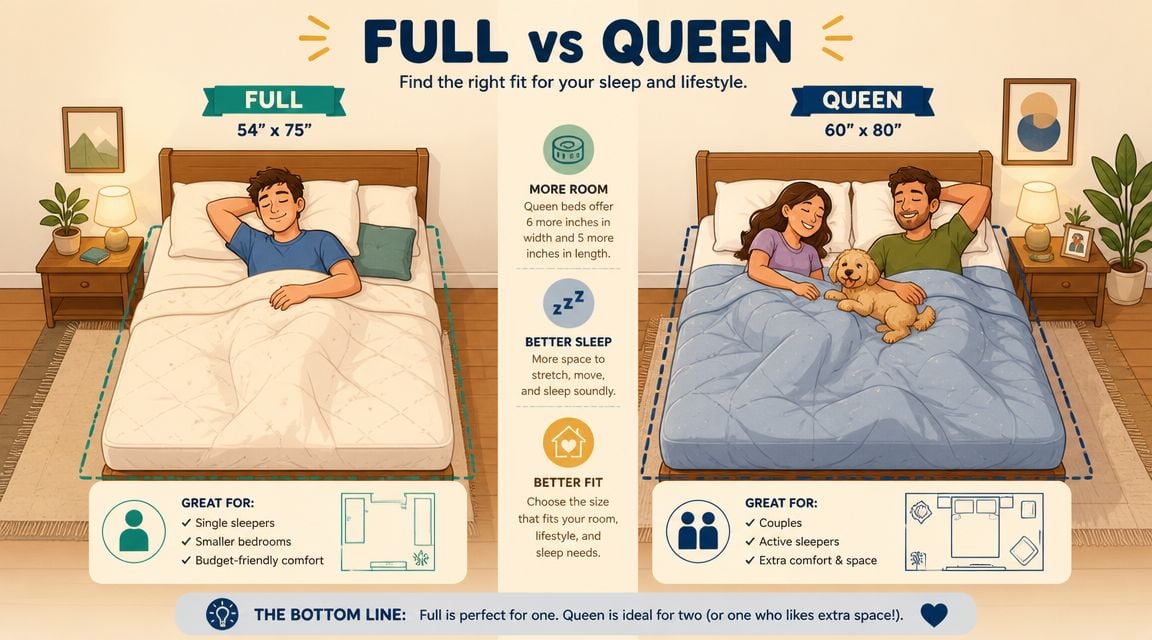
A full mattress measures 54 x 75 inches. A queen measures 60 x 80 inches. Those added inches change two things shoppers notice after the first week, not just in the showroom. How much room each person has to settle in, and whether the bed feels finished once pillows, blankets, and a frame are in place.
Width changes the feel of shared sleep
For one sleeper, a full usually feels comfortable and efficient. For two adults, it starts to feel close fast. Shoulders compete for space, one person ends up nearer the edge, and any tossing or turning gets shared.
A queen gives a couple more breathing room without moving into king-bed territory. In practical terms, that often means fewer small sleep disruptions through the night. Anyone who sleeps light, runs warm, or likes a little space around them usually notices that difference right away.
I see this in our showroom all the time. A couple will sit on a full and say, "We can make that work." Then they lie on a queen for a minute and realize the extra width changes the whole feel of the bed.
Length matters for taller sleepers and real bed setups
The extra five inches in a queen matter most for taller adults. Anyone around six feet tall or above tends to feel the shortness of a full sooner, especially if they sleep on their back or stomach and stretch out.
Length also matters once you get beyond the mattress alone. A bed with a thicker headboard, footboard, or rails can make the setup feel bigger in the room and tighter at the foot of the bed. That is one reason we encourage Albany-area shoppers to plan the whole footprint, not just compare mattress tags.
If you are trying to picture that fit before buying, Tip Top's how to choose the best bed mattress size for your home guide is a helpful starting point, especially if you are weighing mattress size against frame style and walking space.
Personal space is not just a sleep issue
Bed size also affects how the room functions during the day. A full often leaves enough clearance for a dresser drawer to open fully or for one nightstand to fit without crowding the walkway. A queen asks more from the room, but it usually gives more back in nightly comfort.
That trade-off matters most in older Albany-area homes, smaller guest rooms, and bedrooms with angled walls or radiator placement. On a floor plan, the difference can look minor. In person, it can be the difference between a room that feels balanced and one that feels packed.
Frame style changes that feel too. Lower-profile options can make a bed look less bulky and keep the room more open visually. For families considering that approach, this guide on finding the perfect family floor bed shows how bed height and frame choice can shape the room along with mattress size.
Matching Your Bed to Your Lifestyle and Sleep Habits
The same mattress can feel right in one home and wrong in another. I see that all the time with Albany-area shoppers. A full may be the better fit for a solo sleeper who wants the room to stay flexible, while a queen often earns its space in a primary bedroom where sleep quality comes first.
Single sleepers and solo adults
A full works well for many single adults because it gives enough sleeping room without taking over the bedroom. That matters in apartments, older homes, and smaller second-floor rooms where every piece has to earn its place.
It is also a smart choice for bedrooms that do more than one job. If the room needs a desk, reading chair, or extra storage, a full usually keeps the space easier to live with day to day.
A queen still makes sense for one person in the right setting. Taller sleepers, people who spread out, and shoppers planning to keep the mattress through a move or a future bedroom upgrade often prefer the extra width and length.
Couples and shared sleep
Couples usually feel the difference more than solo sleepers do. A full can work for two adults, but it asks for more compromise. You notice your partner's movements more, you have less room to shift positions, and warm sleepers tend to feel crowded faster.
That trade-off gets sharper if one person is a light sleeper or keeps a different schedule. In those cases, a queen usually supports better rest because each sleeper gets a little more breathing room.
Some households also pair a queen with comfort features that support reading, recovery, or easier position changes. For shoppers comparing setup options, adjustable bed benefits for everyday comfort can be worth a look.
Guest rooms around the Capital Region
Guest rooms call for honest priorities. If relatives visit one at a time, or the room also stores seasonal items, a full often serves the space better. The room stays useful between visits, which matters in homes where square footage is tight.
A queen is the better call if overnight couples stay often and the room can handle the larger setup without feeling crowded. In our Freehold showroom, this is usually the point where shoppers stop thinking only about mattress size and start considering the whole setup, including frame style, bedding, and how guests will move around the room.
Delivery and future moves are part of the decision too. If the mattress may need to go upstairs, into a guest room over a garage, or out again during a home project, read this Home Removals Sydney guide before purchase. It is a practical reminder that size affects handling as much as sleep comfort.
Kids rooms that need to last
For kids and teens, a full is often the long-term value choice. It gives more room than a twin and usually fits the way a child's needs change over time, from sleepovers to study space to a more grown-up furniture setup.
A queen can still be the right pick for a larger bedroom, especially if the goal is to buy once and keep the bed for years. But in many family homes, a full leaves more usable floor space for everything else that has to happen in that room.
Planning Your Bedroom Layout for the Perfect Fit
A bed can fit on paper and still make the room awkward to live in. Albany-area homeowners run into this all the time, especially in older homes with tight wall sections, radiator placement, or closet doors that need full clearance.
What room size means in real life
A full usually works more comfortably in a modest bedroom. A queen often needs more breathing room around it, especially if you want two nightstands or a dresser across from the bed.
That difference shows up fast once the rest of the room is involved. Door swings, window trim, baseboard heat, low sills, and closet access all compete for the same space. In many Capital Region homes, those details matter more than the mattress dimensions listed on a spec sheet.
I usually tell shoppers to stop looking only at whether the bed fits wall to wall. The better question is whether the room still works on a normal weekday morning.
How to test a layout before delivery day
Start with the traffic path. You should be able to walk into the room, get to the closet, and make the bed without turning sideways around the footboard.
Then check the furniture that has to open or pull out:
- Entry door clearance: Make sure the door opens without hitting the bed or forcing an awkward path into the room.
- Drawer space: Dressers and nightstands need enough depth in front to open fully and stay usable.
- Shared movement: In a primary bedroom, both sleepers need room to get in and out without bumping into each other or the furniture.
- Frame bulk: Storage beds, upholstered side rails, and wider headboards can take up more room than shoppers expect.
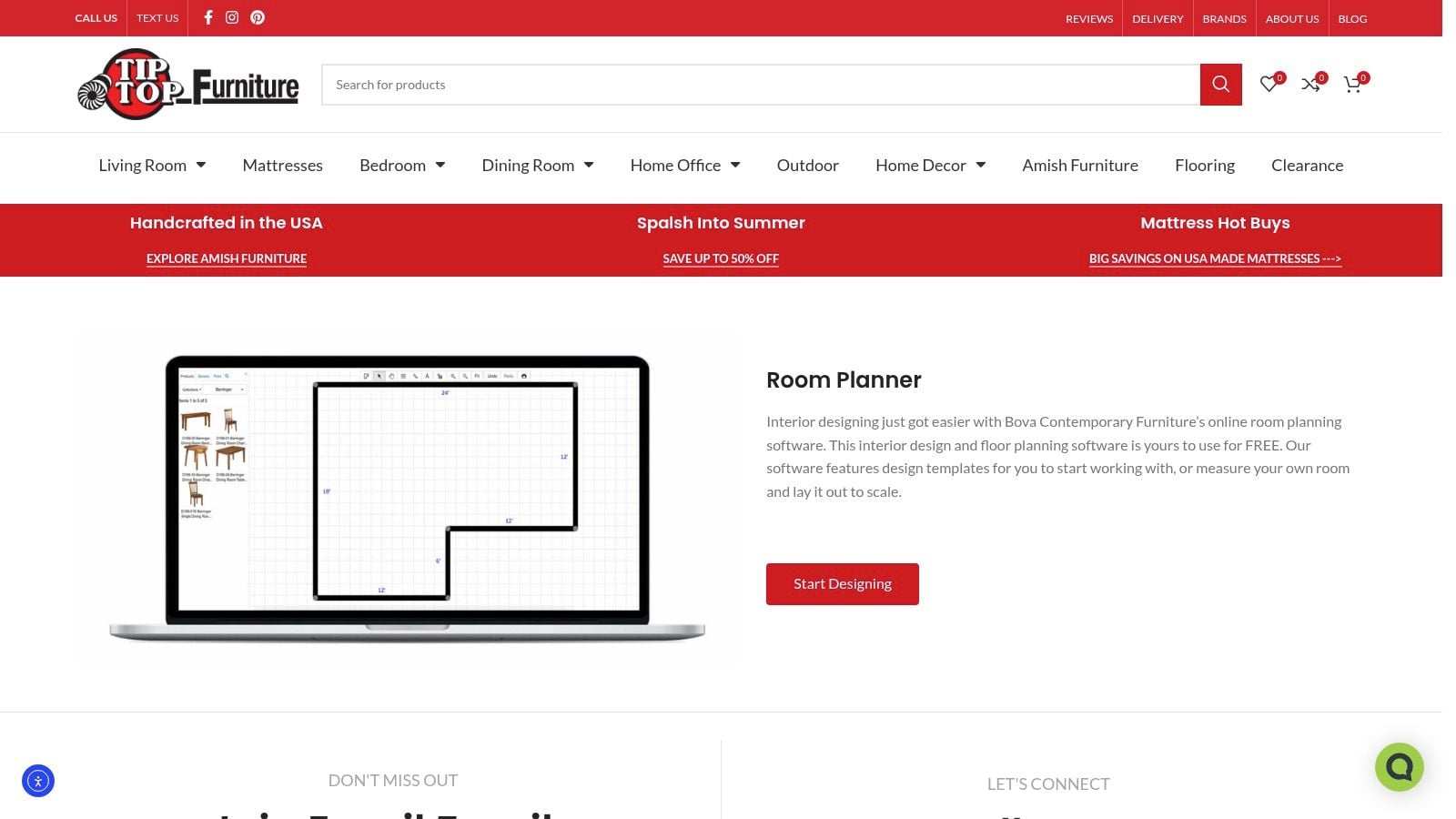
A tape measure helps, but a layout tool catches problems faster. Tip Top offers a free Room Planner that lets you place the bed, case pieces, and walkways to scale before you order. It also helps to review how to measure a room for furniture perfectly so your numbers reflect the actual usable space, not just the room's widest points.
Delivery matters too. If the mattress has to go up a narrow staircase, around a landing, or through a second-floor hall, size affects handling as much as sleep comfort. For households planning a move as well as a purchase, this Home Removals Sydney guide is a practical reminder to check the path into the room before delivery day.
In our Freehold showroom, this part of the decision often settles the full versus queen question. Once shoppers map the room accurately, the right size usually becomes clear.
Considering Frames Bedding and Overall Costs
A bed purchase gets more expensive, or more practical, once you look past mattress width. Frame style, sheet sizing, comforter fit, and replacement costs all shape whether a full or queen still feels like the right choice a year from now.
Why queen setups usually offer more choices
Both sizes are standard, but queen bedding and bed frames are stocked more heavily across the market. In practical terms, that usually means more frame styles, more sheet sets, and more comforter options without special ordering.
That difference shows up fastest when shoppers want a specific look. A simple metal frame or basic platform bed is usually easy to find in either size. A tall upholstered bed, a storage frame, or a coordinated bedroom set often gives you more queen options, especially in better fabrics and finish choices.
Bedding fit matters too. A comforter that is technically usable can still look skimpy or bulky once it is on the bed. Tip Top's comforter size chart for full and queen bedding helps sort that out before you buy the mattress, frame, and top layers separately.
Looking at the full cost of ownership
A full usually costs less at the start. The mattress is smaller, the frame is often less expensive, and extra bedding tends to cost less too. For a guest room, a kid's room, or a smaller spare bedroom, that can be the smarter use of the budget.
A queen often makes more sense for long-term adult use. If the room may serve a couple later, or if you want one setup that can stay put for years, paying more upfront can save you from replacing the whole bed later.
Frame construction changes the math. A low-profile platform bed keeps costs fairly controlled. A storage bed, custom wood frame, or upholstered headboard adds visual weight and price, and those upgrades can shrink the gap between full and queen less than shoppers expect. At our Freehold showroom, I often see homeowners settle on size only after they compare the complete package, not just the mattress ticket.
Protection and upkeep deserve a spot in the budget too. Mattress protectors, spare sheets for guest use, and basic care supplies are easy to overlook. For households furnishing a guest space or managing frequent turnover, understanding professional bed bug removal expenses can help put prevention costs in perspective before problems start.
Your Bed-Buying Checklist and Next Steps at Tip Top
The easiest way to decide between a full and a queen is to stop thinking about the mattress in isolation. A better choice comes from checking the room, the sleepers, and the long-term plan at the same time.
A simple checklist before buying
- Measure the room first: Include wall length, window placement, door swing, and where other furniture has to go.
- Decide who will use the bed most: A solo sleeper and a couple have very different comfort needs.
- Think beyond today: A guest room might later become a teen room, office, or primary bedroom backup.
- Check the supporting pieces: Frame height, storage needs, bedding, and nightstand space all affect the final fit.
- Match the bed to the room's job: Some rooms need maximum sleep space. Others need better flow.
If the room feels tight on paper, it usually feels tighter in person.
What to do next
For many shoppers, the decision becomes clearer after seeing both sizes laid out with real bedroom furniture instead of viewing mattresses by themselves. That helps with proportion, frame style, and judging whether the room will still feel balanced.
It also helps to compare the complete setup, not just the mattress label. A full may be the smarter fit for a compact guest room. A queen may be the better long-term answer for a main bedroom. Neither choice is automatically right without the room plan behind it.
For Albany, Troy, Schenectady, and Greene County homeowners, the next useful step is to bring room measurements, talk through how the room is used, and narrow the choice before ordering. Financing can also make it easier to purchase the full bedroom setup at once instead of piecing it together over time.
For shoppers comparing a full size bed vs queen size bed, the clearest next step is to test the layout before buying and then see both options in person. Tip Top Furniture & Mattresses serves the Greater Albany Capital Region from its Freehold, NY showroom and offers bedroom furniture, USA-made mattresses, custom-order options, a free room planner, design help, clearance finds, and flexible financing for homeowners who want the whole room to work together.