How to Mix Furniture Styles for a Cohesive Look


So, you’re standing there, staring at a sleek modern sofa and a cozy vintage armchair, wondering if they can possibly live in the same room. We see this all the time. Homeowners from Albany to our Freehold, NY showroom worry about creating a space that just looks… wrong. A jumbled mess.
But here’s a little secret we’ve learned from our family-owned business, which has been serving the Greater Albany Capital Region since 1978: the most beautiful, inviting homes are the ones that tell a story. Your story. And that story is built from pieces you absolutely love, no matter what “style” they’re supposed to be.
Forget the rigid rules. Mixing furniture styles is really about finding a common thread that ties everything together. It could be a shared color, a similar sense of scale, or even a repeating texture. Once you start thinking that way, you can confidently create a room that feels curated, personal, and uniquely you.
Why an Eclectic Home Is a Happy Home
This guide is your roadmap to getting that cohesive, stylishly eclectic space you're dreaming of. It’s less about following a strict formula and more about learning to see the harmony in the details. Blending different styles isn't just a fleeting trend; it’s a shift toward creating homes with real heart and soul.
A Growing Movement Toward Personalization
The push for truly unique home design is bigger than ever. In North America, over 50% of homeowners now report mixing furniture styles. Some of the most popular combos we see are mid-century modern with a touch of farmhouse, or industrial pieces warmed up with bohemian textiles.
This move away from perfectly matched room sets is all about self-expression. People are tired of cookie-cutter rooms. They want to curate their spaces piece by piece, creating a collection that feels authentic. If you want to dive deeper, you can discover more insights about the growing furniture market and see just how much eclectic tastes are shaping the industry.
Expert Tip: Try thinking of your room as a conversation. A clean-lined, modern table can absolutely "talk" to a rustic, handcrafted Amish chair. Our Professional Design Services team has helped clients find these connections since 1984. Maybe they share a similar wood undertone, or their shapes complement each other. It's those little connections that make the conversation interesting.
This approach is what allows you to weave together treasured family heirlooms, fun flea market finds, and new investment pieces all into one harmonious look. It’s a design strategy that honors where you’ve been and where you’re going, all in the same room.
To get started, it helps to ground your design plan in a few key concepts. These aren't restrictive rules, but rather foundational ideas that help ensure your eclectic mix feels intentional and balanced, not chaotic.
Below is a quick-reference table that breaks down these core principles. Think of it as your cheat sheet for creating a room where every piece, regardless of its style, works together beautifully.
Core Principles for Harmonious Interiors
| Principle | Actionable Tip | The Impact |
|---|---|---|
| Scale & Proportion | Group items of similar visual weight. A delicate antique table will be swallowed by a massive sectional. | Creates visual balance and ensures no single piece overpowers the room. The space feels comfortable and properly arranged. |
| Color Palette | Choose a unifying color scheme (e.g., 3-5 colors) and repeat it across different pieces and textiles. | A consistent color story ties disparate styles together, creating a cohesive and intentional look. |
| Material & Texture | Repeat at least one material (like a wood tone or a metal finish) or texture (like velvet or linen) throughout the space. | This repetition provides a subtle, unifying thread that connects different items and adds depth and interest to the room. |
| Balance | Distribute different styles evenly. Don't cluster all your modern pieces in one corner and all your traditional ones in another. | Achieves a dynamic yet harmonious feel. The eye moves smoothly around the room, appreciating the curated mix. |
By keeping these four principles in mind, you're not just randomly placing furniture; you're actively composing a space. It’s the difference between a room that feels accidentally thrown together and one that feels thoughtfully and personally designed.
Establish Your Room's Anchor Piece
Every beautifully mixed room our design team has seen starts with a single, confident decision. Before you even think about layering in different styles, you have to pick your room's anchor piece. This is the star of the show—the largest or most visually dominant item that sets the primary tone for the entire space.
Think of the substantial sofa in your living room, the bed in your main bedroom, or the dining table that will host countless family meals. This anchor doesn't just fill a space; it grounds it. Its style, material, and scale will guide every other choice you make, creating a clear starting point. For example, if you start with a solid wood, handcrafted Amish dining table from our Freehold showroom, you’ve established a timeless, heirloom-quality foundation. Its warmth and durability make it the perfect base to build upon with more contemporary chairs or modern lighting fixtures.
Finding Your Foundation
Choosing a high-quality anchor is a real investment in your home's future. It provides stability and longevity, which makes the rest of the design process feel far less intimidating. Instead of trying to make a dozen small decisions at once, you can focus on finding pieces that complement this one key item. Your anchor piece is the design element all other pieces will "speak" to.
Since 1978, we’ve seen that the most successful eclectic rooms in the Albany area begin with one piece the owner truly loves. Don't start with trends; start with a piece that has meaning and quality, and the rest will fall into place.
This approach really simplifies the process of mixing furniture styles. Once your anchor is in place, you can confidently add contrasting elements. A sleek, modern sofa, for instance, can be beautifully balanced by a more ornate, traditional coffee table. To get this crucial secondary piece right, check out our guide on how to style the perfect coffee table, which offers practical tips for creating a stunning centerpiece.
A Simple Decision-Making Framework
To help simplify your choices when building around your anchor, this simple decision tree visualizes the thought process.
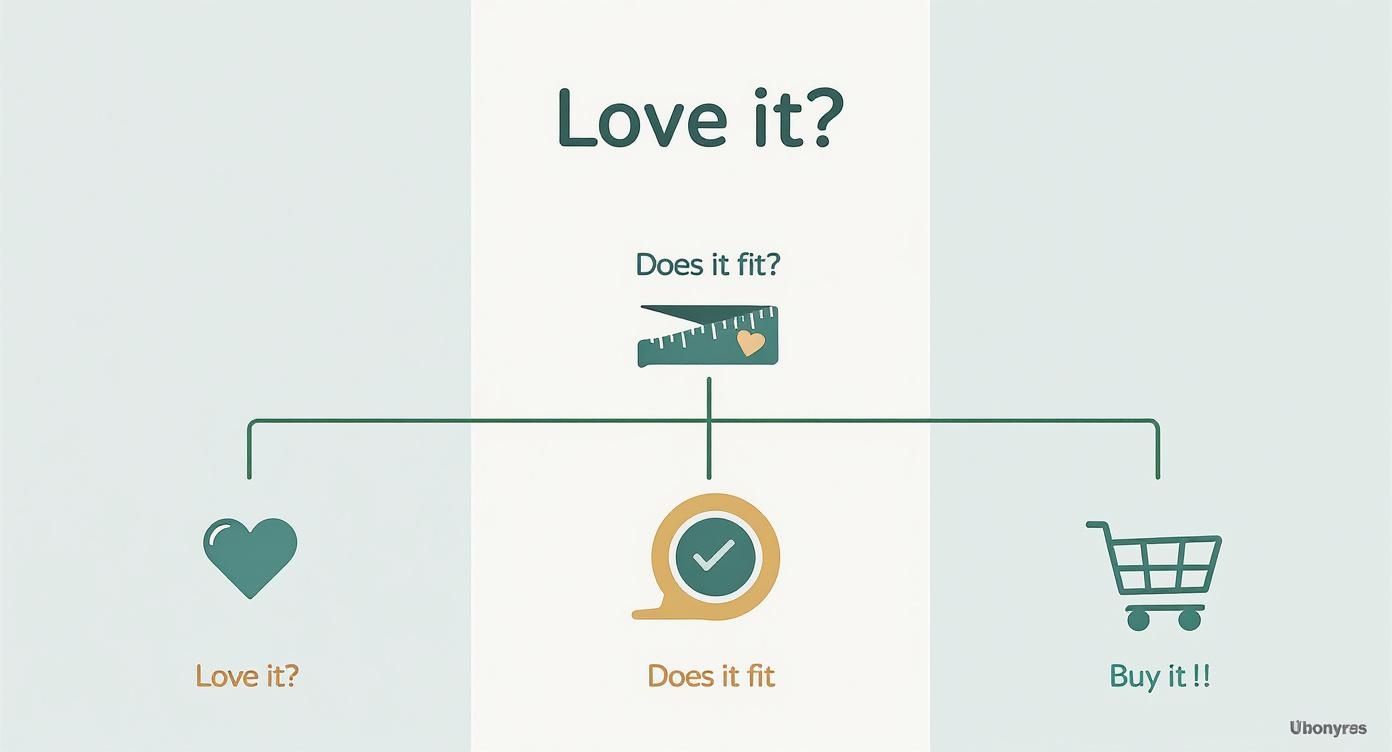
The key takeaway is to lead with what you love and then verify its practicality. By starting with a strong, well-loved anchor piece, you ensure your room has a solid, stylish foundation that reflects your personal taste from the very beginning.
Apply the 80/20 Rule for Balance in Your Capital Region Home
One of the most effective, yet simple, principles our design team has used for decades is the 80/20 rule. Think of it as a designer's secret for getting a look that feels intentionally eclectic, not accidental or chaotic. It’s a great way to take the guesswork out of mixing furniture styles, especially when you're worried about how much contrast is too much.
The idea is really straightforward: let 80% of your furniture and decor stick to one primary style. This creates a solid, cohesive foundation for the room. The other 20% is your space to play—that’s where you introduce a secondary, contrasting style to add personality and a little bit of drama.
Putting the Rule into Practice
Let's picture a living room right here in the Albany area that’s mostly traditional. You'd start with your big pieces, like a classic, comfortable sofa and a solid wood coffee table, making up your 80%.
The last 20% is where the magic happens. This could be a pair of sleek, mid-century modern accent chairs sitting opposite the sofa, or maybe a geometric, industrial-style bookcase against one wall. That strategic splash of contrast keeps the room from feeling flat or like it came straight out of a catalog. It’s that element of surprise that makes a space feel truly curated and personal.
Since starting our family business in 1978, we’ve learned that a perfectly balanced room isn’t about matching everything. It's about creating a harmonious conversation between different pieces, and the 80/20 rule provides the perfect script.
This method works wonders with accent walls, too. Just like dedicating one wall to a bold color, that 20% of your furniture can serve a similar purpose by creating a focal point. You can read more about this strategy in our guide on creating a perfectly balanced accent wall.
Your Secret Weapon for the Perfect 20%
Finding that perfect accent piece is where our custom ordering service really shines. It’s practically made for this exact situation. If you’ve established a mostly rustic room (your 80%) and need a modern armchair (your 20%), we can help you select the ideal fabric or finish to tie it all together. This ensures your accent piece doesn’t feel random, but instead looks like it was chosen with an expert eye.
And you wouldn't be alone in trying this. This approach is getting more and more popular. Recent surveys show that over 60% of homeowners are now intentionally mixing furniture styles in their homes. Some of the most common pairings we see are Scandinavian modern with mid-century vintage and industrial with rustic, proving that thoughtful contrast is at the heart of contemporary design. You can read the full research about these home design trends to see just how homeowners are creating these unique spaces.
By applying the 80/20 rule, you can confidently join them and create a balanced, stylish home that is uniquely yours.
Unify Your Space with Color and Texture
Once you've settled on your anchor piece and have the 80/20 rule in mind, it's time to pull everything together. This is where color and texture truly shine—they're the secret ingredients that make a room feel cohesive and intentional.
Think of color as the invisible thread that connects a sleek, modern lamp to a rustic, handcrafted Amish cabinet. They don't have to match perfectly, but they need to speak the same language. The trick is to establish a consistent color palette by choosing three to five core colors and sprinkling them throughout the space.
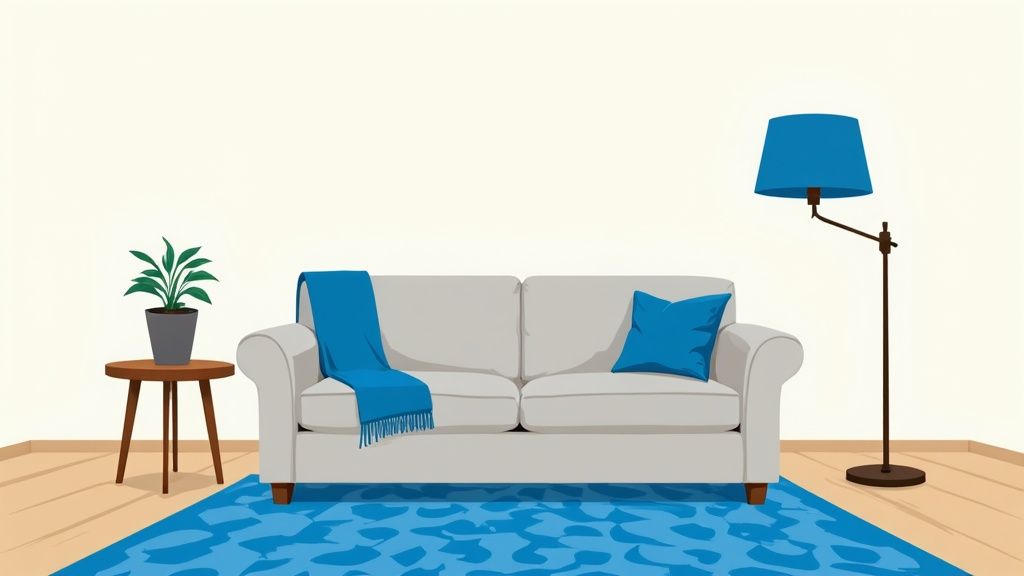
This repetition creates a visual rhythm that guides the eye, making the different styles feel like they belong together. For instance, the deep blue from a throw pillow on a traditional sofa can be echoed in a piece of abstract art above a contemporary console table. That simple link is all it takes. If you're looking for fresh ideas, our guide on how to add color to your home without painting is a great place to start.
Layering with Texture for Depth
Texture works in a similar way, but it adds a sensory layer that makes a room feel rich and inviting. When you mix different tactile surfaces, you create a space that’s not just interesting to look at but also compelling to touch. It’s a subtle but powerful element for successfully mixing furniture styles.
A great mix of textures might include:
- The smooth, buttery feel of a leather armchair.
- The visible, pronounced grain of a solid wood coffee table.
- The inviting softness of a velvet curtain or a chenille throw.
- The cool sleekness of a polished metal floor lamp.
A well-designed room engages more than just your eyes. You want to create a space that feels as good as it looks. A thoughtful blend of textures is how you get that depth and comfort.
Even your flooring plays a huge part in this. As a one-stop-shop serving the Greater Albany Capital Region, we've seen how crucial it is to get the foundation right. The color and texture of your carpet or hardwood set the stage for every piece of furniture you place on it, helping to create a complete, unified feel from the ground up.
Mastering Scale and Visual Weight
Getting the scale wrong is one of the fastest ways to make a room feel… off. When you're mixing furniture styles, it’s a bit like building a team—every piece needs to play its part, but no single item should hog the spotlight. A huge, overstuffed sectional next to a delicate, antique side table is a classic example. The room immediately feels lopsided and just plain uncomfortable.
The secret is to balance the visual weight of your furniture, which isn't always the same as its physical size. A "heavy" item, like a dark, solid wood media console, naturally draws a lot of attention. To balance it out, you don't necessarily need another big, heavy piece. Instead, you can group a few lighter items on the other side of the room, like pairing a tall floor lamp with a cozy armchair. This grouping creates a sense of equilibrium that’s incredibly pleasing to the eye.
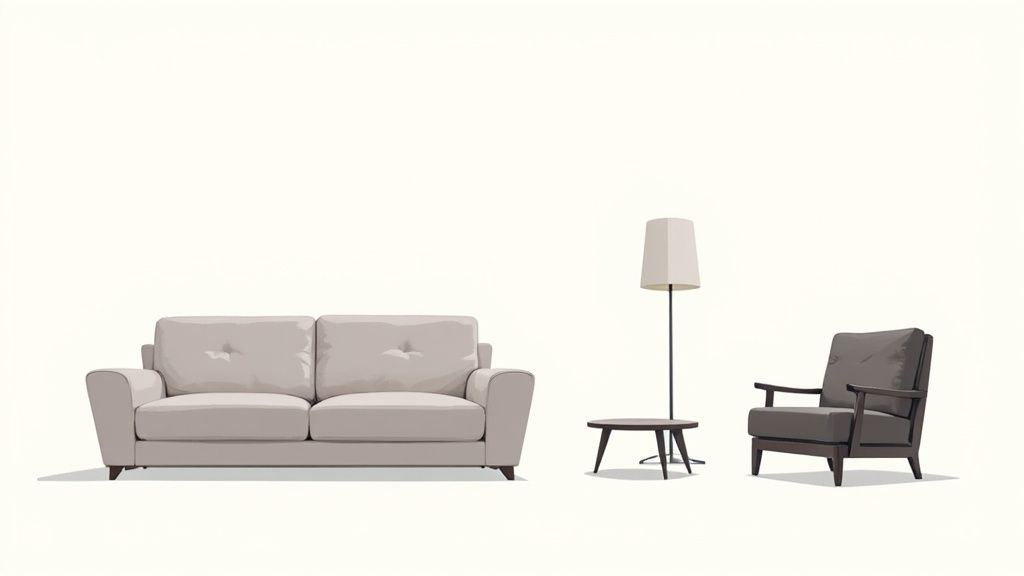
This idea has become even more important as more of us embrace multifunctional furniture to get the most out of our space. The global market for this type of furniture was recently valued at USD 15.9 billion, a number that’s growing as people lean into eclectic interiors where looks and practicality have to coexist. It just goes to show that homeowners are getting savvier about using pieces that are beautiful and useful, no matter the style.
Get Your Proportions Right Before You Buy
It can be tough to visualize how different pieces will actually look together in a room. A sleek, modern bed frame might feel light and airy on its own, but how will it look flanked by ornate, traditional nightstands? Will the combination feel balanced or just… strange? This is where a little bit of planning makes all the difference.
Before you fall in love with a piece, you have to understand the dimensions of both your room and the furniture you're looking at. Our guide on how to properly measure furniture for your space has simple, step-by-step instructions to make sure you get a perfect fit every time. This one check can save you from the common mistake of buying something that’s way too big or small, which instantly throws the whole room off balance.
As a family-owned business serving the Albany Capital Region since 1978, we've seen firsthand that the most successful rooms are the ones where proportions are respected. A well-scaled room just feels calm and intentional.
When you master scale and visual weight, you’re ensuring that every item in the room—from the biggest sofa to the smallest accent table—is working together to create a space that feels harmonious and whole.
Use Decor to Bridge Different Styles
The final layer—your accessories and decor—is what really pulls everything together. I like to think of items like rugs, lighting, and artwork as the connectors that bridge the gap between your different furniture pieces. They are the essential finishing touches when you're figuring out how to mix furniture styles like a pro.
A vibrant, patterned rug, for example, can sit under both a sleek modern sofa and a vintage chest, uniting them with shared colors and textures. It’s a simple addition, but it creates a common ground that makes two distinct styles feel like they belong in the same conversation.
Tie It All Together with Accents
These finishing touches are also where you can find incredible value. At our Freehold, NY showroom, we always tell customers that the right lamp or mirror can completely change the feel of a room, often for a surprisingly small investment.
Consider these small but mighty elements:
- Lighting: A modern arc lamp can elegantly hover over a traditional armchair, instantly linking the two eras.
- Textiles: Throw pillows and blankets are your best friends for repeating colors from one piece of furniture to another, creating a cohesive color story across the room.
- Artwork: A large piece of contemporary art can serve as a stunning backdrop that ties together rustic and industrial elements underneath it.
Since 1978, we've seen that the most thoughtfully designed rooms here in the Albany Capital Region are the ones where the details have been considered. Decor isn’t an afterthought; it’s the glue that holds your eclectic vision together.
Finding unique, high-quality lamps, mirrors, or accent pieces doesn't have to be a major expense. Our clearance section is a fantastic place to discover character-filled items without a hefty price tag. For those bigger refreshes, our flexible financing options make getting everything from the sofa to the final decor piece feel manageable and stress-free.
For more ideas on using patterns effectively, explore our advice on how to mix and match patterns to find the perfect balance.
Answering Your Top Questions About Mixing Furniture Styles
Even with the best game plan, a few questions always seem to pop up once you get started. It's totally normal. Here are some quick answers to the design dilemmas we hear most often from homeowners right here in the Albany Capital Region, so you can keep your project moving forward.
Can I Really Mix Different Wood Tones in the Same Room?
You absolutely can! In fact, you should. Mixing wood tones is what gives a room that collected-over-time, professionally designed feel. A room where everything is a perfect match can feel a little flat and dated.
The trick is to pick one dominant wood tone to ground the space. Think of your biggest pieces, like a dining table or a substantial media console. From there, you can layer in other wood tones through smaller items like side tables, chairs, or even picture frames.
To keep it all looking intentional, pay attention to the undertones (warm, cool, or neutral). For example, the warm, rich tones of our solid oak Amish furniture look fantastic alongside lighter maple or pine accents. It creates a beautiful depth you just can't get from a matched set.
What's the Single Biggest Mistake People Make?
Hands down, it's getting the scale wrong. I've seen it time and time again—beautiful individual pieces that just don't work together because their proportions are off. When the furniture is too big or too small for the room (or for each other), the whole space feels chaotic and unbalanced.
The goal is to consider the visual weight of every item. How heavy does it feel in the room? How does it relate to the pieces around it?
A well-proportioned room just feels right. It has a sense of calm and intention that lets your different styles sing together instead of competing for attention.
This is exactly why we offer our free online room planner. It’s a lifesaver for visualizing how different pieces will actually fit and feel in your space before you commit. You can play around with layouts and get the balance just right.
How Can I Make My Room Refresh Affordable?
Creating a space you love shouldn't break the bank. My best advice is to invest in a high-quality anchor piece—the one item you’ll use and love every day, like a great sofa or one of our durable, USA-made mattresses.
Our flexible financing options make it easier to get that foundational piece you really want without having to pay for it all at once.
Once you have your star player, you can fill in the rest of the room by being a savvy shopper. Keep an eye on our Clearance section for incredible deals on high-quality decor and accent furniture. This approach lets you put your money where it counts the most while still pulling together a stunning, curated look on a budget.
Ready to create a home that truly reflects your style? The design experts at Tip Top Furniture & Mattresses have been helping homeowners in Freehold and the Greater Albany area do just that since 1978.