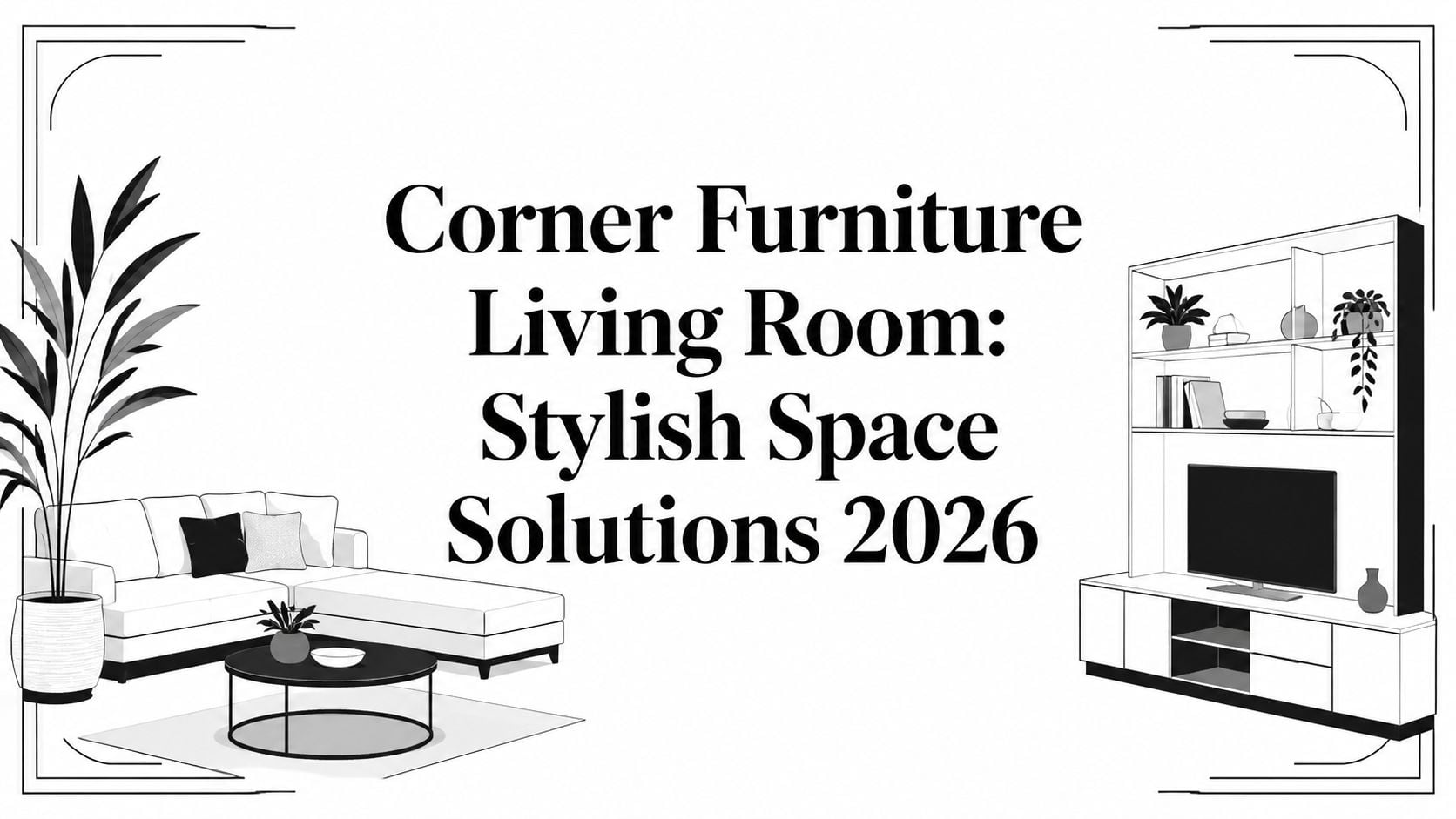
Corner Furniture Living Room: Stylish Space Solutions 2026

A lot of living rooms in the Albany Capital Region share the same problem. One corner sits empty, another gets stuffed with a lamp that never gets turned on, and the seating arrangement feels like it was pushed into place instead of planned. In older homes around Greene County and in open layouts closer to Albany, Schenectady, and Troy, those corners often decide whether the room feels calm or cramped.
That's why corner furniture living room planning matters more than is often realized. Done well, a corner piece can turn dead space into seating, storage, or a focal point that effectively helps the whole room function. Done poorly, it can choke traffic flow, block light, and make even a decent-sized room feel tight.
Family-owned furniture stores in Freehold, NY have spent decades helping local homeowners solve exactly this kind of layout problem. Since 1978, neighbors across the Capital Region have looked for practical answers, not decorating fluff. The best results usually come from the same approach: define the corner's job, measure carefully, and choose a piece that earns its footprint.
Table of Contents
- Making the Most of Every Corner
- Choosing the Right Type of Corner Furniture
- How to Measure Your Living Room for Corner Pieces
- Styling and Arranging Corner Furniture for Flow and Beauty
- Unlock Your Space with Custom Corner Solutions
- Your Local Guide for Furniture in the Albany Capital Region
Making the Most of Every Corner
A common local layout goes like this. The sofa lands on the longest wall, the television claims another wall, and the back corner gets ignored because nothing seems quite right there. Homeowners try a plant, then a chair, then a small table. The room still feels unfinished.
The problem usually isn't taste. It's function. A corner needs a purpose before it needs decoration.
In practical living rooms, corner furniture works because it captures space most rooms leave unused. Corner furniture maximizes spatial efficiency in living rooms by utilizing 90–120 degrees of unused wall perimeter, reducing required floor footprint by up to 18% compared to traditional linear arrangements, according to this corner furniture efficiency reference. That matters in compact homes, apartments, and open-plan family rooms alike.
Practical rule: An awkward corner rarely needs more accessories. It usually needs a clearer assignment.
For some households, that assignment is more seating. For others, it's closed storage for games, media, or seasonal décor. In a narrow room, a corner unit can soften the stop-and-start feeling that happens when every piece sits in a straight line.
Homeowners working with tighter footprints often benefit from studying small-space furniture ideas for better layout planning. The best corner solutions borrow that same discipline. Every inch has to serve the room, not just occupy it.
A well-used corner changes the whole room's rhythm. It can make a conversation area feel grounded, make a television wall feel complete, or give an open plan a clear edge without adding clutter.
Choosing the Right Type of Corner Furniture
The best corner piece depends on what the room is missing. Seating, storage, media support, and display each ask for a different shape and scale.
Start with the corner's real job
A living room corner usually falls into one of four categories:
- The seating corner that needs to hold more people without swallowing the room
- The storage corner that should hide clutter and bring order
- The media corner that needs to support a television or electronics layout
- The transition corner that connects the living area to a dining space, hallway, or stair
That's why broad market demand keeps leaning toward seating. Seating furniture, which includes the corner sofas and recliners central to living room corner furniture configurations, generated USD 113.4 billion in revenue in 2025 alone, representing the largest product category due to high demand in urban households where space efficiency is critical, based on living room furniture market analysis from GM Insights.
Which type works best
A useful way to decide is to match the furniture type to the room's pressure point.
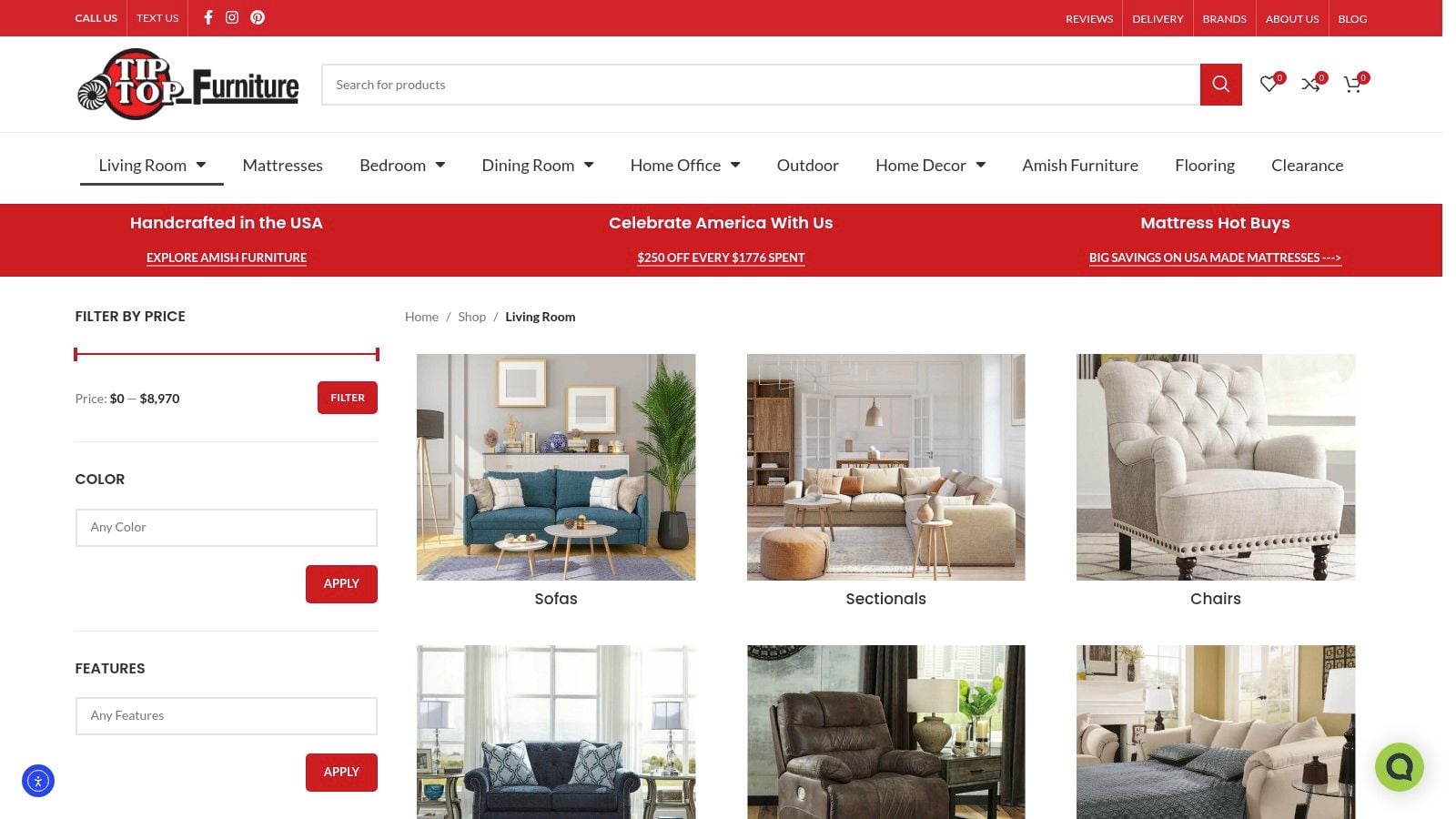
Corner sectional or sofa: Best when the room lacks enough seating or needs to define a gathering area. It works especially well in open-concept homes because the back of the sectional helps outline the living zone. Homeowners comparing arm depth, chaise direction, and scale can get a head start with this corner sofa and chair selection guide.
Corner cabinet: Best when the room feels visually messy. A cabinet turns a neglected angle into real storage and usually improves the room faster than open shelving does.
Corner TV unit: Useful when the architecture makes a flat-wall media setup awkward. It can relieve a difficult wall arrangement, but it isn't always the answer. In many rooms, a longer straight console often looks cleaner than forcing the television into a corner.
Corner shelves or étagère: Good for lighter visual weight. These work when the room already has enough seating and storage, but needs height or display space.
A corner sofa solves one problem and creates another if the room still doesn't have enough walking space.
That's the trade-off homeowners need to respect. Larger seating pieces add comfort, but they also set the room's path lines. Cabinets provide function with less sprawl, but they don't help if the core issue is too few seats. The right answer isn't the trendiest piece. It's the one that fixes the room's biggest weakness first.
How to Measure Your Living Room for Corner Pieces
Most corner furniture mistakes happen before the furniture ever arrives. The room gets measured loosely, the walkway gets guessed, and a good-looking piece ends up feeling too big once it's in place.
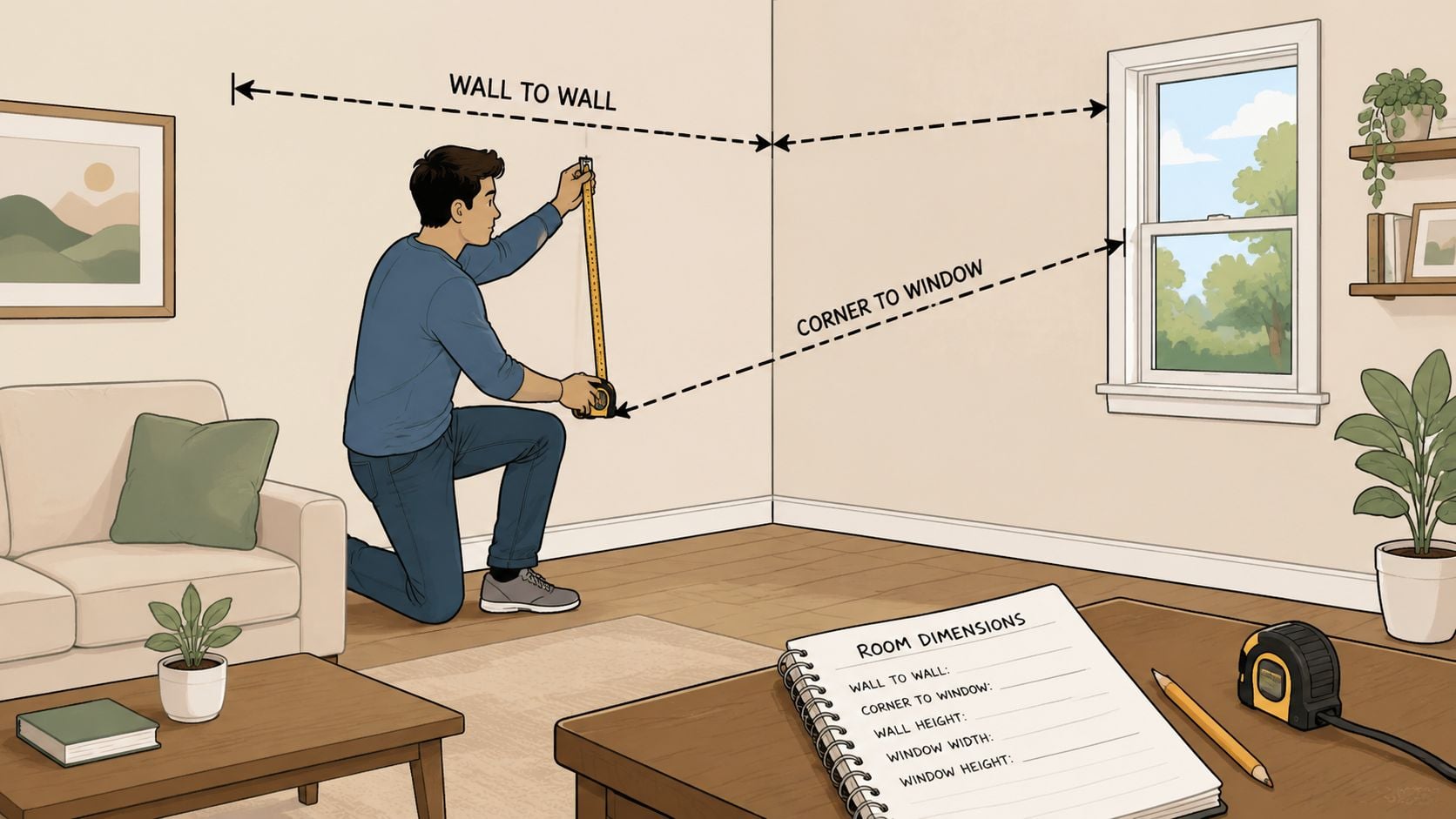
Measure the room before the furniture
Start with the architecture, not the product tag.
- Measure both walls of the corner. Write down the full wall lengths and note where trim, vents, outlets, and windows interrupt usable space.
- Measure the room depth. This matters more than many homeowners expect, especially with a chaise or sectional return.
- Mark fixed obstacles. Fireplace hearths, radiators, floor registers, and door swings can all limit where a corner piece can sit.
- Account for adjacent furniture. Coffee tables, recliners, and media units affect circulation even if they aren't touching the corner piece.
A rough sketch on paper helps. So does putting measurements into a digital tool before making a final decision. Homeowners who want to compare planning methods can compare floor plan software to see what kind of room-mapping approach fits their comfort level.
For more detailed prep, this room measuring guide for furniture placement is useful when the room has multiple openings or a trickier footprint.
Use the tape test before buying
Once the measurements are written down, the floor should be marked.
Use painter's tape to outline the exact footprint of the proposed sectional, cabinet, or chair. Include the depth, width, and any extended chaise or reclining section. Then walk the room as if the piece were already there. Open doors, pass through the traffic path, and check sightlines from the main entry.
Tape on the floor reveals layout problems faster than a showroom glance ever will.
Clearance matters. Expert analysis shows that maintaining at least 90 cm (36 inches) of clear circulation path between the sofa and other furniture is critical; adherence results in a 92% satisfaction rate for spatial flow, according to corner sofa sizing guidance from Loftstore.
A few practical checks help catch the most common misses:
| Check | What to look for |
|---|---|
| Walkway | Can someone pass through comfortably without turning sideways? |
| View line | Does the corner piece block windows, artwork, or the television view? |
| Reach | Are outlets, switches, and side tables still usable? |
| Scale | Does the taped outline feel balanced against the wall, or does it dominate the room? |
The tape test doesn't need to be fancy. It just needs to be honest. If the outline already feels tight, the actual furniture won't feel better once cushions and arms are in place.
Styling and Arranging Corner Furniture for Flow and Beauty
A corner piece shouldn't look like it was dropped into leftover space. It should look connected to the whole room.
Build a corner that belongs to the room
The strongest arrangements treat the corner as part of a composition, not a side note. A sectional needs a rug that's large enough to hold the seating area together. A corner cabinet needs enough visual company nearby so it doesn't look stranded. A reading corner needs lighting that reaches the seat, not just the floor around it.
When homeowners struggle with arrangement, the issue is often balance. One side of the room becomes heavy while the rest feels sparse. A corner sectional can create that problem quickly if there isn't a chair, coffee table, or cabinet elsewhere to distribute visual weight. To address this, a thoughtful living room furniture arrangement guide can help refine the room after the main piece is chosen.
For families browsing online before visiting a showroom, image quality matters more than many people realize. Looking at product photos from multiple angles can help reveal arm shape, leg style, and scale cues. This guide for ecommerce product images gives a helpful lens for evaluating furniture photos more critically.
Choose materials and accents with purpose
Styling works best when it supports how the room is used.
- For busy family rooms: Choose upholstery and finishes that don't demand delicate treatment. Texture can hide everyday wear better than very flat surfaces.
- For formal living spaces: A wood cabinet or well-proportioned sectional often carries the corner more elegantly than a casual overstuffed piece.
- For mixed-use rooms: Keep accessories restrained. A working room doesn't benefit from too many decorative fillers around the corner.
The most attractive corner in a living room is usually the one that feels easiest to use.
Lighting is often the element that completes the arrangement. A floor lamp can soften the vertical line of a cabinet or define a reading seat. Art above a corner unit can help anchor it, but only if the scale matches the furniture below. Throw pillows and blankets should echo the room's palette, not introduce a completely separate story.
A good corner setup feels settled. The eye moves through it comfortably, and the room still breathes around it.
Unlock Your Space with Custom Corner Solutions
Some living rooms don't need a better off-the-shelf option. They need a piece made for the room they have.
When stock sizes don't solve the problem
This comes up often in the Capital Region. Older homes can have unusual wall lengths, narrow entries, off-center windows, or corners that need storage but can't accept a standard cabinet width. In those rooms, compromising on size usually leads to one of two results. The piece looks undersized and temporary, or it overwhelms the wall and breaks the room's flow.
Custom ordering changes that equation. Custom-ordered corner furniture with personalized wood type and finish allows for exact accommodation of room dimensions within ±0.5-inch tolerance, a capability provided by Tip Top's Custom Order service since 1984, as noted on Tip Top's custom order background reference.
That level of fit matters when a corner has to work around trim, a baseboard heater, or a tight transition to another room.
Why Amish-made pieces fit this category so well
Corner cabinets, hutches, and storage pieces benefit especially from Amish craftsmanship because they're often solving more than one problem at once. They have to fit the room physically, suit the home stylistically, and hold up over time.
Solid wood construction also gives homeowners more freedom with finish selection. That's useful when a room already has existing wood tones that can't be ignored. Rather than forcing a near-match, a custom order lets the furniture belong to the space.
Homeowners weighing whether custom is worth it may find The Cabinet Coach's cabinet guide helpful for thinking through the differences between standard and more customized solutions.
Custom corner furniture makes the most sense when the room's limitations are architectural, not decorative.
That's the key distinction. If the problem is simple indecision, custom won't fix it. If the problem is a room that standard dimensions keep fighting, custom often becomes the cleanest answer.
Your Local Guide for Furniture in the Albany Capital Region
Homeowners in Albany, Schenectady, Troy, Greene County, and nearby communities usually need more than a showroom full of options. They need help narrowing those options down to what fits the room, the budget, and the way the household lives.
That's where local knowledge still matters. A team that understands older Upstate homes, open-plan renovations, and the practical needs of family living can save shoppers from expensive sizing mistakes. For homeowners still building their overall plan, this living room furniture selection guide is a useful place to start.
A strong local store also makes the process easier after the layout decisions are made. Professional design services help coordinate furniture with décor and flooring. Flexible financing can make a full-room update more manageable. Clearance pieces can be a smart answer for shoppers who need quality and quicker availability at the same time.
Freehold remains a worthwhile destination for shoppers who want to see craftsmanship, compare comfort in person, and get real guidance instead of generic advice. That combination is especially valuable when the piece in question has to solve a stubborn corner and support the room for years.
Tip Top Furniture & Mattresses helps homeowners across the Greater Albany Capital Region solve difficult living room layouts with personalized guidance, custom ordering, Amish-made craftsmanship, professional design support, flexible financing, and quality finds in the Clearance Corner. Visit the Freehold, NY showroom to explore corner furniture in person, or start planning the room with a design consultation that turns an awkward corner into a space that finally works.