How to Arrange Living Room Furniture: A Practical Guide from Your Local Experts

Before you even think about moving a single piece of furniture, the most successful living room arrangements start with a solid plan. As a family-owned business helping our neighbors since 1978, we've learned that a little prep work saves a lot of headaches. Measure your space, figure out what you’ll be doing in there, and then sketch out a basic layout. This is the secret to making sure that every piece, from a new USA-made mattress sofa to a handcrafted Amish accent chair, fits just right. It’s also how you avoid the classic mistake of buying furniture that’s too big or small for your home.
Your Blueprint for a Perfect Living Room Layout in the Albany Area
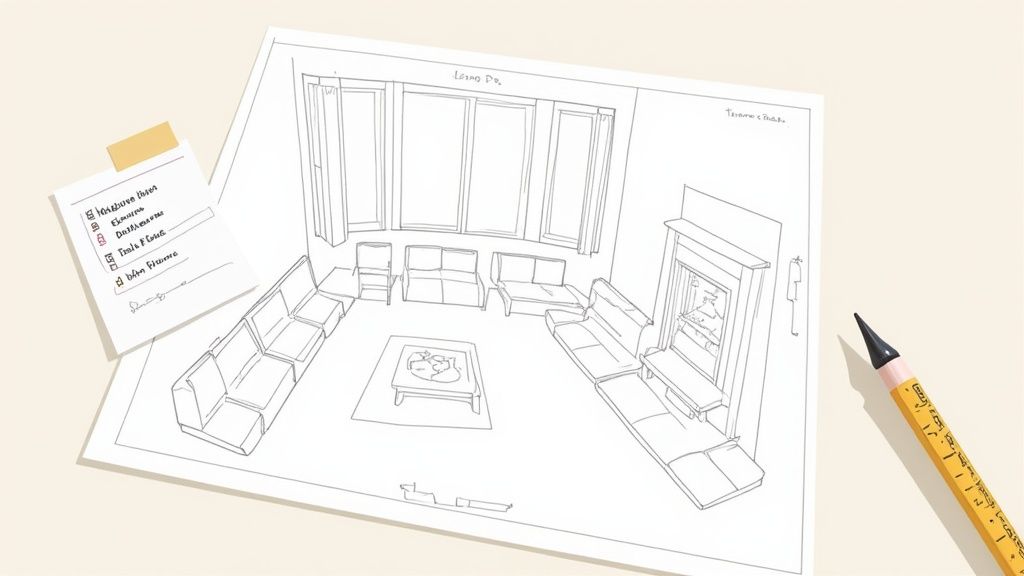
Here at Tip Top Furniture & Mattresses, our Professional Design Services team has been using the same foundational process since 1984. It's a tried-and-true method that has helped homeowners from Albany to Schenectady sidestep costly mistakes and create spaces they absolutely love. Trust us, with over 45 years of experience, we've seen it all.
The first move is always to measure your room. Grab a tape measure and jot down the length and width of the space. Don't forget to note where the windows and doorways are, and measure any permanent fixtures like a fireplace. A quick sketch on paper gives you a bird's-eye view to work from—it doesn’t have to be a masterpiece!
Defining Your Room's Purpose
Next, ask yourself the most important question: What is the primary function of this room? The answer will steer every decision you make. Is this a formal spot for entertaining guests, a laid-back family hub for movie nights, or your quiet corner for curling up with a good book?
- For Family Gatherings: You'll want comfortable, durable seating—like a large sectional available through our Custom Order options—and plenty of room for a coffee table to hold games and snacks.
- For Formal Entertaining: Your layout might be better suited to creating conversation zones using smaller sofas and accent chairs.
- For Relaxation and Media: The main goal is getting the best view of the television and creating a cozy, inviting vibe.
Establishing Clear Traffic Flow
One of the biggest headaches in any Capital Region home, whether it’s a historic brownstone in Troy or a new build in Albany, is creating clear pathways. You need to be able to walk through the room without bumping into things.
A good rule of thumb is to aim for at least 36 inches of clearance for major walkways. This one simple guideline can prevent a room from feeling cramped and chaotic.
For a quick reference, here are the core principles we follow to get started on any living room project.
Quick Guide to Living Room Furniture Arrangement
| Principle | Why It Matters | Actionable Tip |
|---|---|---|
| Measure First | Prevents buying furniture that is too large or small for the room. | Sketch your room on paper with all dimensions, including windows and doors. |
| Define Function | Determines the types of furniture and layout needed. | Decide if the room is for relaxing, entertaining, or family time to guide your choices. |
| Plan Traffic Flow | Ensures the room is easy and comfortable to move through. | Leave at least 36 inches for main pathways so the space doesn't feel cluttered. |
Following these simple first steps sets you up for a layout that truly works for your home and lifestyle.
By mapping out your layout on paper first, you get to experiment with different arrangements without doing any of the heavy lifting. This is how you make sure that beautiful, handcrafted Amish sofa you've been eyeing at our Freehold showroom will fit just as perfectly as you imagined.
This planning phase is absolutely crucial. For a more detailed guide on creating that initial sketch and taking a furniture inventory, you should check out our helpful article on how to plan your room layout. It’s the perfect next step before you come visit us.
Finding and Highlighting Your Room's Focal Point
Every great living room has a star—a natural focal point that grabs your attention and anchors the entire space. Your furniture layout should celebrate this feature, not fight it. In a lot of Capital Region homes, this might be something architectural, like a classic fireplace or a big picture window with a gorgeous Hudson Valley view.
Your first job is to figure out what that star feature is. Got a beautiful fireplace? Let's build a cozy conversation area around it. Blessed with a stunning view? Orient your main seating toward the window to bring that outdoor beauty inside. It’s that simple.
Creating a Focal Point When One Doesn't Exist
But what happens if your room doesn't have an obvious centerpiece? Don't sweat it. This is a common situation, and honestly, it’s a great design opportunity. You get to create your own focal point from scratch.
There are a few ways you can establish a strong anchor for the room:
- A Statement Sofa: Think of a sofa with a striking color, a unique shape, or a luxurious fabric. It can easily become the main event.
- An Artistic Wall: A huge piece of art, a thoughtfully curated gallery wall, or even a bold accent wall can create a powerful visual center.
- An Heirloom Piece: Sometimes, a single piece of furniture has enough gravity to hold the room. A beautifully handcrafted Amish bookshelf or a stunning media console from our Freehold showroom can absolutely be the star.
At its core, a focal point gives a room a sense of purpose. When you arrange your furniture around a central element, you get a layout that feels intentional and harmonious, not just like a random collection of pieces pushed against the walls.
The Sofa as the Ultimate Anchor
Let’s be real: given its size and how much we use it, the sofa is almost always the most important piece in any living room. In fact, a 2023 market analysis from Grand View Research highlights that sofas and couches are a dominant segment in a multi-billion dollar industry. It just goes to show how critical the right sofa is in defining your space.
When your sofa pulls double duty as the focal point, the rest of the layout just clicks into place. All your other pieces—chairs, tables, lighting—should be positioned to complement it. This is especially true if your TV is a big part of the room's function. Our design services team has been helping folks in Albany, Troy, and Schenectady perfect this exact balance for decades.
Mastering Spacing and Furniture Placement in Your Living Room
So, you’ve picked your focal point. Awesome. Now comes the part that really makes a room feel right: getting the spacing between your furniture just right. This isn’t about following a rigid rulebook; it’s more like choreographing a dance. Every piece needs its own spot, creating a natural flow that makes it easy to walk around and even easier to settle in for a good conversation.
Getting these distances right is what separates a room that feels awkward and cramped from one that feels open and intentional. It’s a small detail that makes a huge difference, and it's something our design experts have been obsessing over for more than 45 years here in the Greater Albany Capital Region.
This simple visual breaks down how to use that focal point of yours to guide the rest of your arrangement.
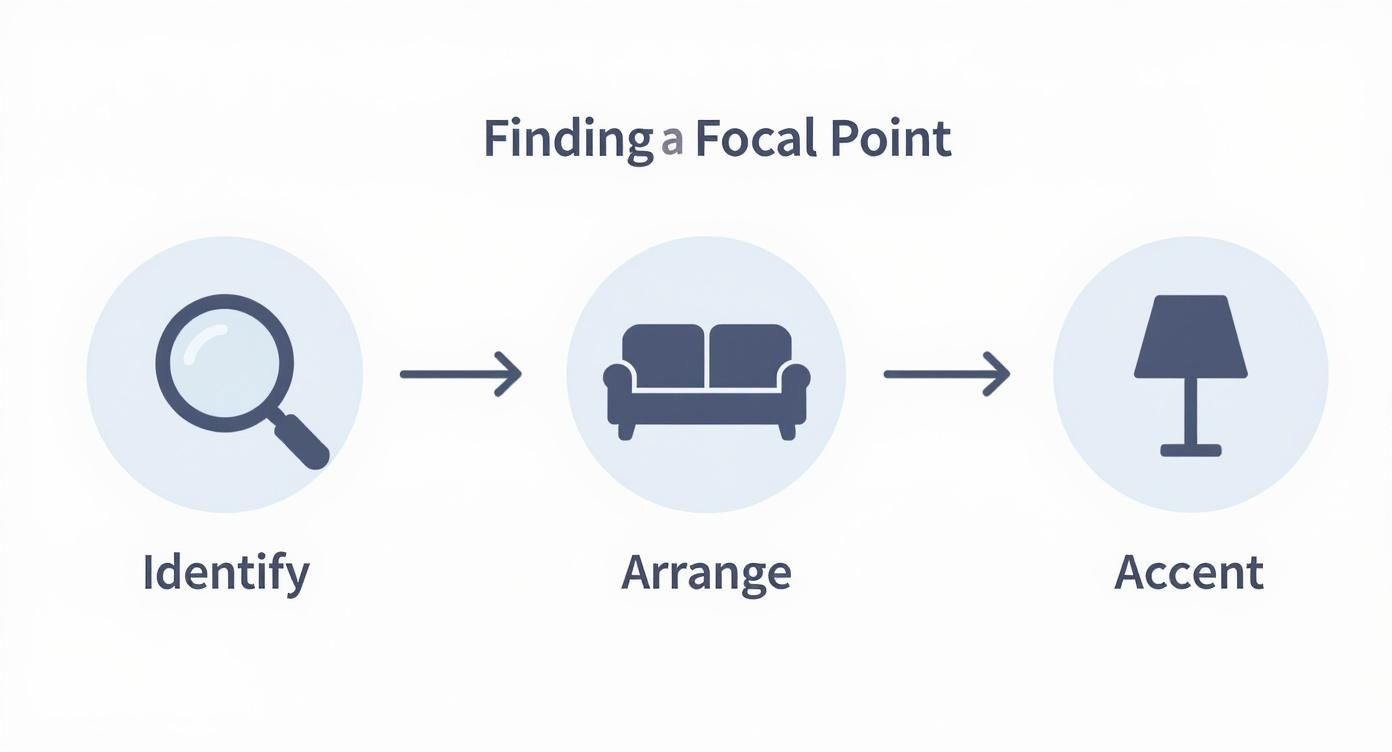
As you can see, it’s a layered process. You start with your main anchor piece and then build everything else out from there to create a look that feels cohesive and complete.
Key Spacing Guidelines for Your Layout
To get that professionally designed feel, there are a few key measurements we always come back to. Think of these less as strict laws and more as trusted guidelines that just flat-out work.
- Coffee Table to Sofa: Leave about 14 to 18 inches between the edge of your sofa and your coffee table. It's the sweet spot—close enough to set down your drink, but with plenty of legroom.
- Main Walkways: Keep your main traffic paths at least 36 inches wide. This is usually the route from a doorway into the room. Anything less and your living room starts to feel like an obstacle course.
- Conversation Distance: The best distance between seating pieces is right around 8 feet. Any further, and people have to raise their voices. Any closer, and things can feel a little too crowded.
- Area Rug Placement: A great trick is to make sure your rug is large enough for at least the front legs of your sofa and chairs to sit on it. This anchors the whole seating area and really defines the space.
Of course, nailing these measurements starts with knowing the size of your furniture. Before you start moving things around, check out our guide on how to properly measure your furniture to make sure everything will fit just as you've planned.
Tackling Common Living Room Layout Challenges
Here in the Capital Region, from Albany to Schenectady, we see living rooms of every imaginable shape and size. As a family business that’s been helping our neighbors since 1978, we’ve seen it all and helped countless people solve even the trickiest layout puzzles.
The secret? Don't look at layout quirks as problems. Instead, see them as a great excuse to get creative with your furniture arrangement.
The Small Living Room Dilemma
A smaller living room just means you have to be smarter about your choices. The real goal is to make every square inch count by picking multi-functional pieces that work harder for you.
- Go Vertical: Tall, slender bookshelves or an elegant floor lamp draw the eye upward, instantly creating a sense of height and space.
- Choose Leggy Furniture: When you can see the floor under a sofa or chair, the room automatically feels more open and airy. It’s a simple trick that works wonders.
- Multi-Functional Marvels: A storage ottoman is the unsung hero of small spaces. It can be your coffee table, extra seating, and the perfect spot to tuck away blankets.
One of the biggest mistakes people make in small rooms is shoving everything up against the walls. Try pulling your sofa out just a few inches. That little bit of breathing room can make the entire space feel bigger.
For a deeper dive, check out our guide on how to make a small room feel bigger for more tips tailored to compact living.
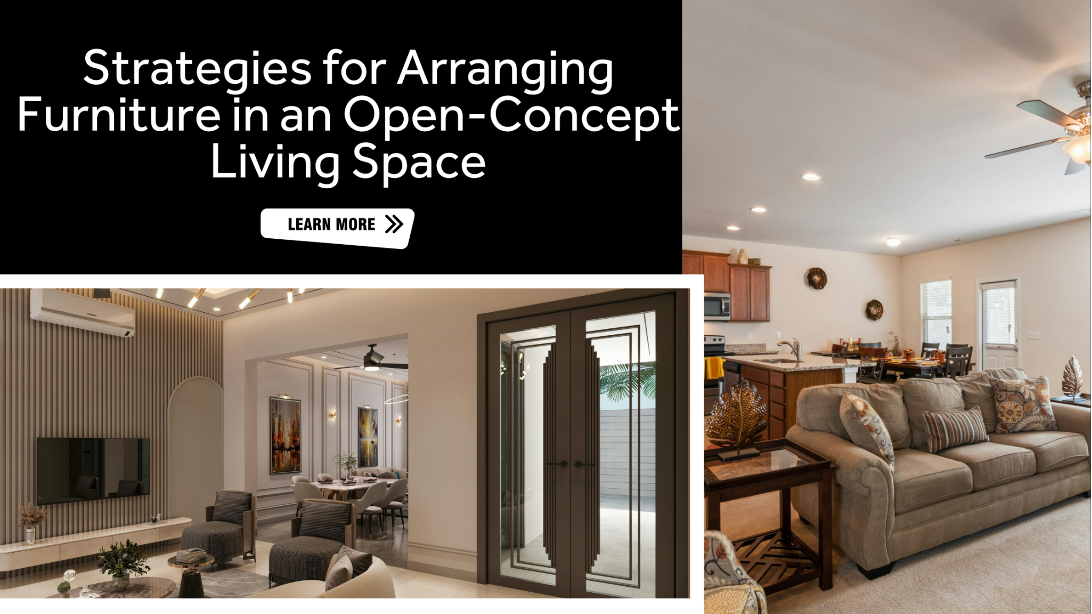
Taming the Large Open-Concept Space
Big, open-concept rooms can sometimes feel a bit cold or cavernous. The key to making them feel cozy and inviting is to create distinct zones for different activities.
Area rugs are your best friend here. Use one to visually anchor your main living area, separating it from a dining space or walkway. You can also place a console table behind a sofa to act as a "half wall," which clearly defines your conversation zone without blocking the open feel. Think about creating a primary seating area and maybe a separate, smaller nook by a window with a comfy chair and a lamp—perfect for reading.
Arranging Furniture in Long, Narrow Rooms
That long, narrow living room—often called a "bowling alley"—is a classic feature in many Upstate New York homes. The most effective way to handle it is to break the room up into a few different zones.
This is where modular furniture really shines. Using different sections of a sofa or a few movable chairs lets you adapt the layout to whatever you need. By treating a long room as two or three smaller spots—like a main seating group, a small workspace, and a reading corner—you end up with a much more balanced and useful space. This is a perfect scenario for pieces from our Custom Order collection, which lets you pick furniture with the exact dimensions you need to define each zone perfectly.
Completing Your Look with Lighting, Rugs, and Decor
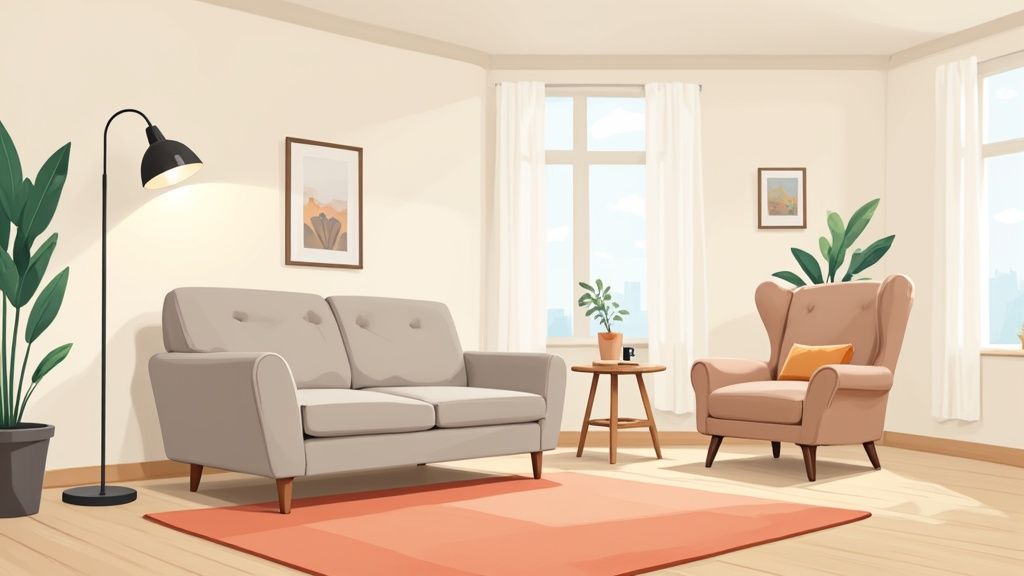
If your furniture arrangement is the skeleton of the room, then lighting, rugs, and decor are what give it a soul. This is where you move past the blueprint and start injecting your home with personality. Don’t think of these as afterthoughts—they’re essential tools for nailing the mood and making the space truly yours.
A well-lit room just feels better. It’s more welcoming, more usable. The best approach we've seen over the years involves layering three distinct types of light to create a perfectly balanced atmosphere.
- Ambient Lighting: This is your room’s main light source—think a ceiling fixture or recessed lighting—that casts a general glow over everything.
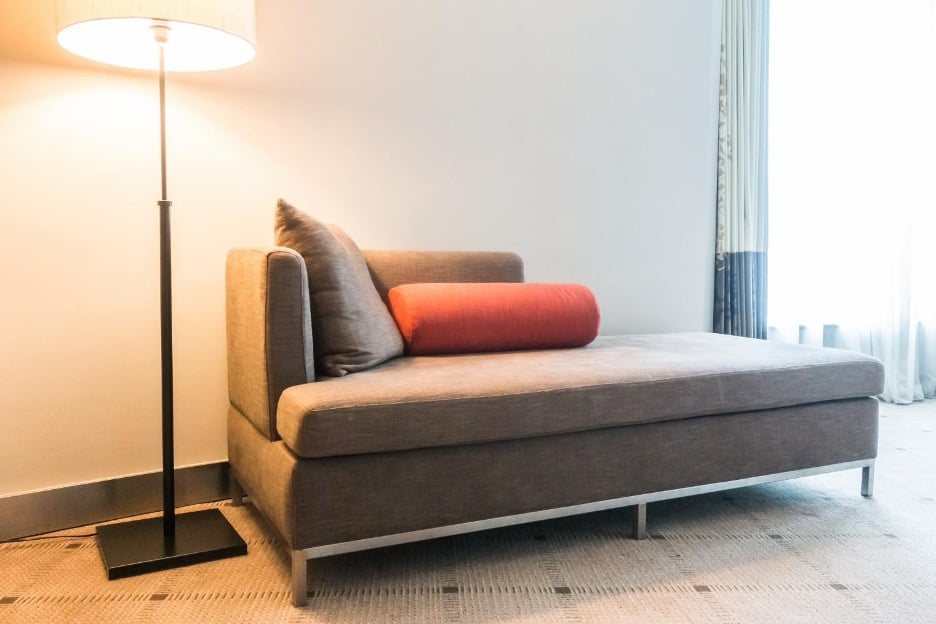
- Task Lighting: This is targeted light for specific activities. A floor lamp next to an armchair for reading is a classic example.
- Accent Lighting: This is the fun stuff! Use it to highlight a piece of art or show off the texture of a stone fireplace. It adds depth and drama.
Layering these three types of light gives you total control over the vibe. You can go bright and energetic for a party, then switch to soft and cozy for a quiet night in. For a deeper dive, our guide on putting your living room in the best light is packed with more ideas.
Anchoring Your Space with the Right Rug
An area rug is one of the most powerful pieces in your design toolkit. It’s what pulls your entire furniture arrangement together, defining the conversation area while adding color, texture, and warmth. The single biggest mistake we see people make? Choosing a rug that’s too small. It makes the whole room feel disconnected.
Here’s the golden rule: at a bare minimum, the front legs of your sofa and any accent chairs should sit comfortably on the rug. This is non-negotiable! It visually tethers all the pieces, creating a cohesive, intentional look. If you have a larger room, a rug big enough for all the furniture legs to rest on feels even more luxurious and grounded.
Accessorizing Without Creating Clutter
Now for the final touches: throw pillows, blankets, wall art, and family photos. These are the details that tell your story. The trick is to decorate with intention, not just fill every empty surface you see.
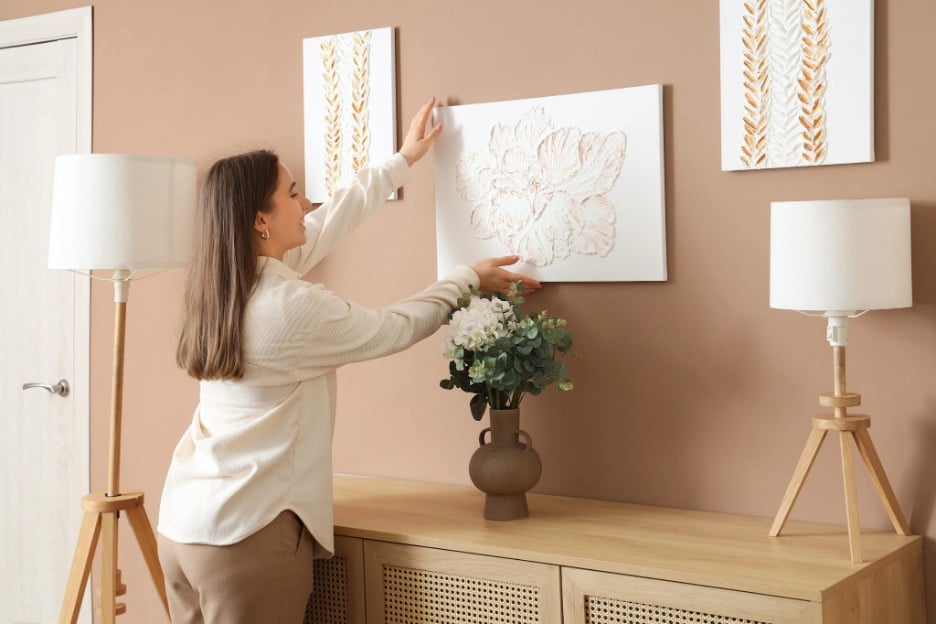
Try grouping smaller decorative items in odd numbers—threes or fives always look more dynamic and professionally styled. When hanging art, a good rule of thumb is to position the center of the piece at eye level, which is usually around 57 inches from the floor. And never underestimate the power of a few well-placed plants to add life and a pop of color to any corner.
Since 1978, our family has been helping homeowners in the Capital Region find all these finishing touches in one place. From gorgeous flooring options to the perfect decor, you can find it all at our Freehold showroom. And with our Flexible Financing options, you can make your entire project simple and affordable.
Your Top Furniture Arrangement Questions, Answered
After spending over 45 years helping homeowners in the Greater Albany Capital Region, our designers have heard just about every layout question you can imagine. From our historic Freehold showroom, we’ve shared simple, practical advice that turns frustrating spaces into functional, beautiful rooms.
Here are our answers to some of the most common dilemmas we see.
How Do I Arrange Furniture with Both a TV and a Fireplace?
This is a classic challenge, especially in many of the beautiful older homes around the Capital Region. Our best advice? Avoid placing the TV directly above the fireplace. It's often a recipe for neck strain and can expose your electronics to heat damage.
Instead, place the TV on an adjacent wall.
Arrange your main sofa to face the fireplace—let that be the star of the show for conversations. Then, you can bring in two comfortable accent chairs angled so they can easily see both the fireplace and the television. This creates a really balanced, dual-purpose layout that honors both features without forcing a compromise.
What Is the First Piece of Furniture I Should Place?
Always, always start with your biggest piece. Nine times out of ten, that's your sofa. Think of it as the anchor for the entire room. Once your sofa is in its ideal spot, everything else just falls into place so much more easily.
Positioning it first establishes the room's main purpose and dictates the natural flow of traffic. From there, you can start arranging chairs, tables, and ottomans around it to create a space that feels cohesive and well-proportioned.
Expert Tip: Fight the urge to automatically push your sofa against the wall! Even pulling it forward by just a few inches can make a room feel more open and professionally designed. It's a small change that makes a huge difference, especially in smaller rooms.
Can I Place a Sofa with Its Back to the Front Door?
Absolutely! In an open-concept home, this is often the best way to define the living area and create a sense of arrival. The key is to make that entrance feel intentional and welcoming, not like you're walking into a wall.
The solution is simple: place a console table directly behind the sofa. This little trick is a designer favorite because it does so much:
- It creates a visual separation, signaling where the entryway ends and the living room begins.
- It provides a functional landing strip for keys, mail, or a spot to display a lamp or plant.
- It makes the back of the sofa look polished and purposeful, rather than like a barrier.
How Can I Make My Small Living Room Feel Bigger?
Making a small space feel larger is all about creating an illusion of openness and light. Our go-to strategies are simple but incredibly effective.
First, choose furniture with exposed legs. Being able to see the floor underneath the sofa or chairs instantly creates a sense of spaciousness. Next, opt for a large area rug. It sounds counterintuitive, but a tiny rug can actually make a room feel choppy and even smaller. A generous rug anchors the space and makes it feel more expansive. Finally, use mirrors to bounce light around the room and stick to a lighter color palette on your walls and main furniture pieces to keep things feeling airy.
Have a layout challenge that's not on this list? The expert team at Tip Top Furniture & Mattresses is here to help. As your local, family-owned one-stop shop, we have the experience and inventory to solve any design puzzle.