How to Decorate a Sunroom: A New York Homeowner’s Guide


A lot of sunrooms in Upstate New York start with good intentions. The windows are beautiful, the light is fantastic, and the room feels full of possibility. Then real life takes over. A leftover loveseat lands there, a rug gets dragged in from another room, and by the first stretch of harsh summer glare or the first cold snap, the space becomes more pass-through than destination.
That's why how to decorate a sunroom has to start with function, not just style. In the Albany Capital Region, a sunroom has to handle bright light, shifting temperatures, moisture at the entry, and furniture that won't quit after one season. The right plan turns that bright extra room into a reading space, breakfast corner, work zone, or family retreat that sees regular use.
Table of Contents
- Your Sunroom's Untold Potential
- Start with a Plan Your Sunroom's Layout and Function
- Choose Durable Furniture for Sun and Style
- Master Light Control with Window Treatments and Lighting
- Add Warmth with Flooring Rugs and Natural Decor
- Create Your Four-Season Retreat in the Capital Region
Your Sunroom's Untold Potential
Many homeowners around Albany, Schenectady, Troy, and the surrounding Capital Region already have the bones of a great room. What's missing isn't more sunlight. It's a clear direction. A sunroom can become the calmest seat in the house, but it often ends up holding whatever didn't fit anywhere else.
The difference usually comes down to whether the room is treated like a real part of the home. In older houses and updated porch enclosures, that means thinking beyond décor and paying attention to comfort, circulation, and durability. Homeowners who are still in the planning stage often find it helpful to review practical Sparkle Tech sunroom conversion steps before they shop, because the decorating decisions work better when the room itself is ready for year-round use.
A sunroom shouldn't feel like storage with windows. It should feel like the room everyone drifts toward.
From a historic showroom in Freehold, NY that has served local homes since 1978, the pattern is familiar. The most successful sunrooms aren't overloaded. They're edited carefully, furnished with materials that can handle sun, and planned like any other hardworking room in the house.
Start with a Plan Your Sunroom's Layout and Function
The first decision isn't sectional or swivel chair. It's purpose.
A sunroom works best when it has one primary role and maybe one secondary role. Without that, the space gets crowded fast. A reading room with a small writing desk feels intentional. A “do everything” room usually feels unfinished.

Define what the room needs to do
Start with how the room will be used most days, not holidays or special occasions.
- Quiet retreat: Two comfortable chairs, a small table, layered light, and storage for books or blankets.
- Entertaining zone: Conversation seating, easy-clean surfaces, flexible side tables, and a stronger traffic path to the patio or yard.
- Work space: One desk or writing table, a comfortable chair, controlled glare, and access to outlets.
- Family overflow room: Durable seating, washable textiles, hidden storage, and fewer delicate accents.
For homeowners who want to test layouts before moving a single piece, a scaled room layout planner for furniture placement helps show where pathways tighten up and where a chair might block a doorway or view.
Measure the room like a designer would
A good layout protects movement first. Measure wall lengths, window spans, door swings, radiator or vent locations, and the path from the main house to the outside. In sunrooms, that traffic path matters more than people expect because the room often doubles as a transition zone.
A simple planning checklist helps:
- Mark entry points so furniture doesn't interrupt natural movement.
- Face seating toward the strongest view if the glare is manageable.
- Leave breathing room near glass so the room doesn't feel crammed against the windows.
- Reserve one surface for everyday use, such as coffee, books, or a laptop.
Address comfort before decorating
Many sunroom plans go awry. Furniture gets chosen first, while the room's thermal performance gets ignored.
Double-paned glass with low-emission coatings and high-quality insulation, including weatherstripping, can reduce heat transfer by up to 50% compared to single-pane windows, according to sunroom design guidance on thermal performance. In Upstate New York, that isn't a luxury. It's what keeps the room usable when the temperature swings.
Practical rule: If the room is uncomfortable at noon in July or early evening in January, more pillows won't fix it.
Choose Durable Furniture for Sun and Style
Sunlight is hard on furniture. It bleaches fabric, stresses finishes, and exposes weak materials fast. A sunroom that looks beautiful for one season but tired by the next was usually furnished like a den instead of a high-light environment.

Choose materials that can take the exposure
For frames, the reliable choices are synthetic resin wicker, powder-coated metal, and solid wood with a protective finish. For upholstery, solution-dyed acrylic fabrics are a smart pick because they're made to handle prolonged UV exposure without fading or losing strength, as noted in this sunroom material guide.
Color matters too. Lighter shades such as soft neutrals, pastels, and natural tones reflect nearly 80% of sunlight, which helps keep the room cooler and makes fading less visually obvious over time, according to the same sunroom inspiration resource.
For tabletops, glass and stone usually outperform wood in this setting because they handle heat better and ask for less maintenance.
Know where standard living room furniture falls short
A sunroom exposes shortcuts quickly. That bargain sofa with indoor-only fabric may look fine on delivery day and worn out after months of direct sun. Untreated wood can dry, shift, or warp. Dark fabrics absorb light and often show fading first.
A better buying filter looks like this:
| Furniture element | What works | What tends not to work |
|---|---|---|
| Frame material | Powder-coated metal, synthetic wicker, protected hardwood | Low-grade untreated wood |
| Fabric | Solution-dyed acrylic, sun-tolerant textiles | Delicate indoor fabric |
| Table surfaces | Glass, stone | Heat-sensitive wood tops |
| Color palette | Light neutrals and natural tones | Very dark colors in direct exposure |
One local detail matters here. Custom sunroom furniture in the Albany region benefits from specifying wood types like white oak or maple with UV-resistant finishes, as these materials resist fading and warping when exposed to 6–8 hours of daily sunlight found in spacious, window-heavy rooms common in Greater Albany Capital Region homes, based on Albany-area furniture guidance from Tip Top Furniture.
For shoppers comparing fabric performance before ordering chairs, settees, or cushions, this guide on choosing upholstery fabric for everyday durability is a practical place to start.
Where custom orders make sense
Odd corners, knee walls, and narrow traffic paths are common in sunrooms. That's where custom sizing helps. A shallower chair, a specific finish, or a better-performing fabric can prevent the room from feeling improvised.
Amish furniture is often a strong fit in these spaces because the construction is solid, the wood quality is higher, and the finish options are more controlled than many mass-market pieces. In a room with this much visibility, the craftsmanship shows.
Master Light Control with Window Treatments and Lighting
A bright room needs restraint. Sunrooms feel best when light is managed, not blocked entirely.
The goal is flexibility. Morning sun, midday glare, and evening privacy all ask for different responses. A single layer rarely handles all of it well.
Use layered window treatments
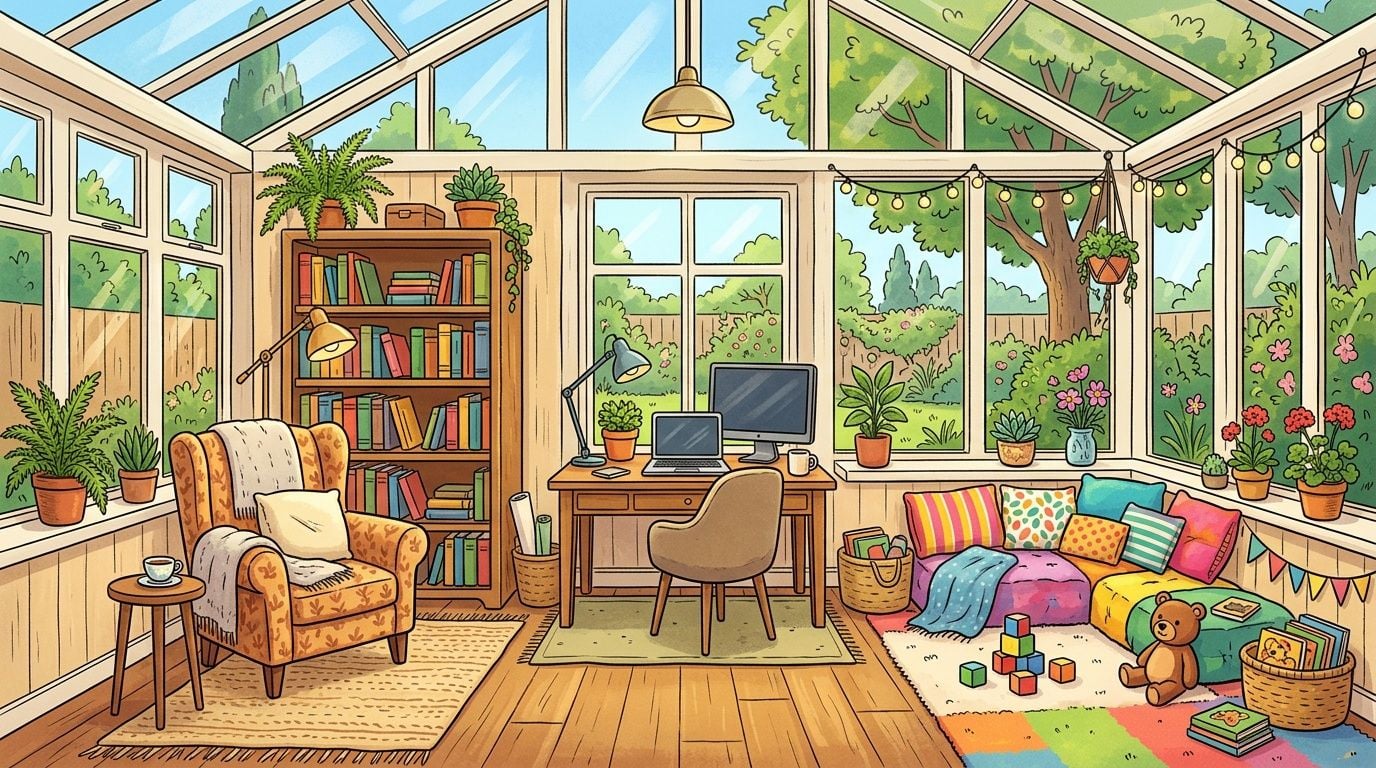
A dependable formula is sheers for daytime softness and a second treatment for stronger control. Sheer cotton or linen curtains can allow approximately 70% of natural light to filter through, which softens glare while keeping the view open, according to this small sunroom window treatment guide. When stronger protection is needed, bamboo or Roman shades can block up to 90% of direct sunlight during peak hours, based on the same sunroom reveal resource.
Sizing matters as much as fabric choice. Curtain fabric should be at least twice the width of the window, so a 60-inch window needs 120 inches of fabric for proper fullness and control, as explained in this window treatment measurement reference.
For homeowners comparing glass upgrades as part of glare control, these Superior Home Improvement UV windows are a useful example of how window performance affects comfort before décor even goes in.
Finish the room for evening use
A sunroom that only works in daylight is only half designed. Skip harsh overhead lighting if possible and build softer layers instead.
- Floor lamp near seating: Good for reading and helps anchor the conversation area.
- Table lamp on a side table: Adds warmth at eye level and keeps the room from feeling flat at dusk.
- Wall lighting or dimmable accent light: Useful if the room is also used for dining or games.
- Reflective surfaces: Mirrors placed thoughtfully can bounce daylight deeper into the room.
That last point has real impact. Placing mirrors opposite window treatments can increase the perceived size of the room by up to 20%, according to the same sunroom lighting and window management article.
For readers narrowing down treatments by privacy, softness, and light control, this overview of how to choose window treatments helps sort the options cleanly.
Sheers alone make a room look finished. They don't always make it comfortable.
Add Warmth with Flooring Rugs and Natural Decor
Once the major furniture is in place, the room still needs something underfoot and around the edges. That's where many sunrooms either come together or feel unfinished.
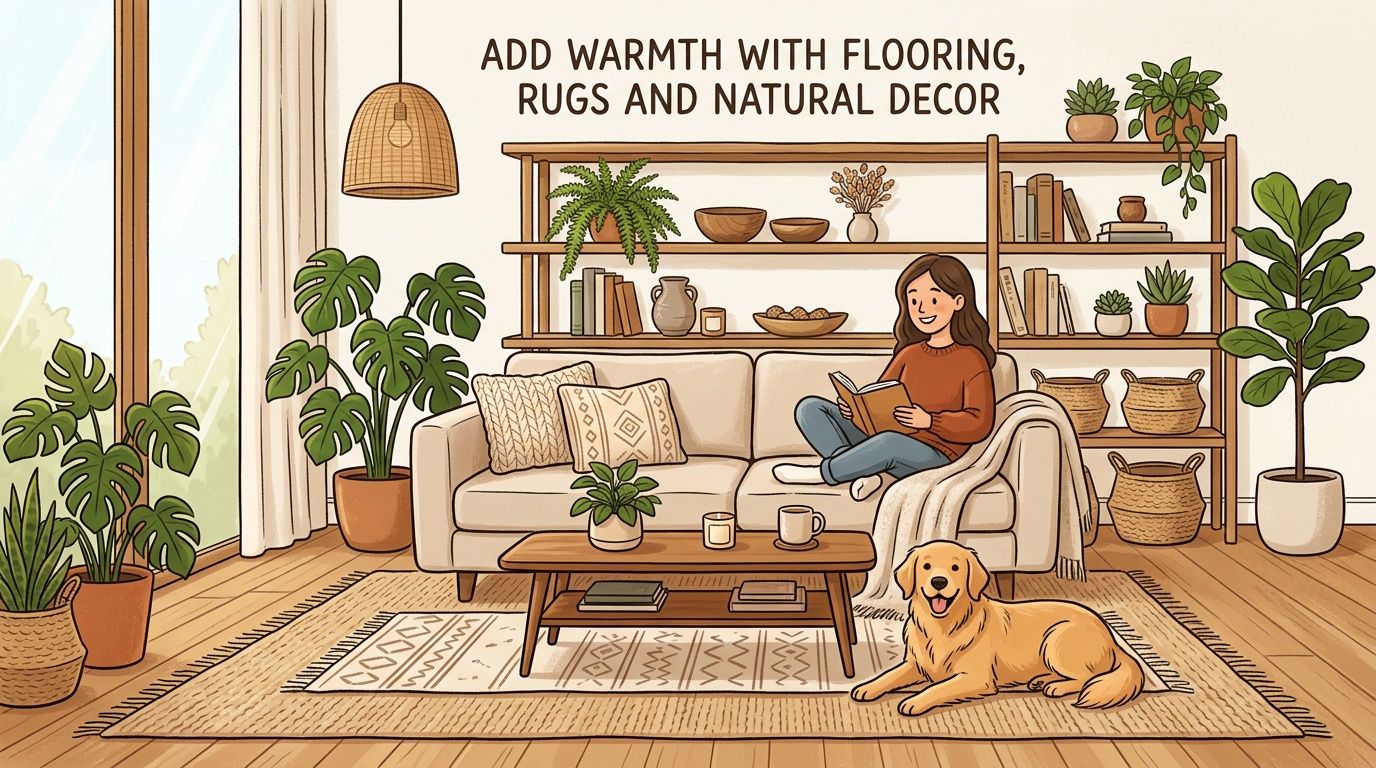
Flooring, rugs, and natural accents do more than decorate. They absorb the visual hardness of all that glass, make the room quieter, and help it feel connected to the rest of the house instead of detached from it.
Start from the floor up
Sunrooms in the Capital Region often act like in-between spaces. Wet shoes, humid air, and direct light all show up there first. Flooring should be chosen with those realities in mind.
A coordinated approach usually works better than treating the floor as an afterthought. That's one reason some homeowners prefer a one-stop process that pairs furniture and floor samples side by side. Tip Top Furniture & Mattresses offers that through its flooring department, with choices from over 25 manufacturers across hardwood, laminate, and carpet categories.
For general planning, this guide to the best flooring for a living room and adjacent spaces can help narrow down practical directions for a sun-facing room.
If the sunroom connects visually to existing wood floors, it also helps to study broader ideas for designing around hardwood floors so the transition feels intentional rather than patched together.
Pick rugs that can handle the room
An area rug does a lot of heavy lifting here. It defines the seating zone, softens acoustics, and makes the room feel furnished instead of staged.
Reliable rug choices include:
- Synthetic fiber rugs: Good for moisture and sun exposure.
- Jute and sisal: Add texture and a relaxed feel, while still suiting a bright room.
- Low-pile construction: Easier for door swings, sweeping, and seasonal cleanup.
According to the same sunroom material reference, weather-resistant rugs made from synthetic fibers like polyester blends or natural fibers like jute and sisal are well suited to the moisture and heat shifts common in sun-filled rooms.
Be smarter with plants and accents
Plants belong in a sunroom, but they need better placement than most guides suggest. A 2024 University of Illinois Horticulture Study found that 78% of sunroom plants in high-exposure zones suffer from rapid root desiccation and leaf scorch, not due to poor species choice, but because of the sunroom microclimate trap of intense UV plus dry air from vents, as summarized in this sunroom plant care discussion.
That changes the decorating plan.
- Move plants away from direct vent paths so dry airflow doesn't strip moisture.
- Use self-watering or reservoir-style containers when possible.
- Group plants together to create a slightly more forgiving microclimate.
- Choose accents with purpose, such as baskets, lanterns, and small tables that add utility as well as style.
A good finishing pass should feel edited. One textured rug, a few resilient plants, and a couple of useful accent pieces usually go further than filling every corner.
Create Your Four-Season Retreat in the Capital Region
The biggest mistake in sunroom decorating is pretending it's only a style problem. In the Northeast, it's often a comfort problem first.
That matters because an underperforming sunroom doesn't just feel inconvenient. It gets abandoned. A 2025 National Renewable Energy Laboratory study found that over 65% of sunrooms in the Northeast U.S. are abandoned during winter months specifically due to extreme heat loss, as noted in this discussion of sunroom comfort and planning.
Build the room for January, not just June
A beautiful chair, a handsome rug, and airy curtains won't rescue a room that can't hold comfort. For Freehold, Albany, and the wider Capital Region, a four-season plan means combining décor decisions with thermal decisions.
The priorities are straightforward:
- Insulated treatments where needed so the room isn't relying on decorative sheers alone.
- Furniture materials that tolerate fluctuation in light and seasonal temperature swings.
- Flooring that feels intentional year-round, not temporary.
- A layout that keeps the room usable when people naturally gather away from the coldest glass.
The most inviting sunroom is the one that still works after the leaves are gone.
Keep the budget practical
A sunroom project touches more categories than people expect. Seating, rugs, window treatments, flooring, lamps, and occasional tables add up quickly, especially when lower-quality choices have to be replaced early.
That's where planning pays off. Some households phase the room in layers. They start with the structural comfort fixes, then the main seating, then the finishing pieces. Others prefer to map the full room budget and make it manageable through financing so the room is completed cohesively instead of in scattered stages.
For homeowners who want help coordinating those decisions, interior design consultation services can help connect layout, furnishings, flooring, and overall room flow before purchases are made.
A good sunroom in Upstate New York shouldn't be treated like a seasonal afterthought. It can be a breakfast room in spring, reading room in fall, and a bright daily living space even when winter settles in. The key is choosing materials and layers that respect what the room is up against.
For homeowners ready to turn a bright but underused space into a comfortable everyday room, Tip Top Furniture & Mattresses offers a practical next step. Visit the Freehold, NY showroom to explore Amish furniture, custom ordering, flooring coordination, clearance finds, and design guidance for homes across the Greater Albany Capital Region. If the project needs to be phased, ask about flexible financing and design support to build a sunroom that works in every season.