Free Standing Wall Solutions for Your Albany Home


A lot of Albany-area homes ask one room to do several jobs. A living room becomes a work zone during the day. A large bedroom needs a quiet reading corner. An open floor plan looks beautiful on paper but feels unfinished once real life moves in.
That's where a free standing wall starts to make sense. In a home setting, it often isn't a construction project at all. It's a smart furniture solution that shapes space, adds storage, and creates a little privacy without tearing into floors, ceilings, or plaster.
Families around Freehold, Albany, Schenectady, Troy, and Greene County often want that balance. They want a room to feel more organized, but they don't want a renovation hanging over the house for weeks. A freestanding divider, shelving unit, or wall-style partition can solve that problem in a way that still feels flexible.
The design goal is simple. Make the room work better, and keep the home feeling like home.
Table of Contents
- Your Flexible Solution for Modern Home Layouts
- Defining the Freestanding Wall for Your Home
- Popular Types of Freestanding Walls for Albany Homes
- Choosing Materials Finishes and Custom Options
- Proper Placement and Installation Safety
- Design Your Perfect Space with Tip Top Furniture
Your Flexible Solution for Modern Home Layouts
A common Albany-area scenario goes like this. A homeowner loves the openness of a combined living and dining space, but after a few months the room feels too exposed. The television competes with the dining table, toys drift into every corner, and there's no natural stopping point for the eye.
A free standing wall gives that room some structure without turning it into a permanent jobsite. It can act like furniture that unobtrusively creates rooms. One side can face the sofa, the other can support baskets, books, or decor, and the whole setup can still be changed later if the family's routine shifts.
That flexibility matters in older Capital Region homes too. Many homes near Albany and Greene County have generous rooms with awkward traffic paths. A freestanding piece can guide movement in a way that feels intentional instead of blocked off.
A practical example from everyday living
A family might need to carve out a homework spot behind a sectional, or make a guest room feel less exposed without building a full wall. In both cases, a furniture-based divider does two jobs at once. It shapes the layout and gives the room a finished look.
A good freestanding wall doesn't just separate space. It helps each part of the room feel like it belongs there.
Homes also change with the seasons. One year the extra zone becomes a home office. Later it turns into a reading corner or toy storage area. That's why many homeowners start by using a layout guide like planning a room layout before choosing furniture dimensions or placement.
For anyone collecting ideas before buying, it also helps to look at ways to elevate your living space with texture, layering, and softer visual boundaries. A freestanding divider works best when it's part of the whole room plan, not just dropped into the middle as an afterthought.
Defining the Freestanding Wall for Your Home
The phrase free standing wall confuses a lot of people because it covers very different things. One person means a decorative room divider. Another means a temporary partition in an office. Someone else may be thinking about a patio wall or even a training wall.
Why the name causes confusion
For homeowners, the most useful starting point is purpose. The term can refer to very different items, from an adjustable training wall to a temporary office partition or a decorative patio wall. The key is to define the use case first, because visual separation, storage, and display each call for different design choices for safety, durability, and cost, as noted in this freestanding wall use-case reference.
That's why a builder and a homeowner may use the same words but mean completely different objects. A structural outdoor wall deals with weather, masonry, and movement. An indoor furniture-based divider is usually about layout, storage, privacy, and style.
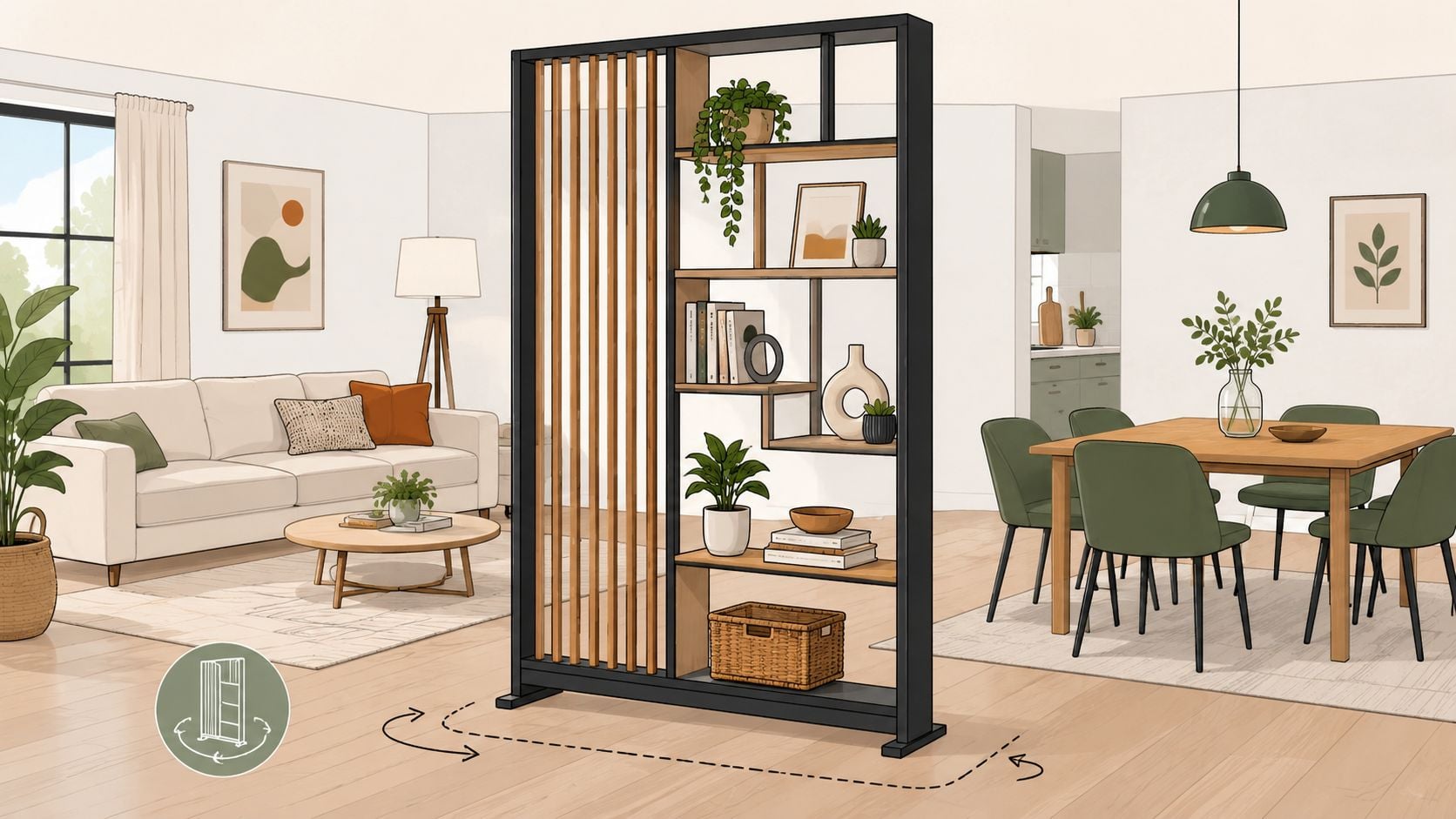
What counts as a freestanding wall indoors
Inside a home, a freestanding wall is usually one of these:
- A divider or screen that breaks up sightlines without fully closing a room
- An open shelving unit that separates areas while still letting light pass through
- A substantial wall-style furniture piece that creates a stronger boundary between functions
- A sliding or movable room element used to make a flexible zone feel more private
A helpful way to think about it is this. A freestanding wall indoors is often furniture that acts like architecture. It doesn't carry the home's structure. It shapes daily life inside that structure.
That distinction matters when shopping. Someone who wants display space for books and baskets needs a different solution than someone who wants to divide a bedroom from a dressing area. A homeowner trying to create a softer boundary may even prefer a barn door room divider because it changes the mood of the room without feeling heavy.
The best freestanding wall starts with one question. What should this piece do every day?
Once that answer is clear, the choices become much easier. Height, depth, material, and openness all flow from the job the piece needs to handle.
Popular Types of Freestanding Walls for Albany Homes
Some freestanding walls are light and decorative. Others are substantial enough to anchor a room. In the Albany area, the right choice usually depends on how much separation the household wants and whether the piece also needs to store anything.

Room dividers that soften an open plan
A simple divider works well when the goal is visual separation rather than full privacy. This type suits homes where the room already feels bright and open, but needs a little definition.
These are especially useful for:
- Living and dining spaces where furniture seems to float without clear zones
- Bedrooms with sitting areas that need a calmer transition between functions
- Entry areas where a screen can create a more welcoming first view
A lighter divider can also help preserve natural light. That matters in many Upstate New York homes where homeowners want rooms to feel cozy without becoming boxed in.
Shelving units that divide and store
This is often the most practical option. An open bookcase or wall unit divides the room, but it also earns its floor space by handling storage and display.
A shelving-based free standing wall can hold:
- Books and baskets for a family room or den
- Office supplies for a work-from-home corner
- Decor and tableware between a dining area and living space
- Kids' items that need a home but shouldn't take over the room
Solid wood versions are especially appealing for homeowners who want a piece with long-term durability and a more furniture-grade look. Amish-made shelving is a strong fit here because it brings genuine wood construction, timeless lines, and custom possibilities that work well in traditional, farmhouse, and transitional interiors.
For readers exploring related pieces, it helps to browse room settings such as living room furniture and home office furniture to see how a divider can connect with the rest of the room instead of standing apart from it.
Open shelving is often the sweet spot. It separates space without making the room feel smaller.
Partition-style pieces for focused zones
Sometimes a household wants more than a visual cue. A work area may need fewer distractions. A guest sleeping nook may need stronger screening. In those cases, a partition-style freestanding wall offers more coverage and a stronger sense of enclosure.
This style can work well for:
- Home office zones in a spare room or large family room
- Studio-style layouts where sleeping and living functions need separation
- Shared bedrooms where each person benefits from a little more privacy
These pieces should be chosen carefully. A taller, fuller divider changes traffic flow more noticeably than open shelving. It should feel intentional from both sides, especially in a room where people move through often.
For homes where the divider will sit near a sleeping area, it's also worth looking at bedroom furniture so the new piece complements the bed, case goods, and overall scale of the room.
Choosing Materials Finishes and Custom Options
Material changes everything. Two freestanding walls can have the same size and shape but feel completely different once wood tone, metal detail, shelf thickness, or panel inserts come into play.
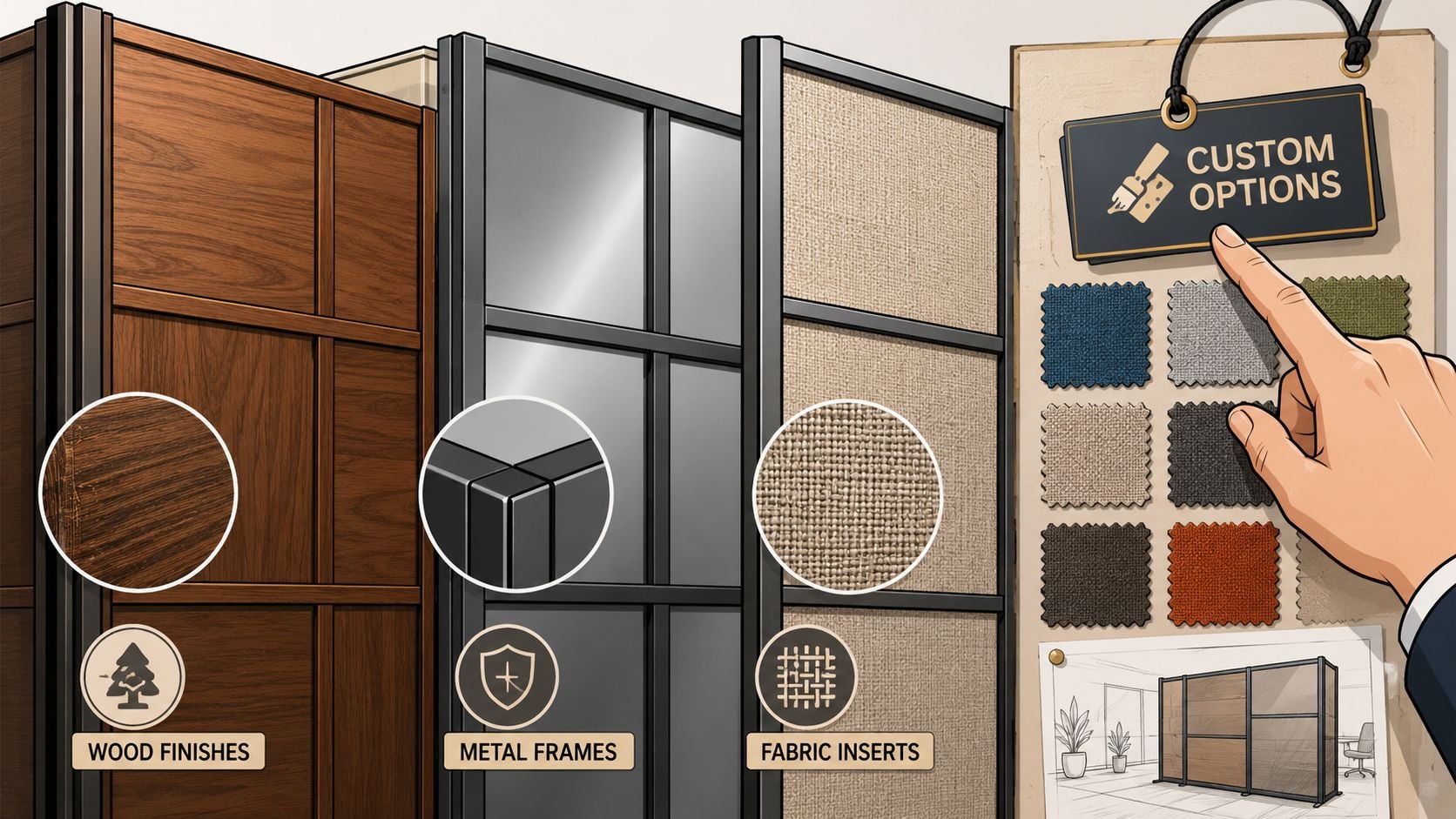
How material changes the feel of the room
Solid wood brings warmth, weight, and a more permanent furniture look. It's often the right choice for traditional homes, farmhouse interiors, and anyone who wants a divider that feels like it has always belonged in the space.
Engineered wood can be a practical fit for households that want a polished appearance with a wider range of finish styles. It often suits casual spaces, media rooms, and multi-use areas where easy upkeep matters.
Metal and mixed-material designs feel lighter and more architectural. They pair well with industrial, modern, and transitional rooms, especially when a homeowner wants separation without visual heaviness.
Glass or open-frame details help preserve sightlines. These are useful in smaller rooms where a fully solid piece would block too much light.
A quick comparison helps:
| Material direction | Best fit in the home | Visual effect |
|---|---|---|
| Solid wood | Living rooms, dining transitions, libraries | Warm and grounded |
| Engineered wood | Family rooms, casual multipurpose spaces | Clean and adaptable |
| Metal mix | Offices, loft-like interiors, updated spaces | Crisp and open |
| Glass or open frame | Smaller rooms, light-sensitive layouts | Airy and unobtrusive |
When custom work makes more sense
Off-the-floor options are useful, but they don't always solve the actual problem. A homeowner may need a very specific width to fit behind a sectional. Another may want shelves tall enough for large baskets, or a stain that works with existing trim and flooring.
That's where custom ordering becomes worthwhile. Instead of forcing a room to accept a near match, the piece can be built around the room's dimensions and style. That could mean selecting wood species, shelf spacing, finish tone, panel style, or the openness of the design.
Tip Top Furniture & Mattresses offers custom ordering through its Freehold showroom, including options tied to handcrafted wood furniture and personalized finish selection. For readers comparing stains and wood character before making a choice, this guide to custom wood finishes for the home is a practical place to start.
A custom freestanding wall makes sense when the room has one awkward dimension that standard furniture can't solve.
Custom is also helpful when the divider needs to connect visually with more than one part of the house. If the shelving faces a living room on one side and a dining area on the other, the finish and proportions need to work from every angle.
Proper Placement and Installation Safety
A freestanding wall can look beautiful in a showroom and still fail in a real room if placement is rushed. Most problems come from skipped measurements, poor traffic planning, or choosing a piece that doesn't match the household's daily habits.

Start with measurements not guesses
The first step is simple. Measure the room, the wall openings, and the walking paths around the proposed divider. A piece can be the right width and still feel wrong if it pinches the route between the sofa and dining table.
A planning tool helps here, especially in open layouts where it's hard to judge spacing by eye. This guide on measuring a room for furniture correctly gives homeowners a practical framework before they commit to a divider, shelf wall, or partition.
Three measurements matter most:
- Overall footprint so the piece fits the zone without crowding it
- Clear walking space so everyday movement still feels natural
- Sightlines so the room keeps the right balance of openness and privacy
If the divider will become a focal point, color matters too. Homeowners pairing furniture division with paint changes may enjoy these inspiring accent wall designs to see how color and room separation can support each other.
How a freestanding wall stays stable
One of the biggest questions is stability. People often assume a tall divider must connect to the ceiling to be safe, but that isn't always the case.
A practical stability approach relies on engineering features such as specialized braces that reduce lateral deflection and properly weighted bases, which allow self-supporting partitions to be installed without overhead support, according to this guidance on freestanding wall support.
For a homeowner, the plain-language takeaway is straightforward:
- A wider or weighted base helps resist tipping
- Balanced construction keeps the piece from leaning or swaying
- Bracing or internal support details improve rigidity
- Proper setup on a level surface matters as much as the design itself
Stability isn't just about how heavy a piece feels. It depends on how the base, height, and support system work together.
A simple safety checklist for daily life
A freestanding wall should fit the household, not just the floor plan. A home with young children, pets, or frequent rearranging needs extra care.
Use this checklist before final placement:
- Check floor level: Uneven flooring can make even a well-built piece feel unstable.
- Respect shelf purpose: Heavy storage belongs on pieces designed for that load, not on decorative dividers.
- Mind climbing risks: Open shelving can tempt children if baskets, toys, or lower shelves create a ladder effect.
- Think about both sides: A divider seen from two rooms should look finished from both directions.
- Use professional setup when needed: Delivery and in-home placement can help avoid awkward positioning and reduce risk.
That last step matters in many Albany-area homes, especially older ones where floors aren't perfectly level and room dimensions can be less predictable than they first appear.
Design Your Perfect Space with Tip Top Furniture
A freestanding wall works best when it feels like part of the room's overall story. The shape can divide space, but the finish, styling, and surrounding furniture make it feel natural.
Pull the whole room together
A few styling moves usually make the difference:
- Repeat a finish tone from nearby tables, flooring, or trim so the divider feels connected
- Vary what sits on the shelves with books, baskets, and a few open areas to avoid visual clutter
- Use both sides intentionally because the piece will likely be seen from more than one zone
- Anchor the area with nearby furniture so the divider looks planned rather than temporary
One-stop shopping can be particularly helpful. A homeowner might choose the divider first, then coordinate area furniture, lighting, decor, and even flooring so the finished space feels cohesive rather than pieced together over time.
Helpful next steps for Albany-area homeowners
For homeowners in Albany, Schenectady, Troy, Greene County, and nearby communities, the most useful next move is usually to narrow the project into one of three goals. Create privacy. Add storage. Improve layout.
Once that goal is clear, a design consultation can turn a vague idea into a room plan with real dimensions, finish direction, and furniture pairings. Readers who want help shaping the full room can look into interior design consultation services.
Budget matters too. Some projects call for custom work, while others can start with in-stock pieces or value-focused finds from clearance furniture options. For households planning a larger room refresh, flexible financing choices can make it easier to phase the project in a manageable way.
For Albany-area homeowners who want a free standing wall that looks intentional and functions well every day, Tip Top Furniture & Mattresses offers a practical next step. Visitors can explore room layouts, custom-order possibilities, design guidance, financing options, and in-stock furniture at the Freehold, NY showroom while planning a space that fits how the home is actually used.