Find Your Perfect Free Standing Corner Shelves


That corner beside the sofa may be doing nothing except collecting dust, catching stray toys, or making the room feel unfinished. In many Albany-area homes, especially apartments, older houses, and compact family rooms, a conventional bookcase won't fit without crowding the walkway.
Free standing corner shelves offer a practical alternative. They add vertical storage, create a display area, and can often be positioned without drilling into the wall. The important question isn't only whether a shelf looks attractive. It's whether the unit fits the corner, carries the intended load, and stays stable around children, pets, uneven floors, and everyday activity.
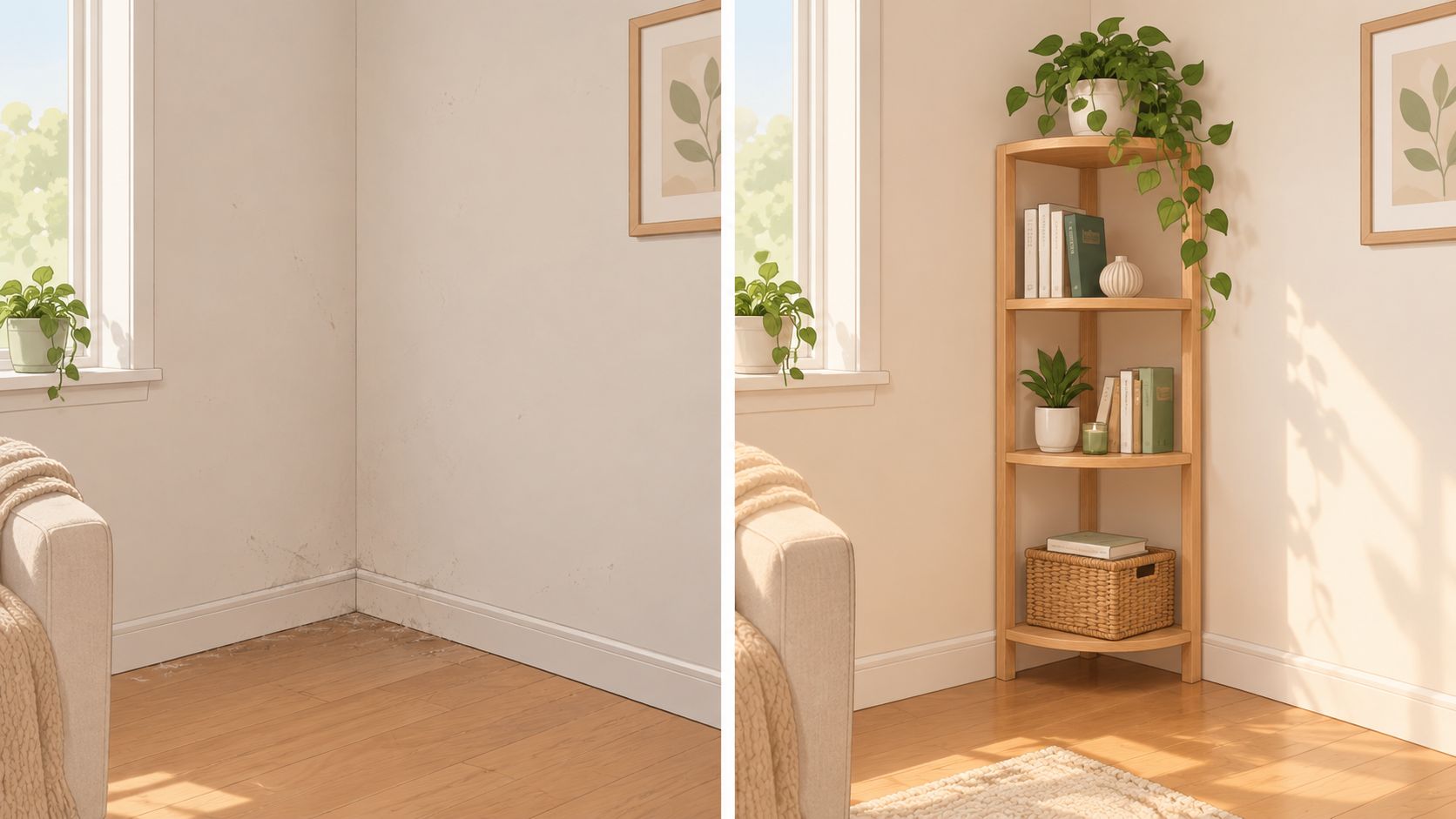
Transforming Awkward Corners into Focal Points
An empty corner can make an otherwise comfortable room feel accidental. A sofa may stop short of the wall, leaving an awkward triangle beside it. A lamp might fill the floor space, but it won't hold books, framed photographs, or the small objects that make a home feel personal.
A freestanding corner shelf changes that corner without demanding a full furniture rearrangement. A compact unit can hold a few carefully chosen pieces in a living room, while a taller design can create a vertical storage zone in a home office, bedroom, or reading area. Because the shelves stand on the floor, renters and homeowners can reposition them as rooms change.
Why corner furniture works so well
Corner shelving follows a furniture idea with a long history. Britannica describes a corner cupboard topped by corner shelves as a form introduced into England from France, while historical accounts place separate corner cupboards in American inventories as early as the 1720s. Modern freestanding shelves are a lighter, more flexible version of that same space-saving principle, as documented in this history of corner shelving and its design evolution.
The best results come from treating the shelf as part of the room rather than a leftover storage piece. Match its wood tone or metal finish to nearby furniture, leave breathing room around displayed objects, and avoid filling every tier because space is available.
A useful choice for Capital Region homes
A freestanding model can make sense when wall mounting isn't desirable, when a room layout may change, or when the corner has plaster, brick, or other challenging surfaces. It also gives homeowners more flexibility during moves between Albany, Schenectady, Troy, and surrounding communities.
For a broader selection of corner-focused living room pieces, explore corner furniture for the living room. The right unit should solve the room's specific problem while still looking intentional from the doorway and from the seating area.
Choosing the Right Shelf for Your Upstate NY Home
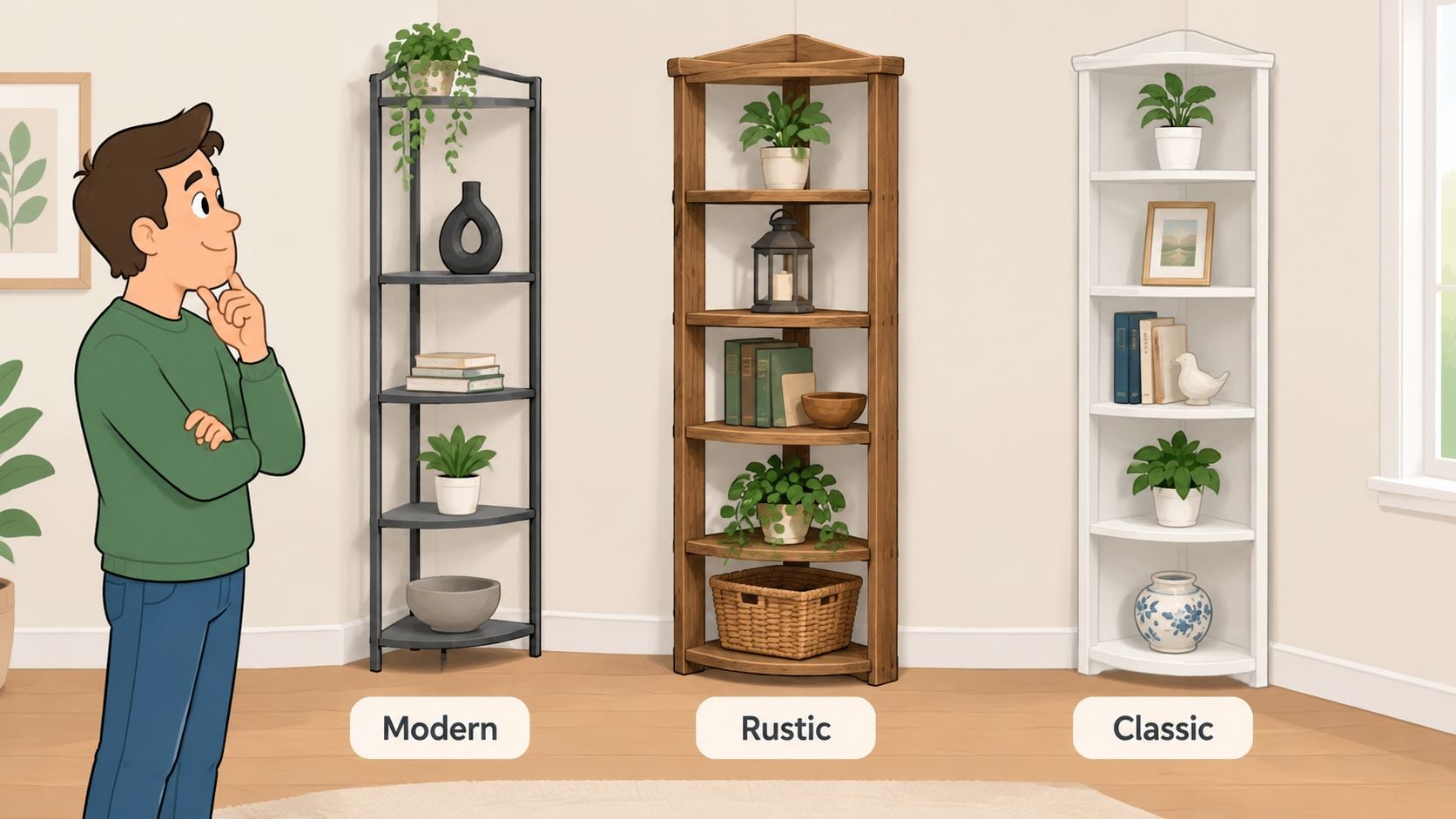
The best shelf depends on three things, the shape of the unit, the material, and the corner's actual dimensions. A tall open bookcase may suit a reading nook, while a narrow ladder profile works better beside a desk or chair.
Start with the shelf style
Traditional multi-tier corner bookcases provide the most predictable storage. Their broad, consistent shelves work well for books, baskets, records, and heavier decorative objects when the manufacturer's ratings allow those uses.
Ladder shelves taper toward the top and usually feel visually lighter. They're useful in smaller rooms where a solid cabinet would look heavy, but the narrowing shelves limit what can be stored. Open-sided étagères create an airy display, though they need thoughtful styling because every object remains visible.
The choice should follow the room:
- Books and practical storage: Select evenly spaced tiers with adequate depth and a sturdy lower section.
- Decor and plants: An open-sided design can provide a lighter appearance.
- Mixed use: Choose shelves with varied widths or adjustable spacing, provided the construction remains stable.
- High-traffic areas: Favor a substantial base and an option for anti-tip anchoring.
Compare materials honestly
Solid wood, including American-made Amish furniture, offers visible grain, repairability, and an heirloom character that engineered panels generally don't match. It may cost more, and wood furniture needs sensible care, but strong joinery and a quality finish can make it a long-term choice.
Engineered wood can be a sensible budget option for light display. Metal frames provide a clean, industrial look and may improve rigidity when paired with properly supported shelves. The material alone doesn't determine performance. Fasteners, joints, shelf span, frame design, and load distribution matter just as much.
A finite-element study of cabinet-type furniture found different corner-joint performance among common sheet goods, with plywood ranking above MDF and particleboard in strength metrics. The comparison of shelf materials and corner-joint construction supports a practical rule, quality construction matters more than a finish that merely looks substantial.
Measure before shopping
A corner can appear generous until baseboards, trim, outlets, and nearby furniture are accounted for. Before choosing a unit, record:
- Both wall lengths: Measure from the corner outward on each wall.
- Available depth: Check how far the shelf can project without blocking a walkway, door, vent, or drawer.
- Overall height: Look for ceiling trim, windows, artwork, and lighting that could conflict with a tall unit.
- Baseboard and floor conditions: Note whether the shelf will sit flat or need adjustable feet.
- Access paths: Confirm that the assembled or boxed piece can pass through doorways and stair turns.
The room-measuring guide for furniture can help shoppers prepare accurate dimensions before visiting a Freehold, NY showroom or reviewing furniture online.
A Guide to Load Capacity and Stability
A shelf's appearance doesn't reveal how much it can safely carry. Load capacity is a specification, not an impression. A narrow shelf loaded with books behaves differently from the same shelf holding a few lightweight frames.
Many consumer-grade freestanding units are reported in the 10 to 22 pound range per shelf, while one commercial five-tier listing specifies 11 pounds per tier. These figures come from practical guidance on freestanding corner shelf capacities and a five-tier shelf product specification. The full-unit ratings in common consumer examples can also fall in the 30 to 50 pound range, so shoppers should read both the per-tier and total limits.
Why corner shelves can tip
A tall, narrow shelf puts more of its mass above the floor. When a heavy object sits near the front edge, it creates a tipping force that can pull the unit forward. Uneven flooring, a bumped shelf, an open door, or a child climbing can increase the risk.
Tall units deserve special attention. Consumer guidance identifies shelves over 60 inches as candidates for anti-tip protection, particularly when floors aren't level or children and pets share the home. Adjustable feet can help the unit sit evenly, but they don't replace an anti-tip connection where one is recommended.
Practical rule: Put the heaviest approved items on the lowest shelves, keep upper tiers lighter, and follow the manufacturer's instructions rather than estimating capacity by eye.
A heavy-duty corner rack shows why specifications vary so widely. One manual lists a 386-pound maximum spot load per shelf and a 1,929-pound total capacity across five shelves, with a steel frame measuring 70 by 70 by 180 centimeters. That type of equipment is a different class of item from a decorative bookshelf, so the rating must match the intended use.
Build quality affects confidence
A reinforced steel frame can improve the performance of engineered-wood shelves, but even strong materials can fail when screws are loose, joints are poorly fitted, or weight is concentrated at one point. Shelf depth, span, fastener quality, and floor contact all matter.
For shoppers comparing construction details, a guide to common wood joinery types offers useful vocabulary for evaluating how components connect. Those details aren't merely decorative. Better-fitting joints can reduce wobble and help a shelf remain reliable through daily use.
Freestanding and wall-mounted shelves also solve different problems. A wall-mounted shelf can eliminate floor contact, but installation quality becomes critical. Anyone considering that route can review techniques to achieve a perfect floating shelf finish, including careful leveling and secure attachment.
How to Style Corner Shelves Room by Room
A corner shelf looks best when every item has a reason to be there. The display should support the room's function, not turn an efficient storage piece into a crowded collection of unrelated objects.
Living room
Use the living room shelf as a visual extension of the seating area. Combine books, family photographs, a small plant, and one sculptural object. Keep the largest or heaviest approved item low, then use the upper shelves for lighter pieces that draw the eye upward.
A small tray can corral remotes and charging accessories near a sofa. In a larger room, a wood finish that echoes the coffee table or media console can make the shelf feel integrated. For additional layout ideas, the guide to decorating shelves in any room provides a useful starting point.
Home office
An office corner benefits from storage that is visible but controlled. Use matching bins for cables, notebooks, and supplies, then reserve one or two shelves for reference books or a framed print.
Open shelving works well when the contents are edited. If every tier holds loose papers, the unit becomes visual clutter rather than useful organization.
Bedroom
Keep a bedroom arrangement calm. A few books, a small framed photograph, a low-maintenance plant, and personal keepsakes can add warmth without making the corner feel busy. Candles should sit securely and away from fabric, curtains, or anything that could be knocked over.
Plant and reading areas
Corner shelves can create a vertical plant display, but sunlight, watering, and weight all need consideration. Use trays beneath pots and select plants suited to the room's light. For readers choosing compact indoor plants, this succulent guide offers general care ideas.
Tip Top's Professional Design Services have been available since 1984, giving Albany-area homeowners a resource for coordinating shelf finishes, nearby furniture, décor, and flooring. A cohesive corner usually comes from repeating a few materials and colors, not from matching every object exactly.
Finding Custom and Quality Options Near Albany
A standard shelf works when the corner is standard. Older Upstate NY homes often have unusual trim, sloping floors, tight stairways, or dimensions that make a ready-made piece look almost right but not quite. Custom ordering addresses those constraints by allowing the shopper to consider the size, wood type, style, and finish together.
That flexibility matters when a corner shelf needs to coordinate with an existing dining set, bedroom collection, or living room. It also helps when the desired piece must fit beside a doorway, under a window, or within a carefully planned reading nook. A custom order can be based on a photo or sketch, subject to the maker's capabilities and specifications.
Amish furniture offers another path for buyers who value handcrafted construction and long-term ownership. These pieces are handcrafted in the USA, often use solid wood, and can carry a warmer, more individual character than mass-produced alternatives. The Amish furniture collection for shoppers near Albany is a useful place to begin comparing styles and options.
The corner-cupboard tradition documented in American inventories as early as the 1720s shows that dedicated corner furniture isn't a passing decorating fad. Today's freestanding shelves adapt that established idea for smaller rooms and more mobile households.
A local showroom also provides advantages that online dimensions can't fully convey. Shoppers can inspect the finish, test for movement, compare scale beside other furniture, and discuss delivery access before ordering. For families in Albany, Schenectady, Troy, Greene County, and nearby communities, a visit to the Freehold showroom can turn a vague corner problem into a measured furniture decision.
Frequently Asked Questions About Corner Shelves
Can a small TV sit on a corner shelf?
Only when the shelf is specifically rated for the television's weight and footprint. The screen should sit fully supported, with no overhang that could shift the center of gravity. A tall or narrow unit may not be appropriate even if the shelf technically carries the weight, because movement and tipping remain concerns.
How should a solid wood shelf be cared for?
Dust with a soft, dry cloth and clean spills promptly. Avoid soaking the surface or using harsh products that can affect the finish. Engineered wood and metal may have different care requirements, so the manufacturer's instructions should guide cleaning.
Is a freestanding unit safer than a wall-mounted shelf?
Neither option is automatically safer. Freestanding shelves avoid wall drilling, but tall units may need anti-tip anchoring. Wall-mounted shelves remove floor contact, yet poor anchors or incorrect installation can cause failure. The safest choice is the one properly matched to the wall, floor, load, and household.
What if the right shelf doesn't fit the budget?
Shoppers can compare materials, choose a simpler finish, consider immediate-availability inventory, or review clearance pieces. Flexible financing can also make a larger home project easier to plan, subject to current terms and approval. A store that offers furniture, décor, flooring, USA-made mattresses, custom ordering, delivery, and financing can help coordinate the entire project instead of treating the shelf as an isolated purchase.
Tip Top Furniture & Mattresses is a family-owned Freehold, NY showroom serving Albany and the Greater Capital Region with furniture, Amish and American-made options, décor, flooring, mattresses, custom ordering, design services, delivery, financing, and clearance value. Visit Tip Top Furniture & Mattresses to explore quality pieces, discuss the right corner solution for the home, and get local guidance before ordering.