A 10 Chair Dining Table Guide for Albany & Freehold Homes

A lot of families start shopping for a 10 chair dining table after one of those meals where the room just stops working. Extra chairs get pulled in from the office, two people sit too close to a corner leg, and someone has to wait for another guest to scoot in before they can stand up. In homes around Albany, Troy, Schenectady, and Greene County, that usually isn't a style problem. It's a fit problem.
A larger dining table can solve that, but only when the table fits the room, the chair count fits the table, and the layout still feels comfortable on an ordinary weeknight. That matters even more now that dining rooms often double as homework stations, remote work zones, and all-purpose gathering spaces. The broader market reflects that shift. The global dining table market was valued at USD 9.19 billion in 2026 and is projected to reach USD 16.01 billion by 2034, driven by demand for high-quality, customizable furniture and the expanding use of dining tables for family, work, and entertainment spaces, according to Fortune Business Insights.
Table of Contents
- Your Guide to Hosting with Room to Spare
- Calculating Your Space for a 10 Person Table
- Choosing the Right Shape and Material
- Plan Your Dining Room Layout with Confidence
- Pairing Chairs and Finalizing Your Style
- Budgeting for a Table That Lasts Generations
- Create Your Gathering Place with Tip Top Furniture
Your Guide to Hosting with Room to Spare
A good dining room doesn't just seat people. It lets them stay awhile.
That's the difference families usually notice when they move from a too-small table to one built for ten. Dinner gets easier to serve. Guests can settle in without bumping elbows all night. The room feels calmer because nobody is improvising a place setting at the last minute.
For households that host often, the table becomes less of a formal piece and more of a working center of the home. It handles holiday meals, birthday dinners, school projects, and the in-between evenings that don't need a special occasion to bring everyone together. Anyone planning a larger gathering can also pick up a few useful tips for memorable dinner parties to make the space work as well socially as it does physically.
A 10 chair dining table works best when it feels comfortable on a regular Tuesday, not just on Thanksgiving.
That practical view matters in Upstate New York homes, where room sizes, traffic flow, and lifestyle often vary more than buyers expect. Some dining rooms are long and narrow. Some open into kitchens. Some need to stay flexible because they serve multiple purposes all week long. A larger table can absolutely work, but it needs more thought than a simple seat-count label.
Families who want ideas for seasonal hosting can also look through this holiday hosting guide for practical planning inspiration.
Calculating Your Space for a 10 Person Table
A family will often walk into the store with room measurements in hand and still end up surprised once we map out a 10-person table on the floor. On paper, the room looks large enough. In real life, a doorway swings into the chair path, a buffet crowds one side, or the table leaves no easy route to the kitchen.
That is why measuring for a 10 chair dining table needs to go beyond the tabletop itself. The goal is not just fitting ten seats. The goal is fitting ten seats in a way that still feels comfortable on a weeknight and manageable when the house is full.
Start with seat space, then test how the room works
A solid planning rule is about 24 inches of table edge per person. For many rectangular tables that seat ten, that usually puts you in the range of 96 to 120 inches long and 36 to 48 inches wide, based on this dining table sizing guide.
That number helps because a product label can say “seats 10” and still feel tight once everyone sits down with plates, serving dishes, and elbows in motion.
For round tables, buyers often need a much broader footprint than expected. Earlier sizing guidance in the article covered the common diameter range for seating ten. The practical takeaway is simple. Round tables can seat a crowd well, but they ask for more open floor area, which is not always ideal in older Albany homes or dining rooms that double as pass-through spaces.
Clearance is what decides whether the room feels easy or cramped
After you know the tabletop size, measure the space around it. A room needs enough clearance for chairs to pull back and for someone to pass behind a seated guest without turning sideways.
A good working minimum is 36 inches around the table. 48 inches is more comfortable if the room connects to the kitchen, a patio door, or another busy part of the house. That difference is often what separates a room that merely fits from one that works well during a holiday meal.
Practical rule: If guests cannot pull out their chairs without blocking the room, the table is too large for that layout.
Custom thinking proves beneficial. Many Albany-area homes have quirks that standard online charts do not address well. I have seen long narrow rooms that need a slimmer rectangular top, open-concept spaces that can handle extra length, and older homes where a pedestal base or extension design solves a chair-spacing problem better than a wider fixed table.
A simple measuring process usually gives the clearest answer:
- Tape the tabletop on the floor using the full length and width.
- Add the chair zone around it so you can see how far seats will pull back.
- Walk your normal traffic paths to the kitchen, doorway, windows, or hutch.
- Check the table ends carefully because end seats often tighten circulation first.
If you want a measuring reference while you test layouts, use this dining table size guide for room planning.
Quick Guide to 10-Seater Table and Room Dimensions
| Table Shape | Recommended Table Size | Minimum Room Size (36" Clearance) | Ideal Room Size (48" Clearance) |
|---|---|---|---|
| Rectangular | 96 to 120 inches long, 36 to 48 inches wide | Table size plus 36 inches around all sides | Table size plus 48 inches around all sides |
| Round | Sized to allow comfortable seating for 10 | Table size plus 36 inches around all sides | Table size plus 48 inches around all sides |
Room size is only the starting point. Chair width, table base design, nearby case pieces, and daily traffic patterns all change how a 10-person setup feels. That is why the right answer is not always the biggest table you can squeeze in. It is the one that gives your family enough seating, enough movement, and enough flexibility to use the room comfortably all year.
Choosing the Right Shape and Material
Once the room can support a larger table, the next question is how the table should behave. Shape changes the way people talk, move, and use the room every day.
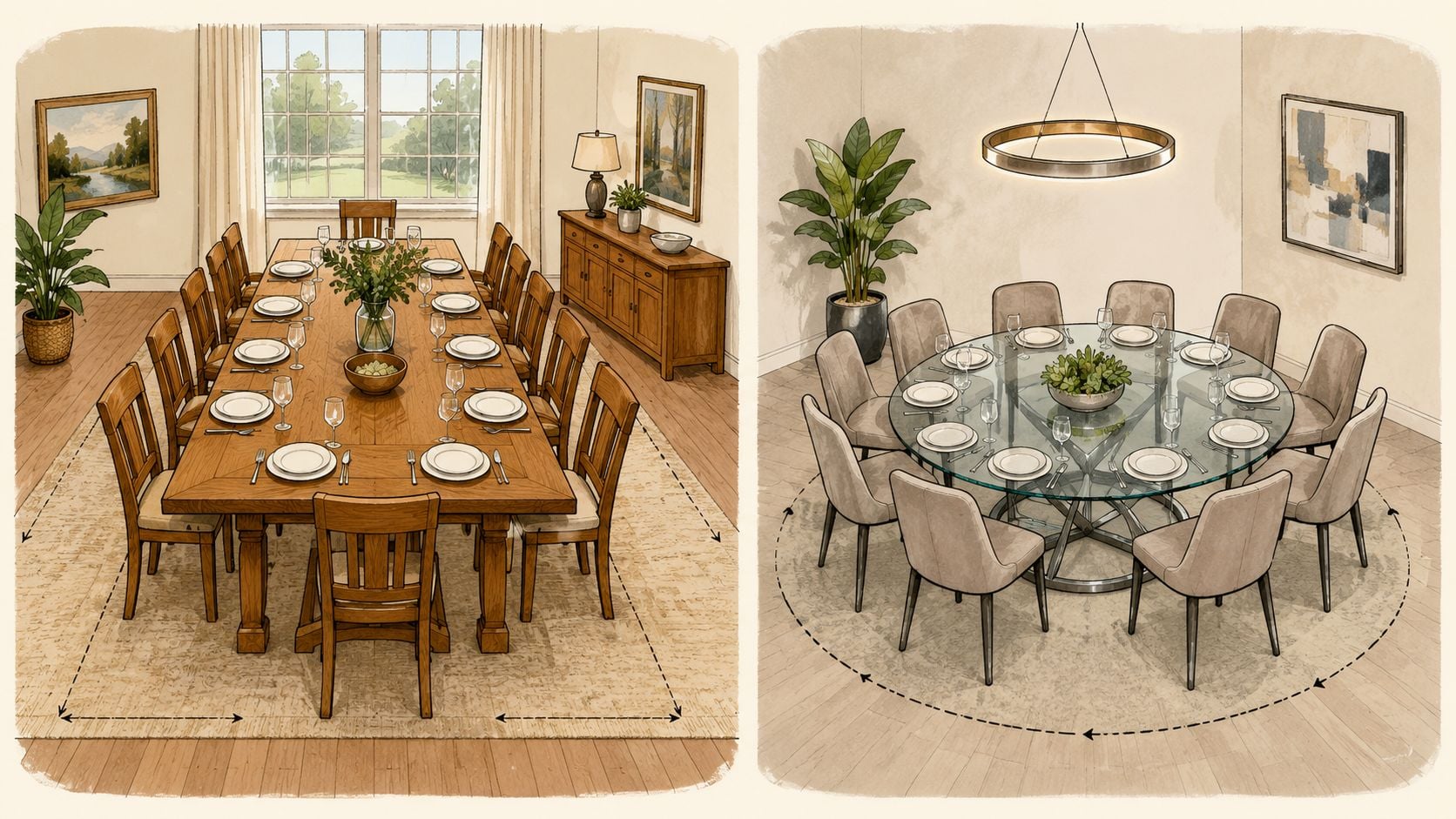
How shape changes daily use
A lot of shopping guides stop after listing sizes. They don't answer the harder question: which shape works better for daily life versus larger gatherings. That gap matters because buyers are trying to balance comfort, conversation, traffic flow, and flexibility, as noted in this discussion of dining table tradeoffs.
Here's how the main options usually compare in real homes:
- Rectangular tables work well in longer rooms and usually make the clearest use of space for ten seats. They're often the easiest choice for serving dishes down the center and for defining a traditional dining area.
- Round tables encourage conversation because everyone faces inward, and there are no corners to hinder movement. But they need a broad footprint, so they can overwhelm a room faster than buyers expect.
- Extension tables offer the most flexibility for homes that don't need ten seats every day. They're often the most practical answer for mixed daily use and holiday hosting.
For many families, the right answer isn't the shape that offers the highest seating capacity. It's the shape that lets the room feel normal most of the year.
What materials hold up in real homes
Material affects more than appearance. It affects how the table ages, how it feels to use, and whether the piece still looks right years from now.
Solid wood remains the most dependable option for buyers who want warmth, repairability, and a substantial look. It's especially appealing for households that want a table to stay with the home for a long time rather than serve as a short-term purchase. For shoppers considering species, grain, and finish durability, this overview of wood choices for tables can help narrow the field.
A few common trade-offs matter:
- Solid wood offers lasting character and can suit everything from farmhouse to formal spaces. It also tends to feel more grounded in larger sizes.
- Veneer surfaces can give a polished look and help control cost, but they're usually a different decision than buying for heirloom use.
- Glass tops keep the room visually lighter, which can help in tighter spaces, but they also show fingerprints and need more frequent upkeep.
- Amish-made wood tables are often worth considering for buyers who want handcrafted, USA-made furniture with custom finish options and a stronger long-term value story.
The bigger the table, the more important visual balance becomes. A heavy top paired with bulky chairs can make the whole room feel crowded before anyone sits down.
Plan Your Dining Room Layout with Confidence
A larger dining set doesn't fail because the measurements were wildly wrong. More often, it fails because the room looked workable on paper and awkward in person.
Why measurements alone aren't enough
One authoritative furniture source says a rectangular table for ten is about 112 inches long and recommends leaving about 3 feet of clearance around it, which highlights how important full-room visualization is before ordering, as noted by Ethan Allen's dining table planning guidance.
That's the point where many buyers benefit from a room-planning tool instead of relying only on a sketch or a tape measure. A room may technically accommodate the footprint, but nearby windows, door swings, buffets, and walkways change how that layout feels in daily use.
A better way to test the room before buying
A scaled layout works better than guesswork. The process is straightforward:
- Enter the room dimensions and note windows, doors, and fixed pieces.
- Place the table to scale so the footprint reflects the actual top size.
- Add all ten chairs instead of assuming they'll fit later.
- Check traffic paths to kitchens, hallways, and nearby seating areas.
For buyers who want to visualize the full arrangement before making a decision, this room layout planning resource offers a useful place to start. Tip Top Furniture & Mattresses also provides a free online room planner for mapping furniture layouts to scale, which can be helpful for larger dining projects in homes across the Capital Region.
Lighting should also be part of the layout plan, especially over a table this size. Buyers choosing fixture scale and placement may find this comprehensive guide for dining room chandeliers useful when coordinating the table with overhead lighting.
A room planner won't just tell someone whether a table fits. It shows whether the room still feels comfortable once real life starts happening around that table.
Pairing Chairs and Finalizing Your Style
A table can look right and still function poorly if the chairs are too bulky, too formal, or hard to move in a full set of ten.
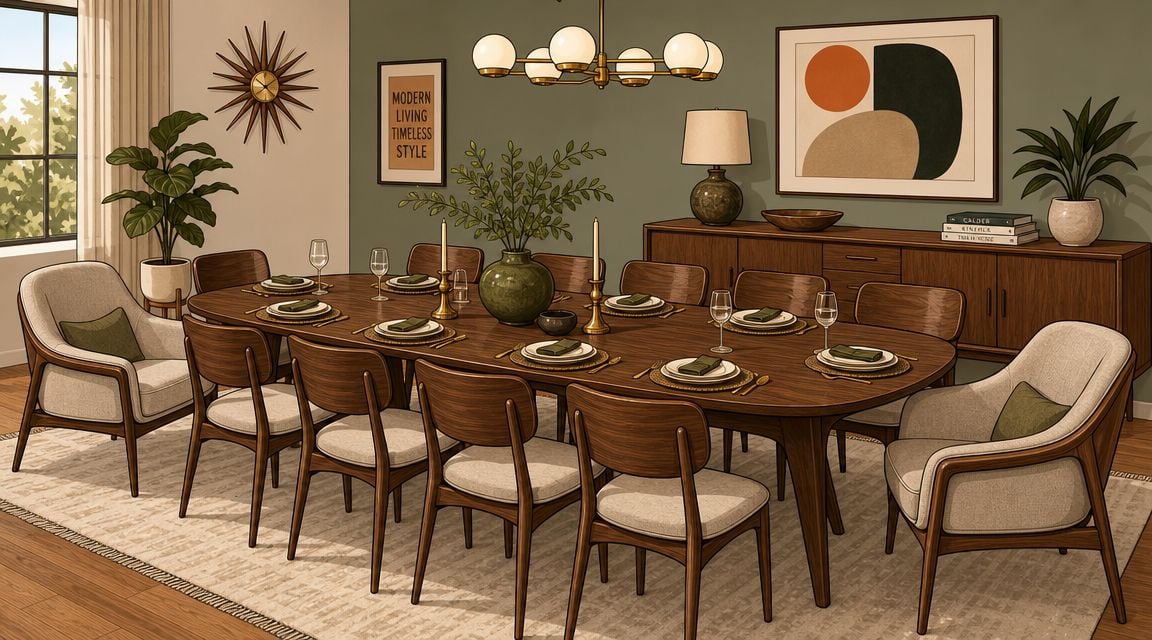
Choose chairs for access as much as appearance
With a 10 chair dining table, the chair silhouette matters more than many shoppers expect. Ten wide chairs can make a table feel smaller. Ten narrow chairs can preserve movement but may sacrifice lingering comfort if the seat design is too rigid.
A balanced setup often works best:
- Side chairs along the length keep access easier and usually preserve more usable space.
- Arm chairs at the heads add presence without making every seat oversized.
- Mixed seating styles can soften the room and make a large set feel less stiff.
- Simpler frames usually help larger groups look less crowded.
The goal isn't perfect matching at any cost. It's a set that looks cohesive and still lets people get in and out without bumping into each other.
Why custom details matter more on larger sets
Customization makes a bigger difference on a large dining set because every choice repeats ten times. A wood finish that's slightly off, a fabric that feels too formal, or a chair back that looks too heavy becomes much more noticeable when the full set is arranged around the table.
That's why custom ordering can be so useful for dining rooms that need to feel specific to the home. Buyers can often tailor details such as:
- Wood finish to better coordinate with flooring, cabinetry, or existing case pieces
- Paint color for a softer contrast in brighter dining spaces
- Upholstery fabric for either easy-care practicality or a dressier look
- Chair style mix to strike a balance between everyday comfort and hosting presence
Window treatments also influence the final feel of the room. For anyone trying to soften a large dining area or bring in a lighter look, this guide to sheer curtains dining room ideas offers helpful inspiration.
Budgeting for a Table That Lasts Generations
A dining set for ten is a serious purchase. It should be.
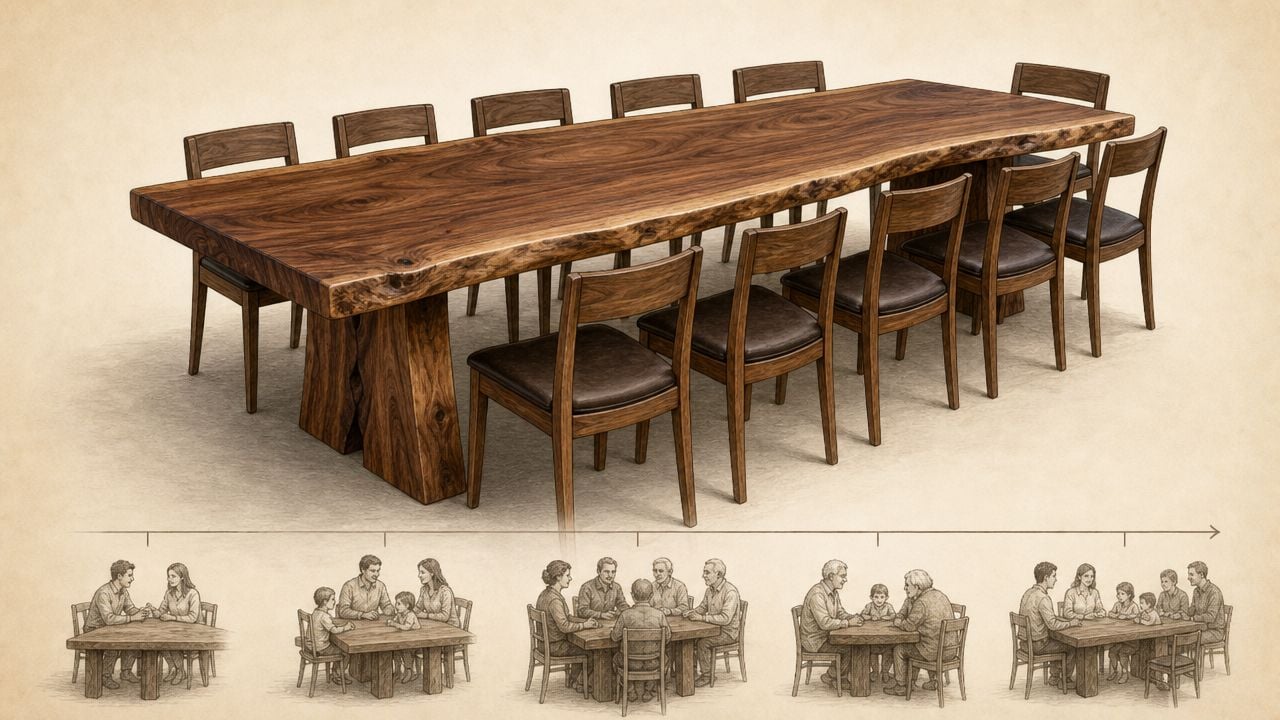
What usually drives the price up or down
The biggest cost differences usually come from material, construction, and chair count. A solid wood table with ten well-built chairs is a different purchase than a lighter, more temporary-feeling set.
Shoppers often get the best long-term value by thinking in terms of use, not just purchase price. If the table will host family holidays, weekend dinners, and everyday meals for years, then durability matters. That's especially true with larger pieces, where replacing the full set later is a much bigger project than replacing a small kitchen table.
Ways to make the project more manageable
A quality dining set doesn't have to mean paying for everything at once. Tip Top Furniture & Mattresses offers flexible financing options, including special financing through a Synchrony Home Card, to help make home projects more affordable.
Other budget-friendly paths can include:
- Shopping clearance pieces when timing matters more than custom options
- Prioritizing the table first and making careful chair upgrades within budget
- Choosing durable materials that reduce the chance of an early replacement
- Looking at USA-made furniture when craftsmanship and longevity are the priority
For many households, the smartest budget isn't the cheapest one. It's the one that delivers the right fit, the right construction, and a payment path that feels manageable.
Create Your Gathering Place with Tip Top Furniture
The right 10 chair dining table comes down to a few practical decisions. Measure the room precisely. Choose a shape that suits daily life, not just holidays. Make sure the layout works with real chairs and real traffic. Then choose materials and a budget strategy that match how the home is practically used.
That process matters in every market, but it matters even more in the Greater Albany Capital Region, where homes vary so much in room size, age, and layout. A table that works beautifully in one dining room can feel oversized in another, even when both rooms look similar at first glance.
For buyers who want help pulling the full room together, from table scale to finishes and surrounding pieces, these interior design consultation services can be a useful next step. Families from Albany, Schenectady, Troy, Freehold, and Greene County often need more than a product tag. They need a plan that works in the room they already have.
A larger dining table should make hosting easier, not more stressful. For families ready to compare sizes, explore custom options, or get help planning a room that works for everyday life and big gatherings, Tip Top Furniture & Mattresses is a practical place to start.