Elevate Your Home: Mirror Placement Living Room Ideas

A lot of living rooms reach the same point. The sofa fits, the rug is down, the lamp is in the right corner, and the room still feels a little flat, dim, or tighter than it should. In many Albany-area homes, especially older layouts with one strong window and a few darker corners, that last layer often comes from reflection, not more furniture.
A well-placed mirror can change how a room feels without changing the footprint at all. It can brighten a shadowy wall, give a narrow seating area more depth, and make the room look more finished because it repeats the best part of the space. For homeowners who are trying to make a compact room work harder, this kind of update often pairs naturally with other small-space ideas, including smart ways to make a small room feel big.
Families across the Capital Region have been solving this same design problem for decades. Good mirror placement in a living room isn't random wall decor. It's a practical design decision that works best when it's sized correctly, hung at the right height, and aimed at something worth seeing.
Table of Contents
- The Secret to a Brighter More Spacious Living Room
- First Things First Sizing and Height Rules
- Strategic Reflections to Enhance Light and Mood
- Styling Your Mirror Like a Designer
- Common Mirror Mistakes and How to Avoid Them
- Create Your Perfect Space with Local Expertise
The Secret to a Brighter More Spacious Living Room
A mirror earns its place when it solves a problem. In one living room, that problem is weak daylight reaching the back wall. In another, it's a sofa wall that feels heavy and blank. In many Freehold and Capital Region homes, it's both.
The biggest shift happens when the mirror is treated like a tool instead of filler. A large mirror can pull light farther into the room, soften a dark corner, and visually open up a seating area that feels boxed in. That matters in homes where family rooms do double duty as reading space, TV zone, and gathering spot.
Why mirrors change the room so quickly
Mirrors work because they do two jobs at once.
- They borrow light from windows and lamps and move it deeper into the room.
- They repeat shape and depth so walls don't feel as final or closed off.
- They strengthen a focal point when placed over a mantel, console, or sideboard.
- They reduce visual heaviness around large furniture pieces.
A mirror shouldn't just fill an empty wall. It should improve what the room already has.
That trade-off matters. A beautiful frame in the wrong location can still make a room feel restless. A simpler mirror in the right location usually does more.
What works in everyday living rooms
The most successful placements usually support how the room is already used. If the family gathers near the windows, reflection can make that side of the room feel wider. If the room has a fireplace, a mirror can help the mantel wall feel intentional without adding clutter. If the room is narrow, a taller mirror can stretch the visual height and keep the wall from feeling compressed.
A good result rarely comes from chasing trends. It comes from asking two simple questions. What needs more light, and what deserves to be reflected?
First Things First Sizing and Height Rules
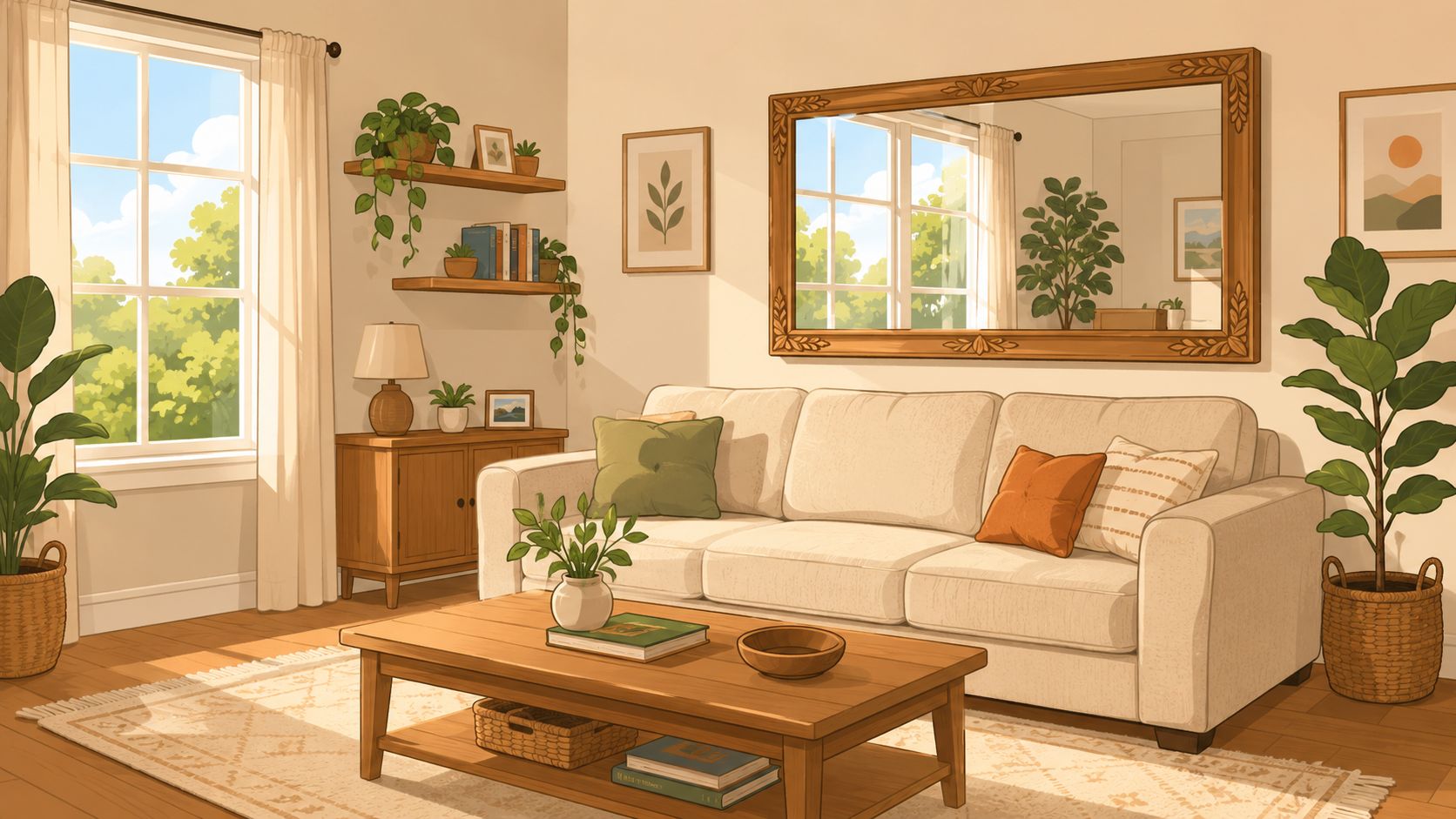
A mirror can have a beautiful frame and still look wrong if the scale is off. In Albany-area homes, I see this most often above sofas, mantels, and narrow console tables where the wall needs presence but the mirror still has to relate to the furniture below it.
Start with the furniture below
The safest rule is proportion. A mirror usually looks right when it spans about two-thirds the width of the piece under it, as noted in this living room mirror placement guide. That gives the arrangement enough weight without making the room feel top-heavy.
Here is a simple planning chart.
| Furniture Width | Ideal Mirror Width (approx. 2/3) |
|---|---|
| 48 cm | 32 cm |
| 90 cm | 60 cm |
| 120 cm | 80 cm |
| 150 cm | 100 cm |
| 180 cm | 120 cm |
That guideline works well in real homes because it leaves breathing room at the sides. On a compact wall in a Center Square brownstone or a suburban family room in Colonie, that extra margin helps the mirror feel placed, not squeezed in.
There are exceptions. If the furniture is very low and visually light, such as an open-base console, a slightly larger mirror can help anchor the wall. If the piece below is bulky or has a tall hutch-like profile, going smaller often looks more settled.
Hang for eye level, not empty wall space
Height usually causes more trouble than width. A mirror hung too high loses its job. Instead of reflecting the room, it reflects ceiling, trim, and the tops of lamps.
A practical range for the mirror's center is about 150 to 165 centimeters from the floor. In rooms where people sit most of the time, I often cheat a little lower so the reflection still feels connected to daily use.
Practical rule: If someone standing in the room cannot easily see the space reflected back, the mirror is probably too high.
Spacing matters too. Above a sofa or console, leave enough room so the mirror feels connected to the furniture, but not so much that it floats. In many living rooms, that means a modest gap that keeps the whole grouping reading as one thought.
If you're pairing a mirror with artwork on the same wall, keep the sight lines consistent. Homeowners mixing framed art and reflective pieces may find this expert advice on hanging new canvas useful when planning spacing and alignment.
Before you put in hardware, map it out on the wall. This step-by-step guide to hanging your picture with precision is a good reference for getting placement right the first time.
Strategic Reflections to Enhance Light and Mood
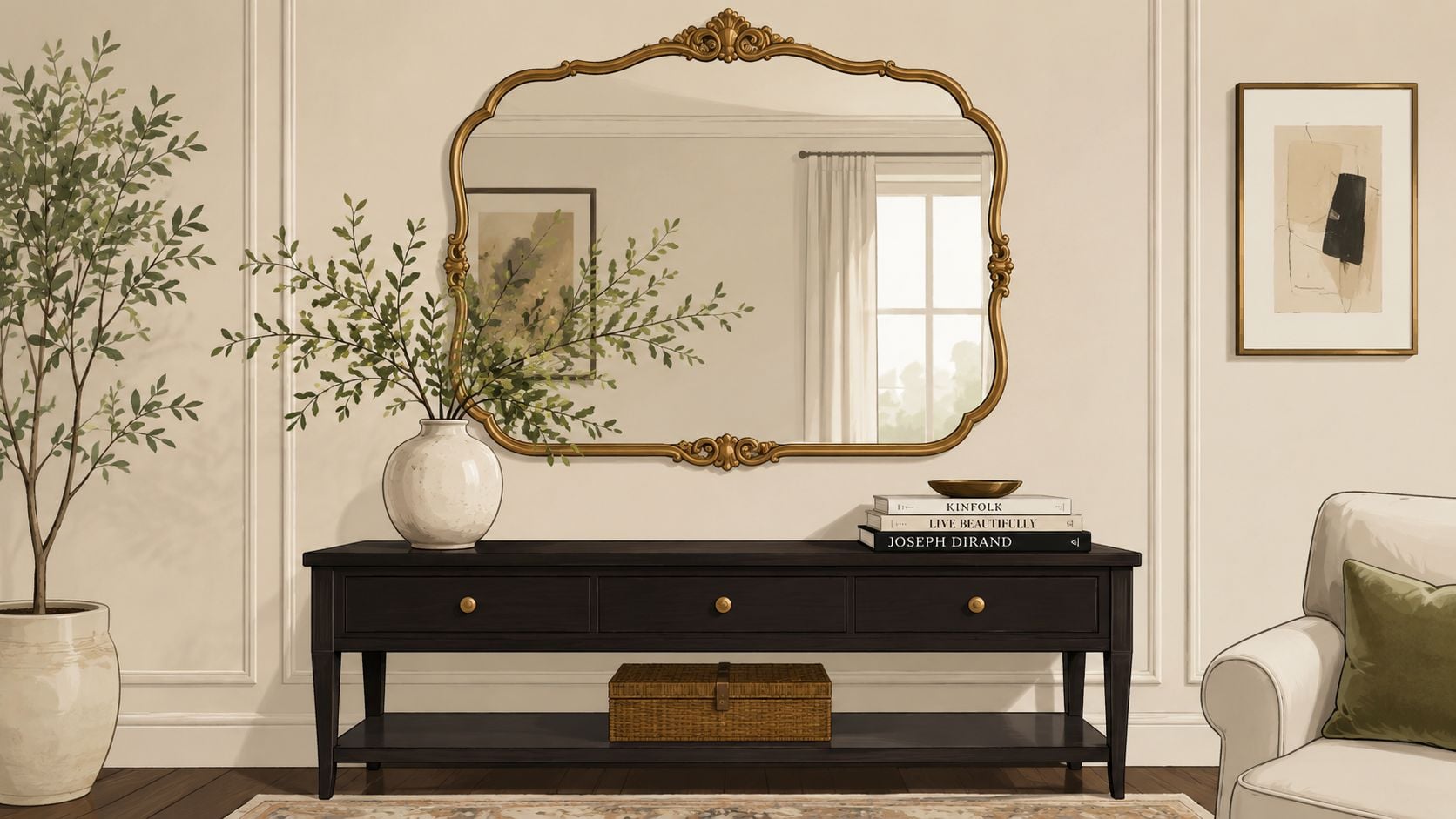
The best mirror placement in a living room doesn't stop at size and height. It also depends on what the mirror reflects all day long. That's where many rooms either start working better or start feeling unsettled.
Use daylight on purpose
One of the most effective placements is opposite or adjacent to a window. This can double the amount of natural light entering the room, according to mirror placement research summarized by VentanaMan. In living rooms around Albany and Troy, where daylight can feel directional and seasonal, that move often makes a noticeable difference.
The effect is strongest when the mirror reflects side light deeper into the room rather than bouncing harsh glare directly back into someone's eyes. That's why exact placement matters. A few feet left or right can change the whole feel.
A nearby resource on putting your living room in the best light pairs well with this approach because mirrors and lighting should support each other, not compete.
Choose calm reflections
Light is only half the story. What the mirror reflects affects mood. A 2024 study noted in RMCAD's discussion of mirrors, light, and illusion found that 68% of homeowners reported increased anxiety when mirrors reflected high-traffic walkways or cluttered areas, while only 12% of design guides warned about it.
That idea deserves more attention because it's practical. A mirror amplifies movement, mess, and visual noise just as easily as it amplifies daylight.
Good reflections include:
- A calm seating area with balanced shapes and softer textures
- A clean wall with art or a lamp
- A window view with trees, sky, or seasonal light
- A quiet corner that needs more presence
Poor reflections usually involve:
- Busy hallways where people constantly pass through
- Drop zones with bags, shoes, and coats
- Cluttered shelves that already feel crowded
- Strong overhead glare from direct light
A mirror should repeat the part of the room that makes people want to stay there.
Styling Your Mirror Like a Designer
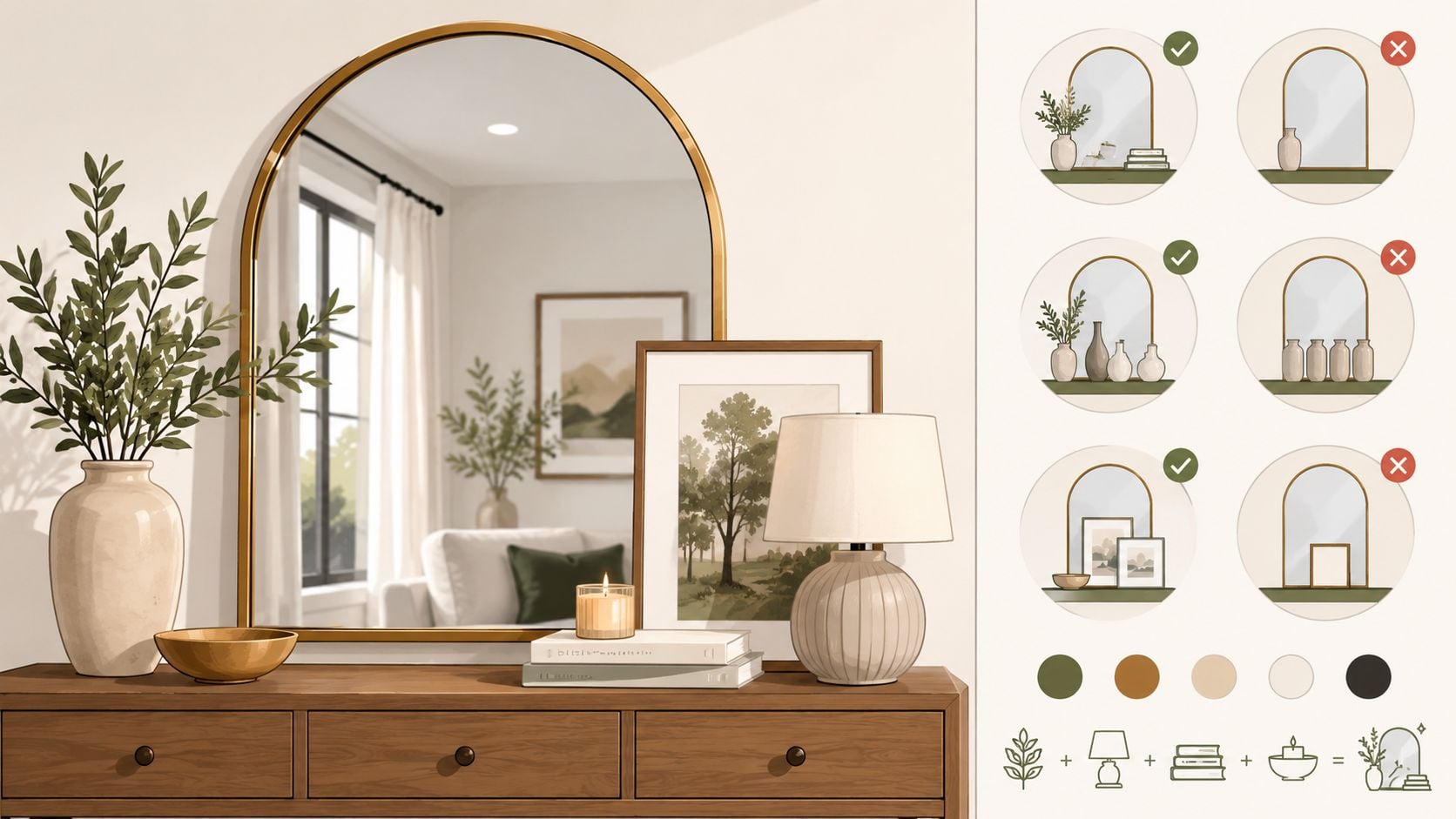
A well-placed mirror should look like it belonged in the room from the start. In Albany-area homes, that usually means working with what is already there. Brick fireplaces, long sofa walls, older molding, or an open path to the kitchen all affect how the mirror should be styled.
Above a fireplace or console
Above a fireplace, the mirror needs to support the architecture. If the mantel has strong lines or detailed trim, a simple frame usually looks more settled. In a room with many square edges, a round or arched mirror can soften the setup without pulling attention away from the fireplace itself.
A console gives you more freedom, but it still needs balance. I usually suggest treating the mirror and the tabletop as one composition. If the console already holds a lamp, books, or a plant, keep the frame quieter. If the surface stays fairly clean, the frame can carry more personality.
These pairings tend to work well in real living rooms:
- Traditional spaces: Wood-framed mirror with matching lamps or candlesticks
- Casual family rooms: Arched mirror with greenery and one pottery piece
- Clean-lined rooms: Slim frame with a low-profile console and very few accessories
A mirror behind a sofa can look finished
A sofa wall often gets ignored, especially in builder-grade living rooms where the room feels wide but not very layered. A mirror can solve that. The key is making it feel anchored to the wall composition instead of dropped into empty space.
Keep some distance between the top of the sofa and the bottom of the frame so the piece has breathing room. Use a frame with enough visual weight to hold its own above upholstery. If the wall still feels bare, flank the mirror with sconces or pair it with smaller art so the whole arrangement feels intentional.
This approach works best after the seating plan is settled. If you are still adjusting traffic flow or deciding where the main conversation area belongs, start with how to arrange living room furniture before choosing the final mirror location.
Style the frame to match how your room lives
Frame choice matters more than many homeowners expect. In a busy family room, a substantial wood or metal frame usually holds up better visually than a thin frameless edge. In a formal sitting area, cleaner lines can look sharper and less fussy.
That is also where custom choices help. In many Capital Region homes, standard sizes do not line up neatly with the wall width, mantel scale, or console depth. For homeowners comparing finishes, textures, and specialty designs, these AmeriGlass Industries glass options provide a helpful overview of styles that can suit different room types.
The best-styled mirror finishes the wall and supports daily life in the room. It should not feel precious or out of place.
Common Mirror Mistakes and How to Avoid Them
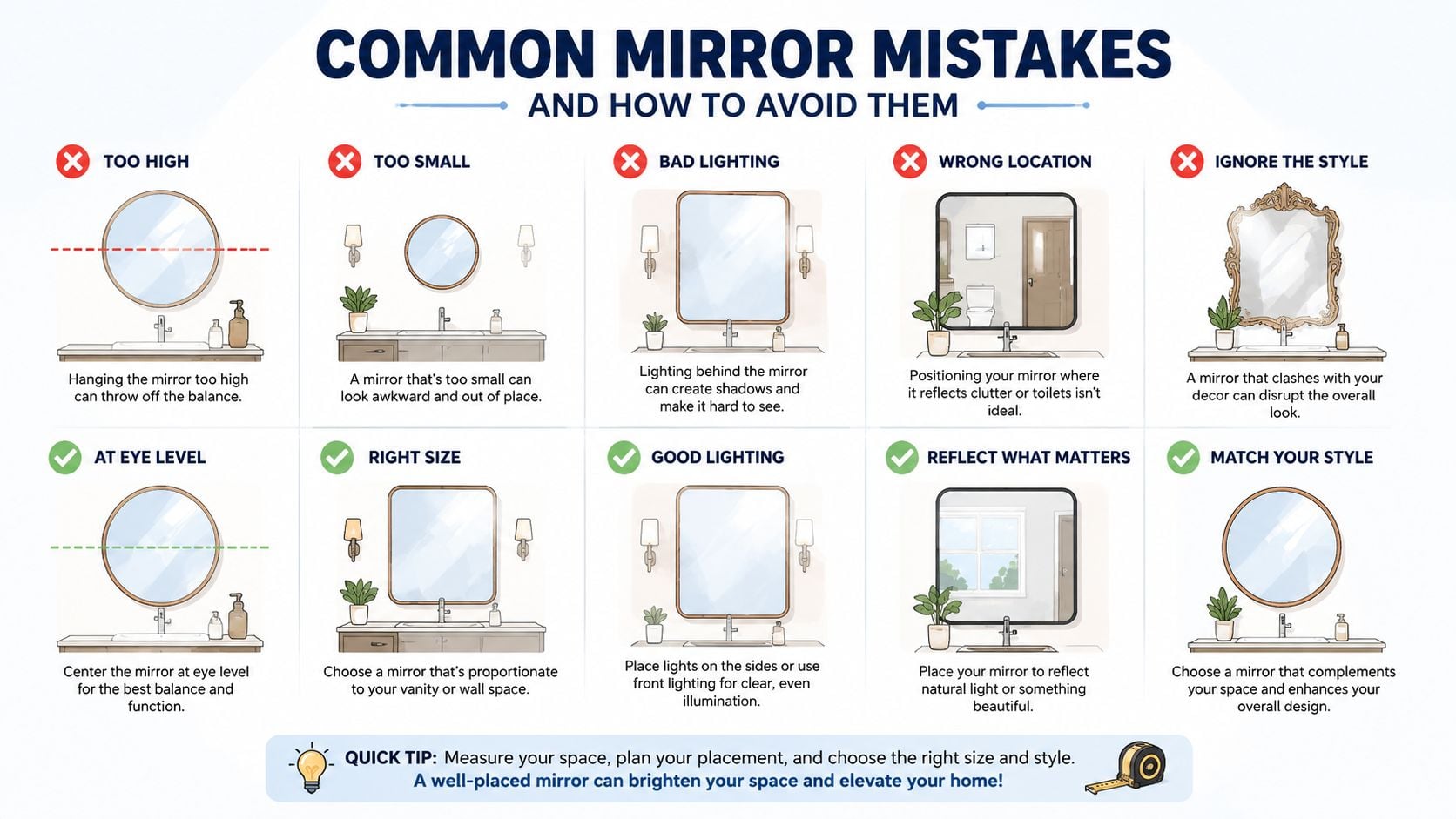
Most mirror problems aren't caused by the mirror itself. They're caused by placement decisions that ignore how the room is used. The result is a piece that feels distracting instead of helpful.
What goes wrong most often
The oldest warning is still one of the best. Mirrors double whatever they face, and historical design rules have long advised against reflecting laundry zones, busy benchtops, or chaotic traffic areas. Those same guidelines also caution against placing mirrors directly across from each other because the repeated reflections create an overwhelming effect. That principle is discussed in the earlier linked source on strategic reflection.
Three mistakes show up again and again:
- Reflecting clutter: The mirror enlarges the mess instead of improving the room.
- Facing another mirror: The repeated image feels busy, not elegant.
- Ignoring the frame style: A highly ornate frame can fight with a simple room, while a frameless mirror can look unfinished in a more classic space.
Better fixes for real rooms
A better approach is to treat the mirror as part of a broader composition.
Try these practical corrections:
- Shift the angle: Even a small move can take a hallway out of the reflection and bring a lamp or window into view.
- Choose one statement piece: In many living rooms, one larger mirror does more than several scattered small ones.
- Use smaller mirrors with purpose: A grouped arrangement can work if it behaves like one visual unit instead of random filler.
- Shop by room mood: If the room already has texture and pattern, a quieter mirror usually balances it better.
When a mirror feels wrong, the answer usually isn't "remove it." The answer is "change what it's reflecting."
For anyone refining the whole room instead of one wall, this guide on how to create an eye-catching room helps connect mirrors, furniture, lighting, and accessories into one cohesive look.
Create Your Perfect Space with Local Expertise
The right mirror placement in a living room comes down to three things. Size it in proportion to the furniture. Hang it at a height that works for real people. Reflect something that adds light, calm, or depth to the room.
That sounds simple, but every home has its own trade-offs. Some Albany-area living rooms need brightness more than drama. Some need a stronger focal point. Others need a custom solution because the wall, furniture scale, or room shape doesn't follow standard measurements.
That kind of problem-solving is where local guidance helps most. A family-owned showroom that's served the region since 1978, with professional design services available since 1984, can help homeowners sort through the practical choices, from custom-order furniture and heirloom-quality Amish pieces to flooring coordination, delivery, and budget-friendly financing. For many families in Freehold, Albany, Schenectady, Troy, and across the Capital Region, it's easier to make good design decisions when the mirror, furniture, decor, and layout are considered together.
Whether the room needs one statement mirror, a better furniture layout, or a full refresh, Tip Top Furniture & Mattresses offers one-stop shopping with local expertise for homeowners across the Greater Albany Capital Region. Visit the Freehold, NY showroom to explore living room furniture, decor, Amish handcrafted options, custom ordering, flooring, and Clearance finds, or ask about a complimentary design consultation and flexible financing to make the project easier from start to finish.