Hybrid Mattress Pros and Cons: 2026 Buying Guide

You're standing on a showroom floor, pressing a hand into one mattress, then another, and both sound convincing in the tag line. One says plush, another says supportive, and the one with the coils promises cooler sleep, which sounds great until the core question hits, will it solve the way your body sleeps?
That's where hybrid mattress pros and cons matter. A hybrid can be the right answer for the right sleeper, but it's not a universal win. The foam and coil blend changes how the bed feels, how it holds up, and whether it helps a hot sleeper, a side sleeper, or a couple who wakes up every time the other person rolls over.
Why Hybrid Mattresses Are Dominating the Market
Hybrid mattresses keep getting attention because they promise something simple, comfort on top, support underneath. That sounds perfect when a buyer wants the contour of foam without giving up the easier movement and lift of coils. The catch is that “best of both worlds” only works when the build matches the sleeper.
Independent owner-research from Sleep Like The Dead reports about 72% owner satisfaction for low-priced hybrids, about 78% for mid-priced hybrids, and about 73% for high-priced hybrids for everyday adult use. That spread tells a useful story. Price alone doesn't guarantee a better hybrid, and shoppers shouldn't assume the most expensive option automatically sleeps better.
Why the category keeps growing
The appeal is easy to understand. Hybrids aim to give a sleeper more structure than all-foam beds, while still keeping pressure relief where shoulders and hips need it. That's why so many shoppers start there when they're unsure whether they need softness, support, or both.
But the value of a hybrid depends on the sleeper, not the marketing. A lighter side sleeper, a heavier back sleeper, and a partner who tosses and turns may all react very differently to the same build. That's why a showroom test matters more here than with many other mattress types.
Practical rule: A hybrid is worth serious consideration when the body needs both cushioning and a stable base, but the final choice still has to match sleep position, body weight, and partner movement.
For a broader breakdown of mattress categories, Tip Top Furniture & Mattresses also lays out the basics in its guide to mattress types explained. That kind of side-by-side context helps shoppers avoid buying a mattress type just because it sounds advanced.
Understanding Hybrid Mattress Construction
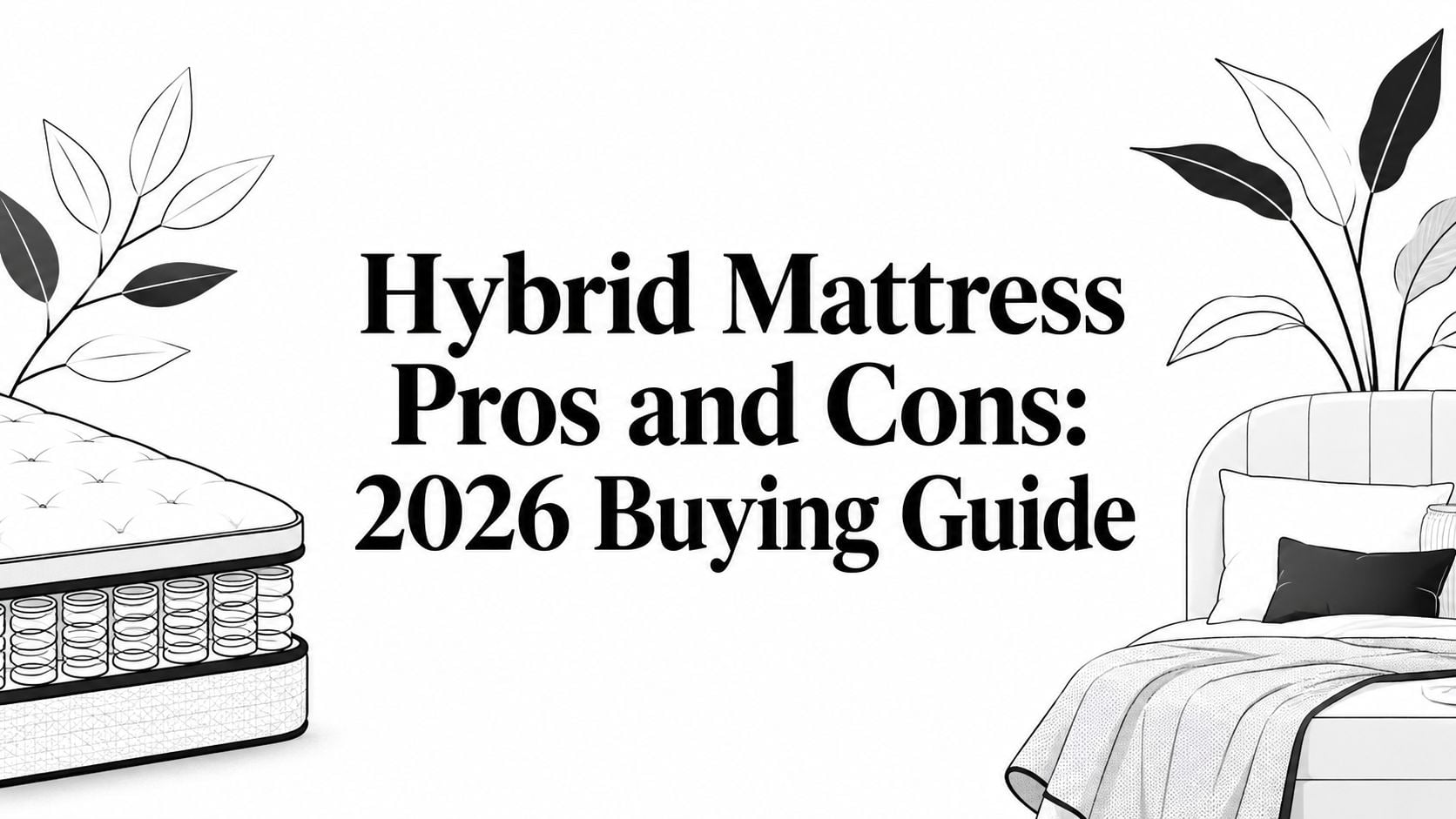
A hybrid mattress is basically two systems working together. The lower system is the coil core, usually made with pocketed coils that move independently. The upper system is the comfort stack, which can include foam or latex for pressure relief and contouring.
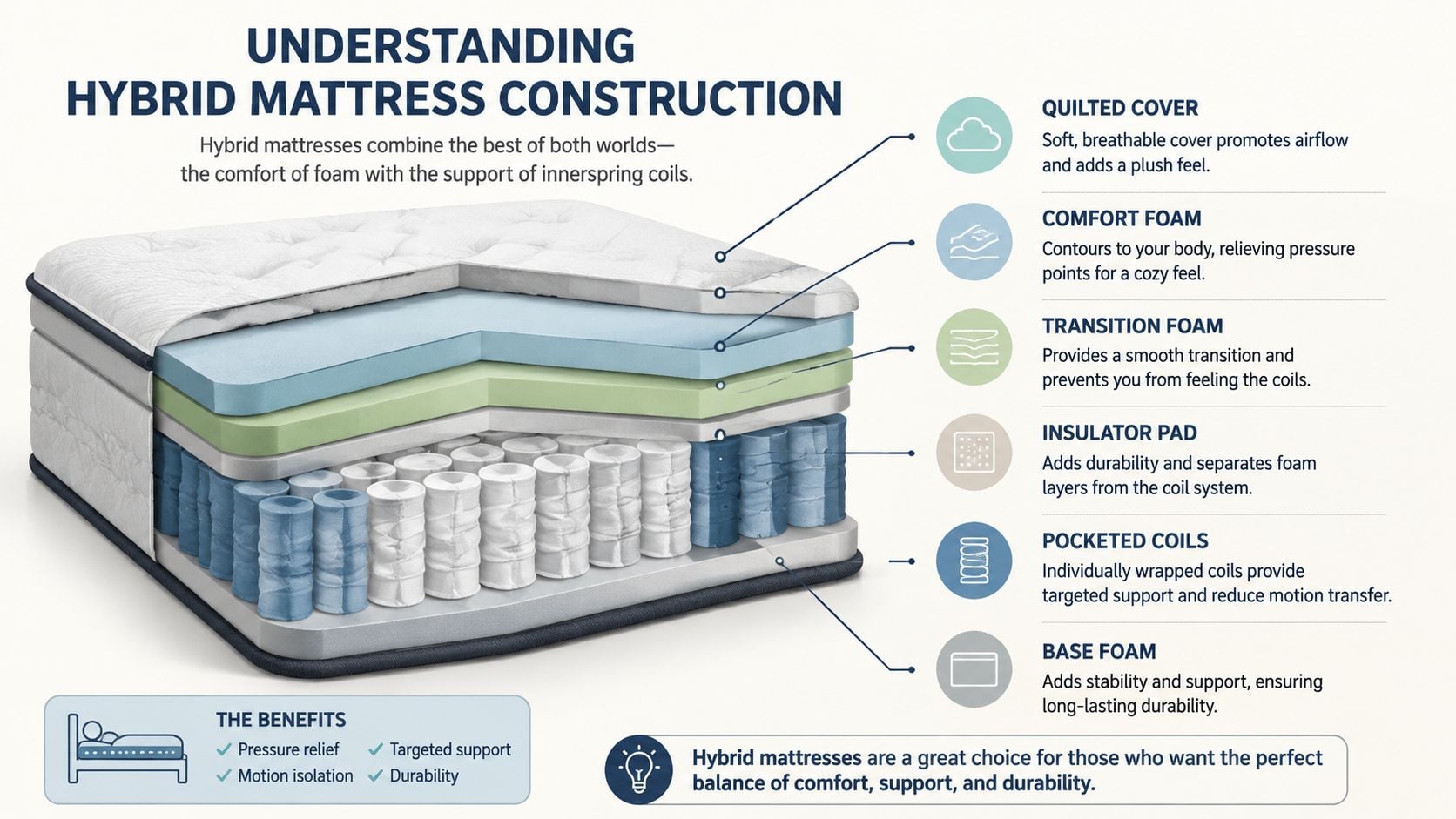
How the layers work together
The coil layer matters because it creates internal airflow channels, which helps heat move away from the sleeper. That's one reason hybrids usually sleep cooler than dense all-foam beds. The foam on top still does the work of cushioning joints, so the bed doesn't feel like a bare spring mattress.
Think of it as a suspension system with a comfort shell. The coils provide the chassis, the foam softens the ride, and the mix creates a feel that sits between deep foam sink and classic innerspring bounce. That middle-ground feel is exactly why hybrids are so popular with combination sleepers who don't want to feel stuck in the bed.
A good hybrid also avoids extremes in the transition layer. If the foam is too thin, pressure relief suffers. If the top is too thick and soft, the mattress can lose the quicker response that makes a hybrid useful in the first place.
Tip Top's what is a hybrid mattress guide is useful for shoppers who want the construction explained in plain terms before they compare models in person. That's the right order, construction first, then feel, then fit.
Advantages of Hybrid Mattresses
A hybrid earns its keep when the sleeper needs support and comfort in the same bed. That is the whole point. The coil base handles lift and airflow, while the foam or latex comfort layers ease pressure on shoulders, hips, and lower back. A hot sleeper gets a cooler surface, a back sleeper gets cleaner support, and a combination sleeper gets a bed that changes positions without a fight.
That balance is why hybrids work for specific sleepers rather than everyone. Broad-shouldered side sleepers usually want enough cushion to keep pressure off the shoulder, while lighter back sleepers often need a firmer hybrid so the hips do not sink too far. Couples also notice the difference fast, especially when one person tosses and turns more than the other.
Independent guidance from Furniture Fair describes this build as a practical mix of support, pressure relief, and quicker rebound. That is the kind of feel many shoppers miss in the showroom. A quick test lies less than a full night on the bed, so the true payoff shows up after hours of sleeping, not just during a short lie-down.
Where hybrids usually shine
- Cooling: The coil system opens space for air to move through the mattress, which helps reduce trapped heat.
- Edge support: The perimeter usually holds shape better than many softer all-foam beds, so sitting and sleeping near the edge feels more secure.
- Responsiveness: Changing positions is easier because the surface springs back faster.
- Balanced feel: The bed cushions pressure points without creating that deep, stuck-in-the-bed sensation that some sleepers dislike.
That mix is why hybrids often suit people who sleep on their side one moment and on their back the next. It also helps active sleepers who do not want to wrestle with the mattress every time they roll over. For couples, the extra structure can make a shared bed feel steadier, especially when one partner prefers a different level of firmness.
A hybrid often makes sense when a sleeper wants less foam hug and more ease of movement.
That is also why these beds come up often for people dealing with back pain, especially when the mattress needs to support the lumbar area without feeling rigid. Tip Top Furniture & Mattresses lays out that connection clearly in its guide on help back pain with the right mattress, and that is the right conversation to have before choosing a build.
Bedroom conditions matter too. If allergies or stale air are making sleep worse, the mattress alone will not fix it. A practical read on indoor air quality for better sleep helps round out the decision by looking at the room, not just the bed.
Honest Downsides You Need to Consider
The most common mistake is assuming a hybrid is automatically the smarter buy. It isn't. Hybrids are usually heavier, more expensive, and sometimes less motion-isolating than dense foam beds, which means the “upgrade” can turn into a hassle if the sleeper values convenience or silence over bounce.
That weight shows up fast during setup and rotation. A mattress that feels stable on the floor can be a pain to move through a hallway or lift onto a frame. Buyers who change apartments often, or who don't have help when the mattress arrives, should take that seriously.
The tradeoffs buyers overlook
- Weight: Moving and rotating can be difficult.
- Price: Quality queens often start in the mid-hundreds.
- Motion transfer: Partner movement can travel more than with thick foam.
- Durability risk: Low-quality foam or weak coils can wear out early.
Sleep Like The Dead reports that sagging is reported by about 17% of hybrid owners, and that hybrid durability is only “no better than fair” overall, using owner-research data from Sleep Like The Dead. That's the number to keep in mind when a bed feels nice in the store but doesn't have enough quality in the foam layers or coil system.
Low-priced hybrids can be especially risky because the engineering is more complex than simple foam. If the comfort layer is thin or cheap, the mattress can lose its feel before the coils are done supporting it. Buyers who want the lowest-cost option, the quietest sleep surface, or the deepest foam contour should look elsewhere.
Tip Top's mattress care tips to keep cool, clean all summer long is also a smart reminder that even a good mattress needs upkeep, especially when heat and daily use start to work against the materials.
Who Should Buy a Hybrid Mattress
The right hybrid buyer usually falls into one of a few clear groups. Heavier adults often need the coil base because it helps prevent the mattress from feeling too soft too quickly. Combination sleepers usually like the quicker response because they don't have to fight the surface when they shift positions.
Hot sleepers are another obvious fit. Coils breathe better than solid foam, so the bed usually runs cooler. Couples can also benefit when one partner likes edge support and a more stable surface, especially if both people want a mattress that doesn't sag at the sides.
Hybrid mattress suitability by sleeper type
| Sleeper Profile | Hybrid Suitability | Key Considerations |
|---|---|---|
| Heavy adult | Strong fit | Needs firmer support and durable construction |
| Side sleeper | Good fit with the right build | Softer comfort layers help shoulders and hips |
| Back sleeper | Strong fit | Medium-firm to firmer builds often feel best |
| Stomach sleeper | Good fit with a firmer model | Too much softness can let the hips sink |
| Combination sleeper | Strong fit | Responsive bounce helps movement |
| Light sleeper with a restless partner | Mixed fit | Motion transfer can still be a problem |
How to match the build to the sleeper
Side sleepers usually need more cushioning, so thicker comfort layers make the mattress easier on shoulders and hips. Back and stomach sleepers usually do better when the top isn't too soft, because they need the spine and pelvis to stay in line. Heavier sleepers often need a firmer, more supportive feel to keep the mattress from collapsing too soon.
For a couple, the hardest question isn't comfort, it's compromise. A hybrid can solve pressure relief for one partner and still feel too lively for the other. That's where a showroom test matters, because movement, edge support, and firmness all show up differently once two people are on the bed.
A helpful place to start is Tip Top's which mattress is right for your body type guide, since body shape and sleep position should drive the choice more than the label on the tag. Shoppers who also want a room-level comfort upgrade can think about bedding too, and a piece on the best anti-allergy duvets for UK homes is a reminder that mattress comfort and bedding comfort work together.
How Hybrids Compare to Other Mattress Types
Hybrids sit in the middle of the mattress world, and that's both their strength and their weakness. They rarely beat every other mattress type on a single metric, but they often post the best all-around compromise for people who don't want to make one big sacrifice.
Innersprings are usually bouncier and simpler, but they don't contour as well. Memory foam isolates motion better and hugs the body more, but it usually traps more heat and can feel slower when changing positions. Latex brings a more naturally resilient feel and strong durability, but it typically comes at a premium and doesn't feel like hybrid foam-coil construction.
A practical comparison
- Cooling: Hybrids usually beat memory foam and compete well with innersprings.
- Motion isolation: Memory foam usually wins here.
- Edge support: Hybrids often outperform softer foam beds.
- Feel: Hybrids feel more balanced, less sinky than foam, less bare than springs.
- Price: Hybrids usually cost more than basic foam and many innersprings.
This is why buyers who want one mattress to do everything often land on a hybrid first. Still, the mattress type should follow the sleep problem. If partner movement is the main issue, a foam bed may be the better call. If heat is the biggest complaint, hybrid construction has a real advantage. If natural materials and durability matter most, latex deserves a look.
The showroom conversation should stay focused on the actual problem, not the category name. That's how a family-owned store earns trust, by matching the sleeper to the build instead of pushing a one-type-fits-all answer.
Smart Shopping Strategies for Hybrid Mattresses
The smartest hybrid shoppers start with firmness, not features. Medium-firm works for many sleepers, but side sleepers often need a softer surface, while back and stomach sleepers usually need a firmer one. That simple decision cuts down on a lot of bad purchases.
Sleep trials and warranties matter too. A mattress should come with enough time to live on it, not just test it for a week. Warranties should also be clear about sagging expectations, because vague language helps sellers more than buyers.
What to check before buying
- Feel the edge support. Sit and lie near the perimeter to see whether the mattress stays stable.
- Test movement response. Roll from back to side and see whether the surface lets you switch positions easily.
- Ask about foam quality. Thin or low-density comfort layers can wear out early.
- Compare coil feel. The support core should feel steady, not shaky or noisy.
- Check return terms. A trial period only helps if the process is straightforward.
In-store testing is still one of the best ways to shop for this category, especially when a local team can compare several builds side by side and ask about body type, sleep position, and partner dynamics. That kind of matching is exactly where a showroom earns its keep.
Tip Top Furniture & Mattresses also offers flexible financing, which helps buyers step up to a better-built mattress without forcing the project into a bad budget fit. For shoppers in Freehold and the Greater Albany Capital Region, that matters because the right mattress should solve sleep problems, not create financial stress.
Making Your Final Decision
A hybrid mattress makes sense when the sleeper wants a cooler, more responsive bed with real support under the comfort layers. It's a strong choice for hot sleepers, combination sleepers, heavier adults, and couples who need a more balanced feel. It's a weaker choice for shoppers who care most about maximum motion isolation or the lowest possible price.
The quickest way to sort it out is to ask a few blunt questions. Does the sleeper run hot at night? Does the body change positions often? Does the mattress need strong edge support? Is a higher-quality build worth the investment? If the answer is yes to most of those, a hybrid deserves a serious look.
Local expertise still matters here. A mattress should be tested in person, because a bed that looks good online can feel wrong the minute a body lies down on it. A good showroom visit saves money, reduces guesswork, and keeps a buyer from making a costly mistake.
Tip Top Furniture & Mattresses helps shoppers in Freehold and across the Greater Albany Capital Region test hybrid mattresses in person and compare comfort, support, and financing options with local guidance. Visit Tip Top Furniture & Mattresses to explore mattress choices that fit the way you sleep, not just the way a tag describes them.