Mattress vs Memory Foam: Which One Is Right for You


A shopper walks into a mattress showroom in the Capital Region expecting a simple answer to "mattress vs memory foam," then faces rows of beds that all look different and feel similar for the first few seconds. One model feels supportive, another feels softer, and a third seems cooler, but the underlying question isn't which label sounds better.
The useful comparison is all-foam versus hybrid versus innerspring versus latex. Construction determines how a bed handles pressure, movement, heat, body weight, and long-term wear. For shoppers visiting a Freehold, NY showroom from Albany, Schenectady, Troy, or nearby Greene County, that framework makes the decision far easier than chasing a sales tag or a cooling buzzword.
Why Shoppers in the Capital Region Are Comparing Mattress Types
A shopper from Albany may need pressure relief for side sleeping. A couple from Troy may care more about motion isolation because one partner gets up early. Someone from Schenectady may prefer a firm, breathable surface and dislike the sinking sensation associated with dense foam. Those shoppers can stand on the same showroom floor and need completely different mattresses.
That's why the question isn't really mattress versus memory foam. Every memory foam bed is a mattress, and memory foam can appear in all-foam and hybrid designs. The more useful question is which construction balances comfort and support for the sleeper using it.
The local climate changes the decision
Capital Region homes bring their own sleep conditions. Warm, humid summers in Freehold can make heat retention more noticeable, while cold Albany winters can make some foams feel firmer at first. A bedroom's ventilation, bedding, and thermostat matter just as much as the label stitched onto the mattress cover.
Innerspring designs generally encourage airflow through the coil area. Memory foam offers closer contouring but can restrict airflow. Hybrids often split that difference by combining a foam comfort layer with a coil support system. Latex tends to feel more responsive, which helps sleepers who dislike being closely surrounded by the bed.
The shopper's problem is usually specific
The person looking for an outlet deal may need dependable support without paying for features that won't affect sleep. A side sleeper needs cushioning at the shoulder and hip. A couple needs movement control. Someone dealing with recurring joint discomfort may prioritize pressure distribution over bounce.
Memory foam's history also explains why it feels different from the traditional beds many shoppers grew up with. It was developed at NASA's Ames Research Center in 1966, released for wider commercial use in the 1980s, and reached consumers in mattress form in 1991. Tempur-Pedic introduced the technology to the U.S. market in 1992, and the first bed-in-a-box appeared in 2003, according to this history of mattress development.
The right showroom conversation starts with sleep position, body shape, temperature preference, and partner movement. Price comes after those needs are clear, not before.
What Memory Foam Actually Is and How It Behaves at Night
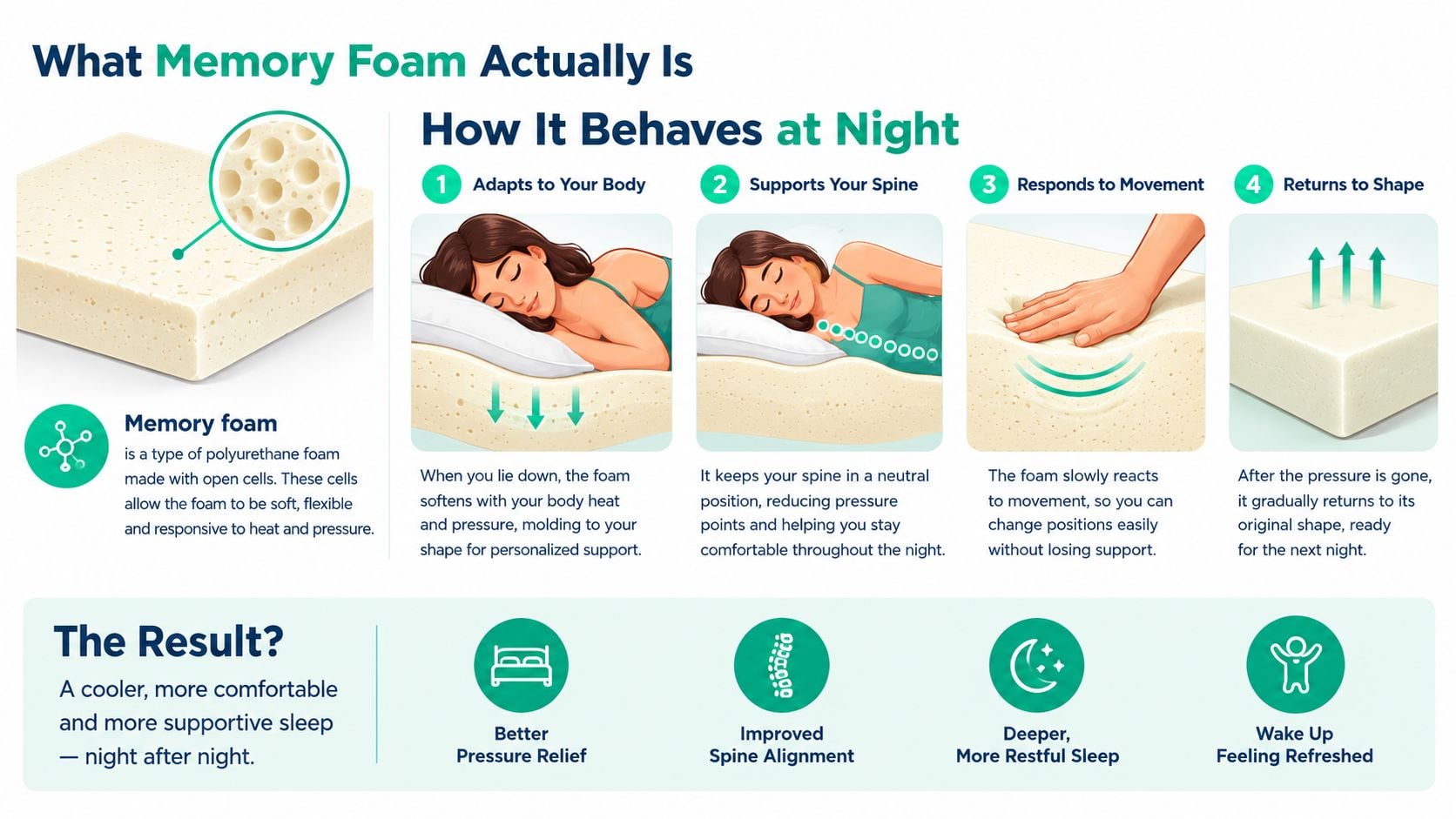
Memory foam is a viscoelastic form of polyurethane foam. In plain terms, it responds to pressure and warmth, then slowly returns toward its original shape. That delayed response creates the familiar contouring sensation, often described as a gentle hug or a feeling of sinking into the comfort layer.
The material belongs on top of a supportive base. A memory foam comfort layer can cushion the shoulders and hips, while the deeper support core keeps the sleeper from dropping too far into the bed. That distinction matters because memory foam isn't automatically a complete support system by itself.
How pressure creates the contour
A sleeper's body applies more force at the shoulders, hips, and other heavier areas. The foam compresses in those zones, spreading the load across a broader surface instead of concentrating it at a few hard contact points. That's why memory foam often feels especially comfortable to side sleepers.
The best result is not maximum sinking. It's a balance in which the shoulders and hips receive enough cushioning while the spine remains reasonably aligned. A mattress that allows the pelvis to drop too far can feel soft at first and unsupported later.
Density gives shoppers a more useful specification than vague phrases such as “advanced cooling.” Wirecutter's foam mattress guidance identifies 3 lb/ft³ or higher as a practical durability benchmark for memory-foam layers, with 4 lb/ft³ suggested for sleepers over 200 pounds. Those figures don't determine comfort by themselves, but they help reveal whether a manufacturer is providing meaningful construction details.
What a first night can reveal
Memory foam may feel firmer in a cold bedroom and soften as body heat reaches the surface. That change is part of the material's behavior, not necessarily a defect. The sleeper should notice pressure easing at the shoulder and hip without feeling trapped when changing position.
Foam care matters, too. A useful resource on professional Birmingham rug washing discusses cleaning considerations around foam mattresses and bedroom textiles. Shoppers can also review what a memory foam mattress is before visiting a showroom, especially if the terms viscoelastic, density, and support core are unfamiliar.
Memory Foam Against Innerspring, Hybrid, and Latex Side by Side
A direct comparison helps shoppers avoid choosing by brand language alone. Memory foam and latex aren't interchangeable, and a hybrid is not just a more expensive innerspring. Each construction creates a different combination of pressure relief, movement, airflow, and responsiveness.
The table below focuses on the practical differences a sleeper can feel in the bedroom.
Memory Foam vs Innerspring vs Hybrid vs Latex
| Criterion | Memory Foam | Innerspring | Hybrid | Latex | Best Pick |
|---|---|---|---|---|---|
| Support | Contouring support from foam over a support core | Firm, familiar coil support | Balanced support from coils and comfort layers | Buoyant, even support | Hybrid for balance |
| Pressure relief | Excellent at redistributing shoulder and hip pressure | More limited cushioning | Strong relief with less sinking than all-foam | Good relief with a springier feel | Memory foam |
| Motion isolation | Excellent because foam absorbs movement | Movement can travel across connected coils | Good, especially with pocketed coils and foam | Good, but more responsive than memory foam | Memory foam |
| Temperature regulation | Often warmer because dense foam can restrict airflow | Strong airflow through the coil area | Better airflow than all-foam designs | Usually breathable and responsive | Innerspring |
| Durability | Depends heavily on foam density and support construction | Varies with coil and upholstery quality | Strong when both coils and foams are well built | Generally strong, with longer-lasting latex constructions | Latex |
| Weight and movement | Heavier feel and slower repositioning | Easier to move across | Moderate responsiveness | Easy to move across | Latex |
| Price | Available across a broad range | Often accessible for budget shoppers | Frequently costs more than basic builds | Often positioned as a premium material | Depends on the budget |
A memory foam mattress earns the nod for a sleeper who wants deep pressure relief and minimal partner disturbance. An innerspring is the practical choice for someone who wants airflow, bounce, and a traditional firm feel. A hybrid suits shoppers who want foam cushioning without giving up coil responsiveness.
Latex is the better match for sleepers who dislike the stuck-in-bed feeling. It also tends to have a longer service life than memory foam, polyfoam, and many traditional constructions, although exact durability depends on the full design and care.
The mattress types explained guide can help shoppers become familiar with those construction terms before testing beds in person. The showroom test should then confirm how the materials feel under the shopper's own body, not just how they sound on a product label.
Heat Retention, Motion Isolation, and the Density Question
Memory foam does tend to retain more heat than spring-based constructions, but “memory foam sleeps hot” is too broad to guide a purchase. Foam density, thickness, ventilation, cover materials, and cooling layers all influence the final experience.
Dense foam can feel stable and durable, but it also contains more material that can absorb warmth. Cooling designs may use open-cell structures, gel, copper channels, breathable covers, or other methods to manage heat. Those features can improve a mattress, but shoppers should still ask what the foam density is and how the entire bed is constructed.
A review of memory foam performance notes that layers at or above 3 lb/ft³ offer a practical durability benchmark, while sleepers over 200 pounds may benefit from layers at or above 4 lb/ft³. The same guidance makes clear that density is a more actionable specification than a broad cooling claim. The independent memory foam mattress testing also discusses how specialized cooling construction can reduce warmth while the underlying material remains more heat-retentive than coils.
Heat Retention and Motion Isolation by Mattress Build
| Mattress Type | Typical Heat Retention | Motion Isolation | Foam Density if Applicable |
|---|---|---|---|
| All-foam memory foam | Higher, especially with dense contouring foam | Excellent | Ask for the density of each major foam layer |
| Traditional innerspring | Lower because air moves around coils | Limited to moderate | Upholstery foam may vary |
| Hybrid | Moderate, depending on foam depth and coil design | Moderate to good | Ask for comfort-layer density |
| Latex | Generally moderate, with more surface airflow and responsiveness | Good, but less absorbing than memory foam | Ask whether the latex is used in the comfort layer or support zone |
AARP testing cited in the available research found that one memory foam model retained only 11 degrees of heat, showing that cooling design can materially change performance. That result applies to the tested model, not to every foam mattress, so it shouldn't be treated as a universal temperature promise.
Motion tells the other half of the story
Memory foam absorbs movement instead of transferring it across the surface. That makes it a strong choice for light sleepers and couples, especially when one person changes position frequently. Traditional innerspring beds can transfer more movement, while pocketed coils and foam comfort layers can improve the isolation of a hybrid.
Showroom rule: The useful question isn't whether a mattress says “cooling.” It's whether the construction explains how it handles heat, movement, and body weight.
For practical warm-weather maintenance, shoppers can review these mattress care tips for keeping a bed cool and clean. A showroom associate should be able to explain the density, cover, support core, and cooling materials without hiding behind marketing language.
Off-Gassing, Smell, and Indoor Air After a New Mattress
A new mattress smell and a broader indoor-air concern are related, but they aren't identical. Off-gassing refers to volatile organic compounds released from materials such as foams, adhesives, and some fire-barrier components. The odor can be temporary, while emissions may remain measurable after the smell becomes difficult to notice.
A chamber study cited in 2026 found that emissions from two memory foam mattresses peaked on the first day, declined over 31 days, and remained measurable at the end of the test. The modelled one-year averages were 2.7 and 4.2 µg/m³, and another independent summary reported that one model emitted 61 distinct VOCs, including benzene and naphthalene. The off-gassing discussion and chamber-study summary provides the relevant context for shoppers who want more than a simple “the smell goes away” answer.
Who should pay closer attention
Most shoppers notice an odor after opening a compressed bed-in-a-box mattress. That smell can seem stronger because the materials were sealed for shipping. People with asthma, chemical sensitivity, or a nursery application should be more selective about certifications, materials disclosure, and ventilation plans.
Certifications such as CertiPUR-US and GREENGUARD Gold can provide additional information about emissions and screened materials, but certification details should be checked for the actual model rather than assumed from a retailer's general statement.
A sensible airing-out routine
- Remove the packaging promptly: Let the mattress expand in a room with open airflow.
- Leave it uncovered: Avoid trapping the initial odor beneath bedding or a protector immediately.
- Use a fan: Cross-ventilation can move room air and make the odor less noticeable.
- Wash bedding first: Clean sheets prevent the new mattress smell from settling into freshly purchased bedding.
- Follow the manufacturer's instructions: The required expansion and use time can vary by construction.
The practical answer isn't panic or dismissal. A strong odor, unclear material disclosure, or a sensitive sleeper warrants more investigation before purchase. A mild temporary smell in a ventilated bedroom is a different issue from long-term indoor-air concerns.
Matching Mattress Type to Sleeper, Body, and Climate
The right construction becomes clearer when the sleeper's position comes first. A bed should cushion the areas carrying pressure while keeping the body from sagging into an unsupported posture.
Side sleepers need shoulder and hip relief
Side sleeping concentrates pressure at the shoulder and hip. Guidance for side sleepers commonly places the preferred firmness around 4 to 6.5 out of 10, with the exact choice depending on body shape and support needs, according to this side-sleeper mattress guidance.
Memory foam is often the first construction to test because it contours closely. A hybrid with a softer comfort layer can work just as well for a side sleeper who wants more airflow or easier movement.
Back, stomach, and combination sleepers need different support
Back sleepers generally need even support beneath the lumbar area without excessive softness. Stomach sleepers usually need a firmer surface to reduce the chance of the midsection dropping too far. A firmer innerspring or a supportive zoned hybrid can be a sensible starting point.
Combination sleepers should test responsiveness. Latex and hybrid designs make position changes easier than slow-response foam, while an all-foam bed may suit a sleeper who values stillness more than bounce.
Couples should decide whether movement control or ease of movement matters more. Memory foam usually isolates movement most effectively, while a pocketed-coil hybrid can offer a useful compromise between isolation and responsiveness.
Body weight changes the feel
A 250-pound sleeper won't compress a foam layer in the same way as a 130-pound sleeper. The lighter person may experience a firmer surface and less contouring, while the heavier person may engage deeper layers and feel more heat or sink.
Density matters here. Higher-density foam generally resists wear better than lower-density foam, and the support core should be examined rather than ignored. Foam density guidance from Sleep Foundation explains why density influences feel and durability.
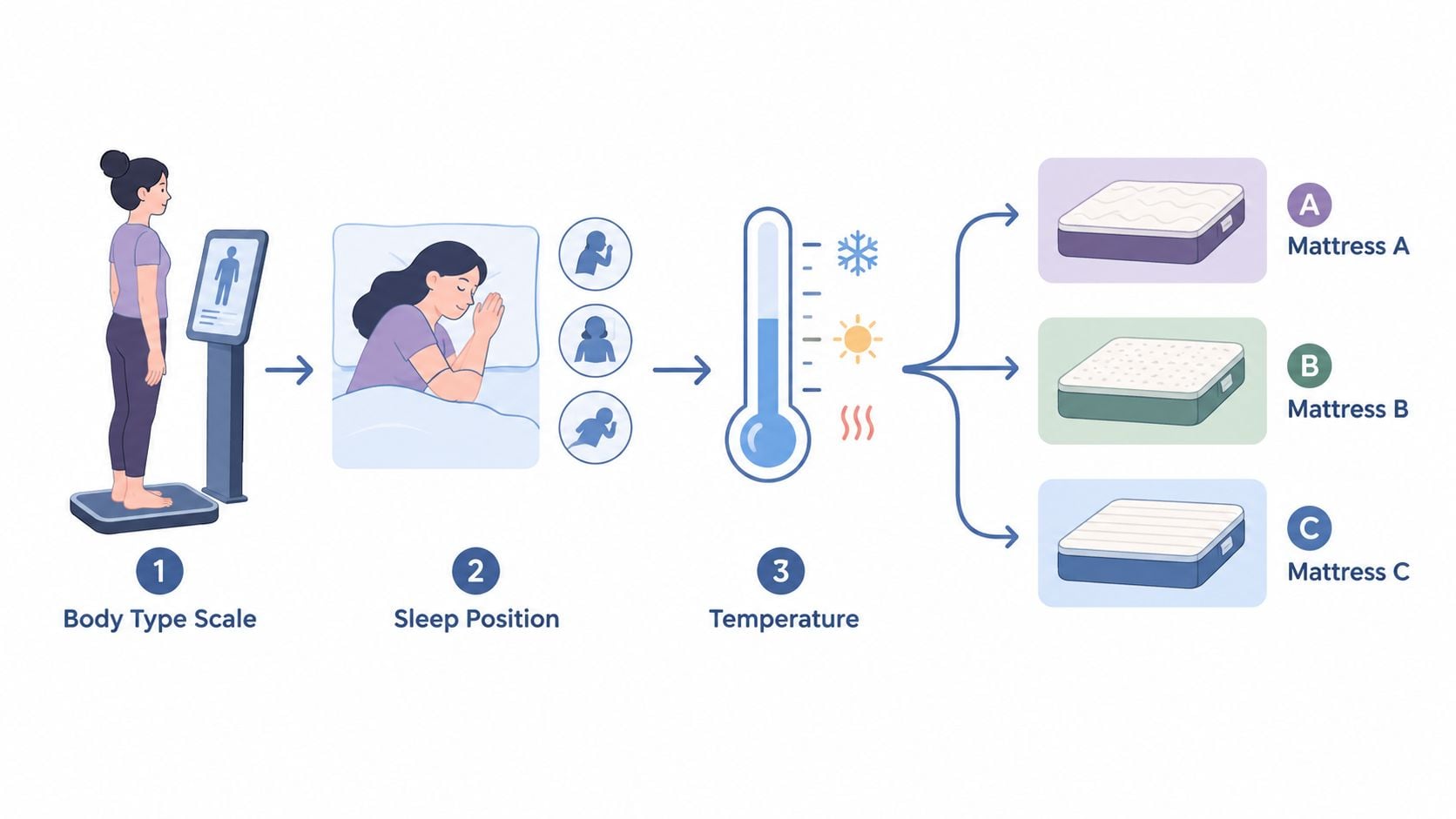
For Freehold's humid summers, breathable coils or a ventilated hybrid may be more comfortable for hot sleepers. During cold Albany winters, foam may feel firmer when first used and soften as it warms. The mattress guide for different body types can help narrow the floor before the shopper tests specific models.
Shopping for a Mattress in Freehold and the Albany Area
A productive showroom visit should feel like a fitting, not a race. The first conversation should identify sleep position, body weight, partner movement, preferred firmness, temperature concerns, and any pressure points. Those answers narrow the construction before the shopper spends time comparing covers and finishes.
A high-tech bed-matching system can support that process by connecting body and comfort information with suitable mattresses. The system shouldn't replace lying down on the bed, but it can reduce the number of models that need serious testing.
A practical mattress test
- Lie down naturally: Stay in the position used at home rather than sitting on the edge or lying flat for a few seconds.
- Allow enough time: A quick test reveals the first impression, but a longer rest reveals whether the shoulder, hip, and lower back remain comfortable.
- Change positions: Roll from side to back and back again. A sleeper who struggles to move may dislike deep, slow-response foam.
- Check alignment: The body should feel supported without a pronounced gap or excessive pressure.
- Test the edge: Sit and lie near the perimeter to evaluate how easily the mattress supports getting in and out of bed.
- Bring a partner when possible: Motion isolation and shared comfort can't be judged accurately by one person alone.
A useful question for the floor: “What are the foam densities, coil construction, cover materials, trial terms, and warranty conditions for this exact model?”
What to ask before signing
A salesperson should explain the foam density, coil gauge or coil design where relevant, support-core material, cover construction, and care requirements. If the answer is only “premium” or “advanced,” the shopper hasn't received enough information to compare beds fairly.
Local delivery matters as well. Shoppers from Albany, Schenectady, Troy, Saratoga, and the surrounding Freehold area should confirm delivery windows, setup details, removal options, trial periods, and exchange policies before the purchase is complete.
Financing can make a larger bedroom project easier to manage, especially when a mattress is purchased alongside bedroom furniture, flooring, or other home needs. A family-owned showroom with professional design services can also coordinate the mattress purchase with the rest of the room rather than treating sleep as a separate transaction.
Red flags worth taking seriously
- No density disclosure: The shopper can't evaluate the foam's construction or likely wear.
- Vague warranty language: The salesperson can't explain what sagging or material defects qualify.
- Pressure to decide immediately: The shopper is discouraged from comparing or testing naturally.
- Unclear exchange terms: The trial process, fees, and eligibility aren't written down.
- Unverified claims: Cooling, orthopedic, or health promises appear without specific construction details.
Mattress durability varies by construction and care. The average mattress is often described as lasting around seven years, while lower-quality all-foam models may break down in 2 to 3 years and better models may last 7 to 8 years. The guidance on mattresses that resist sagging also identifies high-density polyfoam of at least 1.8 pounds per cubic foot as a commonly recommended support-core specification.
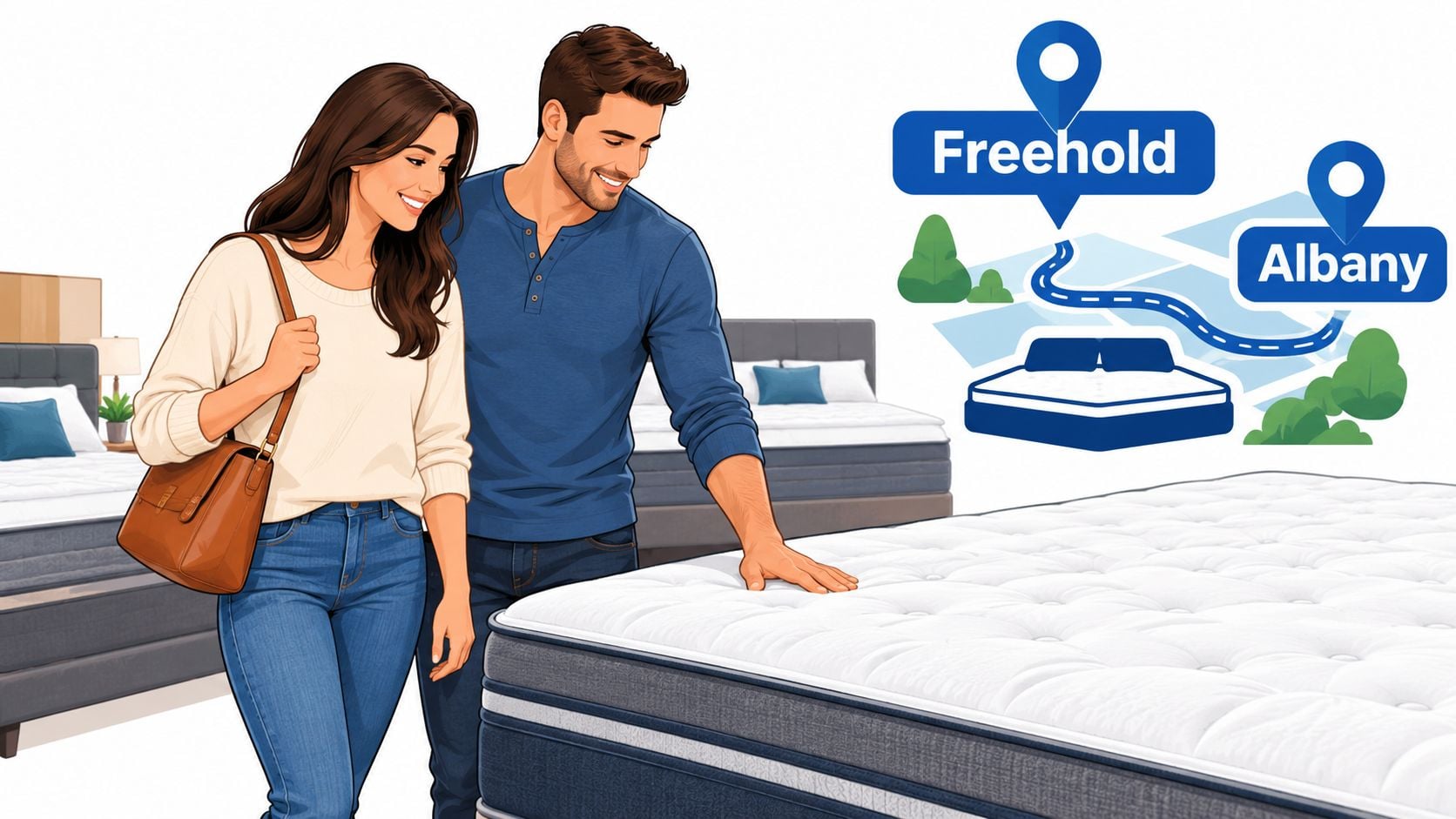
The local showroom approach is straightforward: test the bed, ask for construction details, review the written policies, and choose the design that fits the sleeper rather than the loudest sales claim. The local mattress shopping guide offers another checklist for preparing before a visit.
Tip Top Furniture & Mattresses is a family-owned Freehold, NY showroom serving the Greater Albany Capital Region since 1978, with professional design services available since 1984 and products from 50+ trusted manufacturers; learn more through Tip Top Furniture & Mattresses. Shoppers can test USA-made mattresses, discuss flexible financing and delivery, explore bedroom furniture, flooring, Amish furniture, custom ordering, and clearance options, then get local guidance on whether memory foam, a hybrid, innerspring, or latex fits the way they sleep.