Heirloom Quality Furniture: A Practical Buying Guide


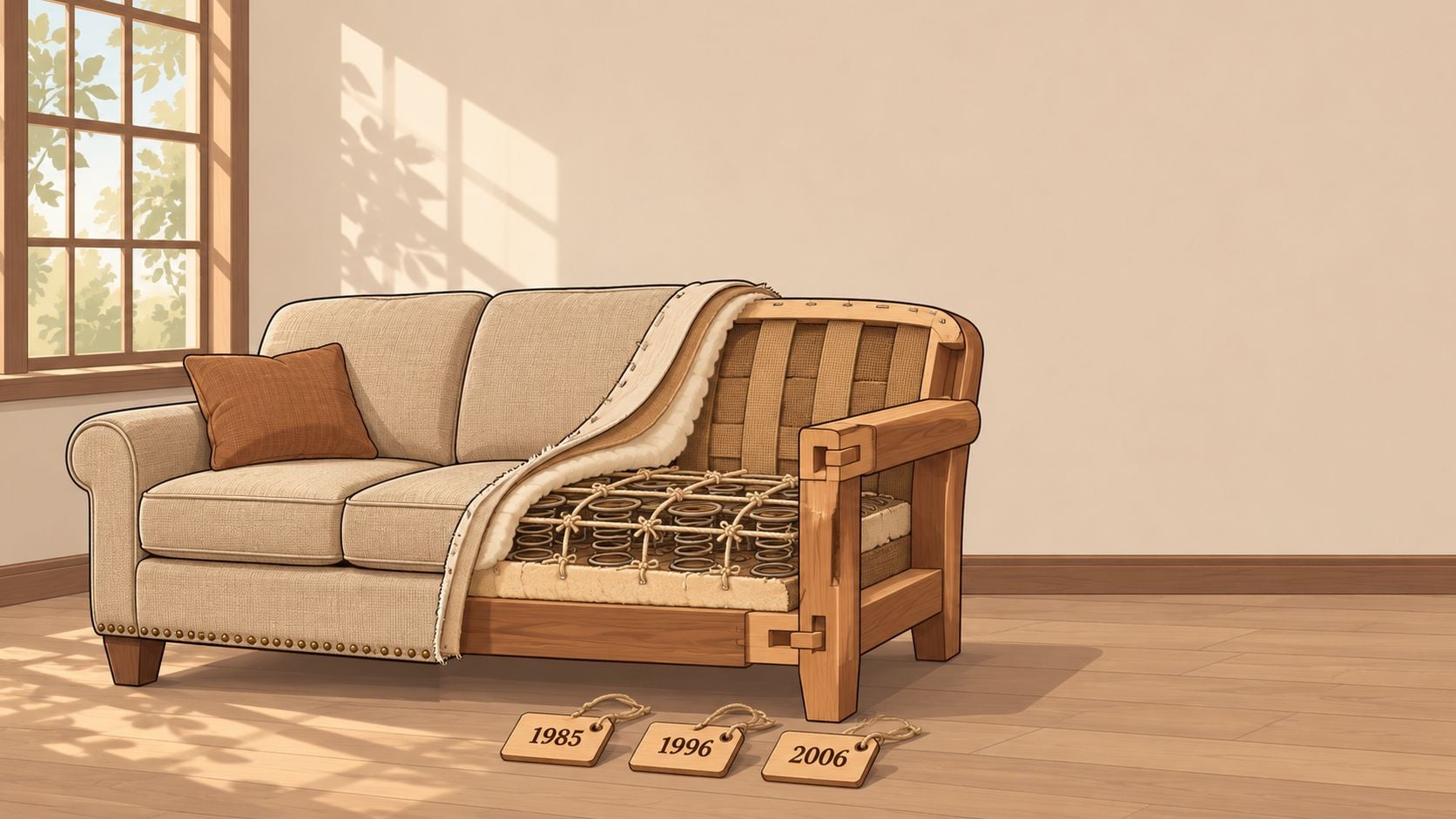
7.8 years is how long a U.S. furniture buyer in 2006 expected a good-quality sofa to last, on average, according to a systematic review of furniture lifetimes. Two decades earlier, in 1985, the same question drew an answer of 14.2 years. Nobody voted to make sofas disposable. Flat-pack shelving, cheap online sectionals, and the habit of treating furniture as temporary did that.
Heirloom quality furniture is the opposite bet. It isn't a style, a stain color, a weight, or a country of origin printed on a hangtag. It's a piece built so the second and third owner can keep using it, which comes down to three questions. Is the wood allowed to move? Can the joints and hardware be serviced? Can the finish be renewed?
A shopper driving in from Albany, Schenectady, Troy, or anywhere in Greene County can answer most of that on a single chair in about twenty minutes.
What Heirloom Quality Furniture Really Means
A sofa's expected life and its time in use can be very different. A systematic review of furniture lifetimes found that U.S. buyers' expectations for a good-quality sofa declined across three survey years, alongside changes such as flat-pack furniture, online shopping, lower prices, and easier replacement.
The same review found a gap between expected and actual use among Austrian households. For sofas, the figures were 13.2 years expected and 8.6 years in use; for desks, 17.9 and 8.8; for wardrobes, 19.0 and 10.5. A piece can fall short of expectations even when it looks sound at first.
Construction is often hidden from view. A cutaway makes the layers easier to understand, from the frame outward.
Here is a useful definition to carry into a store:
Heirloom quality furniture is built to stay useful, repairable, and welcome in someone else's house long after the first owner is finished with it. Its lasting value depends on whether it can be repaired, refinished, and fitted with parts after the sale, not only on its materials or craftsmanship when new.
A wool coat offers a familiar comparison. Good wool may outlast the lining, and a tailor can replace the lining so the coat keeps serving its owner. Furniture follows a similar principle: repairable parts can extend its useful life, while construction that cannot be serviced may turn a small failure into the end of the piece.
Expected versus actual furniture lifetimes
| Measure | Expected years | Actual years in use |
|---|---|---|
| Good-quality sofa, U.S. buyers, 1985 | 14.2 | Expectation only |
| Good-quality sofa, U.S. buyers, 1996 | 12.1 | Expectation only |
| Good-quality sofa, U.S. buyers, 2006 | 7.8 | Expectation only |
| Sofa, Austrian buyers | 13.2 | 8.6 |
| Desk, Austrian buyers | 17.9 | 8.8 |
| Wardrobe, Austrian buyers | 19.0 | 10.5 |
The numbers help explain why longevity is about more than what a piece looks like on the showroom floor. Buyers can ask whether the maker or seller can support repairs, refinishing, and replacement parts later. Wood that moves with seasonal changes, joints a repair shop can open and reglue, and a finish that can be renewed all help keep furniture in service.
A December 2025 survey of 2,101 German adults commissioned by imm cologne and conducted by YouGov found that 95.5% rated furniture durability as important or very important (imm cologne). Still, a heavy feel, a deep stain, or a USA label cannot prove that a piece will last. Ask what can be repaired and how the finish can be renewed.
Solid Wood Joinery and Finishes That Hold Up
A piece can be solid wood and still fail early if its joints, top attachment, or finish cannot be repaired. Use the table to compare how a piece is built and what can be serviced later.
| Feature | Heirloom-quality sign | Short-cycle sign |
|---|---|---|
| Wood and cut | Solid hardwood such as white oak, cherry, maple, or walnut; quartersawn where a top is wide | Particleboard, MDF, or a thin printed skin |
| Movement | Frame-and-panel doors; no cross-grain glue lock; white oak has about 10.5% total tangential shrinkage versus 5.6% radial shrinkage (USDA Forest Products Laboratory, Wood Handbook) | Wide panels glued or screwed so seasonal swelling has nowhere to go |
| Joinery | Mortise-and-tenon or similar fitted joints that can be reglued | Staples, dowels in weak cores, or cam-lock flat-pack fittings |
| Tabletop attachment | Clips, buttons, or screws in elongated holes | Screws driven tight across the grain |
| Drawers | Solid-wood boxes with dovetails and a replaceable slide | Stapled corners and a thin non-wood bottom |
| Finish | Oil, lacquer, or conversion varnish that can be touched up or stripped | Foil, paper print, or a film that cannot be sanded to wood |
Wood takes in and releases moisture as indoor conditions change. That movement is not equal in every direction. A guide to wood movement explains how moisture changes can contribute to warping, checking, splitting, and loosened joints. The Wood Handbook figures in the table show why grain direction matters: white oak shrinks more tangentially than radially as it dries.
Why a Wide Top Needs Room to Move
A wide flatsawn top changes across its width as moisture levels shift. It works like a board that swells and contracts with the seasons. If an apron is glued firmly across both ends, the top has little room to move, so it may cup or split. A frame-and-panel door handles the same change more gently: the frame holds its shape while the center panel sits loosely in a groove.
Look at how the tabletop joins its base. Clips, buttons, or screws in elongated holes allow the top to widen and narrow. A screw driven tight through an apron restrains it. In homes where indoor air changes between a heated winter and a humid summer, that restraint can push stress into the finish and then into the wood.
Joinery and Hardware You Can Service
Fitted joints can often be opened, cleaned, and reglued. A mortise-and-tenon frame or dovetailed drawer gives a repairer solid wood to work with. Staples and cam-lock fittings in a particleboard core offer less material for a durable repair. The wood joinery types guide explains common joint names and how they are assembled.
Drawers deserve a close look, too. A solid-wood box with dovetails can be repaired, and a slide that unscrews can be replaced. A stapled box with a plastic runner molded into its bottom may leave fewer repair options. Ask whether the slide is a replaceable part and whether it can be ordered after the sale. That answer matters as much as the joint you can see today.
Finishes You Can Renew Instead of Replace
White oak, cherry, hard maple, and walnut can be sanded and recoated by a refinisher. A veneer over a stable core can also make a sound door when its frame is solid. Printed foil or paper over particleboard is different: sanding cannot reveal a wood surface beneath it.
Oil, lacquer, and conversion varnish may be renewable, depending on the finish and its condition. A worn finish may need a touch-up or new coat; peeling can call for more extensive work. Ask what finish was used and whether it can be renewed, then find out whether the maker or seller can provide repair guidance or parts later. Solid wood, careful joinery, and an American-made label can be useful signs, but none proves that a piece will last. Heirloom status depends on whether its parts can be repaired and its surface refinished after the sale.
When comparing a showroom piece, consider all six rows together. A durable-looking stain or heavy feel cannot make up for a top locked against seasonal movement or joints that cannot be repaired.
How to Check a Piece Before You Buy
The checks below take about twenty minutes on one piece and none of them need a tool. A flashlight and a pulled drawer tell you more than the price tag does.
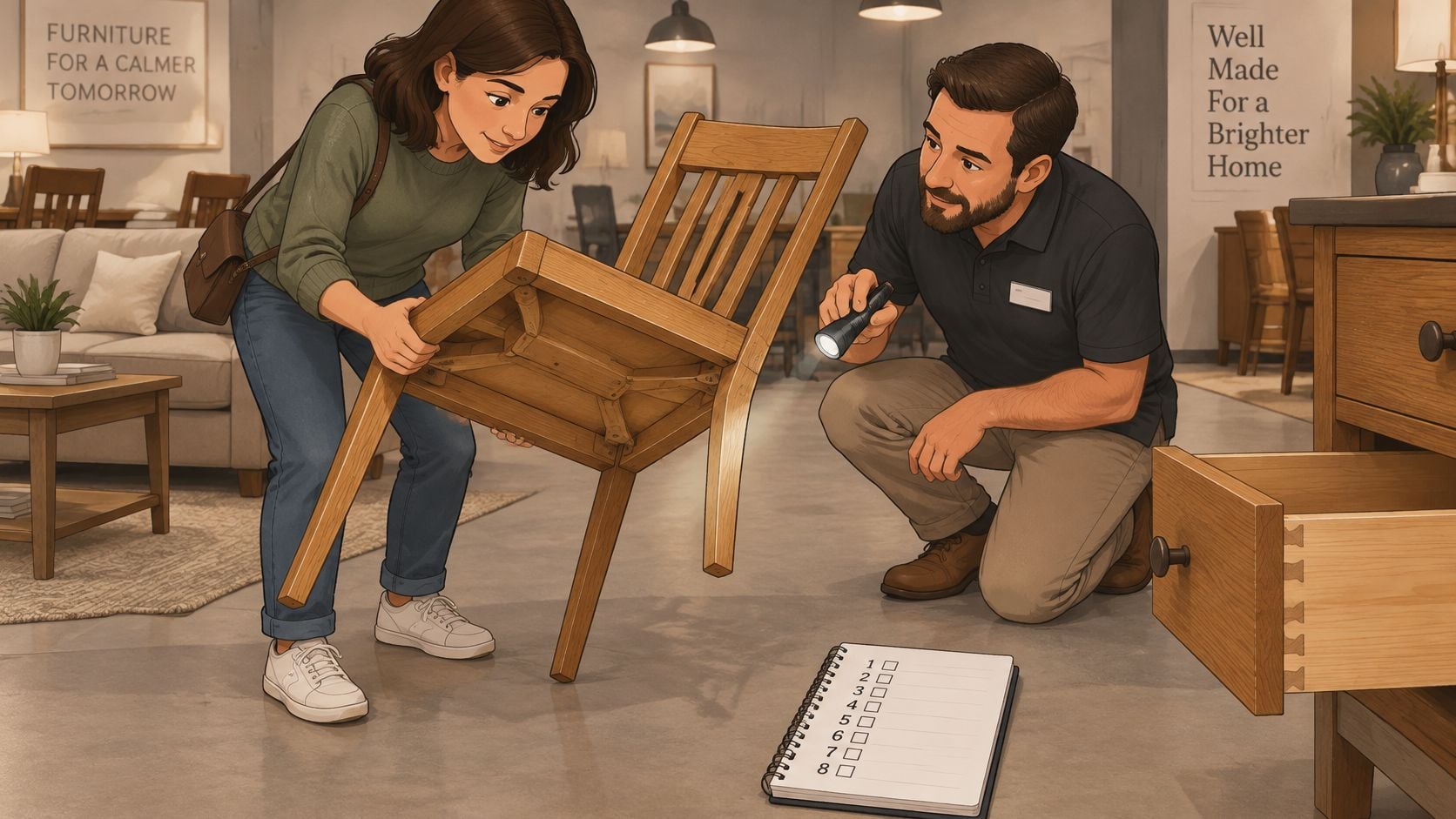
- Tip the piece over and read the underside. A pass shows solid wood where the maker didn't expect you to look. The solid wood versus veneer comparison explains why a veneered panel over a stable core is still sound when the frame is solid.
- Pull a drawer all the way out. Check the corner joint, the bottom panel, and the slide. A pass means the box doesn't rattle and the slide is a part you could order and swap.
- Open a door and look at the edge of the panel. A pass is a center panel that floats in a groove with a little play, not one glued on all four edges.
- Find where the top meets the base. A pass means clips, buttons, or slotted holes. A fail is a screw driven tight across the grain.
- Ask for the species, the moisture content at build, and whether wide boards are quartersawn or flatsawn. A pass is an answer without a pause, plus quartersawn stock on any wide top.
- Ask which finish went on and whether it can be renewed. A pass is oil, lacquer, or conversion varnish with a stated touch-up path.
- Rock the frame gently, corner to corner. A sound joint shouldn't rack, creak, or open a gap at the rail.
- Ask for the maker, the species, and a written care note before you leave. A pass is paperwork you can file and use in five years.
The two-fail rule: if two or more of those checks fail, price the piece as replaceable furniture, whatever the label says.
None of this requires expertise in wood science. It requires looking at the parts the catalog photograph never shows. Do the same routine at a second store and the differences get obvious fast.
Why a Longer Service Life Pays Off
A UK national online survey conducted in February 2017 asked 2,207 respondents to weigh six purchase factors across 18 categories of durable products: appearance, brand, guarantee length, longevity, price, and reliability. Respondents consistently emphasized longevity and reliability, and the study found that longevity was "extremely important" for seven categories, including furniture (Springer circular economy study). That preference makes sense at home, where a lower sticker price can look less attractive after repeated replacements.
Compare furniture by useful years per dollar, not just by its price tag. A household moving from Troy to Greene County, for example, needs a chest that can be moved and reassembled without losing a corner. A piece also earns its keep when a loose joint can be repaired, its finish can be renewed as tastes change, or it can be passed along instead of discarded.
Solid-wood furniture can be a strong heirloom choice, but the material alone does not settle the question. A heavy piece, an attractive stain, or a USA label is not proof that it will last. Its long-term value depends on whether it can be repaired, refinished, and fitted with replacement parts after the sale.
Heirloom value is useful years per dollar, including the replacement you avoided. A chest that serves a household for years costs less per year than one replaced sooner.
Ask about care instructions and parts availability before buying, alongside construction. If no one at home can handle a repair and no shop can get the needed part, sound construction may not be enough to keep the furniture in use. The idea behind casino asset preservation tips can be applied in a simpler way at home: maintain what you own so it stays useful.
For a practical benchmark, read how long furniture should last. The answer depends on upkeep, not marketing language alone. A repairable design with a finish that can be renewed is more likely to remain useful as a household's needs change. A plain cherry chest may still suit the room years later, while a distinctive finish may be harder to refresh or fit to new tastes.
Repair Refinishing and Seasonal Wood Care
A repairable piece has a better chance of staying in use. Comparative research found that 42.3% of furniture items were repaired, compared with 44.5% of clothing items, and that consumers performed 60% to 80% of repairs themselves (Springer repair study). Those figures make a practical point: care and access to parts matter after purchase, not just the material or craftsmanship.
A 2025 survey of 1,068 people in Denmark reported that 77% wanted to repair products before buying new, while 64% said they had done so (Aalborg University study). The difference between intention and action can come down to whether a repair feels manageable and the needed parts or help are available.
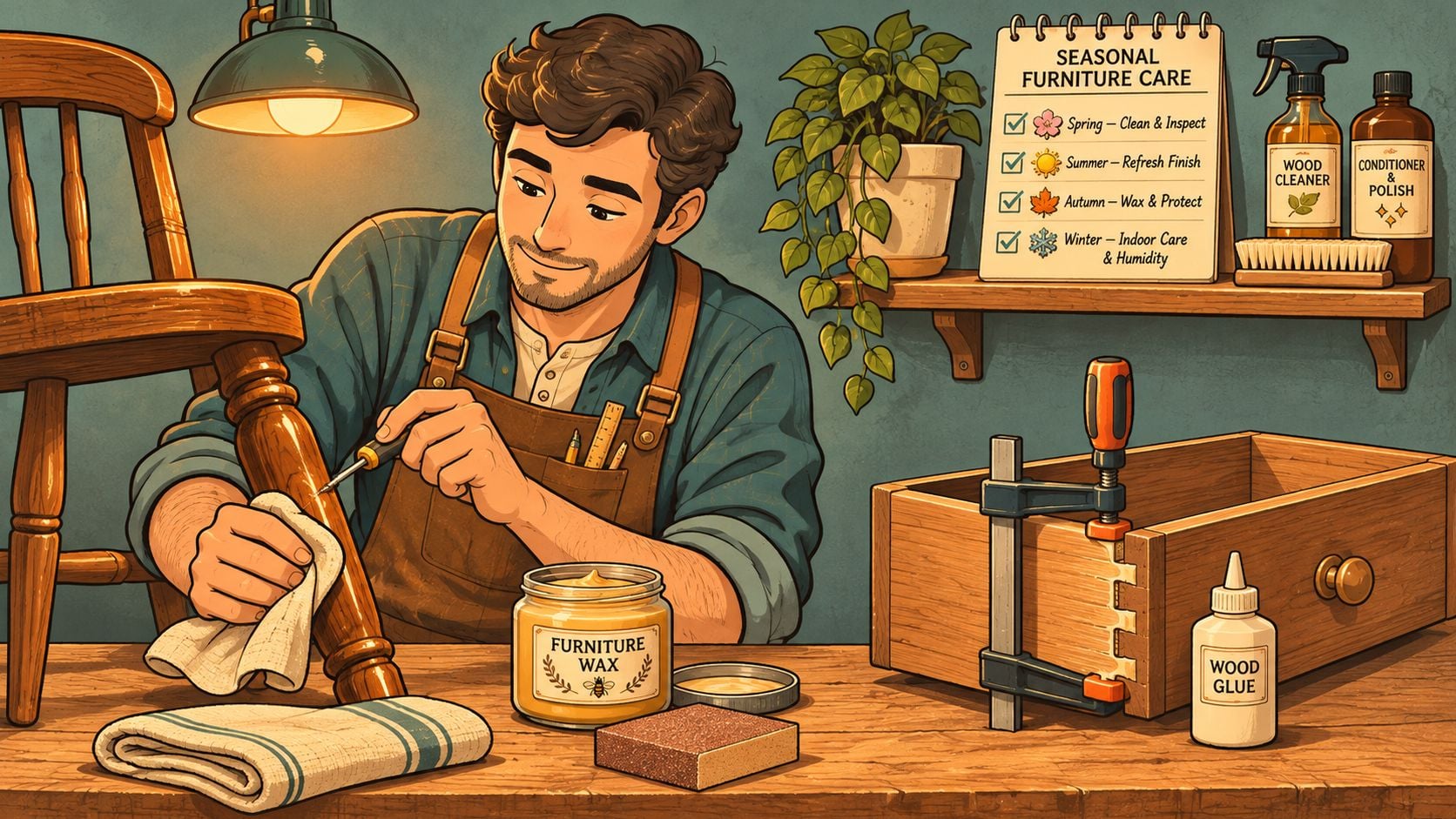
Use this care routine as a starting point. Check the maker's instructions before applying a product or attempting a repair.
- Dust with a soft, dry cloth and avoid silicone polish. Silicone can leave a film that complicates refinishing.
- Use coasters and felt pads, and blot spills promptly. End grain absorbs liquid readily, which can leave a deep stain.
- Limit the drying effect of indoor heat in winter. A humidifier can help reduce seasonal dryness that may cause joints to open.
- Check and tighten hardware periodically. Loose pulls can wear their screw holes and make later repairs harder.
- Touch up finish before bare wood turns gray. Follow the finish maker's directions for oil or wax, and test in an inconspicuous spot first.
- Consider refinishing a solid top when its protective finish fails. A refinisher can renew the surface while preserving marks that give the piece character. Confirm the top is solid before sanding.
- Ask a professional to assess broken joints, lifted veneer, or structural cracks. Incorrect clamping or glue can make the damage harder to repair.
- Keep the order sheet and record the species, finish name, and hardware brand. Those details can help identify compatible materials when a repair is needed.
Seasonal care does not replace repair. The solid wood furniture care guide covers routine upkeep, while a qualified restorer can assess damage that affects a piece's structure. A USA label, heavy weight, or a stain that looks rich today cannot guarantee longevity. The useful question is whether you can maintain, refinish, and repair the furniture as it ages.
USA-Made and Amish Pieces Worth a Closer Look
A country-of-origin label tells you where a piece was made, not how long it will last. Heirloom value also depends on whether the furniture can be repaired, refinished, and supplied with replacement parts after the sale. Ask about those options alongside the materials.
Composite wood products, including hardwood plywood, particleboard, and MDF, are subject to formaldehyde standards. The composite wood and formaldehyde standards explain which products and finished goods are covered. Check the information for the actual piece, including any composite panels in drawer bottoms or backs, rather than assuming its label tells the whole story.
Three material types can suit different needs. The useful question is how each is built and whether it can be maintained.
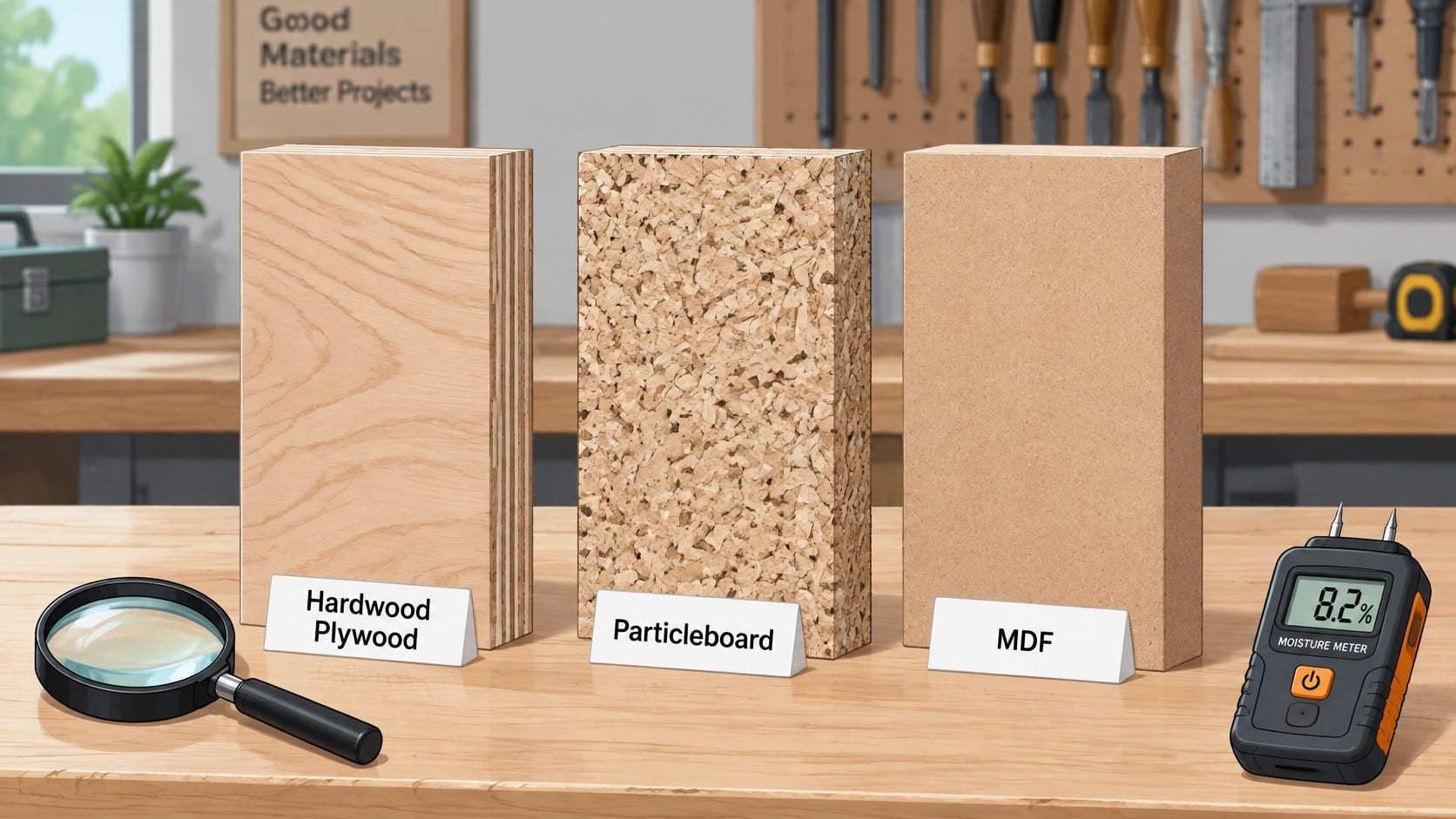
Use these questions when comparing pieces, and ask for clear answers rather than relying on a hangtag.
- What species is the case, and what is the door? A veneered door over a stable core can work well. Find out which parts are solid and which use a core.
- Which adhesive and finish were used? Ask for the product details; adhesives and finishes can differ.
- Does the piece comply with TSCA Title VI if it contains composite panels, including in drawer bottoms or backs?
- Which room is it for? Consider the room's ventilation and how the furniture will be used.
- How long should it air out before the room is used every day?
Apply the same repair test to the whole piece. A dining table has heirloom potential when its top can be refinished and its base can be re-glued. A frame-and-panel chest can offer repair options that a foil-finished wardrobe may not. An upholstered chair's prospects depend on whether its frame can be recovered, not just on how substantial the fabric looks.
For Amish furniture handcrafted in the USA, ask about joinery, wood and finish choices, and what repair or replacement parts are available after purchase. Tip Top Furniture & Mattresses offers Amish furniture handcrafted in the USA. Browse the USA-made wood furniture collection with those questions in hand. Weight, stain, and a USA label may help you assess a piece, but none proves it will last. Keep the product details and ask how to care for and service the furniture before you buy.
See It in Freehold Before You Commit
A piece's long-term value depends on whether it can be maintained after the sale. Stain, hardware, and price are personal choices; a repairable design and access to refinishing or replacement parts matter more to heirloom potential. Ask about those options before committing.
Tip Top Furniture & Mattresses is family owned and operated in Freehold, NY, and serves Greene County. Its Amish Furniture is handcrafted in the USA, and its Custom Order service lets shoppers choose a piece's style, size, wood, and finish. Professional design services are also available.
Choose a practical next step based on what you already know:
- Still deciding on a layout? Use the free online room planner to arrange furniture to scale before ordering.
- Know the room but not the piece? Ask about design services and bring your questions about wood species, finish, and upkeep.
- Know the piece and the budget? Review the available financing terms before making a purchase.
- Looking for a lower-cost option? Browse pieces in the Clearance section, then inspect their construction and ask how they can be repaired.
Read financing terms carefully. The CFPB on promotional financing explains that retail promotions may offer no interest for six to 12 months if the promotional balance is paid in full by the deadline. If it is not, interest may be charged retroactively from the purchase date, sometimes at a rate near 25%. The CFPB on deferred interest says that a payment more than 60 days late can end the promotion, with retroactive interest calculated on the original promotional balance, not just what remains. The CFPB bulletin on promotional APR offers also notes that new purchases on a retail card may lose their grace period while a promotional balance is open. Ask for the payoff date, minimum payment, and APR in writing.
Bring room measurements and questions about moisture content, quartersawn boards, top attachment, and finish renewal. In the showroom, ask what can be repaired or refinished, and whether parts remain available after the purchase. Those answers help you judge the support behind a piece, not just how it looks on the day you buy it.
Visit Tip Top Furniture & Mattresses to plan a showroom visit, browse collections, or ask about a custom order.