Accent Table Round

The wrong round accent table shows its flaws fast. It leaves a sofa arm unreachable, blocks a walkway in a narrow Capital Region living room, or looks so light that it feels like it could tip if someone sets down a heavy mug and leans on it. The right accent table round solves all three problems at once, and that's why it still earns its place in homes from Freehold to Albany, Schenectady, and Troy.
Round accent tables have staying power because they aren't a passing style gimmick, they're a furniture form with deep design roots. Circular occasional tables were already established centuries ago, and the form kept getting refined through French guéridons, rounded pier tables, and compact tea tables built for flexible placement Britannica's history of sideboard and side-table forms. That long history matters in real homes, because the shape keeps proving itself in tight rooms, busy households, and mixed-use spaces where sharp corners create more trouble than they solve.
Why a Round Accent Table Transforms Your Living Space
A square end table cuts a room into hard lines. A round accent table round softens that edge right away, which matters in Albany-area homes where a narrow living room, a deep sectional, or a tight traffic path leaves little room for wasted space. The curve reads calmer, and it works better beside seating that people use every day.
The practical win is just as clear. A round table can be reached from more angles, so it fits between two chairs, beside a sofa arm, or in a bedroom corner without creating a snag point. That flexibility is exactly why the form kept returning through different eras of small-table design, from early side tables to rounded occasional pieces Britannica.
A round table also solves a layout problem that square pieces make worse. In a room with straight-backed sofas, bookcases, and media furniture, the curve breaks up the blocky look without demanding attention.
For shoppers who want a rustic direction, complete farmhouse side table buying advice is a useful reference. In a Capital Region home, though, the test is simpler, the table has to sit close enough for a drink, leave room for feet and pass-through space, and feel sturdy where it stands. Tip Top's custom-order options make that fit easier to get right when a standard piece misses the mark.
Choosing the Right Size for Every Room and Seat
A round accent table fails fast when the size is guessed from a photo. The table has to fit the seat beside it, the arm height, and the walking path around it. Get those three things right and the room feels finished instead of cramped.
For a standard sofa, keep the tabletop close to arm height, usually within about two inches. That usually lands in the 22 to 26 inch height range, with a diameter around 18 to 24 inches so it does not choke the aisle. For a reading chair or recliner, go smaller, usually 16 to 20 inches in diameter, and keep the edge close enough to reach without twisting your shoulder.
Quick measuring rules that save bad purchases
- Measure the arm height first. The tabletop should sit near it, not below it where drinks feel awkward and not so high that the table overwhelms the seat.
- Check the reach zone. A seated person should be able to set down a mug, a book, or a phone without leaning forward.
- Map the clearance. Leave room for feet, rugs, and a walking path. If the route feels tight on paper, it will feel worse once the table is in place.
A bedroom table can run taller if it is working as a nightstand, usually in the 20 to 28 inch range when it needs to meet mattress height. In Albany-area homes, that matters in bedrooms where the bed sits close to a wall or radiator, because every inch of reach and clearance counts. Entryway tables can be larger because they do not compete with seating, so a foyer can handle a more generous round top without crowding the room.
| Seating / Room Role | Ideal Diameter | Ideal Table Height | Clearance Tip |
|---|---|---|---|
| Sofa side table | 18 to 24 inches | 22 to 26 inches | Keep the top near the armrest height |
| Reading chair | 16 to 20 inches | Match the seat arm closely | Leave the edge easy to reach from the chair |
| Bedroom nightstand | 20 to 28 inches | Scale to mattress height | Do not block drawer or bedside movement |
| Entryway table | Up to 30 inches | Match the visual scale of the foyer | Keep the path open on both sides |
A tape-measure test catches most mistakes before you order. Mark the footprint on the floor with painter's tape, then sit where the table will live. If the surface feels too far away or the shape eats the path, the size is wrong. For a more detailed reference, use the end table dimensions guide before you commit. Tip Top's custom-order options help when a standard piece misses the mark on height, diameter, or both.
The table should serve the seat, not force the seat to adapt to the table.
Stability and Safety Features That Actually Matter
A round table that wobbles isn't a design piece, it's a nuisance. That matters even more in homes with toddlers, big dogs, or teenagers who drop backpacks, shoes, and laptops wherever they land. The base has to do real work.
The first thing to check is the base-to-top ratio. Independent furniture guidance recommends a base diameter around 60 to 70 percent of the tabletop diameter for better balance and anti-tip performance, with 50 percent treated as a minimum ratio round-table diameter and base guidance. That's not decoration trivia, it's the difference between a table that feels planted and one that shifts when weight hits the edge.
What to inspect before money changes hands
- Base footprint: A wider base gives better resistance when someone leans on the edge.
- Joinery: Mortise-and-tenon and dowel joints hold up better over time than loose screw-and-glue builds. A good explanation of that construction approach is worth reading at mortise-and-tenon joint basics.
- Leg geometry: Slight leg splay and bracing help stiffness more than brute mass alone.
- Surface safety: Rounded edges, burr-free surfaces, and finger-entrapment protection matter on domestic tables EN 12521 safety requirements.
One more thing, a solid base beats a pretty one every time if the room gets real use. Winter heating in the Capital Region can dry indoor air sharply, so solid hardwood bases tend to cope better than flimsy construction that loosens as the season changes. If the table sits on hardwood floors, felt pads help, but they don't replace proper footprint and joinery.
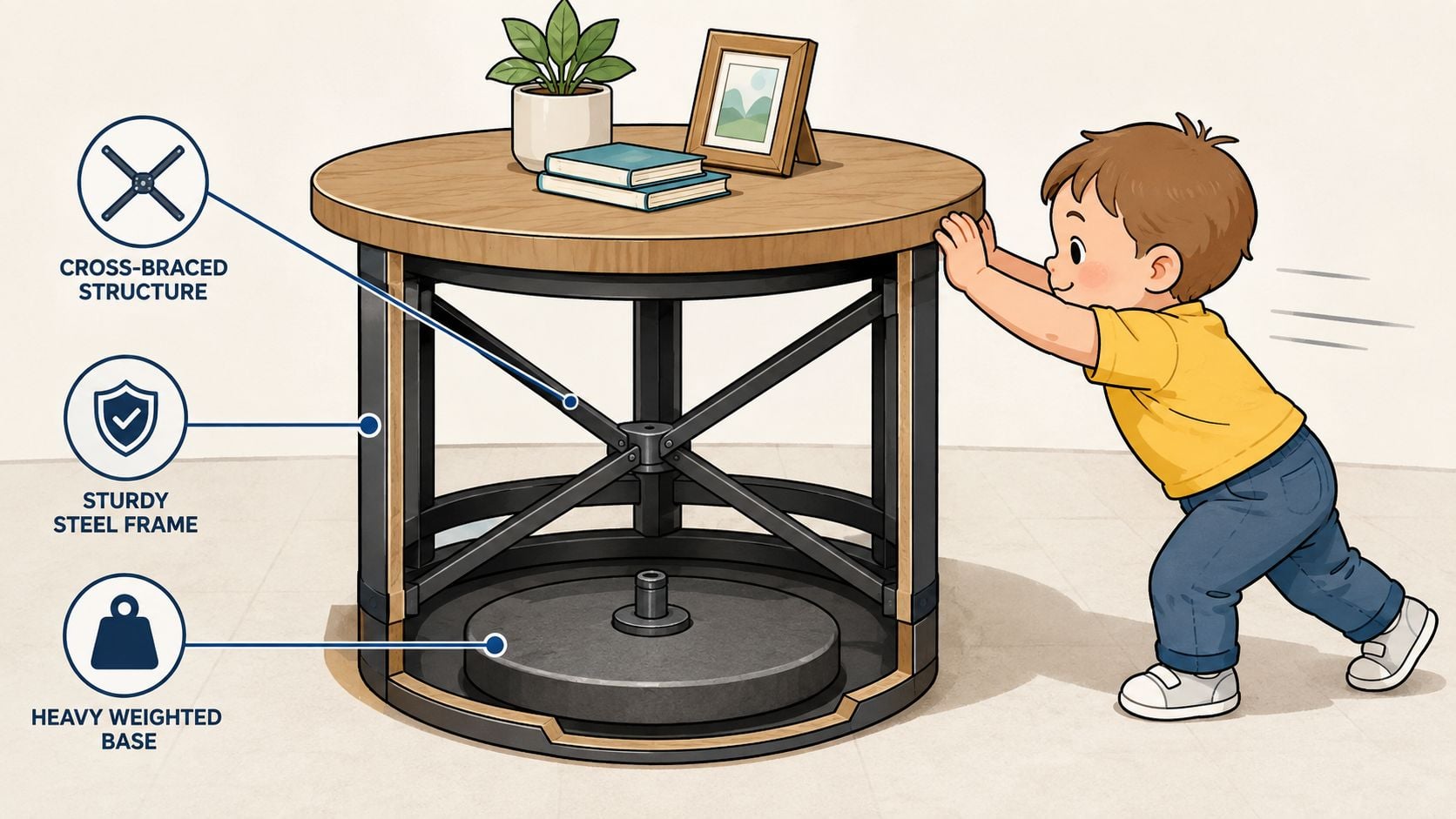
A showroom test should be blunt. Push the table lightly at the edge, not violently, and see whether it rocks, shifts, or stays grounded. If it already feels nervous in the store, it won't improve at home.
Comparing Materials and Finishes for Daily Use
The best material depends on how the table will be used. A lamp stand in a quiet bedroom can be lighter and more decorative. A drink table beside the family sofa needs to shrug off spills, scratches, and repeat contact.
Solid hardwood still makes the most sense for most households that want a table to last. Oak, maple, and cherry each bring different looks, but all three offer more staying power than flimsy construction when the table is used daily. Engineered wood can work for decorative roles, but edge quality matters a lot on round tops, because a bad edge finish shows quickly and ages badly.
The finish matters just as much as the material.
- Lacquer: Cleaner-looking, but fingerprints and sheen show more easily.
- Oil or hand-rubbed finishes: More forgiving to touch and often easier to live with.
- Waxed looks: Soft in appearance, though they may ask for more care.
- Distressed paint: Hides minor wear well, especially in casual rooms.
- Glass tops: Visually light, but they demand more cleaning and can feel less forgiving in active rooms.
- Metal bases: Good for slim profiles and mixed-material style, especially when the top needs extra support.
A mixed-material table often gives the best balance of form and function. A wood top with a metal base can feel lighter in a small room, while a stone top can read more substantial in an entry or sitting room. If the table needs to hold snacks, laptops, or drinks every night, durability should outrank novelty.
Straight answer: For active family rooms, choose the finish that hides everyday use, not the one that photographs best.
For broader guidance on wood selection, the best wood for tables resource helps narrow down species choices before a purchase. And for shoppers drawn to stone surfaces, the visual logic behind natural stone for kitchen design translates well to accent tables too, because the appeal is the same, clean lines with a solid feel.
The Tip Top Furniture & Mattresses showroom in Freehold also carries round tables in mixed constructions, including wood-and-metal combinations and glass-topped designs, which makes it easier to compare how each material reads in person.
| Material | Durability | Maintenance Level | Best For |
|---|---|---|---|
| Solid hardwood | High | Moderate | Daily-use side tables, heirloom pieces |
| Engineered wood | Moderate | Low to moderate | Budget-friendly decorative use |
| Metal | High | Low | Slim bases, modern rooms |
| Glass | Moderate | Moderate to high | Light visual effect, low-clutter spaces |
| Stone | High | Moderate | Entryways, statement pieces |
Placement and Styling Tips for Capital Region Homes
Round tables work best when they're placed with intent, not just tucked into the nearest empty space. In a narrow Albany living room, the smart move is often to flank a sofa with a round side table that keeps the walkway open. In a reading nook, put the table close enough for a lamp and a book, but not so close that the chair has to twist around it.
Older colonial homes in the Capital Region often have awkward corners and mixed room proportions. That's where a round table helps most, because it softens a dead corner without making the room feel more boxed in. In a foyer, the same shape can create a welcoming vignette if the diameter suits the scale of the entry instead of overwhelming it.
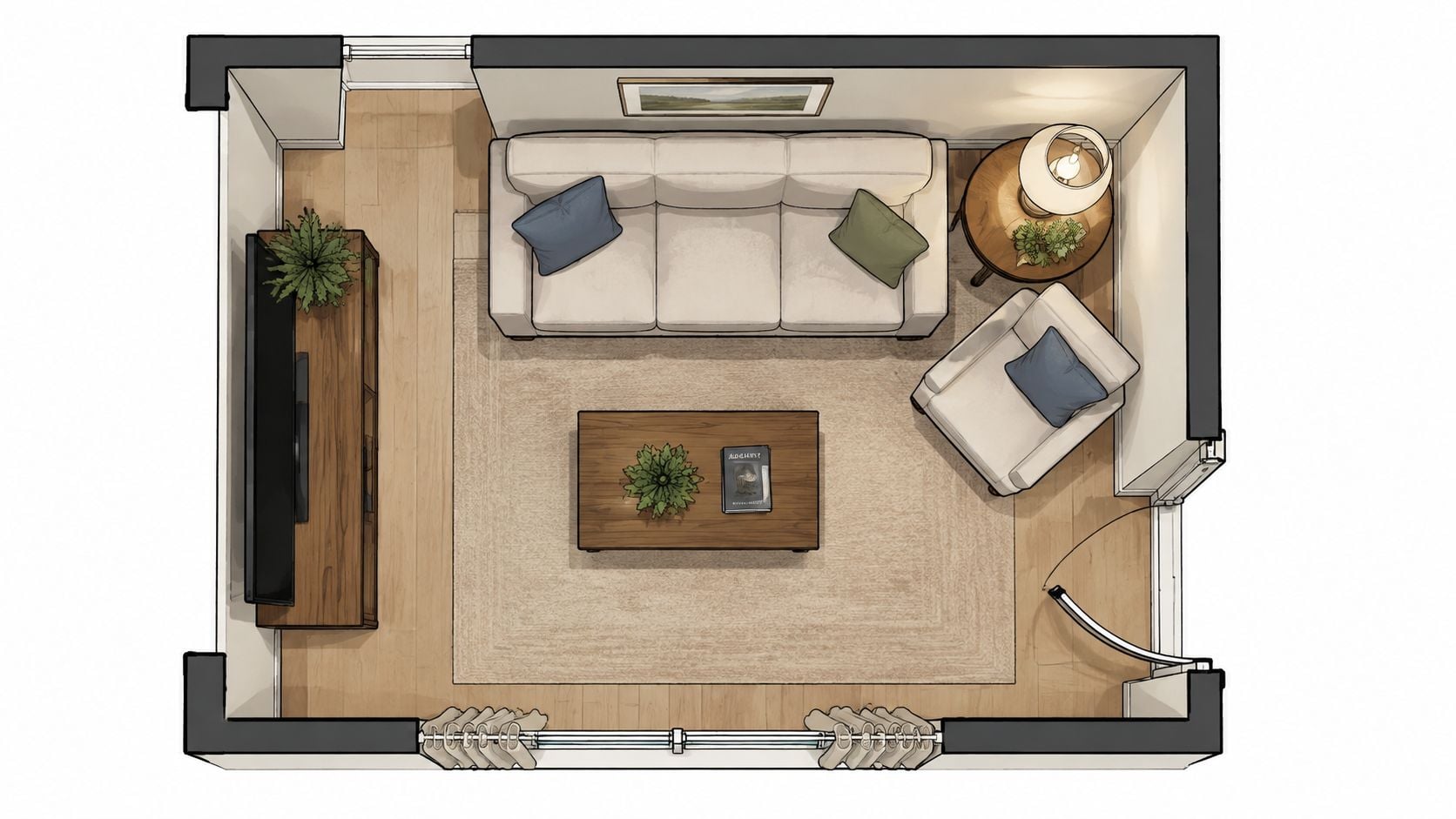
A few styling rules keep the surface from turning cluttered.
- Anchor with one main object. A lamp, stack of books, or bowl can set the tone.
- Add one natural element. Greenery or branches keeps the arrangement from feeling stiff.
- Leave breathing room. A round table needs visible surface, or the shape loses its advantage.
The area around the table matters too. Keep enough room for daily movement, especially where people pass through with laundry, bags, or serving trays. Styling should reflect the season without forcing a full reset. Lighter objects and fewer layers fit summer better, while a lamp, a textured bowl, or heavier books can give winter rooms more depth.
For layout support, the living room furniture arrangement guide is useful when a round table has to fit around a sofa, chair, and walkway at once. That kind of planning matters in homes from older Victorians to mid-century ranches, where room depth and traffic flow are rarely generous.
Budget Picks Versus Heirloom Custom Orders
A budget round table makes sense when the room is temporary, the budget is tight, or the table is meant to be decorative rather than heavily used. It can also work when a homeowner needs a stopgap while the rest of the room comes together. The mistake is treating a cheap table as if it will behave like a lasting one.
A solid hardwood custom piece is a different category. It costs more upfront, but it also avoids the cycle of replacing a wobbly table, a chipped finish, or a size that never quite fit the room. For awkward Albany layouts, custom sizing is often the value, because standard diameters and heights can miss the mark by just enough to be annoying every day.
What custom ordering solves
- Exact diameter: Better fit beside a sofa, chair, or bed.
- Base style choice: More stability or more visual lightness, depending on the room.
- Wood species and finish: Better match for the rest of the house.
- Special details: Live-edge tops, turned pedestal bases, and hand-rubbed finishes can all be specified through custom ordering at the Freehold showroom.
The custom order starting point is worth considering when a room needs something beyond the standard shelf selection. Tip Top Furniture & Mattresses also works with Amish furniture made in the USA, which gives homeowners a route to heirloom-quality construction without settling for a near-fit. That matters in a showroom that serves families who want one stop for furniture, décor, flooring, and delivery coordination.
Lead time and price objections are fair, but the comparison is replacement cost versus long-term use. A table that lasts is usually the calmer decision.
Your Next Steps to the Perfect Accent Table
The smart way to shop is simple. Measure the seat first, choose the use case second, and then pick the material that can survive the way the room is lived in. That order prevents nearly every bad accent table purchase.
Use this checklist before visiting Freehold:
- Measure the seat height and arm height.
- Decide the table's main job. Drink surface, lamp holder, or decorative display.
- Check the walking path. The table should fit without turning the room into a squeeze.
- Choose the finish for the household. Kids, pets, and frequent use need a tougher surface.
- Set the budget with honesty. Temporary need and heirloom need are not the same purchase.
For homeowners in the Albany Capital Region, the best next step is to bring room photos and rough measurements to the showroom in Freehold. That makes it easier to compare in-stock round accent tables against custom-order options, request finish samples, and decide whether the room needs a lighter profile or a more grounded base. A visit also helps when the table has to coordinate with other rooms, flooring, or nearby furniture.
Tip Top Furniture & Mattresses can walk shoppers through round accent table choices, custom dimensions, and Amish-built options in one place. Visit the Freehold showroom, or browse online first so the shortlist is already clear before the trip.
Tip Top Furniture & Mattresses helps Capital Region homeowners choose round accent tables that fit the room, the seat, and the way the home is used. Visit Tip Top Furniture & Mattresses to compare in-stock pieces, custom-order options, and showroom guidance before you buy.