How to Choose Carpet for High Traffic Areas


The hallway looks fine until the light hits it at an angle. Then the walking lane shows up, the entry mat is spilling grit, and the carpet that felt wonderful in the showroom starts looking tired in the one place the family uses every day. That's the moment to stop shopping by softness and start shopping by construction.
For homes in Freehold and across the Greater Albany Capital Region, high traffic means mud season, snow melt, salt, boots, backpacks, pets, and a lot of turning, stopping, and dragging. The right carpet can handle all of that, but only if the pile, density, and rating fit the job. The wrong one can look plush on day one and worn out before you're ready to replace it.
When a Soft Carpet Is the Wrong Carpet
A soft sample can fool anybody. In a showroom, plush carpet feels rich underhand, but deep pile often turns into a crushed path in hallways, stairs, and entryways where people hit the same spots every day.
Buy for shape retention, not first touch. A dense, low-pile construction holds up better in busy rooms because short, tightly packed tufts resist crushing and matting. Appearance-retention ratings help separate carpet that still looks good from carpet that only feels good at the sample board. The Carpet and Rug Institute points homeowners toward dense construction and a pile height of no more than 1/2 inch for high-traffic rooms, hallways, stairs, entryways, and playrooms, because backing should not be easy to see or feel through the fibers (CRI guidance).
How carpet compares with hardwood in busy homes
Softness still matters, but it should be a comfort bonus. In a busy household, the carpet has to survive traffic first. If it cannot handle the daily lane, the room will look tired long before anyone is ready to replace it.
Density math matters here. A carpet can feel plush in the hand and still be loosely packed, which is why a firmer, tighter build usually makes more sense for a mud-heavy entry or a family hallway. For Upstate NY homes, that matters more in winter, when snow, salt, and slush get tracked in and ground into the fibers.
Practical rule: choose the carpet that still looks respectable after a season of hard use, not the one that feels nicest in the showroom.
That is the right standard for high-traffic carpet. Buy for the lane that gets walked every day, not the corner that gets admired once.
Carpet Construction Basics Every Buyer Should Know
The four specs that matter first
Start with pile type. In a busy house, loop pile and Berber-style loop usually wear better because the surface stays tight and does not show traffic lanes as quickly. Cut pile can work, but only if the build is firm enough to resist crushing. Cut-loop is a practical middle ground if you want texture that hides footprints, soil, and day-to-day use.
Then check density and twist, because those two tell you more than a soft sample board ever will. High traffic carpet should feel compact, not airy. Tighter yarn twist helps the fibers spring back instead of fraying, untwisting, or matting down in the path from the door to the kitchen.
Here is the part many buyers skip. Face weight is not the same thing as density. Face weight only tells you how much fiber sits on the surface. Density tells you how tightly that fiber is packed into the carpet. If you know the face weight and pile height, you can calculate density with the common formula D = (W × 36) / H. That math is worth asking about in the showroom, especially for hallways, stairs, and family rooms that take a beating.
Good showroom habit: bend the sample, look at the backing, and pass on anything that looks fluffy instead of tightly built.
A broader Flooring type pros and cons for a broader comparison can help if you are still deciding whether carpet belongs in the room at all.
Why the numbers beat the hand feel
Softness sells carpet. Construction decides how long it keeps looking decent.
That matters in Upstate NY homes, where mud in spring and snow, salt, and slush in winter punish the same walking lanes over and over. A carpet that feels luxurious in your hand can still flatten fast if the pile is loose, the twist is weak, or the density is light.
Use a simple filter. Choose low, tight, dense construction first. Then worry about comfort and color. That order saves you from buying carpet that looks tired long before the room does.
Matching Fiber Type to Your Household
Start with the room, then pick the fiber
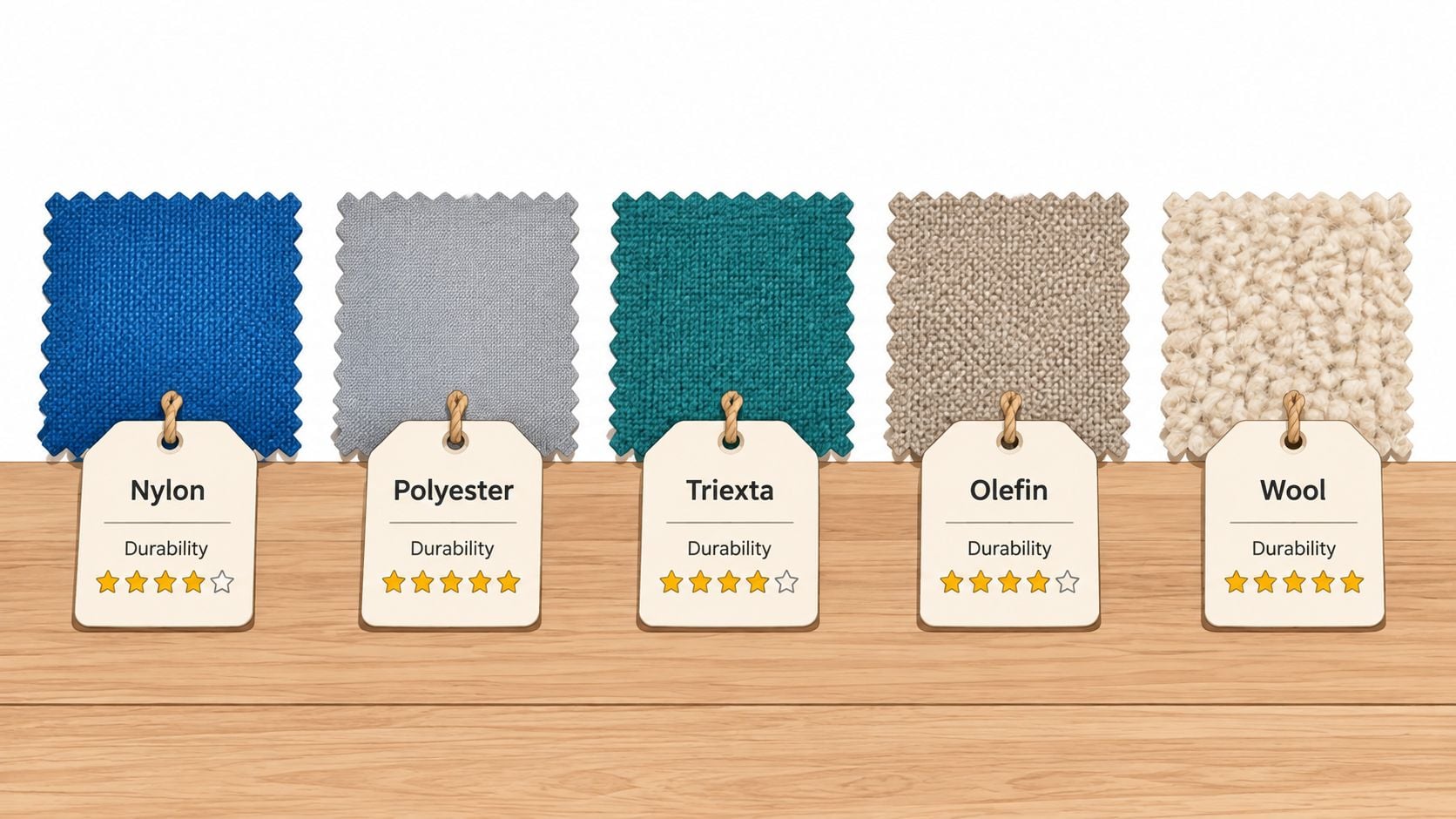
For stair runs and main hallways, nylon is the most straightforward answer. A comparative flooring guide identifies it as having excellent durability and resilience, calls out high-traffic areas and stairs as suitable uses, and notes that it has good stain resistance when treated (Shipshape carpet guide). In plain language, nylon is the safe workhorse when the space gets used hard and often.
For families with kids, snacks, and frequent spills, triexta and solution-dyed polyester usually make sense because stain resistance matters as much as resilience. They're easier to live with when the household is messy, even if they don't always match nylon's toughness over the long haul. That trade-off is real, and it's fine as long as the buyer knows it.
Olefin is the budget-minded choice for drier, less punishing rooms. It can work where moisture is low and wear is lighter, but it's not the first pick for stairs or a front entry that sees salt and slush. Wool sits at the premium end, with a warm feel and natural resilience, and it fits homeowners who want a more traditional surface and are willing to maintain it properly.
Choosing carpet for heavier traffic with a dedicated guide
A quick decision filter
- Choose nylon if the space is a staircase, hallway, or family path and durability matters most.
- Choose triexta or treated polyester if spills are the bigger problem than abrasion.
- Choose olefin if the room stays relatively dry and budget is the main constraint.
- Choose wool if comfort, warmth, and natural character matter enough to justify the upkeep.
The point isn't to crown one fiber for every home. It's to match the fiber to the abuse pattern.
Reading the Numbers Behind Durability
The right spec sheet saves money. The wrong one sounds impressive and still wears badly. That's why the shopper should read the rating before reading the sales tag.
What the ratings actually mean
Texture Appearance Retention Rating, or TARR, gives a standardized way to judge how well carpet keeps its texture and appearance under repeated wear. The minimum levels are 2.5 for moderate use, 3.0 for heavy use, and 3.5 for severe use, with severe spaces including corridors, entrances, and public areas that resemble residential hallways and stairs (TARR rating guidance). For a busy home, that makes 3.0 or higher the sensible target, and 3.5 the stronger call for the hardest-working spots.
The density formula also deserves attention. One common way to estimate density is D = (W × 36) / H, where W is face weight in ounces per square yard and H is pile height in inches. That formula matters because it shows why a heavy carpet can still be a weak performer if the pile is too tall.
| Specification | Target for High Traffic | What It Tells You |
|---|---|---|
| Pile height | No more than 1/2 inch | Shorter pile resists crushing and shows less wear |
| TARR | 3.0 or higher | How well the carpet keeps its appearance under use |
| Density | High enough that the pile feels compact | How tightly the fibers are packed |
| Twist | Tight, with four or more as a strong benchmark | Helps fibers resist matting and unraveling |
A fuller technical sheet should list fiber type, pile height, face weight, density, backing, warranty exclusions, and test rating. The buyer comparing a carpet sample to another hard surface, such as in a granite vs marble flooring comparison, will notice the same logic at work, the material only matters after the performance numbers are understood.
How to choose flooring with the right questions first
The rule is plain. Read the numbers, then trust the feel second.
Room by Room Recommendations for Busy Homes
Match the construction to the abuse
Stairs need the hardest-working setup in the house. A low-profile loop or a tightly twisted cut pile is the right call, because both hold shape better than a lofty pile and don't make the nosing look fuzzy after repeated foot traffic. A multi-tone pattern helps hide the fact that stairs get stepped on in exactly the same place, every day.
Hallways should get a dense, low-pile Berber or level loop in a color that hides soil without looking muddy. Mid-value shades are practical because they don't broadcast every speck of grit. In a home that tracks in winter mess, that matters more than a bright tone that looks clean for a week.
Family rooms need a little more comfort, but not much more height. A textured cut-loop with a forgiving pattern strikes the best balance, because it gives the room a softer feel without opening the door to obvious wear lanes. Entryways deserve the toughest product of all, ideally a dark solution-dyed loop that handles salt and slush better than a plush surface would.
The same room-by-room logic applies in kitchen flooring choices for colder climates
What to carry into the showroom
Bring a short list, not a vague idea. For busy homes, the useful notes are these:
- Traffic map: mark where people enter, turn, pause, and climb stairs.
- Color memory: note the wall color, trim, and nearby furniture so the carpet doesn't fight the room.
- Texture preference: decide whether a tighter loop or a textured cut-loop fits the space.
- Wear concern: be honest about pets, kids, mud, snow, and salt.
Tip Top Furniture & Mattresses can help coordinate flooring with the rest of the room from the Freehold showroom, which is useful when the carpet has to fit into a larger furniture plan. That matters in real homes, not just in sample boards.
Padding, Stain Protection, and Seasonal Care
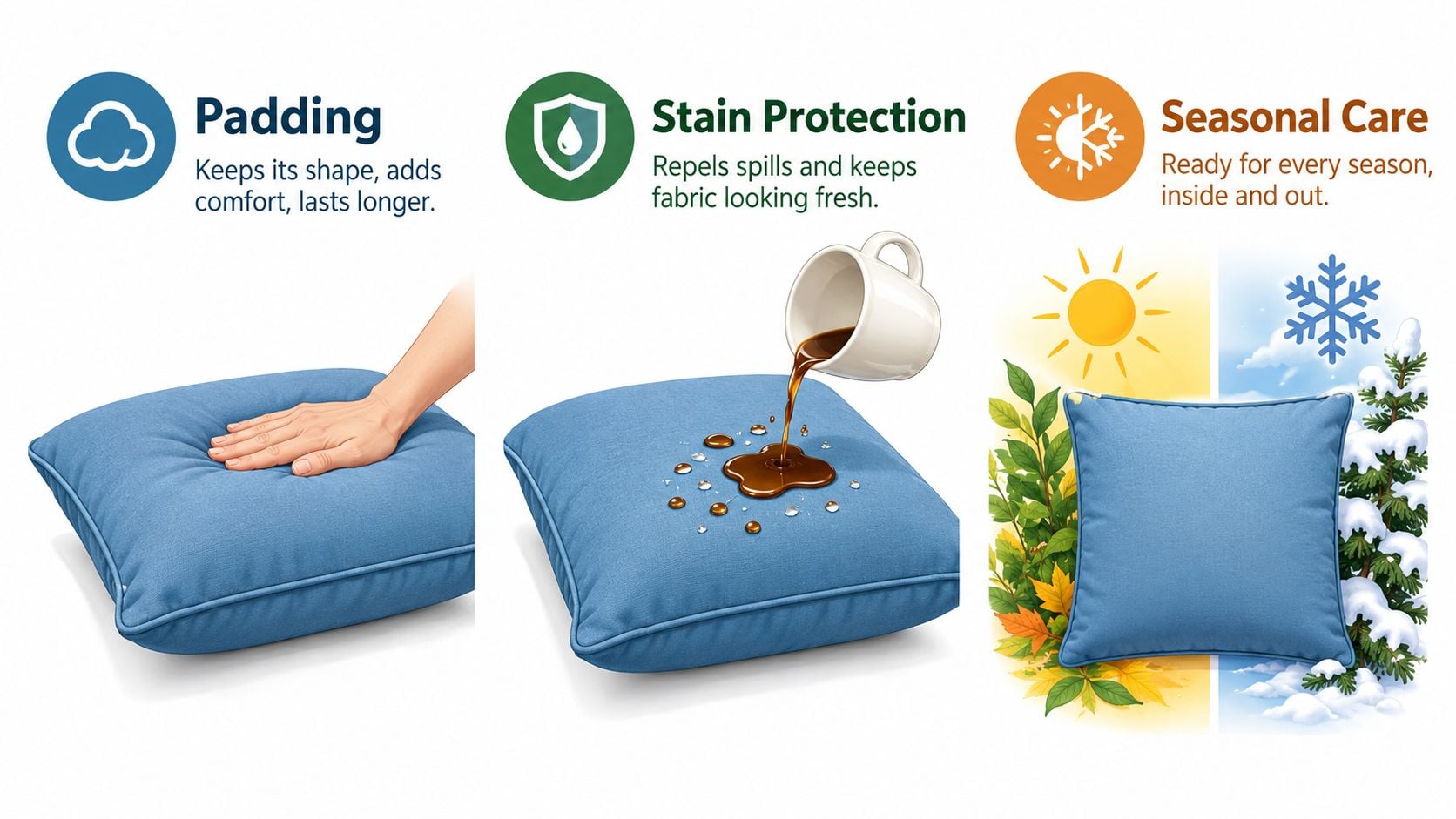
The system under the carpet matters
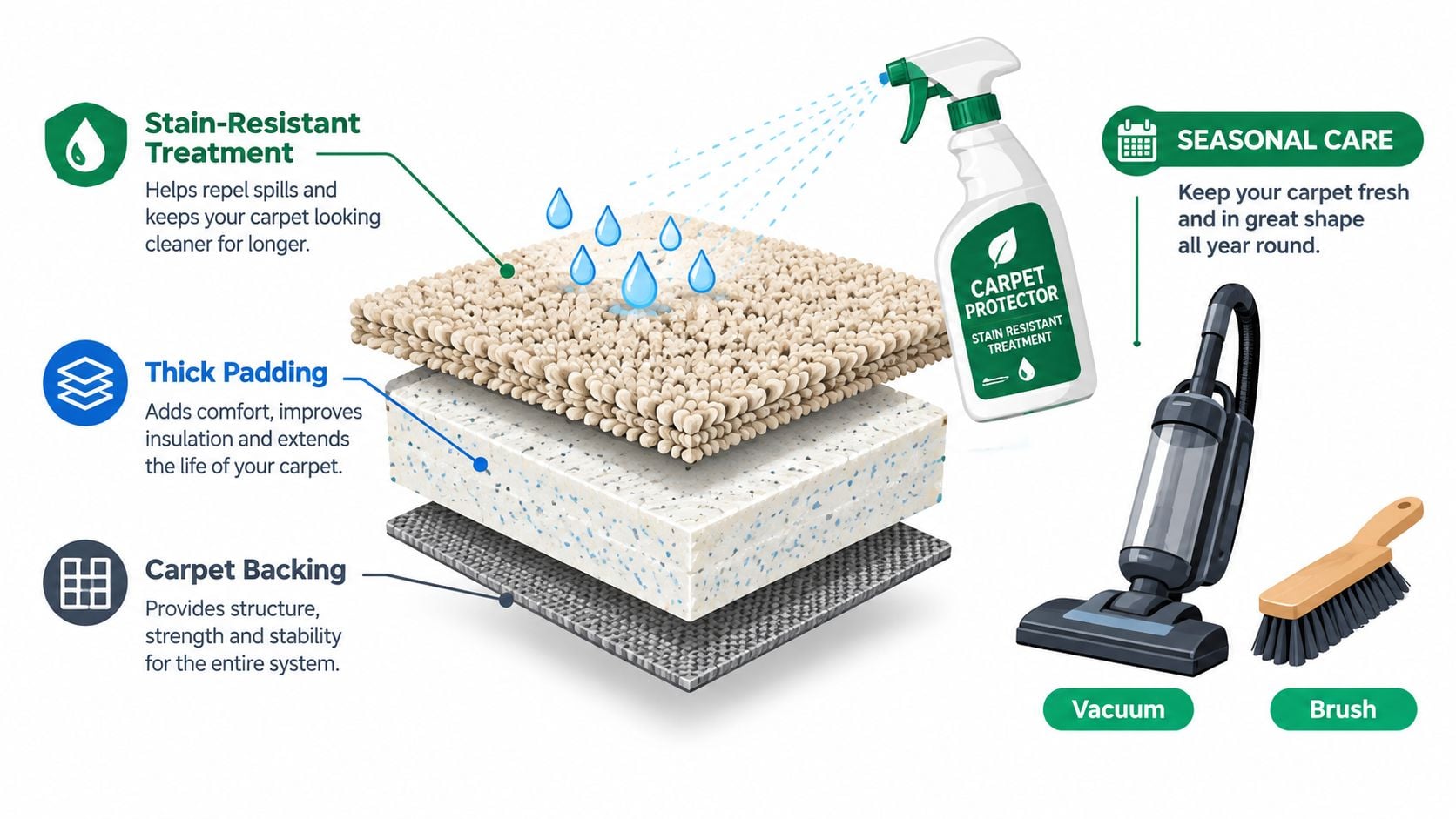
You feel the pad every time you walk across the room, and a bad one shows up fast in traffic lanes. For busy homes, skip the overstuffed feel. A pad should steady the carpet and help it hold its shape, not add bounce that lets the pile flex, crush, and wear out sooner. In high-traffic rooms, lower-profile support usually ages better than extra softness.
Stain protection also deserves a straight answer. Ask what protection is built into the carpet, then weigh it against the fiber itself. Factory treatment helps with everyday spills, but solution-dyed fibers are still the smarter pick where mud, melted snow, and tracked-in drinks are common, because the color runs through the fiber instead of sitting near the surface.
Simple rule: buy the carpet system that stays firm underfoot, cleans up without drama, and dries without lingering moisture.
That matters even more in Upstate New York. Winter salt, spring grit, and wet boots punish carpet from the front door inward. Good entry mats do the first job. A vacuum with strong suction and sealed filtration handles the next one. After that, your cleaning method matters. Heavy soaking causes problems, so keep spot cleaning controlled and avoid saturating the backing.
Professional carpet shampoo service for deep-clean planning
The maintenance schedule that actually works
A workable routine beats occasional heroic cleaning.
- At the doorway: use flat, grit-catching mats outside and inside the entry.
- During the week: vacuum often enough to keep abrasive soil from grinding into the pile.
- After spills: blot fast, rinse lightly if needed, and keep water use controlled.
- Every season: check entries, hall turns, and stairs, because those areas load up first with salt and dark soil.
- Every 12 to 18 months: schedule extraction cleaning, or sooner in a house with constant foot traffic, as noted in maintenance guidance.
That schedule costs less than premature replacement. More important, it keeps the carpet from looking tired before the rest of the room does.
Measuring, Budgeting, and Visiting the Showroom
Start with room dimensions, then measure stairs carefully. Add enough waste for seams, matching, and awkward cuts, because tight layouts always use more material than a simple rectangle. The basic measuring walk-through at how to measure a room for furniture is a useful starting point when the goal is a clean fit.
Budget for both the carpet and a quality pad, not just the roll price. Bring notes on traffic, stain concerns, and whether the room needs a low-profile loop, a tight cut pile, or something softer for a family space. If the stairs are odd-shaped or the finish needs to match other rooms, custom order options can solve problems that off-the-shelf rolls can't.
For a showroom visit in Freehold, the smart move is simple. Bring room measurements, a sample of wall color or nearby fabric, and the specs that matter, especially pile height, density, and rating. Flexible financing through the Synchrony Home Card can also make a larger flooring project easier to manage.
Tip Top Furniture & Mattresses helps Freehold and Greater Albany Capital Region homeowners compare carpet construction, coordinate flooring with the rest of the room, and plan a purchase that fits real life. Visit Tip Top Furniture & Mattresses to explore flooring options, ask about custom orders, and stop guessing at the showroom.