
How to Choose Carpet for Bedrooms: Expert Tips

A lot of homeowners start the same way. They know they want the bedroom to feel softer, warmer, and quieter, but once they start looking at samples, everything begins to blur together. Plush. Texture. Twist. Nylon. PET. Dense pad. Soft pad. Suddenly a choice that seemed simple feels oddly technical.
That’s why learning how to choose carpet for bedrooms works best when you bring it back to real life. Who uses the room, what lands on the floor, how much sunlight comes in, and how much upkeep you’re willing to do matter far more than a display label that says “luxury.” The right bedroom carpet should help the room feel restful every day, not just look good on installation day.
Why Choosing the Right Bedroom Carpet Matters
A bedroom carpet choice usually feels simple until the room is finished and lived in. Then the practical assessment begins. Cold mornings, footsteps overhead, closet paths that flatten early, and a color that looked calm in the showroom but feels dull at home all show up fast.

In our area, that matters more than many homeowners expect. Upstate homes deal with long heating seasons, second floors, older subfloors in some houses, and bedrooms that often need to feel quiet as much as they need to look good. Carpet can solve several of those problems at once, but only if the product matches the room.
Comfort, quiet, and durability all have to work together
Soft carpet feels good underfoot. That part is obvious. What gets missed is how much the right carpet also affects noise, warmth, and the way a bedroom settles down for rest.
A bedroom is one of the few rooms where people notice flooring with bare feet, early in the morning and late at night. If the carpet is too thin, the room can feel chilly and a little cheap. If the pile is too loose, it may look worn long before the rest of the room does. If it holds every footprint, vacuum mark, or pet track, the bedroom starts to feel high-maintenance instead of restful.
That trade-off is real.
The floor does more visual work than many people realize
Carpet covers nearly the whole room, so it influences the space more than a single paint color or one furniture piece. It changes how natural light reads, whether the room feels airy or enclosed, and how easy it is to coordinate the bed, casegoods, window treatments, and accents.
That broader view matters at Tip Top because homeowners rarely shop for flooring in isolation. Many are also thinking about bedroom furniture, mattresses, or a full room refresh. Looking at those pieces together usually leads to a better result than choosing carpet from a small sample and hoping everything else falls into place later.
If you are still weighing surface options, this guide to carpet vs hardwood flooring for bedrooms can help you compare comfort, upkeep, and overall fit.
A good bedroom carpet should feel right, wear well, and support the kind of room you want to spend time in. If it misses one of those jobs, you tend to notice it every day.
Assess Your Bedroom's Unique Needs First
Before looking at swatches, ask a more useful question than “What’s the best carpet?” Ask “What does this room need from its carpet?”
A primary bedroom, a child’s room, and a guest room may all be bedrooms, but they don’t live the same way. The carpet that works beautifully in one can be frustrating in another.
Start with how the room is used
Some bedrooms are low-drama spaces. Others handle pets, toys, laundry baskets, sunny windows, and constant foot traffic to a closet or bath. That daily pattern should drive the selection.
Use this quick checklist:
- Who uses the room most often. A calm adult bedroom can prioritize feel and appearance more than a kids’ room can.
- How much traffic crosses the space. A bedroom with a path to an en-suite bath or dressing area will flatten weak carpet faster.
- Whether pets spend time there. Claws, accidents, and fur all influence fiber and pile decisions.
- How often the room gets cleaned. Some carpets forgive missed vacuuming better than others.
- How long you want the carpet to stay in place. A short-term refresh and a long-term investment aren’t the same purchase.
Match the carpet to the room type
Here’s where practical trade-offs show up clearly.
| Bedroom type | Usually works best | Often disappoints |
|---|---|---|
| Primary bedroom | Soft, medium-height carpet with good density | Extremely loose or fluffy styles that crush fast |
| Kids’ bedroom | Durable synthetic fiber and a pattern or texture that hides wear | Delicate light solids that show every mark |
| Guest room | Comfort-forward carpet if use is occasional | Paying for heavy-duty performance the room may never need |
| Pet-friendly bedroom | Cut pile in a resilient synthetic fiber | Loop styles if snagging is a concern |
A lot of homeowners make the mistake of buying for the showroom, not for the room. A carpet can feel fantastic in a sample board and still be a poor fit once real life starts.
Practical rule: If two carpet styles look equally good to you, choose the one that better fits the room’s daily use. Regret usually comes from maintenance headaches, not from giving up a slightly softer sample.
Think beyond the carpet alone
Bedrooms work best when the floor, wall color, bed, and lighting all support the same mood. That’s one reason it helps to think about the room as a whole instead of treating carpet as a separate decision. If you’re weighing broader surface choices, this guide on how to choose flooring is a smart next step.
A clear self-assessment saves money, narrows the field, and makes every later decision easier. Without it, people tend to overbuy, underbuy, or chase a style that doesn’t hold up to the way they live.
Decoding Carpet Fibers Pile and Density
A bedroom carpet can feel wonderful under your shoes in the store and still disappoint six months later. In our showroom, that usually happens for one reason. The fiber, pile, and density were never matched to the way the room is used.
Those three details do most of the heavy lifting. Fiber affects softness, stain resistance, and how well the carpet springs back. Pile style changes the look and the amount of tracking, shading, and vacuum marks you see. Density tells you a lot about how the carpet will hold its shape once furniture, foot traffic, and everyday life enter the picture.
Fiber choices and where each one works
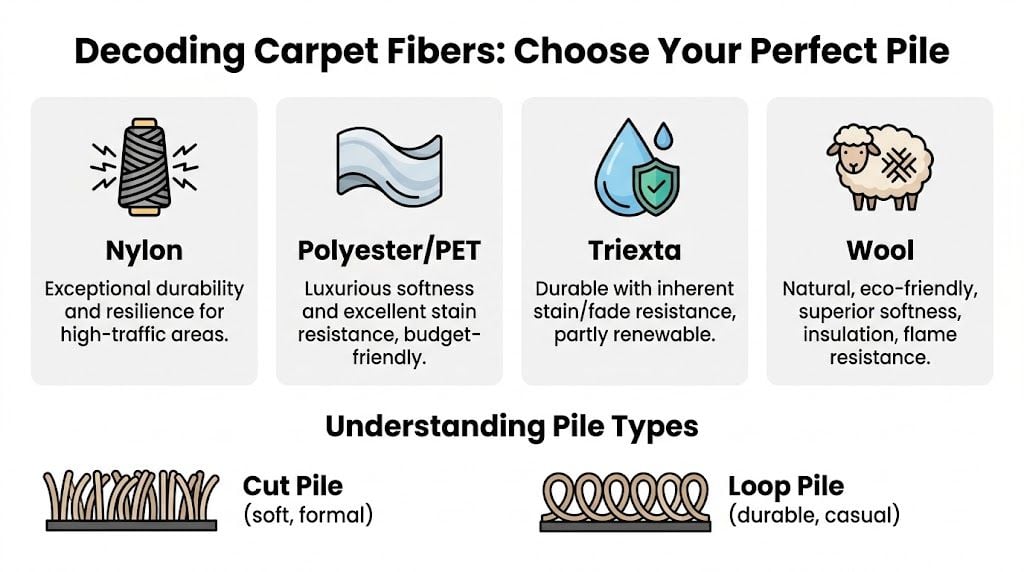
Nylon is still the safest all-around pick for many bedrooms. It handles traffic well, bounces back better than many softer alternatives, and makes good sense in kids’ rooms, pet-friendly bedrooms, and any space that gets daily use. If a homeowner wants one word from me on nylon, it’s dependable.
Polyester (PET) usually wins on hand feel at the sample rack. It can be very soft and often gives you a rich look for the money. The trade-off is performance. In a lower-use guest room or a primary bedroom with lighter wear, it can be a smart value. In a room with rougher treatment, it may show crushing sooner than nylon.
Triexta sits in the middle of a conversation many shoppers are already having. They want softness, but they also want easier cleanup. Some triexta products deliver that balance well. I still tell homeowners to judge the actual carpet in front of them, not just the label. Twist level, construction, and density matter as much as the fiber family.
Wool has natural warmth and a beautiful, refined look that many people love in a quieter primary bedroom. It also asks more from the homeowner. It costs more, it can be less forgiving with spills, and it is rarely the practical answer for a child’s room or a bedroom where pets have free run.
Pile style changes the day-to-day experience
Pile is the way the carpet surface is finished, but it has a big effect on what you live with every day.
Cut pile
Cut pile is the familiar bedroom choice for a reason. It feels comfortable, looks inviting, and fits the softer mood of a sleeping space. Some cut piles are smooth and formal. Others are textured to hide footprints and traffic patterns better.
Loop pile
Loop pile keeps the yarn loops intact. It can wear nicely and add a clean, defined look, especially in more casual or modern rooms. The caution is snagging. In homes with pets, or in bedrooms where anything catches the surface easily, I usually steer people toward a cut pile or a very carefully chosen loop.
Textured styles
Textured carpet often gives homeowners the best balance of comfort and forgiveness. It helps disguise footprints, vacuum lines, and the slight shading that can bother people once a carpet is installed wall to wall. That matters more than many shoppers expect.
Density matters more than height
A tall carpet is not automatically a better carpet.
In fact, some of the loosest, fluffiest styles create the most complaints after installation because they flatten quickly and start to look tired. A denser carpet supports the yarn better, resists crushing more effectively, and usually holds its appearance longer in a real bedroom setting.
Pile weight can help as a comparison point, but it should never be read by itself. A higher number does not guarantee better performance if the construction is loose. The better approach is to look at pile weight together with density, twist, and pile style, then put your hands on the sample.
The Carpet and Rug Institute bedroom carpet guidance is a useful reference for understanding how construction affects comfort, maintenance, and appearance retention.
Practical takeaway: Judge bedroom carpet by how firmly it is built, not by how dramatic it looks on a hanger.
A simple way to compare options in the showroom
When homeowners are deciding between two or three carpets, I suggest a quick hands-on test:
- Press your thumb into the pile. If the fibers spread easily and you can quickly see the backing, the carpet may not keep its appearance as well.
- Brush the sample in both directions. This shows how much shading, tracking, or texture change you will see after vacuuming and walking across it.
- Bend the sample back. Look at how tightly the tufts are packed and how well the carpet is constructed.
- Ask how the style is expected to wear in a bedroom, not just how it feels today. A good sales consultant should be able to answer that plainly.
- Compare the carpet to the rest of your room plans. If you are still deciding between soft surface and hard surface options, this guide to different flooring types and their pros and cons can help you sort out the bigger picture.
Shopping local helps. In our family business, we do not stop at the carpet sample. We help homeowners in the Albany area compare flooring with wall color, furniture, room use, and budget so the final choice works in the house, not just under showroom lighting.
Selecting Colors and Patterns for a Restful Space
You walk into the bedroom at the end of a January day in the Albany area, the light is low, and the carpet color suddenly matters more than it did in the showroom. A sample that looked clean and airy under bright retail lighting can read cold at home. A darker tone that felt rich in the store can make the room feel smaller once it covers the whole floor.
That is why color selection needs to happen in the room, with your own light, furniture, and wall color in mind. Carpet covers a large visual area, so it sets the tone before bedding, artwork, or lamps have much chance to help.
What color does to the room
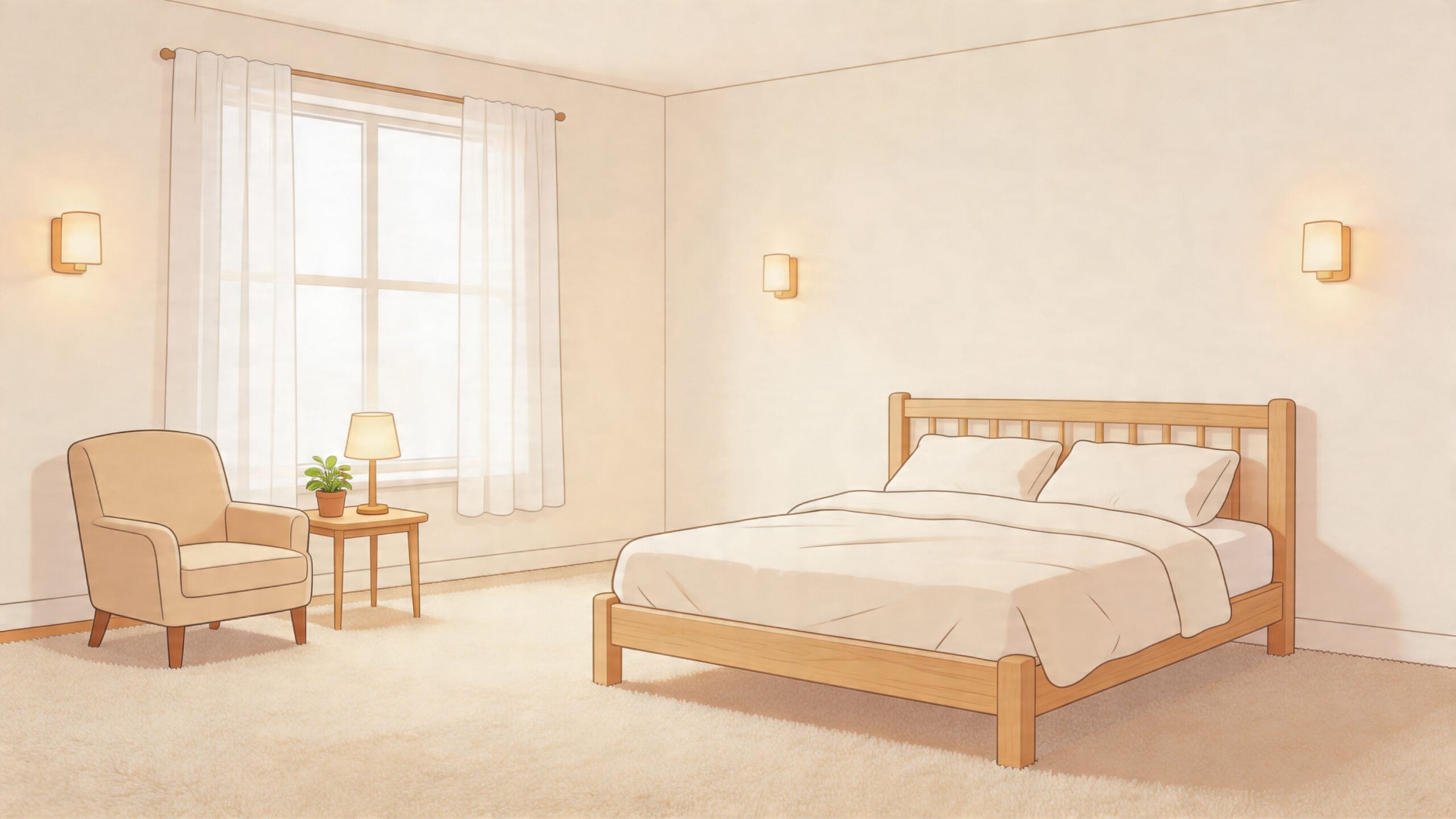
Light neutrals usually make a bedroom feel more open and help natural light travel across the floor. Mid-tone colors are often easier to live with day to day because they hide lint, footprints, and minor soil better. Deep colors can feel cozy and refined, but they also bring more visual weight, which is not always the right fit for a smaller room.
For most bedrooms, quieter color tends to hold up better over time. Homeowners change paint, bedding, and accent pieces far more often than they replace carpet. A safe, well-chosen base usually gives you more flexibility five years from now than a trendy color that looked exciting on a small swatch.
Undertone matters just as much as lightness or darkness. A beige with pink undertones can fight with oak furniture. A gray with a blue cast can make cream walls look dingy. Those are the details that separate a room that feels settled from one that always feels slightly off.
Pattern can solve problems
Pattern in bedroom carpet does not have to mean bold shapes or a busy floor. In many of the bedrooms we help plan, the best-performing styles have a soft pattern, heathering, tonal shift, or textured finish that adds forgiveness without drawing attention to itself.
That approach helps in practical ways:
- Pet bedrooms where fur, tracked-in bits of debris, or occasional spotting show on flat solid colors
- Kids' rooms where the carpet has to forgive more day-to-day mess
- Sunny rooms where changing light can exaggerate shading on a plain surface
- Primary bedrooms with regular traffic on one side of the bed or through a sitting area
A subtle pattern also helps a room feel finished when the rest of the design is simple. That can be useful if you want calm, but do not want the floor to look flat.
Coordinate the carpet with the room, not just the sample
The best carpet color is the one that works with the full room plan. We regularly help homeowners compare carpet samples against wood finishes, upholstery, paint chips, and window treatments because those combinations tell the truth faster than a sample board by itself.
Set the sample next to the bed, dresser, or nightstand if you can. Look at it in morning light, afternoon light, and lamplight. If one color only looks right for part of the day, keep looking.
If you are planning the whole bedroom instead of just the floor, these bedroom color scheme ideas can help you see how carpet color ties into the walls, furniture, and overall mood. That full-room view is one of the advantages of shopping with a local store that handles more than flooring. It helps you choose a carpet that belongs in your home, not one that looked good only under showroom bulbs.
The Unsung Hero High-Quality Carpet Padding
A bedroom carpet can look excellent on the sample rack and still disappoint after installation if the pad underneath is wrong. We see that in stores every year. Homeowners blame the carpet, but often the issue is a cushion that is too soft, too thin, or not adequately matched to the product.
Padding changes how the whole floor lives in the room. It affects comfort under bare feet first thing in the morning, how much support the carpet gets with daily use, and how well the floor holds its appearance over time.
What good padding actually does
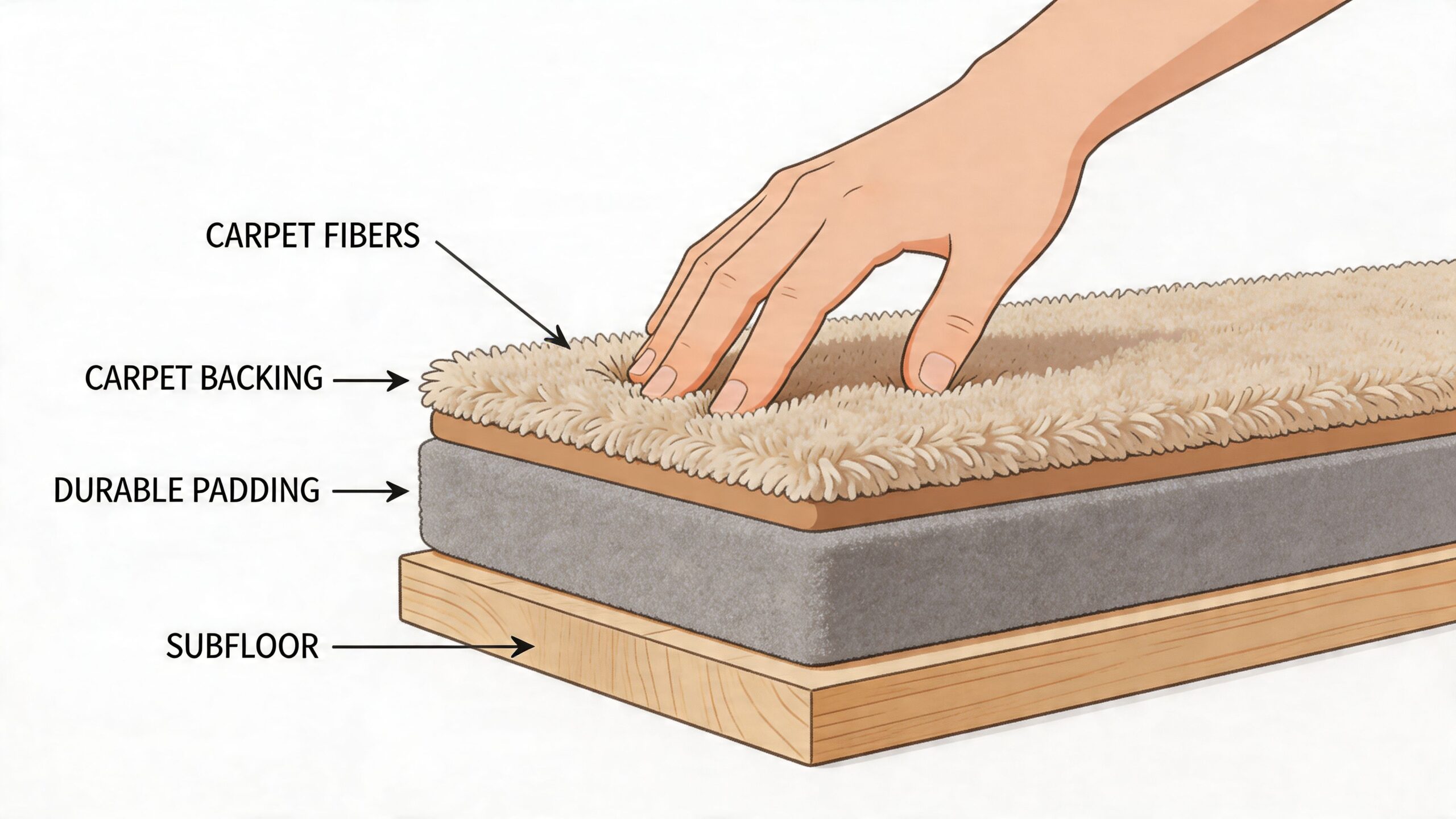
Good pad supports the carpet backing so each step does not put excessive strain on the surface. That support helps the carpet recover better from foot traffic and furniture weight.
Comfort matters too, but softer is not always better. An overly plush cushion can let the carpet flex too much, which can shorten its useful life and make the floor feel spongy instead of stable. In bedrooms, the best choice is usually a pad that feels supportive and comfortable at the same time.
That matters even more under bed frames, dressers, and nightstands. Heavy furniture creates pressure points. If you are still sorting out room layout, these tips on measuring a room for furniture before you buy can help you plan where weight will sit on the floor.
Why cheap pad creates expensive problems
Cutting corners on padding is one of the most common bedroom carpet mistakes.
The problems usually show up slowly:
- The carpet starts to look tired sooner than expected
- Traffic paths feel firmer or flatter than the rest of the room
- The floor loses some of the quiet, cushioned feel people wanted in the first place
- The carpet may not perform the way the manufacturer intended
A better carpet does not make up for poor support underneath. The carpet and pad need to work together as one system.
Padding affects quiet, warmth, and day-to-day use
Bedrooms should feel calm. The right cushion helps soften footfall and reduce some of the hollow sound you notice more in second-floor rooms. It also adds a bit of insulation, which homeowners around Albany and across Upstate New York tend to appreciate during colder months.
There is also a practical side many people miss during installation day. Before furniture goes back in, protect the new surface from scraping and dragging. Using floor protector blankets under moved pieces is a smart extra step, especially in tighter bedrooms where installers and movers have less room to work.
At our family business, we do not treat padding as an afterthought. We help homeowners compare carpet, cushion, room use, and furniture plans together, because that is how you end up with a bedroom floor that feels good on day one and still feels right years later.
Budgeting Measuring and Finding Incredible Value
The easiest way to overspend on bedroom carpet is to budget only for the carpet itself. A real project budget includes the surface, the pad, installation, and any prep work needed before installers arrive.
A smart budget doesn’t mean buying the cheapest product. It means knowing what you’re paying for and where value lives.
Build the budget in the right order
Start with the full project, not the sample board.
- Carpet first. Pick the quality level and fiber that fits how the room is used.
- Padding next. Don’t treat this as optional or secondary.
- Installation after that. Proper installation protects the investment you just made.
- Room prep last. Furniture moving, old flooring removal, and disposal should be discussed before the job is scheduled.
If you’re still planning the room layout and want to avoid sizing mistakes, this guide on how to measure a room for furniture helps with the kind of dimensions homeowners often need before buying anything large for the space.
Take rough measurements before you shop
You don’t need to be perfect to get started. For a bedroom, rough measurements are enough to begin narrowing choices.
- Measure the longest wall.
- Measure the widest wall.
- Include closets if they’ll be carpeted.
- Sketch the room so you don’t forget alcoves or jogs.
- Bring those notes with you.
That early prep helps you compare options more efficiently and avoid falling for a sample that doesn’t fit your budget once the room is fully measured.
Protect the room during the project
If you’re moving furniture in stages or protecting adjacent spaces during installation, simple coverings can help keep traffic and debris off surrounding floors. For temporary protection in work areas, floor protector blankets are a useful example of the kind of heavy-duty covering people use during home projects.
Where value usually shows up
Real value in carpet buying often comes from three places:
- In-stock opportunities that let you buy better quality than you expected
- Practical color choices that stay attractive longer
- Balanced construction instead of paying extra for surface fluff that doesn’t improve performance
If you’re furnishing the room at the same time, it also helps to make flooring decisions alongside the bed, dresser, and lighting plan. That prevents expensive mismatches later and often leads to better decisions than buying one piece at a time without a full-room plan.
Your Final Selection at Tip Top in Freehold NY
The final decision is best made in person. Carpet is one of those materials that has to be seen, touched, and compared under real light. A photo can show color direction, but it can’t tell you how dense the pile feels, how the fibers recover after pressure, or whether the tone works with your bedroom furniture.
That’s where a local showroom still matters. Homeowners from Freehold, Albany, Schenectady, Troy, and across the Capital Region often narrow their choices online, then finalize their choice when they can stand over full samples and compare them side by side.
What to look for when you’re down to final samples
Bring your paint color, wood finish, fabric swatches, or a pillow sham if you have one. Check the sample under bright light and softer light. Put your hand into the pile. Bend the sample. Look at it from the doorway, not just from directly above.
A good final comparison often comes down to this short list:
- Does it feel right for bare feet
- Does it work with the room’s light
- Will it still look good on an ordinary weekday
- Does the construction fit the way the room is used
Installation matters as much as selection
Even a strong product can disappoint if the installation is rushed or poorly planned. Homeowners who want a broader look at what professional carpet and flooring sales and installation typically involves may find that outside overview helpful before scheduling their project.
When the right carpet, pad, and installation come together, the whole room settles into place. The bedroom feels quieter. The furniture looks more grounded. The space becomes easier to live in every day.
Frequently Asked Questions About Bedroom Carpet
What’s the best bedroom carpet for homes with pets or children
For bedrooms that see more wear, nylon is usually the safest place to start. It holds its texture well, stands up to repeated foot traffic, and handles the stop-and-start use that comes with kids, pets, and busy family routines.
A textured cut pile is often the more practical choice in these rooms because it does a better job hiding footprints, light soiling, and everyday use. Polyester can still be a good fit if softness is the top priority and the room will not take the same level of abuse. The better choice comes down to your household. If you want the carpet to stay looking tidy longer, I would usually steer you toward nylon.
Can I install new carpet over old padding
No. New carpet should go over new padding.
Old pad is often compressed, uneven, or holding onto dust, odors, and old spills, even when it looks fine on the surface. That affects comfort underfoot and can shorten the life of the new carpet. We have seen homeowners try to save a little money here and end up disappointed with how the whole floor feels within a short time.
New carpet over tired pad works like putting a new mattress on a worn-out foundation. The surface may look better at first, but the support underneath is still the problem.
How do I keep bedroom carpet looking good
Good carpet care is simple, but it needs to be consistent.
- Vacuum regularly so dry soil does not settle deep into the pile.
- Blot spills quickly and follow the carpet manufacturer’s cleaning instructions.
- Use protectors under heavier furniture to reduce crushing.
- Shift movable furniture occasionally if the room layout allows it.
- Cut down on dirt entering the bedroom by keeping nearby areas clean and using mats at exterior doors.
The biggest mistake is waiting until the carpet looks dirty. By then, grit has usually been grinding away at the fibers for a while.
Is carpet a bad idea for allergy sufferers
Not necessarily. A well-made, properly maintained carpet can still work in an allergy-conscious home.
The deciding factors are usually maintenance, product age, and how the room is used. Older carpet, worn padding, and inconsistent cleaning tend to create more problems than carpet itself. For many Albany-area homeowners, a low-pile, easy-to-clean style paired with regular vacuuming is a more sensible solution than choosing something plush that holds onto more debris.
If allergies are a serious concern, ask about products with low emissions and choose a style that is easy to keep clean. That gives you a softer, quieter bedroom without making upkeep harder than it needs to be.
If you're ready to compare bedroom carpet options in person, coordinate flooring with furniture, or get help planning the whole room, visit Tip Top Furniture & Mattresses in Freehold, NY. Our family-owned showroom has served Upstate New York since 1978, and we help homeowners across Albany, Schenectady, Troy, Greene County, and the Capital Region make confident choices with flooring, custom order options, design guidance, clearance values, and flexible financing.

