Upholstered Headboards: Styles, Materials, and How to Choose


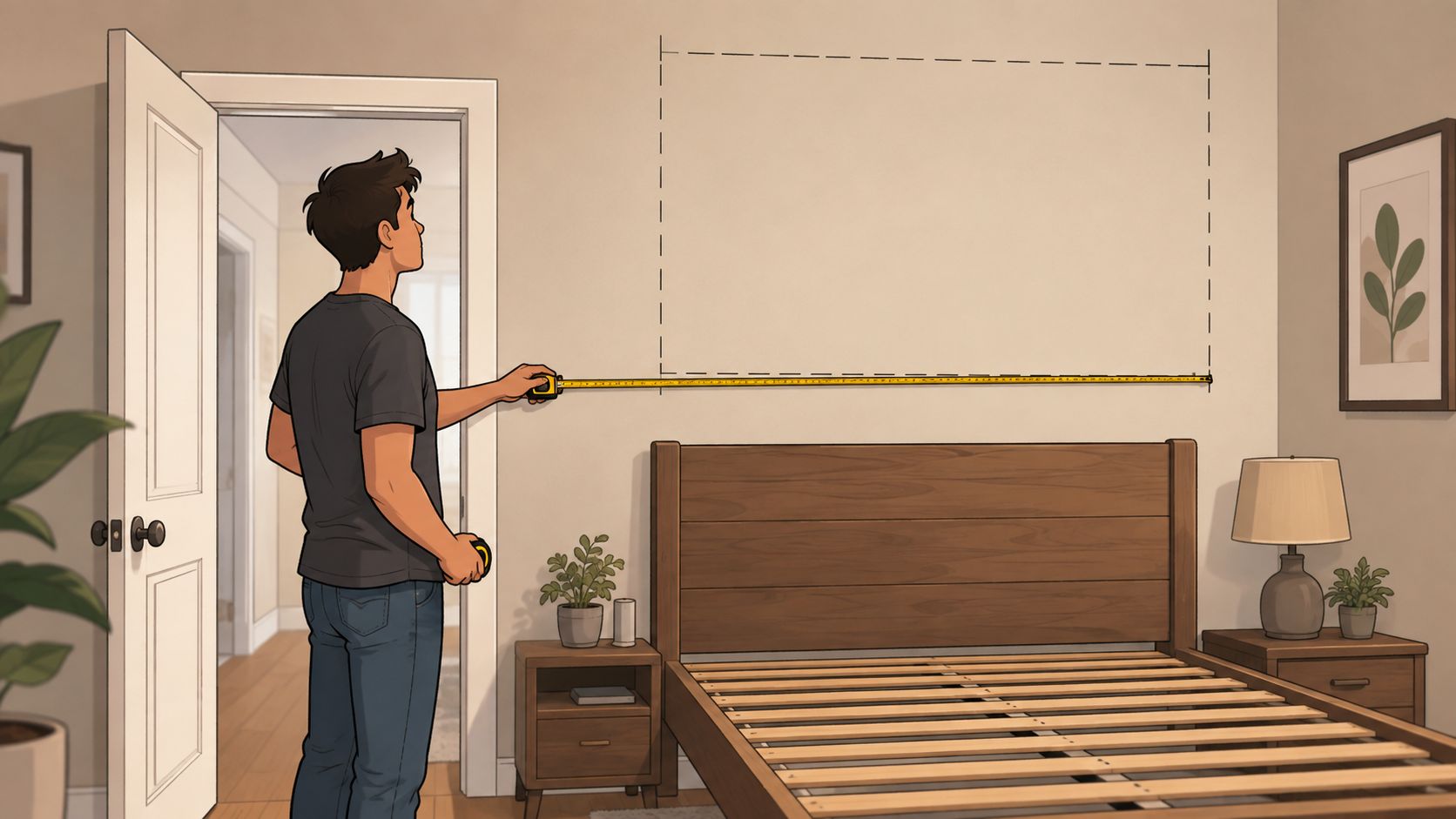
Standing in a bedroom doorway with a tape measure in hand, many homeowners already know they want something softer than bare wood or metal. The difficult part is picturing the right width, height, fabric, and mounting method against the actual wall. An upholstered headboard can make a bedroom feel finished in one decision, but the wrong size or fabric can make the room crowded, difficult to clean, or uncomfortable to use.
For homeowners in Albany, Schenectady, Troy, Greene County, and throughout the Greater Albany Capital Region, the choice also has to respect the architecture. A tall Albany-area colonial with plaster walls needs a different approach from a newer home with standard ceilings and drywall. A local showroom can show fabric samples in person, check bed-frame compatibility, and explain when a custom order makes more sense than an immediately available piece.
Why an Upholstered Headboard Changes the Whole Bedroom
A bedroom can have quality bedding and well-chosen furniture yet still look unfinished when the bed has no headboard. An upholstered headboard gives the mattress a visual anchor, softens the largest hard surface in the room, and provides a comfortable backrest for reading or watching television. Its foam, batting, and fabric also absorb sound more effectively than wood, metal, or painted drywall, reducing the sharp, echoing feel that hard surfaces can create.
The visual anchor matters
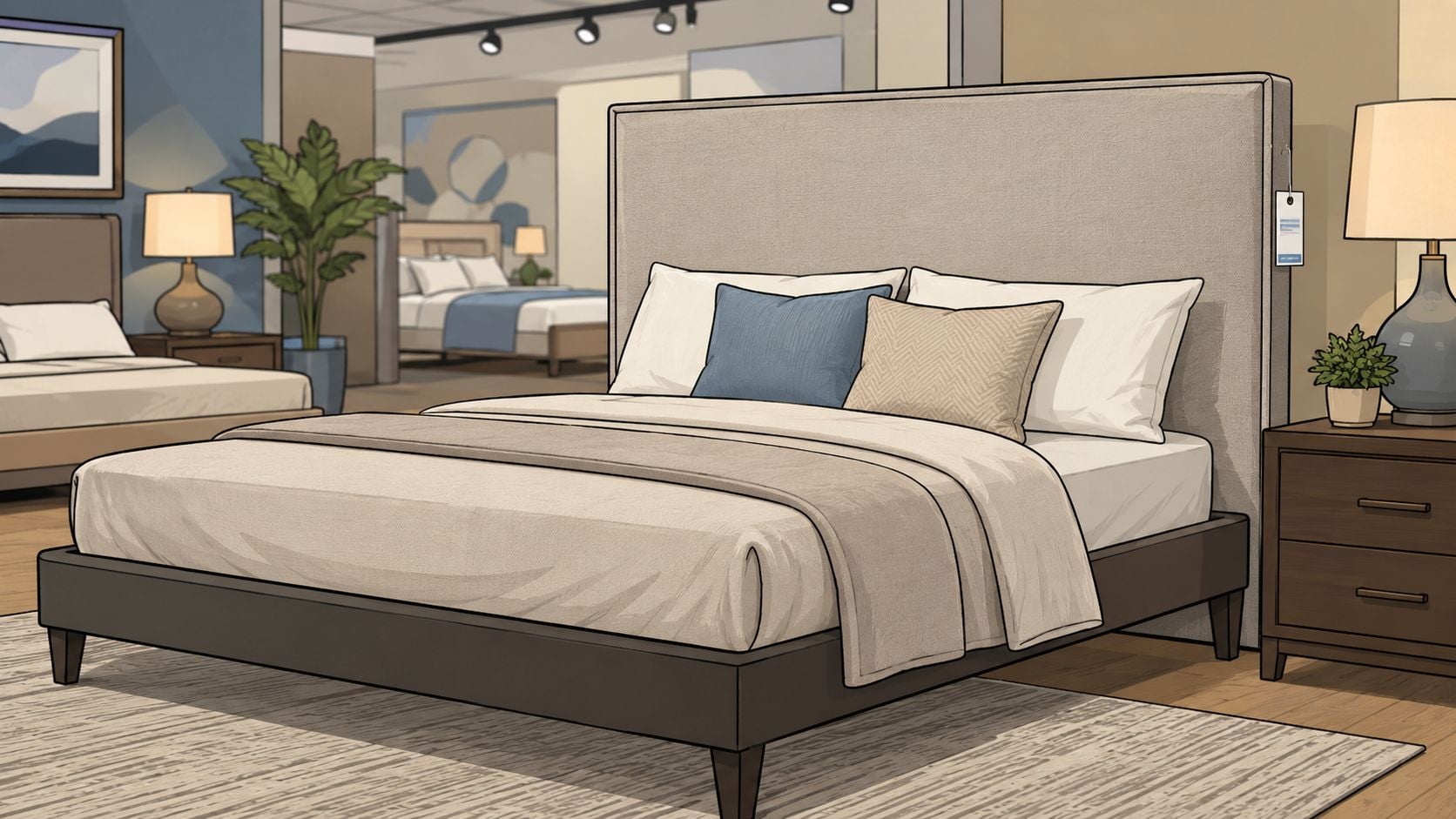
Scale determines whether the headboard strengthens the room or overwhelms it. A properly proportioned piece establishes the bed as the main furniture grouping and gives nightstands, lamps, artwork, and window treatments a clear relationship. A tall, broad headboard can add presence to a room with high ceilings, while a lower panel keeps a compact bedroom from feeling crowded.
For more on bedroom design principles, see this Interiors by DeX bedroom guide.
The category also has deeper roots than a passing decorating trend. Upholstered headboards were gaining popularity in the 17th century, as bedrooms became more private and demand for comfort increased. Early versions were called “stuffers,” reflecting a move away from heavily draped canopy-bed designs, as documented in this history of headboards from Houzz. Their continued appeal follows changing expectations for privacy, comfort, and interior style.
Comfort and acoustics are practical benefits
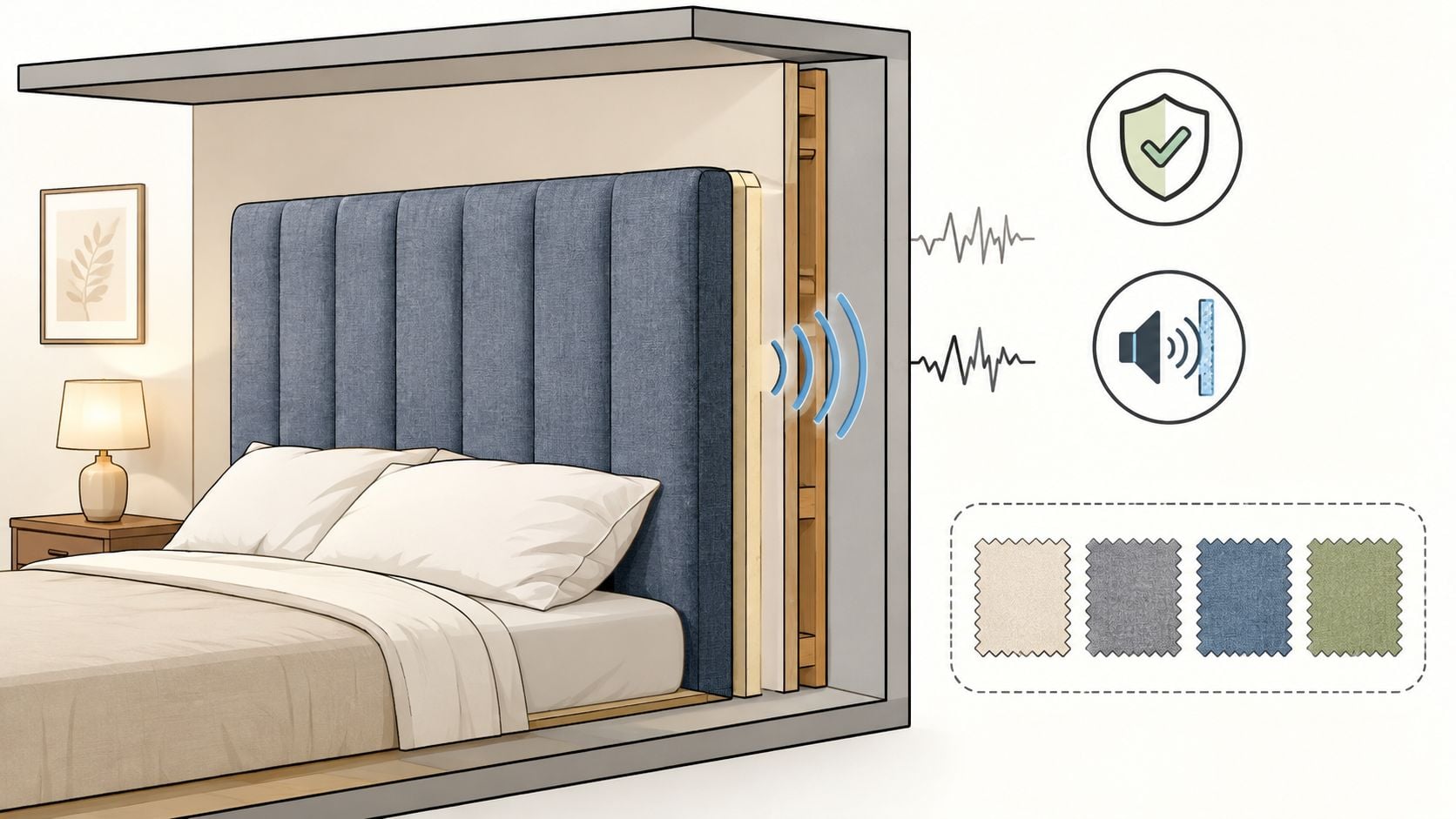
Anyone who sits up in bed benefits from a padded surface behind the shoulders and back. In a smaller bedroom, fabric and foam can also reduce high-frequency reflections and minor flutter echo. The improvement is subtle, but it makes the room feel calmer.
A headboard will not soundproof a bedroom. Thickness and air-permeable materials absorb sound more effectively, so a properly built upholstered piece can act as a localized absorber behind the sleeper's head. Curtains, rugs, and upholstered seating can reinforce that softer acoustic effect.
Fire-safety compliance belongs in the decision as well. Ask how the upholstery and padding are rated, especially for a custom order, and confirm that the finished piece meets applicable requirements for residential use.
Showroom rule: Choose the headboard for how the bedroom is used, not simply to fill the wall behind the bed.
A Freehold, NY showroom lets homeowners judge scale, fabric texture, padding, and construction in person. Tip Top Furniture & Mattresses has served local shoppers since 1978, with professional design services available since 1984. That experience helps with custom dimensions, delivery access, wall construction, and the finish expected to last.
Popular Upholstered Headboard Styles Worth Knowing
Most upholstered headboards fall into a handful of recognizable style families. Identifying the silhouette first makes fabric selection easier because shoppers aren't trying to solve shape, color, texture, and construction all at once.
Start with the outline
- Rectangular padded panel: Clean edges and an even profile suit contemporary, transitional, and restrained traditional bedrooms. Stock versions often ship faster because the construction is straightforward.
- Diamond or biscuit tufting: Deep diamond tufting with buttons reads formal and traditional, while biscuit tufting creates a more precise geometric surface. Labor-intensive tufting usually points toward a custom program or a longer fulfillment window.
- Wingback design: Side wings, sometimes called ears, frame the sleeper and create a sheltered look. This works well in traditional rooms and larger primary suites, but the wings need enough clearance from lamps and nearby walls.
- Channel-stitched or ribbed upholstery: Vertical channels bring height and a modern architectural rhythm. This style fits newer builds, minimalist rooms, and bedrooms that need a strong focal point without ornate buttons.
- Arched or camelback silhouette: A curved top softens a tall wall and gives a classic bedroom a more decorative profile. Curves and shaped upholstery often require custom production.
- Headboard with rails: This configuration replaces a separate bed frame with an upholstered headboard connected to side rails. It creates a unified appearance, though adjustable-base compatibility must be confirmed before ordering.
Match the shape to the architecture
A tall wall can carry an arched, wingback, or oversized panel without looking crowded. In a room with standard ceiling height, a lower rectangular design or modest channel panel usually keeps the proportions calmer. A headboard that reaches too close to crown molding can make the ceiling feel lower.
Traditional homes in the Capital Region often benefit from tufting, shaped tops, nailhead trim, or warm neutral fabrics. Newer subdivisions tend to suit clean rectangles, vertical channels, performance textiles, and low-profile frames. These aren't strict rules, but they help narrow the field before a fabric wall of choices becomes overwhelming.
The Carlisle Upholstered Headboard is an example of a custom direction, with tufting and scooped corners. A shopper drawn to that look should bring room photos and wall measurements before deciding whether the scale works.
The more shaping and tufting a headboard has, the less sensible it is to choose by online thumbnail alone.
Materials, Fabrics, and Frame Construction
The visible fabric is only one part of an upholstered headboard. The frame, padding, attachment system, and upholstery cover all determine whether the piece feels substantial or merely looks attractive on delivery day.
Fabric sets the daily experience
Performance blends, including tightly woven stain-resistant textiles, are practical for active households. They tend to resist everyday spills better than delicate natural fibers, though they can have a slightly less organic hand. Linen and cotton velvet feel natural and inviting, but they can soil, pill, crush, or show wear sooner in a bedroom where people lean against the headboard every night.
Boucle and chenille bring warmth through looped or raised texture. That texture also catches pet hair and can be harder to clean evenly. Leather and faux leather wipe clean with less routine effort, but they feel smoother and cooler against bare skin than woven fabric.
The frame deserves equal attention
Solid hardwood provides a dependable base for staples, brackets, and tufting tension. Quality plywood can also perform well because its layered construction resists the movement associated with weaker sheet goods. MDF may be suitable in protected components, but it isn't the first choice for areas that must repeatedly hold staples, buttons, or hardware over many years.
Padding changes the comfort profile. Foam gives a consistent, supportive feel, while a down-wrapped cushion feels softer and more relaxed but can require more adjustment. Dense foam generally offers firmer support, while thicker layered upholstery can improve both comfort and sound absorption, provided the surface remains breathable, as explained in government research on fire risks of upholstered products.
For a deeper explanation of textile construction, backing, and performance categories, review this guide to upholstery materials.
| Fabric Type | Durability | Care Effort | Best For |
|---|---|---|---|
| Performance woven blend | Strong everyday resistance | Moderate | Families, pets, frequent use |
| Linen or cotton velvet | Comfortable but more prone to visible wear | Higher | Adult primary bedrooms |
| Boucle or chenille | Warm texture, can catch hair | Higher | Calm rooms with limited traffic |
| Faux leather or leather | Easy surface wiping | Lower | Allergy-conscious or high-use rooms |
Check the underside before purchase
Leg height affects mattress alignment, while bolt-on metal brackets usually offer a predictable connection to a compatible frame. French cleats can create a clean wall-mounted appearance, but older Albany homes with plaster walls need appropriate anchors and careful stud location. A wall-mounted headboard should never be attached based only on the visible wall surface.
Matching Materials to Real Households
The most attractive fabric in a showroom isn't automatically the right fabric for a household. The decision should follow the bedroom's actual behavior, including pets on the bed, children leaning against the panel, frequent reading, and how much cleaning the household will realistically do.
Linen and cotton blends suit light adult use beautifully. They feel relaxed and breathable, but they can show soil and pilling in rooms shared with children or shedding pets. Velvet has visual drama and a rich hand, yet repeated leaning can crush the pile and create directional shading.
Boucle and chenille add depth, although their raised fibers demand more frequent vacuuming with an upholstery brush. Tight performance weaves and treated polyester are less romantic to the touch, but they're the stronger practical choice for bunk rooms, children's rooms, and homes with large dogs. Faux leather wipes clean easily and doesn't trap surface dust in the same way woven fabric does, though it can feel slick.
| Material | Durability | Care Effort | Best-Fit Household |
|---|---|---|---|
| Linen or cotton blend | Moderate in light use | Moderate | Adult guest or primary room |
| Velvet | Moderate, with visible pile wear | High | Decorative adult suite |
| Boucle or chenille | Moderate, texture can hold debris | High | Low-shedding, texture-focused home |
| Performance weave | Strong everyday choice | Moderate | Children, pets, regular use |
| Faux leather or leather | Strong surface cleanability | Lower | Allergy-conscious or high-use household |
Homeowners comparing textiles for pets can use this pet-friendly upholstery fabric guide while narrowing the shortlist. A dark microfiber may disguise some marks, but color alone isn't protection. Tight construction and a clear care code matter more.
The strongest recommendation is simple: choose velvet or high-pile boucle for a primary suite used mostly by adults, and choose a tightly woven performance fabric or faux leather when the headboard will face children, pets, or constant contact.
Sizing, Bed Frame Fit, and Wall Placement
A headboard should look connected to the bed, not like an unrelated panel installed behind it. Width is the first measurement. In most rooms, the headboard should match the frame width or sit roughly 1 to 3 inches narrower for a fitted appearance. A wider wall-mounted design can work when the goal is a statement wall that extends beyond the bed.
Measure the entire bed assembly
Height matters as much as width. A 48-inch headboard can ground a tall mattress in a room with standard eight-foot ceilings, while 54- to 60-inch styles typically need taller ceilings or a low-profile bed to avoid overwhelming the room. These proportions should be treated as planning guidance, not a substitute for taping the shape on the wall.
Before ordering, record:
- The finished mattress height from floor to top surface.
- The distance from the bed frame's attachment points to the floor.
- The wall width between corners, windows, doors, and trim.
- The clearance required by an adjustable base.
- The height of outlets, picture rails, and crown molding.
- The thickness of the pillows used against the headboard.
Pillows can push a freestanding headboard forward, especially when the brackets are shallow. Adjustable bases require particular care because a split-leg configuration or wall-mounted solution may be necessary. The guide to attaching a headboard to the wall offers useful installation context, but the hardware still needs to match the home's wall construction.
Test the footprint before committing
Painter's tape is the most useful low-cost design tool in this decision. Tape the proposed width and height directly onto the wall, leave it in place for several days, and view it from the doorway, the hallway, and the foot of the bed. This reveals whether a large panel competes with a window or makes nightstands feel cramped.
A wall-to-wall headboard can be striking, but it also increases the amount of fabric near lamps, outlets, and heating equipment. The larger the panel, the more important accurate placement and access planning become.
Cleaning and Long-Term Maintenance
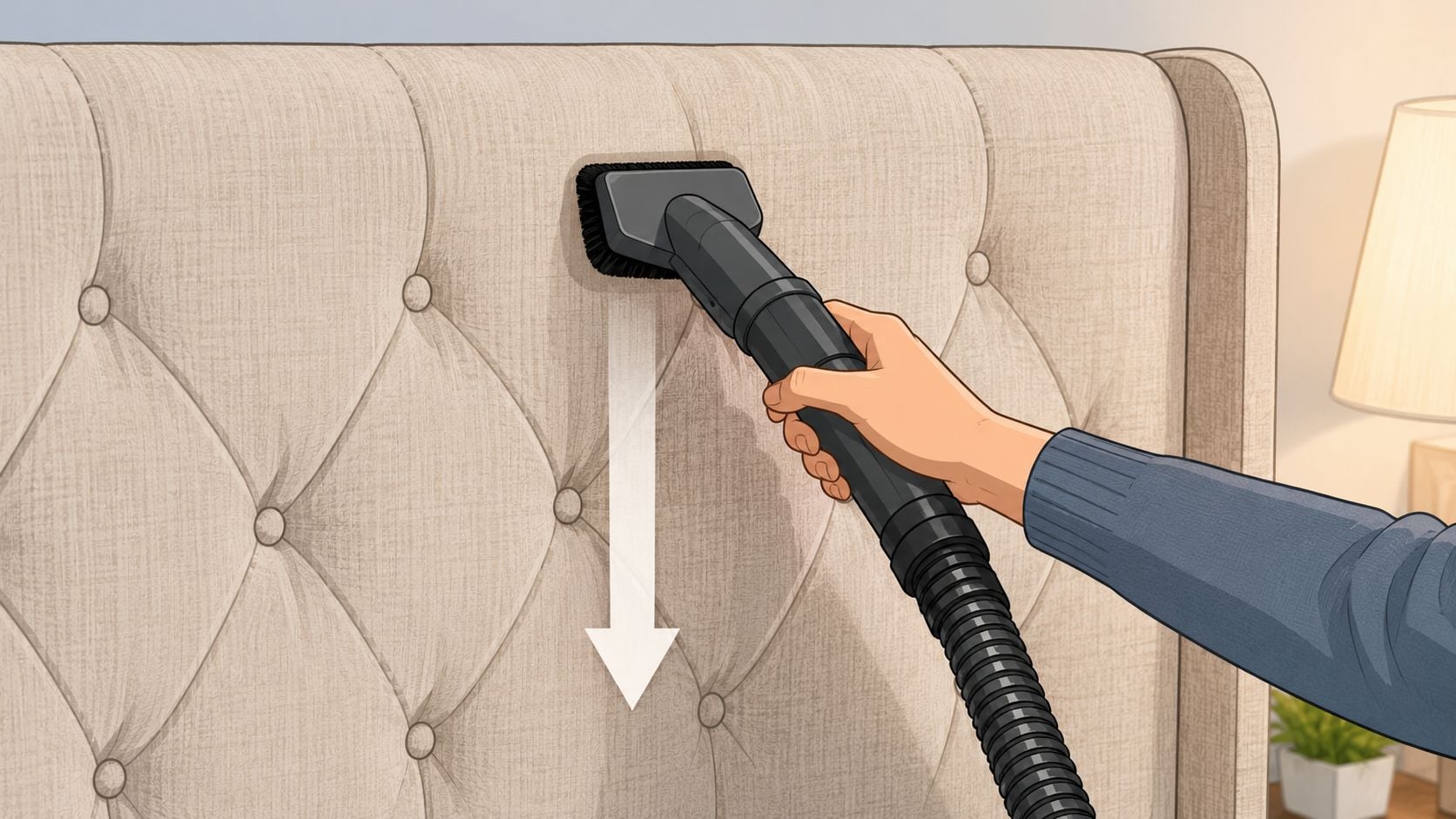
A realistic routine protects an upholstered headboard better than an ambitious cleaning plan that never happens. Weekly vacuuming with a soft upholstery attachment removes dust before it settles into the weave. Work from top to bottom in overlapping strokes, and use a lint roller for loose hair on smooth fabrics.
Treat spills without spreading the damage
Blot spills immediately with a clean white microfiber cloth. Rubbing drives liquid deeper, spreads the mark, and can disturb the surface on velvet, boucle, and chenille. Test any cleaner on a hidden area first, then follow the fabric code:
- W: Water-based cleaning products are generally allowed.
- S: Solvent-based cleaning is required.
- WS: Either water-based or solvent cleaning may be suitable.
- X: Vacuum only. Liquid cleaners aren't appropriate.
A cleaning guide recommends a spot-treatment solution made from 1 ounce of all-purpose cleaner mixed with 1 cup of water, followed by blotting and full air-drying, as described in this upholstery cleaning guidance. That mixture should still be tested against the manufacturer's care code before use.
For stubborn marks, mild dish soap or a suitable upholstery cleaner can be applied to small sections with gentle circular motion, then removed with a lightly damp cloth. Baking soda can help with grease-based spots on some fabric surfaces. Detailed advice on signs upholstery needs cleaning can help determine when spot care is no longer enough.
Protect textured fabrics from overworking
Velvet, boucle, and chenille don't respond well to aggressive scrubbing. Agitation can crush the pile, create shine, cause pilling, or leave an uneven finish. A fitted sheet tucked over the headboard during a heavy pet-shedding season can provide a temporary barrier when pets sleep on the bed.
Periodic deep cleaning makes sense for family bedrooms and less often for low-traffic suites, provided the fabric manufacturer permits the method. Fabric protection should be selected at the time of purchase, not treated as an afterthought. This furniture fabric protection resource explains why the treatment must suit the specific textile.
Safety, Acoustics, and Customization Decisions
A headboard should pass three tests before it enters a bedroom. It should be safe around the room's heat and electrical sources, useful enough acoustically to soften the space, and constructed to fit the bed and wall rather than forcing the room to adapt.
Treat fire performance as a product specification
Upholstered headboards fall within domestic upholstered-furniture safety considerations in major fire-safety regimes. In the UK framework, both front and back surfaces are treated as visible cover fabric, with cigarette resistance for the composite and match resistance for the visible cover. In the United States, federal guidance distinguishes many upholstered bed frames and headboards from rules covering upholstered furniture, while products with upholstered seating surfaces outside the mattress area can trigger additional requirements. The government furniture fire-safety fact sheet explains why the complete fabric, filling, and interliner combination matters.
Manufacturers and specifiers may also encounter BS 5852 Part 1:1979 cigarette and match testing in contract settings, as outlined in this contract-fabric flame-retardancy guide. Buyers should ask whether the chosen fabric and filling were tested together and whether the item carries permanent compliance labeling for the intended market.
Keep upholstered furniture away from woodstoves, candles, smoking materials, hot lamps, heaters, and questionable wiring. The CPSC upholstered-product fire-safety guidance reinforces the importance of placement and hazard control, especially in older homes.
Use softness for modest acoustic improvement
Fabric over foam absorbs sound more effectively than a hard reflective surface. The benefit is localized rather than structural, but that can make a difference behind the sleeper's head, particularly when curtains, rugs, and other soft furnishings support the same goal.
Customize where it changes performance
A local custom program can address fabric, leg height, wing extensions, tufting density, nailhead trim, and split-leg arrangements for adjustable bases. Those options typically require deposits, approvals, and longer fulfillment than a standard in-stock design.
Practical rule: Customize the parts that affect fit, safety, and daily comfort before paying for decorative extras.
A customized headboard chosen around wall construction, sound behavior, fire performance, and household use is a more durable decision than an off-the-shelf shortcut that only looks right in a product photograph.
Choosing and Ordering Your Headboard Locally
A showroom visit settles questions that online photographs cannot. In the room's actual light, compare fabric swatches with flooring, painted walls, bedding, and nightstands. Sit against samples to judge texture, padding, and support before placing an order.
Arrive with the information that affects fit:
- Bring mattress dimensions, bed-frame details, wall width, and room photos.
- Have a design consultant check frame clearance, ceiling height, outlets, molding, and windows.
- View fabric samples under warm and cool lighting, not only showroom lighting.
- Ask whether pricing depends on yardage and whether added fabric changes the total.
- Read deposit, cancellation, delivery, and installation terms before signing.
- Discuss fabric protection while ordering.
- Confirm the mounting method and whether the delivery team supplies and installs the required hardware.
Custom workrooms usually require more time than in-stock pickup. Fabric availability, construction, design approvals, and shipping all affect the schedule, so the estimated delivery date belongs on the order paperwork. The custom-order planning guide gives shoppers a useful checklist for that conversation.
Tip Top Furniture & Mattresses offers furniture, mattresses, décor, flooring, custom ordering, delivery, financing, and access to more than 50 trusted manufacturers. Its Freehold, NY showroom on Route 9 serves homeowners throughout Albany, Schenectady, Troy, Greene County, and the wider Greater Albany Capital Region. Professional design services have been available there since 1984, which makes an in-person consultation useful for coordinating headboard height, fabric, flooring, window treatments, and lighting.
Choose an in-stock headboard when the room must be finished quickly. Choose custom construction when the space has unusual dimensions, plaster walls, an adjustable base, a demanding household, or a fabric and finish unavailable in standard inventory. Confirm those practical details before paying for decorative upgrades.
Visit Tip Top Furniture & Mattresses in Freehold, NY, to feel fabric samples, verify bed-frame compatibility with a design consultant, review headboard sizing and mounting choices, and discuss custom ordering for an Albany-area bedroom. A local appointment also lets you compare materials and confirm delivery details before committing.