Latex Mattress vs Memory Foam: Which Is Right for You

You're probably awake at 2 a.m., staring at the ceiling, wondering why a mattress that felt fine in the store now feels wrong every single night. Maybe your shoulders sink too far, your partner keeps bouncing you awake, or you've started waking up hot and stiff. That's the core latex mattress vs memory foam decision, it's not about a showroom feel for five minutes, it's about how your bed behaves for years.
At Tip Top Furniture & Mattresses in Freehold, NY, that's the conversation families across the Greater Albany Capital Region keep having. The wrong mattress can turn into years of restless sleep and early replacement, while the right one can support better nights for far longer. If back pain is already part of the picture, a practical resource like air bed and back pain can help frame why support and surface feel matter so much.
| Factor | Memory Foam | Latex | Clear Take |
|---|---|---|---|
| Motion isolation | 9.2 | 7.5 | Memory foam wins for couples (NapLab) |
| Cooling | 8.2 | 9.2 | Latex runs cooler (NapLab) |
| Responsiveness | 8.1 | 10 | Latex is easier to move on (NapLab) |
| Average bounce | 6.19 inches | 11.04 inches | Latex feels more buoyant (NapLab) |
| Lifespan | 6 to 7 years on average | 7.5 to 8.5 years on average | Latex lasts longer on average (Sleep Foundation) |
Why the Latex Mattress vs Memory Foam Decision Matters
A mattress is not just another household purchase. It sits under your body every night, and a bad fit shows up fast in sleep quality, stiffness, and plain frustration after the delivery truck leaves. That is why this choice matters more than the quick showroom impression many shoppers leave with on a busy Saturday.
The difference shows up in daily life, not on a tag. One sleeper needs pressure relief at the hips. Another needs to stop waking up sweaty in July. Another needs a bed that will not send every toss and turn across the room. Those are not minor preferences, they decide whether a mattress earns its place in the bedroom.
For shoppers around Albany, Schenectady, Troy, and Greene County, the question is simple. Which type fits the way the household sleeps, and which one will still make sense years from now? Tip Top Furniture & Mattresses has spent 45+ years helping families sort that out with a showroom approach built around comfort, value, and direct answers. Since 1978, that kind of guidance has mattered just as much as the mattress itself.
Practical rule: judge a mattress by the next decade of sleep, not the first ten minutes in the store.
The choice also hits the household budget. A bed that stays useful longer reduces replacement frequency, so durability belongs in the conversation from the start. Industry data suggests that a mattress that lasts 15 years instead of 8 years is replaced less often, and that changes the total cost of ownership. That long view is where latex often starts pulling ahead.
Latex also deserves attention for people already dealing with discomfort. If back pain is part of the picture, a practical resource like air bed and back pain helps show why support and surface feel matter so much. For shoppers trying to understand how foam layers behave under pressure, our guide on what memory foam mattress construction means gives helpful context before you compare beds in person.
Understanding Latex and Memory Foam Construction
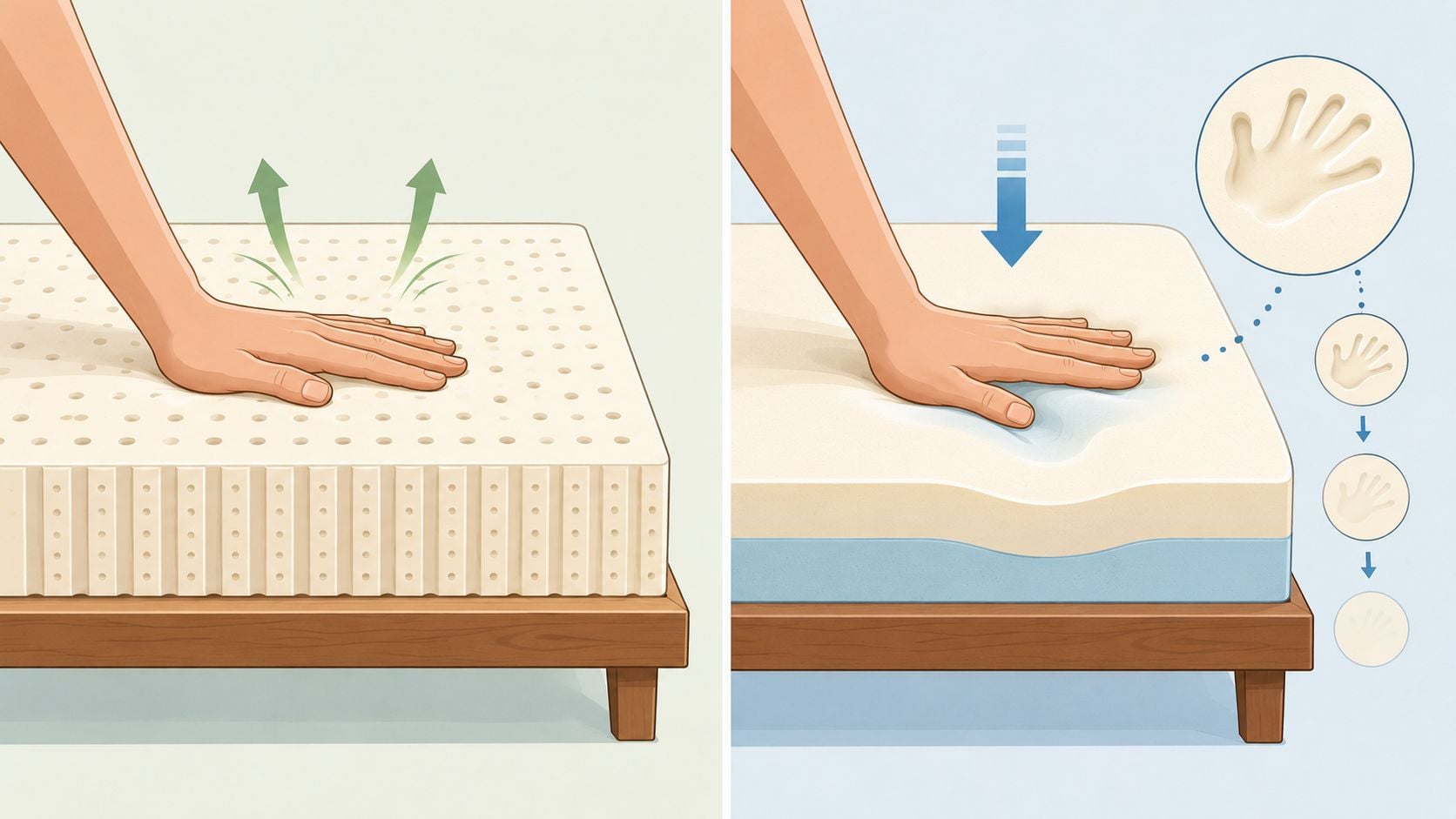
Latex and memory foam can both feel soft at first touch, but they're built on different principles. Latex is a rubber-based foam, usually made from natural latex or synthetic latex, and it's processed in ways that preserve resilience and pushback. Memory foam is a viscoelastic polyurethane foam, made to soften under heat and pressure before slowly returning to shape.
What latex is doing under your body
Latex acts like a springy cushion. When weight lands on it, the material compresses, then pushes back quickly instead of holding a deep imprint. That's why latex usually feels buoyant and easier to move on, especially in mattresses designed with comfort layers over a supportive core.
In practical terms, the firmness you feel comes from how the layers are tuned. Dunlop latex tends to feel denser and more supportive, while Talalay latex usually feels lighter and plusher. Density and firmness ratings matter here because they shape how the bed balances comfort with support.
What memory foam is doing differently
Memory foam is built to contour. It reacts more slowly, softens with body heat, and spreads pressure across a wider surface area before recovering its shape. That slow response is exactly why so many sleepers describe it as sinking in rather than lying on top.
Latex pushes back, memory foam gives way.
That single difference explains most of the buying conflict. A sleeper who likes a hugged-in feel usually leans memory foam. A sleeper who wants quicker movement and a springier surface usually ends up preferring latex. A detailed breakdown of mattress categories on this mattress types guide helps make the construction differences easier to picture before anyone starts comparing prices.
Head-to-Head Performance Comparison
A mattress looks great on paper until you sleep on it for a week. That's where the differences show up. Latex and memory foam solve different problems, and independent lab testing makes the trade-offs easy to see.
| Performance Criteria | Memory Foam Score | Latex Score | Winner |
|---|---|---|---|
| Motion transfer | 9.2 | 7.5 | Memory Foam |
| Cooling | 8.2 | 9.2 | Latex |
| Responsiveness | 8.1 | 10 | Latex |
| Bounce | 6.19 inches | 11.04 inches | Latex |
Motion isolation and couples
Memory foam is the better pick for reducing partner disturbance. If one sleeper shifts a lot, gets up during the night, or shares a bed with someone restless, memory foam hides that movement more effectively. Latex still works for couples, but it lets more motion travel across the surface.
Cooling and summer sleep
Latex stays more neutral in temperature. During warm Upstate New York nights, that matters because trapped heat can turn into broken sleep fast. Memory foam can still work for plenty of buyers, but it is more likely to hold heat and leave some sleepers uncomfortable.
Responsiveness and ease of movement
Latex reacts faster under your body. You can change positions, sit up, and get out of bed without fighting the mattress surface, which is why combination sleepers usually notice it right away. If a bed feels slow or sticky, that is memory foam doing what it does best, not what it does cleanest.
What the bounce numbers mean
Bounce is not a showroom gimmick. A mattress with 11.04 inches of bounce feels livelier and more supportive when you move on it than one at 6.19 inches. Latex delivers that active feel, while memory foam gives you the deeper, more body-hugging sensation.
For shoppers who want to compare these materials with other constructions before narrowing the field, the mattress types explained page is a useful starting point.
Durability and Long-Term Value Analysis
Durability is where a mattress stops being a comfort choice and becomes a long-term spending decision. Natural latex usually outlasts memory foam by a wide margin, and that difference shows up in how long the bed keeps its support before soft spots and body impressions become a problem. Independent mattress guidance from Saatva and Sleep Foundation points in the same direction, latex holds up longer, memory foam breaks down sooner.
Why the lifespan gap exists
The material itself explains most of the gap. Latex is an elastic rubber-based foam with strong resilience, so it springs back and resists everyday wear for a longer stretch of normal use. Memory foam is a viscoelastic polyurethane foam, and over time it softens more noticeably under repeated pressure.
Density matters a lot for memory foam longevity. Lower-density foam tends to wear out faster, while medium- and high-density versions last longer and hold their shape better. Even so, the better memory foam builds still deserve closer inspection, because longevity can vary a lot by construction and by how the mattress is put together.
Why the sticker price can mislead
A lower purchase price can hide a higher replacement cost. A mattress that needs to be replaced sooner can end up costing more over time than a pricier bed that stays supportive for years longer. That is the part families miss when they are trying to stretch a budget without sacrificing sleep quality.
Value rule: cost per year matters more than the opening price tag.
That matters in the Capital Region, where buyers often want a mattress that fits the household budget and still holds up to everyday use. If you want to compare build quality with a local buying lens, the American-made mattress brands page is a practical place to start. It also helps to think about the sleeper, not just the material. A bed that performs well for one person may not be the right long-term fit for someone following a perimenopause sleep guide, especially if temperature, pressure relief, and nighttime comfort are all changing together.
For shoppers who want a bed that keeps its feel longer and avoids early replacement, latex is usually the safer long-term buy. Memory foam still has a place, but only if the build quality is strong enough to justify the shorter service life.
Health and Allergy Considerations for Sensitive Sleepers
Allergy talk around mattresses gets oversimplified fast. Latex is often presented as the automatic answer, but that only tells part of the story. Natural latex, blended latex, and memory foam with modern certifications don't behave the same way, and the details matter more than the label.
What sensitive sleepers should actually watch
Natural latex is the version most often associated with dust-mite resistance and a cleaner material profile. Memory foam can also be dust-mite resistant, but the bigger questions usually involve odor, off-gassing, adhesives, and fire-retardant layers. Those are the issues that sensitive sleepers notice first in the bedroom, not the marketing claims on the tag.
Certifications matter because they help buyers understand what's inside the bed. People shopping for cleaner sleep often look for material disclosures, barrier fabrics, and low-emission construction instead of trusting a broad comfort claim. That's especially useful for families trying to create a healthier bedroom environment without guessing.
When memory foam still belongs in the conversation
Modern memory foam isn't one single thing. Formulations vary, and the quality of the cover, barrier layers, and foam itself can change how a mattress smells and feels in real use. A certified foam bed can be a sensible choice if the sleeper values contouring, but sensitivity to synthetic materials should be taken seriously.
The best advice is to pay attention to the whole build, not just the top comfort layer. That means asking about adhesives, covers, and certification details before buying. If the bedroom also needs to stay cleaner overall, the dust and allergen-free bedroom guide is a practical companion read.
For sleepers dealing with hormone-related temperature swings, a perimenopause sleep guide can also be helpful because temperature regulation and surface feel often intersect during that stage of life.
Which Mattress Type Suits Your Sleep Style
Pick the mattress that matches how you sleep at home, not the one that feels nicest for two minutes on a showroom floor. The wrong feel can look fine at first and turn into sore shoulders, a cramped lower back, or broken sleep once real use starts. That is where the long-term cost shows up, and it is why the sleep style has to drive the decision.
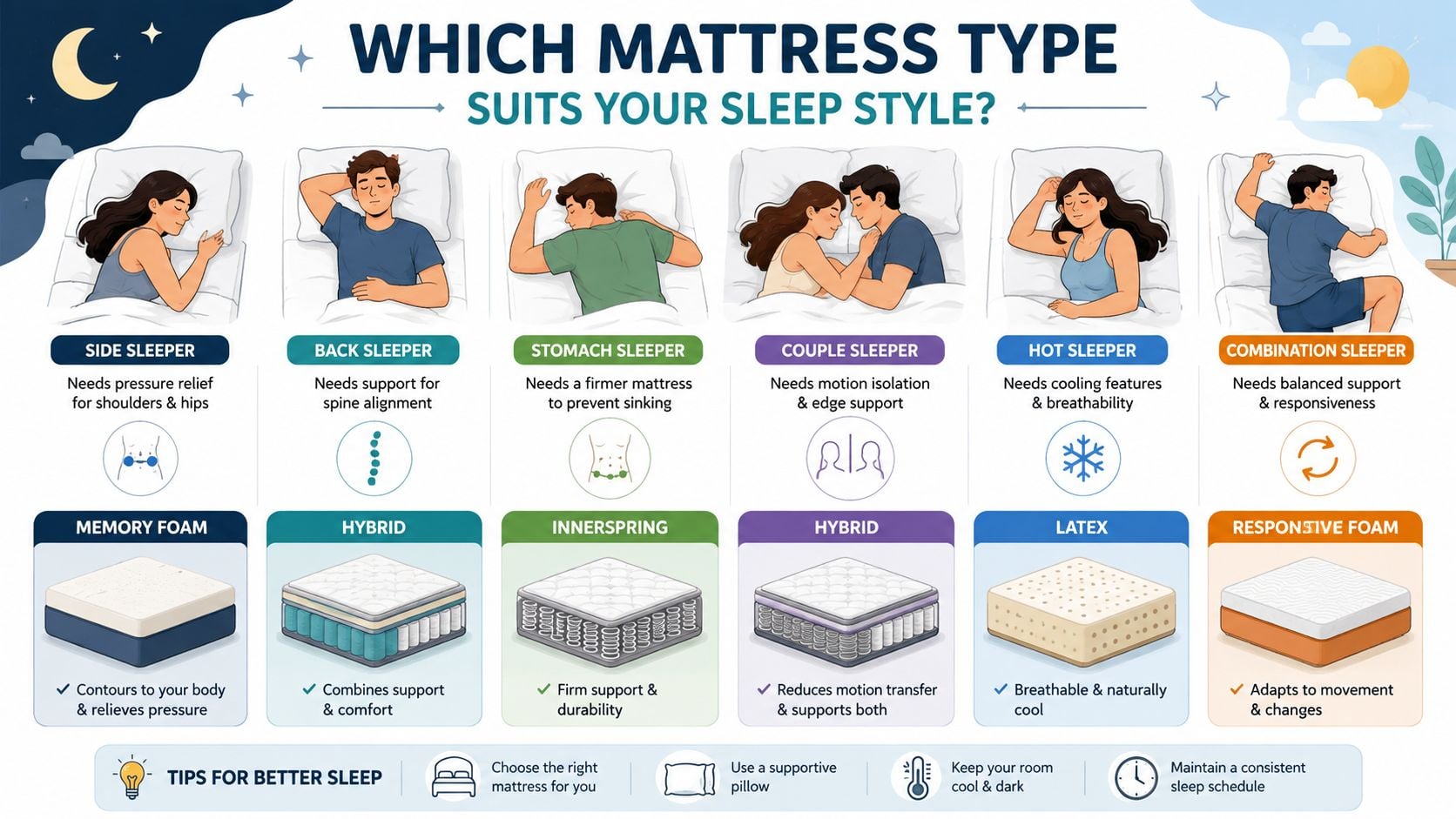
Side sleepers and pressure relief
Side sleepers usually need the most give at the shoulders and hips. Memory foam is the cleaner fit here because it contours more closely and softens sharp pressure points without forcing the body to fight the surface. For a lighter side sleeper, that slower response can feel right away.
Back and stomach sleepers
Back and stomach sleepers usually do better on latex. The quicker response helps keep the midsection from sinking too far, so support stays steadier through the night. Heavier sleepers in these positions often prefer latex for the same reason, since the surface resists collapse better and keeps the spine from feeling strained.
Combination sleepers and restless partners
Combination sleepers usually prefer latex because it makes position changes easier. You can roll, shift, and settle again without feeling stuck in the bed. Couples who care most about motion isolation can still choose memory foam, since it does a better job limiting partner disturbance. Independent testing has pointed to that trade-off for years, and it should be chosen on purpose, not learned after delivery.
Hot sleepers and sensitive households
Latex is the stronger pick for sleepers who run warm. Its cooler feel stands out in humid months, and that can make a real difference in overnight comfort. For households already focused on air quality and temperature control, a home air purifier can help the bedroom environment, but it will not replace choosing a mattress that sleeps cooler from the start.
What sensitive sleepers should watch
Sensitive sleepers should look beyond the comfort layer and ask what is inside the whole bed. Material disclosures, barrier fabrics, and low-emission construction matter more than a broad comfort claim. The safest move is to ask about adhesives, covers, and certification details before you buy, especially if cleaner indoor air is a priority.
Tip Top's which mattress is right for your body type guide helps narrow the choice when body shape, sleep position, and comfort preference all need to line up.
How to Test and Buy Your Next Mattress in the Capital Region
A mattress should be tested like a real sleep surface, not like a couch cushion. Spend 10 to 15 minutes on it in your usual position, wear comfortable clothing, and bring your own pillow if possible. That gives a far better read on pressure, support, and how easy it is to move.
A smart in-store visit also means paying attention to the details beyond the first impression. Ask how the bed feels at the edges, how easy it is to roll over, and whether the surface holds heat. If a mattress feels great for two minutes but awkward after ten, that's a warning sign.
Tip Top Furniture & Mattresses in Freehold, NY uses a high-tech bed matching system to help shoppers find support and comfort levels that fit their bodies. That kind of guidance matters for Albany, Schenectady, Troy, and Greene County families who want less guesswork and more confidence before they buy. Flexible financing, including special financing with a Synchrony Home Card, can make a higher-quality mattress easier to bring home, and the Clearance Corner is worth checking for immediate availability at a lower price point.
If the mattress is only part of a larger home project, the showroom approach helps in another way too. Families can coordinate sleep purchases with furniture, flooring, and delivery planning in one stop, which saves time and keeps the process simpler.
Tip Top Furniture & Mattresses helps Capital Region families compare latex and memory foam with real guidance, not showroom fluff. Visit Tip Top Furniture & Mattresses in Freehold, NY to test both feels, ask about financing and delivery, and find a mattress that fits the way your household really sleeps.