Choosing the Right Bench Seat Depth


The perfect bench is so much more than just a place to sit—it’s the heart of a welcoming entryway, the key to a cozy breakfast nook, or the finishing touch for a bedroom. But what makes a bench truly great? The secret is in its seat depth.
Seat depth is simply the measurement from the very front edge of the seat to where it meets the backrest. As a family-owned business serving our neighbors from our Freehold, NY showroom since 1978, we know getting this one dimension right is the difference between a bench your family flocks to and one that just ends up collecting coats and mail.
The Secret to a Comfortable and Functional Bench
Think about the last time you sat somewhere uncomfortable. Maybe it was a dining bench so shallow your legs felt like they were dangling, or a deep mudroom bench that was just plain awkward to sit on. The right bench seat depth supports good posture and makes all the difference, whether you're lacing up your kids' shoes or lingering over a long family dinner.
For homeowners here in the Greater Albany Capital Region, from Schenectady to Troy, finding a bench that fits our unique, older homes can be a real headache. Standard, big-box sizes often just don’t work with the quirky layouts we love. This is where understanding the fundamentals of seat depth becomes your superpower. With our 45+ years of local expertise, we're here to help you find that "just right" fit.
Why Bench Seat Depth Matters So Much
You might be surprised how much thought goes into comfortable seating, even in industries you wouldn't expect. Take the automotive world, for instance. Car manufacturers produce an estimated 25 million bench seat units every year. That market was valued at a staggering $53.1 billion in 2025, largely because customers demand comfort and safety. You can read more about this growing market on Data Insights Market. Just as car designers obsess over every millimeter to keep you comfortable on a long drive, the same exact principles apply to the furniture in your home.
This guide is a collection of our best advice, honed over decades of helping local families. We want to help you choose with confidence, ensuring your next bench is not just beautiful, but perfectly suited to your home and your life.
Our goal is to give you the know-how to select—or even design—a bench that will serve your family for years to come. Whether you're interested in a handcrafted Amish bench or need a custom solution for a tricky corner, it all starts with understanding seat depth.
For those who like to plan ahead, our free online Room Planner is a fantastic tool for visualizing how different bench sizes will look and feel in your actual space.
Standard Bench Depths for Every Room in the Albany Area
Figuring out the right bench seat depth is a great starting point for any project. While every home is unique, these guidelines—backed by our 45+ years of experience fitting furniture into real homes across the Capital Region—will help make sure your new bench is comfortable and practical, whether it's for your Albany dining room or a cozy Schenectady reading nook.
These aren't just numbers we pulled out of thin air. They're based on what works for real families, day in and day out, right here in our community.
Dining and Kitchen Benches
When you're pulling a bench up to a dining or kitchen table, you want something a bit on the shallower side. This lets you sit upright comfortably, so you're not leaning way over your plate just to eat.
- Recommended Depth: Look for a depth between 15 to 18 inches.
- Why It Works: This range lets most adults sit with good back support while keeping their feet flat on the floor. It also makes sliding in and out a breeze without knocking your knees on the table.
Entryway and Mudroom Benches
In a busy spot like an entryway or mudroom, a bench is all about function. It's a quick place to sit down, tie your shoes, and get out the door. The depth needs to be practical without getting in the way of traffic.
- Recommended Depth: A depth of 14 to 17 inches is perfect.
- Why It Works: It gives you just enough space to sit without jutting out into the walkway. This helps keep the area feeling open and uncluttered, which is a big deal when you're looking for the best furniture for small spaces.
Window Seats and Lounge Benches
Now we're talking about comfort. Window seats and lounge benches are an invitation to curl up with a good book or a hot cup of coffee. For these spots, a deeper seat isn't just nice—it's necessary to create that cozy, relaxing feel.
- Recommended Depth: Aim for 18 to 22 inches, or even a bit more if you have the space.
- Why It Works: That extra room is perfect for piling on throw pillows and gives you enough space to really lean back and relax for a while. A deeper bench like this feels less like a seat and more like a destination.
To give you a quick reference, here's a simple table that breaks down our recommendations.
Recommended Bench Seat Depth by Room and Use
| Bench Type | Standard Depth Range (without cushion) | Primary Use & Comfort Considerations |
|---|---|---|
| Dining/Kitchen Bench | 15" – 18" | Supports upright posture for eating. Allows easy access to the table. |
| Entryway/Mudroom Bench | 14" – 17" | Provides a quick place to sit without blocking traffic. |
| Window/Lounge Bench | 18" – 22"+ | Offers extra room for cushions and comfortable, long-term lounging. |
| Outdoor/Patio Bench | 16" – 20" | Balances comfort for relaxing with durability for outdoor use. |
These ranges are a fantastic starting point for almost any home.
Interestingly, the science behind comfortable seating is a huge deal in other industries, too. Take the automotive world, for example. So much research goes into creating the perfect car seat.

This just goes to show how much value is placed on getting seating ergonomics right. In fact, many automotive design standards recommend a seat depth of around 15-17 inches (38–43 cm) to give the average person the best leg support. It's all about designing for the human body.
Expert Tip: If you're ever on the fence, it's usually safer to go slightly shallower. You can always make a bench cozier with a thick cushion, but you can't shrink a bench that's too deep and makes sitting awkward.
While these standards are great guides, the perfect bench is ultimately the one that feels right in your home for your family. If your space has a tricky layout or you have specific needs, a custom piece might be the answer—and that's something we can help with at our Freehold showroom.
How to Measure for Your Perfect Bench
Getting your measurements right is the first, most important step to finding a bench that feels like it was made just for your home. It can feel a little intimidating, but trust us—it’s easier than you think! We'll walk you through how to measure your space like a pro, so you can skip the guesswork and find a piece that fits perfectly.
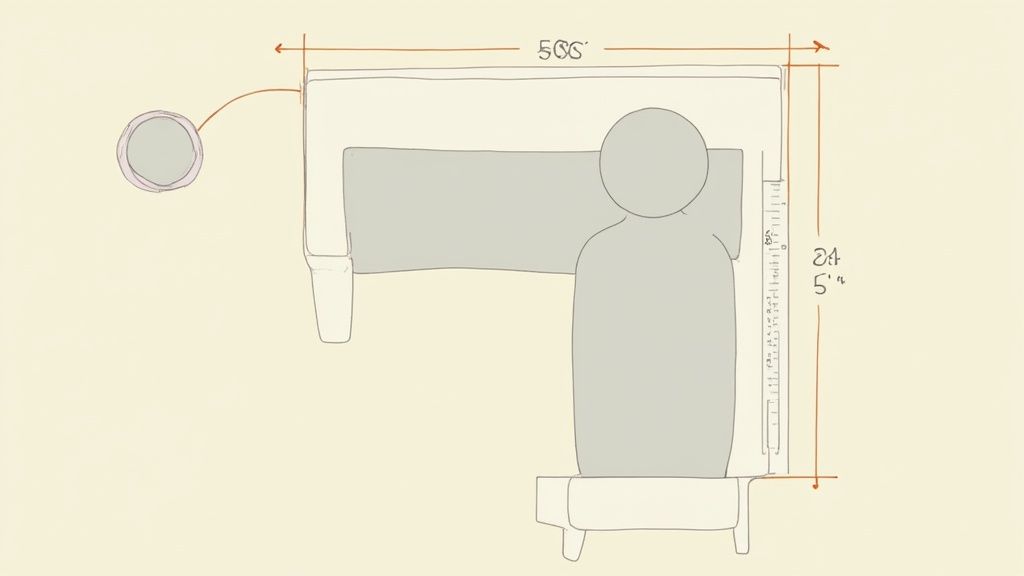
Gathering Your Tools
First things first, you’ll need to grab a few simple things. Nothing fancy required, just the basics to get an accurate read on your space.
- A reliable tape measure
- Painter's tape (this is our favorite trick!)
- A pen and paper or your phone to jot down the numbers
Your Step-by-Step Measuring Guide
Let's imagine we're finding a new dining bench for a breakfast nook in a cozy Albany home. The process is the same whether you’re measuring for an entryway, the foot of your bed, or your dining area.
-
Measure the Total Available Space: Start by measuring the full length and width of the area where the bench will live. In our Albany nook, let's say the wall is 72 inches long. That’s our absolute maximum length.
-
Determine Your Ideal Bench Depth: Based on what we talked about earlier, a dining bench needs about 15-18 inches of seat depth to be comfortable. We'll aim for a sweet spot of 17 inches.
-
Visualize the Footprint with Tape: This is the most critical part, and it makes all the difference. Use your painter's tape to mark out the bench's dimensions right on the floor. Create a rectangle that’s 72 inches long by 17 inches deep. Now you can actually see how much room it's going to take up.
-
Check for Obstructions and Clearance: With the tape outline on the floor, walk around it. Is there plenty of room to pull the bench out from the table? Does it block a doorway, a heat vent, or a cabinet door from opening? This simple trick helps you catch any potential issues before delivery day.
Expert Tip: Don't forget to think about the bench's legs! Some designs have legs that angle outward. Your tape outline should represent the bench's widest and deepest points to guarantee a perfect fit.
Factoring in Cushions and Backs
Keep in mind that your measurements are for the bench frame itself. Adding a cushion or a backrest will change how the bench feels and functions.
-
Cushion Thickness: A thick, comfy cushion can eat into the usable bench seat depth by a few inches. If you plan on adding a plush 3-inch cushion to your 17-inch deep bench, your effective seating depth shrinks to just 14 inches. If you love a thick cushion, you might want to look for a slightly deeper bench frame to make up for it.
-
Back Support: If your bench has a backrest, make sure you measure the depth from the very front edge to the front of that back support, not all the way to the wall.
For a more detailed walkthrough and some extra pro tips, check out our complete guide on how to measure furniture before making a final decision. To make it even easier, you can use our free Online Room Planner to place furniture in a digital version of your room and see exactly how it all fits to scale.
Creating Custom Benches for Unique Spaces
Standard furniture sizes work beautifully in a lot of homes, but what happens when your space has a personality of its own? Many historic houses right here in the Albany Capital Region have charming but non-standard layouts—think narrow entryways, angled breakfast nooks, or bay windows that a regular bench just won’t fit into.
In these situations, a custom bench isn't a luxury. It's often the most practical way to get a perfect, seamless fit that looks like it was always meant to be there.
When to Choose a Custom Bench
Sometimes the decision is obvious, but homeowners often wonder if a custom piece is really worth it. Based on our 45+ years of experience, we've seen a few common scenarios where going custom is the best solution for families in our community.
- Awkward Architectural Features: For spaces like a curved wall, a nook under the stairs, or an unusually long hallway, a custom-built bench is the only way to maximize the area without it looking forced.
- Specific Functional Needs: Maybe you need a mudroom bench with built-in cubbies perfectly sized for your kids' sports gear, or a window seat with hidden storage. Custom ordering lets you add these features right from the start.
- Matching Existing Furniture: If you want to match the wood, finish, or style of a beloved family dining table or heirloom piece, a custom bench ensures perfect harmony in your decor.
- Unique Comfort Requirements: Have a very tall family or specific ergonomic needs? You can specify a custom bench seat depth and height to ensure ultimate comfort for everyone who uses it.
The Power of Amish Craftsmanship
At Tip Top Furniture, our longstanding relationships with talented Amish craftsmen are what make this level of personalization possible. These artisans build furniture the old-fashioned way—with solid wood, time-honored techniques, and an incredible eye for detail. When you choose a custom Amish-made bench, you’re not just solving a design problem; you’re investing in a true heirloom piece built to last for generations.
This process puts you in the designer's seat. You get to specify the exact dimensions, choose the wood species, and select the perfect stain or paint finish to match your home's unique character.
Even concepts from other industries can inspire custom designs. Years ago, front bench seats in cars were standard, often having a depth of around 45–50 cm to comfortably seat three people. As cars evolved, so did seating, but the core principle of designing for specific needs remains. You can learn more about the history of bench seats on Wikipedia, which highlights how form always follows function.
Our team at the Freehold showroom is here to guide you through every step. We can help you translate your ideas into a functional design that our craftsmen can bring to life. For a deeper look into the possibilities, explore our guide on how custom furniture is made simple. With flexible financing options available, creating the perfect piece for your home is more accessible than ever.
Thinking Beyond Depth for Total Comfort
Getting your bench to feel just right is about more than a single number on a spec sheet. While bench seat depth is the starting point, true comfort comes from how it works together with back support and the cushions you choose. It’s a bit like baking—the flour (your seat depth) is crucial, but you won't get a great cake without also getting the sugar and eggs right.
A really deep bench, for example, might sound luxurious, but without the right support, it can feel like you're lost at sea. It often needs a slightly angled back or a few throw pillows to give your lower back the support it needs and keep you from slouching. The same goes for cushions; a thick, sink-in cushion will completely change how a bench feels under you.
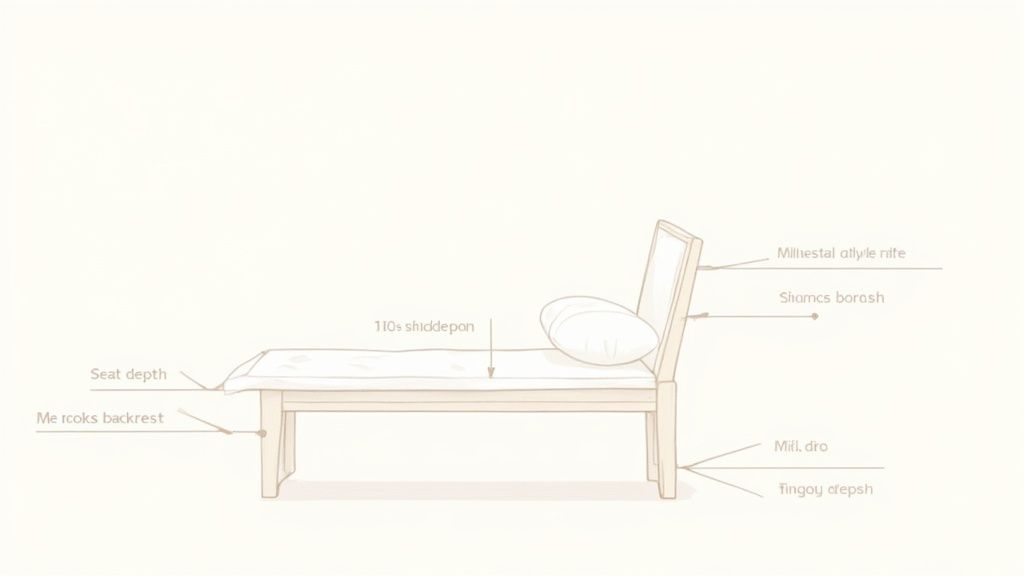
The Cushion and Back Support Connection
There’s a delicate dance between the bench frame, the cushion, and the backrest. A common mistake we see is when someone picks a frame with the perfect depth, only to add a cushion that throws the whole thing off.
Expert Takeaway: A thick cushion eats into your usable seat depth. For instance, if you add a 4-inch thick cushion to an 18-inch deep bench frame, you're left with only 14 inches of actual sitting space. For a dining bench, that might suddenly feel too shallow.
To nail the comfort, you have to think about these elements as a team:
- Cushion Density: High-density foam gives you firm support and doesn't squish down as much, which means you keep more of that original seat depth. Softer foams are cozy for lounging but might not be the best for sitting upright at a table.
- Backrest Angle: For a bench meant for relaxing, even a slight back angle of 5–10 degrees makes a world of difference, especially on deeper seats. That little tilt lets you lean back more naturally.
- Material Choice: The upholstery itself makes an impact. A smooth vinyl has a completely different feel from a soft, textured fabric. Your choice affects everything from upkeep to the overall cozy factor. You can dive deeper into how different fabrics and leathers perform by exploring everything you need to know about upholstery materials in our guide.
Your One-Stop Comfort Solution
This is where Tip Top Furniture’s "One-Stop Shopping" approach really helps homeowners in the Albany Capital Region. We don't just sell you a piece of furniture; we help you see the whole picture. Our Professional Design Services, which we've been offering since 1984, are here to help you get every detail right.
We can help you pick the perfect bench and then find the right custom upholstery in a fabric that's both durable and beautiful. If you're doing a bigger project, we can even help you coordinate new flooring to pull the whole room together. It’s all about making sure every piece works in harmony—a service we've been perfecting for over 45 years while helping local families create comfortable homes.
Find Your Perfect Fit in the Capital Region
Alright, now for the fun part. You've got the know-how on bench seat depth, you have your measurements, and you know exactly what you need. It’s time to find that perfect bench for your home.
For those tricky corners or specific layouts we often see in Capital Region homes, remember that a custom bench can give you that seamless, built-in look that you just can't get off the shelf.
Here at Tip Top Furniture, we've been the area's trusted local furniture expert since 1978. We invite you to come down to our showroom in Freehold to see and feel the difference that real quality makes. Our team is ready to give you personalized advice for your Albany, Schenectady, or Troy home and help you find the ideal piece.
Your perfect fit is waiting. Whether it's something from our showroom floor or a custom creation, our 45+ years of experience mean you'll find a bench you'll love for a lifetime.
Ready to take the next step? Discover the timeless quality of our Amish-made furniture near you, or check out our online Clearance section for some incredible deals available right now. We look forward to helping you create your perfect space.
Got Questions About Bench Seat Depth? We've Got Answers.
Every day in our Freehold showroom, we help homeowners from all over the Albany Capital Region figure out the little details that make a big difference. When it comes to benches, a few questions pop up time and time again. Here’s some practical advice from our team to help you get it just right.
What's the Best Dining Bench Depth for Kids?
If you have little ones, choosing a slightly shallower bench is one of the smartest moves you can make. We typically recommend a seat depth of 15 to 17 inches for benches that kids will be using at the dining table.
This isn't an arbitrary number—it's the sweet spot that lets them sit all the way back against the bench and still comfortably reach their plate. No more perching on the edge, which means better posture and, let's be honest, a much cleaner and more comfortable mealtime for everyone.
How Much Room Should I Leave Between the Bench and the Table?
It’s all about giving people enough room to slide in and out without a struggle. A good rule of thumb is to aim for 5 to 7 inches of space between the very front of the bench seat and the edge of your tabletop. This keeps everyone close enough to eat comfortably without feeling pinned in.
Expert Tip: Don't forget to account for a backrest! If your bench has one, that 5-7 inch gap should be measured from where a person's back would naturally rest, not from the wall or the back of the bench itself.
Can I Just Add a Back to a Backless Bench?
While it might seem like a straightforward weekend project, adding a back to a bench that wasn't designed for one can be a real headache. It's tricky to get the ergonomics right for proper support, and even tougher to make sure it's safely and securely attached for the long haul.
Honestly, if back support is important to you, your best bet is to choose one of our Amish-made benches that was built with an integrated, supportive back from the start. This way, you're guaranteed to get that rock-solid stability, lasting comfort, and a beautifully finished look that will stand up to daily life for years to come.
Here at Tip Top Furniture & Mattresses, our team is ready to walk you through every detail. From finding the perfect dimensions to exploring custom-built options, we make furnishing your home easy and enjoyable.