10 Home Decorating Trends to Transform Your Upstate NY Home

What does a polished home need in Upstate New York, a fresh trend, or a smarter fit for long winters, changing light, and rooms that work hard all year? The best home decorating trends do more than photograph well. They help a house feel warmer in February, less cluttered in mud season, and easier to live in when families are juggling work, guests, and everyday mess.
For homeowners across the Capital Region, that means looking past surface style and asking what holds up. A good update should fit an older colonial, a newer build, a rental, or a compact room in a way that still feels personal. It should also leave room for budget choices, whether that's a custom order, a durable clearance piece, or a full room refresh through the Freehold, NY showroom.
The strongest trends right now lean toward comfort, flexibility, and character. That lines up with broader market behavior, too. The global home decor market reached US$128.31 billion in 2023 and Statista projected 3.89% CAGR from 2024 to 2029; the same dataset said the United States generated US$33.86 billion in 2023, while Americans spent about $1,598 per year on home decor and $5,635 on renovation/remodeling projects (Statista). The point is simple, decorating is a real household investment, not a throwaway category.
1. Warm Minimalism Feels Right for Upstate NY Homes
Could a room feel simpler and still feel warmer? In Upstate NY, that balance matters. Long heating seasons, gray winter skies, and older homes with a lot of character can make stark white interiors feel harder than they look in photos. Warm minimalism keeps the room calm without stripping out the comfort people use every day.
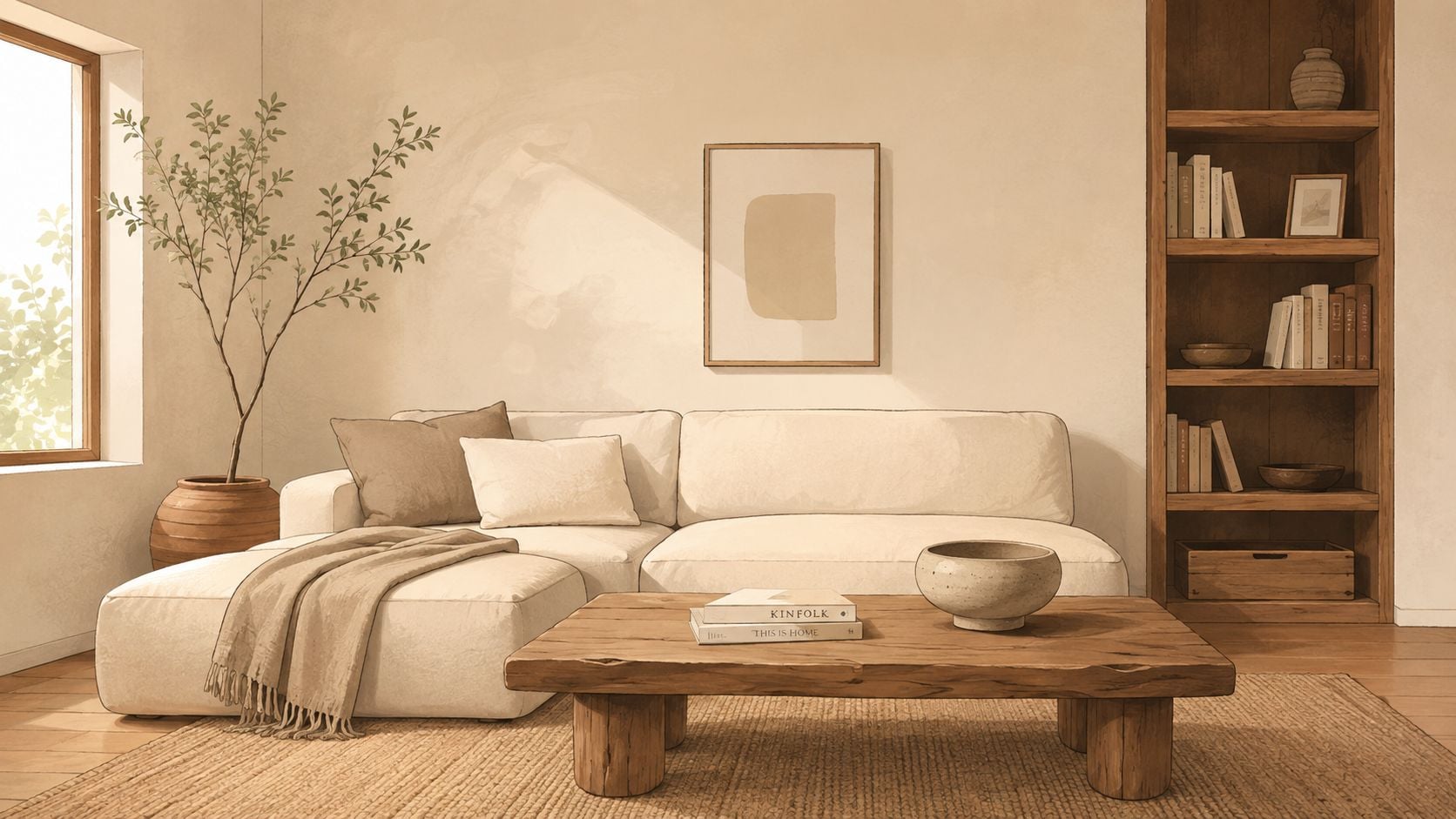
A strong warm-minimal room starts with warm white, soft taupe, and a natural wood tone. From there, layer in linen, wool, woven baskets, and a few pieces that matter to the household, a ceramic lamp from a local shop, a framed print, or a solid side table that can handle daily use. That approach lines up with the shift Opendoor described in its 2023 home decor report, where 25% of homeowners said they change decor once a year or more, down from 32% in 2021, as households moved toward “universal decor” that can hold up across seasons.
The room does not need to look bare. It needs better editing.
Practical rule: If a piece does not add comfort, function, or meaning, it probably does not belong in the room.
For Freehold and Albany-area homes, solid wood furniture fits this trend especially well. It brings warmth without adding clutter, which helps in rooms that already have a fireplace, built-ins, or heavier winter textiles. It also gives homeowners a practical place to spend more in one spot while saving elsewhere, such as on simpler accent pieces or budget-friendly storage that still looks clean. Tip Top's guide to mastering minimalism with personal style fits this approach, because the goal is not an empty room, it is a room that feels intentional and works through the seasons.
2. Earthy Tones and Nature-Inspired Palettes Create Calm
Want a room that feels settled the minute you walk in? Earthy tones do that well, and they fit Upstate NY homes especially well because the palette holds up in harsh winter light and still feels fresh when the views turn green again.
Terracotta, sage, ochre, warm taupe, and natural wood give a room an easy, grounded look. In older homes around the Capital Region and beyond, those colors usually work with the architecture instead of fighting it. A good starting point is one wall color, one larger furniture color, and one repeat color in pillows, curtains, or artwork. That keeps the room cohesive without making it feel flat.
Natural materials matter just as much as the paint. Linen, cotton, wool, leather, jute, and unfinished wood help the palette feel lived in instead of overly styled, and they bring texture that matters during long heating-season months. In a colder climate, that mix also keeps a room from feeling visually chilly, especially in spaces with lots of hard surfaces.
Lighting can change the whole effect. A warm color on the wall may look muddy if the room is underlit, particularly in rooms that do not get much afternoon sun. Layered lighting, table lamps, task light, and a small accent source, helps the color read as rich instead of dull.
Green tile decorating ideas can also fit this approach well in kitchens, baths, and mudrooms, where a deeper natural color brings in personality without taking over the space. Used on a backsplash or shower wall, green tile adds a durable accent that still feels calm and rooted in nature.
For homeowners who want a regional feel, keep the palette close to the local outdoors. Forest green, weathered brown, soft stone, and muted clay tones usually age better than highly saturated jewel colors. That choice matters in Upstate homes because the room needs to feel calm in February and still make sense when the windows are open in July.
3. Maximalism Works Best When It's Edited
Can a room be bold without feeling busy? Yes, if the choices are edited. Maximalism works best in Upstate NY homes when the room has a clear point of view, a color thread that repeats, and enough open space for the strongest pieces to stand out.
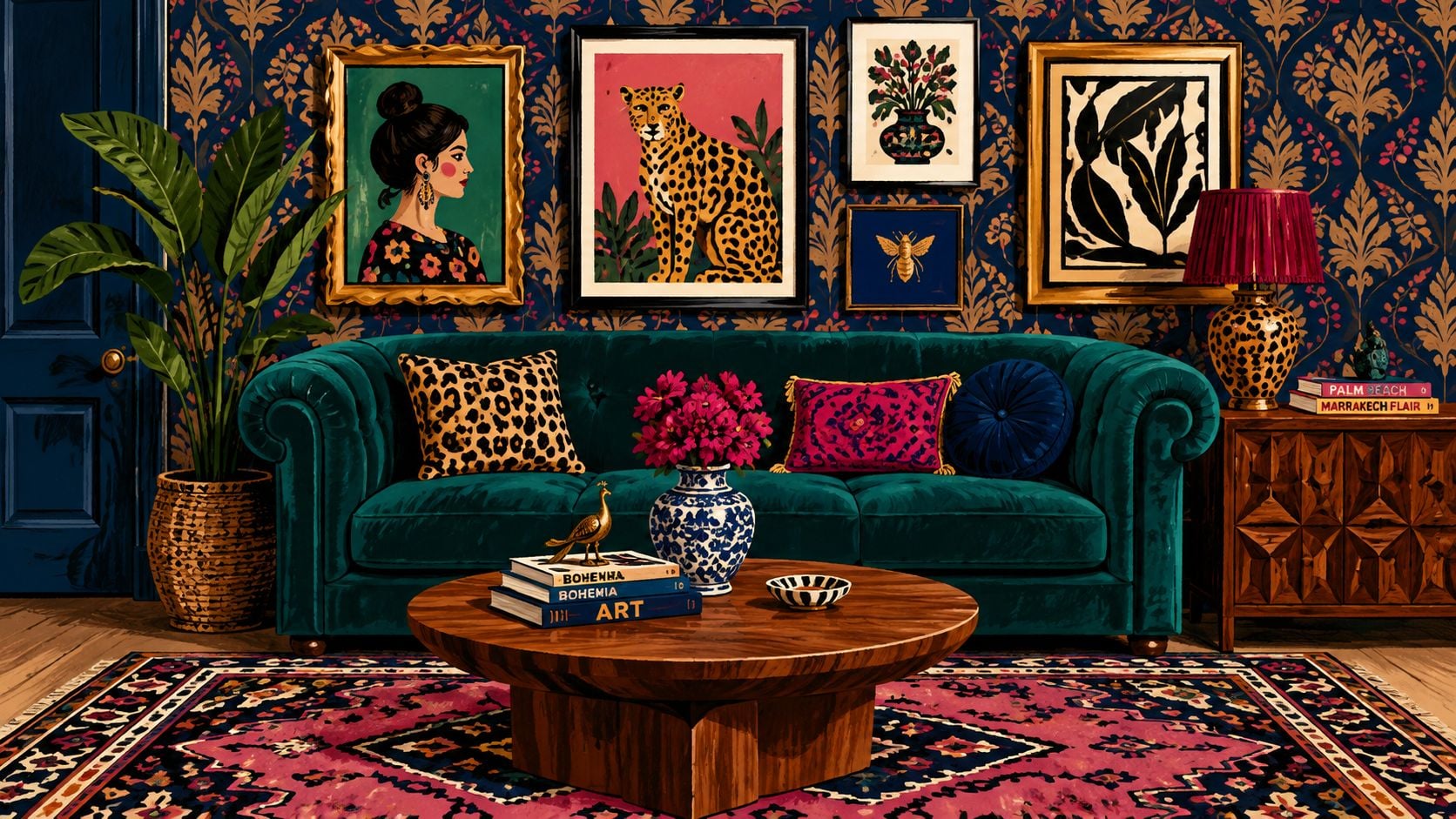
This style fits homes with real character already built in, inherited art, a favorite chair, a vintage rug, or shelves full of books. It also helps homeowners who want personality without forcing every item to match. Pick one thread and keep returning to it, such as jewel tones, warm metals, or one fabric family, then let the other pieces support that choice instead of competing with it.
Practical rule: Start with one statement piece, then build around it instead of filling the room all at once.
Pattern can work when the scale is handled with care. Large wallpaper can sit beside smaller prints, and a velvet sofa can balance against a plain wood table. The room falls apart when every surface asks for attention at the same time, because the eye has nowhere to settle.
For an affordable living room refresh, use one or two strong pattern moments and keep the rest of the room quieter. mixing patterns guidance is useful for Capital Region homeowners who want more color without turning the room chaotic. Custom upholstery can help too, since it lets you repeat a fabric in the right size and finish instead of settling for a nearly right piece that never quite fits.
Older homes often handle maximalism especially well. Trim, built-ins, tall windows, and other traditional details already give the room structure, so layered furniture and art feel intentional rather than crowded. In those spaces, one well-chosen extra piece usually adds more than a row of small objects on every wall.
4. Sustainable Design Is Becoming the Smarter Purchase
Why replace furniture before it has worn out? In Upstate NY, where salt, mud, winter boots, pets, and everyday traffic can be hard on a room, sustainability is also a practical budget decision. Furniture and finishes that hold up save money, reduce frustration, and age better with the house.
The smartest sustainable choices are often the quiet ones. Solid wood furniture, heirloom-quality construction, and USA-made pieces can be refinished, repaired, and kept in service longer, which makes them a better fit than trendy items that look finished before the season changes. Amish handcrafted furniture and carefully selected flooring often make more sense here because they stand up to real use without asking homeowners to replace them on a short cycle.
Tip Top's sustainable wood furniture fits that practical approach. For homeowners who want better materials without overcomplicating the project, it gives a straightforward path to durable pieces that suit an older home or a busy family room. It still pays to ask about finish options, wood type, and care needs before you buy, because a sustainable piece only works if it still fits the room and the way you live in it years later.
Analysts at Research and Markets forecast continued growth in the home decor market, with online retail taking a larger share of distribution and furniture holding a major share of product demand. That points to the direction many homeowners are already taking, durable furniture, clearer purchase planning, and the kind of shopping that lets you compare quality before you commit. For Upstate NY homes, where the wrong finish or size can become a daily annoyance, buying once and buying well is often the smarter purchase.
5. Multifunctional Spaces Solve Real Problems
Multifunctional design is one of the most practical home decorating trends for Upstate NY, because many houses need rooms to do more than one job. A dining room becomes a work zone during the week. A guest room needs to function as storage most of the year. A living room has to handle TV, homework, and company without feeling cramped.
The strongest multifunctional rooms start with honest priorities. If a space has to support work and sleep, the furniture should reflect that reality instead of assuming every use will happen neatly on its own. Storage beds, modular seating, extendable tables, and well-placed dividers can make a room easier to use without making it feel temporary.
Tip Top's multi-functional furniture guide helps homeowners sort out the details that matter in older Upstate homes. Custom sizing is often the difference between a room that works and one that feels awkward. A piece that sits too deep can crowd a hallway, and a table that is too large can leave a dining room underused for part of the year.
For families in the Capital Region, flexible furniture also fits changing routines. Kids grow, relatives visit, and hybrid work still changes how rooms get used. Movable pieces and hidden storage usually offer more value than oversized fixed layouts, especially in homes where a room needs to reset quickly for the next task.
A good flexible room usually includes a clear anchor piece, like a sofa or table that defines the space. It also needs at least one movable element, such as a rolling table or modular seat, so the layout can shift when the use of the room changes. Hidden storage keeps the room from feeling cluttered, and neutral core pieces help it adapt to future updates without starting over. That mix keeps the room from feeling like a compromise. It makes the room work harder.
6. Vintage and Antique Pieces Add Character Without Forcing It
Why do some rooms feel finished right away, while others still feel flat after every new purchase? Vintage and antique pieces usually answer that question. They bring age, texture, and a sense of history that brand-new rooms often miss, and in Upstate NY homes, where original trim, hardwood, and older floor plans already have character, one well-chosen piece can feel completely at home.
The key is restraint. A restored wood desk in a home office. An inherited table in a dining room. A vintage mirror in an entry. These pieces add story without turning the house into a museum, and they work best when they share space with newer essentials like a quality mattress, updated flooring, or a custom upholstered chair.
The smartest vintage rooms don't look assembled all at once. They look collected over time.
That collected feeling is what gives this trend staying power. It also keeps a home from sliding into the same mass-produced look you see everywhere else. The better rooms feel gathered, not ordered in a hurry. For families in the Capital Region, that matters because a room still needs to work for daily life, not just look interesting in a single photo.
There is a real trade-off, though. Too many heavy or delicate antiques can make a room feel crowded, and pieces with the wrong scale can fight the architecture instead of fitting it. Tip Top's design services can help blend vintage finds with newer furniture so the room stays balanced, and local shoppers can use antique shops, estate sales, and consignment pieces for character while Tip Top fills in the functional basics with solid construction and custom options.
For Upstate NY homes, the smartest mix often depends on season and use. A sturdy vintage sideboard can anchor a dining room through winter gatherings, while a lighter accent chair or small table may suit a porch, sunroom, or guest space that changes with the weather. Budget-wise, a few carefully chosen secondhand pieces usually go further than trying to furnish an entire room with antiques, especially when the core seating, sleep, and storage pieces come from a local source that can size them correctly for the room.
7. Japandi Feels Right in Smaller Rooms and Older Homes
Japandi works well in Upstate NY because it gives older homes room to breathe. The mix of Japanese restraint and Scandinavian warmth fits smaller bedrooms, narrow living rooms, and layouts that already have enough character in the trim, windows, or flooring. It keeps the room calm without making it feel cold.
The palette usually stays quiet, with cream, soft gray, and natural wood leading the way. Texture does the rest. Linen, wool, stone, and lightly finished wood add depth without crowding the eye, which helps in homes where the architecture already brings its own detail. In a drafty farmhouse bedroom or a compact city apartment, that balance matters more than extra decoration.
Craftsmanship also matters here. Clean-lined, well-made pieces suit Japandi better than ornate furniture, because the style depends on restraint and clear proportions. A low wood bed, a simple side table, or a pared-back dining table can make a room feel settled instead of sparse. For budget planning, it usually makes sense to spend first on the pieces people use every day, then add smaller accents that carry the look without loading the room.
Tip Top's local furniture selection and design help make that approach easier to use in real homes. When a room needs a tighter layout, the right scale matters more than chasing a full set. Tip Top can help homeowners pair storage, seating, and sleep pieces that fit the room properly, then build in the softer details with rugs, lighting, and textiles that hold up through winter and still feel light in warmer months.
A practical Japandi room usually follows three rules.
- Keep the palette tight, so the room stays calm.
- Choose fewer, better pieces, especially for furniture that gets daily use.
- Leave negative space, because open areas are part of the look.
For Freehold, Albany, Troy, or Schenectady homes, Japandi is a strong choice for bedrooms, offices, and reading rooms where visual calm matters more than filling every corner. It is especially useful in older homes that already have strong bones, since the style lets the architecture stay visible while the furnishings do the quiet work.
8. Bold Wallpaper and Accent Walls Bring Back Personality
Why settle for a plain room when one wall can change the whole feel? Bold wallpaper gives homeowners a faster way to add character without tearing into the rest of the space, which is why it works well in dining rooms, bedrooms, offices, and entryways. In older Upstate NY homes, it can also soften the look of uneven plaster or walls that show every flaw under flat paint.
One strong wall is usually enough. Pick the surface that naturally draws attention, then let it do the visual work while the rest of the room stays quieter. That approach gives pattern room to read clearly instead of competing with every chair, lamp, and frame.
Scale is where many projects go wrong. Large patterns suit bigger rooms with more open wall space, while smaller repeats tend to feel calmer in compact rooms. In a Capital Region home with lower ceilings, awkward corners, or a narrow layout, the wrong scale can make the room feel busier than it should, especially during months when the light is already limited.
The style also fits the broader move toward richer color and more texture. ArchDaily's 2025 roundup, based on more than 3,000 projects in its database that year, points to earthy tones, terracotta, blue accents, flexible divisions, modernist revival furniture, and accent lighting as notable directions (ArchDaily). That kind of palette gives bold wallpaper a practical place in the room, not just a decorative one. For homeowners who want artwork to carry some of that same energy, from The Brooklyn Initiative's blog offers another angle on how strong visuals can shape a room without overfilling it.
Tip Top's flooring and window treatment options can help connect the wall treatment to the rest of the room. That keeps the look intentional, which matters in houses that need to balance personality with everyday use.
9. Hygge Keeps Comfort at the Center
What makes a room feel good to live in through an Upstate NY winter? Hygge answers that with comfort first. The idea is simple. A room should feel warm, safe, and easy to settle into, especially when cold months start shaping how people use their homes.
The strongest hygge rooms start with seating people actually want to use. Sofas, chairs, and reading nooks should support the body without feeling rigid or formal. From there, blankets, pillows, rugs, and warm lighting do the rest, softening the room at night and making early mornings feel less harsh.
This style works in living rooms, bedrooms, and home offices because it respects how people really live. A work area can still feel calm if the chair is comfortable, the lamp gives off a warm glow, and the surfaces stay uncluttered. A bedroom feels more restful when the bed, bedding, and lighting all point toward sleep instead of competing for attention. In older Upstate homes, that balance also helps rooms feel cozy without adding visual clutter, which matters when radiators, narrow layouts, or drafty corners already ask a lot from the space.
Tip Top's seating, upholstery, and USA-made mattress options fit the comfort-first side of this style well. A quality mattress matters here because better sleep changes how the whole house feels the next day. That holds true in homes where one room has to handle rest, recovery, and busy schedules at the same time.
Hygge does not need a theme or a lot of décor. It needs softness, furniture that earns its place, and a room that makes someone want to stay a little longer.
10. Curved Furniture Softens the Whole Room
Curved furniture can soften a room fast, but scale still has to match the floor plan. In a larger Upstate NY living room, a curved sectional or rounded table can help traffic move more naturally and take the edge off a boxy layout. In a tighter room, especially in older homes with narrow walkways or awkward corners, oversized curves can crowd the path and make the space harder to use day to day.
Start with the piece that has a clear job. A rounded coffee table can make a seating area feel easier to gather around. An arched mirror can soften a console without adding visual weight. A curved chair can break up a run of square seating and keep the room from feeling too rigid, which helps in spaces that already have hard edges from trim, doorways, or built-ins.
There is a real seasonal advantage here too. Curves feel less severe in winter, when Upstate homes already deal with heavy coats, boots, and more time spent indoors. They can make entryways, sitting rooms, and bedrooms feel more welcoming without adding clutter. The trade-off is that oversized curvy furniture can date quickly if the rest of the room does not have enough balance, so the shape should support the room instead of taking it over.
Tip Top's custom ordering can help with that because radius, depth, and overall scale matter more than they seem at first. A curved piece that is too large can choke circulation, while one that is too small can look like it was added without a plan. Use the free online room planner to test flow before you buy, especially in homes with older floor plans or narrow paths between rooms. That kind of check is useful across price tiers, from a simple accent chair to a larger seating group, because the wrong curve is usually a layout problem before it becomes a style problem.
A good rule is to pair curves with straight lines so the room stays grounded. Straight-edged tables, lamps, or case pieces give the eye a place to rest, and then the curved furniture does its softer work without overwhelming the rest of the room.
Top 10 Home Decorating Trends Comparison
| Trend | Implementation complexity | Resource requirements | Expected outcomes | Ideal use cases | Key advantages |
|---|---|---|---|---|---|
| Warm Minimalism: Cozy Simplicity with Soul | Medium, requires disciplined editing and layout planning | Moderate, quality solid wood, warm textiles, layered lighting | Calm, organized, warm and timeless interiors | Small–medium living rooms, bedrooms, home offices; homeowners seeking calm + personality | Combines minimalism with warmth; highlights craftsmanship |
| Earthy Tones & Nature-Inspired Palettes | Low–Medium, color selection and lighting balance important | Low–Moderate, paints, natural fabrics, wood and stone accents | Grounded, biophilic, restorative spaces | Living/dining rooms, bedrooms, those wanting nature connection | Timeless, versatile, promotes well‑being and pairs with wood |
| Maximalism & Curated Eclecticism | High, careful curation to avoid chaos | High, diverse furniture, art, custom or vintage sourcing, possible design help | Bold, layered, highly personalized interiors | Large rooms, collectors, expressive homeowners, feature rooms | Highly expressive and flexible; supports custom and vintage pieces |
| Sustainable & Eco-Conscious Design | Medium, requires vetting materials and suppliers | Moderate–High upfront, solid wood, certified materials, non‑toxic finishes | Durable, low‑impact, heirloom-quality environments | Value-driven homeowners, long-term investments, green builds | Reduces environmental impact, improves longevity and air quality |
| Multifunctional & Flexible Spaces | Medium, thoughtful layout and multifunctional choices | Moderate, convertible furniture, storage systems, modular pieces | Space-efficient, adaptable rooms that serve multiple functions | Small homes, remote workers, growing families, multipurpose rooms | Maximizes space, future-proofs home, reduces need for duplicate pieces |
| Vintage & Antique Curation | High, sourcing, authentication, possible restoration | Variable, purchase, restoration, and upholstery costs | Unique, character‑filled interiors with historical depth | Heritage homes, collectors, those seeking one‑of‑a‑kind pieces | Sustainability via reuse, superior craftsmanship, value retention |
| Japandi: Japanese Minimalism Meets Scandinavian Warmth | Medium, careful balance of restraint and warmth | Moderate, natural materials, quality handcrafted furniture | Serene, functional, refined simplicity with tactile warmth | Bedrooms, living rooms, mindful homeowners seeking calm | Timeless, meditative, emphasizes craftsmanship and natural materials |
| Bold Wallpaper & Accent Walls | Medium, pattern scale and installation require planning | Moderate, quality wallpaper and possible professional installation | Instant focal point, visual drama, defined spaces | Entryways, dining rooms, bedrooms, accent walls; renters (peel‑and‑stick) | Transformative and reversible, anchors furniture and layout |
| Hygge & Comfort-Focused Living | Low, layering textures and lighting is straightforward | Low–Moderate, soft textiles, warm lighting, comfortable seating | Cozy, welcoming, stress‑reducing environments | Living rooms, bedrooms, reading nooks, family spaces | Prioritizes comfort and well‑being; easy, quick improvements |
| Curved Furniture & Organic Shapes | Medium, sourcing and placement require consideration | Moderate–High, custom or designer pieces may cost more | Softer, more inviting spaces with improved flow and sculptural appeal | Living areas, lounges, modern/traditional hybrid interiors | Ergonomic, safer for households with children, distinctive focal pieces |
Bring Your Favorite Trends to Life
The strongest home decorating trends for Upstate NY homes are the ones that respect real life. They handle winter light, tighter floor plans, seasonal mess, family traffic, and the need for furniture that doesn't feel outdated after one season. Warm minimalism, earthy palettes, curated maximalism, sustainable materials, flexible layouts, vintage pieces, Japandi calm, bold walls, hygge comfort, and curved forms all offer something useful, but none of them should be copied blindly.
A better approach is to choose the trend that matches the room's job. A living room that hosts guests may need warmer minimalism or hygge. A dining room could handle wallpaper, earthy tones, or a vintage anchor piece. A small bedroom might be better served by Japandi, a storage bed, or a custom wood frame than by a trend that looks good only in a large showroom.
For Upstate NY homeowners, the smartest next step is to shop with the room in mind, not just the style board. That means measuring carefully, checking how natural light hits the room, and choosing pieces that can survive daily use. Tip Top Furniture & Mattresses in Freehold, NY is built for that kind of decision-making, with one-stop shopping for furniture, mattresses, décor, flooring, financing, and custom options, plus local design help that can tie the whole project together.
Visit the showroom if the room needs to be seen in person. Use the room planner if the layout feels tricky. Ask about custom ordering if the space needs a specific size, finish, or function. For many Capital Region homes, that practical step is what turns a trend into a room that still feels right years later.
Tip Top Furniture & Mattresses helps Upstate NY homeowners turn decorating ideas into rooms that work, with furniture, mattresses, flooring, décor, custom options, and flexible financing all in one Freehold showroom. If these home decorating trends are shaping a project at home, visit Tip Top Furniture & Mattresses to explore what fits your space, your budget, and your style.